8 Scientific and Historical Facts That Shatter Our View of the World (9 photos)
Do you think blue eyes are colored by pigment? 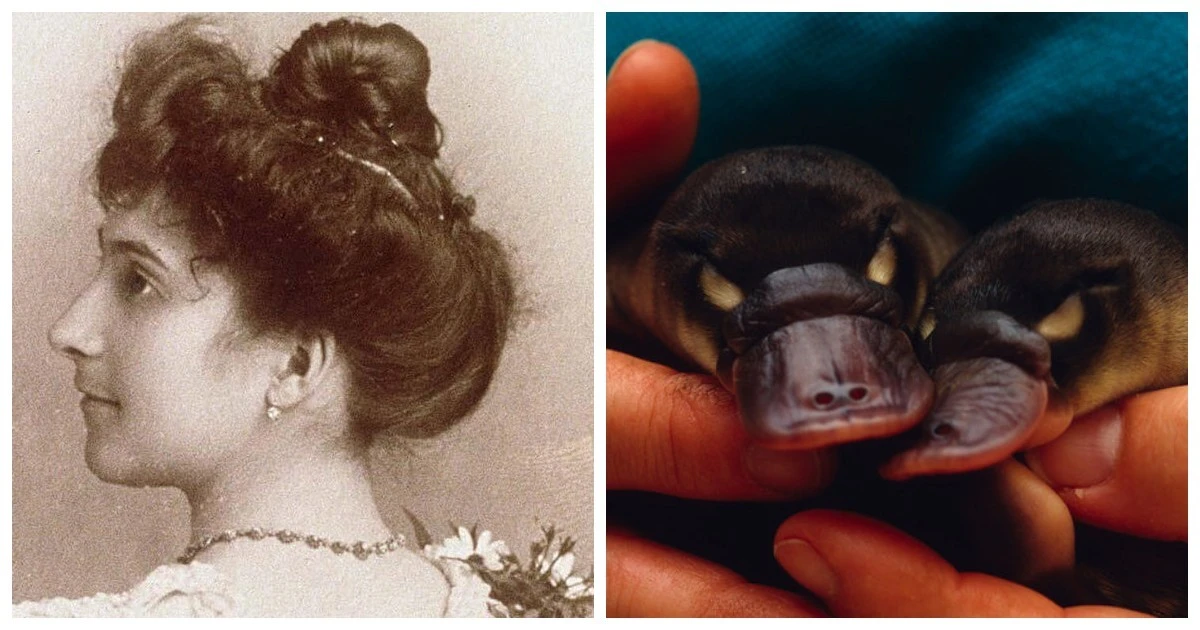
No, you're wrong. Prepare to be amazed. This and other facts will make you question the obvious. Here we have the most dangerous crustacean, which forcibly changes the gender of its victims, and a medieval graphic technique still widely used today. Are you ready to discover what the real magic of science and the dark side of history look like? Then let's get started.
1. A Surprising Find 
In 1989, researchers discovered the skeleton of a Neanderthal child in Cova Negra Cave (Valencia). The researchers affectionately named the child Tina. It was discovered that he suffered from Down syndrome. The diagnosis was made in 2024 not from DNA (which could not be extracted), but from a 3D reconstruction of his inner ear. Tina had anomalies (thickened canals, a small cochlea) that are found only in people with Down syndrome.
Due to the ear abnormalities, the child suffered from complete deafness, severe balance problems, and bouts of dizziness. He lived to be six years old. Even in the 1920s, children with this syndrome rarely lived past nine years. Tina survived thanks to the constant care of the group. Researchers call this "true altruism," as the child was unable to repay the care.
2. A Unique Parasite 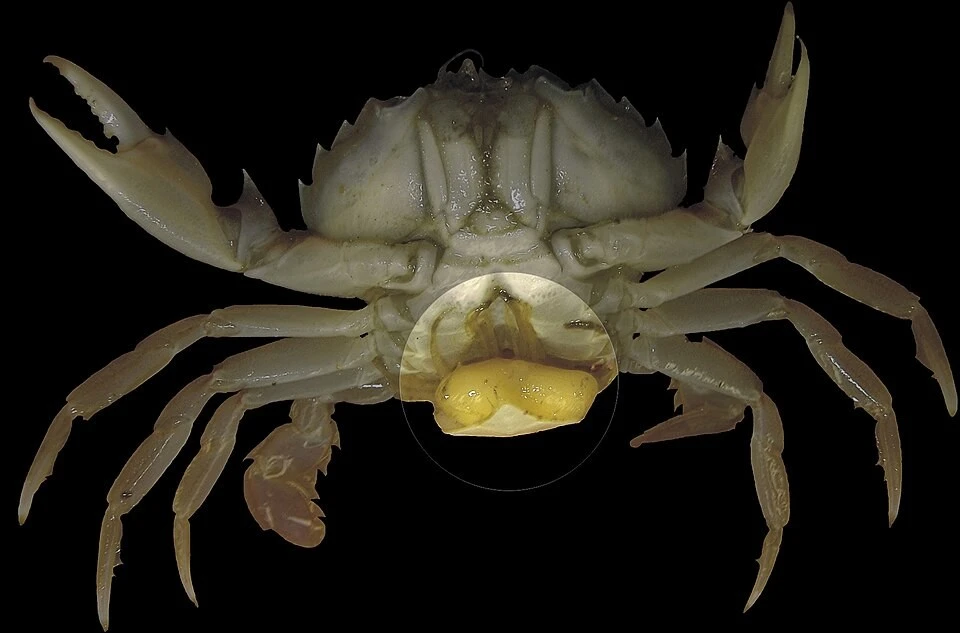
There is a species of barnacle (acorn crab) that alters the hormones of its host crab, causing it to develop female characteristics. The female larva penetrates the crab, loses its hard shell, grows into it with its appendages, and releases an egg sac on the crab's abdomen.
The most common victims are the green crab, as well as shore crabs, hairy crabs, and flying crabs. The parasite suppresses molting (the crab does not grow or regenerate its claws), sterilizes the crab by causing its ovaries to atrophy, and forces both males and females to care for the egg sac as if it were their own brood. After removal of the parasite, females can restore their ovaries, but males cannot restore their testes.
3. Completed Observation 
In 1989, the Guinness Book of World Records stopped tracking the record for the most beer drunk in an hour due to health concerns. At the time, the current record holder was 23-year-old Jack Case. In 1969, in Northern Ireland, he drank over 20 liters of beer in one hour.
4. A Medieval Technique Still Relevant Today 
The Droste effect is a visual technique in which an image contains a miniature version of itself, which contains another version, and so on ad infinitum (or until the image's resolution runs out). The name comes from the Dutch cocoa "Droste": on its packaging, a nurse holds a tray with a cup of hot chocolate and a box of the same cocoa with the exact same design.
Although the technique is associated with 20th-century design, its inventor was not illustrator Jan Misset. As early as the 14th century, Giotto depicted Cardinal Stefaneschi presenting this very triptych to Saint Peter on one of his triptychs. Infinite nesting worked even without digital technology.
5. One of a Kind 
Jeanne Louise Calment (1875–1997) is the only person in history whose age has been officially documented to be over 120 years. She was born in February 1875 in Arles, France, and died on August 4, 1997, at the age of 122 years and 164 days.
Her longevity is astounding. During her lifetime, she witnessed the opening of the Eiffel Tower (1889), both world wars, the moon landing (1969), and the dawn of the 21st century. Yet, Jeanne herself led a rather unsettled life. She fenced until she was 85, rode a bicycle until she was 100, and smoked almost to death (she quit at 117, only because she was nearly blind and couldn't light her own cigarette). She is the only verified person to have lived over 120 years.
6. A Miracle of Nature 
A baby platypus has no official name. Although zoologists refer to young animals by the general term "puppies" or "youngsters," informal references include "platypup" and "puggle." The latter term is also used for baby echidnas and sometimes for beagle-pug hybrid puppies. Neither term is recognized by the scientific community, but both can be found in zoos, documentaries, and popular articles.
The word "platypus" itself comes from the Greek platúpous, meaning "flat-footed." Its scientific name, Ornithorhynchus anatinus, translates as "duck-like bird-billed."
7. A Hated Nickname That Made History 
The real name of the infamous Roman emperor was Gaius (Gaius Caesar Augustus Germanicus). He received the nickname Caligula at the age of two or three, when he accompanied his father, the famous general Germanicus, on military campaigns in Germany. His mother, Agrippina, sewed him a miniature soldier's uniform, including small army boots called caligae. The soldiers, touched by the sight of the little boy in military attire, affectionately nicknamed him Caligula, or "little boot" (a diminutive of caliga). The Emperor himself, upon coming to power, disliked this nickname and preferred to be called Gaius.
8. Mysteries of Color 
Blue eyes don't contain a drop of blue pigment. No one else in the world does. Green eyes don't either. The only coloring pigment in the iris is melanin. It produces all shades of brown, from honey to almost black. And when melanin is depleted, the laws of physics come into play.
The eye becomes like the sky. The same process—Rayleigh scattering—causes short blue wavelengths of light to be reflected from the iris rather than absorbed. As a result, we see blue, light blue, gray, or even green (when a small amount of melanin, which produces a yellow tint, is mixed into the scattering).
So, eye color isn't a dye. It's an optical illusion created by the structure of the tissue and the play of light. This is why the eyes of the same person can appear different in different lighting.