At room temperature (20 degrees Celsius), a maximum of 360 grams of table salt can be dissolved in one liter of water. After this point, the solution reaches saturation, meaning that if you add more salt, it will simply settle to the bottom, no matter how much you stir. 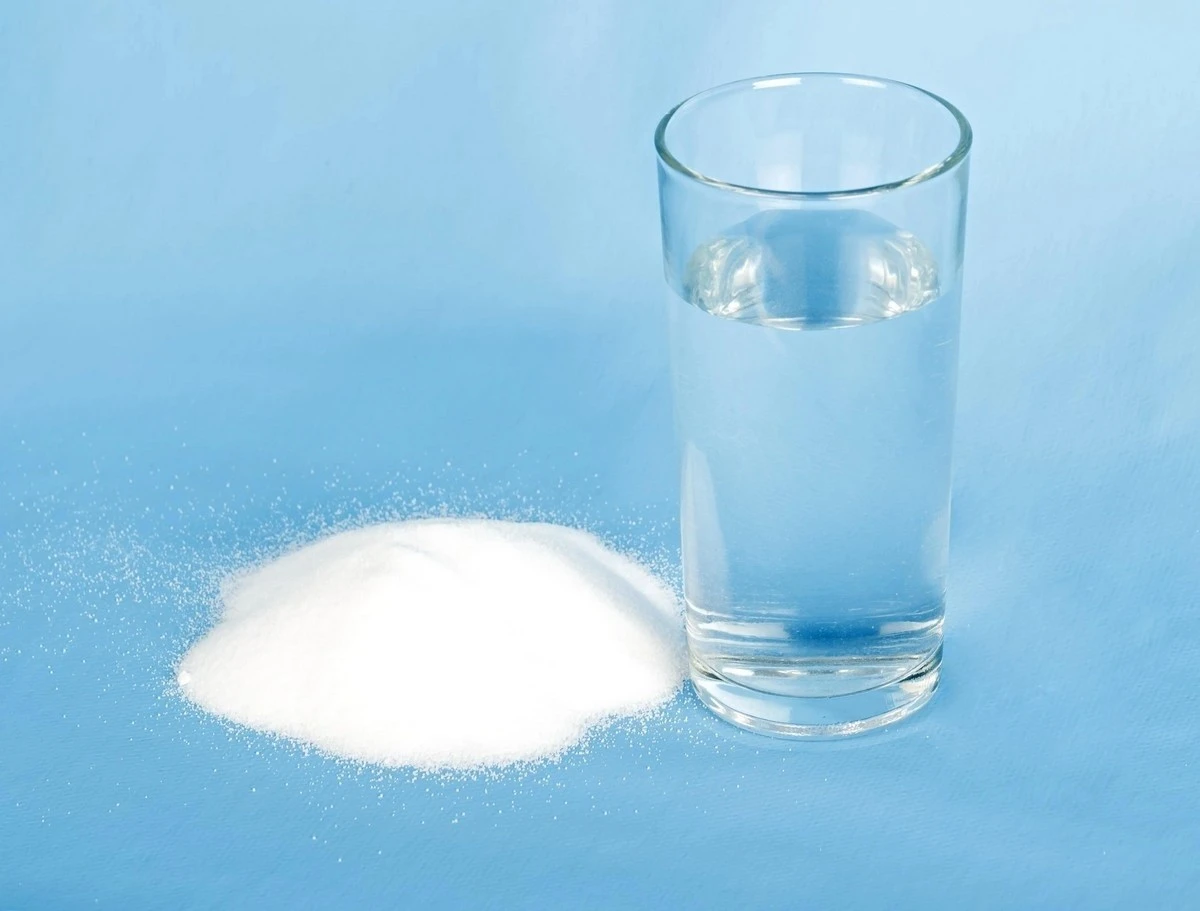
This limit is called solubility, which depends on temperature. If the temperature of a liter of water were 100 degrees Celsius, it would be possible to dissolve slightly more salt—a maximum of 391 grams. This is because hot water "captures" more salt molecules due to the accelerated movement of the particles—this is a fundamental law of physics.
It's noteworthy that regular sugar dissolves much better than salt—up to two kilograms per liter at room temperature. This is why the sweet syrup is so thick. Chalk, however, is practically insoluble—only 0.013 grams per liter.
But let's return to salt. Thanks to the existing solubility limit, the Earth's oceans do not become infinitely salty, despite the fact that rivers and volcanic activity continuously deliver mineral salts. 
When the salt concentration reaches its maximum, its excess, as mentioned above, precipitates, which is why enormous salt deposits have formed on Earth over millions of years.
Incidentally, the solubility limit is used in industry to purify substances by recrystallization: the solution is heated, the maximum amount of substance is dissolved in it, and then cooled to obtain pure crystals.
Add your comment
You might be interested in:


















Persistence in achieving a goal

Not everyone is having fun on the amusement ride

A biker prevented a hit-and-run driver from escaping

17 Photos That Will Stop You in Your Tracks (18 Photos)

The cutest lunch delivery ever

Absolute perfection

Young women, Dancing and George Michael: nothing superfluous

An apology delivered with a running start

A steam locomotive for "big boys"
