The facts you're about to read sound like the stuff of a science fiction writer. But each one has scientific confirmation, real witnesses, and sometimes very confused researchers. 
In China, a popular mushroom makes thousands of people see tiny elves, identical to everyone. They crawl under doors and climb walls. An insect is born already pregnant: the mother is carrying a daughter, and the daughter is already carrying a granddaughter. And the Swedish navy spent 15 years hunting submarines, which turned out to be herring farting in unison. Reality is more subtle than it seems. And beneath its surface, absurdities simmer, which scientists document in reports, while we study in amazement the facts that make us see the world differently.
1. Oxygen that Became a Poison 
2.4 billion years ago, the evolution of oxygen-producing bacteria caused a mass extinction. Oxygen was toxic to existing life, and its reaction with methane triggered the "Snowball Earth" Ice Age, which lasted 300 million years.
2. Genetic Gigantism in Ligers 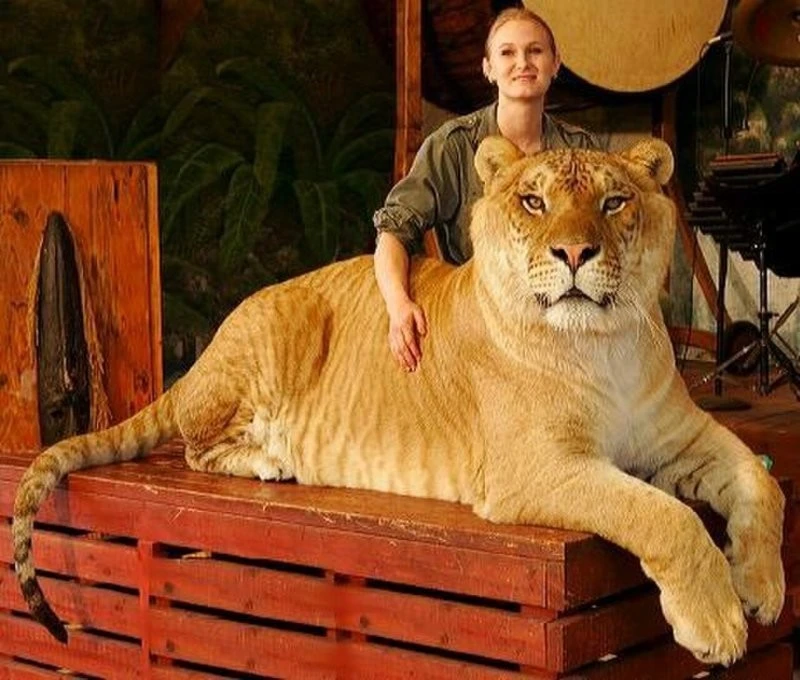
Ligers receive growth-promoting genes from their lion father, but their tiger mother lacks the growth-inhibiting genes (like lionesses). The result is gigantism, and hybrids can weigh almost 500 kg.
3. An Ancient Underground City Discovered Thanks to Chickens 
In 1963, a man in Turkey was renovating his house and noticed that his chickens were constantly disappearing into a crack in the basement wall. When he widened the crack, he discovered the ancient city of Derinkuyu—18 levels at a depth of 85 meters, capable of sheltering 20,000 people.
4. The Fox That Hibernates and Climbs Trees 
The common raccoon dog is an unusual member of the canids (dogs, foxes, etc.) because it hibernates in the cold winter and is a tree climber. It is most closely related to foxes. It lives in Asia and is considered an invasive species in Europe.
5. Shy Liars and Naive Sherlock Holmes 
The Cottingley Fairies—a series of photographs taken in 1917 and 1921 by two teenage girls—sixteen-year-old Elsie Wright and her ten-year-old cousin Frances Griffiths—was a hoax. It remained unsolved for over 60 years, partly because the cousins were embarrassed to have deceived Sherlock Holmes' creator, Arthur Conan Doyle, who publicly defended the photos as genuine.
The girls cut out pictures of fairies from the children's book Princess Mary's Gift Book (illustrated by Claude Shepherson), attached them to hatpins, and photographed them. One of the experts hired by Conan Doyle was from Kodak. But he, too, was unable to prove the forgery, saying only, "We cannot confirm that these are real fairies." The cameras and the original photographs are now housed at the National Science and Media Museum in Bradford, England.
6. A mushroom that causes Lilliputian hallucinations 
A mushroom popular in China, Lanmaoa asiatica (Lilliputian boletus), when undercooked, causes "Lilliputian hallucinations." This rare phenomenon involves seeing tiny people or fantastical creatures. The hallucinations are consistent across different people and cultures: tiny, elf-like creatures crawl under doors, climb walls, and cling to furniture.
This phenomenon has been documented in various cultures. Similar cases have been reported not only in China, but also in the Philippines (locally called "ansisit") and Papua New Guinea (in the 1960s, "mushroom madness" was described there). The active ingredient is unknown, the effects are very long-lasting, and in Yunnan Province, where this mushroom grows, no one eats it raw or undercooked. Researcher Colin Domnauer, who studies this mushroom, never dared to try it due to the extreme duration of the trance and the risk of side effects such as delirium and dizziness.
7. The Hunt for a Spy Who Turned Out to Be a Fish with a Fart Problem 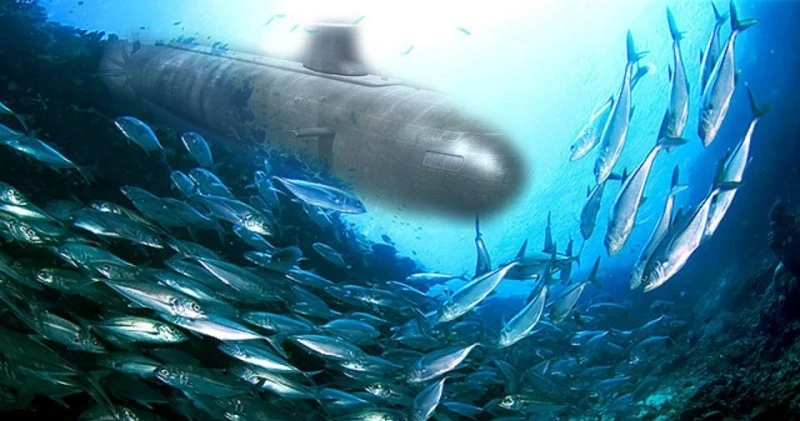
The Swedish Navy spent 15 years and millions of dollars tracking what they thought were submarines in their waters. In 1996, civilian scientists finally analyzed the acoustic signals and discovered that the "submarines" were actually just huge schools of herring farting.
Herring have a unique anatomical feature: their swim bladder is connected to their anus. When they are frightened, migrating, or simply want to release excess gas, they contract their bladder and release a stream of bubbles through their anus. This sound is not of digestive gas (like in humans or cows), but of gas from their swim bladder.
8. Life Like a Matryoshka Doll 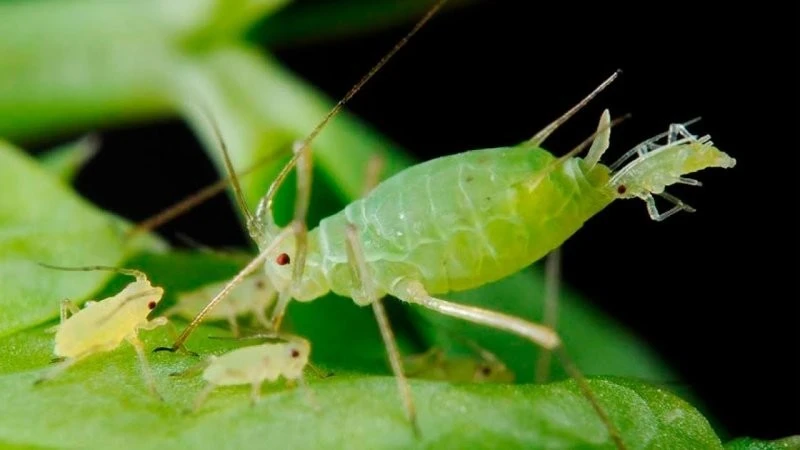
The birth of an aphid is a sci-fi story in the insect world. In summer, these tiny insects practice parthenogenesis with viviparity, reproducing without males and immediately giving birth to live young, skipping the egg stage. But the craziest thing is a mechanism scientists have dubbed "generation telescoping." The embryo inside the female aphid begins developing even before leaving its mother's body. As a result, the adult female carries not only daughters but also granddaughters. She becomes a walking Russian doll and a living aphid production line.
The practical effect is stunning. Aphids waste no time searching for a mate, carrying eggs, or waiting for the next season. A single female can produce up to 100 new insects in her lifetime. In the fall, when the leaves fall and the temperature drops, the system switches over. Males are born. Mating normally occurs, the females lay eggs that will survive the winter, and in the spring, history repeats itself.
Add your comment
You might be interested in:














Protective film Removing it with a power screwdriver

When a child plays hide-and-seek at a professional level

Super dads who swoop in to save the day

Precision carpentry

Looks like it's time to buy WinRAR

How to hang wallpaper neatly

Athlete in Bavarian dress flies over a lake on a hydrofoil

Man sets up bedroom camera and discovers the reason for his

First meeting with Mom's twin sister
