The Rosetta Project: A small disc that is saving the voices of vanishing peoples (7 photos)
There are approximately 7,000 living languages in the world. And almost half of them are on the verge of extinction. 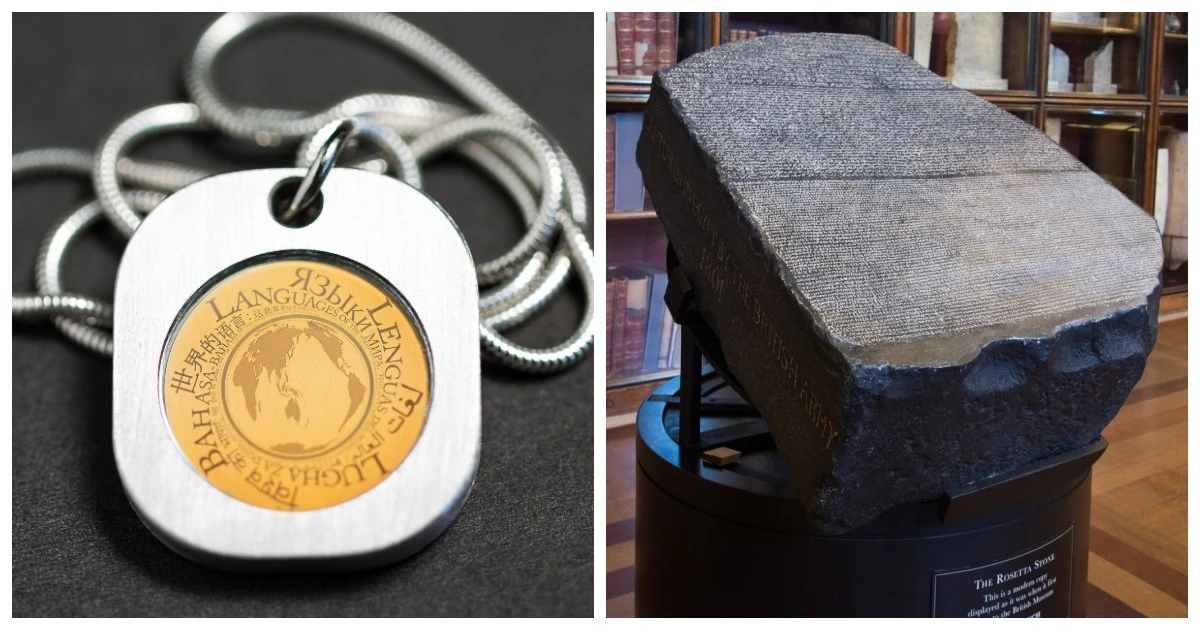
They could disappear forever in the coming decades. Most of these languages have only a few thousand speakers, and many aren't even recorded. Nearly 500 languages have fewer than 10 living speakers. They will disappear very soon. The rest are dying more slowly, displaced by more powerful languages used in schools, markets, and on television screens. 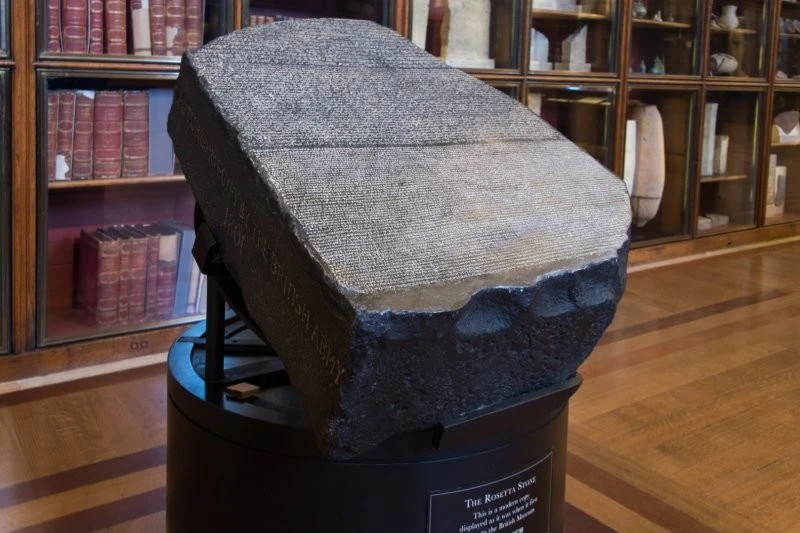
The Rosetta Stone in the British Museum
The Rosetta Project is attempting to preserve the 1,500 languages most likely to disappear by the end of this century. Inspired by the famous Rosetta Stone, the project aims to create a key that future generations can use to decipher these lost languages. 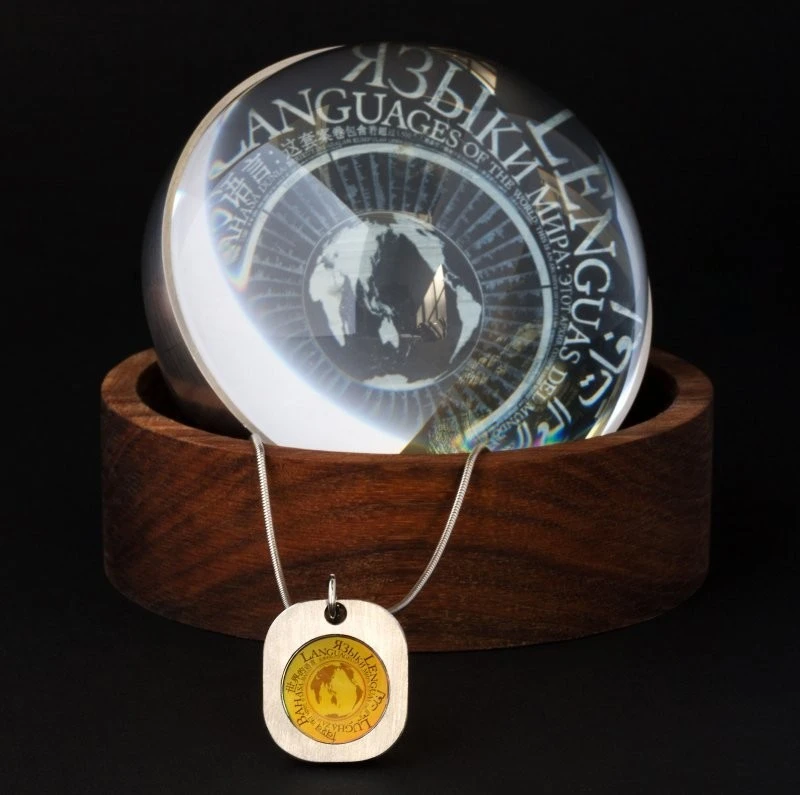
The original Rosetta Stone was created in 196 BC. The same text was carved on it in three different scripts. Scholars were able to decipher ancient Egyptian hieroglyphs using known languages and writing systems. Thus, the history of an entire civilization was unlocked. 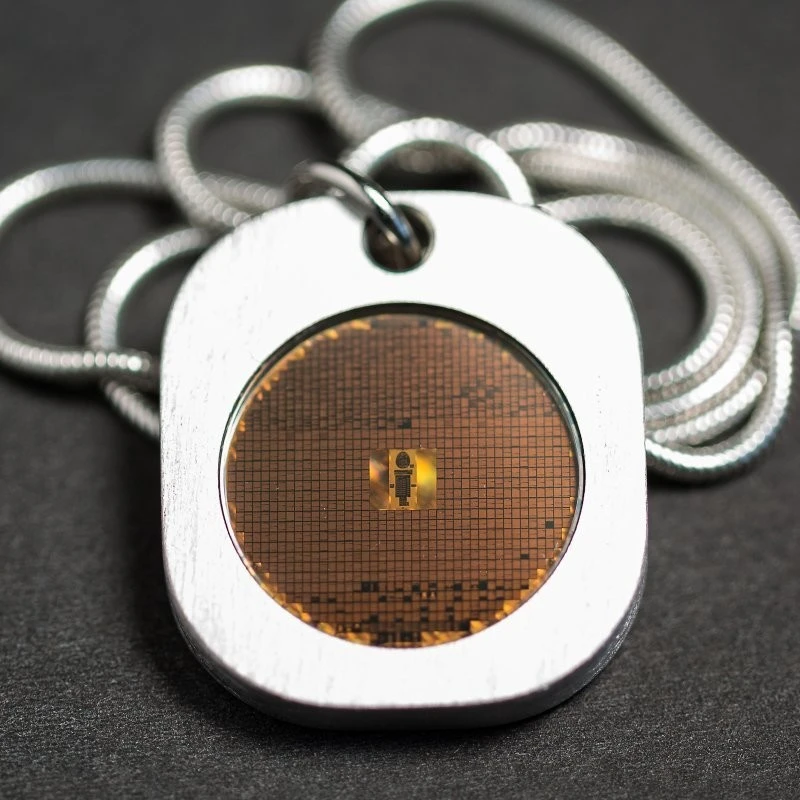
The modern Rosetta project has a similar goal. It is based on a massive array of parallel information—the same set of texts, dictionary entries, and linguistic descriptions for 1,500 human languages. 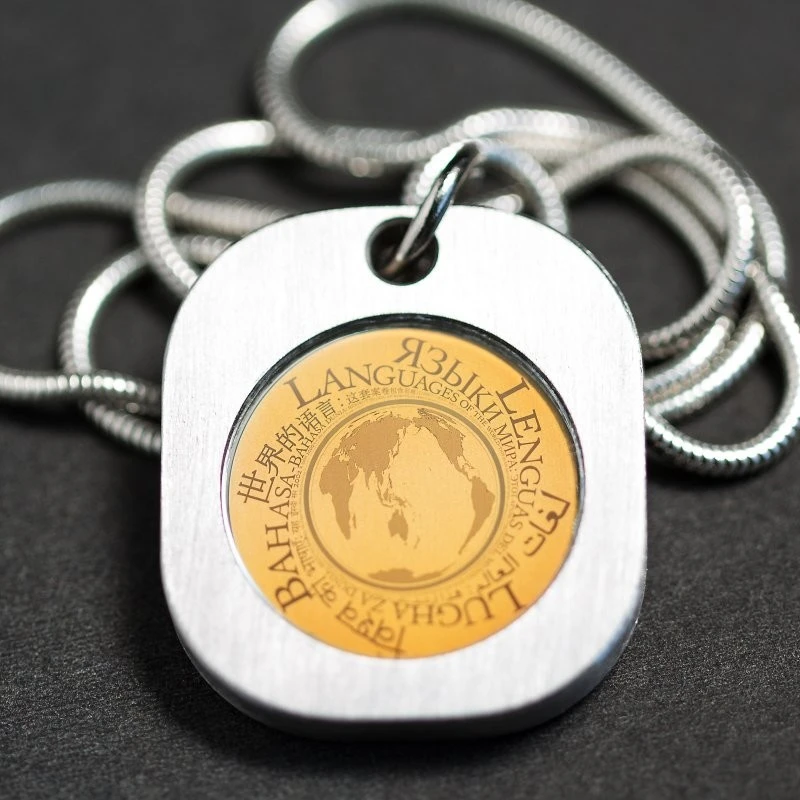
One of the first prototypes of this archive was the Rosetta disk. It is a nickel disk, just over 7 centimeters in diameter, with almost 14,000 pages of information printed on its surface under a microscope. One side of the disk contains a graphic splash screen. The text starts at a size legible to the naked eye and spirals inward, gradually getting smaller until it becomes too small to read.
But in reality, the text continues to get smaller and smaller, requiring a microscope with 500x magnification to read it. The other side of the disk contains the stored data itself. 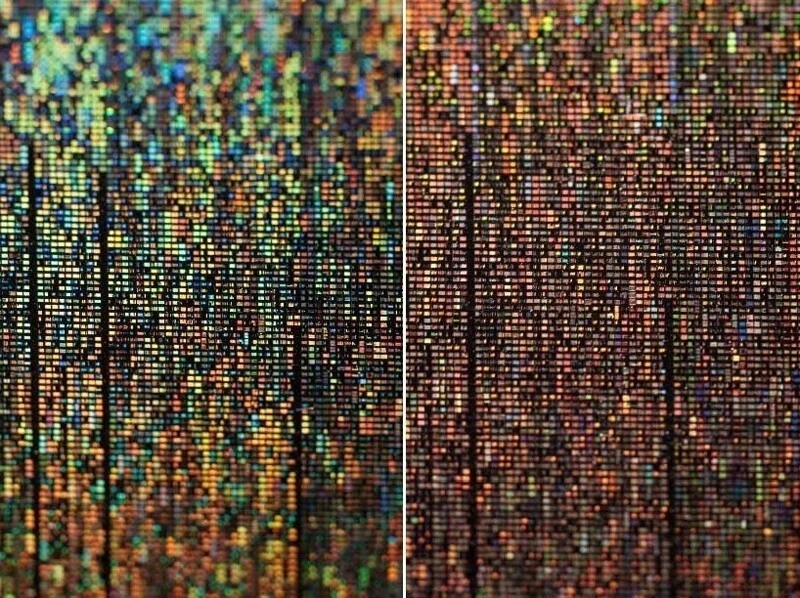
The disk is housed inside a stainless steel and glass sphere. The sphere is not hermetically sealed, allowing air to pass through the disk while protecting it from accidental impacts and scratches. With minimal care, it can be stored and remain readable for thousands of years.
The Long Now Foundation, the creators of this project, has released a version of the Rosetta disc for everyday use. It's a coin-sized pendant, much smaller than the first edition, but containing almost as much valuable information. 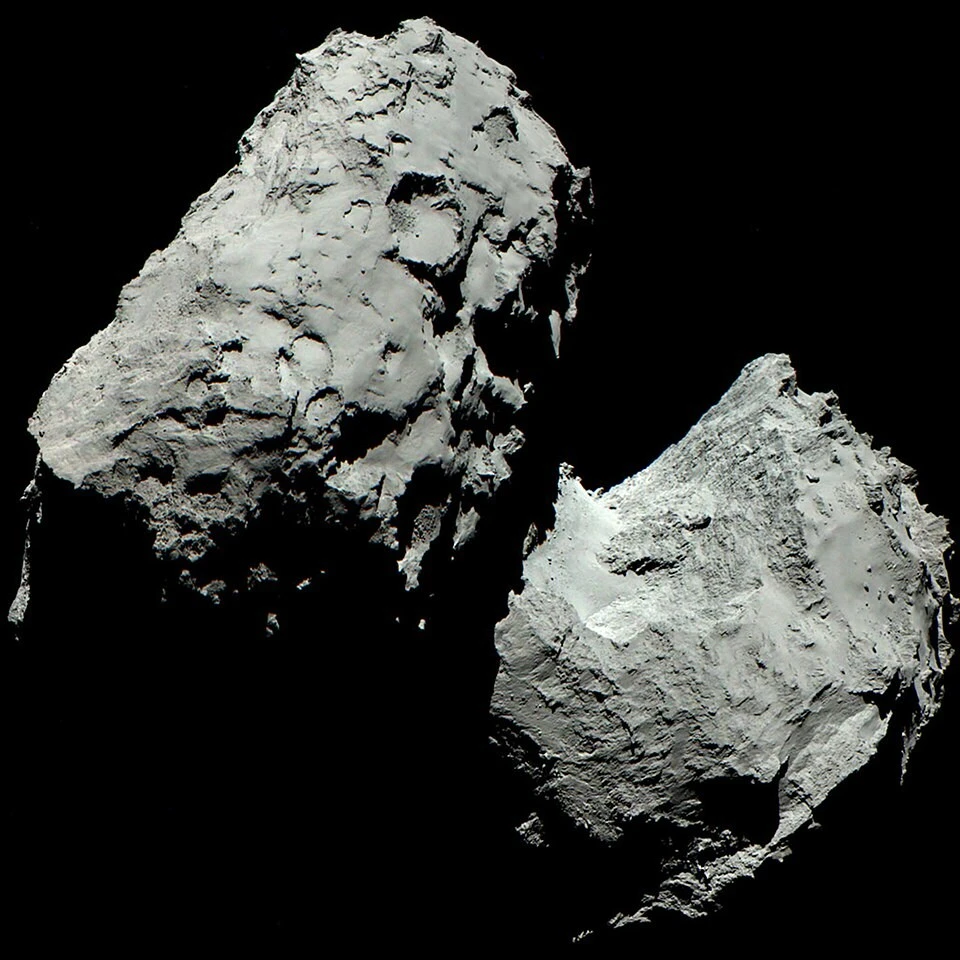
Comet 67P/Churyumov–Gerasimenko in natural color, photographed by the ESA Rosetta spacecraft in December 2014
A special version of the Rosetta disc was sent into space aboard the ESA Rosetta probe. In 2014, the probe reached comet 67P/Churyumov–Gerasimenko, and in 2016, it concluded its mission by crash-landing on its surface. This microscopic archive of human languages is now traveling through the solar system, along with the probe and the comet.