Perentia: An Oversized Monitor Lizard Kills with Its Tail, Venom, and Speed (8 photos)
The Perentie's second name is the giant monitor lizard. It is Australia's apex predator, with no natural predators. While not as large as its Komodo cousin, its appearance still commands respect and a touch of intimidation. 
A common dog from Australia...
Adult Perenties can reach a length of 2.5 meters, and according to some sources, as much as 3 meters. Despite their size, they have a very slender build and weigh a maximum of 40 kilograms. For reference: a crocodile of similar length can weigh over 100 kilograms! 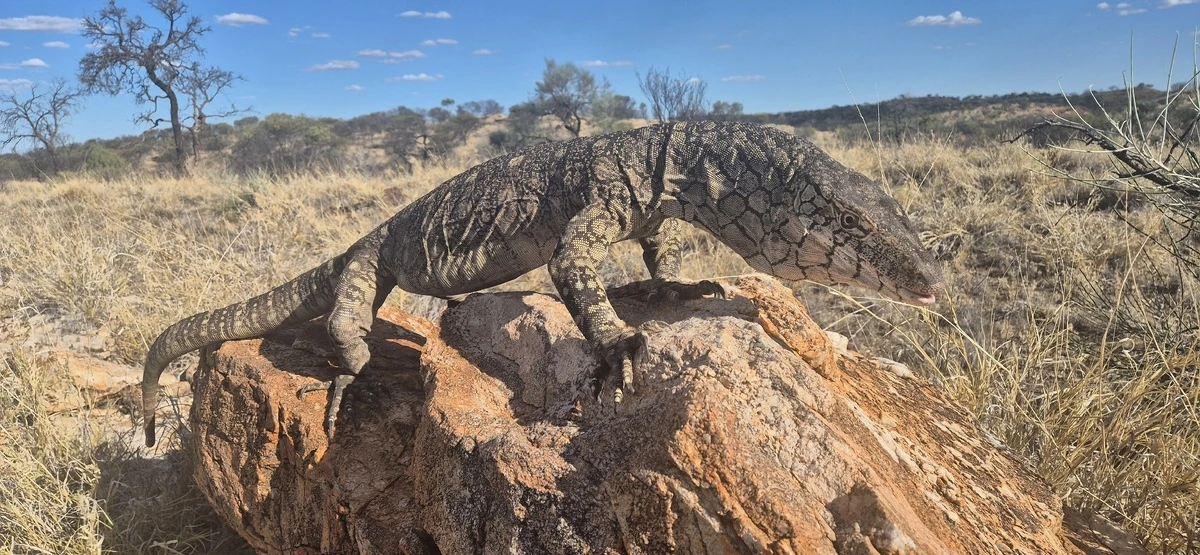
Professional lightweight fighter.
Therefore, despite its size, the perentie is a very shy and cautious animal, avoiding encounters with any creatures larger than itself. Fortunately, its camouflage, like dry vegetation, is very helpful in hiding in Australia's arid regions. But "shy" doesn't mean "harmless." When encountering a larger animal, the perentie puffs out its throat and hisses. And if the animal dares to come even closer, the perentie doesn't retreat; it attacks! 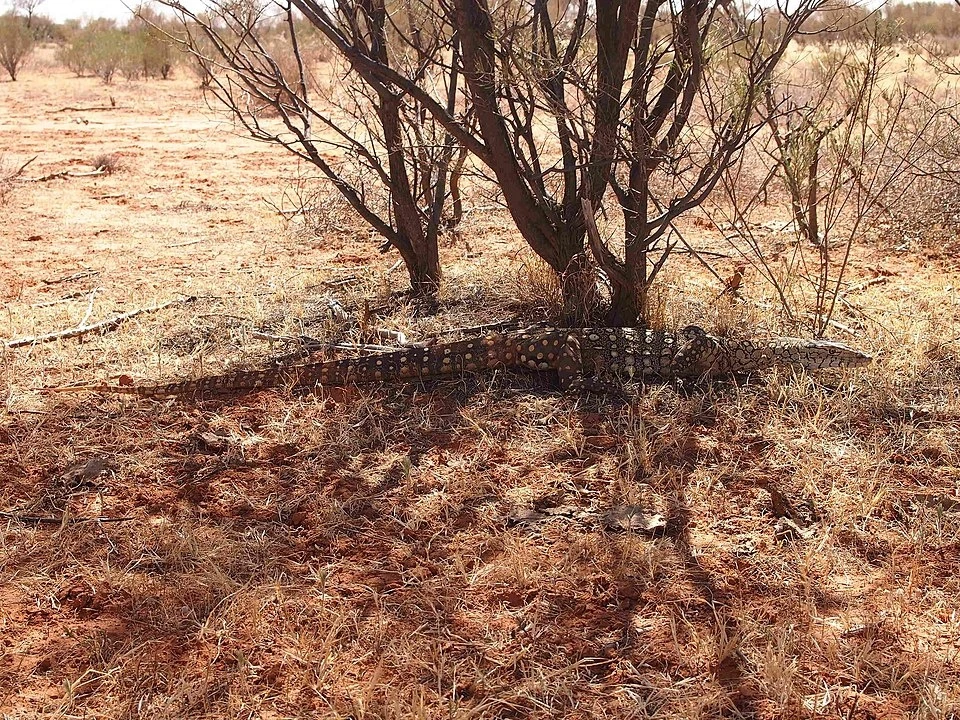
You won't believe it, but there's a monitor lizard here. 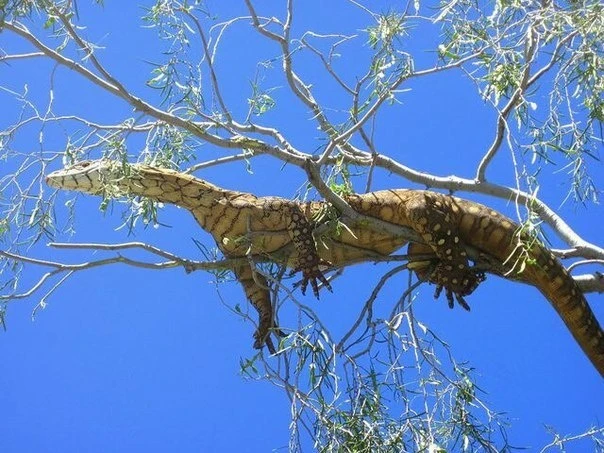
You won't believe it, but there's a monitor lizard here!
Giant monitor lizards are incredibly fast by reptile standards—they can reach speeds of up to 40 km/h. Therefore, an attacking monitor lizard can even catch up with a person and strike them with its extremely powerful tail. Attacking with the tail is a standard monitor lizard strategy. This strike can cut a leg to the bone or break a dog's paw. A monitor lizard can also simply bite, which not only carries the risk of serious injury but also can lead to poisoning. After all, the perentie is a venomous monitor lizard. 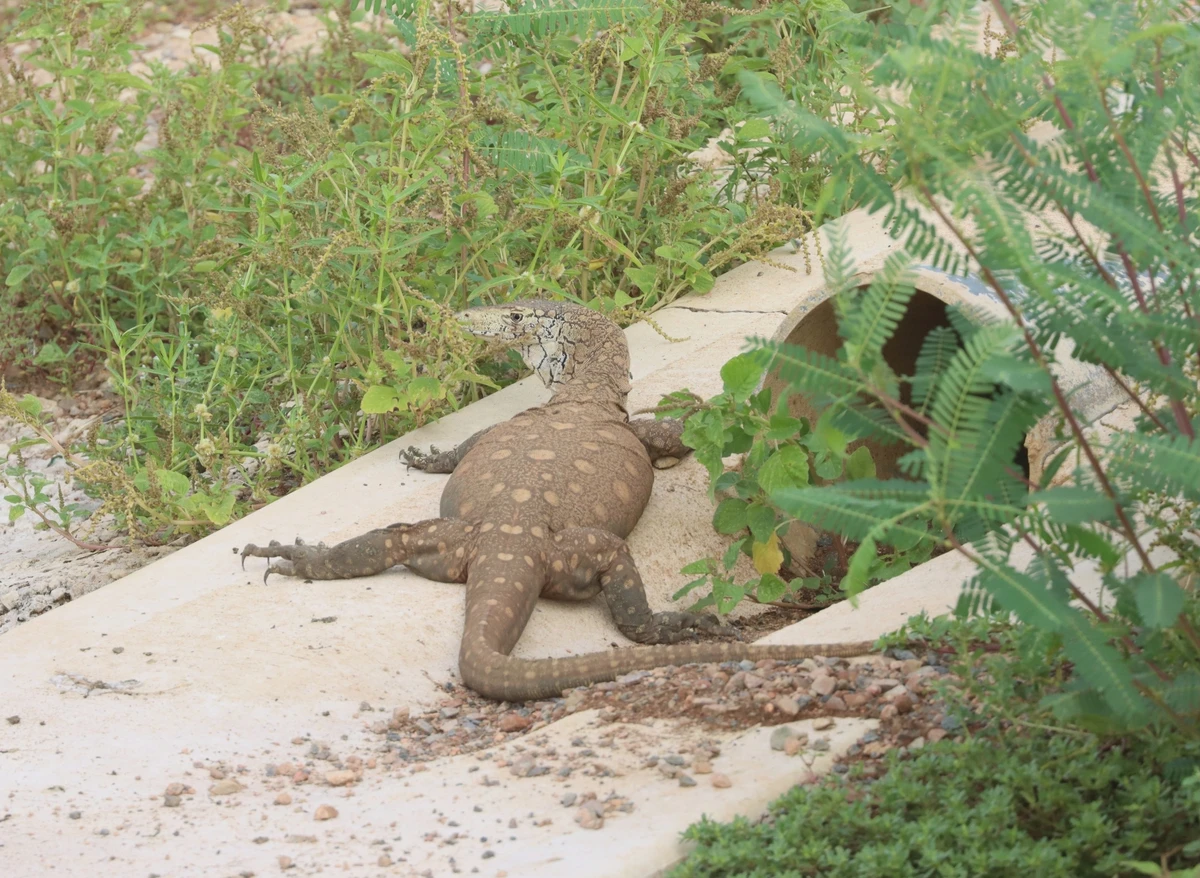
To apply for Australian citizenship, you only need to possess the venom.
Its venom, however, is very weak. The effects begin to be felt tens of minutes after the bite and are limited to a feeling of mild malaise—dizziness, nausea, and chills—for several hours. This isn't dangerous even for smaller animals, not just humans. And since the monitor lizard consumes its prey whole and immediately after the attack, the venom serves no purpose at all. However, some scientists argue that its toxicity may be merely a side effect, and the venom itself serves a different purpose. For example, it breaks down proteins and carbohydrates, like the amylase in our saliva. This is a good theory for the origin of many animal venoms. It all begins as a simple aid in digestion and only later becomes the primary means of killing prey. 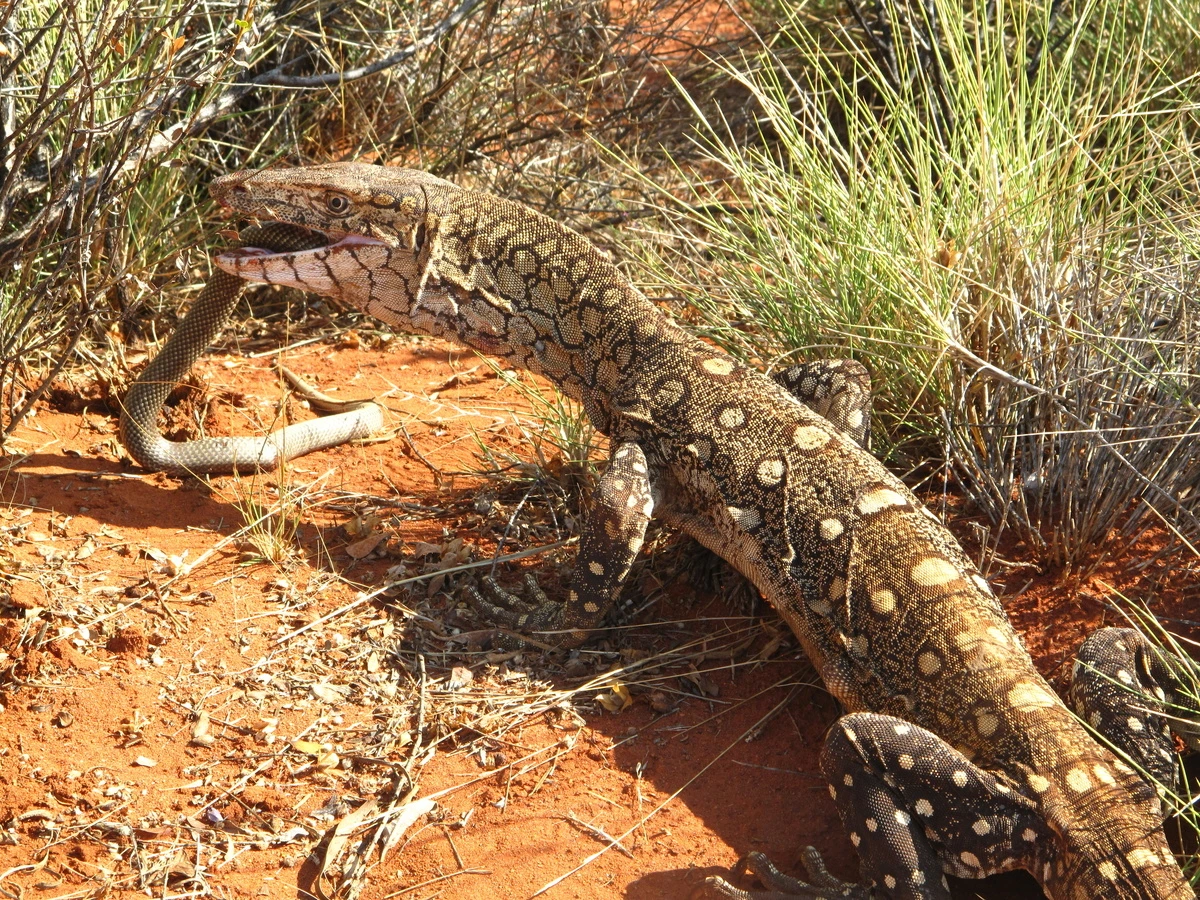
Gastroscopy is certainly strange in this clinic...
Thanks to their excellent self-defense skills, perenti have lost all natural enemies and leapt into the ranks of apex predators, albeit only formally. After all, they can't hunt large herbivores—they lack the strength! Instead, the monitor lizards have become hunters of hunters. The main prey of giant monitor lizards are skinks, agamas, and smaller monitor lizards, including younger members of their species. Thanks to their light build, long neck, and high speed, they leave other reptiles no chance of escape. 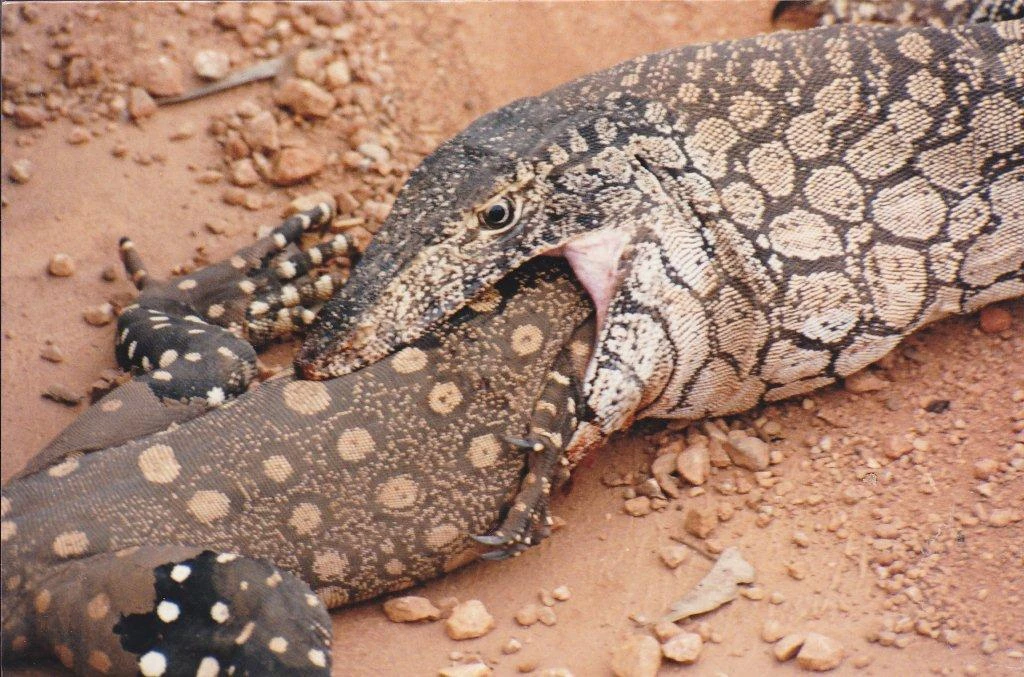
Reptilians have a dispute over power on our planet.
Perenties reproduce throughout the year, which is very convenient. The almost complete absence of mating games is doubly convenient. The male's only task is to drive other males away from the female and mate with her before the other reptiles arrive. Moreover, after mating, the male leaves immediately. He has achieved his goal and does not wish to see the female any longer than necessary. To be fair, these feelings are mutual. Observations of perenties in zoos show that if the male remains with the female for more than a week after mating, she begins to become stressed. After all, perenties are solitary creatures and are not accustomed to each other's company. 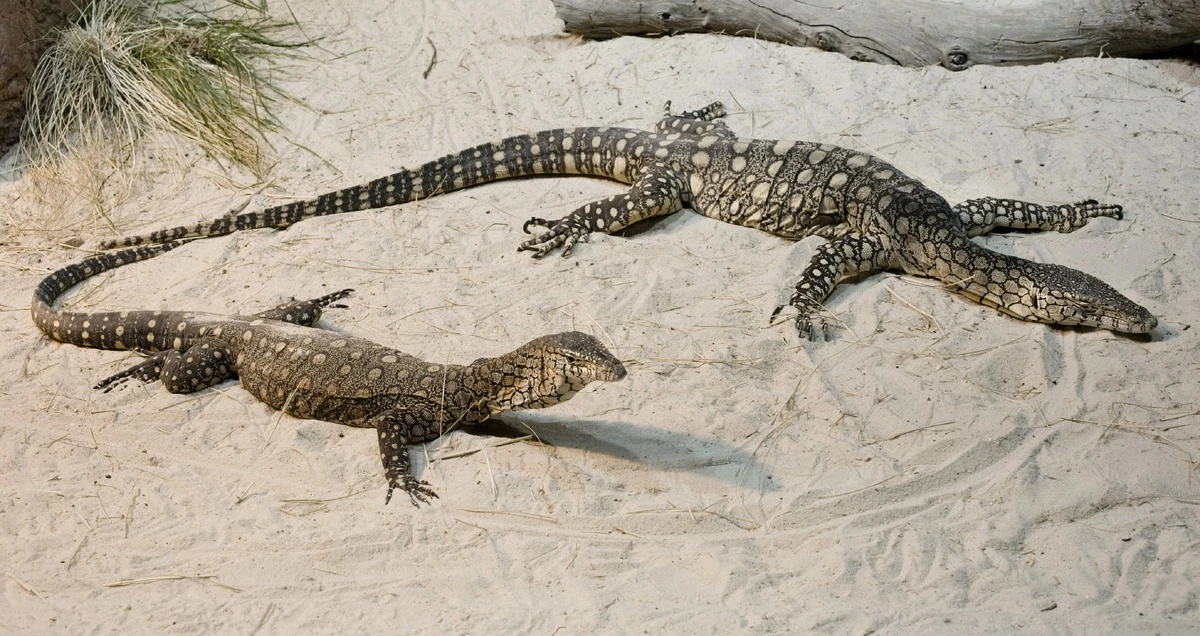
Seryoga, go away like a brother, okay?
They don't even keep a close eye on their eggs. A couple of weeks after the encounter, the female will lay 6-10 eggs in a mound of sand she's made herself or in an abandoned termite mound. Then she'll simply leave. This won't upset the young, though. They're capable of foraging for food from birth.