Spider Monkeys: Their Tail Has Become a Full-Fledged Third Arm (12 photos)
It's believed that somewhere around 15-20 million years ago, the ancestors of modern apes abandoned their tails, which ultimately led us to where we are today. But at the same time, the ancestors of spider monkeys took a completely opposite path. They decided they needed a fifth limb, and they made one out of their tails. 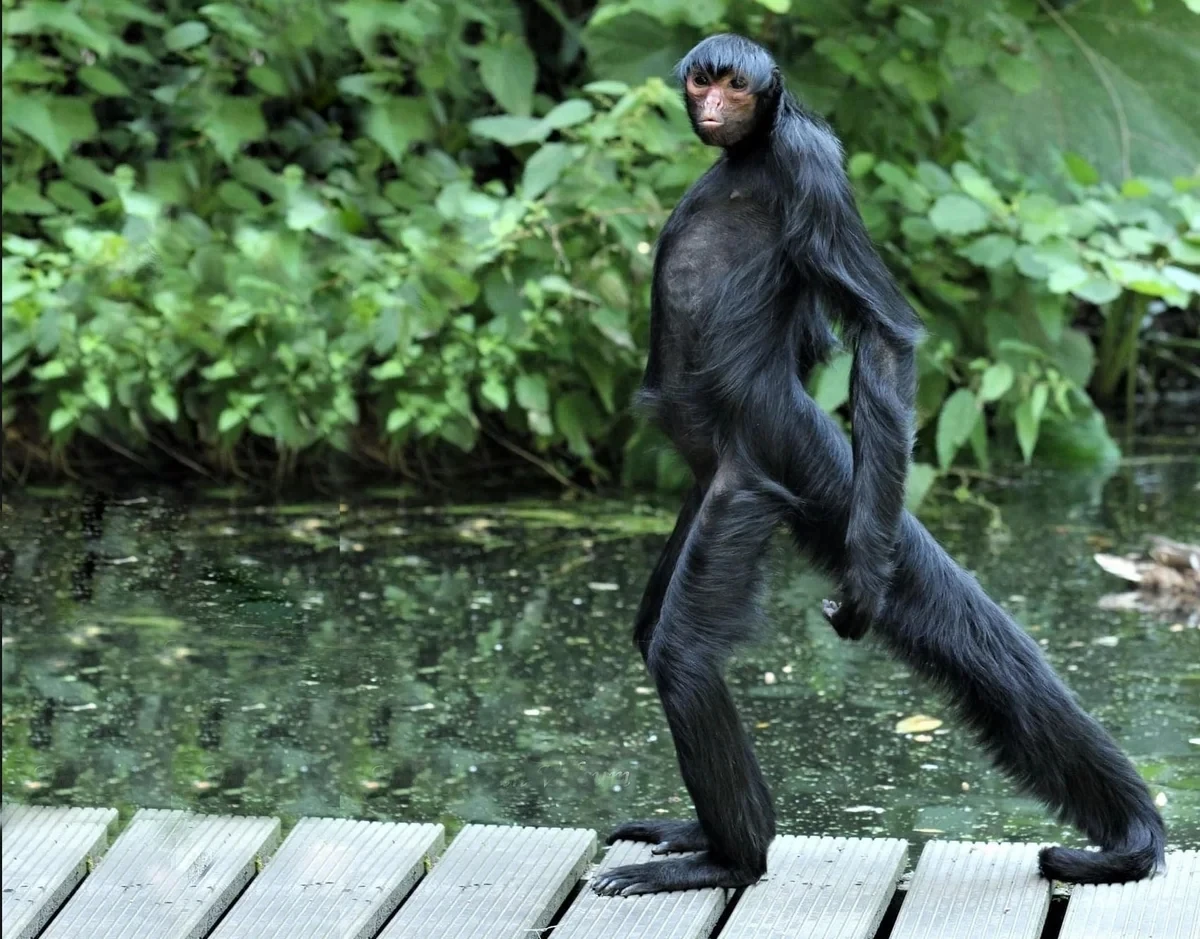
It's convenient for him; you can always make a stool out of his tail. 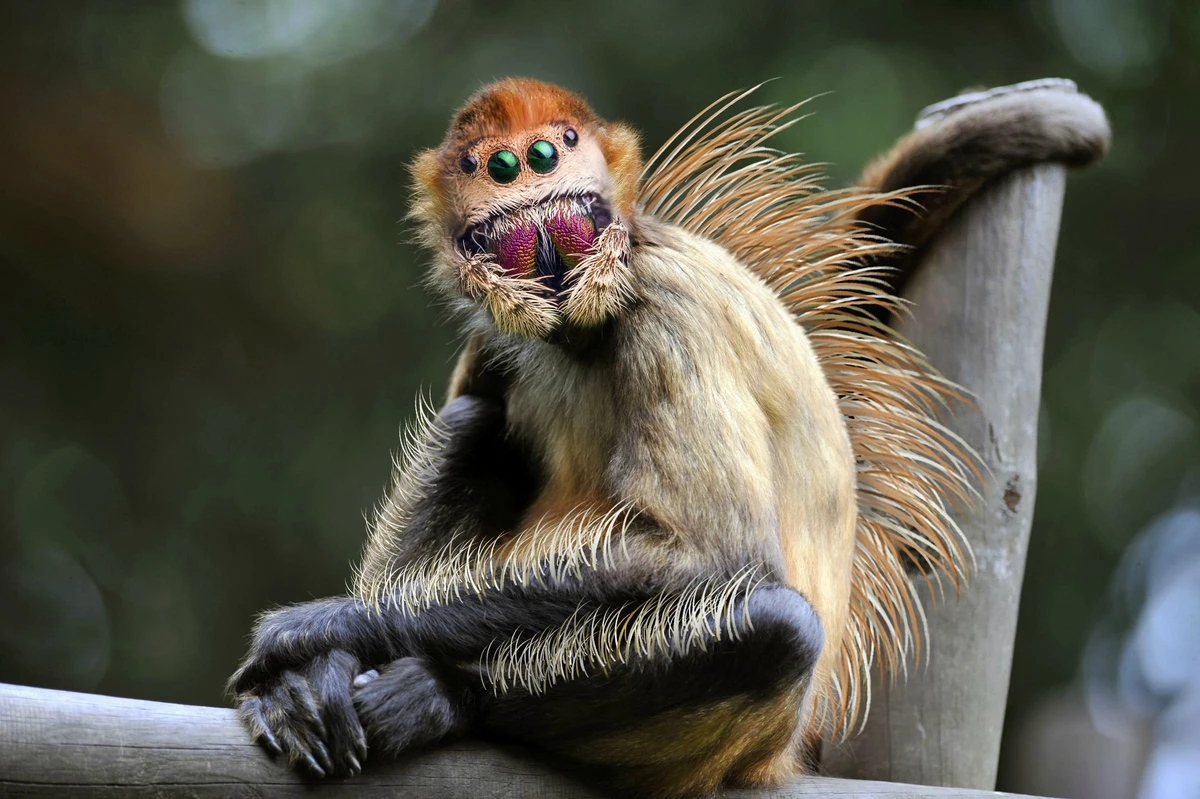
I wish spider monkeys looked like this...
Obviously, the tailless monkeys did a much better job of expanding their range than the tailed monkeys—we populated the entire globe. But the spider monkeys did quite well, too. They evolved into a whole family of 26 species, which populated virtually all the forests of South America. 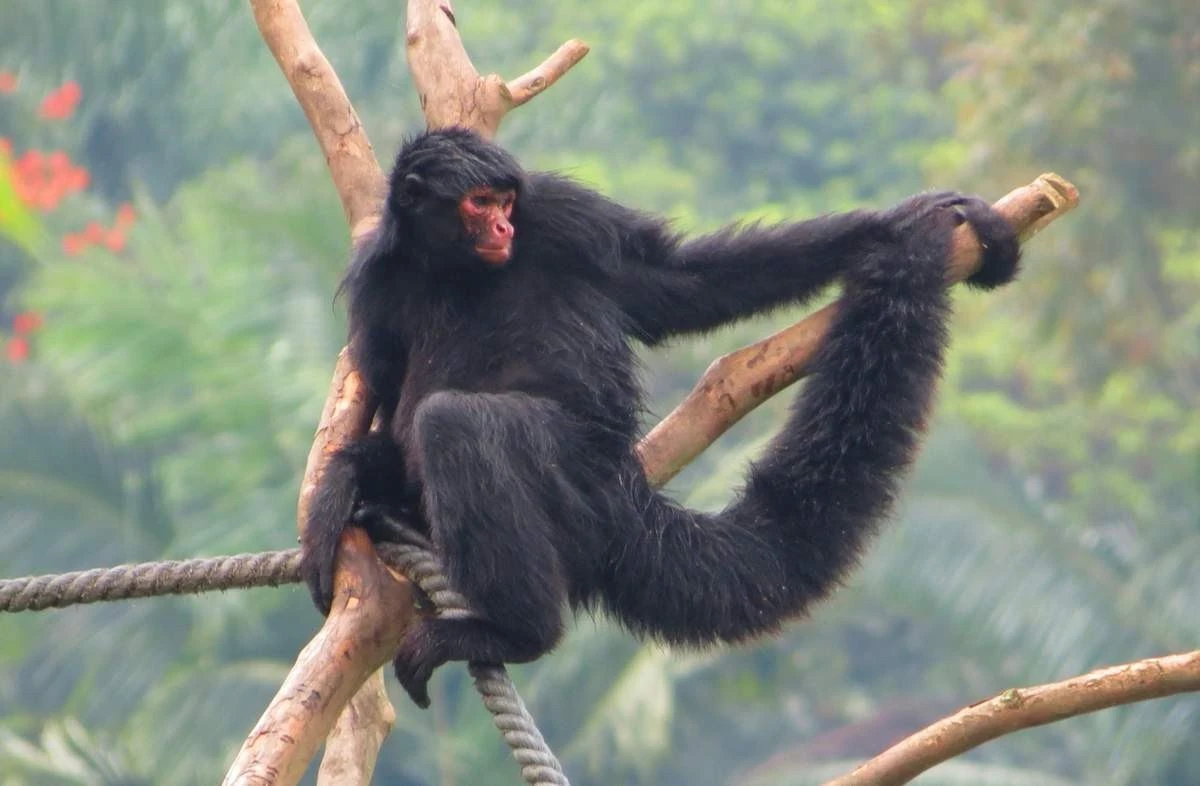
That tail is probably incredibly soft and muscular to the touch... 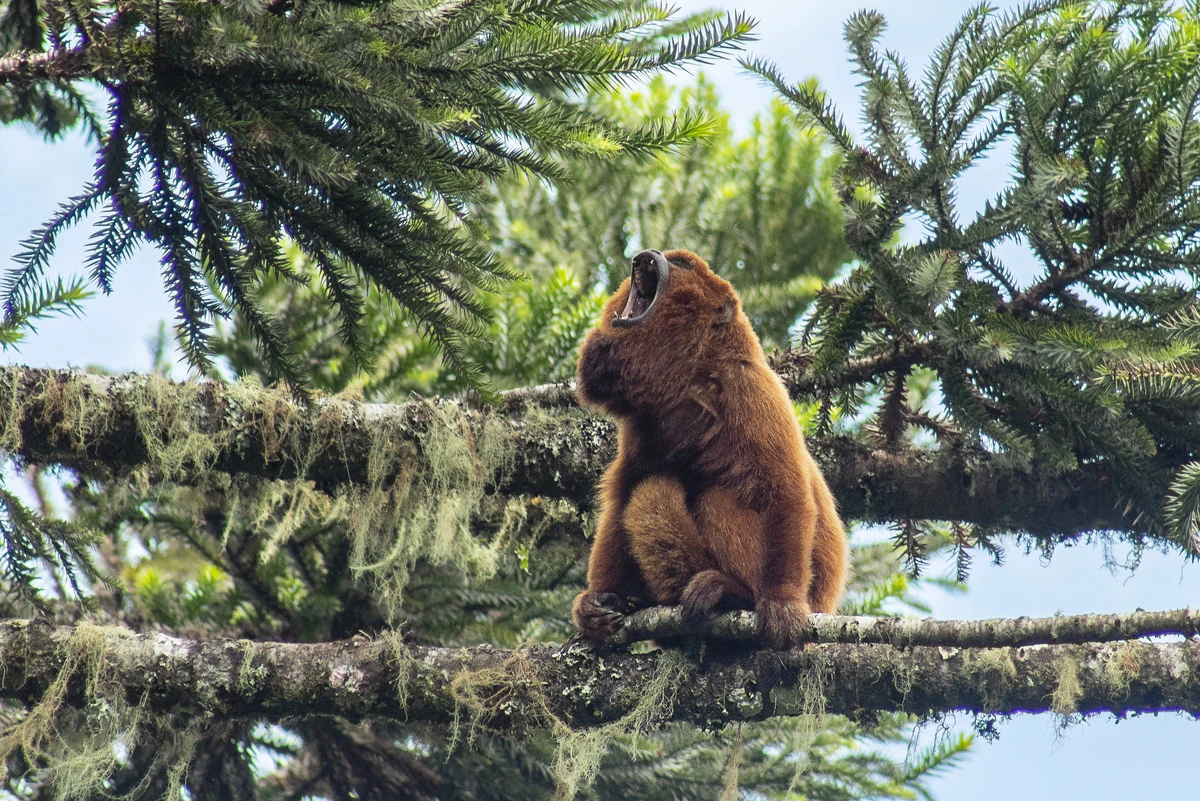
Moreover, the species differ greatly in appearance.
They're not particularly large, however—they reach no more than 70 centimeters in height and weigh no more than 10 kilograms. After all, a tail isn't a true arm; it's designed differently and has a severely limited load-bearing capacity. 12-15 kilograms is its theoretical weight limit; the tail vertebrae simply can't handle more. But look how they leap through the trees! While other medium-sized primates use their tails as rudders to help them maintain balance in difficult situations, spider monkeys have transformed their tails into a flexible and powerful arm! 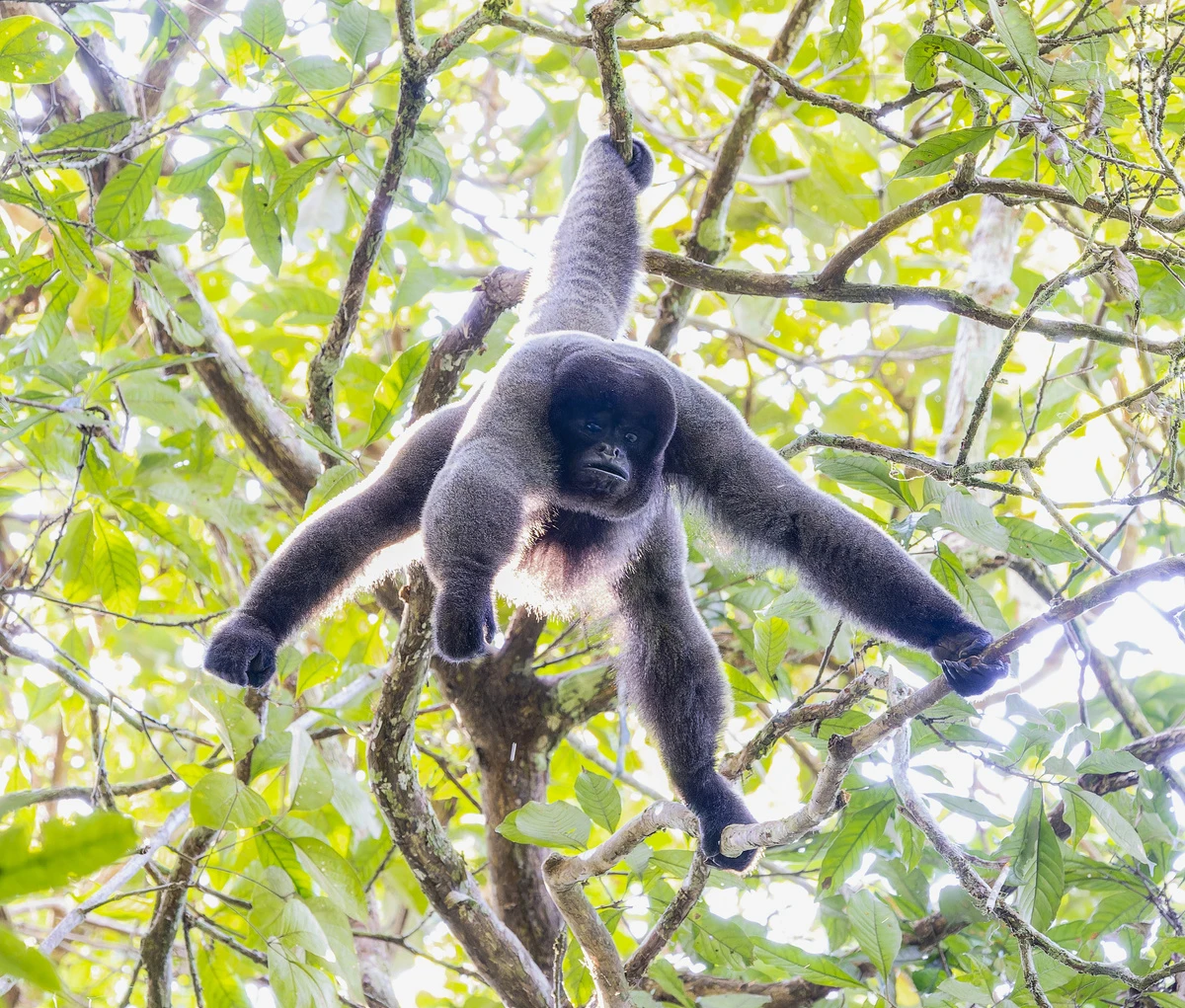
Almost an octopus. 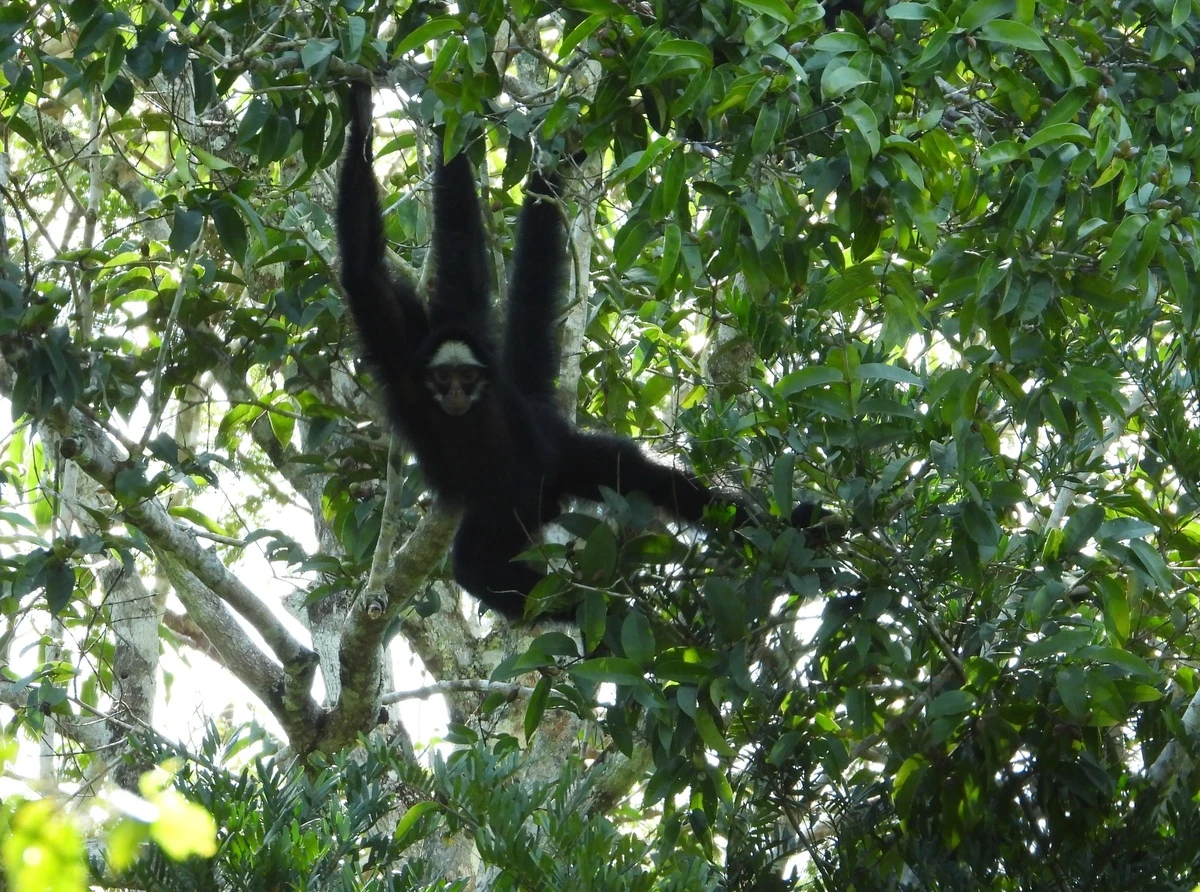
How many arms do you see in this photo?
The strength of the tail is enough not only to support the primate's weight but also to swing or catch it during a jump. This makes them perhaps the fastest and most agile tree climbers on the planet. To make climbing even more convenient, they have grown a hairless callus on the tip of their tail, providing excellent traction. Now these monkeys resemble spiders, deftly climbing trees with their many legs. 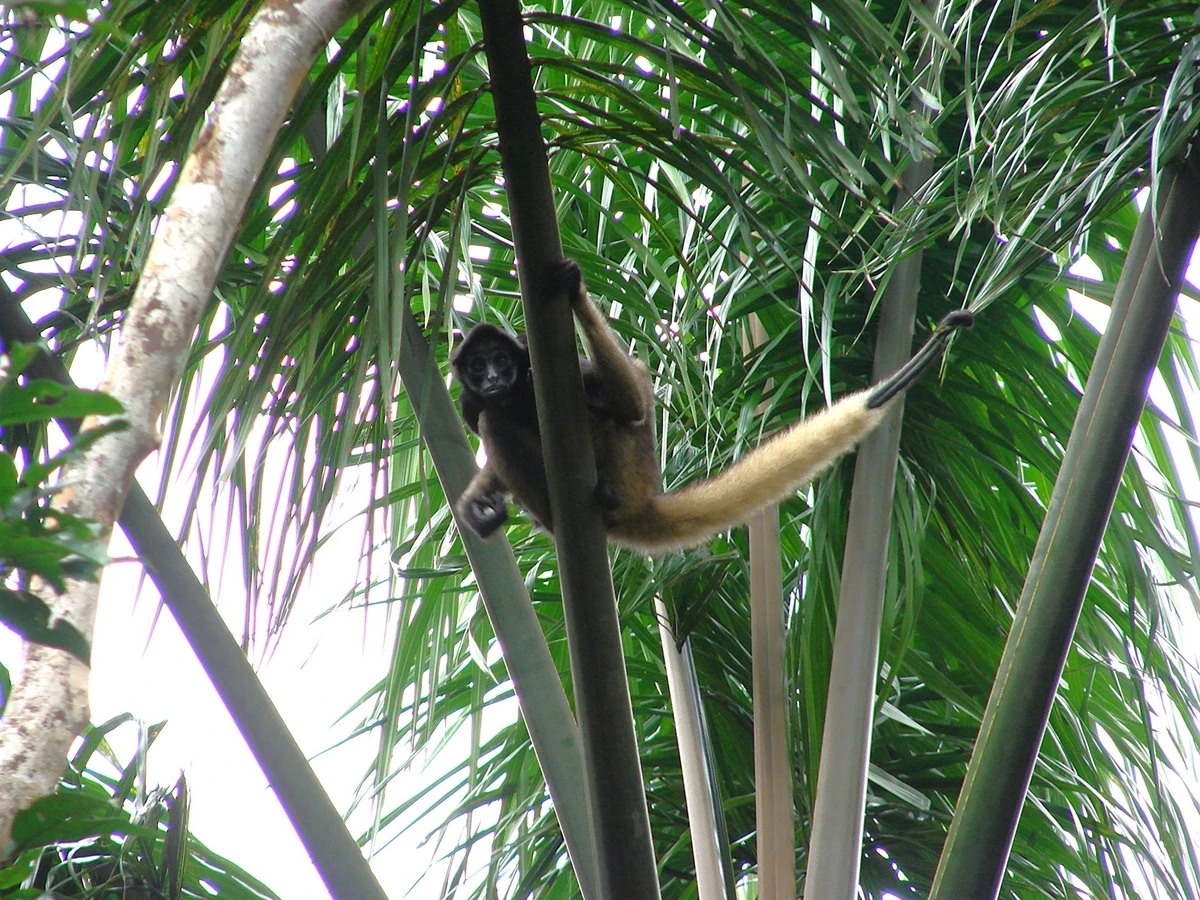
In this photo, you can see a callus for traction. They even have a "palm" on their tail!
Yet, they sometimes manage to fall out of trees right into the clutches of jaguars. It's not that they lack coordination or agility; they just need to drink less! Spider monkeys' diet consists exclusively of fruit. The only meat they eat is the meat that hasn't crawled out of the fruit while they're eating it. 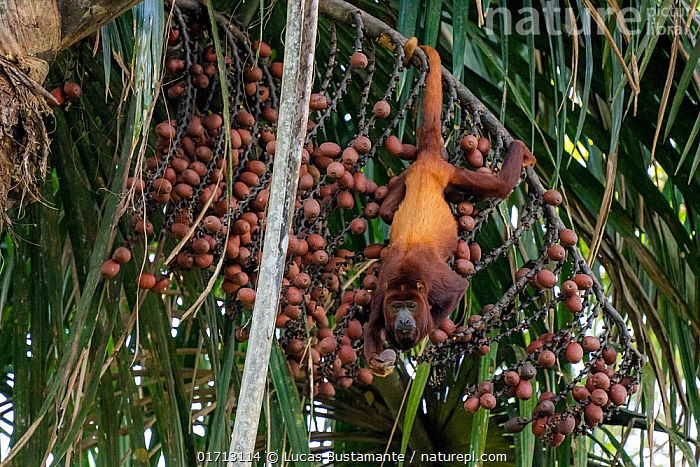
Mother: Eat properly at the table! Meanwhile, the child:
But sweet fruits tend to ferment. And the closer to the end of the fruiting season, the more alcohol they contain. Right at the end, the monkeys get the intoxicating fruits with the fermented mash inside—the ethanol content can reach 7%! And although primates can break down alcohol, converting it into calories, their tolerance to ethanol is no better than humans'. Therefore, they can get drunk to the point of losing coordination, vomiting, and a severe hangover the next day. 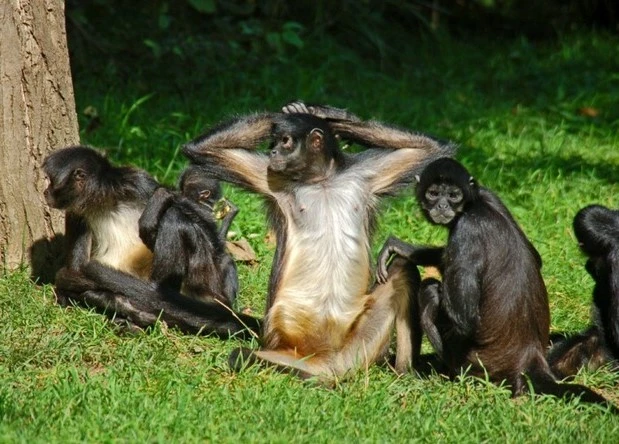
When will Stasyan show up with the booze?
Spider monkeys live in groups of up to 25 adults each. But if the group grows, there may be several males, and they maintain their own hierarchy, separate from the females. The group spends most of its time apart, breaking up into small groups based on common interests. This makes it easier to find food and avoid predators such as jaguars, harpy eagles, and crested eagles. 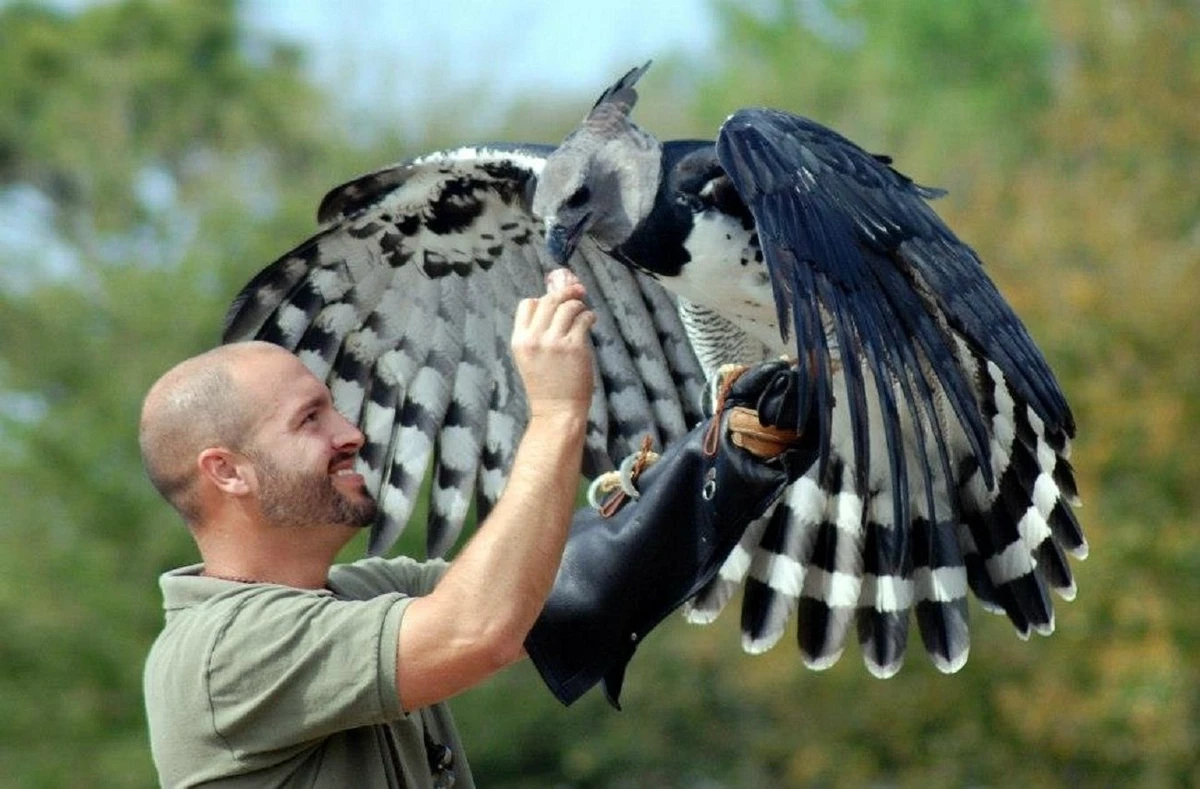
The harpy eagle is the spider monkeys' main natural predator. It rivals them in size and surpasses them in physical strength.
But every evening, or before moving to a new forest area, the monkeys gather together to socialize, build social bonds, and, of course, play! Spider monkeys love to play; even adult primates spend up to 18% of their day playing. They even have a special playful facial expression—something like our sincere smile. And this is how these little tailed monkeys are so similar to humans! 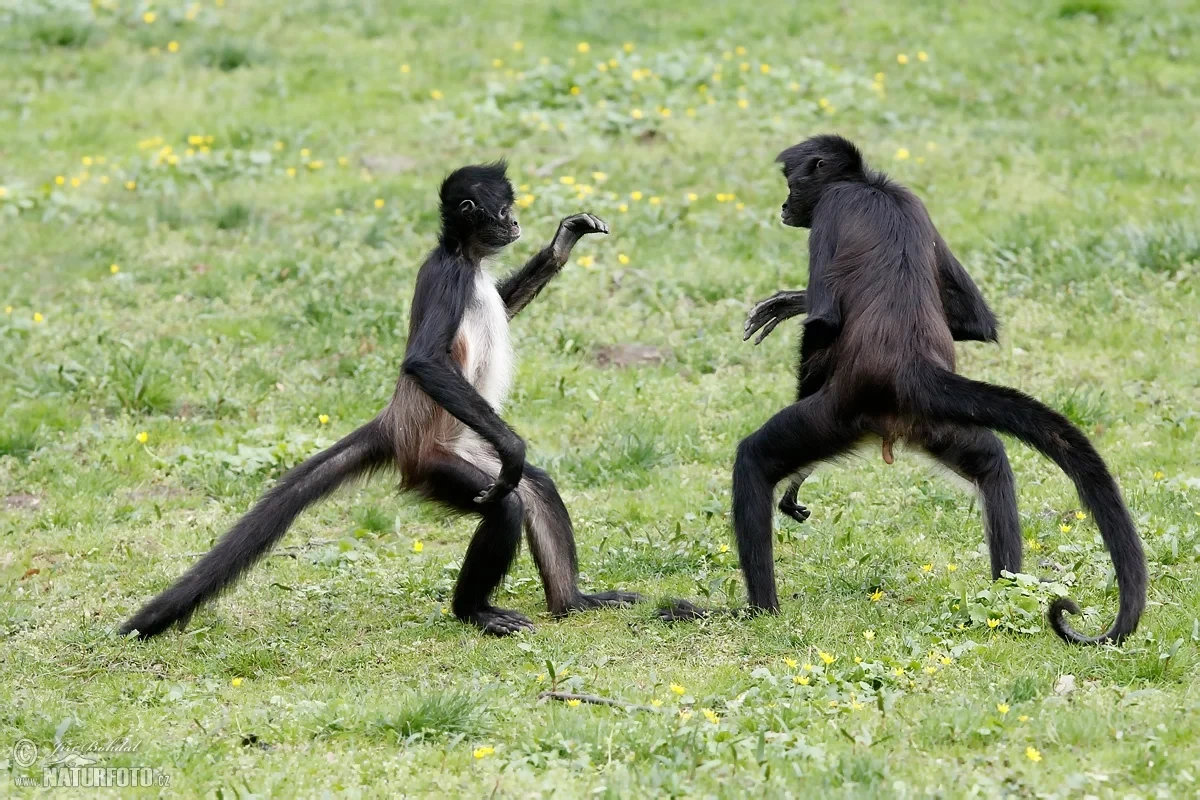
Hurray, catch-up! 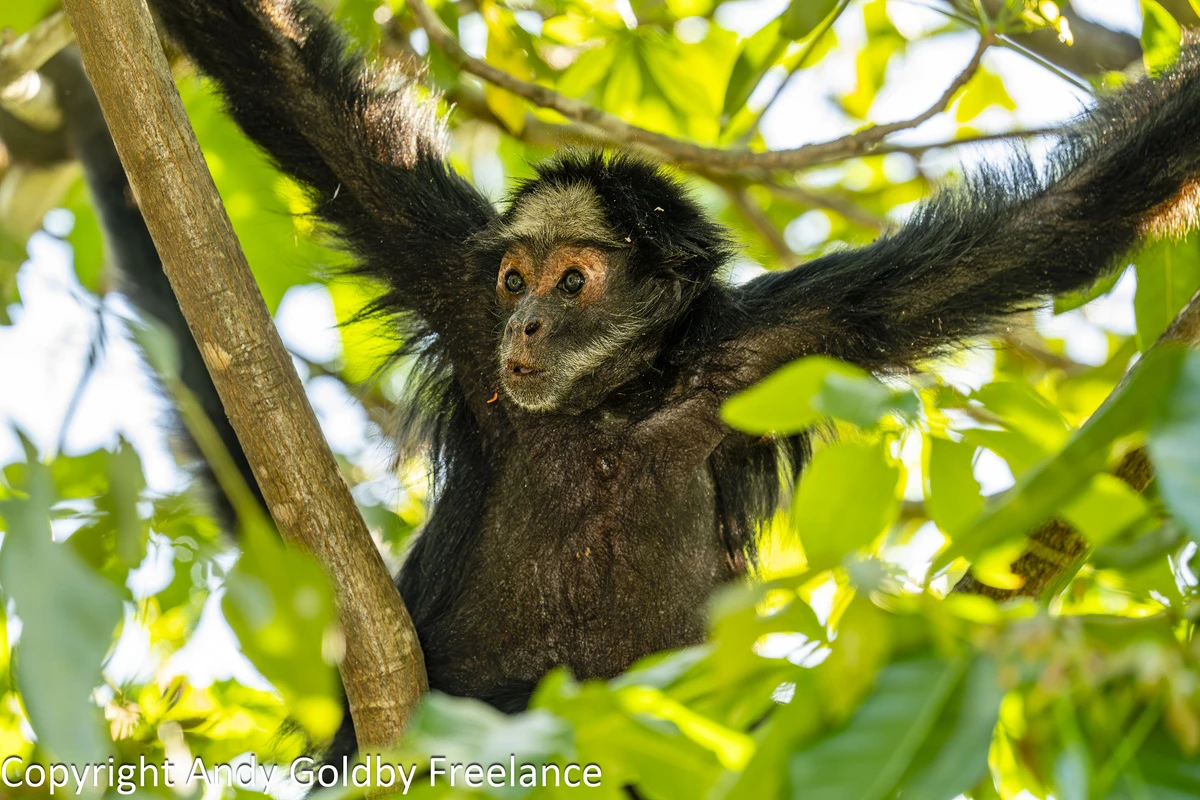
I guess everyone has a drunken neighbor like that :D