5 facts about cows: they persecute the weak, mass cloning (13 photos)
We're all familiar with cows. We spend our entire lives eating their meat, drinking their milk, and considering them such an integral and routine part of our lives that we don't even think about them. And we're completely wrong. Now we'll share five facts that prove cows are much more complex than they seem. And let's start with the most pressing of them. 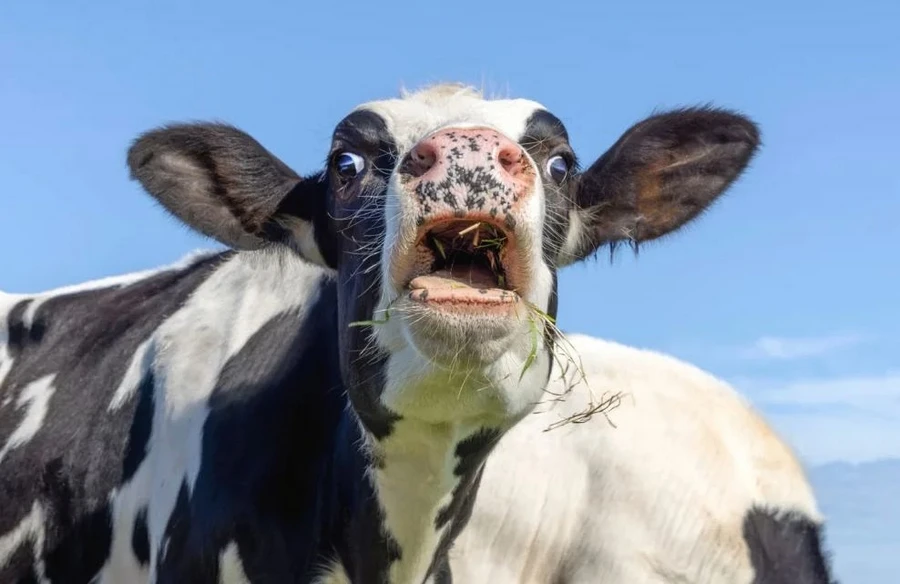
Author, keep quiet, humans shouldn't know our secrets.
Fact One: Cows Don't Eat Grass
Well, yes, they bite it off, chew it, and swallow it—that's a fact, and arguing with it is utterly foolish. But it's not cows that eat grass; it's entirely different organisms. After a short journey down the esophagus, the green stuff enters the first two sections of the stomach—the rumen and the reticulum. And these are simply enormous—they occupy 85% of a cow's stomach, which has a capacity of approximately 150 liters. But the main thing about them isn't their volume, but the amazingly complex microscopic ecosystem they house. 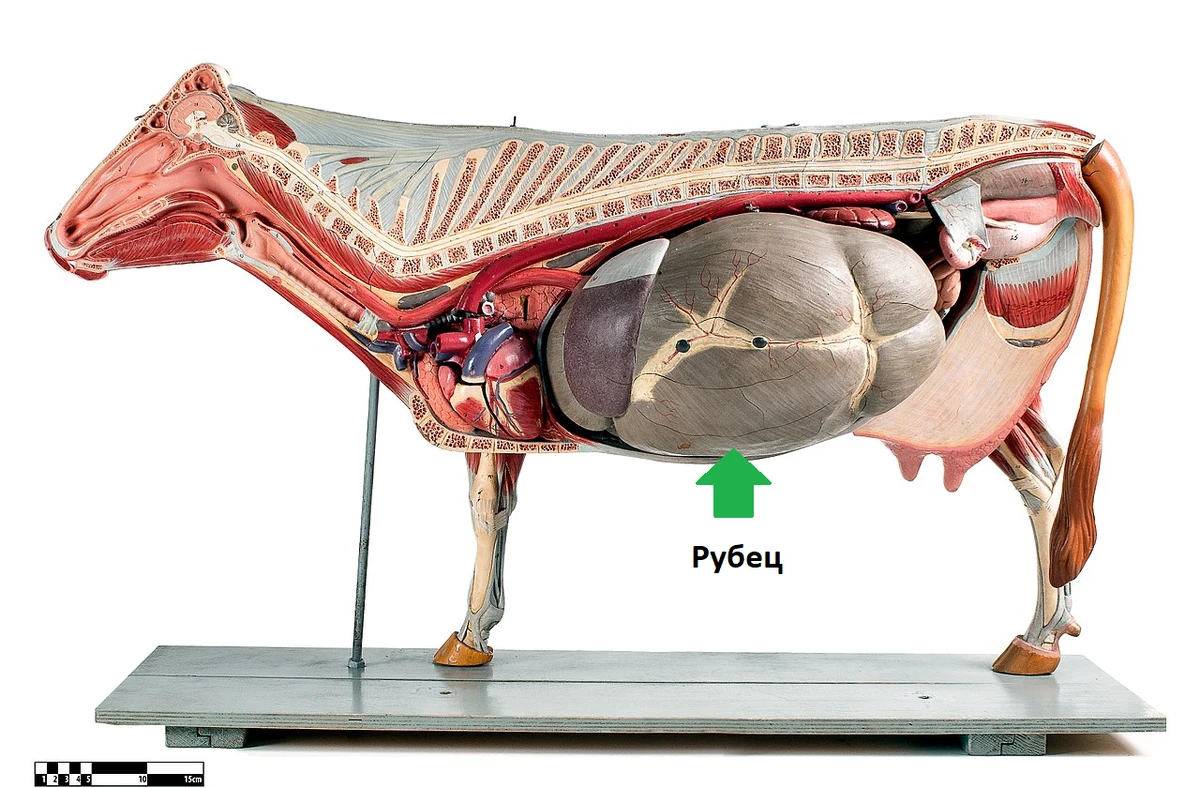
If you're wondering, "Can a human fit into a cow's stomach?" the answer is yes, they can.
Hundreds of species of bacteria and fungi tirelessly process the food they ingest. These, in turn, feed single-celled animals—amoebas, ciliates, and even more unusual creatures. What's more, they even have their own viruses, which you won't find "on the street"! 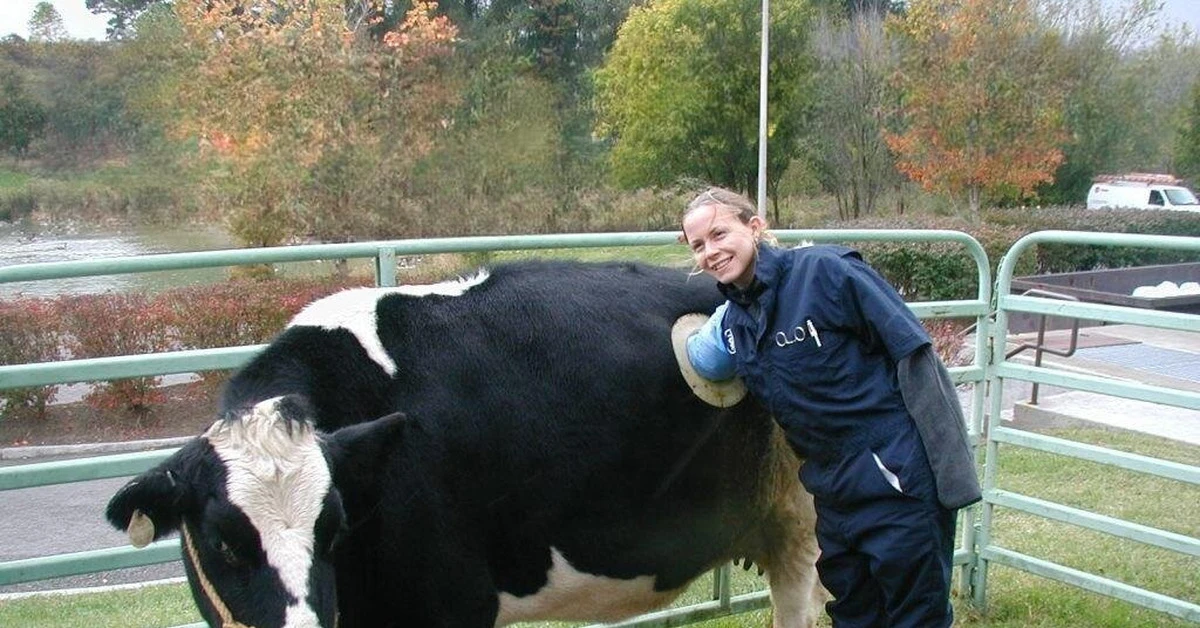
If a cow has digestive problems or needs to have her microflora regularly analyzed, a fistula—a special opening leading directly to the rumen—is cut into her.
And all this single-celled diversity gradually breaks down cellulose, converting it into simple nutrients and thereby increasing its biomass. Excess bacterial biomass then passes into the next sections of the gastrointestinal tract, where it is safely digested by the cow's own enzymes. So, the cow feeds on microorganisms. In fact, the cow doesn't digest grass directly, but rather the microbial biomass and their metabolic products (volatile fatty acids). Essentially, the cow has a personal bacterial bioreactor inside, which it feeds with greens to extract all the benefits!
Fact two: Cows have been with us for a VERY long time.
Unlike cats and dogs, whose origins and domestication are still not fully understood, we have figured out the origins of cows surprisingly quickly. They are descendants of wild aurochs, which inhabited somewhere in Egypt or Mesopotamia 11,000 years ago. And even then, they began to be domesticated by humans. 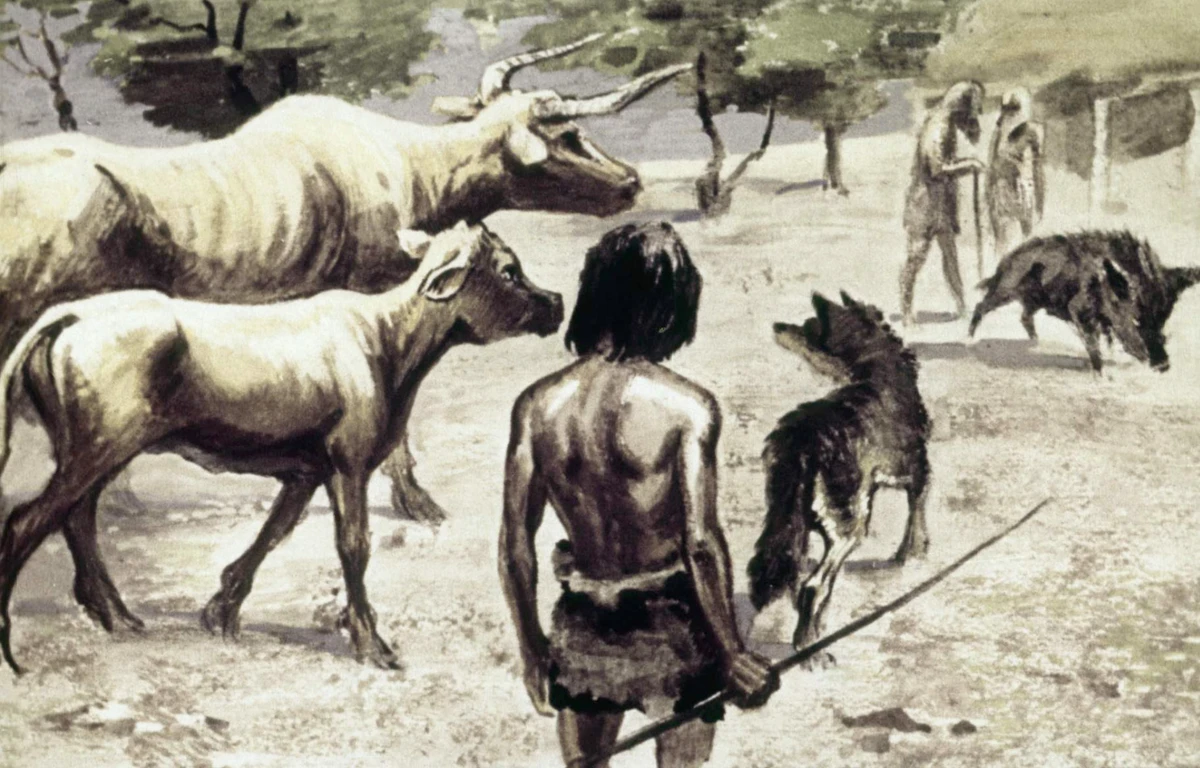
Wages hadn't even been invented yet, and we already had to work!
Just so you understand, 11,000 years ago, people were still stuck in the Stone Age. Yes, we had already mastered sewing and ceramics, but that was where the wonders of human thought ended. No ancient empires existed yet. The first cities were just emerging, which by our standards wouldn't even be called villages. However, shepherds with cows were already roaming the fields around them! 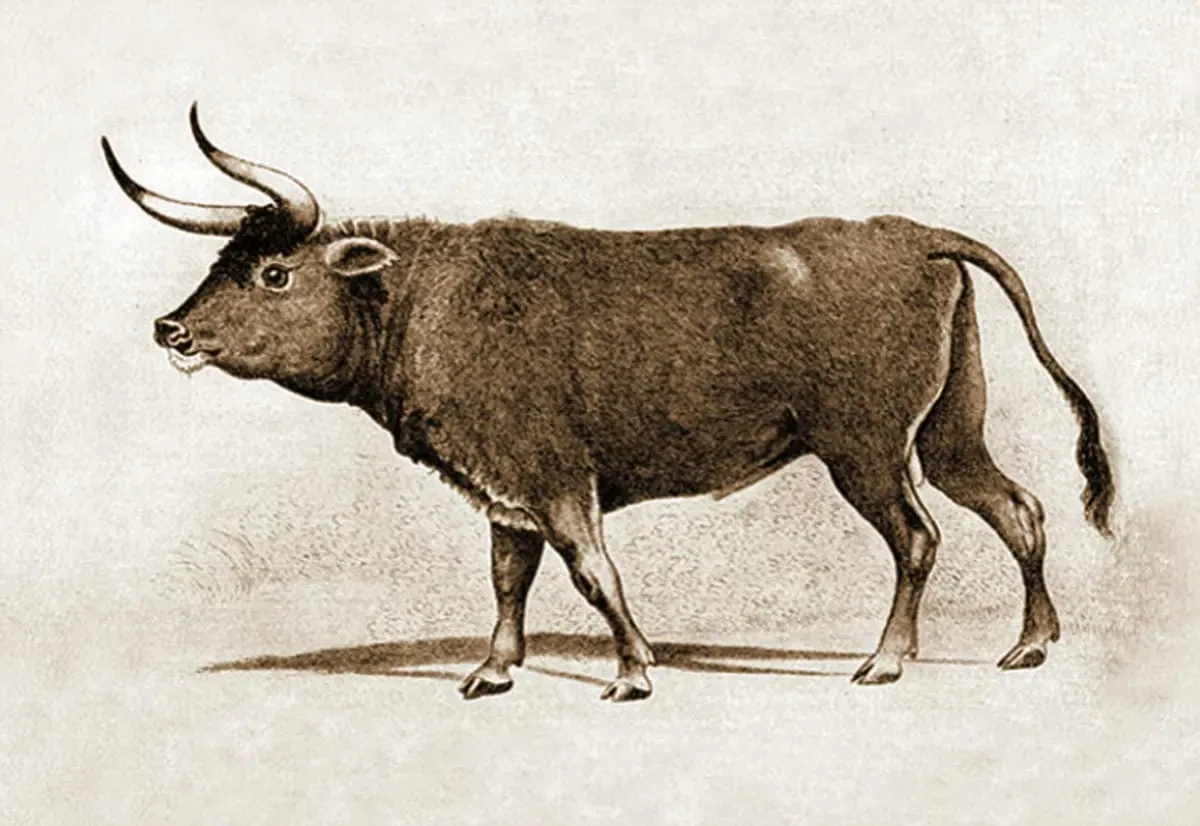
The aurochs looked something like this. Unfortunately, they became extinct several centuries ago. Their weight never exceeded 800 kg. 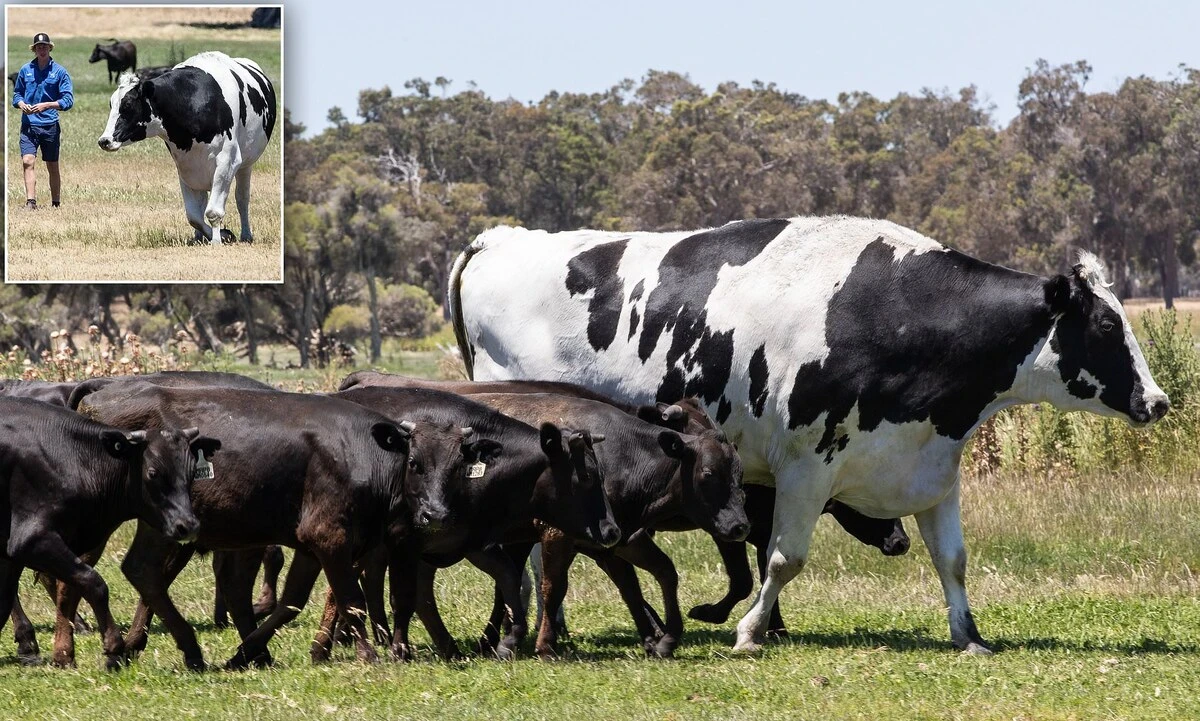
In 2018, photos of a giant cow from Australia exploded online. The photo is real. This bull miraculously grew to a height of 2 meters at the withers and a weight of 1,400 kg, making it a record holder.
Fact three: Cows are strong together!
Subconsciously, we don't expect any organization from cows. After all, they're literally a herd fit only for eating grass and reproducing. Moreover, for the last 100-odd centuries, they've been doing so under human tutelage. Under such conditions, organization is neither meaningful nor beneficial. And yet, it exists. Regardless of the size of a cow herd, it always has the same structure. 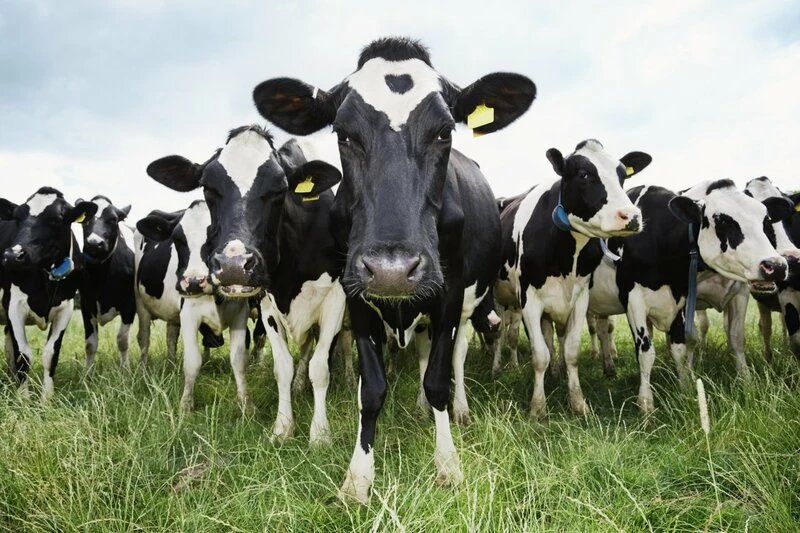
It's immediately obvious who's in charge!
At the head of the herd stands the dominant female: the most brazen, experienced, and strongest cow. She is the one who chooses the route for the herd, secures the best bedding areas, and eats the tastiest grass. Immediately behind her are several subdominant cows, also incredibly bold and self-assured. These cows constantly squabble and bully each other to get as close to the throne as possible. And to replace the dominant cow if she weakens or dies. 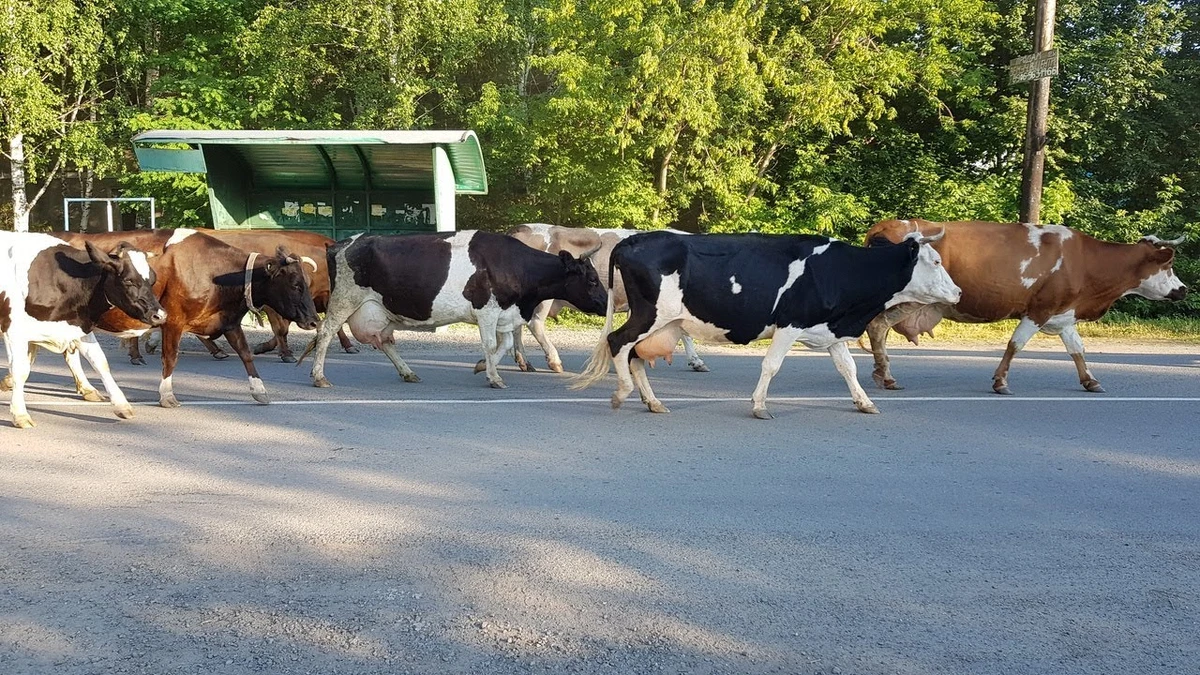
7 kilometers down the highway, then turn left and there's grass that'll blow your mind!
Next in line are the middle-of-the-pack cows. These are calm and non-confrontational individuals who are content with their position in the pecking order. But they won't let anyone bully them either. And then, at the back of the herd, there are the outsiders, bullied even by the calm and non-confrontational cows. This layer consists of cows who lack the strength or courage to respond to aggression, so they are often driven away from food, not even given the chance to satisfy their hunger. The life of an outcast is hard, no matter what you say. 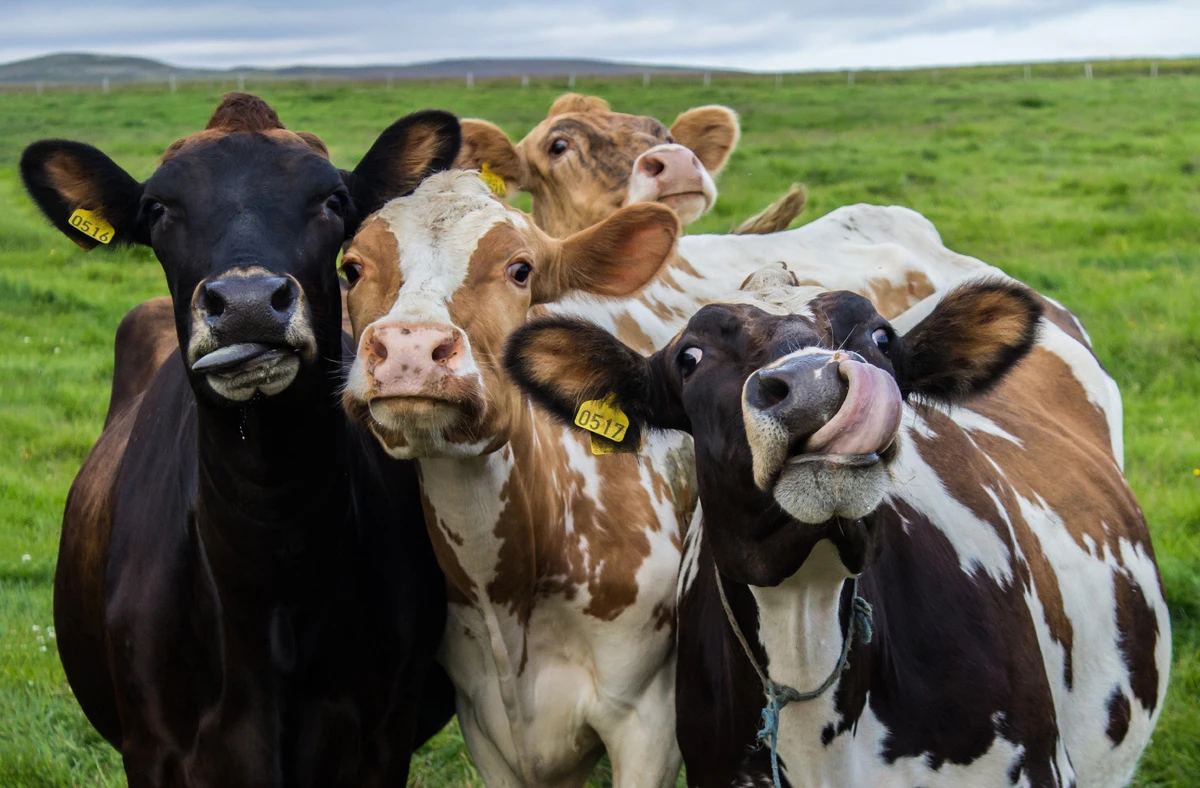
While they're fighting for power in the herd, we can afford to be fools!
Hierarchical position affects not only the cow herself, but also her reproduction. The higher the female's position in the pecking order, the sooner she will find herself in the tight embrace of a male bull, and the higher up the social ladder her offspring will be. For about the first six months of life, a male's status in the herd is automatically equal to that of its mother, so the daughter of an older cow will be overlooked when making connections, while an outsider girl will be shoved in the ribs and chased away. The hierarchical structure is so important to cows that it has not weakened at all under the pressure of human selection. Experiments show that even if a completely new herd of cows unfamiliar with each other is assembled, they will establish a new hierarchy in just half an hour! 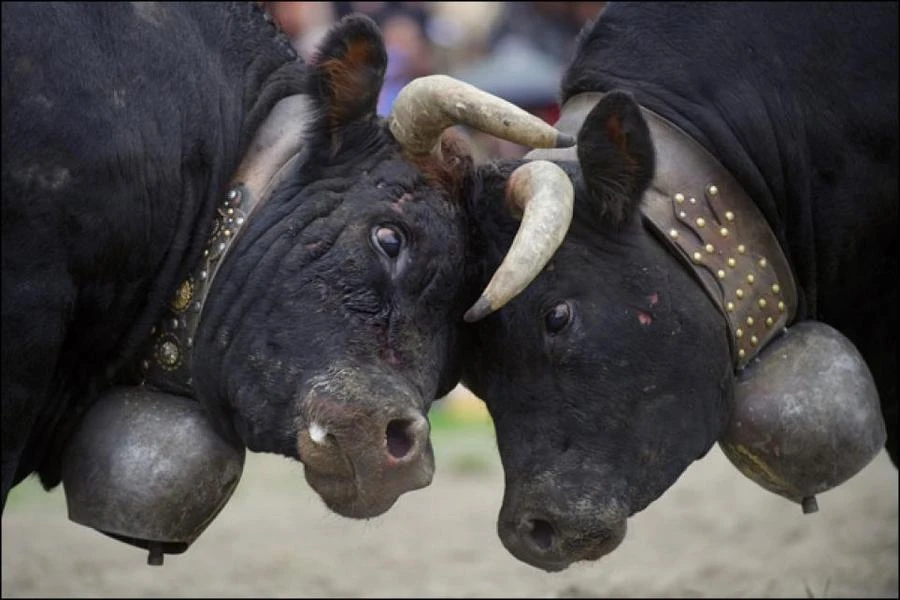
By the way, bulls also have their own hierarchy, independent of the cows'. If there are several bulls in a herd, the lead bull covers the dominant female and her lackeys, and the others sort things out on their own.
Fact Four: A Memory Worth Being Proud Of
Of course, to remember everyone's place in a huge herd of 50-100 animals, cows need an excellent memory, sometimes on par with humans. That's why they can navigate a complex maze even six weeks after their last training session. They remember the faces and personalities of people who interact with them, and they remember affection shown to them for at least six months! But if you consciously train cows, you'll quickly discover that they learn commands just as well as horses and remember them for up to a year! 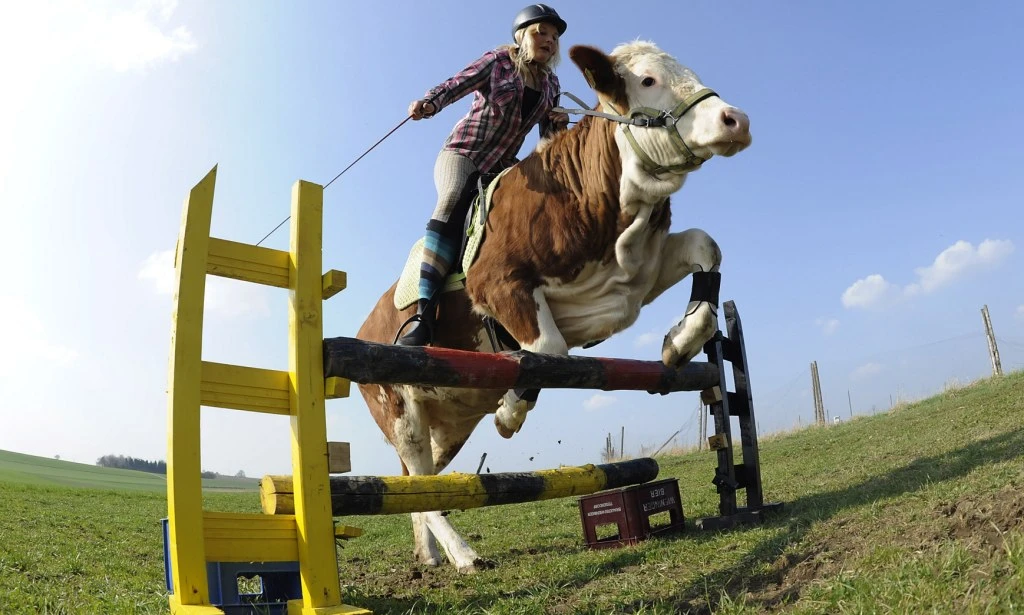
Go ahead, horsey! 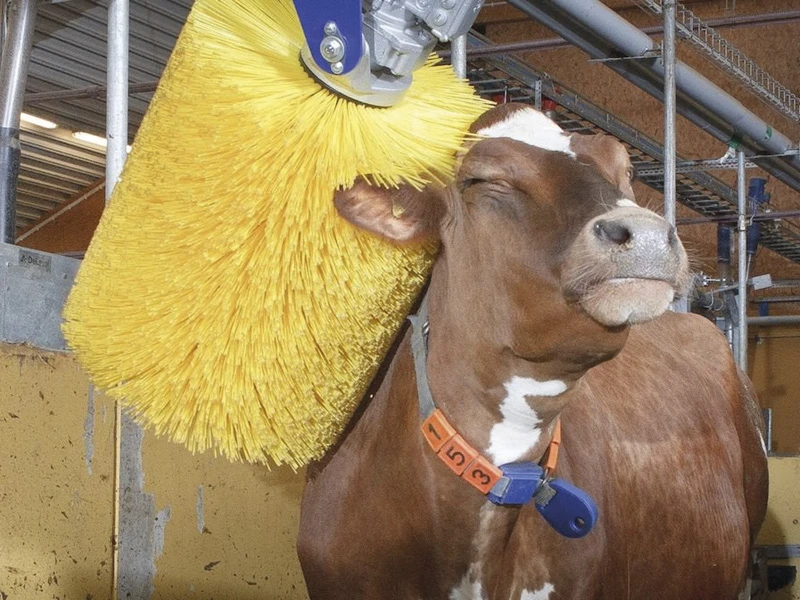
I'll give you such a good combing that you'll remember me forever!
Fact Five: Clones, clones, clones...
Cows are also surprisingly common test subjects in cloning experiments. Which, actually, is quite logical. After all, cows are one of the most studied animals on earth, and artificial insemination has long been a proven process. All embryologists have to do is, instead of inseminating a cow, implant a lab-grown cloned embryo. Then nature will do the rest. However, creating the embryo itself is still a challenge. 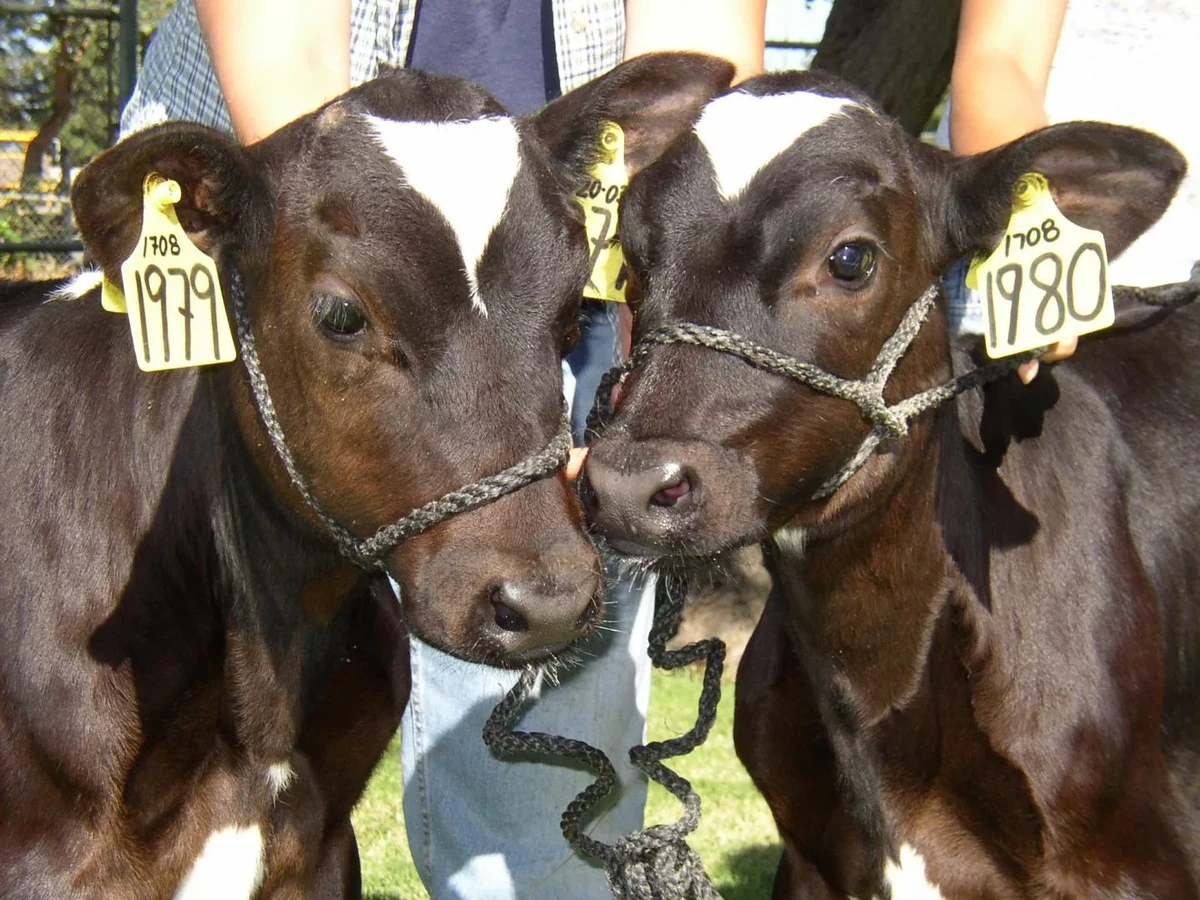
Oddly enough, not every cloned cow looks the same. The unique characteristics of embryonic development, unique to each individual, are to blame.
This technology isn't just of interest to geneticists and embryologists. It could also be useful to us in the near future. After all, if you have a cow with exceptional milk yields, why not breed her into a whole herd?