An old clock with a new character: the story of one landmark (13 photos + 1 video)
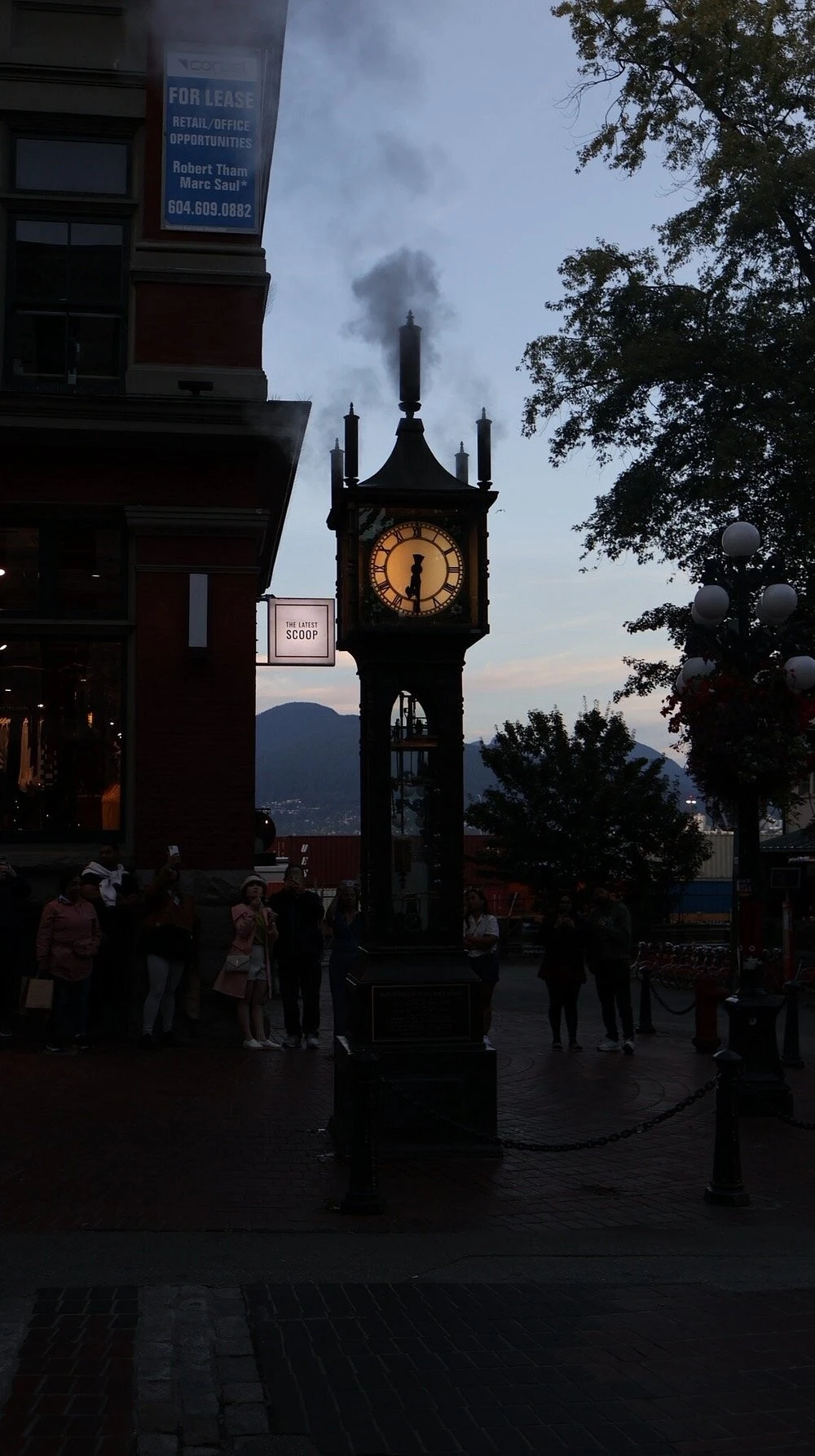
In the heart of the historic Gastown district, near Vancouver's waterfront, stands a mechanism that invariably draws crowds of onlookers. It's a steam clock. 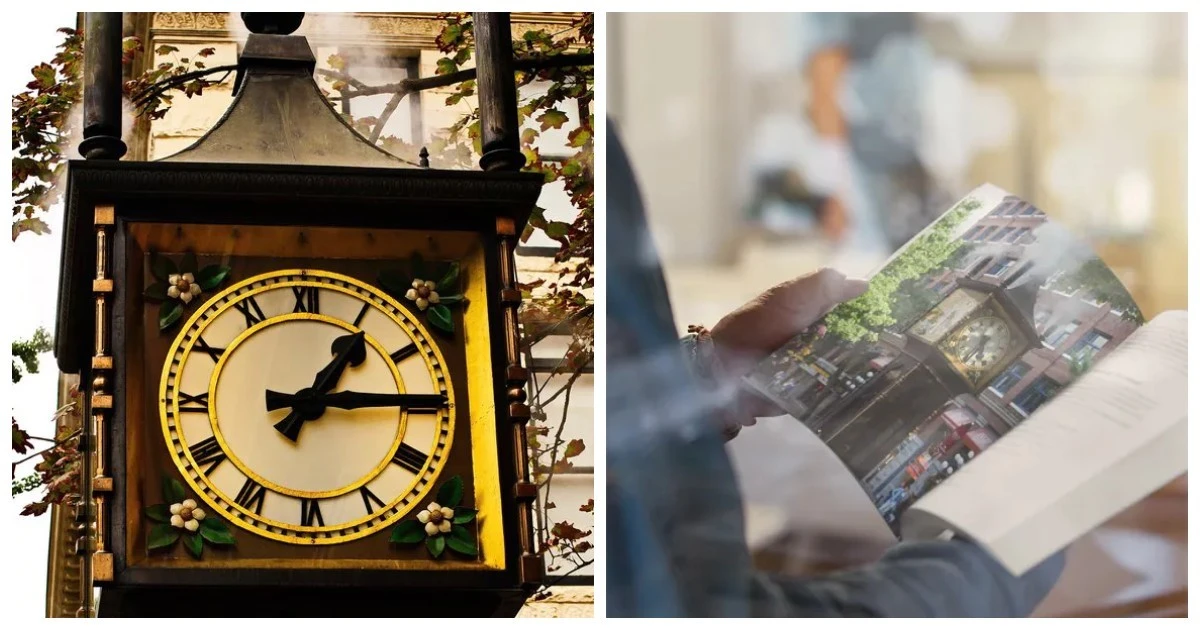
The five-meter-tall, four-faced giant chimes every quarter hour, while plumes of steam billow from its top, like a locomotive. 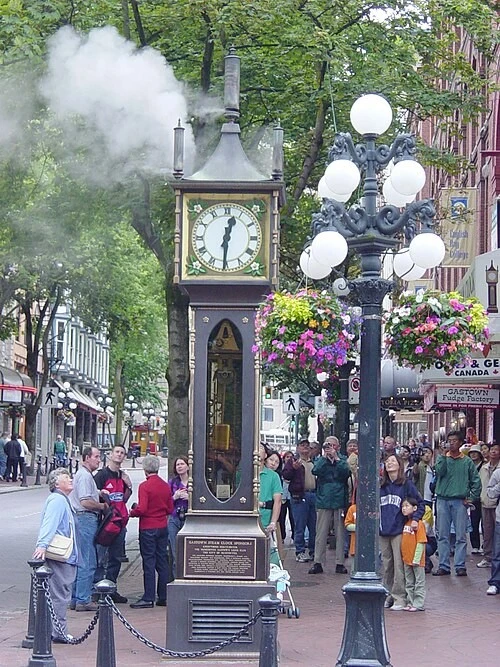
Tourists enjoy watching the steam clock
Despite its brutal exterior and archaic technology, this clock is hardly an old-timer. It was created in 1977 by Canadian watchmaker Raymond Saunders and became part of a revitalization program for the dilapidated Gastown neighborhood. 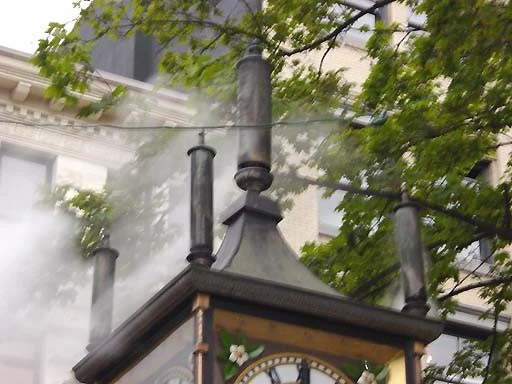
Whistles on the Clock
In the 1960s, many North American cities were building expressways that cut through residential neighborhoods and ran along waterfronts. Vancouver remained on the sidelines of this race, but local officials decided to catch up. 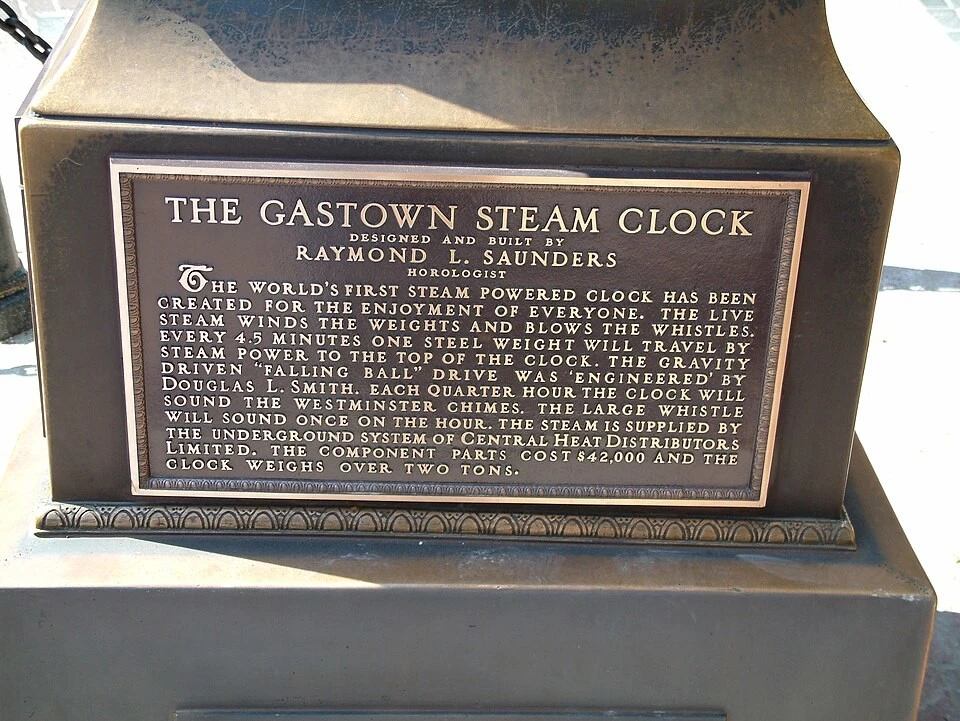
Plaque on the front of a steam clock in Vancouver's Gastown district
They planned to build a gigantic highway that would connect the Trans-Canada Highway with the Lions Gate Bridge, destroying the historic but by then marginalized neighborhoods of Strathcona, Chinatown, and Gastown along the way. 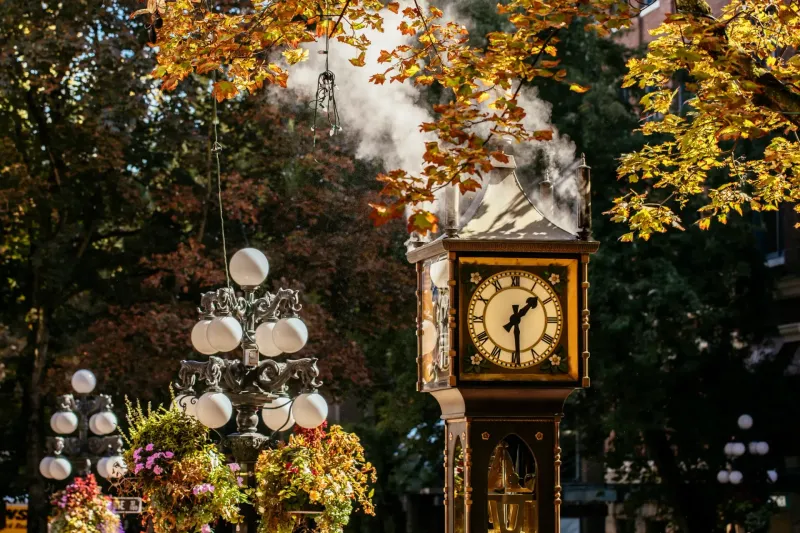
Residents of the area protested, and the construction plans were abandoned. Instead of bulldozers, restoration workers began bringing old buildings back to life. 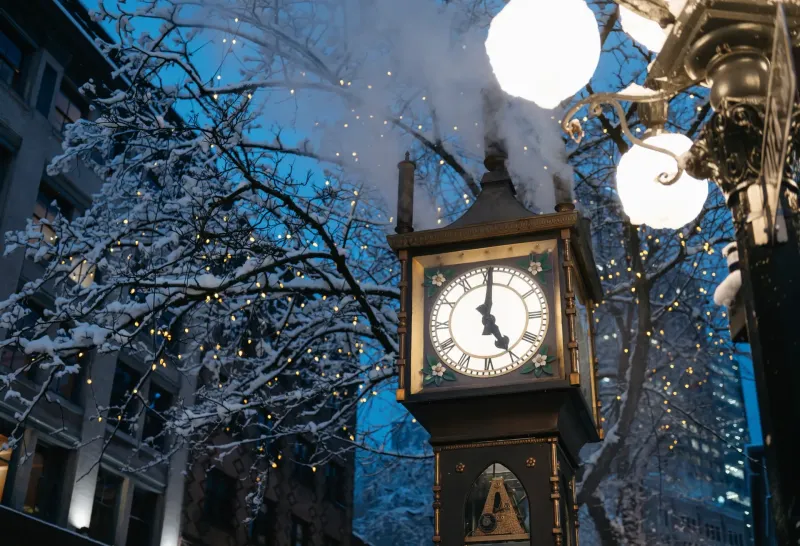
By 1977, Gastown's renewal was nearing completion, but the area still lacked a unique charm, that special draw that would keep people coming back. Local merchants and property owners pooled their funds and raised $58,000 to commission Saunders to create a clock with a hint of antiquity. 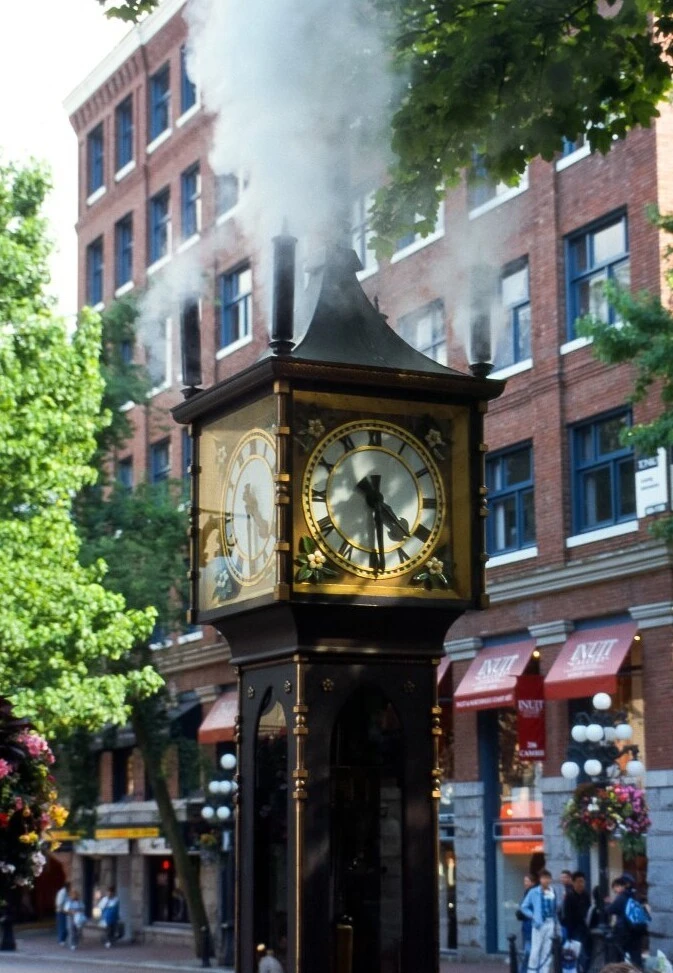
The steam theme was no accident: it alluded to the area's industrial past, where steam pipes once ran underground to power factory machinery. Thus, Gastown acquired the world's second steam clock. 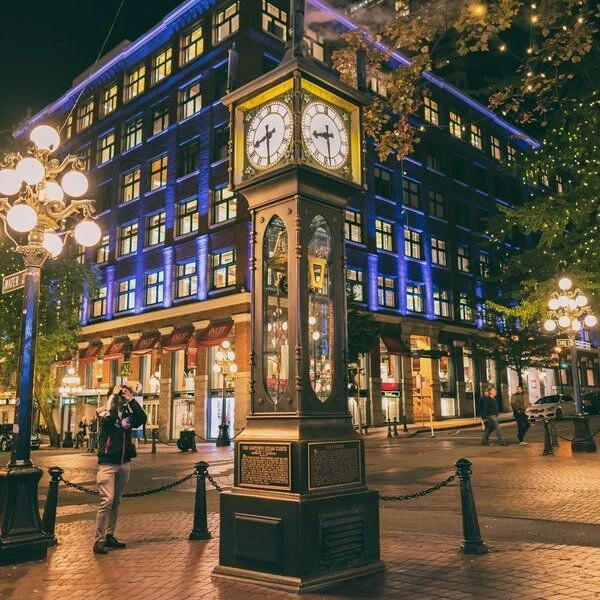
The first such mechanism was created by Englishman John Inshaw in 1859. The inventor, who had previously designed steam engines for railways and shipping, decided to attract customers to his new pub in Birmingham. 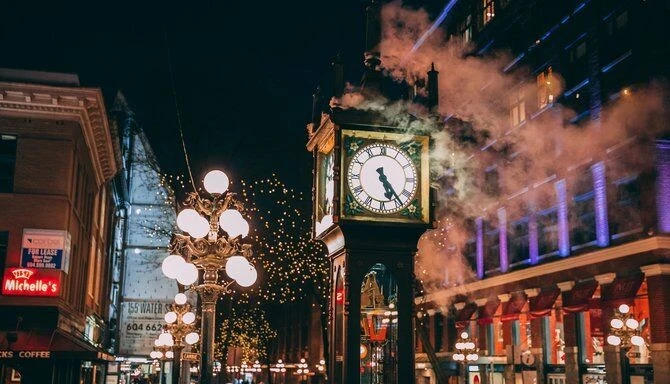
He devised a device in which steam from a small boiler condensed into droplets of water and fell at regular intervals onto a plate, driving a clockwork mechanism. A clock was installed above the entrance, and the pub was named "The Steam Clock." The establishment was so successful that by the early 1880s it had become a music hall. 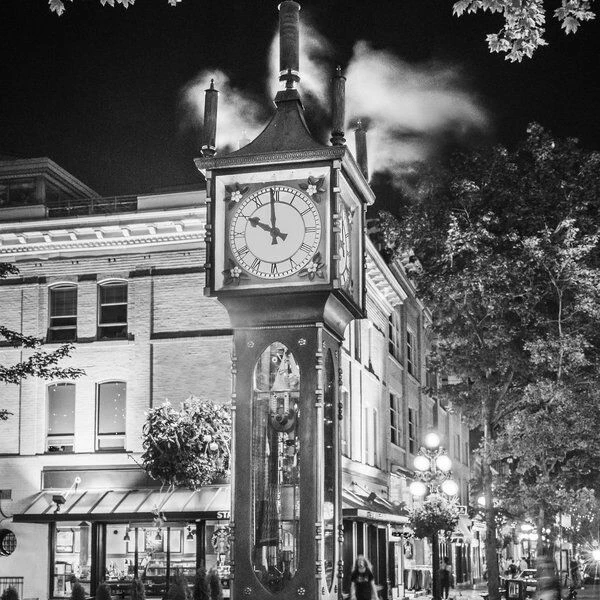
The Saunders Clock in Gastown is designed differently. In fact, its driving force isn't steam, but gravity. Inside the mechanism, steel balls descend under their own weight, driving a chain that turns the hands. A small steam engine at the base serves a different purpose: it lifts the balls back up, returning them to their original position. 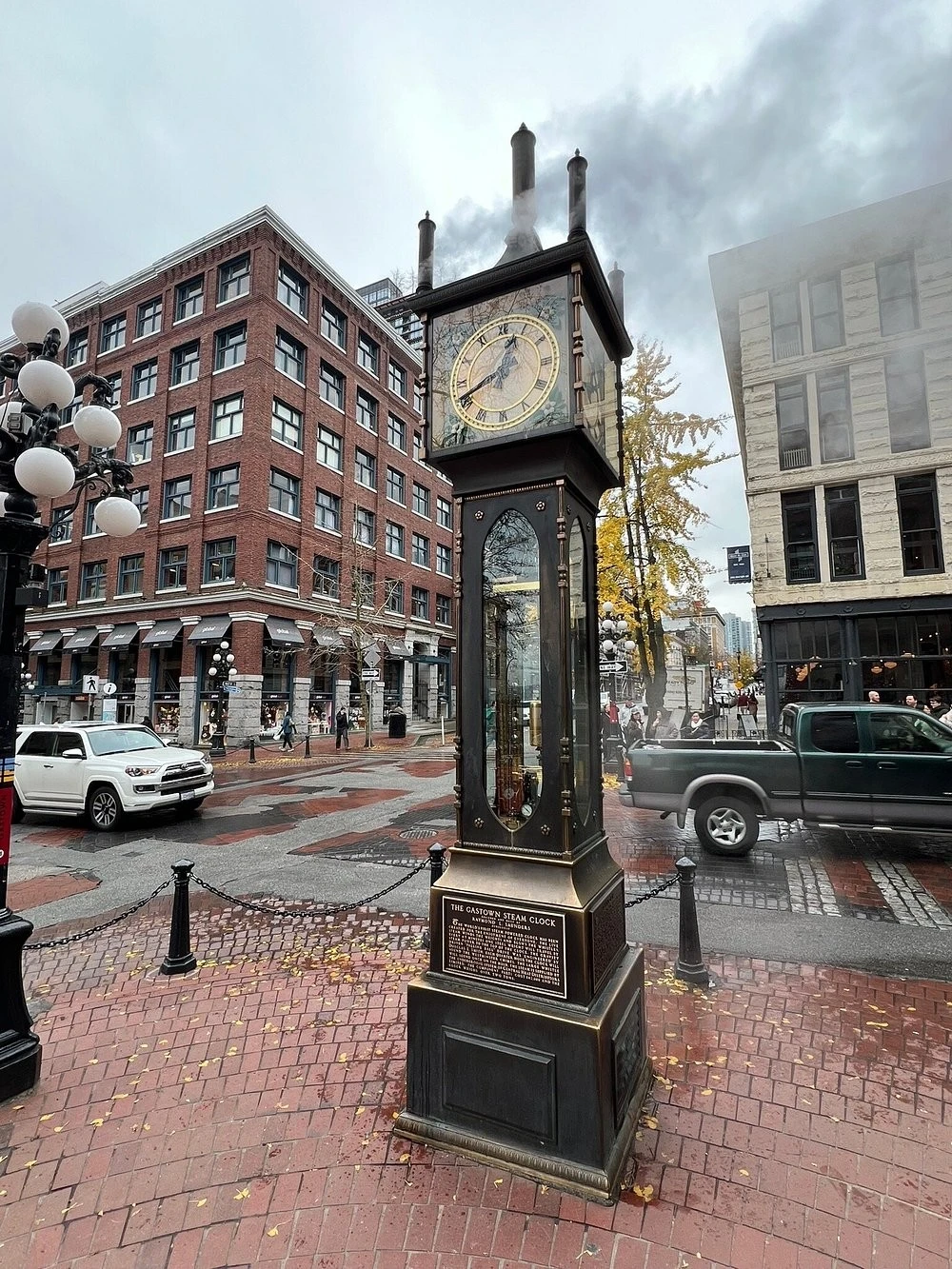
This engine also powers the whistles and, of course, the spectacular clouds of steam escaping. 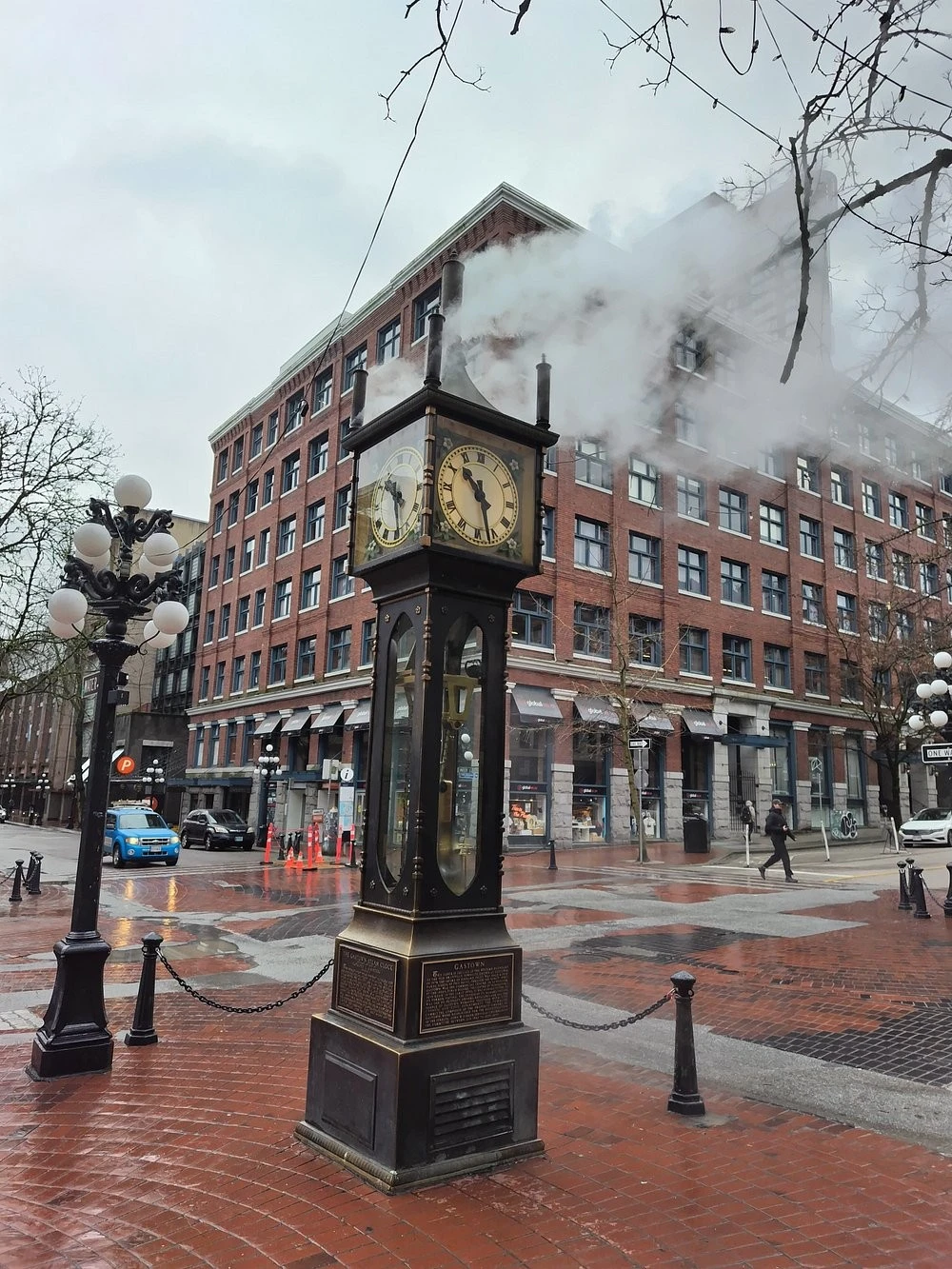
Raymond Saunders later built public steam clocks for Otaru, Japan, Indianapolis, USA, and Whistler and Port Coquitlam, Canada. Steam clocks by other makers can be found in St. Helier, Jersey, and Chelsea Market, London.