If ordinary geese had social media, they'd be all over magpie geese. After all, instead of building normal, conventional families, they're engaged in some kind of harem-like obscenity! Just imagine: there are two, sometimes even three, females for every male. And they're often sisters! 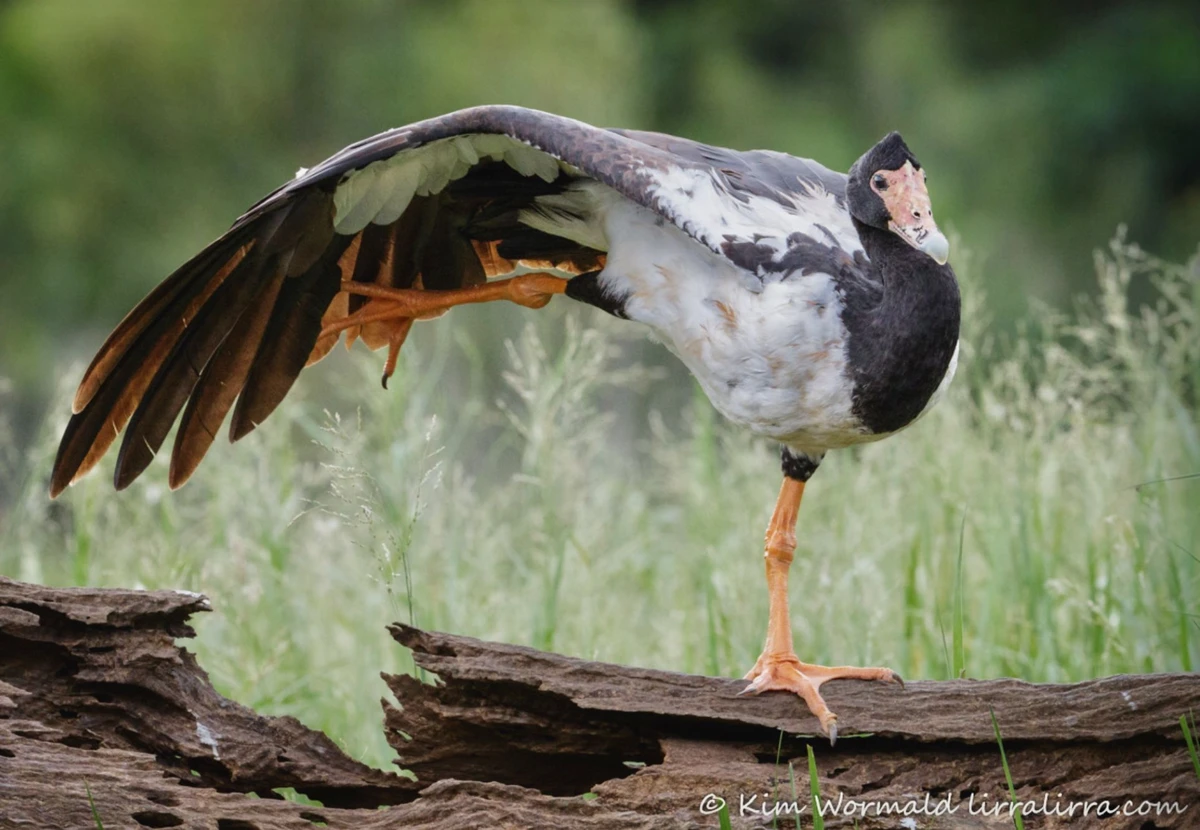
Okay, girls, I'll stretch my legs and then I'm all yours.
Strange black-and-white geese don't just create strange families. They live in noisy communities throughout Australia and southern New Guinea. Colonies of thousands of birds are found along riverbanks and in the middle of swamps, and their inhabitants scream loudly for kilometers around. And if you hear magpie geese, it's best not to approach them, as they do absolutely unacceptable things there. They sit in trees and even build nests in them, which is actually not something anseriformes are supposed to do! 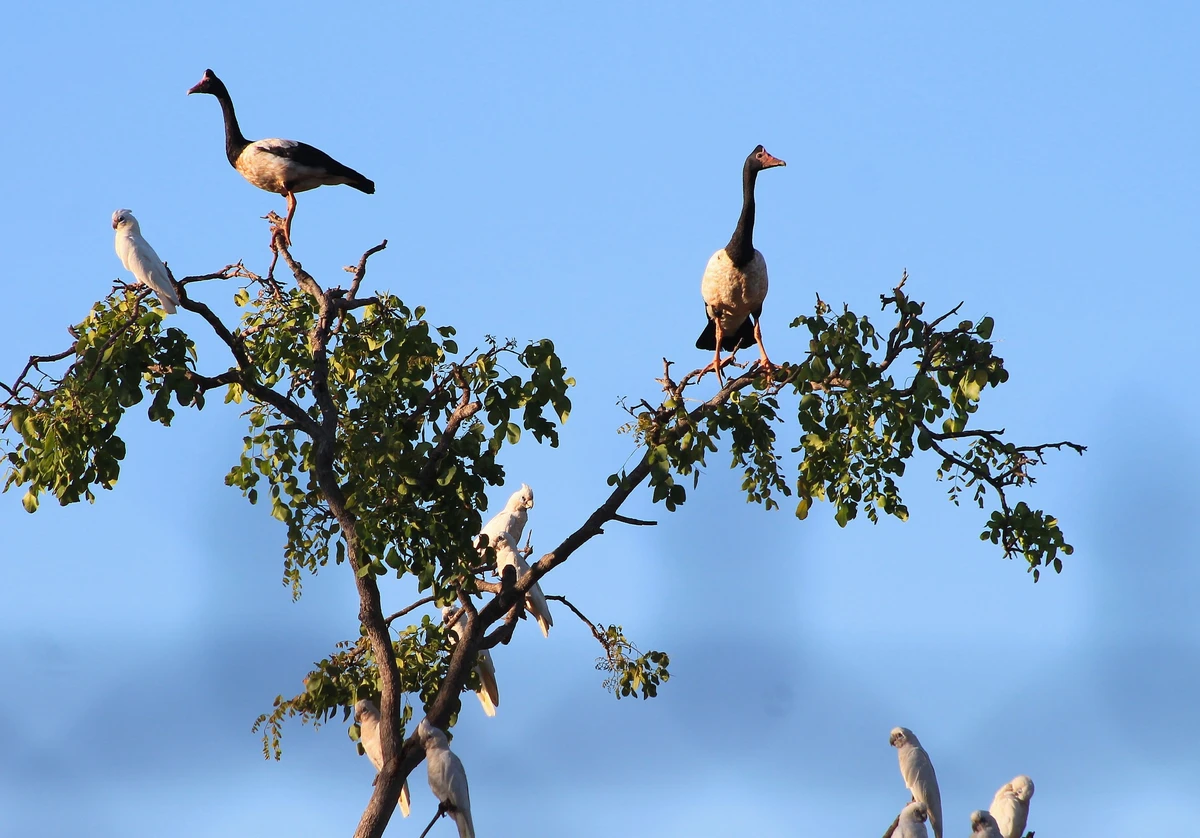
Regular geese can't sit in trees because they lack a backward-pointing toe. 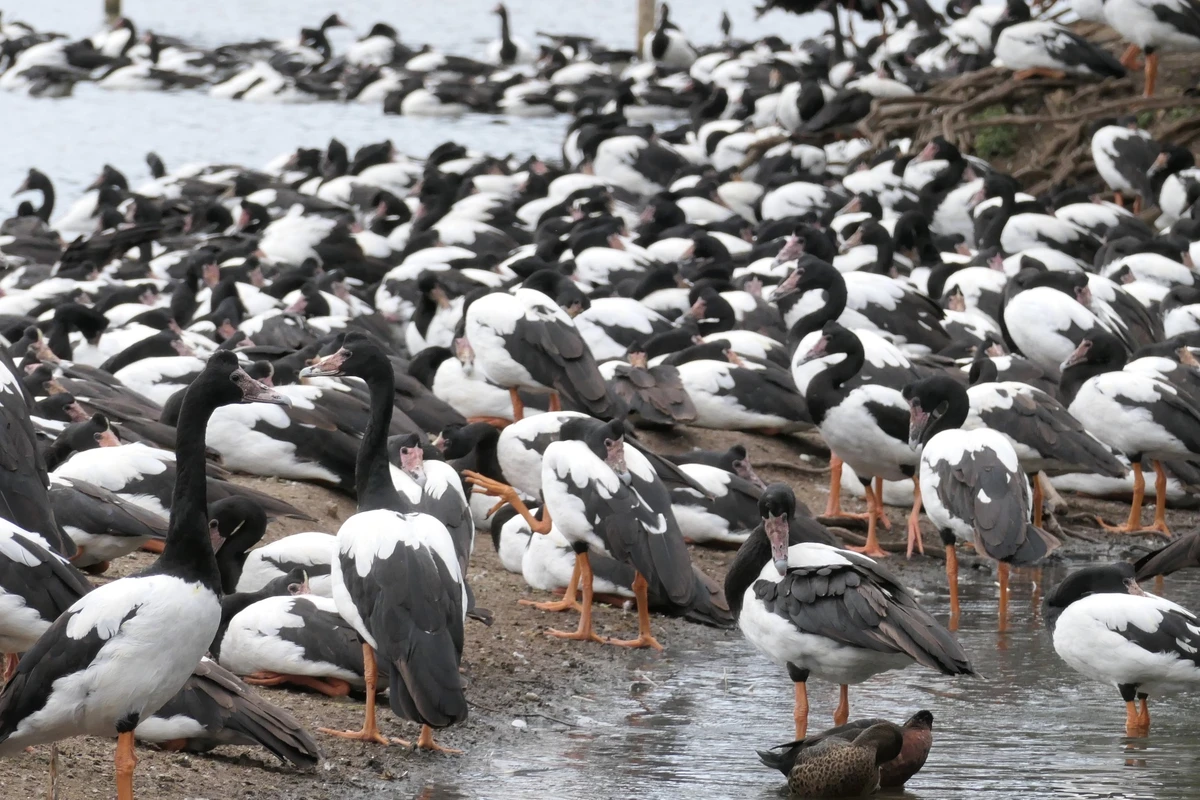
Although the magpie-goose is also an anseriform bird, its evolutionary lineage diverged from that of true geese a long time ago. About 70 million years ago. So the "goose" in the name is more of a superficial impression than an indication of close kinship. It's a kind of "living fossil" among the Anseriformes.
But if you look at their dubious families with a more sober eye and without imposing human morality, geese are surprisingly doing well. They don't differentiate between their own and strangers' children and care for them equally. Although the male builds the nest alone, other responsibilities are divided equally between the parents. 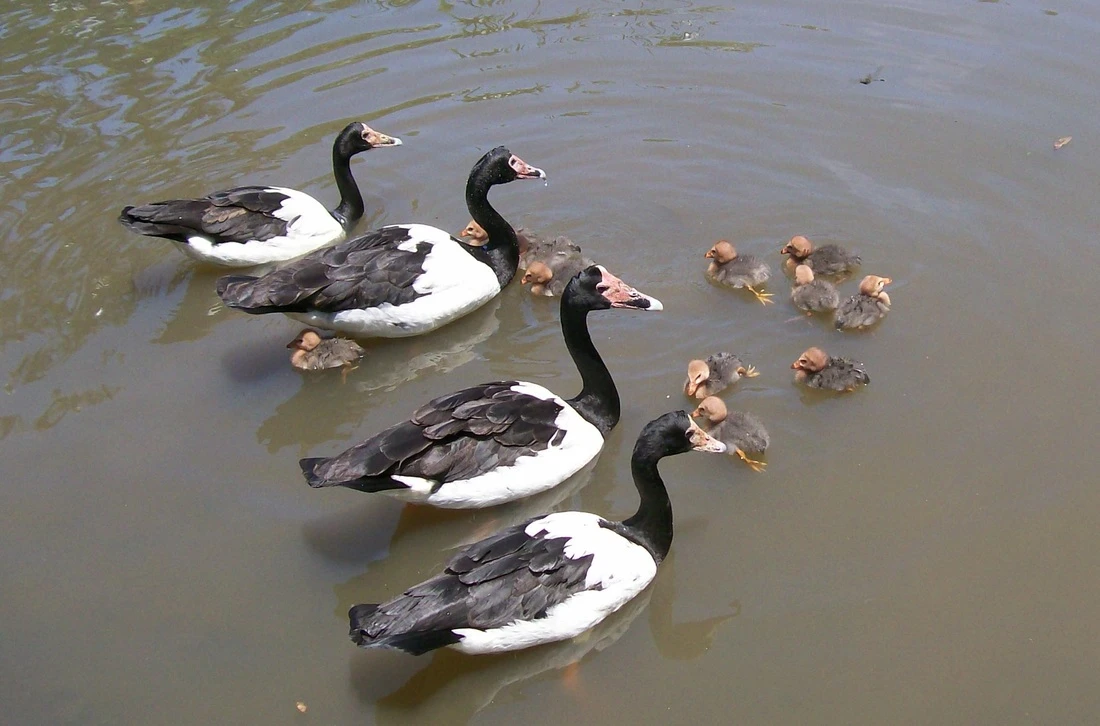
Mom, Mom, Mom, Dad, I'm a happy family!
While one parent sits on the nest or watches over the babies, the others fly around foraging for food: stems of aquatic plants, grain seeds, and other relatively high-calorie greens. In the arid regions of Australia, they sometimes have to fly several kilometers from home. And in this case, the more parents there are, the more time each individual can spend searching for food. 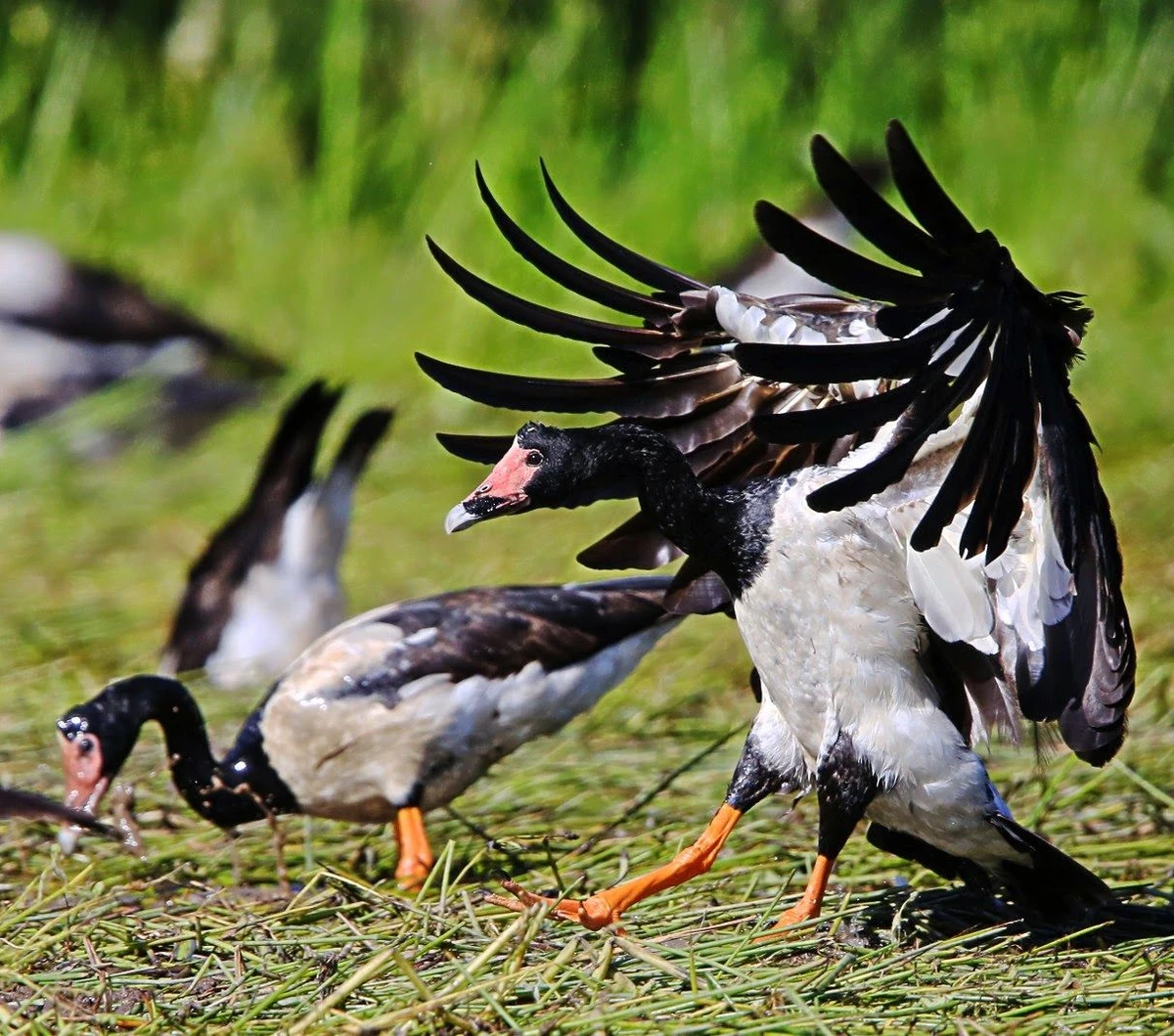
And then he came out of the bushes and started attacking me!
It's precisely these difficult living conditions that lead to the formation of strange families. Not all magpies find suitable Swedish families, but in regions with food shortages and/or an abundance of enemies, such families are common. In such cases, the death of one parent doesn't lead to the destruction of the nest; the others can raise their offspring, and the legacy of the deceased bird lives on. 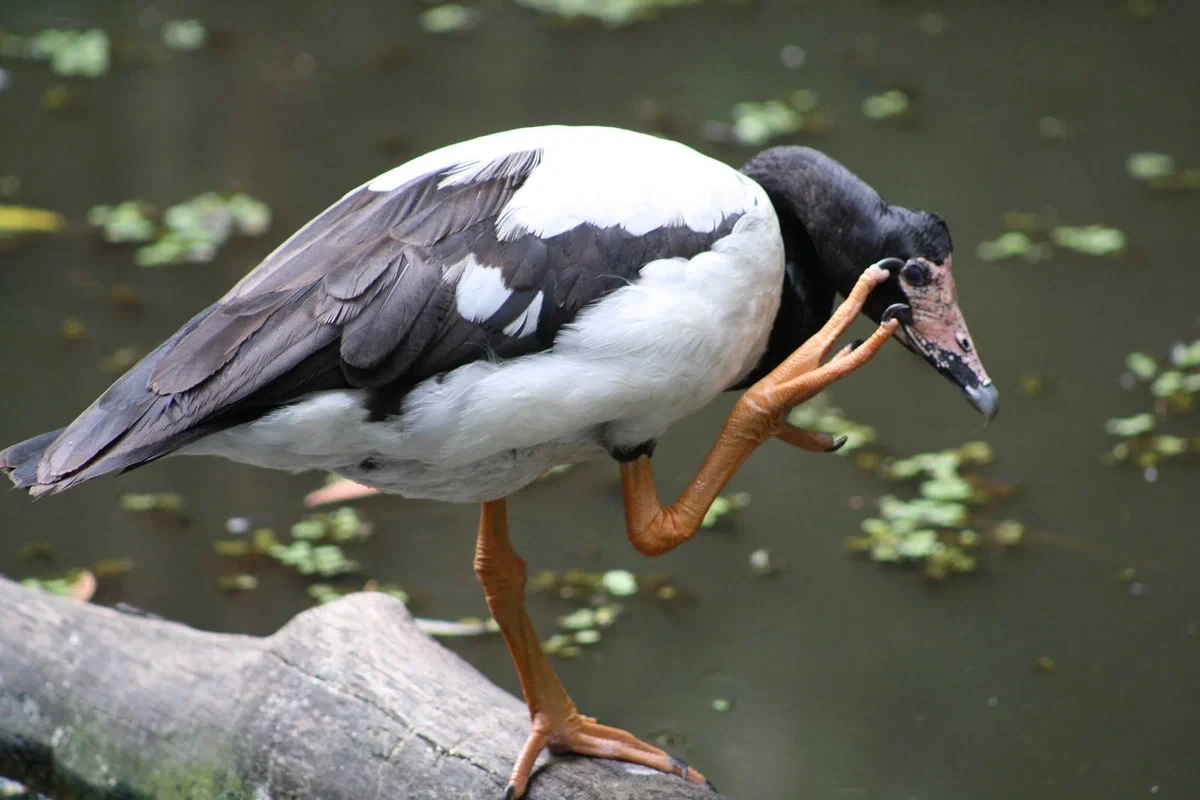
Having raised their offspring, now it's time to scratch them behind the ears!
And if living conditions are close to comfortable, most nests contain one male, one female, and 5-14 maturing goslings. So, there's no talk of any debauchery here, because all they care about is the survival of their offspring.
Add your comment
You might be interested in:











Geese's reaction to a meteor
Bongiorno!: brutal attack of geese

The neural network generated a photo of a spectacular

Geese crossing the road drove a woman into hysterics

In a Brazilian prison, dogs were replaced with more

A car transporter with very rare Mercedes was spotted in

A goose parade was held in the Netherlands

A prison where they use geese instead of dogs.

What can these geese do?

17 Photos That Will Stop You in Your Tracks (18 Photos)

Behind the Camera on 'Back to the Future' (45 Photos)

22 Examples of Pure Design Genius That Deserve a Huge

What Would Happen to a Human on Every Planet in the Solar

The Sexual Customs of the Vikings: Why an Older Partner Was
Stunning Views of the Martian Horizon from 400 Kilometers

15 Mind-Blowing Sex World Records You’ve Probably Never

20+ Fascinating Photos of Rare and Unusual Sightings (40

30 Fascinating Movie Details You Probably Never Noticed (31
