Research: The Milky Way contains hundreds of millions of potentially habitable planets (2 photos)
A recent assessment of data obtained by NASA's Kepler space telescope, launched on March 6, 2009, specifically to search for exoplanets (planets outside the solar system), paints a startling picture: the Milky Way may contain hundreds of millions of planets that fall into the "potentially habitable" category—that is, Earth-sized and located in the habitable zone of their stars. 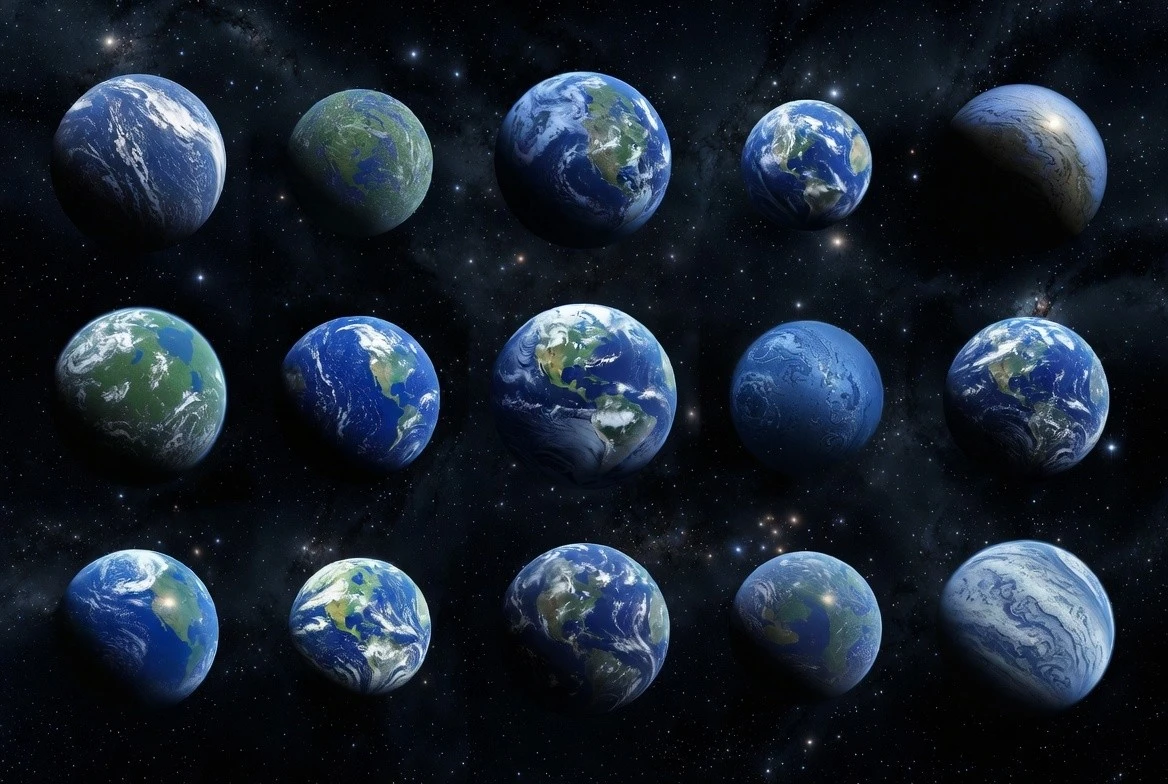
The most conservative estimate puts the number of such worlds at 300 million.
How exactly did astronomers calculate this?
First, the distance to the parent star. The habitable zone (often called the "Goldilocks zone") is the range of orbits where, under suitable conditions, liquid water can be stably present on the surface of a celestial body. But it's important to understand that being in this zone doesn't guarantee that liquid water actually exists. Details matter—the atmosphere, pressure, the planet's composition, cloud cover, and geological features. Mars is a prime example. It lies at the outer edge of the Solar System's habitable zone, but liquid water on its surface has long been absent.
Second, the type of star. Particular attention is paid to G-class stars, similar to our Sun. This is because they exhibit long-term stability—even by cosmic standards—and therefore provide a more stable climate on planets. Plus, we have a ready-made "standard" for comparison: we know for sure that life once arose under these conditions. Observations and modeling suggest that approximately 18–22% of Sun-like stars host Earth-like planets in their habitable zones.
"Why are astronomers hunting for water at all? Maybe life could arise and exist without it," an armchair expert might say.
You can imagine a lot, but in your search, it's useful to consider real-world experience (life on Earth). Based on this experience, water is key to life because it is the most universal and abundant solvent in the universe: chemical reactions, which can form complex organic structures, proceed most easily in liquid water. 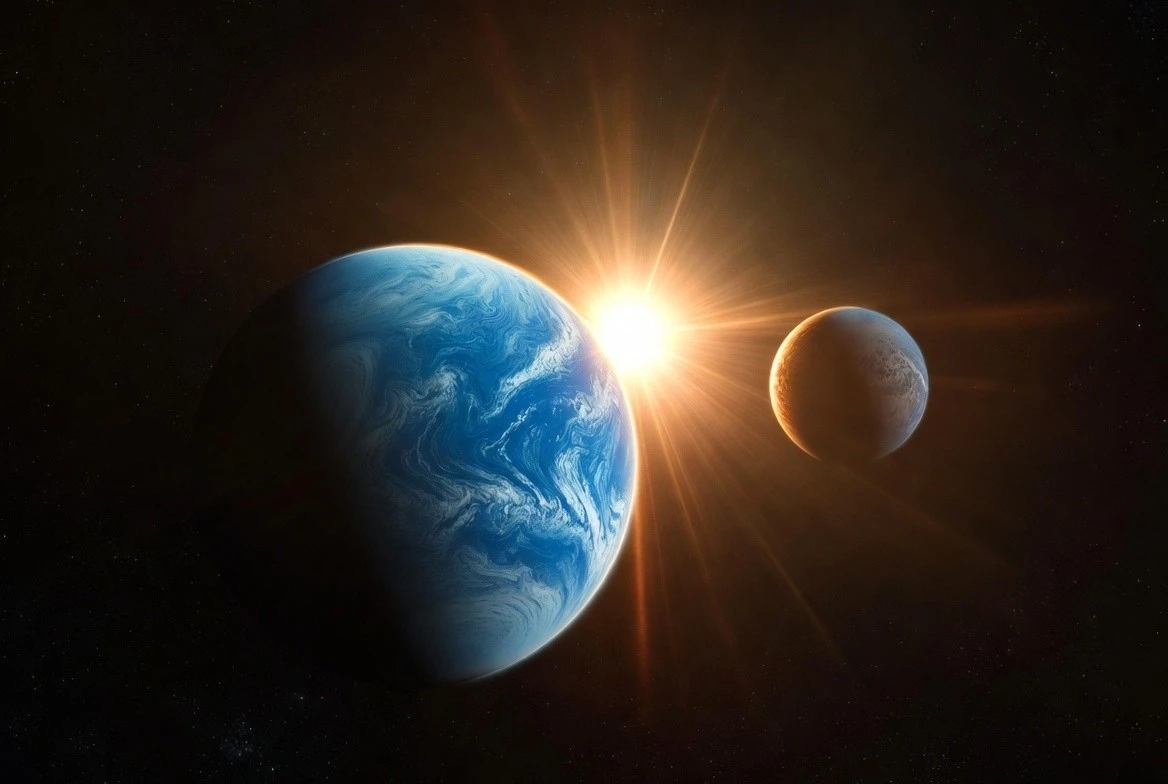
But even the discovery of an Earth-sized exoplanet with seas and oceans orbiting in the habitable zone around a Sun-like star doesn't mean "someone definitely lives there." Such an object would only be considered "potentially habitable."
The most encouraging aspect of the study is that some of these worlds may be relatively close to us: estimates suggest several candidates within approximately 30 light-years. These will be prime targets for future telescopes, which will be able to analyze the chemical composition of their atmospheres in detail and perhaps even map the distribution of temperatures and clouds.