Anaconda: 5 facts about this snake that break the mold (14 photos)
The anaconda is the perfect horror movie hero. Huge, silent, deadly, and seemingly designed to inspire primal terror. But the more scientists study this snake, the more it... irritates them. Because the anaconda refuses to fit our stereotypes. We'll share five facts about this snake that break our stereotypes. 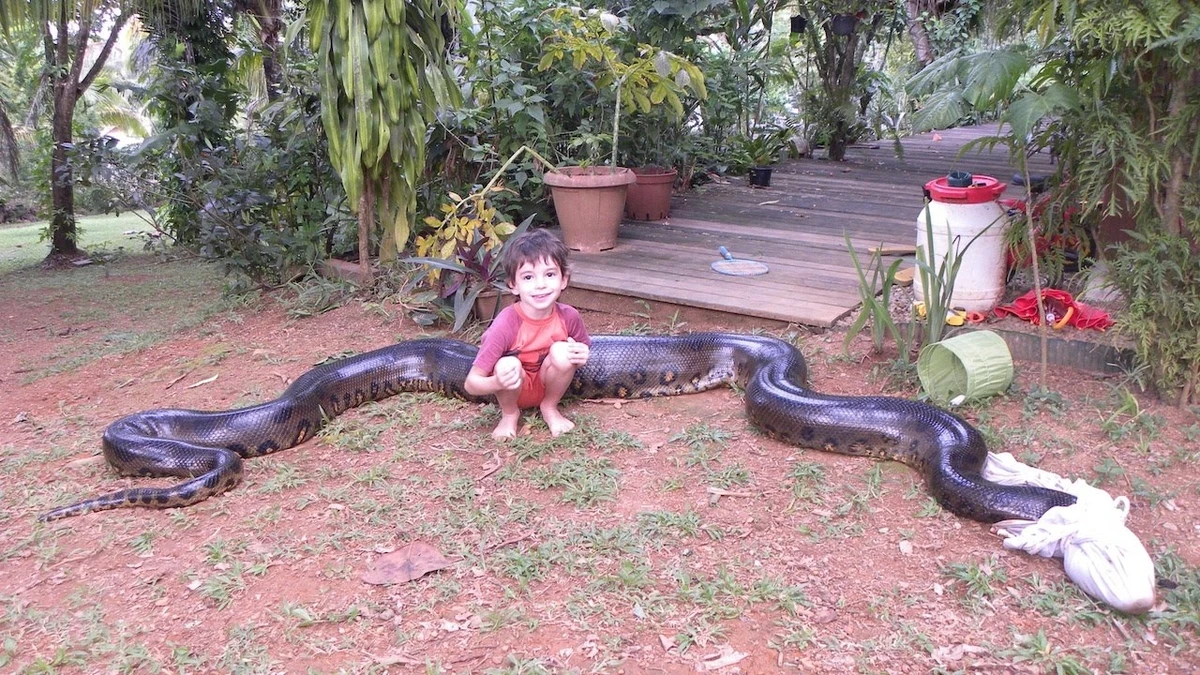
Yes, wearing a rag over your head definitely makes things safer.
1. We don't know the size of the largest anaconda
You'll agree, when it comes to the heaviest snake in the world, we'd like more specifics. The only thing worse than knowing there's a huge, deadly monster in the jungle is not knowing about it. Without knowledge, our imagination will come up with the most terrifying ideas, even more frightening than the snake itself. 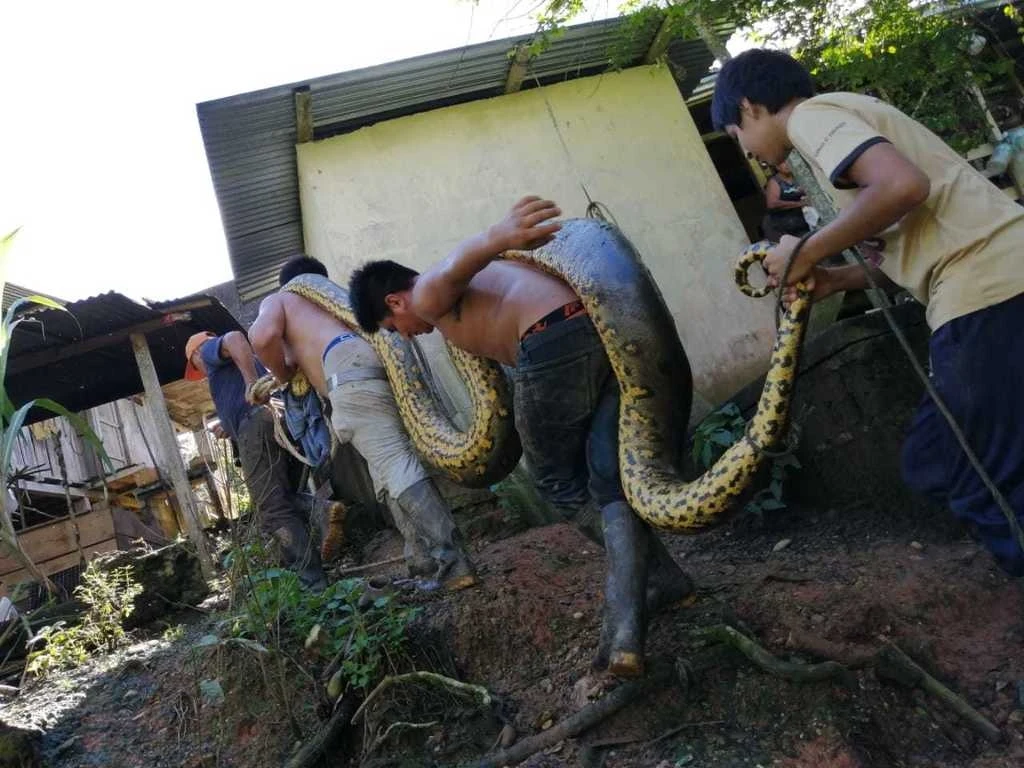
That same friend who promised to hang out until 4 AM but ended up passing out by 11 AM.
To date, the maximum recorded length of an anaconda is 5.2 meters and weighs 97 kilograms. That's enough to open a brick factory upon meeting someone. But there are countless reports of snakes up to 8, or even 11 meters long. And it would be fine if these were isolated campfire tales, but no—there are countless such claims. However, science only accepts officially confirmed data for a record, meaning a snake, whether alive or not, or at least reliable reports. But there aren't any in the deep jungle, and that's incredibly infuriating. 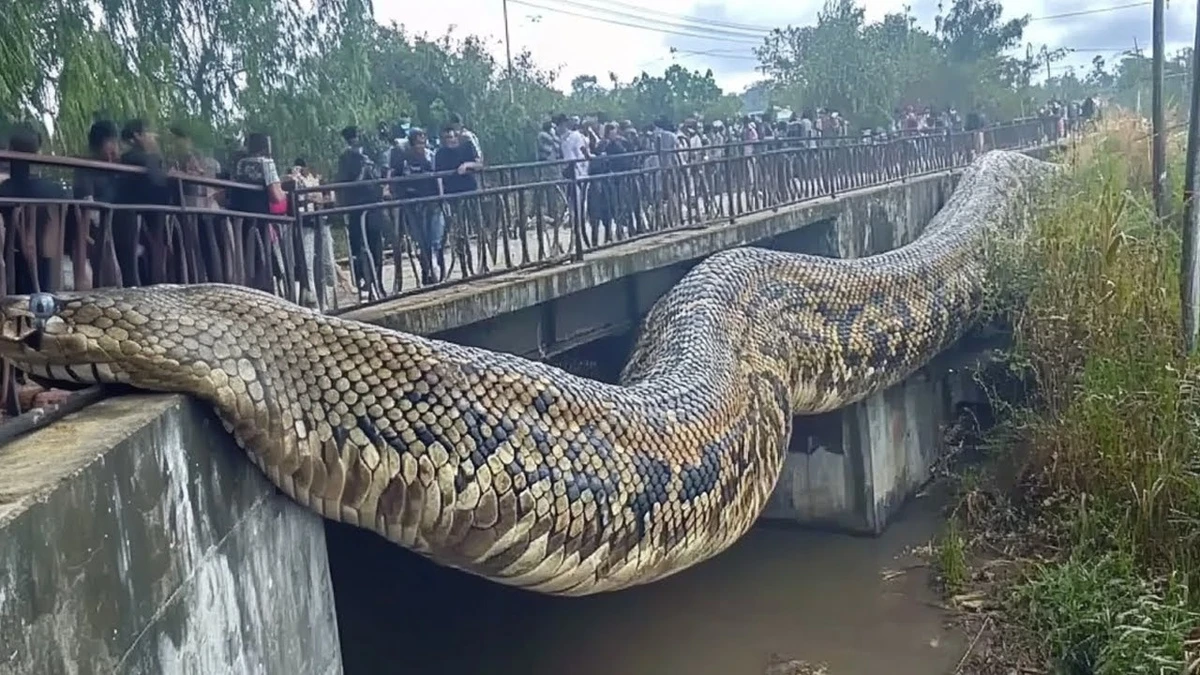
If scientists took everyone at their word, they'd have to admit that photoshopped snakes do exist.
2. Anacondas don't strangle their prey
Every schoolchild knows that if you fall into the clutches of an anaconda, you won't escape alive. The snake will wrap you in tight coils in seconds, suffocate you, and then eat you. But this is fundamentally wrong! The snake doesn't "strangle" you the way people think. It doesn't cut off its prey's oxygen supply, which would be long and tedious. In reality, the reptile squeezes its prey so tightly that it blocks its circulatory system. 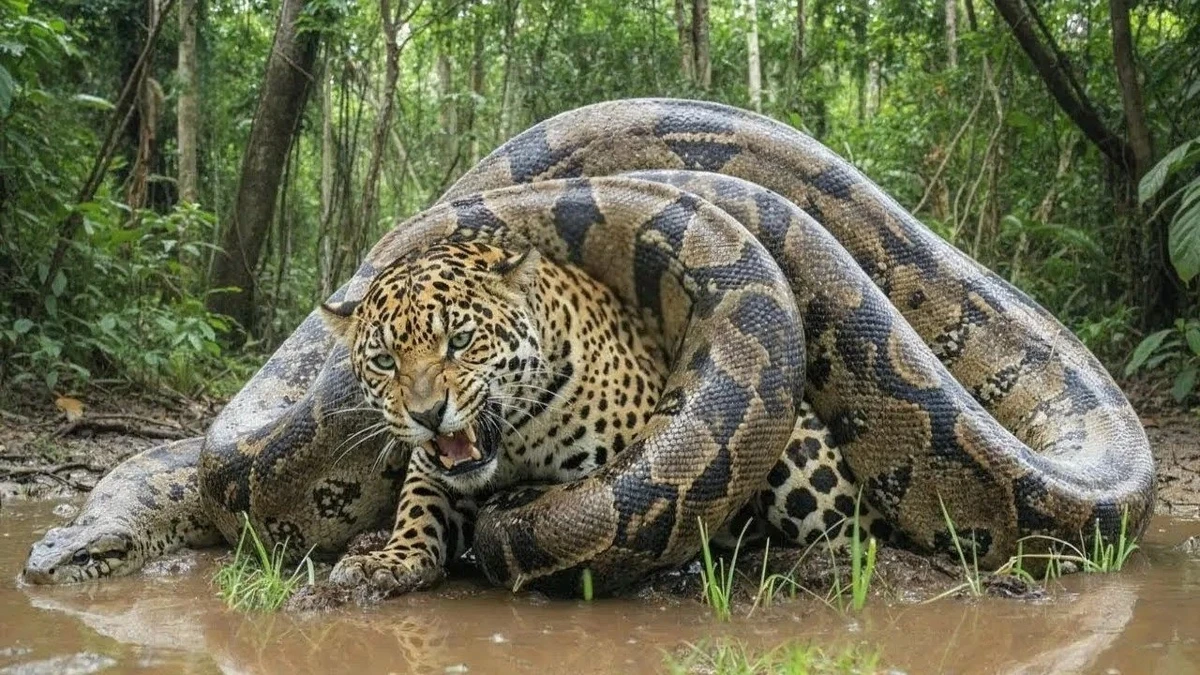
Another Photoshopped image. But so realistic and epic!
The pressure of the snake's muscles on its prey from the outside is several dozen times greater than the normal blood pressure inside the unfortunate victim. The anaconda reacts sensitively to every breath and twitch, constantly tightening its grip. This way, the prey's heart stops in a matter of minutes—and dinner is served! 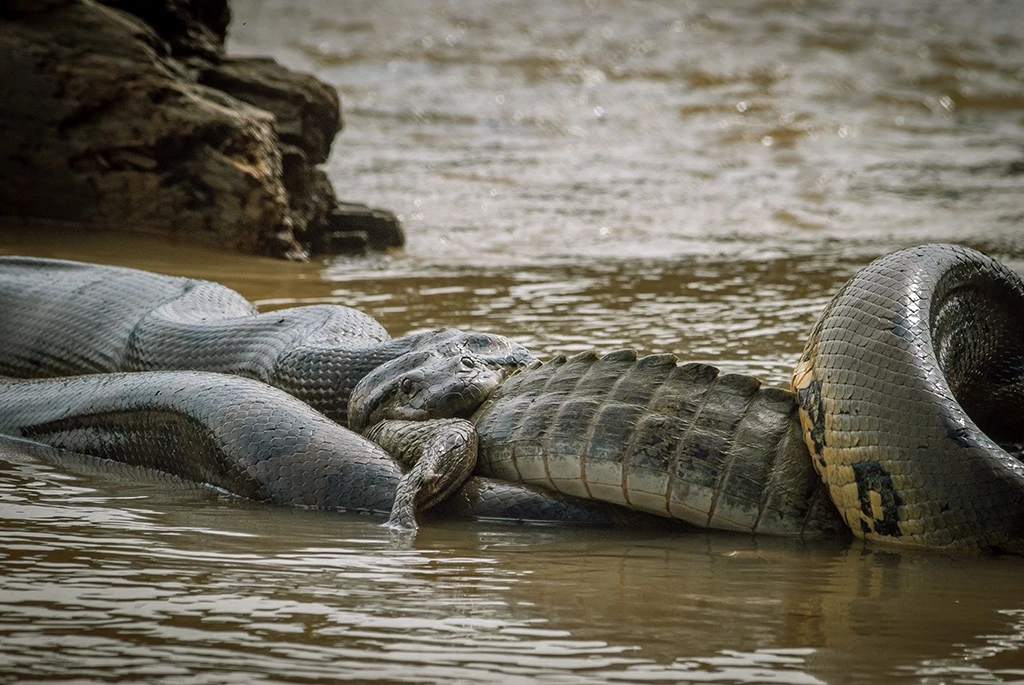
The purse ate the shoes. Here's a real photo!
3. Anacondas don't eat people
Any jungle inhabitant can become prey for this giant snake—the reptile's mouth can accommodate prey weighing up to 50 kilograms. Capybaras, tapirs, deer, caimans, and even other anacondas—the snake will happily devour them all. As you can see, humans aren't on the menu. That's because the reptile doesn't eat people. 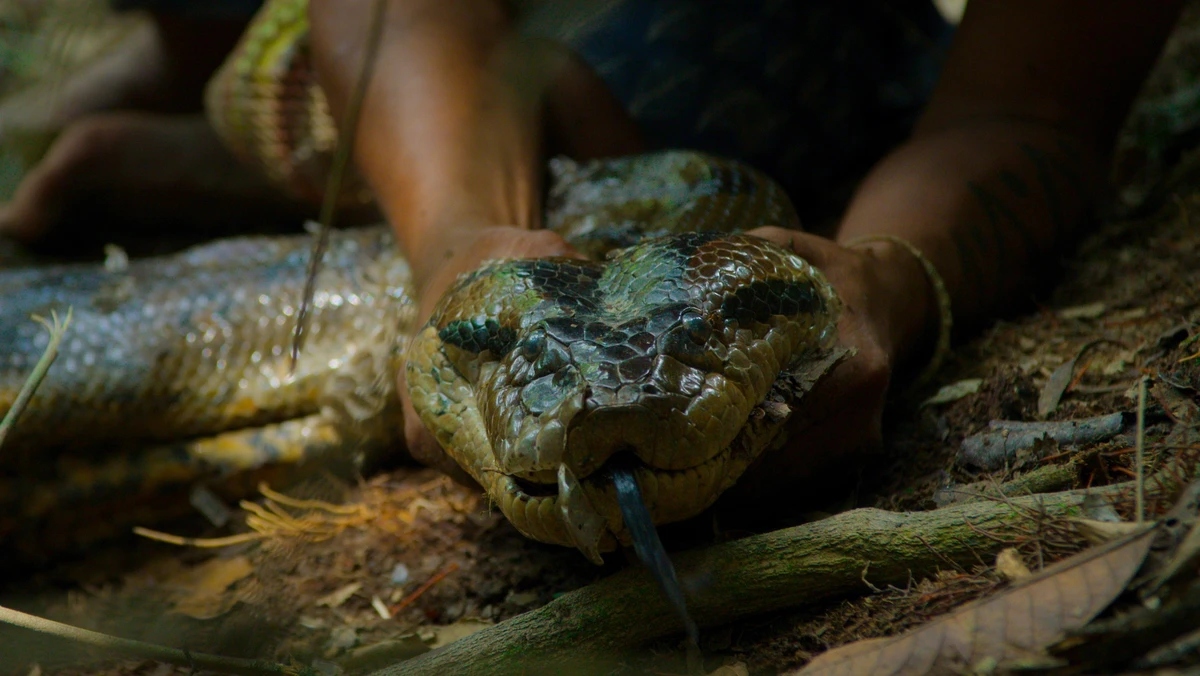
Man, stop strangling your anaconda!
Swallowing a human is technically feasible for a snake. But in reality, reptiles rarely attack people. And there are no documented fatalities! That's because humans are inconvenient prey. Anacondas swallow their prey whole. Humans' broad shoulders and hips make us physically difficult to swallow—it requires tremendous effort and poses a risk to the snake itself. Furthermore, anacondas in the wild prefer to avoid humans. To them, we are a potential threat, not food. Evolutionarily, snakes that attacked large, dangerous creatures fared worse. 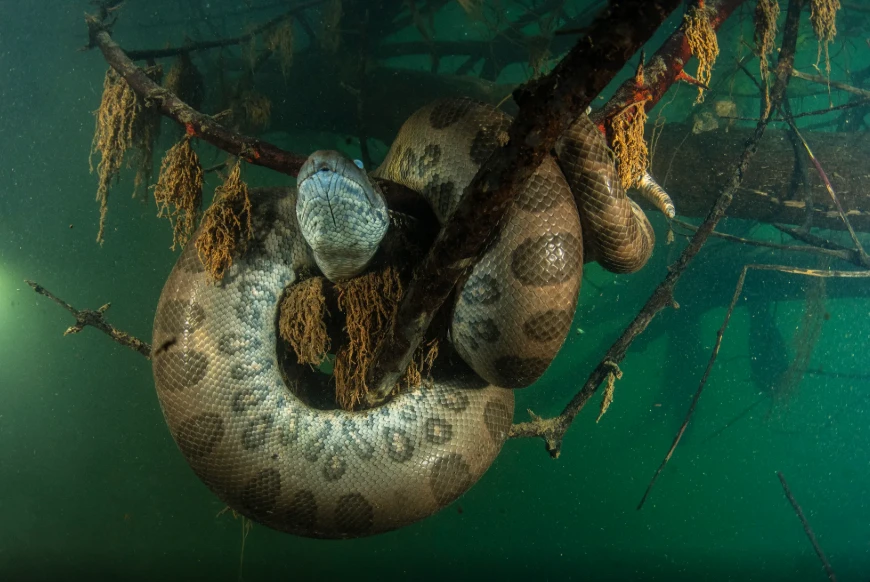
Anacondas also rarely encounter humans, as they prefer dense, flooded jungles and can remain submerged in water for long periods.
4. Most of the time, anacondas don't care about anyone.
Judging by horror movies and some documentaries, this vicious beast is expected to do nothing but prowl the jungle in search of food. But no! For most of its life, anacondas do absolutely NOTHING. After swallowing a fatty meal, the snake switches on its gastrointestinal tract and liver at full capacity. Its metabolism accelerates dramatically: the intestines thicken, the liver and pancreas begin churning out enzymes, and the heart pumps more blood. This is one of the most extreme metabolic surges among vertebrates—the body literally goes into "turbo mode." Thanks to this, even large prey is digested in 1-2 days. 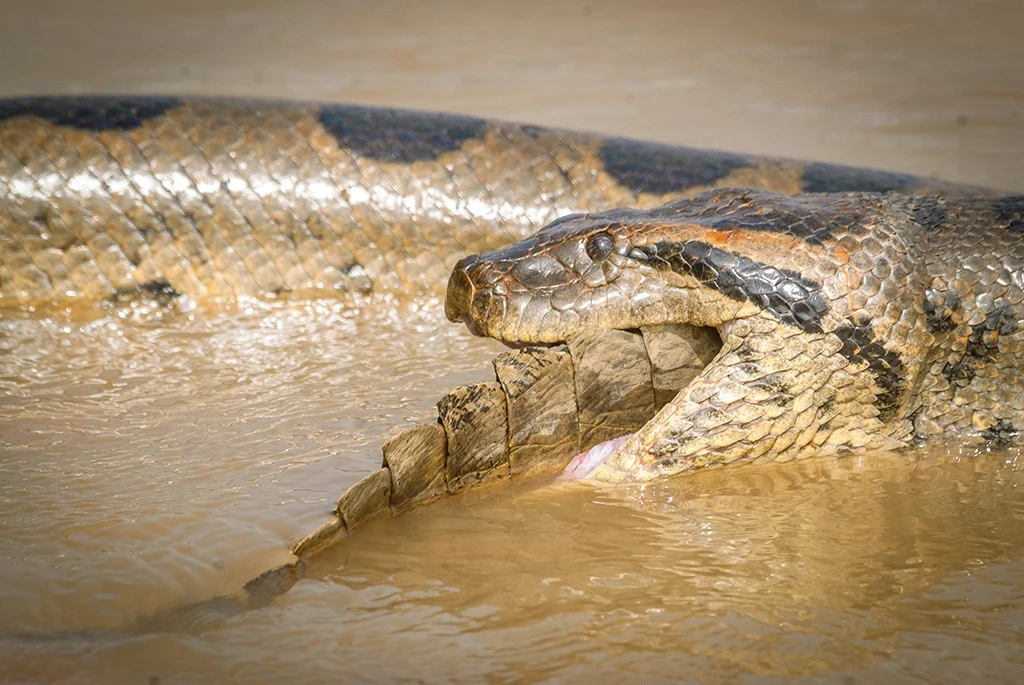
That same overly long spaghetti.
But when digestion is finished, the opposite miracle occurs. The gastrointestinal tract, liver, kidneys, and other organs go into standby mode, shrinking in size and requiring almost no energy. Thanks to this, an anaconda can survive for months without food after a single meal. Evolution has made it not a gluttonous monster, but a perfectly efficient survival machine. If only humans could do the same! Eat a double burger with large fries, wash it down with a liter of cola, and you don't have to worry about cooking for a whole week. If an anaconda doesn't eat, it sleeps. The reptile spends days lying in the water, with only its snout exposed, enjoying the hot sun. Moreover, the anaconda's eyes and nostrils are located on top—just like a crocodile's—so nature itself has provided for their comfort. 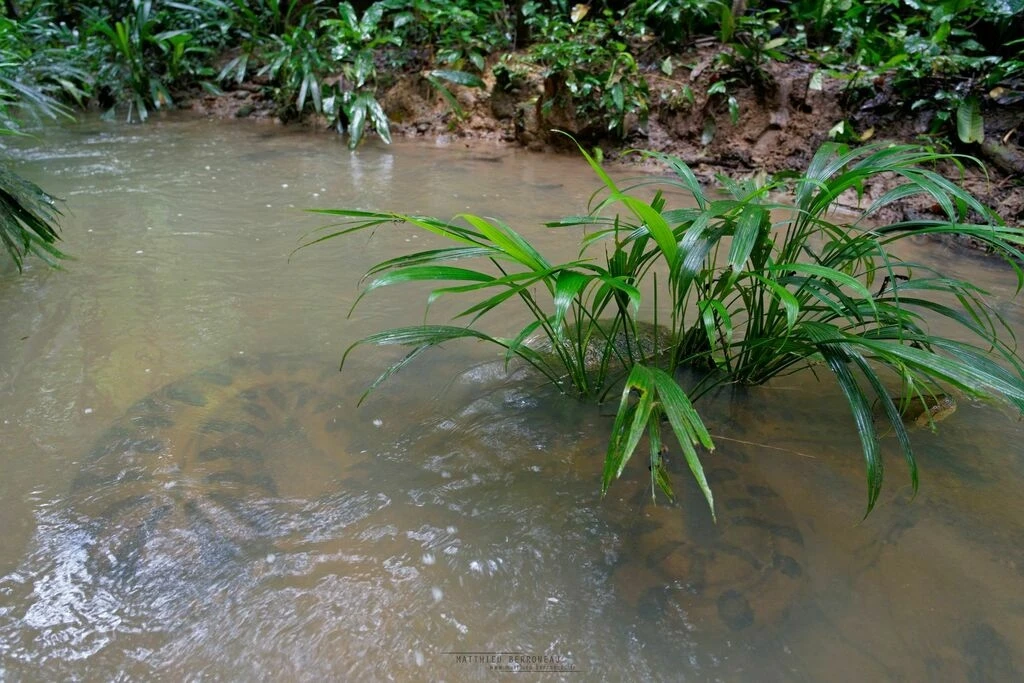
Yes, this is exactly what I imagine when I feel something on the bottom of the lake with my foot.
5. The Anaconda Is Not at the Top of the Food Pyramid
Yes, few would dare to fight a fully grown 5-meter snake head-on. But an anaconda only reaches such a giant size after 6-8 years. This means that this tough reptile spends most of its life not as the "absolute terror of the Amazon," but as perfectly edible prey. Until the anaconda reaches the size of a mythical monster from horror movies, it is forced to constantly hide, conserve its energy, and avoid unnecessary conflicts. 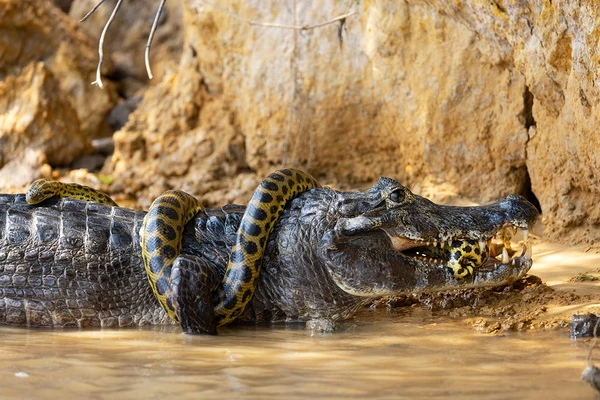
And now the boots have eaten the bag. Justice has prevailed!
No innate status. Only patience, caution, and years of successful hunts. So it turns out that the top of the food chain is not a title, but a temporary position that not everyone lives to reach. Young snakes and small specimens regularly end up on the menus of caimans, pumas, jaguars, and large predatory fish. Heck, sometimes even a fellow snake can become a threat! 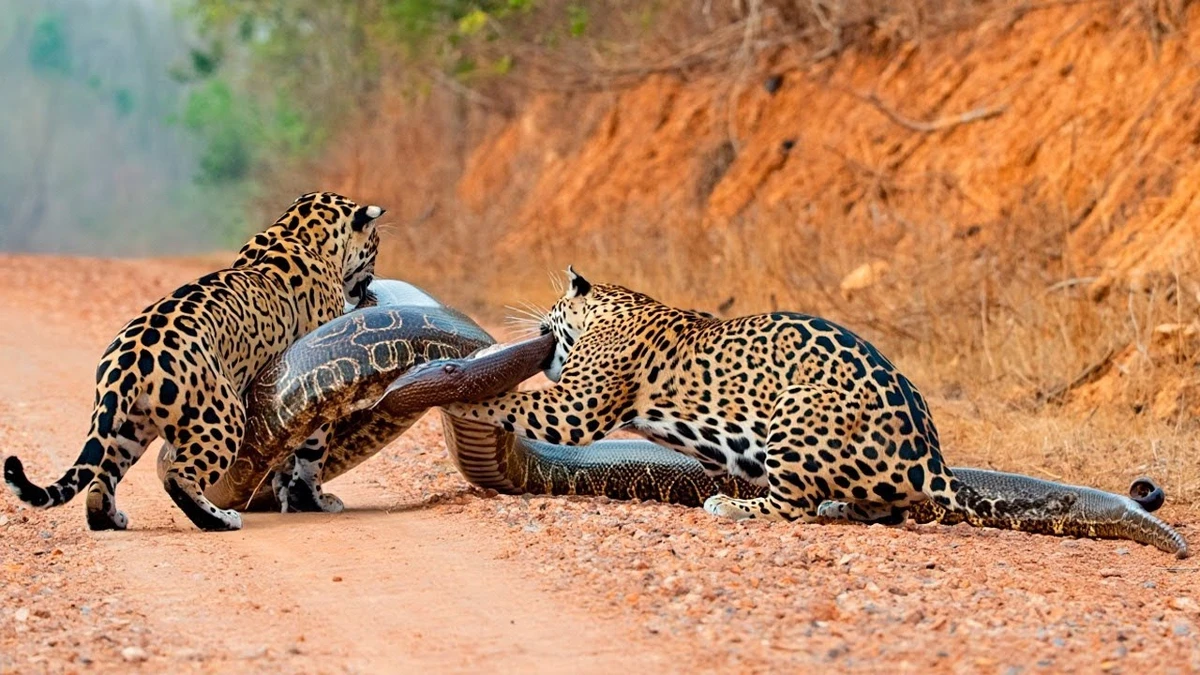
Adult anacondas can also be dealt with. This is why these snakes are extremely secretive when not hungry.
Only females grow to fantastic sizes. For males, the standard length is almost half the maximum size of the species. Therefore, a puny male is a mere morsel for a cold-blooded woman in her prime. Both their size and their specific gastronomic preferences are the result of a special breeding pattern. When a female is ready to mate, she releases pheromones, and all the surrounding males are drawn to this scent. Each one tries to gain a better position, huddle closer, and displace the competition. Everything is used: strength, size, endurance, and plain stubbornness. No speed dating; the battle for the right to become a father can last up to four weeks! A single female can have up to a dozen males approaching her. 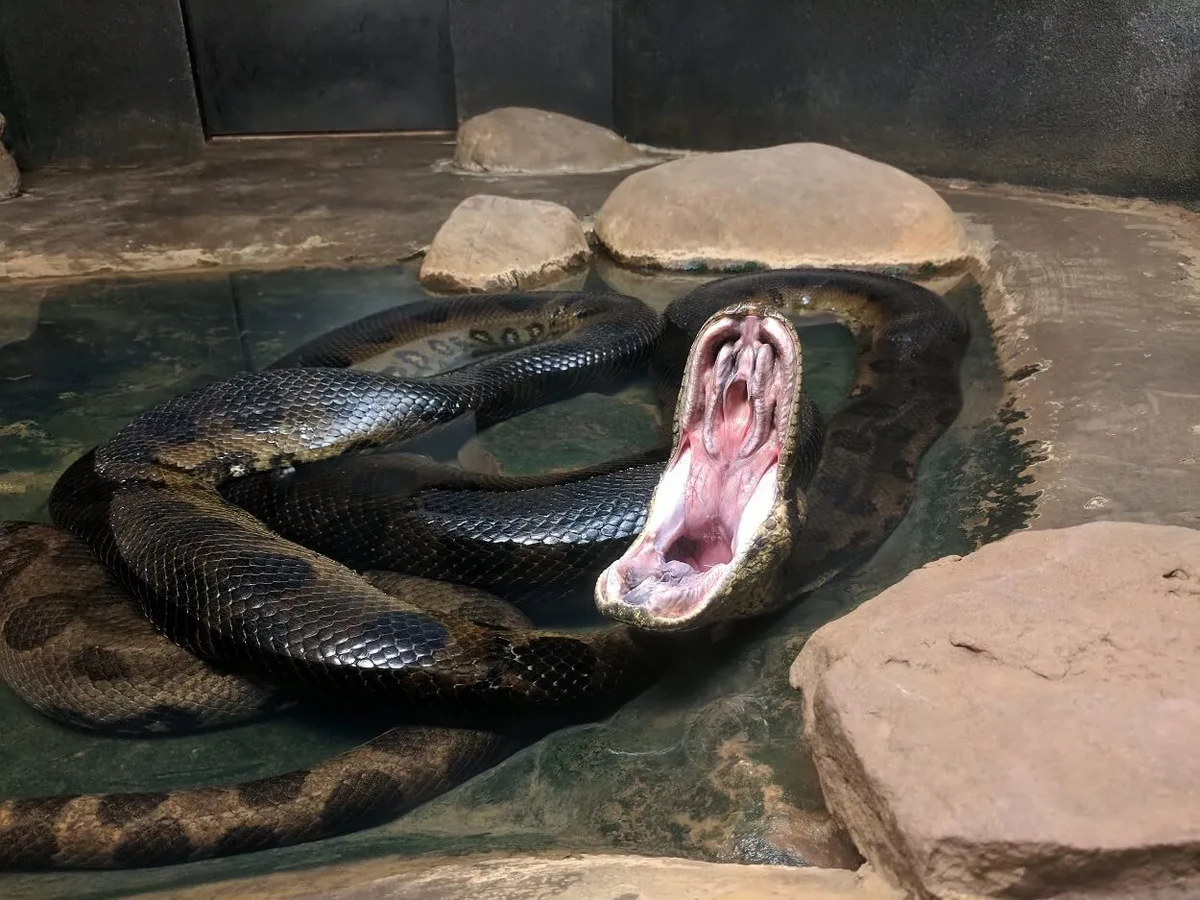
Come on, buddy, get in my mouth!
They lose weight, strength, get injured, and some don't even survive to the end of the season. Meanwhile, the female usually doesn't even try. She simply lies in the center of biological chaos, waiting for the most persistent and tenacious candidate to overcome all the others. The difficulties for her begin later, during gestation. 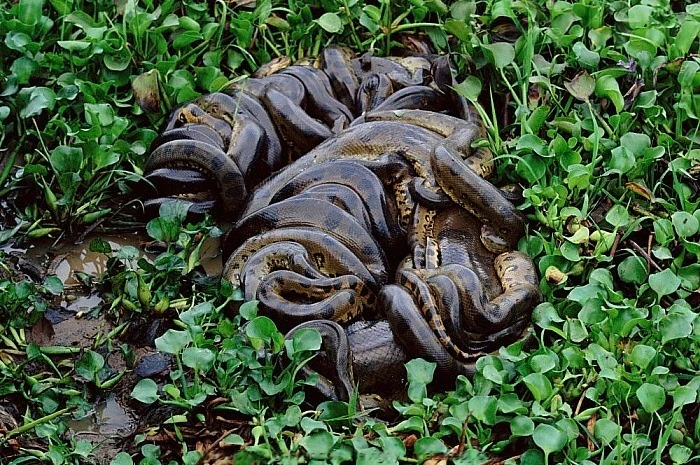
This bacchanalia looks like a disgusting bio-mess.
The anaconda is a viviparous species. The eggs develop inside the mother's body for about 6-7 months. During this time, she practically eats nothing, living off her stored reserves. Every calorie counts. That's why the exhausted male, with whom you've been vigorously romping all breeding season, seems extremely appetizing to a woman! 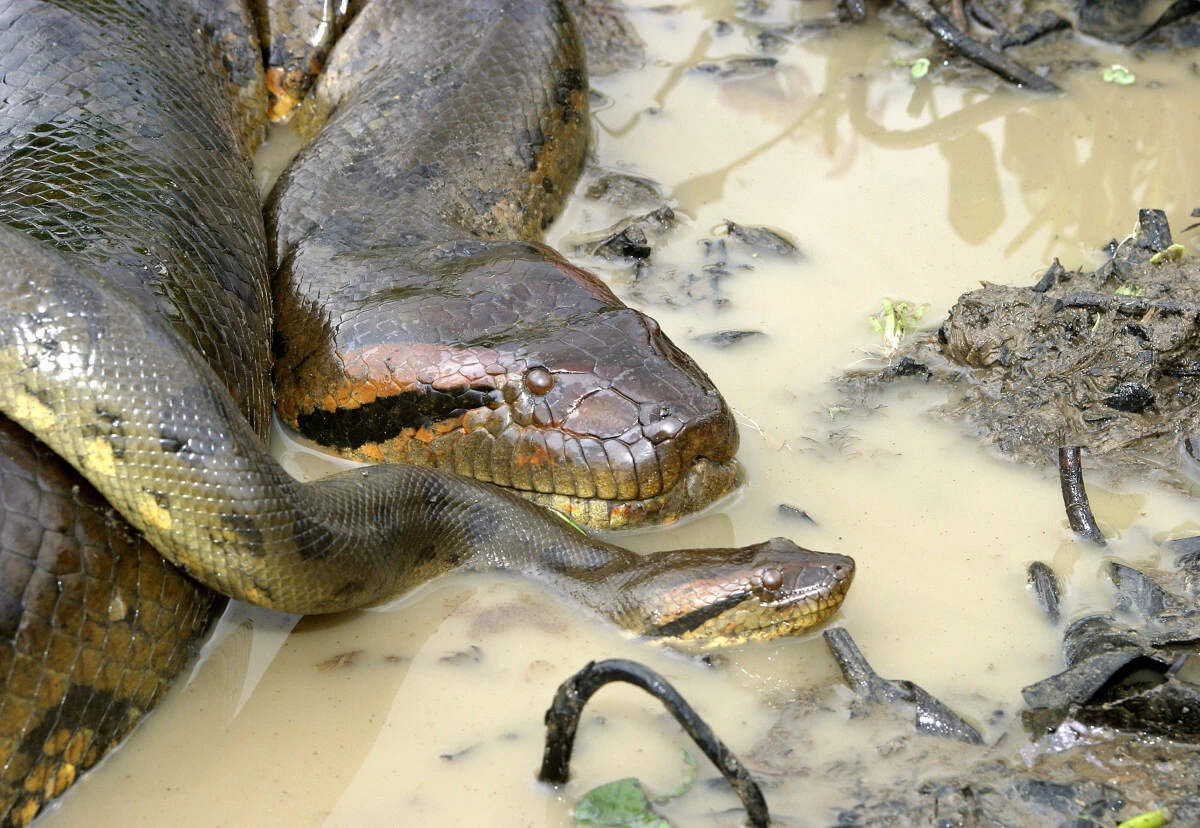
Hey, handsome boy. You're so sweet. I could just eat you up!
As a result, up to 40 snakelets are born, completely independent from the first day of life. No nannies, care, or family values – she gives birth, and then they're left to fend for themselves. It's no wonder that with such a start, adult anacondas grow into silent, lazy, and extremely calculating monsters.