An engineering masterpiece weighing thousands of tons was blown up in Germany (1 photo + 2 videos)
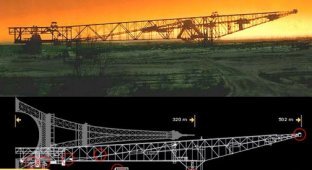
Brandenburg has brought an end to one of the most ambitious engineering projects of the 20th century. The gigantic F60 overburden bridge, a colossal structure that had been a symbol of German industrial might for decades, was blown up in the Jänschwalde coal mine. 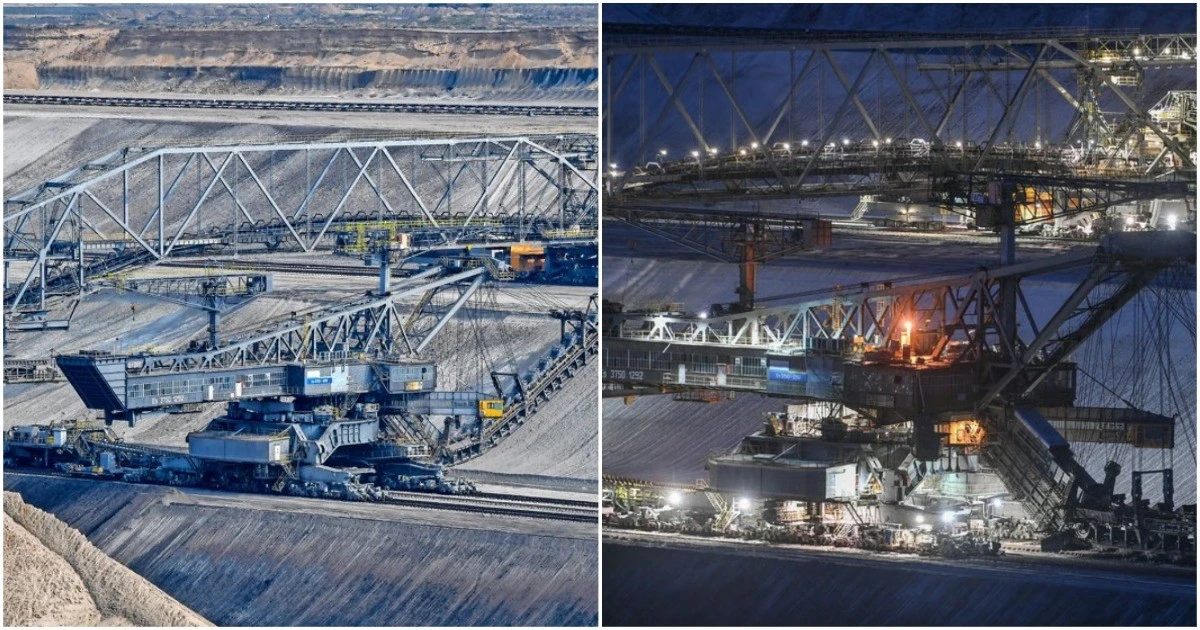
Net weight of the structure: approximately 13,500 tons. This is the weight of the steel "frame" itself, which was blown up. Total operating weight: approximately 30,000 tons. Taking into account the two giant bucket-wheel excavators (typically ES 3750 type) that worked in conjunction with the bridge, the electrical equipment, and kilometers of conveyor belts, the total weight of the system exceeded 30,000 tons.
The scale of this steel monster was truly astounding: at 502 meters long, it was almost 200 meters longer than the famous Eiffel Tower if it were laid on its side. The structure was 204 meters wide and reached a height of 80 meters.
During its 45 years of continuous operation, this giant moved an incredible 3.5 billion cubic meters of earth, literally reshaping the German landscape for the sake of brown coal mining.
The Jänschwalde open-pit mine has officially ceased coal production. Since the F60 bridge is a highly specialized machine for stripping (removing the topsoil), without active mining it would become a useless mountain of metal, simply taking up space.
The death sentence for this engineering masterpiece was carried out with 66 kilograms of explosives. Specialists placed charges in key support points, and within seconds, the half-kilometer-long steel colossus collapsed to the bottom of the quarry. Although the explosion went according to plan, the sight of such a unique machine being destroyed left onlookers more sad than delighted.
There are plans to build solar and wind power plants on the site of Jänschwalde. The enormous 500-meter bridge simply interfered with these plans.
Critics note that the destruction of such a quantity of high-quality steel and complex machinery seems odd against the backdrop of today's green agenda and calls for responsible consumption. For many residents of Brandenburg, this explosion became a symbol not of progress, but of a final and painful break with the industrial past that once supported the entire region.
In this new reality, there was no room for the 500-meter steel monster. Its maintenance was too expensive, and engineers and officials decided against granting it monument status, deeming it unnecessary.
Germany already has a successful example of converting a similar bridge into a museum (the F60 in Lichterfelde attracts thousands of tourists), but in the case of Jänschwalde, authorities opted for a radical dismantling method.