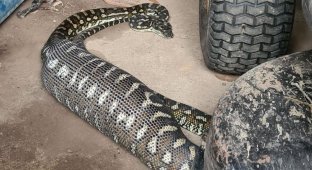
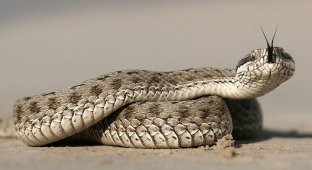
Snake eagle: the killer of the most venomous snakes (8 photos)
Short-toed eagles belong to a rare ecological group of animals—stenophages. This is the term scientists use to describe organisms that specialize in a specific type of food, completely ignoring all other options. Our birds, for example, specialize in meat-based pasta—it accounts for up to 96% of the short-toed eagle's diet. 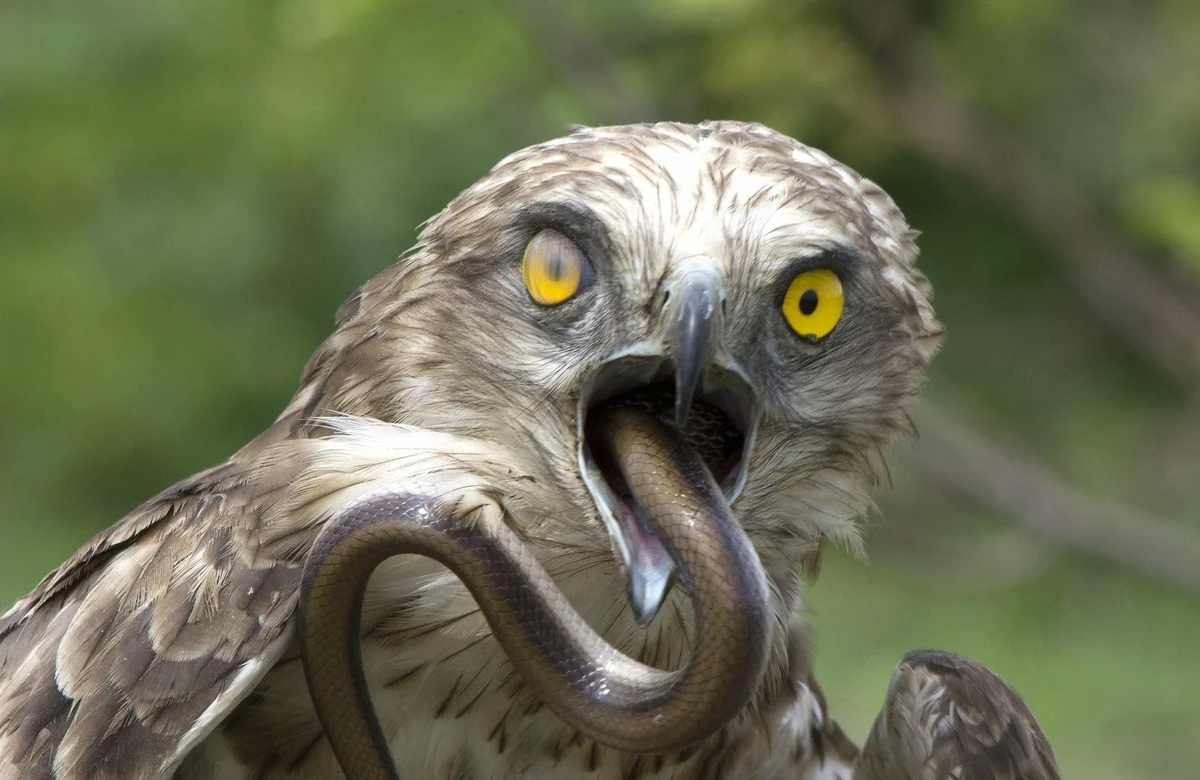
Again a snake, the same thing every day! 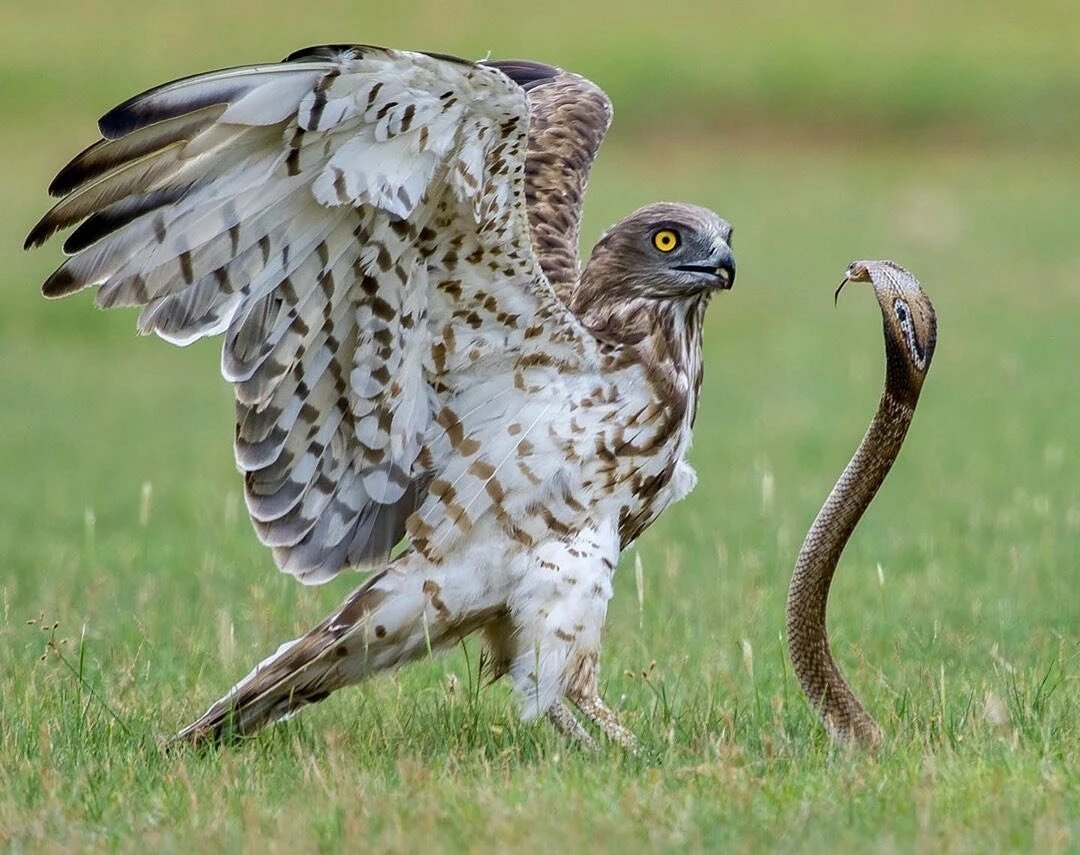
You're my breakfast, don't you dare snap back!
And in this area, the short-toed snake eagle is simply amazingly good. It can hunt any snake, except the largest: from the harmless European grass snake to the dangerous Indian king cobra and the insanely venomous African black mamba. After all, its hunting tactics are extremely simple, effective, and, at the same time, deadly for the bird itself. 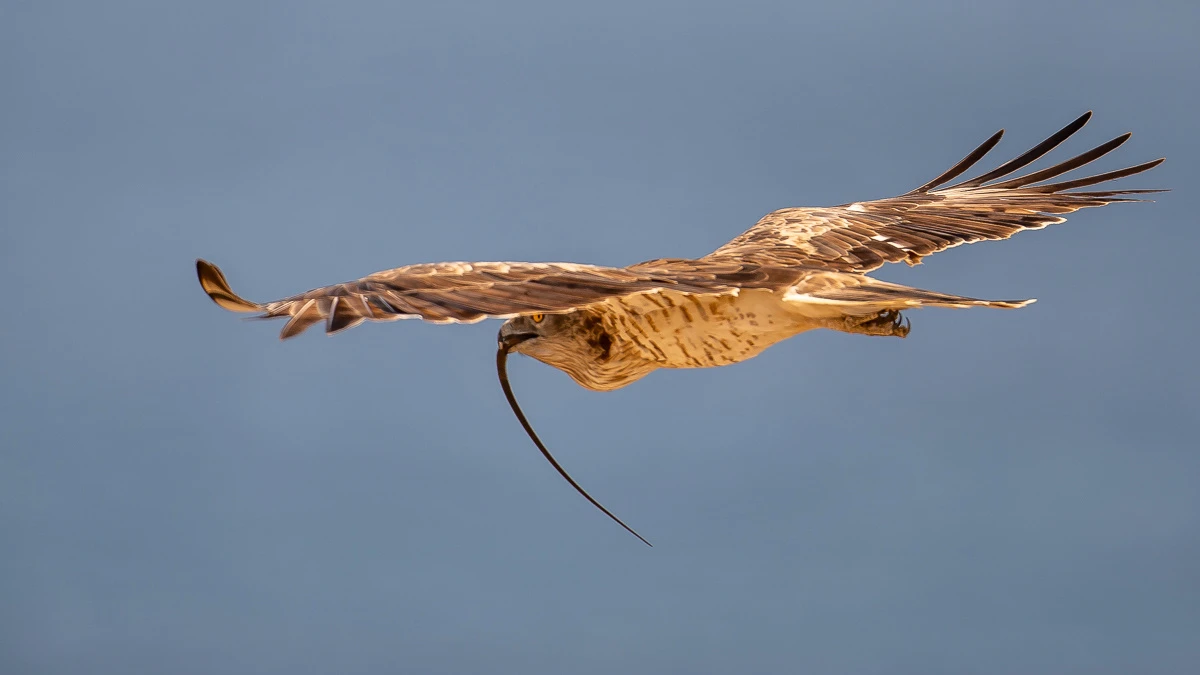
The hunt was clearly a success.
On paper, it all looks easy. First, the hungry bird soars above the clouds, spotting prey with its eagle eyes. Having spotted its prey, it plummets, accelerating to a good hundred kilometers per hour. As it nears its prey, it suddenly slows down with a wingbeat. Simultaneously, the bird thrusts forward its clawed feet, literally pinning the snake's head and neck to the ground. One or two quick strikes with its beak, and the prey is no longer able to resist. 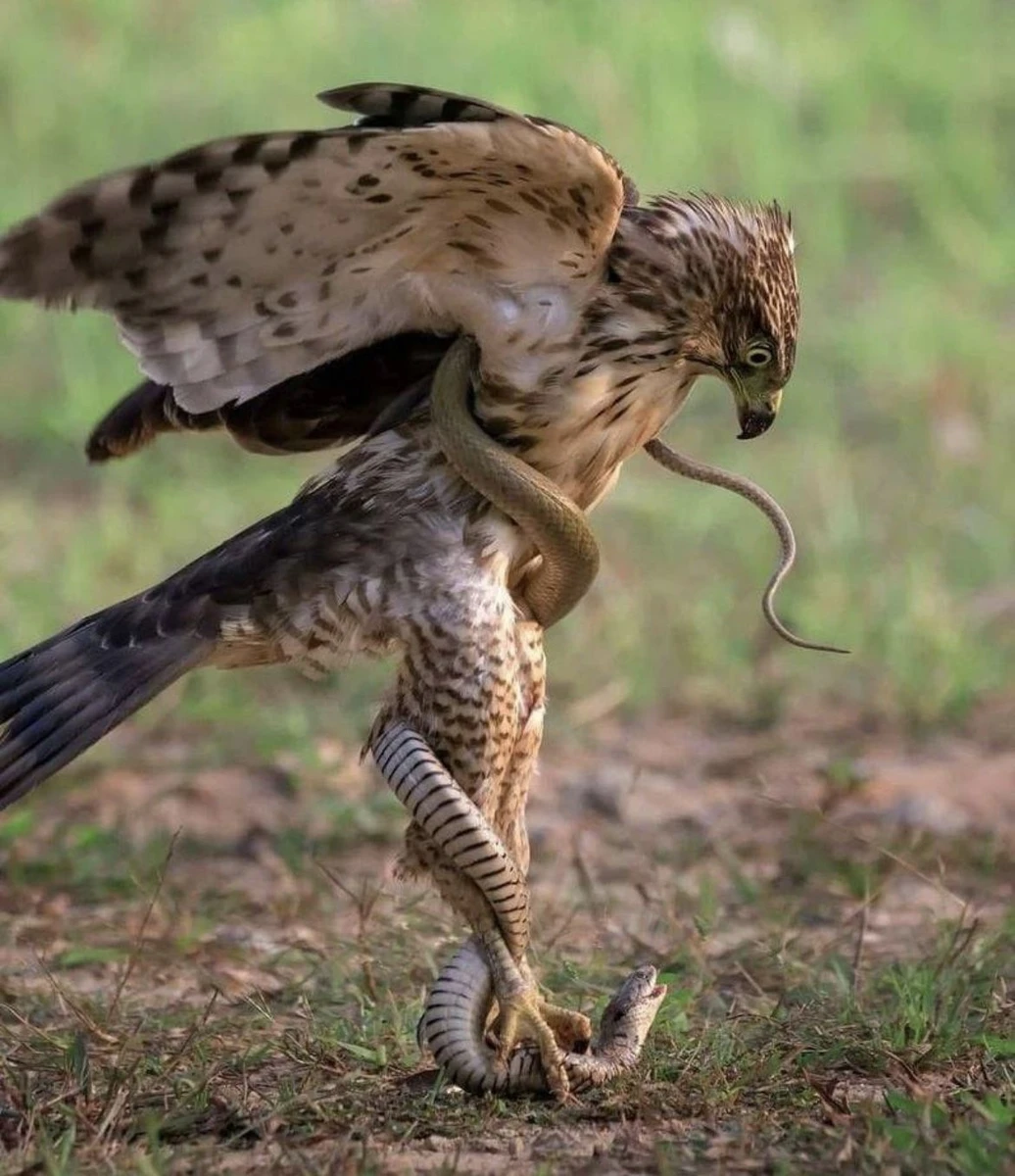
Poo-poo-poo... An unpleasant situation, for sure...
And all short-toed snake eagles, without exception, master this tactic to an impeccable level. It couldn't be otherwise, because any mistake could cost the bird its life. If the bird miscalculates its braking time, it will either give the snake time to prepare for an attack or crash to the ground without having time to slow down. If the predator misses the snake or, say, grabs its tail, the scaly creature will immediately sink its venomous fangs into it—its reaction speed is significantly superior to that of a human. 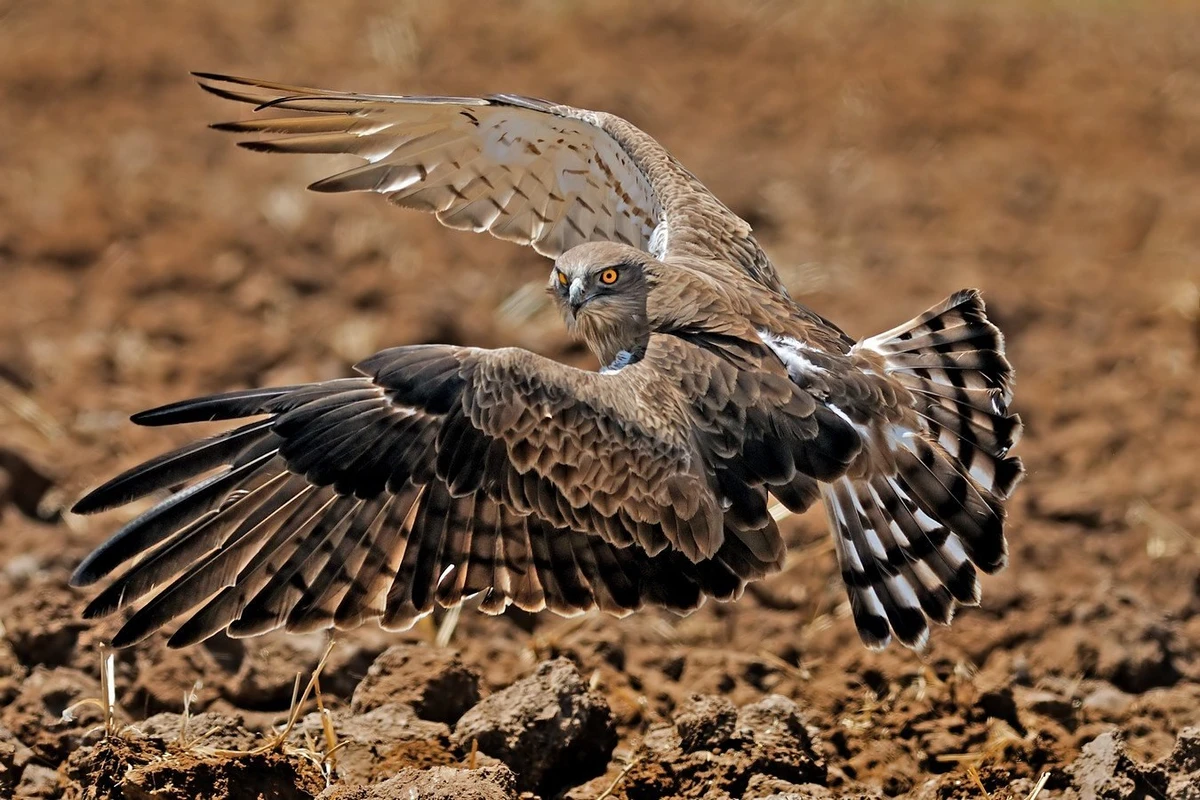
The short-toed snake eagle may not be the fastest bird, but its maneuverability is the envy of many!
And the bird won't get a second chance, as its resistance to venom is roughly equal to that of a human, despite its significantly smaller size. In experimental conditions, birds barely tolerated even the diluted venom of the common viper; more dangerous snakes would certainly give them no chance. 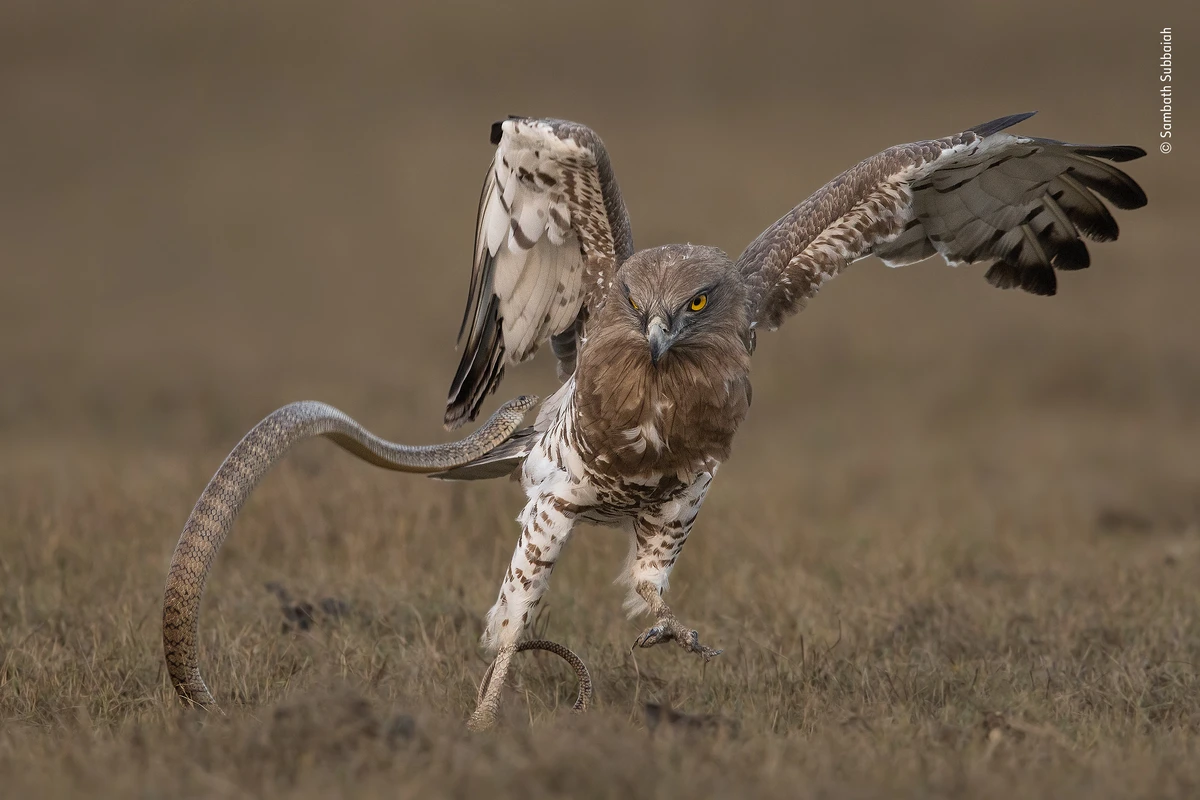
One mistake, and you're wrong.
And yet, despite the constant balancing act on a knife's edge, this specialization does have its advantages. Since snakes are widespread throughout the Old World, their predators live in equatorial Africa, India, and even around Yekaterinburg. 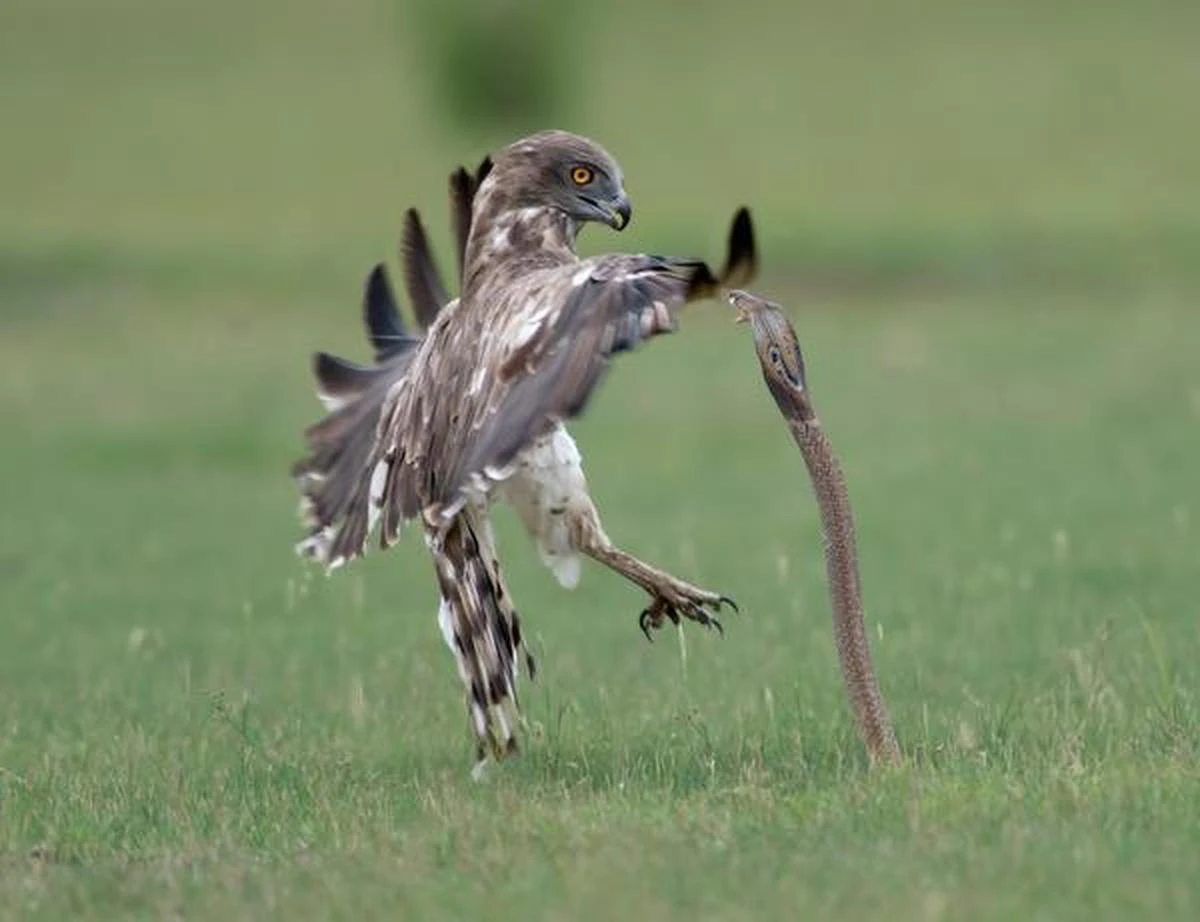
My kung fu is stronger than yours!
Another, no less important advantage is the almost complete absence of competition. While some animals are happy to snack on a snake or two, there are practically no snake-hunting experts. Besides our feathered heroes, the only ones that can be considered such are mongooses and king cobras. The latter, in fact, are themselves potential prey for short-toed snake eagles. 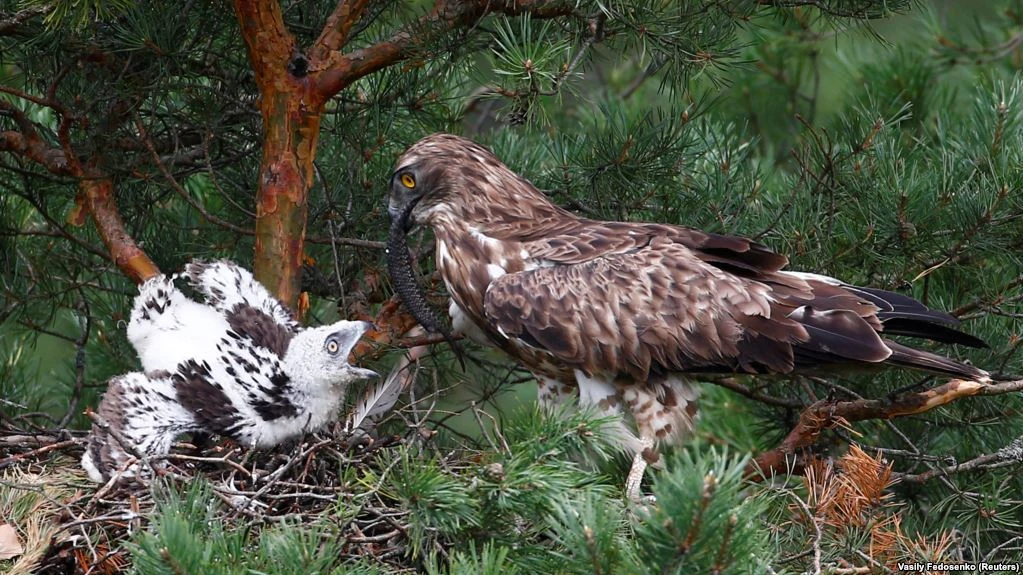
While adult birds can eat mice or toads, the young are fed exclusively snakes.
It turns out that short-toed snake eagles live by the principle: "High risk, high reward." And today, this strategy is paying off: even in a crumbling ecosystem, they feel more than comfortable. But the species pays for its success with the constant risks taken by its individual members. And, frankly, even in my worst nightmares, I wouldn't want to be in their shoes.