One-Way Ticket: TOP 3 Planets Where We (Possibly) Won't Be Flattened (5 photos)
While Elon Musk dreams of the dusty deserts of Mars, astronomers are looking much further afield. Worlds called "Earth-like exoplanets" have been discovered in deep space. 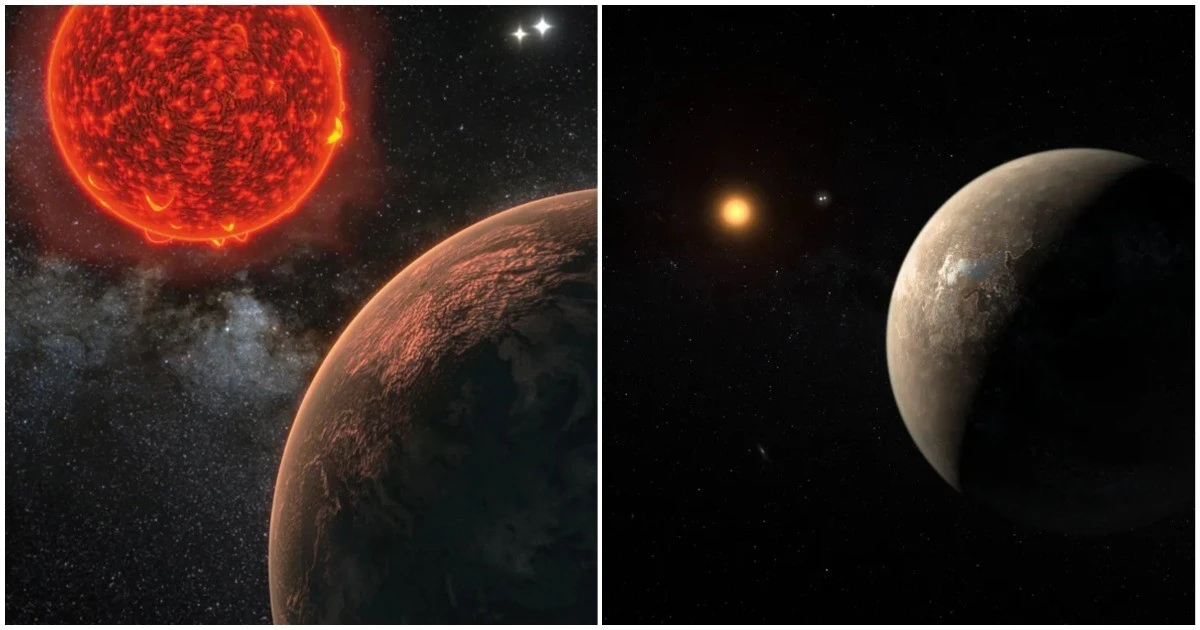
These aren't gas bubbles like Jupiter, but solid rock spheres where you could theoretically build a dacha and even breathe something other than pure nitrogen. We've selected three of the most realistic candidates for "Earth 2.0," which are just a few thousand years away in a cryocapsule.
Proxima Centauri b: The Galaxy's Next Door 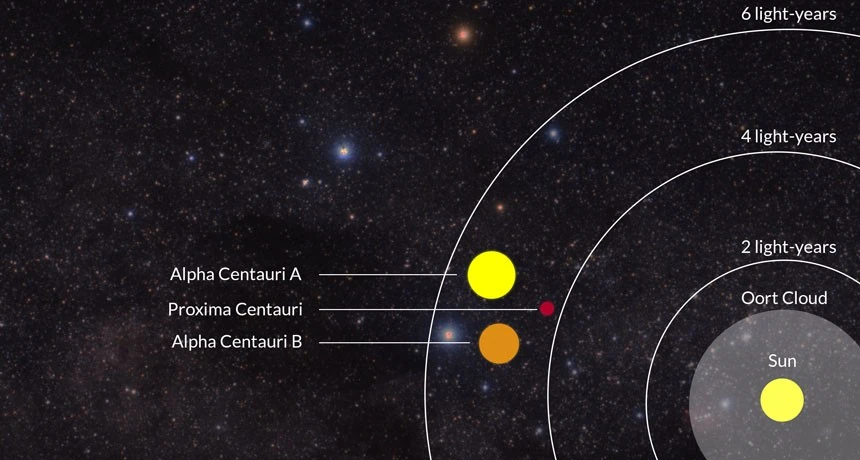
First on the list is our closest neighbor, Proxima Centauri b. It's located just 4.2 light years away. In cosmic terms, that's literally right over the fence. The planet is in the habitable zone, meaning it's not so hot that it boils away, and not so cold that it turns into an ice statue. This planet's main attraction is its red sun. The local dwarf glows dimly and crimson, so you're guaranteed a perpetual romantic sunset. However, the star does tend to spew radiation, so you'll need good sunscreen (and a lead bunker) to get there.
TRAPPIST-1e: A Paradise for Panoramic View Lovers 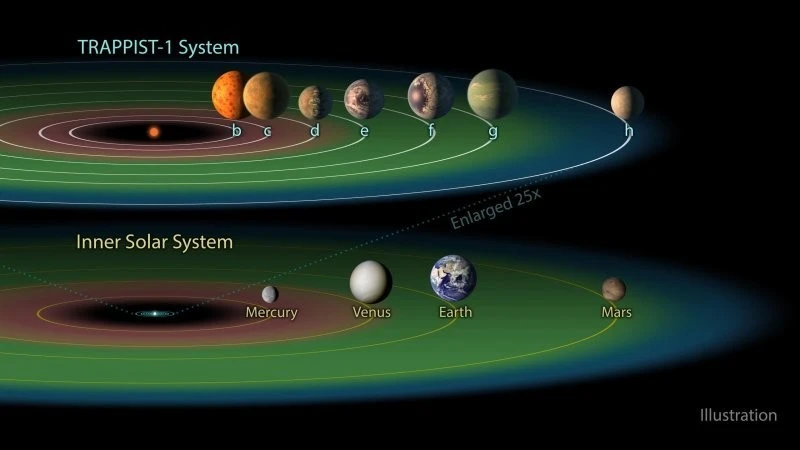
If one sun isn't enough for you, welcome to the TRAPPIST-1 system. Planet "e" is a true gem. It's almost the same size as Earth and likely has an iron core. But the coolest thing is that the seven planets in this system are so close together that, standing on the surface of "e," you'll see other worlds in the sky as enormous moons, with a telescope capable of discerning relief. It's definitely the best view in the known Universe.
Kepler-452b: The Overweight Big Brother 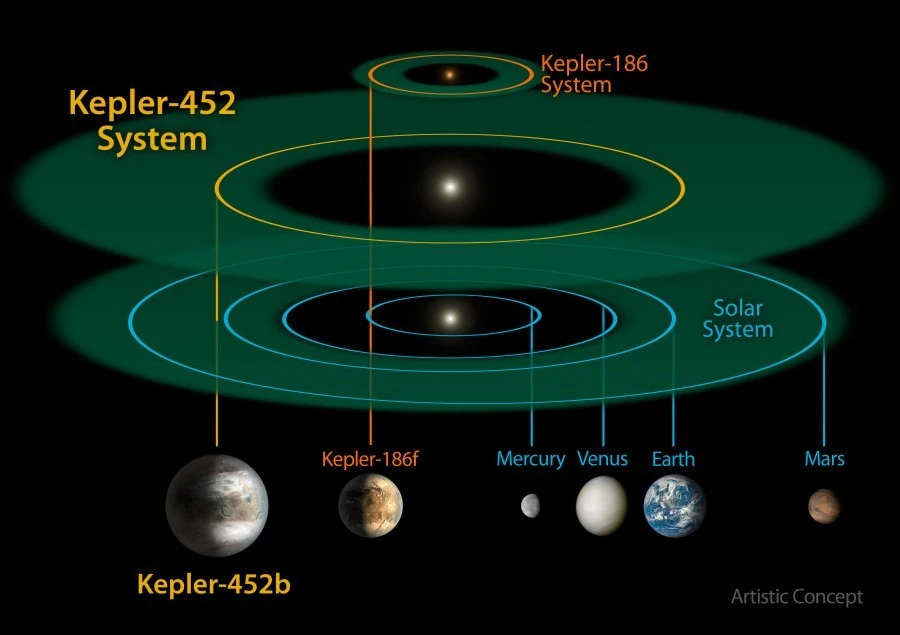
The size and scale of the Kepler-452 system are comparable to those of Kepler-186 and the Solar System. Kepler-186 is a miniature solar system that would fit entirely within the orbit of Mercury.
Kepler-452b is an option for those who long for a true yellow sun. Its star is almost a replica of our Sun, and a year on the planet lasts 385 days. Perfect, right? But there's a catch: the planet is one and a half times larger than Earth. This means its gravity is twice as strong. If you weigh 70 kg on Earth, the scale there will show a whopping 140. Forget about high jumping; every step on this planet will feel like an intense CrossFit workout. But in a couple of generations, colonists there will become true superhumans with incredibly strong legs. 
Scientists haven't yet been able to determine whether these planets contain oxygen, but they're actively working on it. They know their size, mass, and distance from their star, but the composition of their atmospheres is perhaps the biggest mystery, which the James Webb Space Telescope is currently trying to solve.