Why manned interstellar missions are doomed to failure (4 photos)
Proxima Centauri, the closest star to the Solar System, is only 4.24 light-years from Earth. That doesn't sound far until you learn the harsh truth: even a spacecraft as fast as NASA's New Horizons probe, which visited the Pluto system on July 14, 2015, would take approximately 73,000 years to get there. 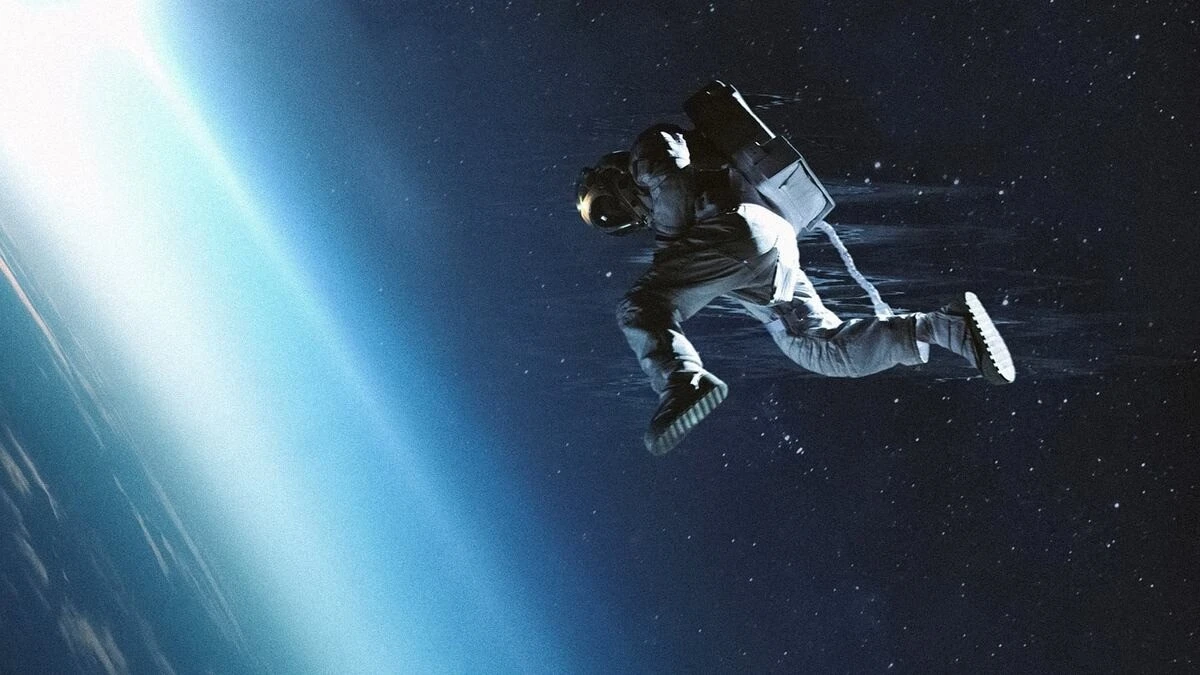
But let's imagine the impossible. Humanity has acquired a huge amount of money and resources, and it has decided to organize a manned mission to Proxima Centauri—a massive space station with a hundred colonists on board. This station is self-sufficient, with closed life support systems, perfect waste recycling, and an inexhaustible food supply thanks to hydroponic farms. So, in our thought experiment, the basic technical problems have been solved (at least temporarily), but the main question remains: can humans survive 730 centuries of cosmic confinement?
Space Prison
One hundred people are locked in a metal box hurtling through the interstellar void. Each of them on board realizes that none of them will be alive when the ship reaches its destination. Their children, grandchildren, and great-grandchildren will be gone. Even the 2500th generation will not see Proxima Centauri.
Every day—the same corridors, the same faces, the same station maintenance tasks. Equipment repair, food cultivation, cleaning, waste processing, medical care—an endless cycle of responsibilities. No new horizons, no discoveries, no variety... only endless routine and the realization that your life is just a tiny link in a chain of generations doomed to this existence.
Unnaturalness
From the very first generations, pragmatic birth control will have to be introduced. Women will be forced to bear children from different men to maintain genetic diversity. No permanent couples, no emotional attachments—only biological functions for survival. 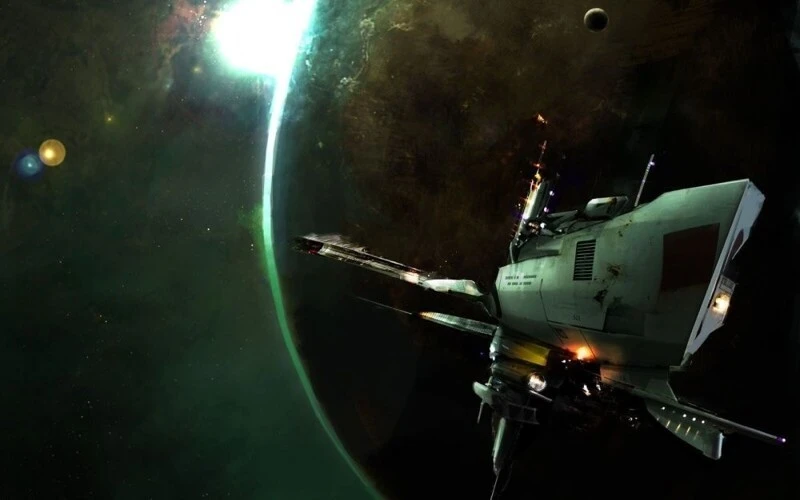
Imagine a society where every child is planned by committees, where personal desires and preferences are subordinated to the survival of the species. How long can people, with all the depth of human emotion, tolerate such an existence?
The Inevitability of Conflict
Human history is a history of endless disagreements and clashes of interests. And despite the fact that we have an entire planet with boundless space and vast resources at our disposal, people are still constantly dividing and fighting over something. And what would happen if people were locked in a cramped space for decades?
The first serious conflicts will begin within a few generations. The struggle for power, resources, and station territory. For example, religious conflicts could erupt—some generations could become fanatically religious, creating a strict theocracy (to find some meaning in all this nonsense), while others would rebel against it as militant atheists. Or catastrophic social stratification could emerge—the highly educated technical elite, controlling the station's vital systems, would begin to despise the "ordinary" workers who do the "dirty work."
The main problem with a space station is that it's impossible to escape. On Earth, dissatisfied people could migrate, establish new settlements, and start over. In space, there's no such luxury. Any conflict would have to be resolved within a closed system, the capabilities of which are certainly not unlimited. Consequently, this would inevitably lead to the accumulation of social tension. 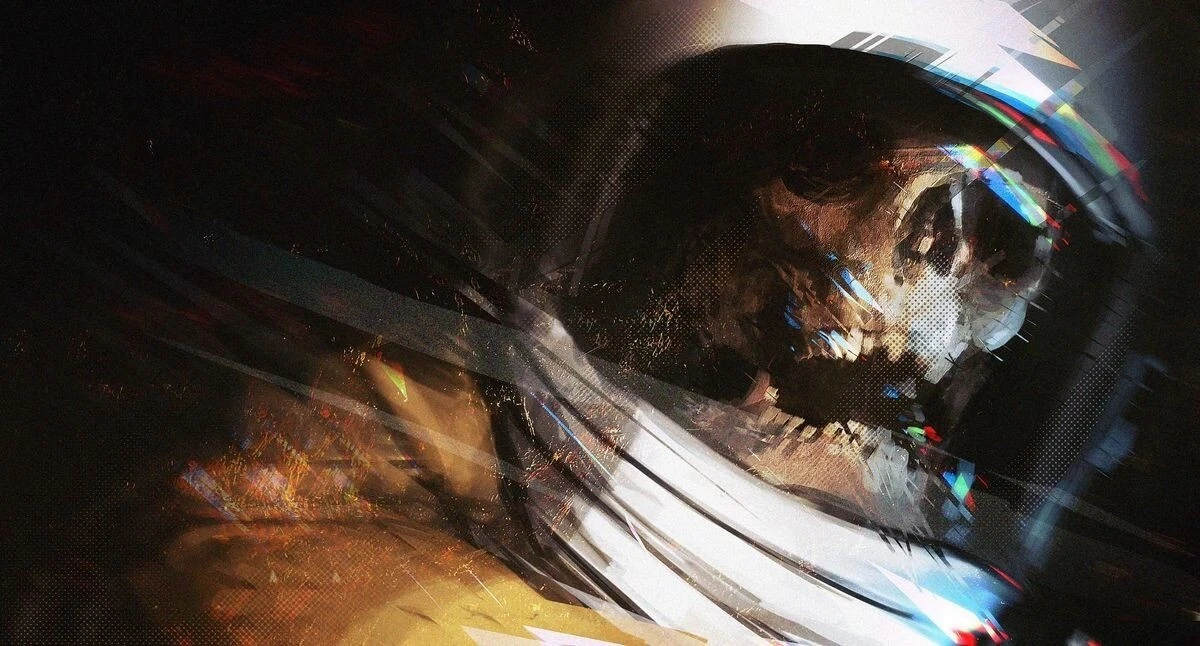
Look at history: Rome lasted about 1,200 years, the Byzantine Empire just over a thousand, the Ottoman Empire 623 years. Even the most stable societies eventually decline. And we're talking about 730 centuries!
Technical Reality
Even if we assume that social problems can be avoided, technical ones remain. In 73,000 years, any equipment will wear out and become unusable. Spare parts are needed that can't be delivered from Earth. Where can we get resources in the interstellar void?
Okay, let's say the station has a huge reservoir of resources, and a small factory for producing the necessary components from them. Then we need people capable of maintaining a high technological level for millennia. But what if at some point this knowledge is lost? What if technological degradation occurs? Today, humanity has unlimited access to any information, but what do the vast majority of people do? Watch "funny" pictures and short videos. Where's the guarantee that the colonists won't face a similar disaster at some point?
A Doomed Utopia
Interstellar travel on a generation ship is the stuff of cheap science fiction. The complexity of the human psyche, the inevitability of social conflict, and technological limitations make such a mission doomed to failure. 
Proxima Centauri as seen by the Hubble Space Telescope
Even radical life extension won't solve the main problem: humans will remain humans, with all their emotions, desires, and conflicts. To make such a journey, we would have to give up what makes us human.
Instantaneous travel technologies contradict the fundamental laws of physics. The only viable option is to entrust interstellar missions to artificial intelligence (AI)—which hasn't yet been created, but will emerge in the foreseeable future. AI will act rationally, without destructive emotions or irrational desires, methodically completing assigned tasks. Perhaps this is how humanity will not only explore distant stars, but also spread its knowledge and achievements further than we can imagine today.