Why Are the World's Oceans Less Explored Than Mars? (2 photos)
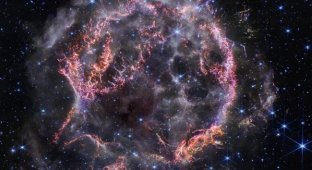
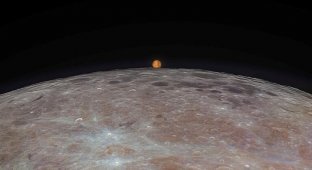
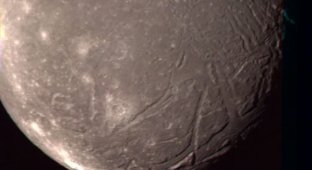
Humanity has sent rovers to Mars, landed in the outer solar system, imaged two black holes, and mapped the Moon, Venus, Mercury, the moons of the gas giants, and even parts of the extremely distant Pluto. Yet our own ocean remains one of the planet's greatest mysteries. 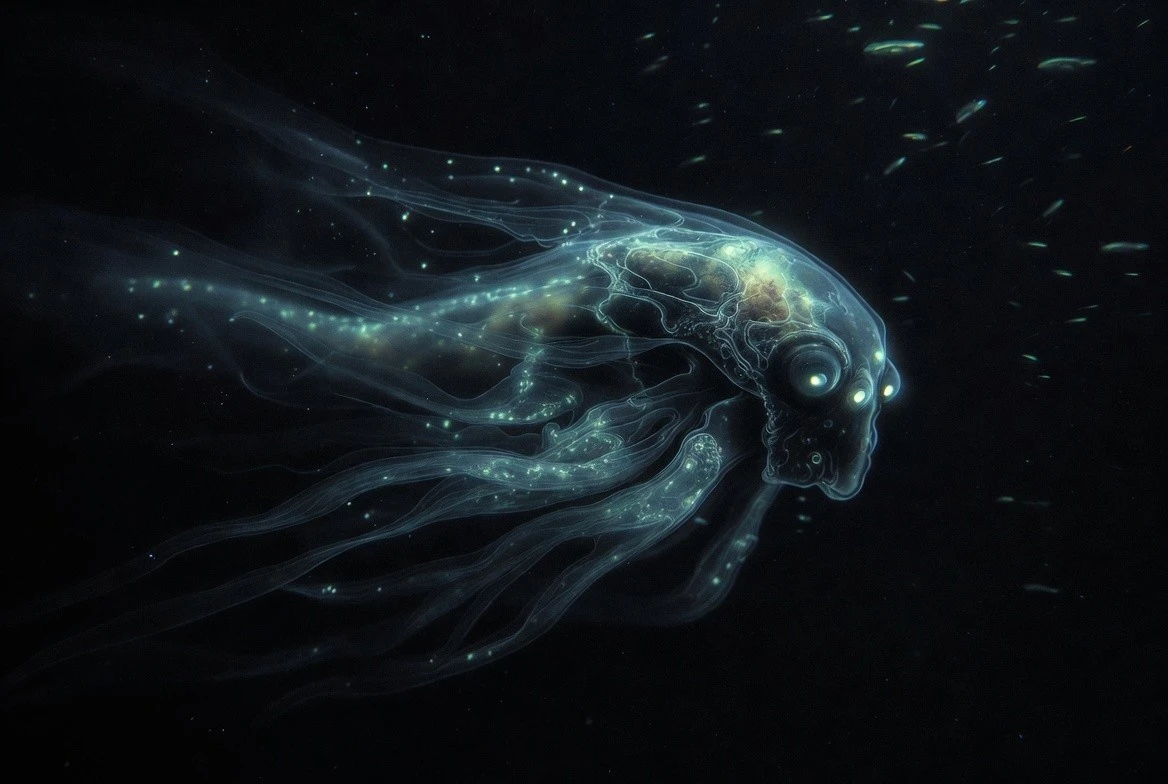
According to NOAA, only about 5% of the world's oceans have been explored through direct visual observation. This involves diving underwater vehicles with cameras to provide a true picture of the seafloor.
Overall, the entire ocean has been mapped by satellites with a resolution of about five kilometers per pixel—we know the locations of major underwater ridges and troughs. However, detailed mapping with a resolution of about 100 meters per pixel covers only 27% of the ocean floor. By comparison, NASA's Magellan spacecraft mapped 98% of the surface of Venus, providing an average resolution of about 100 meters per pixel. The entire surface of Mars has been mapped with an even higher resolution.
The main reason for such little study of the World Ocean is the physical difficulties of exploration:
Lack of Light
Sunlight does not penetrate deeper than 200 meters, turning most of the ocean into a realm of absolute darkness. Any exploration requires powerful artificial lighting.
Extreme Pressure
At the bottom of the Mariana Trench, the pressure is a thousand times greater than at the surface—enough to crush a conventional submarine.
Remoteness and Scale
The World Ocean, containing over 1.3 billion cubic kilometers of water, accounts for approximately 71% of the planet's surface area. Exploring such a vast territory requires colossal time, human, and financial resources.
Technological Limitations
Creating autonomous vehicles capable of withstanding deep-sea conditions requires enormous investment and complex technological solutions. 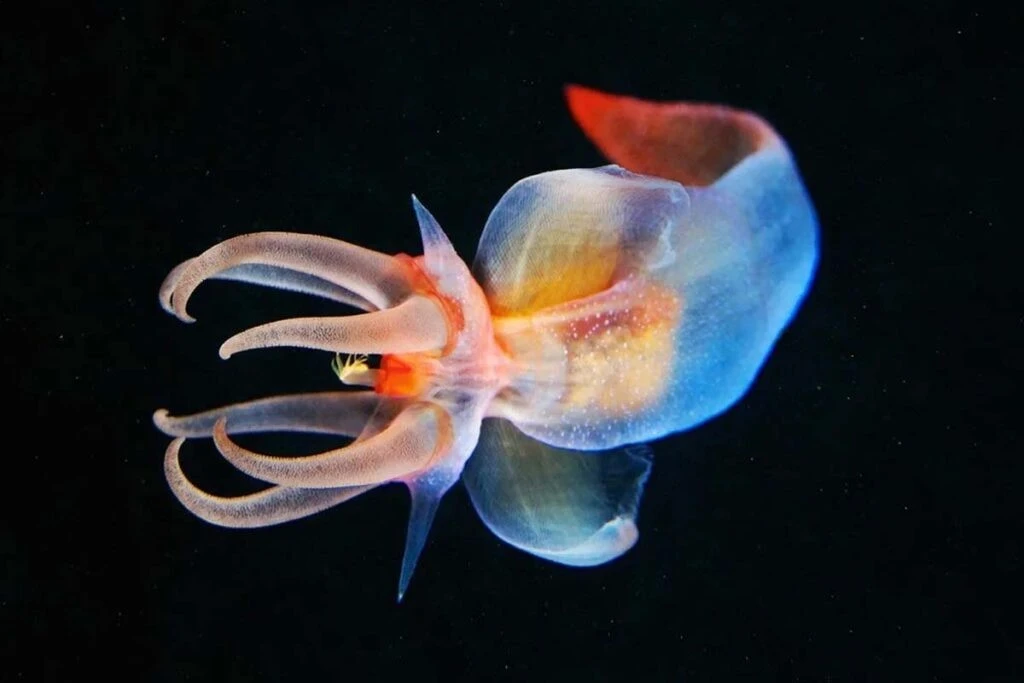
Angelfish
Scientists estimate that the World Ocean is home to between 700,000 and over a million species, two-thirds of which have yet to be discovered. But we're not standing still, as marine biologists describe around 2,000 new species each year.
But for many years to come, the World Ocean will remain one of the unexplored frontiers of our amazing planet.