The millennium mystery: what's hidden in the Hittite Green Stone (7 photos + 1 video)
The Green Stone of Hattusa is one of the most mysterious and intriguing finds from the Hittite capital. This is primarily because almost nothing can be said with certainty about it. 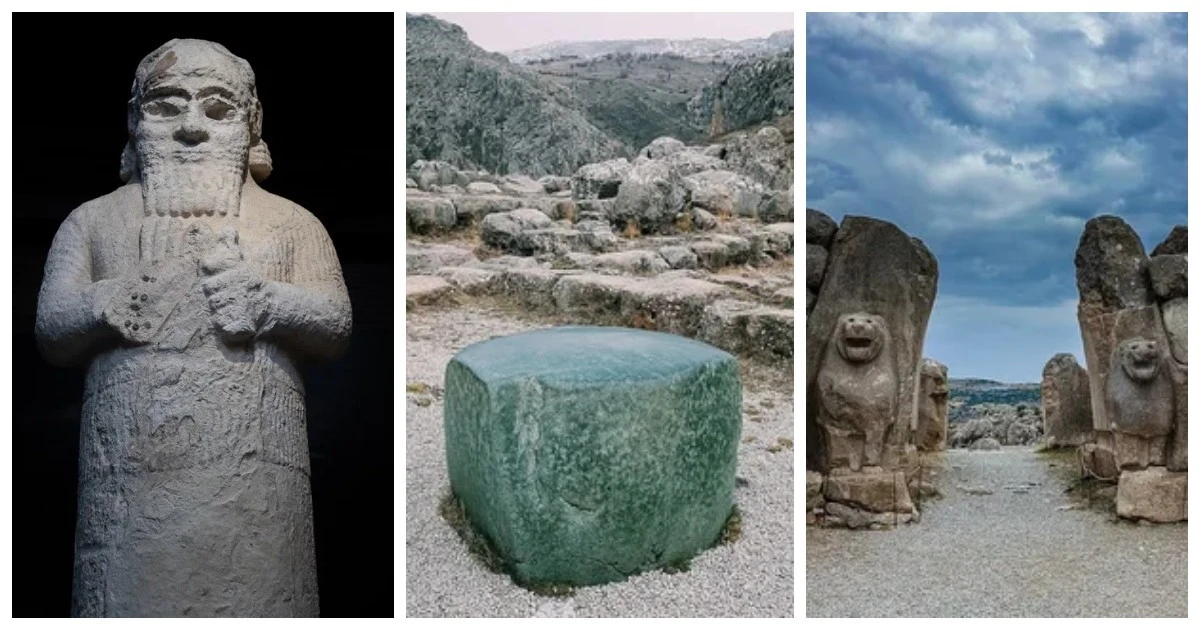
This unusual polished block of green rock stands out sharply against the city's monumental architecture, inscribed tablets, and sculptural reliefs. Yet, despite more than a century of archaeological study, its original purpose remains unsolved. 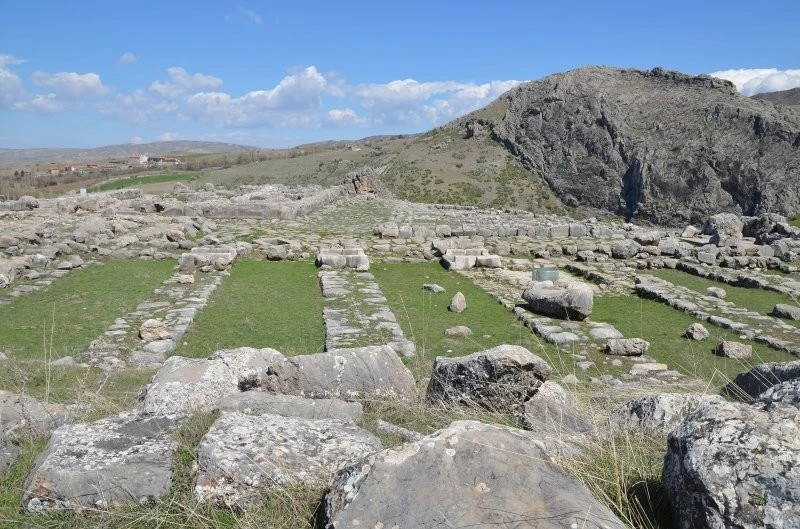
Hattusa - Capital of the Hittite Empire
Hattusa, located near the modern village of Boğazkale in the Turkish province of Çorum, was one of the most powerful cities of the Late Bronze Age, serving as the capital of the Hittite Empire from approximately 1650 BC until its fall around 1200 BC. Among the city's ruins are grandiose fortifications, temples, palaces, and archives of cuneiform tablets, documenting in detail the political, religious, and economic life of the empire. 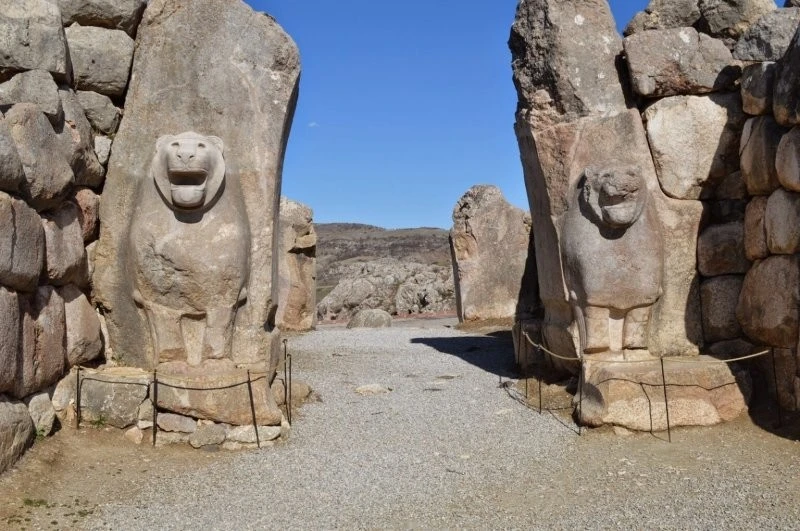
The Lion Gate (Aslanli Kapı) is a defensive gate in the "Upper City" of the capital of the Hittite Empire, Hattusa.
Within this ancient city, a structure known as the Great Temple was the center of a religious cult, likely dedicated to the thunder god Tarhuntu and the sun goddess Arinna, the two supreme deities of the Hittites. Excavations have revealed the temple's foundations, storage rooms, and ritual fittings. 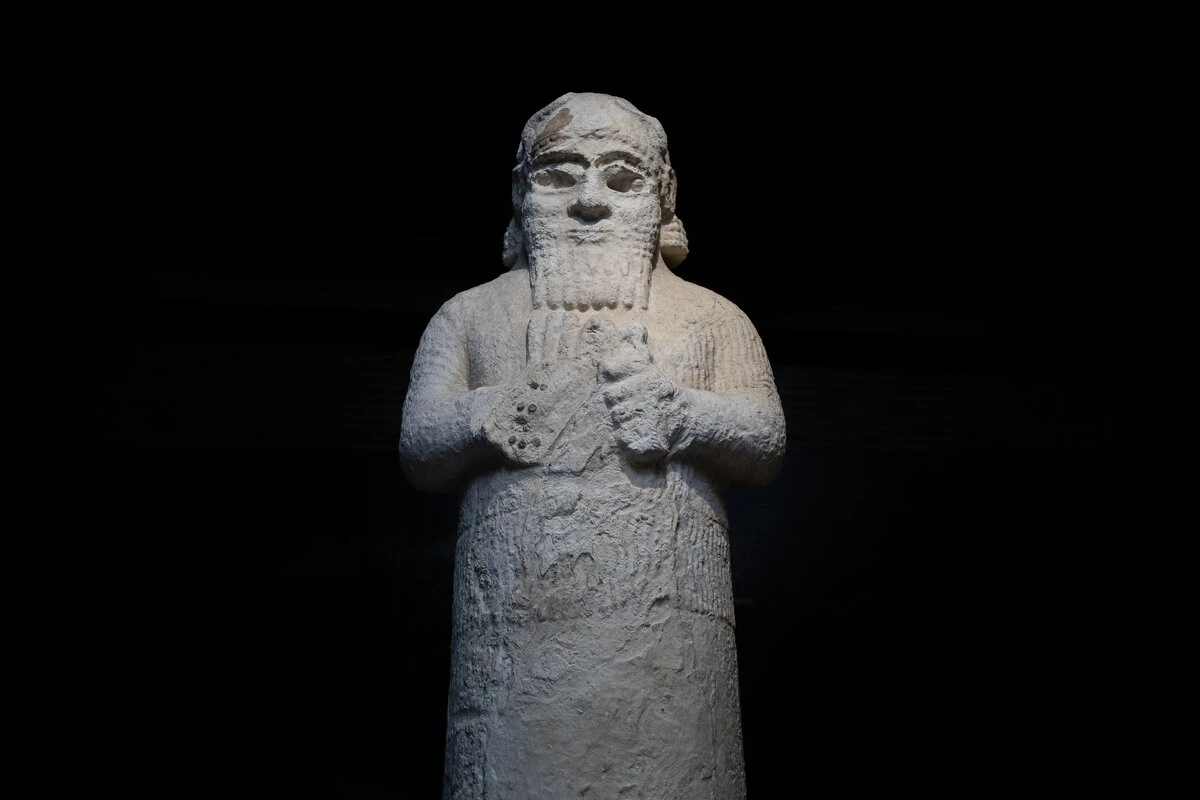
Tarhunt – the god of thunder in Hittite mythology
The green stone was discovered in a small room adjacent to the street leading from the temple gate. It is a roughly hewn cubic block approximately 69 centimeters on a side and weighs about a ton. The hard, green-hued rock is likely a variety of nephrite or serpentinite – a dark-green mineral form of jadeite commonly found in this region of Turkey. 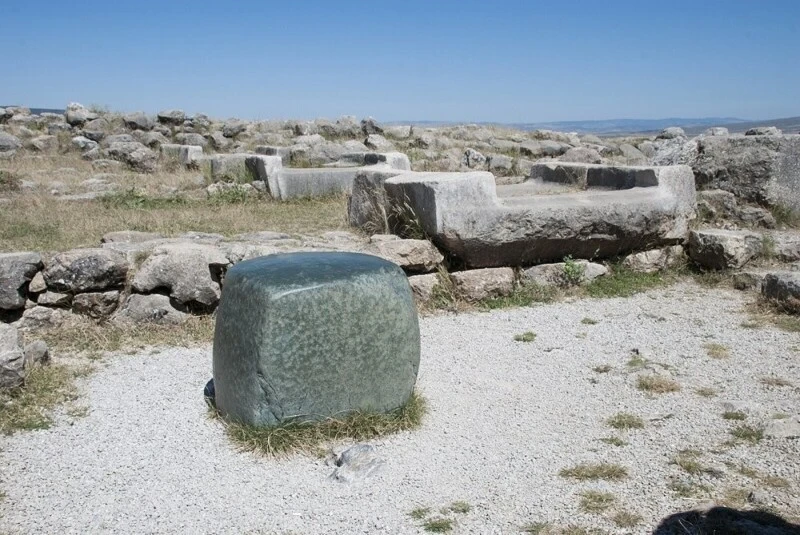
The Green Stone of Hatoussa
Unlike the surrounding architectural blocks, made primarily of limestone, and the many inscribed artifacts found within the city, the Green Stone bears no inscriptions, images, or markings of any kind. It is precisely this lack of written evidence that makes it so mysterious and captivating. 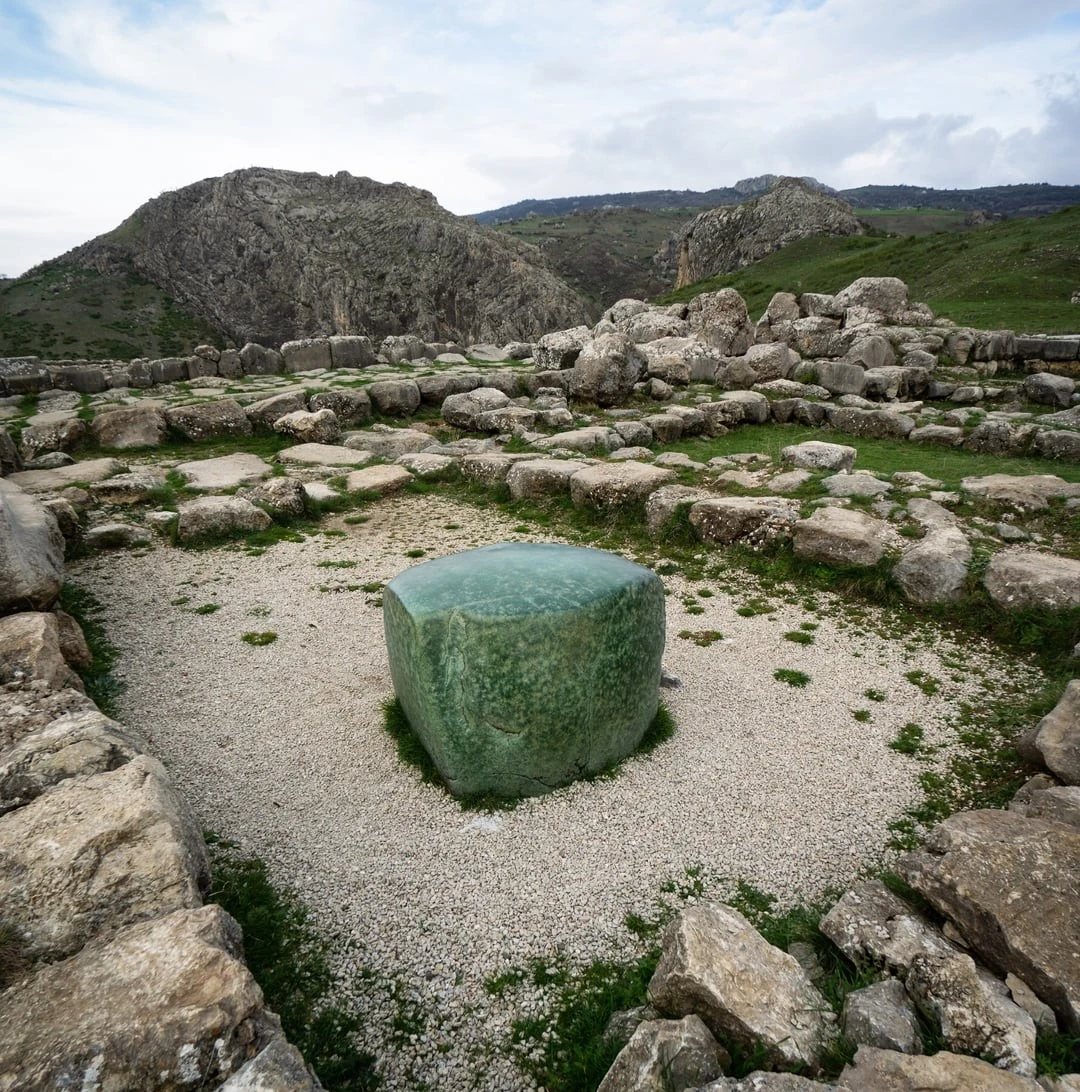
Scholars have put forward several hypotheses, none of which can be confirmed due to a lack of textual evidence. Some archaeologists believe that its location in the temple and its polished shape indicate a ritual or cultic purpose. It may have served as an altar or sacred object to which offerings were made. According to another theory, the stone may have been a pedestal or base for a lost statue of a deity. It may also have served as a symbolic throne or seat, used in religious rites or royal ceremonies within the temple complex. 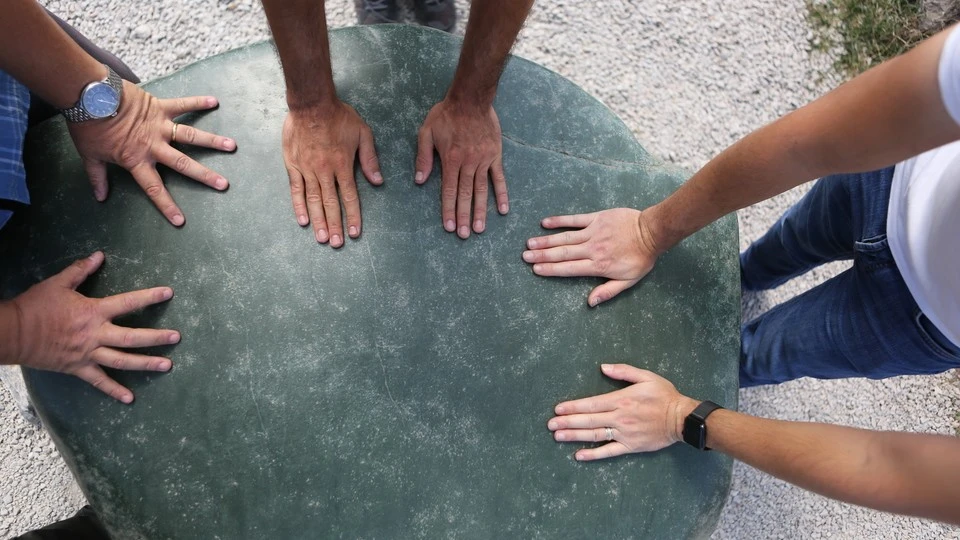
In local folklore, the Green Stone is often called the wishing stone, imbued with the power to bestow good luck and wealth upon anyone who touches it. However, such stories and legends are nothing more than the product of modern folklore.