Bamboo is one of the fastest-growing species in the plant world. Some species can grow more than a meter in 24 hours! That's almost four centimeters per hour—a growth rate that can be observed literally in real time. 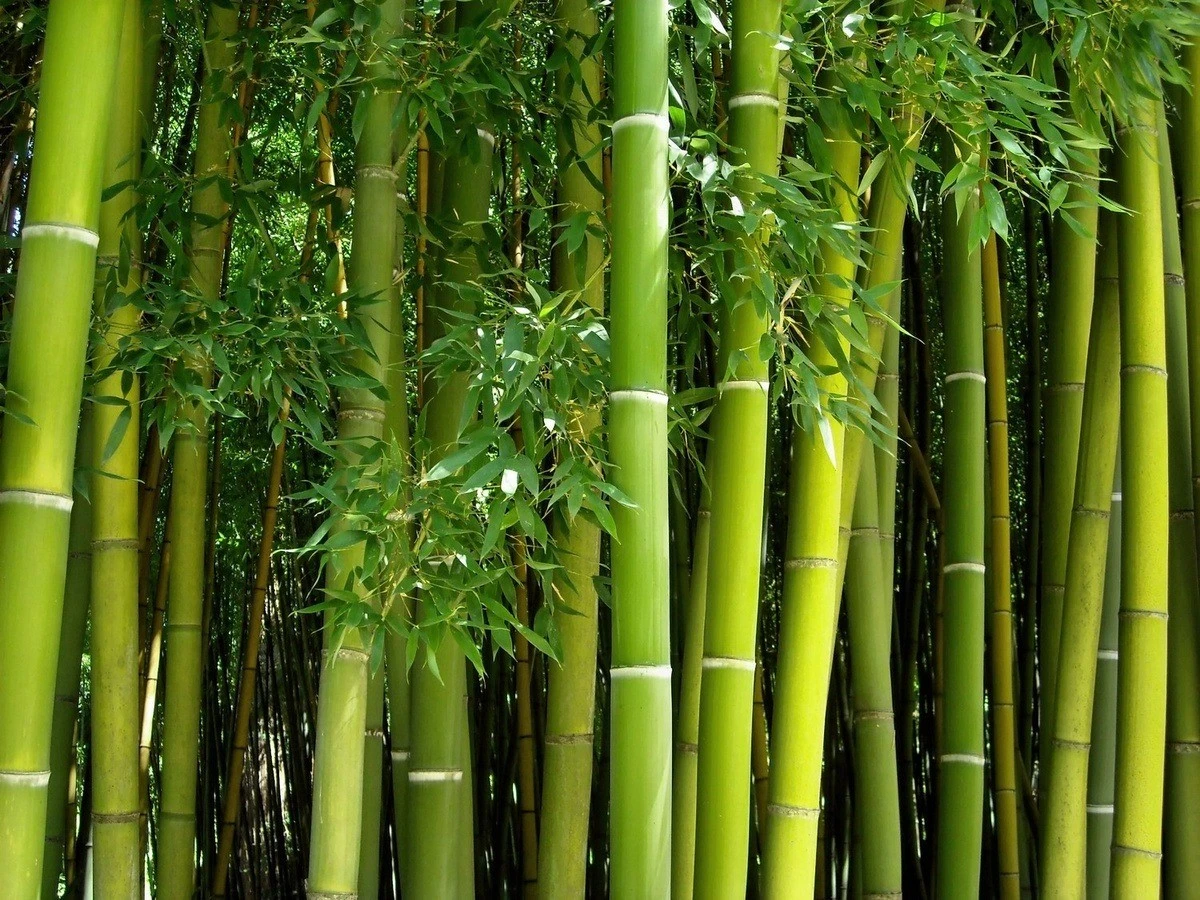
Today, confirmed records belong to Phyllostachys bambusoides (madake) and Phyllostachys edulis (moso), which can grow up to 120 centimeters in 24 hours. The average growth rate for most bamboo species is 30 to 60 centimeters per day during the active growth phase.
For comparison, a typical tree grows an average of 30-50 centimeters per year. Bamboo grows over this amount in a day.
What is the reason for this superpower that nature has endowed bamboo with?
The Main Secret of Speed
Most plants have a growth zone only at the tip of the shoot—in the apical meristem. Bamboo, however, is structured differently: each node (the place where the stem is divided by a septum) contains its own meristem—a region of actively dividing cells.
A young bamboo shoot has dozens of such nodes, and when it finds itself in favorable conditions, all the meristems begin to function simultaneously. That is, each segment of the shoot elongates in parallel with the others.
In other words, bamboo grows not from a single point, but from dozens at once.
Ready-Made Structure
Another feature that gives bamboo a growth advantage is that the shoot emerges from the ground already fully formed—with all nodes and segments. It doesn't need to create a new structure, as it was already established in the rhizome. Therefore, the shoot only needs to grow.
Most other plants whose shoots emerge from the ground must spend time and energy gradually forming the stem and leaves. Bamboo, however, does this in advance, while still underground, and then simply unfolds the completed structure upon reaching the surface. The process can be compared to stretching the bellows of an accordion. 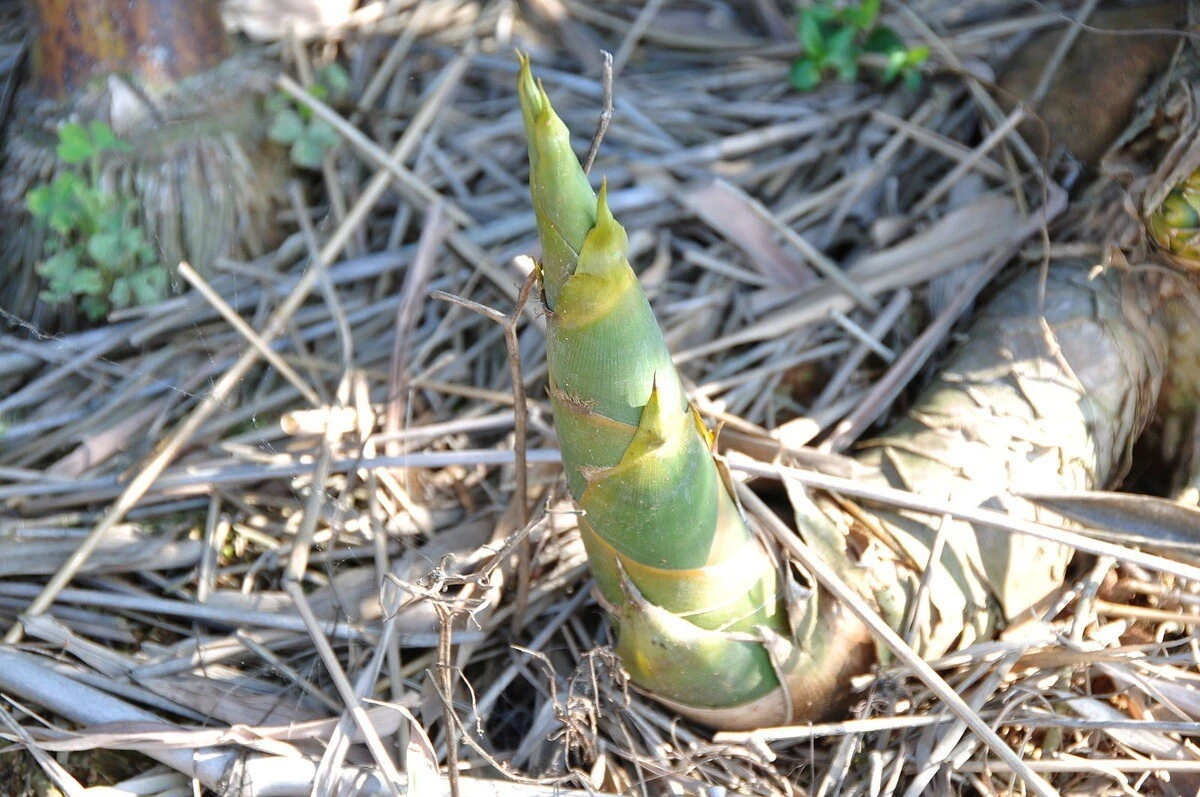
Furthermore, bamboo stems are hollow inside. Therefore, the plant doesn't need to waste time and resources filling the core with dense wood, as trees do.
Despite its internal "emptiness," the structure with partitions and nodes gives bamboo impressive strength, which is why it is widely used as a building material in some regions of the world.
A nurturing root system
There's another important point: bamboo is a grass, not a tree. Its rhizome is a complex, branched underground network that patiently accumulates nutrients and water. When the time comes for growth, the root system generously supplies the shoots with everything they need.
But trees don't do this. Their roots work "in real time," extracting resources and immediately distributing them among the crown, trunk, and new branches.
In this regard, the bamboo root system is like a battery: it stores everything it needs for months, then "discharges" the accumulated energy in one powerful growth spurt.
Add your comment
You might be interested in:
















Protective film Removing it with a power screwdriver

When a child plays hide-and-seek at a professional level

Super dads who swoop in to save the day

Precision carpentry

Looks like it's time to buy WinRAR

How to hang wallpaper neatly

Man sets up bedroom camera and discovers the reason for his

Athlete in Bavarian dress flies over a lake on a hydrofoil

First meeting with Mom's twin sister
