Why Are Babies Said to Be "Found in the Cabbage Patch"? (4 photos)
Since childhood, we've all heard the old story that babies are "found in the cabbage patch." But have you ever wondered why cabbage, and not peas, turnips, or rye? Why this particular crop out of all the traditional staples of ancient Rus? As it turns out, there are several theories behind the origin of this famous idiom. 
No one knows exactly when this lighthearted tale first emerged. Cabbage has been cultivated in Rus since the 9th century AD, introduced either by Greco-Roman merchants or Norse traders. So, newborns couldn't have been "found in the cabbage patch" any earlier than that.
The Midwifery Theory
Childbirth has always been a bloody affair. In ancient times, people viewed blood with a great deal of suspicion—a belief shared across many cultures. Blood was seen as a vessel of powerful forces, and not necessarily benevolent ones. This very belief is why menstruation is still taboo or seen as "unclean" in certain traditional cultures. 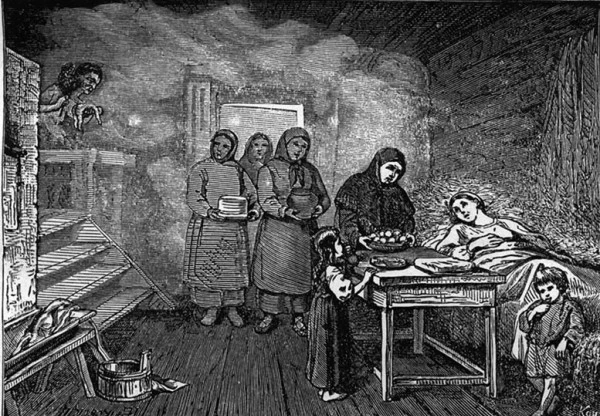
Various cleansing rituals were performed to deal with blood, one of which involved cabbage. In ancient Rus, births usually took place in a bathhouse, and bedsheets were rarely used. Staining precious fabric meant destroying it, and textiles were expensive. Instead, midwives placed broad cabbage leaves beneath the woman in labor. Afterwards, the leaves were simply burned—a practice believed to destroy any evil spirits brought into the world along with the blood. (And indeed, the bathhouse itself was traditionally viewed as a spiritually dangerous place.)
The Mythological Theory
A closer look at a head of cabbage reveals a striking resemblance to a fetus attached to an umbilical cord. The earth bears it much like a mother gives life to a child. And to separate the child from the mother—or the cabbage head from the garden bed—one must use a knife to cut the cord or stem. 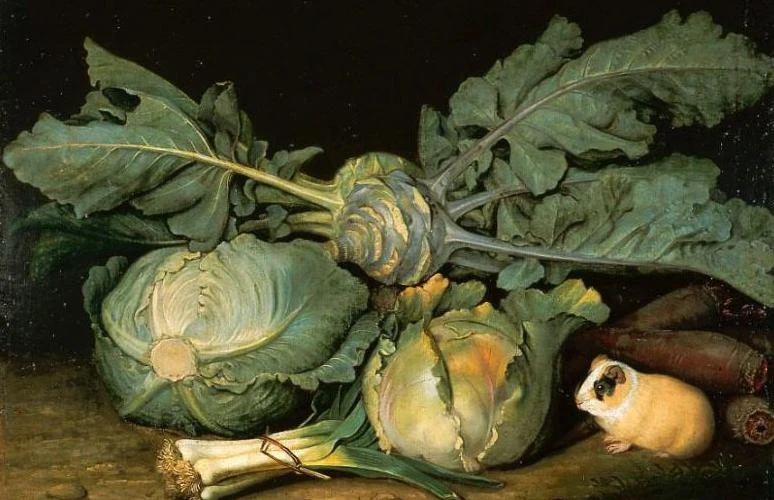
When explaining where babies come from to young children, cabbage served as a remarkably vivid visual aid. It is possible that an ancient myth once attributed human origin to the cabbage itself. Using this allegory, parents could educate their children without getting into the messy physiological details.
The Pagan Theory
In ancient times, many cultures believed malevolent spirits posed a constant threat to mothers and newborns. The early Slavs were no exception. To mislead evil spirits, people avoided speaking directly about childbirth. Rather than being "born," babies were simply "found in the cabbage patch." This clever misdirection was meant to conceal the birth of an heir from dark forces, protecting the infant from illness and death. 
Under this lore, the baby was merely a foundling left in the garden by someone else. Neither father nor mother claimed direct involvement; they were simply taking in an abandoned child to raise. This tradition of disguising a birth still survives today in certain animistic communities.