Do Ostriches Really Bury Their Heads in the Sand? The Origins of an Ancient Myth (4 photos)
We have all grown up hearing that ostriches bury their heads in the sand at the first sign of danger. It is a trope endlessly repeated in cartoons, storybooks, and comic strips—the idea being that by hiding its most vital part, the bird naively assumes it is safe. But is there any truth to it? 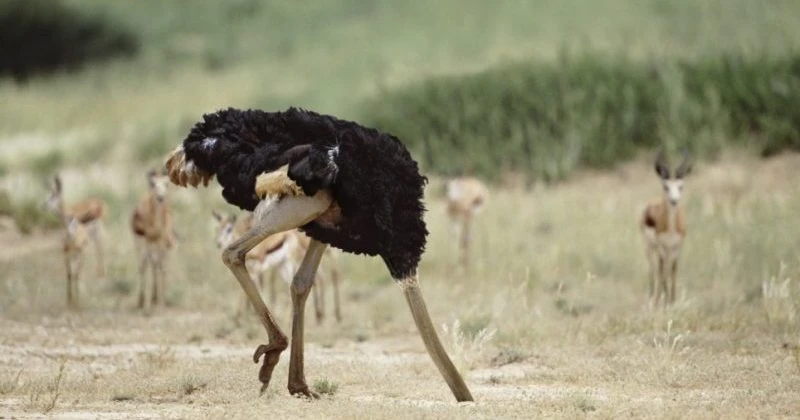
In reality, this supposed defense mechanism is pure fiction. The world has the ancient Roman scholar Pliny the Elder (AD 23–79) to thank for popularizing the idea. It was in his monumental work,
Natural History
, that this claim first appeared under the guise of science, kicking off a myth that has persisted ever since. 
Pliny the Elder
In Pliny's day, and for centuries thereafter, very few Europeans had ever laid eyes on a living ostrich. No one had any reason to doubt such an esteemed scholar, and as a result, a misconception nearly two thousand years old has survived right into modern times.
Today, seeing an ostrich is easy. People encounter these giant birds in the wild, in zoos, and on ostrich farms across the globe. Ask anyone who works on these farms how ostriches react when frightened, and they will tell you they have never once seen one bury its head. They may not be celebrated scholars like Pliny, but their understanding comes from firsthand experience rather than travelers' tales. 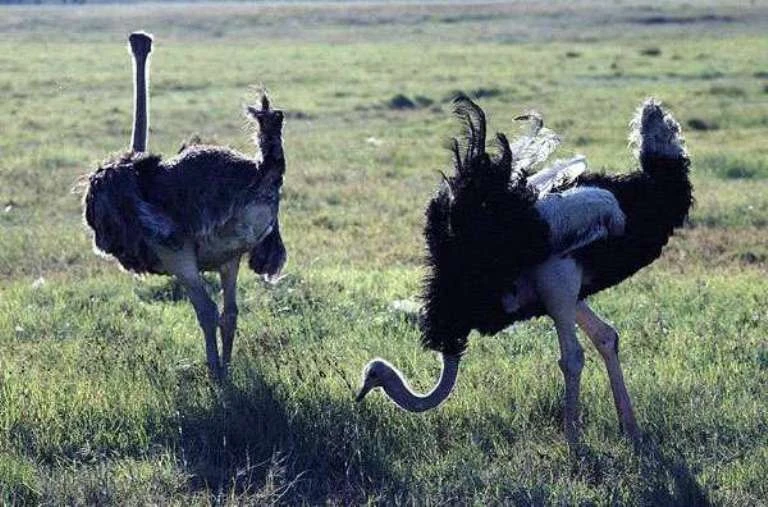
So where did this persistent myth actually come from? Pliny, working from his study, likely fell victim to someone else's misunderstanding. An observer in the field may have seen an ostrich foraging for pebbles, which the birds swallow to help grind food in their gizzards. Or perhaps they spotted an ostrich resting its long neck flat against the ground—a common sight after an exhausting sprint to escape a predator or hunter.
Basic logic is all it takes to dismantle the idea. For starters, ostriches possess a powerful, highly demanding respiratory system. Shoving their heads underground right after an intense chase—when their bodies need oxygen most—makes no physiological sense. 
It is also hard to explain how an ostrich would know when the coast is clear, given that all its primary sensory organs are on its head. Most importantly, could ostriches have survived millions of years of evolution if they handled mortal danger so foolishly? Had they actually relied on such a bizarre strategy, natural selection would have wiped them out long ago.