Crab Sticks: What’s Actually Inside? (8 Photos)
There is no actual crab in crab sticks—a fact almost every reader is probably aware of by now. At best, you might find a pinch of crab extract added for aroma, but more often than not, even that is missing. The "crabby" flavor is engineered using artificial flavorings, sugar, salt, and amino acids that trick our brains into sensing "something seafood-y and expensive." The whole stick is a carefully calculated illusion designed to keep consumer demand high. 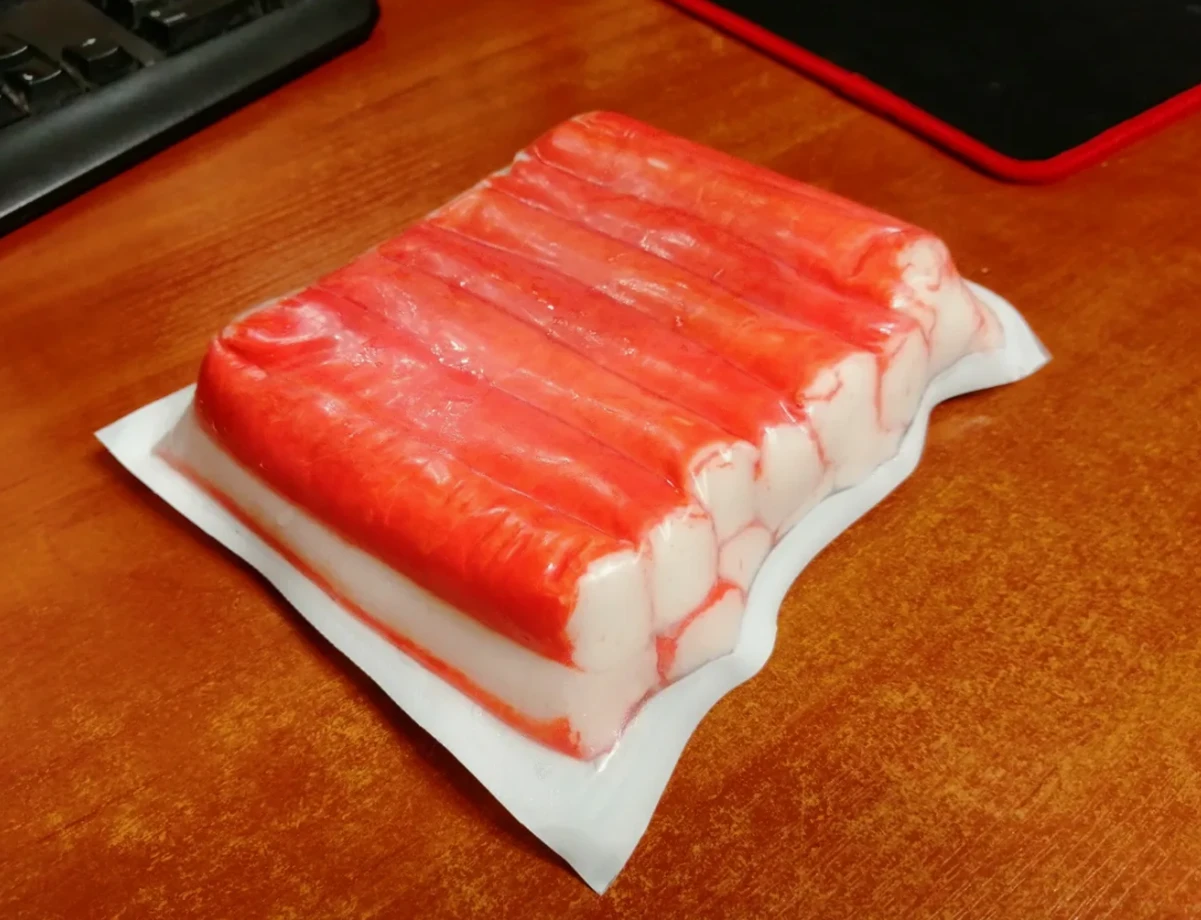
But that begs a much more interesting question: if it’s not crab, then what is it? Who is that unsung hero sitting under a layer of mayo in our holiday salads for decades without receiving a single word of thanks?
The Prime Suspect: Alaska Pollock
Meet the Alaska pollock (*Gadus chalcogrammus*), a close relative of cod and, without exaggeration, one of the most important fish on the planet. It’s an unassuming greyish-brown fish with large eyes and a tiny chin barbel that swims in massive shoals across the cold waters of the North Pacific: the Bering Sea, the Sea of Okhotsk, and off the coasts of Alaska, Kamchatka, and Japan. 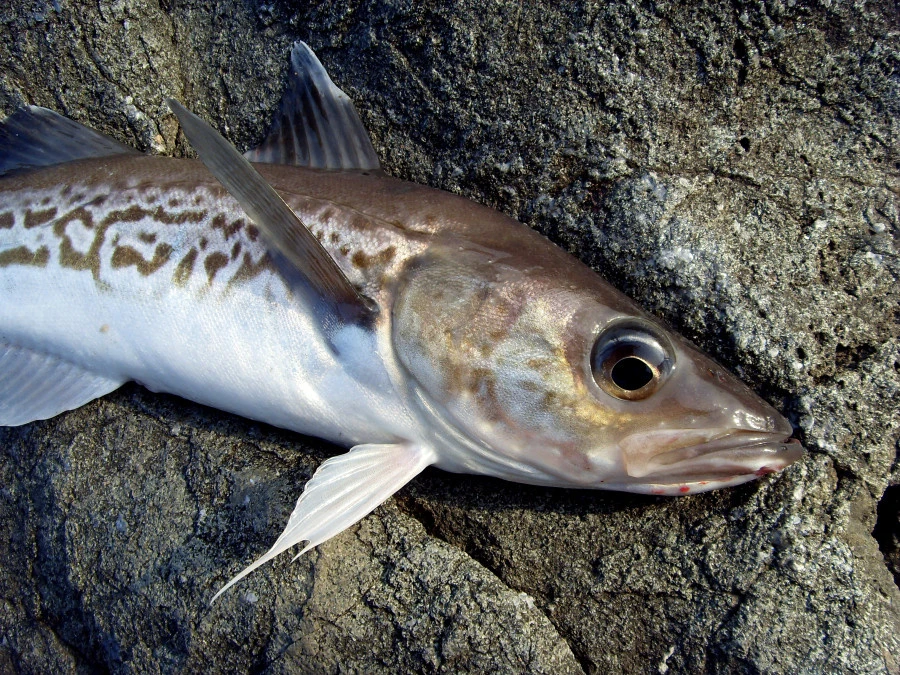
You know, I always dreamed of becoming a crab...
Pollock can grow to nearly a meter in length and live for around three decades, though younger and smaller fish make up the majority of the catch. It does have one rather unsavory trait, however: adult pollock routinely cannibalize their own young. In some years in the Bering Sea, cannibalism is one of the main factors determining how many juveniles survive to adulthood. So before you feel too sorry for the fish in your crab stick, keep in mind that during its lifetime, it likely devoured a few hundred of its own nieces and nephews. Pollock is perfect for crab sticks for one simple reason: its meat is white, lean, and virtually tasteless. Far from a drawback, this is a superpower. You can turn meat like this into practically anything. 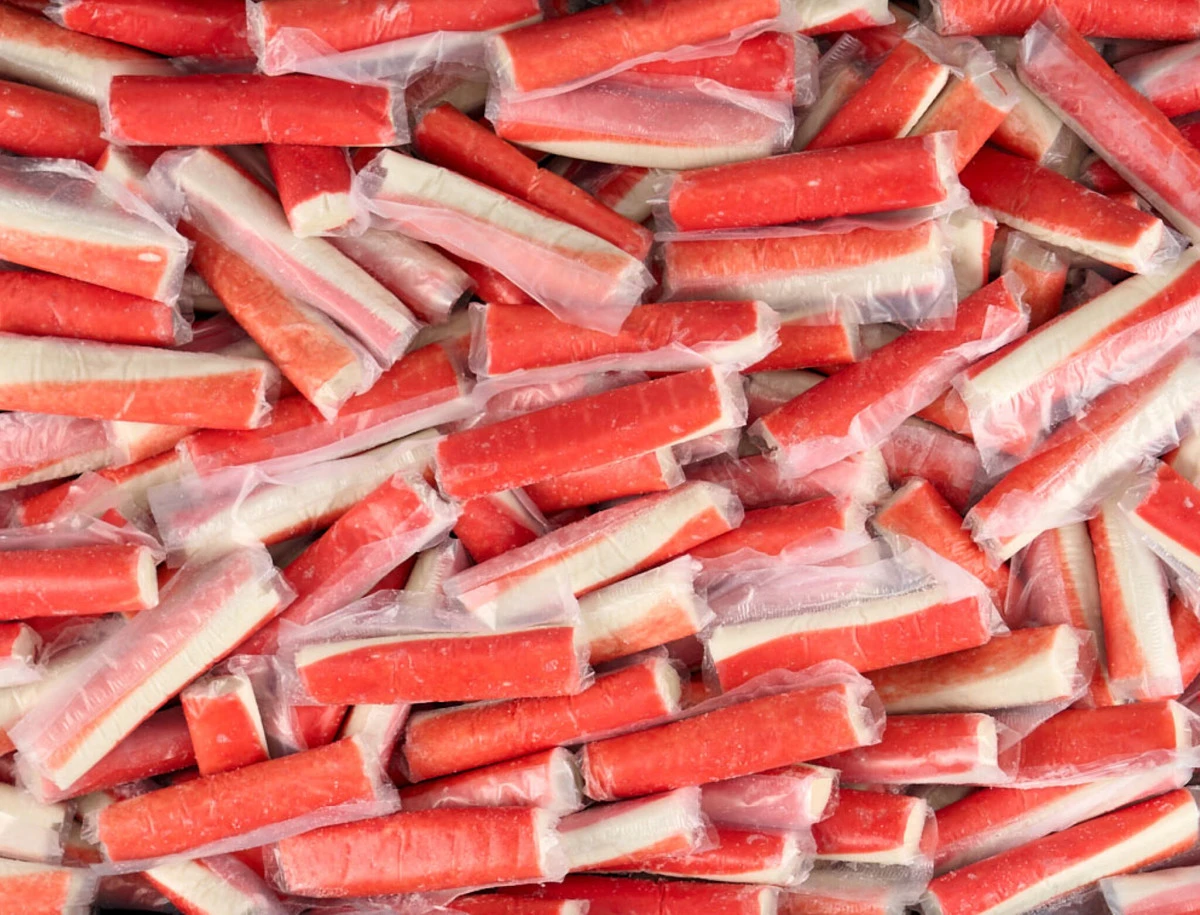
Don't touch that, it's for New Year's!
The Accomplices
While Alaska pollock is the main ingredient, it's far from the only creature lurking in crab sticks. Depending on the manufacturer and the price point, various other whitefish are used as well:
blue whiting—a small relative of cod from the North Atlantic;
Pacific hake;
threadfin bream—tropical fish with a striking pinkish-yellow coloration and a filament trailing from their tail fin, popular in Southeast Asia;
bigeyes—red-hued fish with enormous eyes;
lizardfish—predators with toothy jaws that genuinely resemble a lizard. 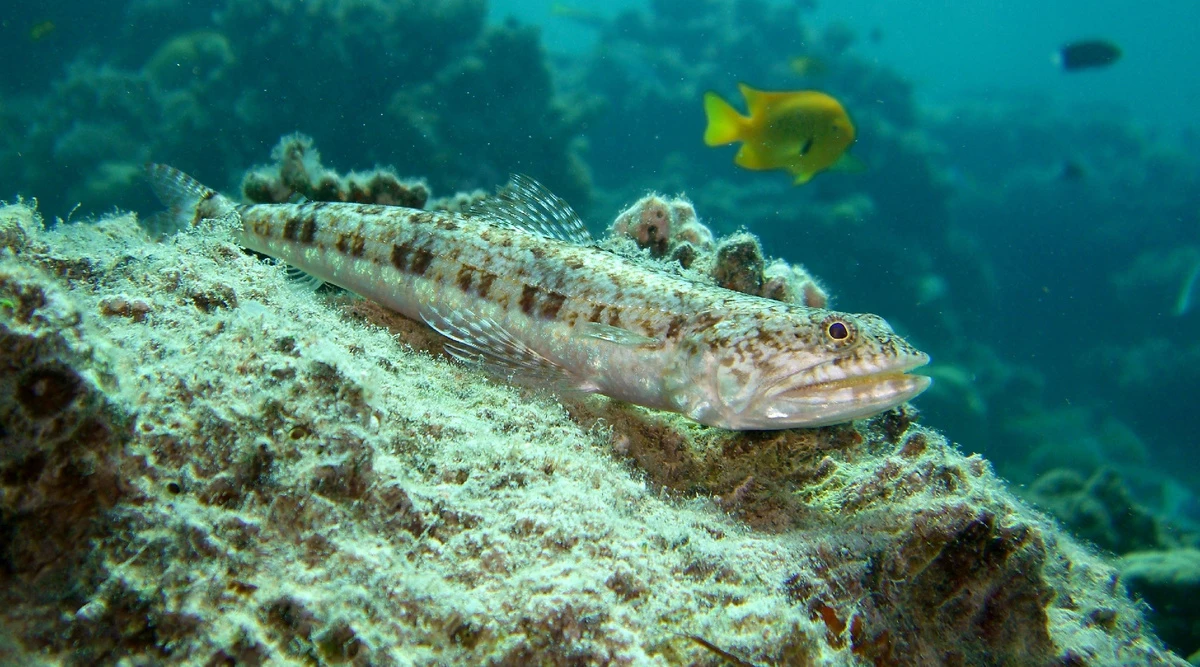
Lizardfish.
In other words, when you buy crab sticks, you might very well be eating a fish from the Indian Ocean whose existence you never even suspected. Welcome to the club. The key concept here is surimi. It's a nearly thousand-year-old Japanese technique originally used to turn minced fish into kamaboko—dense fish cakes and rolls that are still widely eaten in Japan today. The process goes like this: the fish is gutted, the meat is minced, and then it is rinsed multiple times with cold water. This washing removes fat, blood, odors, and soluble proteins, leaving behind mostly muscle proteins. The result is a white, featureless, nearly flavorless paste—a fish with its identity completely erased. It is then pressed, mixed with sugar or sorbitol to prevent the proteins from degrading during freezing, and frozen into blocks. It was this freezing method, invented by Japanese scientists in Hokkaido in 1959, that turned surimi from a local delicacy into a global commodity that could be shipped across oceans. 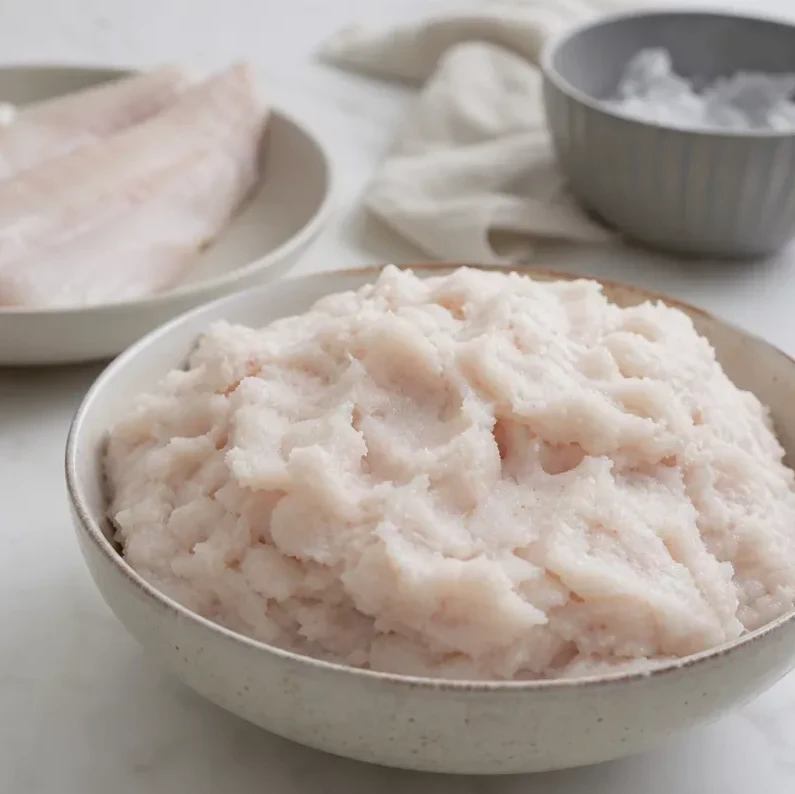
Surimi. 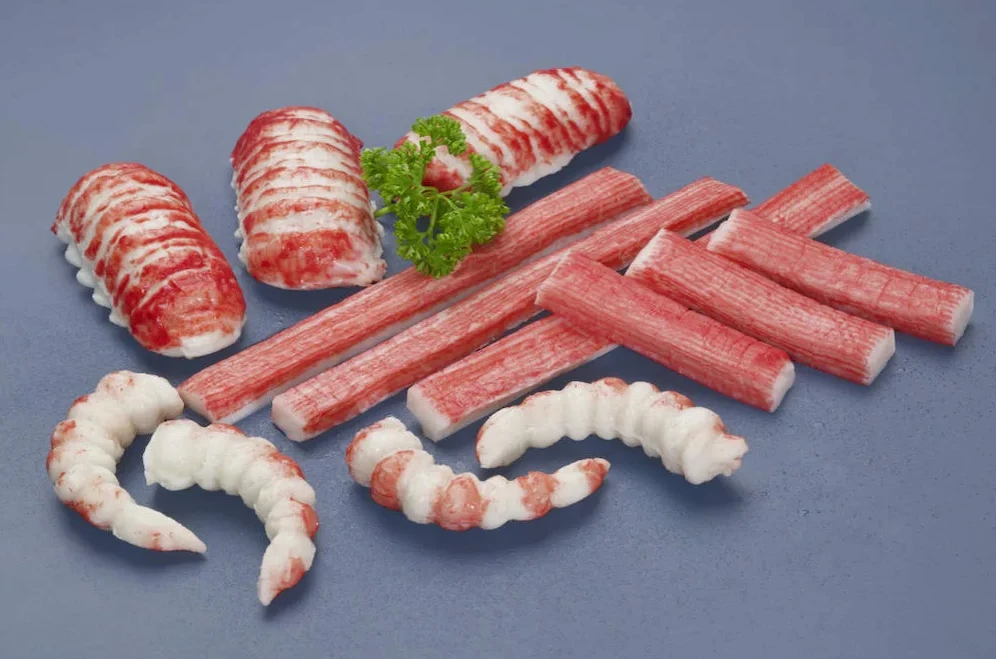
By the way, you can shape it like a shrimp and pass it off as "gourmet tiger prawn."
At the processing plant, the surimi is thawed, mixed with starch, egg white, vegetable oil, salt, and flavorings, and then rolled out into a thin sheet. When heated, the proteins form a springy gel. The sheet is sliced into ultra-thin strips and rolled back up, creating "fibers" that mimic the texture of crab leg meat. The finishing touch is the red stripe on top. Crab sticks themselves were also invented in Japan in the early 1970s, when the Sugiyo company introduced a product called "kanikama"—short for kani (crab) and kamaboko. Originally intended as an affordable alternative to expensive crab meat, it ended up becoming one of the most successful products in food industry history. 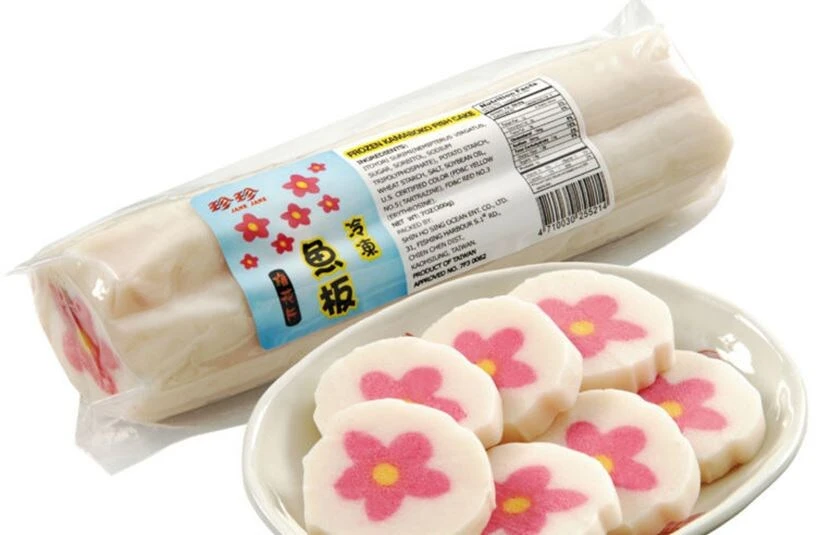
Thanks to the Japanese for anime and crab sticks...
Now for that famous red stripe. It gets its color from various sources: paprika extract, lycopene from tomatoes, or carmine—food additive E120. Carmine is harvested from cochineal, tiny scale insects (Dactylopius coccus) that feed on prickly pear cacti in South and Central America. Female cochineals look like small, fuzzy white specks, but when crushed, they leave a vibrant crimson stain—the insect secretes carminic acid as a defense against ants. Long before Columbus arrived, the Aztecs and Incas used this dye for textiles. Cochineal later became one of the Spanish Empire’s most valuable exports, and today it ends up in yogurt, candy, sausages—and crab sticks. 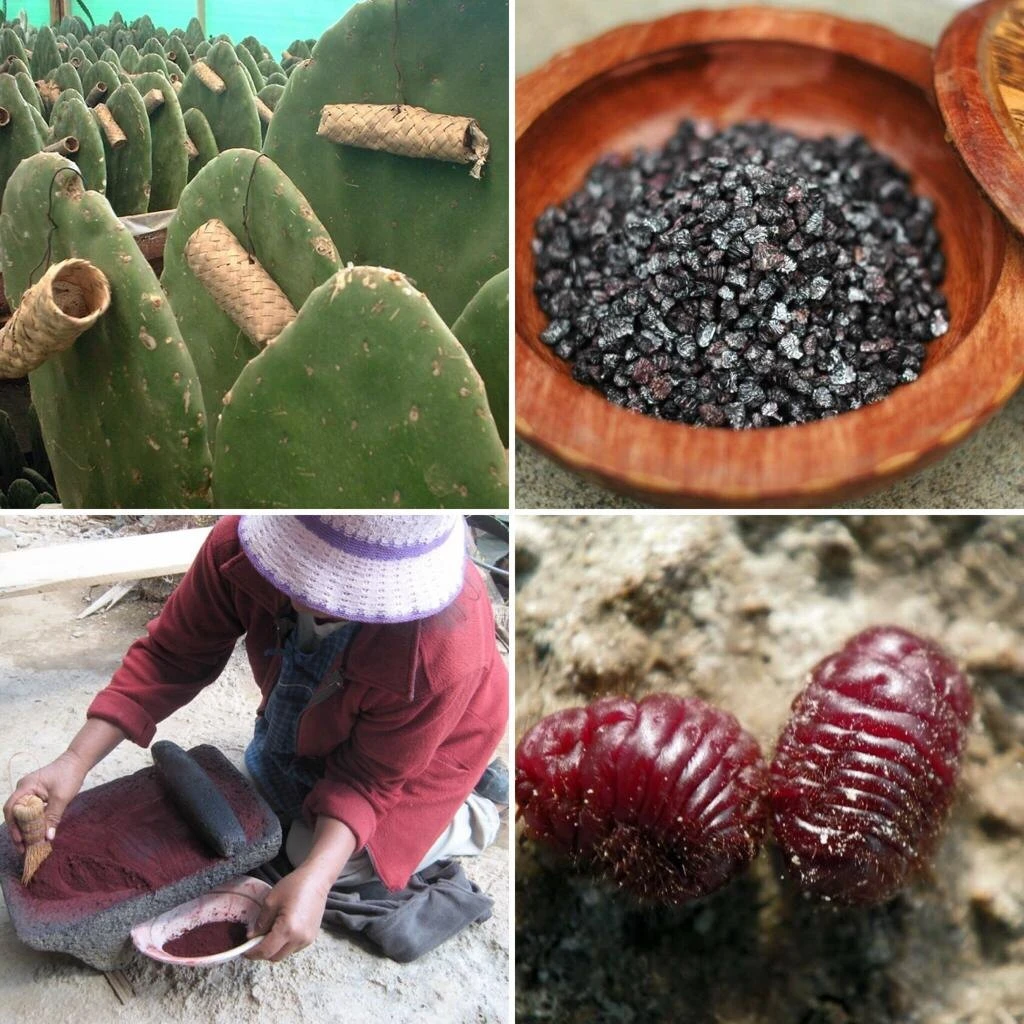
Harvesting and processing cochineal in Central America.
So a truthful answer to the question "what's actually inside?" goes something like this: a single crab stick might contain fish from the Sea of Okhotsk, fish from the Indian Ocean, and an insect from a Mexican cactus. In this lineup, crab is the only one that didn't get an invite...
So, is that a bad thing?
Not at all. Crab sticks aren't a scam—they're an honest imitation, and good packaging will clearly state as much. Quality crab sticks are mostly fish protein and make for perfectly fine food. The real issue comes with the cheapest brands, which contain very little surimi and rely primarily on starch, soy protein, and water. Checking is easy—just read the ingredient list: surimi should be listed first. If water or starch comes first, you aren't buying fish; you're buying a very persuasive crab-shaped mush.