Operation Isotope: The 120 Seconds That Changed Counter-Terrorism Forever (4 photos)
This Israeli intelligence operation marked the world's first successful counter-terrorism mission to rescue hostages from a hijacked commercial airliner. 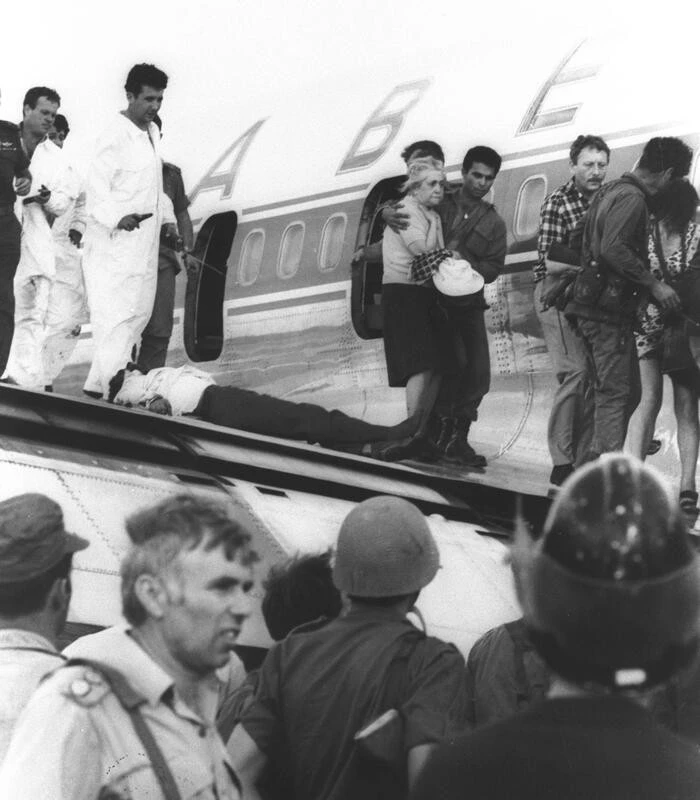
Hostages rescued from Sabena Flight 571 at Tel Aviv Airport, 1972. Photo: Ron Ilan/ IDF Spokesperson's Unit
Conducted on May 9, 1972, at Tel Aviv Airport, the special operation brought a decisive end to the harrowing hijacking of a Belgian Sabena airliner, setting the gold standard for hostage-rescue assault tactics.
It took operators from the elite Sayeret Matkal commando unit less than two minutes to save dozens of lives, turning the hijacked jet into a deadly trap for the terrorists themselves.
Sayeret Matkal is a top-secret elite unit reporting directly to the IDF Chief of Staff. It specializes in intelligence gathering, sabotage, and counter-terrorism operations both domestically and abroad.
Flight 571: Brussels – Vienna – Tel Aviv
Flight 571—a routine Boeing 707 service from Brussels to Tel Aviv with a layover in Vienna—began uneventfully. After leaving Brussels, the aircraft touched down safely at its intermediate stop, where new passengers boarded.
Shortly after taking off from the Austrian capital, the peaceful atmosphere shattered. Among the passengers who had boarded in Vienna were four operatives from the radical Black September organization—two men and two women—led by notorious terrorist Ali Taha Abu Snina. Pre-flight security screening at Vienna Airport was lax, allowing the hijackers not only to board using forged documents but also to smuggle handguns, grenades, and explosive belts onto the aircraft.
Right after takeoff, Abu Snina burst into the cockpit and ordered the crew to announce the hijacking to the passengers while continuing along their scheduled route to Tel Aviv's Lod Airport (now known as Ben Gurion Airport). Captain Reginald Levy complied, but shrewdly transmitted his announcement over the air traffic control frequency as well as the cabin PA system. As a result, Israeli authorities were alerted to the hijacking immediately.
The Ultimatum at Lod
Upon learning of the hijacking, Israeli Defense Minister Moshe Dayan rushed to Lod Airport. He was soon joined by top defense and intelligence officials, including IDF Chief of Staff David Elazar, Minister of Transport Shimon Peres, Air Force Commander Mordechai Hod, Director of Military Intelligence (Aman) Aharon Yariv, and Central Command Commander Uzi Dayan. 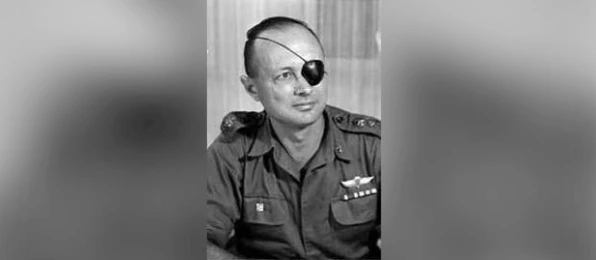
Moshe Dayan
The Boeing carrying the hijackers landed in Tel Aviv at 6:50 PM on May 8. The terrorists issued a stern ultimatum to the Israeli government: release 315 Palestinian militants held in Israeli prisons, pay a $1 million ransom in small bills, and guarantee them safe passage out of the country. If their demands were not met within 24 hours, they threatened to blow up the airliner with everyone on board.
Aharon Yariv, head of Aman, took charge of negotiations with the hijackers. Meanwhile, Moshe Dayan oversaw the planning of the raid, codenamed Operation Isotope.
Aman is Israel's Directorate of Military Intelligence, one of the country's three main intelligence agencies (historically referred to as Modi'in). Today, Aman serves as Israel's primary intelligence body, responsible for setting strategic intelligence priorities. It operates under the General Staff, reporting directly to the Chief of Staff and the Minister of Defense.
Tense negotiations dragged on for nearly 24 hours. While the negotiation team bought as much time as possible, operators drew up a plan to neutralize the terrorists and rescue the hostages.
Hangar Rehearsals and a Fatal Mistake
The assault force was built around 14 operatives from Sayeret Matkal. Remarkably, the squad included several men who would later rise to the highest echelons of Israeli leadership: Major Danny Yatom (future head of Mossad), Lieutenant Uzi Dayan (future Deputy Chief of Staff), and Lieutenant Benjamin Netanyahu (future Prime Minister). The raid was led by Lieutenant Colonel Ehud Barak, who would also go on to become IDF Chief of Staff and Prime Minister.
Commandos were provided with a matching Boeing 707 tucked away in a nearby hangar, where they relentlessly rehearsed assault tactics. As Danny Yatom later recalled, no one initially understood how it was even possible to storm a cabin packed with passengers and neutralize armed terrorists hidden among them. The team worked under immense pressure and anxiety, knowing the hijackers could detonate their explosives at any moment. 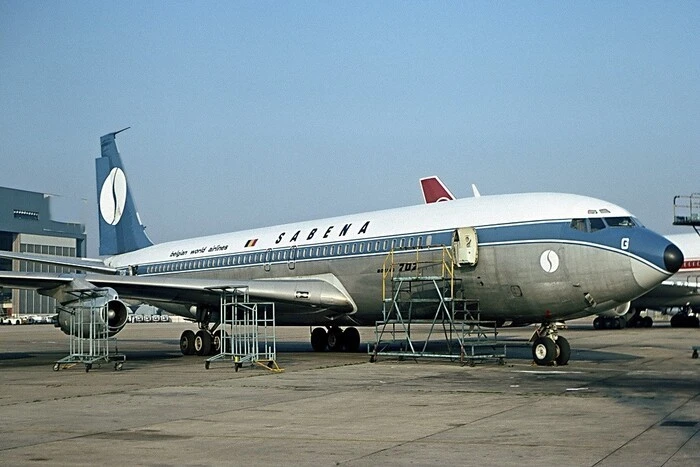
The Sabena Boeing 707 involved in the hijacking. Photo: Steve Fitzgerald via Wikimedia Commons
First, the commandos needed to ensure the aircraft could not take off. Under cover of darkness, a team of operators accompanied by two aircraft mechanics slipped up to the jet, drained its hydraulic fluid, and deflated the landing gear tires. Taking off was now impossible without extensive repairs, buying precious time to organize the raid.
At one point, the terrorists sought to prove their threats were real. They released one of the pilots carrying a sample of explosives to demonstrate they truly had the power to destroy the plane.
However, this move backfired. The released pilot provided intelligence officers with crucial details: the number of hijackers, their weaponry, and their precise locations inside the cabin. In the rush, however, the team neglected to ask what the terrorists looked like or what they were wearing.
Assault Under Red Cross Cover
Once a clearer picture emerged, Moshe Dayan authorized the plan: the assault team would approach the aircraft disguised as maintenance mechanics wearing white overalls.
The assault force was split into three teams. Two were assigned to attack from the wings, while the third was to breach the emergency exits. Joining the Sayeret Matkal operators was El Al security officer Mordechai Rahamim.
Just as preparations were nearly complete, the hijackers suddenly demanded proof that Israel had actually freed their imprisoned comrades. They also insisted that any maintenance work on the plane take place under the supervision of the International Committee of the Red Cross.
To deceive the hijackers, IDF soldiers dressed as released Palestinian prisoners were loaded into trucks and driven onto the tarmac within view of the plane. Meanwhile, the strike team in mechanics' overalls rode out to the Boeing on an airport tractor, accompanied by a Red Cross representative. 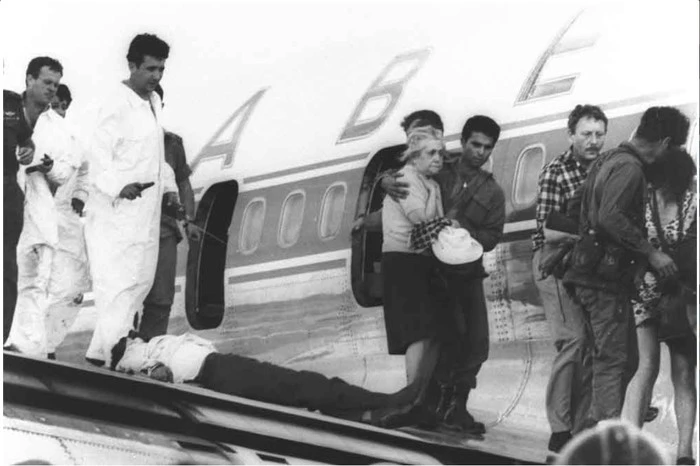
The rescue of hostages from Sabena Flight 571 at Tel Aviv Airport, 1972.
As participants later recalled, the Red Cross official was kept completely in the dark about the true nature of the operation. When he accidentally caught sight of a handgun hidden on one of the "mechanics," tension spiked—the commandos feared he might raise an alarm or refuse to proceed, blowing their cover. However, the aid worker gave no reaction whatsoever.
One of the surviving hijackers, Therese Halasa, later voiced outrage that the raid had effectively exploited the cover of the Red Cross, an organization they had trusted. To an extent, her assessment was accurate.
Neutralized in Seconds
By 4:00 PM on May 9, everything was in place. At 4:24 PM, commandos breached the emergency exits and stormed the cabin. The first hijacker neutralized was Abdel Aziz al-Atrash, who was shot as he reached for his pistol.
The squad led by Uzi Dayan breached through the rear door. Their primary task was to locate the explosives immediately and prevent the hijackers from detonating them. Guided by shouting passengers, operators quickly tackled two female terrorists holding hand grenades, subduing them before they could pull the pins.
Ringleader Ali Taha Abu Snina tried to take cover in a lavatory, where he was cornered and killed by El Al security agent Mordechai Rahamim.
According to most accounts, the entire assault took less than two minutes. Some reports claim the hijackers failed to fire a single shot while commandos discharged around 50 rounds. However, alternative accounts from team members suggest the terrorists sensed something was wrong at the last second, with at least one opening erratic fire with a handgun.
Tragically, hostage casualties could not be entirely avoided. Passenger Mary Holtzberg Anderson was killed during the crossfire (some sources report the fatality as 55-year-old West German tourist Manfred Kordowski), while two other passengers were wounded. Future Prime Minister Benjamin Netanyahu, then a 24-year-old commando, was hit in the shoulder by friendly fire.
Despite these casualties, Operation Isotope entered history as the world's first successful resolution of a commercial airline hijacking. The assault's speed and coordination minimized the firefight's duration, reducing risk to passengers. This lightning-fast shock tactic subsequently became standard protocol for hostage-rescue units globally.
Another key factor in the mission's success was deceptive maneuvering. Misinformation tactics deployed during negotiations kept the hijackers off balance, highlighting the critical role of psychological warfare in special operations.
The two female hijackers were captured alive and sentenced to life imprisonment, though both were later released in prisoner exchanges following the 1982 Lebanon War.
The "Gold Standard" of Counter-Terrorism: Never Negotiate
Regrettably, even this successful operation failed to deter future terror attacks. Just a few months later, Black September carried out the massacre of Israeli Olympic team members at the Munich Games, killing 11 athletes, coaches, and officials. Notably, West German authorities refused Israel's offer to deploy Sayeret Matkal, relying instead on local police—with catastrophic results.
Operation Isotope forged a new counter-terrorism doctrine: zero concessions to hijackers—only swift assault and total neutralization. The raid proved that when a state and its elite forces act decisively, terrorists lose their leverage.
With its clear objectives, tightly coordinated execution, minimal hostage losses, and lasting impact on global tactics, Operation Isotope remains a textbook blueprint for modern counter-terrorism.