Mass Madness in Pont-Saint-Esprit: How Poisoned Bread Drove a French Town Insane (6 photos)
In August 1951, the small town of Pont-Saint-Esprit in southern France suddenly made global headlines. Overnight, at least 250 residents completely lost their minds. Delirious townspeople ran through the streets, screaming about demons and snakes, jumping out of windows, dancing frantically in the square, and attacking passersby.
As it turned out later, tainted bread was at the root of the mass madness—though darker theories about what really happened persist to this day… 
The Outbreak Begins
It all began on August 16, 1951, when three patients arrived at the local hospital with bizarre, terrifying complaints. One man claimed his stomach was being devoured by snakes and that he was engulfed in flames. Another declared he was an airplane before leaping out a window. An eleven-year-old boy admitted at the same time attacked his own grandmother, attempting to strangle her. The doctors were baffled, but the worst was yet to come. 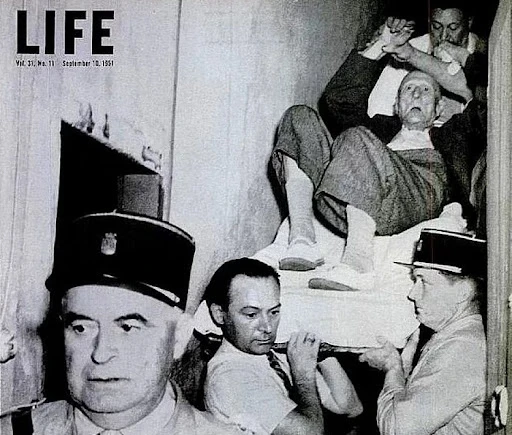
Day after day, the number of victims swelled. Hallucinating locals wandered the streets aimlessly, screaming unintelligibly, dancing, shrieking in terror, and lunging at bystanders. On the night of August 26 alone, 23 people were rushed to the hospital. They suffered from severe hallucinations, suicidal urges, nausea, convulsions, and an array of unexplained symptoms.
Out of the town’s 4,500 residents, roughly 400 were gripped by the madness. With no clear explanation in sight, rumors and theories quickly began to swirl…
The Cursed Bread
Overwhelmed by the influx of patients, local doctors called in medical experts from neighboring cities. After running several tests, they concluded that the victims were likely suffering from ergotism. 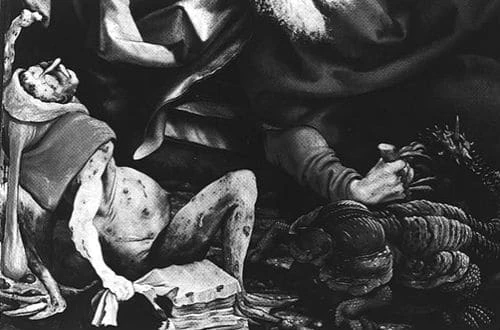
Ergotism is a form of poisoning caused by ergot alkaloids—a dangerous fungus that infects grains like rye and wheat. Investigators surmised that the local baker had used ergot-contaminated flour, causing the devastating reaction among the townspeople.
As soon as news broke, enraged locals painted a cross on the bakery door and threatened to lynch the baker. He escaped mob justice only because the gendarmerie placed him under protective arrest. It was not so much that he was actually suspected of intentionally poisoning anyone, but rather a necessary measure to save his life—driven mad by hysteria, the afflicted townspeople were turning on even their closest friends and family.
The Real Cause
Authorities soon tracked down the miller who supplied the flour. He was the first to face formal charges after investigators discovered the unscrupulous supplier had been cutting flour with ryegrass, a weed frequently infested with ergot and other parasites. 
Autopsies on several deceased victims officially confirmed ergotism as the cause of death. Yet, not everyone in Pont-Saint-Esprit was convinced by the scientific explanation. Some blamed black magic, while others suspected a secret CIA biological warfare experiment.
In 2009, investigative journalist Hank Albarelli published
A Terrible Mistake: The Murder of Frank Olson and the CIA’s Secret Cold War Experiments
. While originally looking into the Kennedy assassination, Albarelli stumbled upon several intriguing clues during his research… 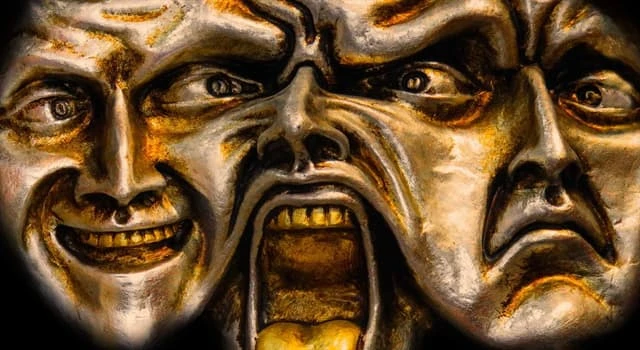
First was the suspicious death of Frank Olson, a U.S. Army biochemist who fell from a hotel window two years after the Pont-Saint-Esprit incident. Second was a transcript of a conversation between CIA operatives discussing the French tragedy and explicitly stating that ergot was not to blame.
Albarelli also interviewed two former high-ranking officials who claimed covert testing had taken place. According to his theory, the town was covertly sprayed with LSD or a similar psychoactive agent to test its potential for inducing mass psychosis.
Despite the documents he uncovered, Albarelli’s allegations were never definitively proven. The official account remains ergot poisoning, but debate over what truly happened in the town continues to this day.
The End of the Nightmare
For most victims, the symptoms subsided within a few days. However, those who suffered severe psychological trauma spent months in psychiatric institutions; at least 32 residents required long-term care. 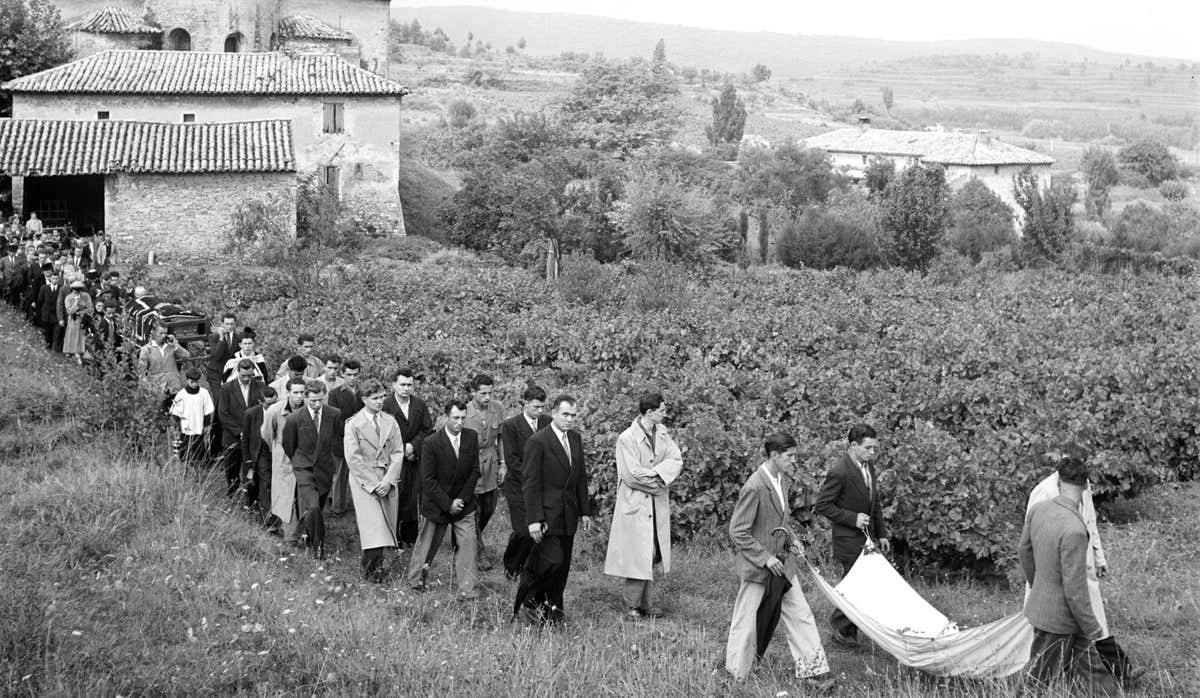
Six people died during the outbreak—some from heart failure, others by suicide, unable to endure the horror. Tormented by visions of burning alive, flying demons, devouring serpents, and giant plants rising from the streets, many simply broke under the agony.
The investigation ultimately revealed that the miller and the baker were in cahoots: the miller offloaded spoiled stock, while the baker cut costs on raw ingredients. Both men were subsequently arrested.
Yet the mystery of the "cursed town" continues to captivate conspiracy theorists and mystery buffs alike. To this day, many remain convinced that Pont-Saint-Esprit was the site of a sinister experiment, viewing the story of the tainted bread as nothing more than a cover-up…