How a Single Photo of a Comet Revolutionized Astronomy (2 Photos)
On June 30, 1881, French astronomer Pierre Jules Janssen pointed his telescope skyward and captured the first high-quality photograph of a comet in history. It was far more than just a lucky shot—at that precise moment, astronomy took a decisive leap from a subjective art of sketch artists to a rigorous science built on verifiable data. 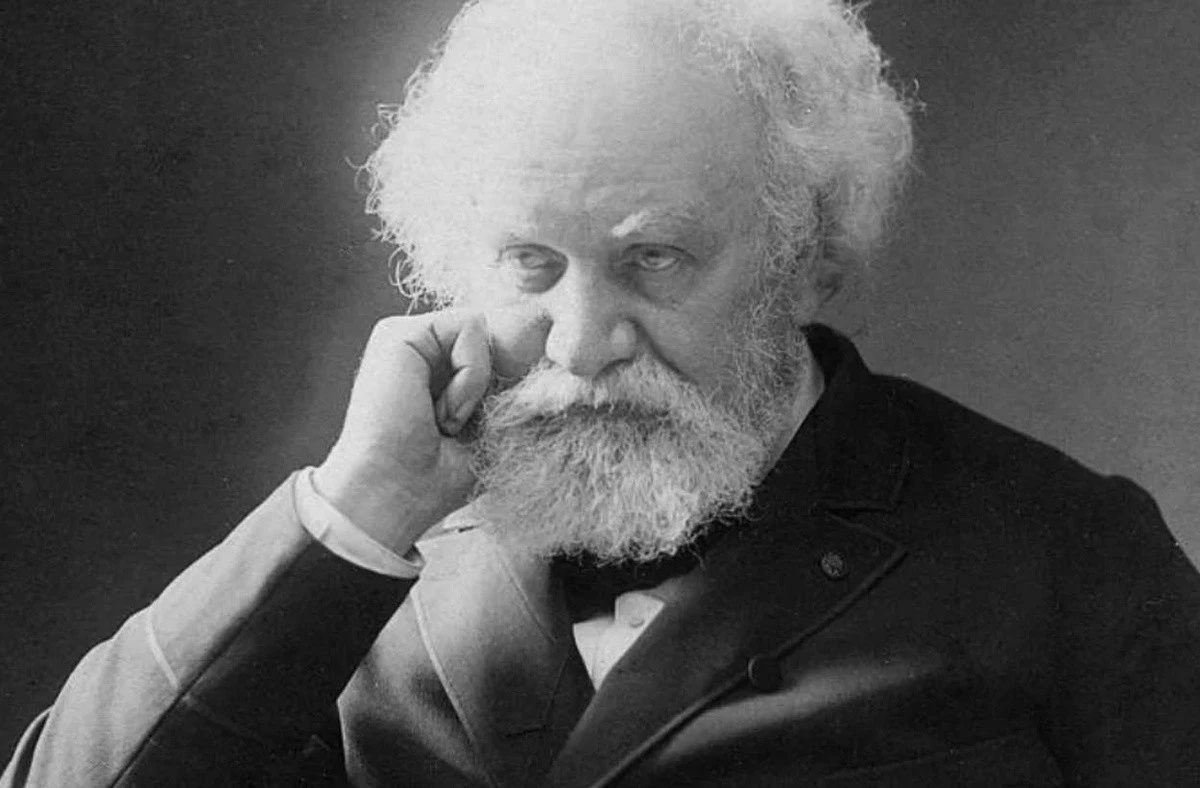
Pierre Jules Janssen (February 22, 1824 – December 23, 1907)
A Scientist Who Would Stop at Nothing
Ten years before taking the iconic comet photo, at the height of the Franco-Prussian War, he pulled off a feat that epitomizes sheer scientific obsession.
Paris was besieged by Prussian troops, with all roads blocked, but Janssen refused to miss a rare solar eclipse. He escaped the blockaded city in a hot-air balloon and made his way to Algeria. Ironically, heavy clouds ruined the view on the day of the eclipse, preventing any observations. Yet this daring attempt—which put his life at grave risk—perfectly captures Janssen's wholehearted devotion to science.
One Shot, Zero Second Chances
Digital photography was unheard of in the 19th century, meaning Janssen couldn't fine-tune his instruments, take hundreds of automated shots, or pick the best frame from a gallery later.
His target was the Great Comet of 1881 (C/1881 K1), a celestial body visible across the globe that burned so brightly it could be seen in broad daylight. At its closest approach to Earth, it passed roughly 0.28 astronomical units away (41.8 million kilometers)—nearly 3.6 times closer to us than the Sun.
Capturing the shot was a harrowing feat. In complete darkness, Janssen applied light-sensitive emulsion to a glass plate. Before it could dry, he had to mount the plate into the telescope, align it with the comet, and hold the shutter open for 30 minutes. To make matters harder, Earth was rotating and the comet was moving along its own trajectory. To prevent the image from smearing into a blurry streak, he had to manually track the object with razor-sharp precision for the entire half-hour exposure, keeping it centered in the eyepiece's delicate crosshairs. A single misstep meant the photo was lost forever.
Immediately after exposure, the plate had to be developed before the emulsion set. No automation, no re-takes—just one shot at getting the image right.
And Janssen pulled it off. 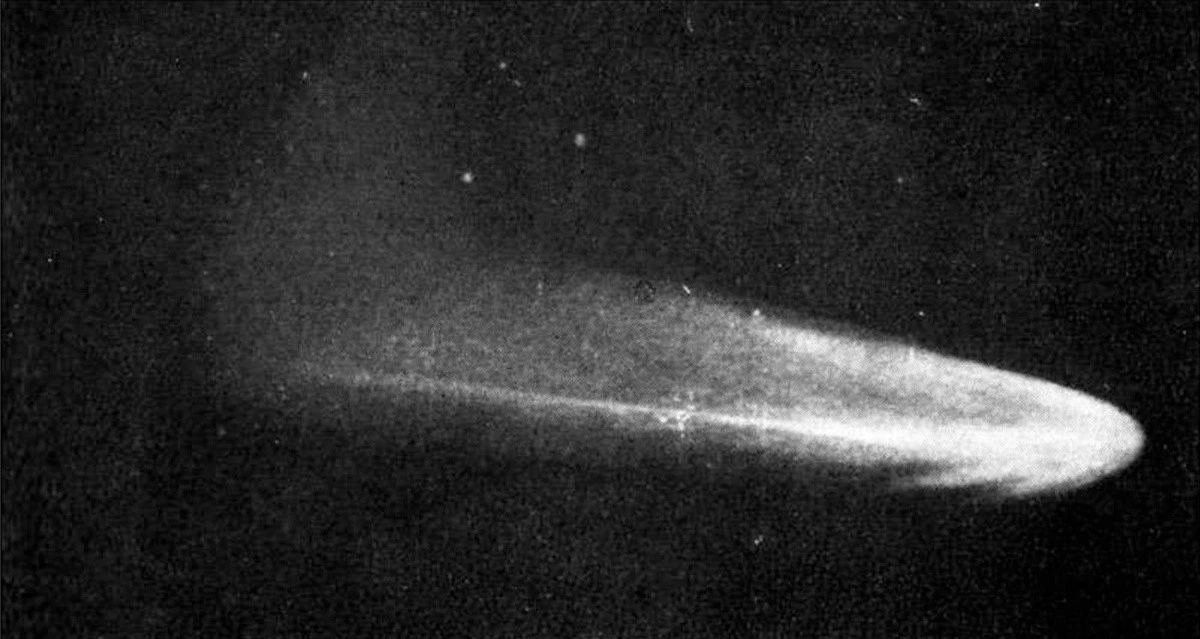
Comet C/1881 K1 captured by Pierre Jules Janssen
From Subjective Sketches to Objective Evidence
Prior to the summer of 1881, astronomers relied entirely on hand-drawn illustrations—an inherently imprecise and subjective method. Sketches depended not only on an observer's artistic skill, but also on their eyesight and even their mood at the time (with some taking considerable creative liberties).
Janssen’s photograph proved that celestial bodies and cosmic events could be recorded, measured, compared, and analyzed long after they occurred. Astronomers worldwide could now exchange actual photos and deliberate over findings without relying on memory or a single witness's interpretation.
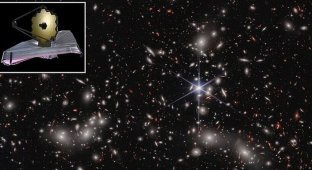
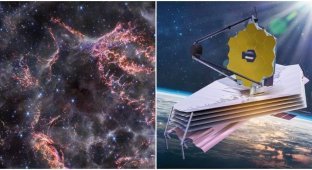
That fragile glass plate marked the beginning of a journey that eventually brought us the breathtaking imagery beamed back by legendary space telescopes like Hubble and James Webb. Every modern astronomical photo—from neighbors in our Solar System to distant galaxies at the edge of the observable universe—can trace its lineage directly back to that single, technically daunting shot delivered to the world by Pierre Jules Janssen.