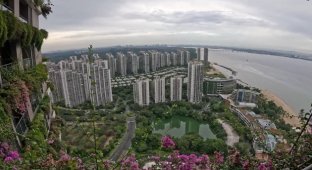
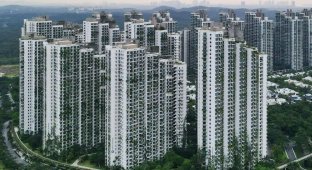
China's Hukou System: How Household Registration Creates Second-Class Citizens (8 photos)
Imagine being born in a rural Chinese village with a lifelong dream of moving to Shanghai. You relocate, land a job, and pay taxes—yet you remain an outsider. Your children can't attend local public schools, you're barred from buying property, and if you fall ill, healthcare isn't covered. This isn't a dystopian novel; it's the daily reality of China's hukou system, which effectively divides the population into two classes. Here is how the system works, why the government refuses to abandon it, and the heavy price ordinary citizens pay. 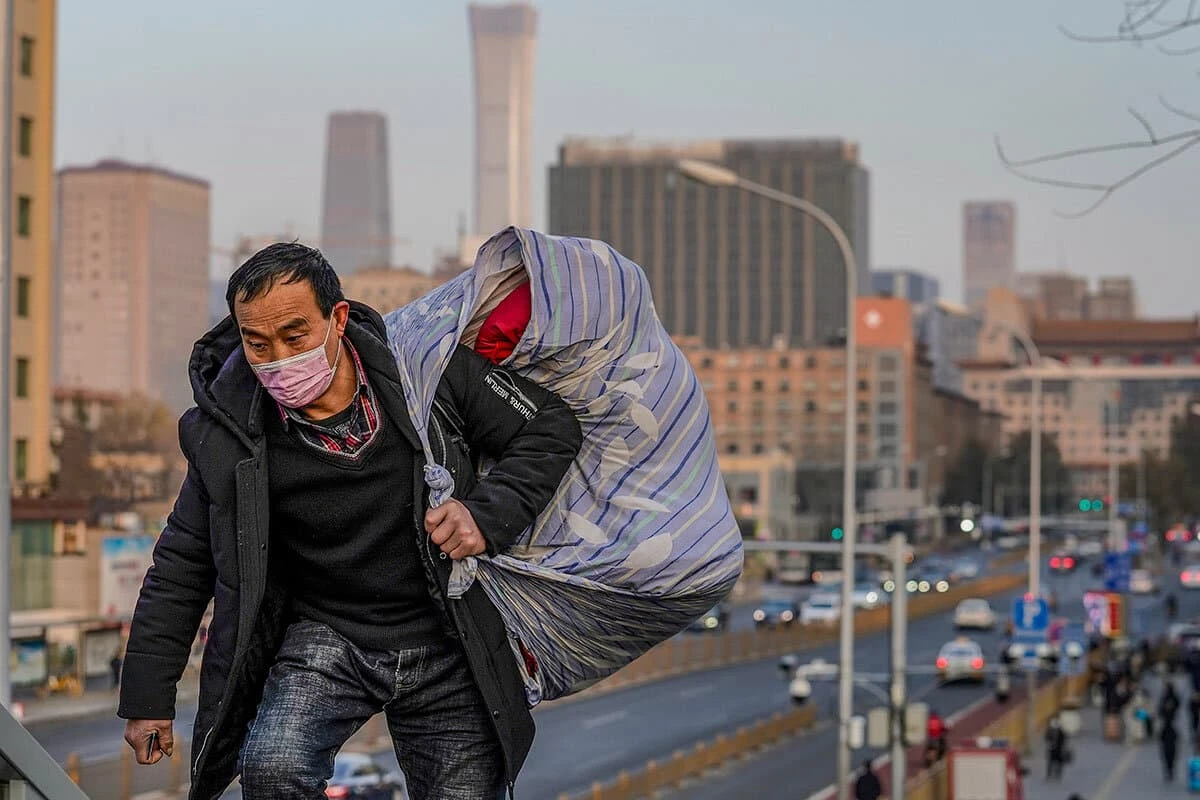
How China Created "Second-Class Citizens"
Anyone familiar with the Soviet era knows the concept of
propiska
—a system that legally tied individuals to a specific city or town. Without that official stamp in your passport, you couldn't get a job or secure housing. Although Russia formally replaced
propiska
with a residence registration system in 1993, mandatory registration remained. China, however, enforces a far stricter mechanism—one that directly dictates access to basic social benefits. 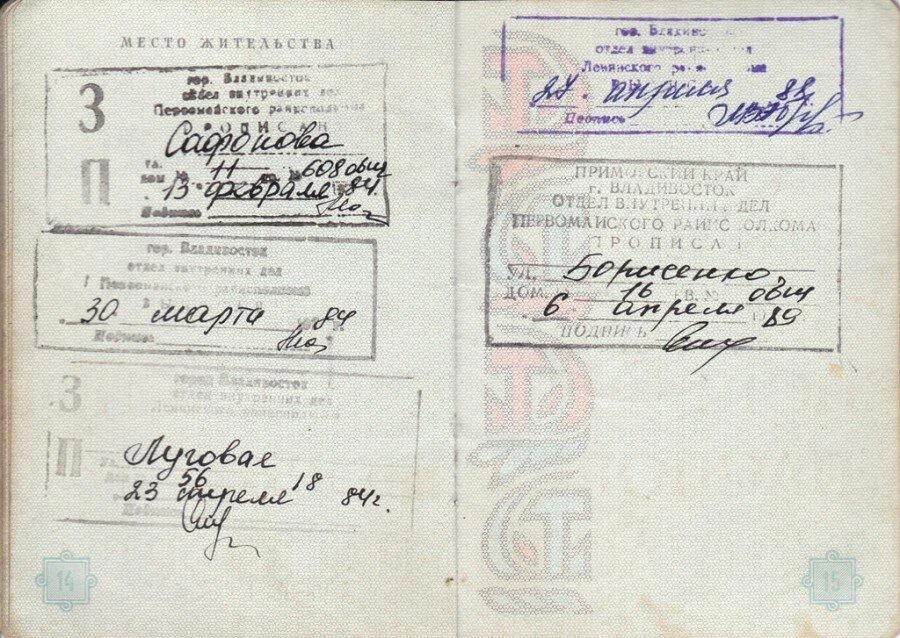
A Soviet passport residency stamp—a system that closely mirrors China's hukou
China introduced its household registration system in 1958 during the Great Leap Forward. As the government pushed for rapid industrialization, officials feared an uncontrolled influx of rural workers into urban centers. The hukou (户口) was designed to keep the rural population in the countryside while giving the state tight control over urban resources, including housing, food rations, and employment.
Similar systems exist in North Korea, Vietnam, Laos, and Taiwan. South Korea long operated its own variation called
hoju
, which bound individuals to a male head of household rather than a location. It was eventually abolished in 2008 after the Constitutional Court ruled it violated gender equality.
Hukou: The Golden Ticket to City Rights
A hukou is an official registration document that classifies a person as either an urban or rural resident. It determines access to state benefits: pensions, subsidized healthcare, public schooling, and preferential university admissions. These perks are strictly reserved for those registered in that specific city. 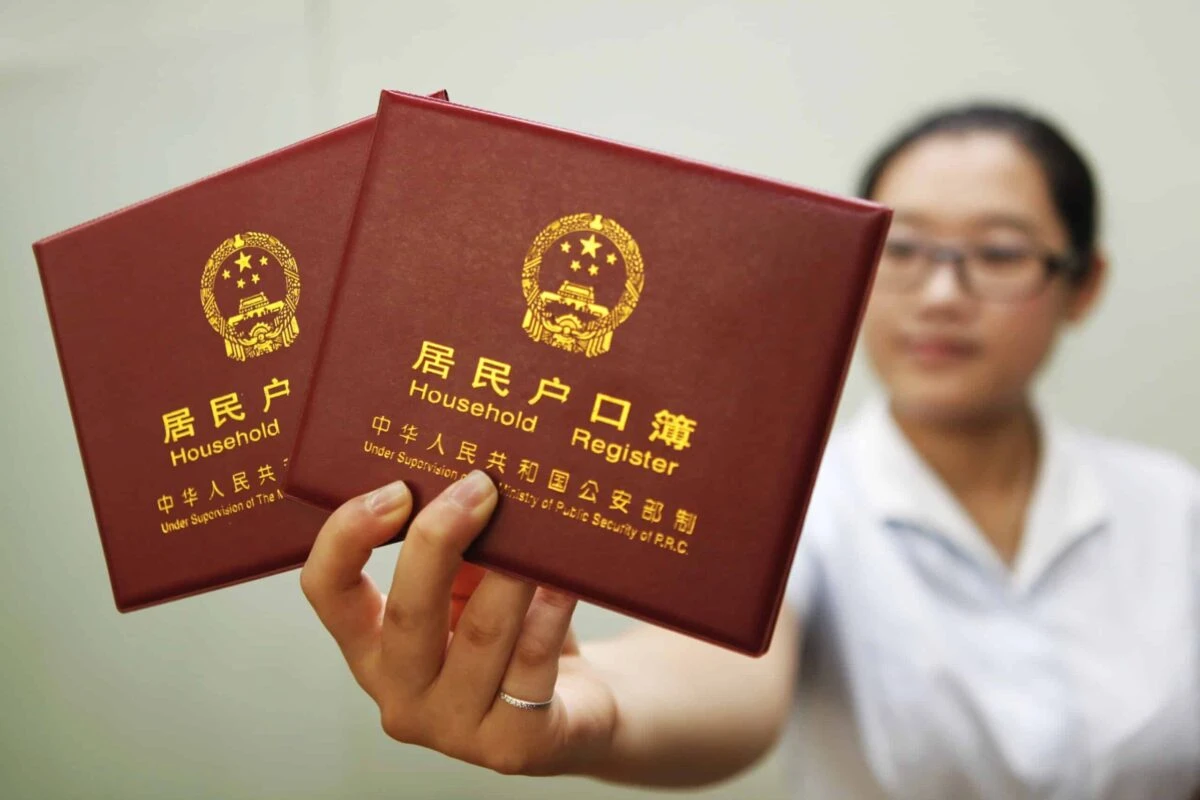
This residency booklet serves as official proof of hukou registration
According to China's National Bureau of Statistics, roughly 48 percent of the population—about 680 million people—held urban hukou status at the end of 2023. Yet, nearly two-thirds of the country (over 950 million people) actually live in cities. The gap of 250 to 300 million consists of internal migrants living without local registration. Legally, they remain rural residents, stripped of city benefits even if they have spent decades in a metropolis.
Megacities Where Migrants Remain Forever Outsiders
This divide is starkest in Shanghai. Of its 25 million residents, only about 15 million hold a local hukou. The remaining ten million are migrant workers classified as "temporary residents," regardless of whether they have lived and worked there for over a decade. 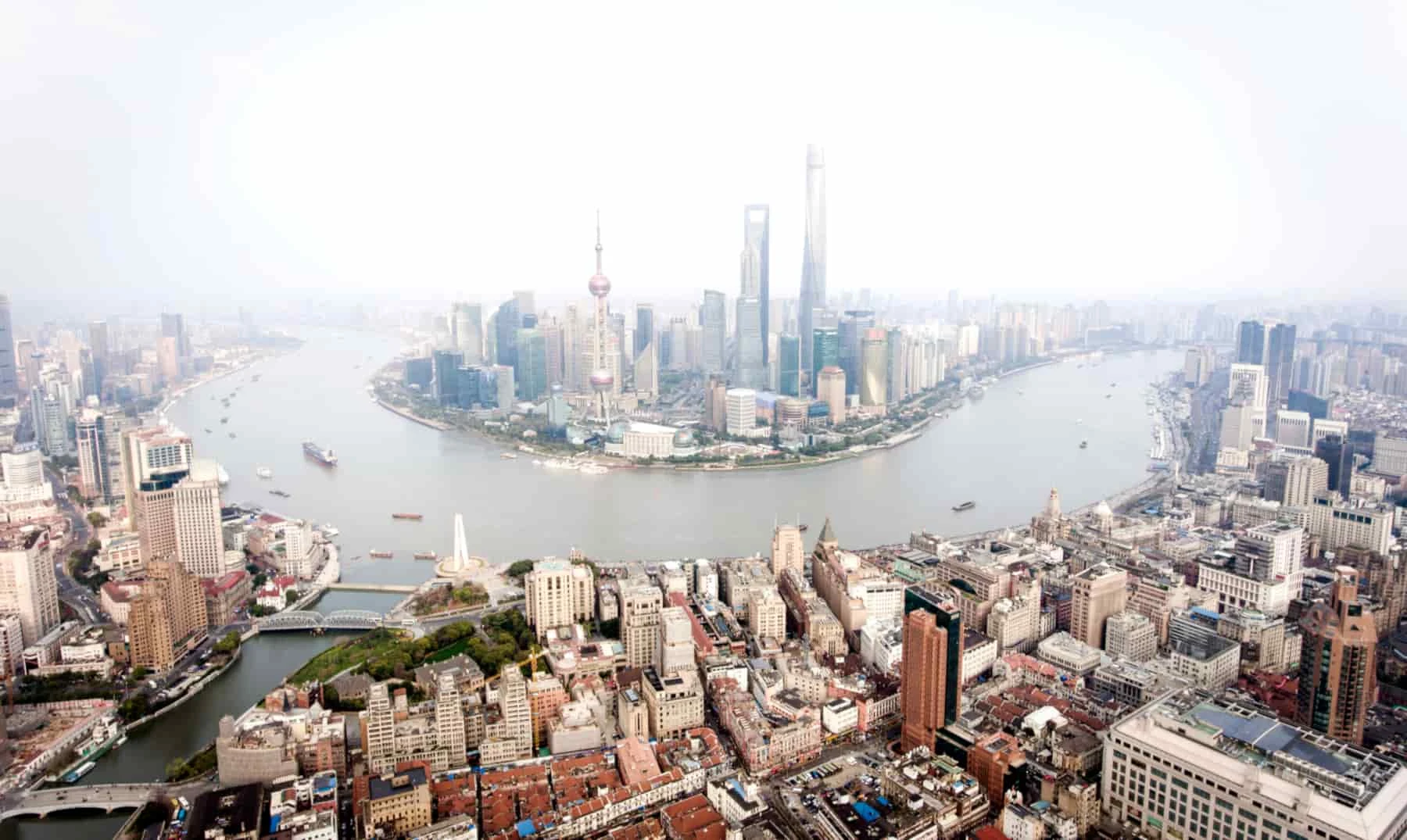
Shanghai is one of China's four direct-administered municipalities
Shanghai is one of China's four direct-administered municipalities, reporting straight to the central government rather than a provincial authority. The other three are Beijing, Chongqing, and Tianjin. Obtaining a local hukou in these megacities is notoriously difficult due to fierce competition and strictly enforced quotas.
Temporary Permits: A Compromise with Catch-22s
To live and work legally in a major city, migrants must apply for a temporary residence permit—a sort of internal visa. While it allows them to remain employed, it grants no rights to buy real estate, enroll children in local public schools, or access subsidized medical care. 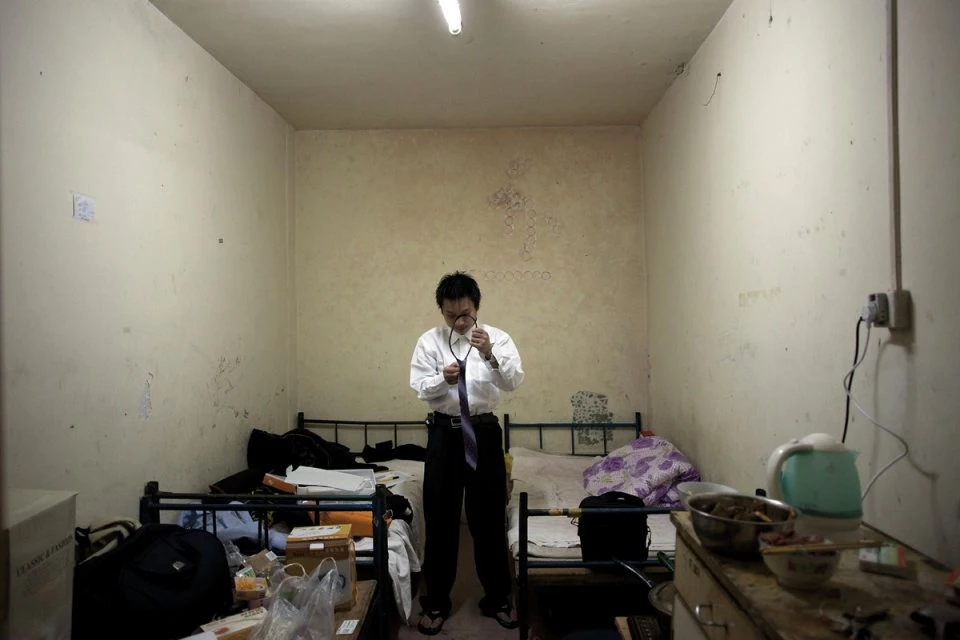
A dorm room shared by three office workers
Renting an apartment legally without local residency is equally challenging, as many landlords refuse to sign contracts with outsiders or demand local credentials. As a result, migrants often rely on unlicensed brokers, risking fraud and eviction. For many, the only affordable option is employer-provided dormitories, where multiple workers share a single cramped room.
$100 a Month: Life in the Underground "Rat Holes"
Those who cannot afford dorms often end up underground. In major cities, companies buy up residential basements and former bomb shelters, partitioning them into tiny cubicles measuring just two to four square meters. Rent runs between $100 and $150 a month—roughly a third of a migrant worker's wage. In Beijing, these subterranean dwellers are colloquially known as the "Rat Tribe." 
A "coffin home" in Hong Kong
A similar housing crisis plagues Hong Kong, though the hukou system does not technically apply there. Sky-high real estate prices force hundreds of thousands to live in subdivided cubicles known as "coffin homes." Hong Kong was also home to the infamous Kowloon Walled City—a densely packed enclave demolished in the 1990s that housed roughly 33,000 people on just 2.6 hectares at its peak in 1987.
Easy to Lose, Almost Impossible to Obtain
Securing a residence permit is difficult, but losing it is remarkably easy. Participating in a protest, committing a minor infraction, or simply letting a permit expire can result in immediate deportation back to one's home village. Foreign media outlets report that up to 200,000 people are expelled from Shanghai alone each year for violating temporary registration rules. 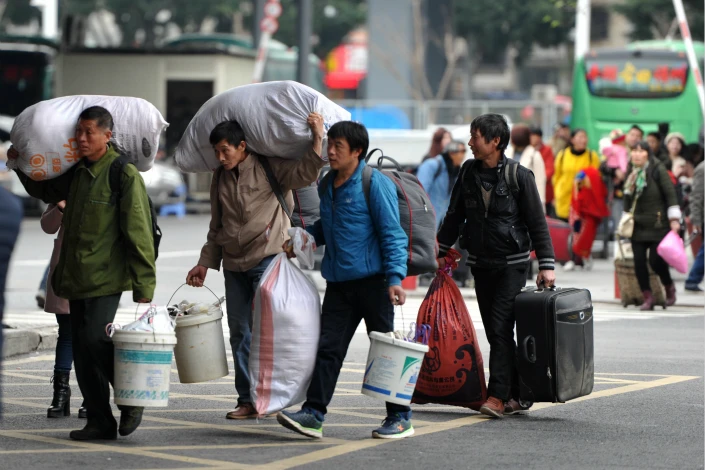
Migrant workers, known in China as "nongmingong," heading back to their home villages
Official data shows that by 2024, approximately 300 million rural migrants were working in Chinese cities—a population nearly equivalent to that of the United States. They drive the economy in factories, construction sites, service industries, and occasionally corporate offices or local police forces. Yet the vast majority remain outsiders; only an elite few—typically top performers or highly decorated workers—ever secure local hukou.
Reforms That Missed the Mark
In 2014, the Chinese government officially abolished the distinction between "rural" and "urban" hukou, reclassifying everyone simply as "residents." In practice, little changed: the old system was replaced by a points-based scheme for local registration. While acquiring residency in smaller cities became relatively straightforward with steady work and housing, megacities like Beijing and Shanghai calculate points based on higher education, specialized skills, property ownership, and years of local employment—thresholds out of reach for most.
The government also introduced refined residence permits, giving migrants limited access to local schools and healthcare, though still falling short of full equal rights. Overall, the reforms helped convert over 100 million rural residents to urban status. 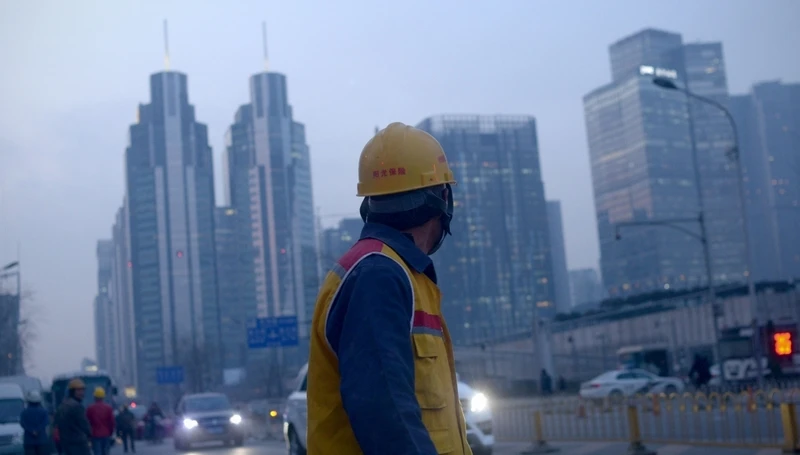
A worker framed against Beijing's heavy smog—a familiar sight for millions of migrants in Chinese megacities
Yet the urban-rural divide remains vast. While authorities aim to raise the urbanization rate to 70 percent by 2029, point-based restrictions in top-tier cities continue to block migrant integration. The hukou system may have been softened, but it remains far from abolished—continuing to dictate the life trajectory of hundreds of millions.
What do you think: is the hukou system a necessary administrative tool for managing a nation of 1.4 billion, or is it institutionalized inequality? Share your thoughts in the comments below!