Alabay vs. Wolf: Who Wins in Real-Life Livestock Clashes? (10 Photos)
Armchair experts love to debate who would win in a fight: an Alabay or a wolf?
For a shepherd on the range, however, the question is far more practical. A shepherd’s concern isn't about bragging rights or who won the fight; it’s about how many sheep are still standing come morning. 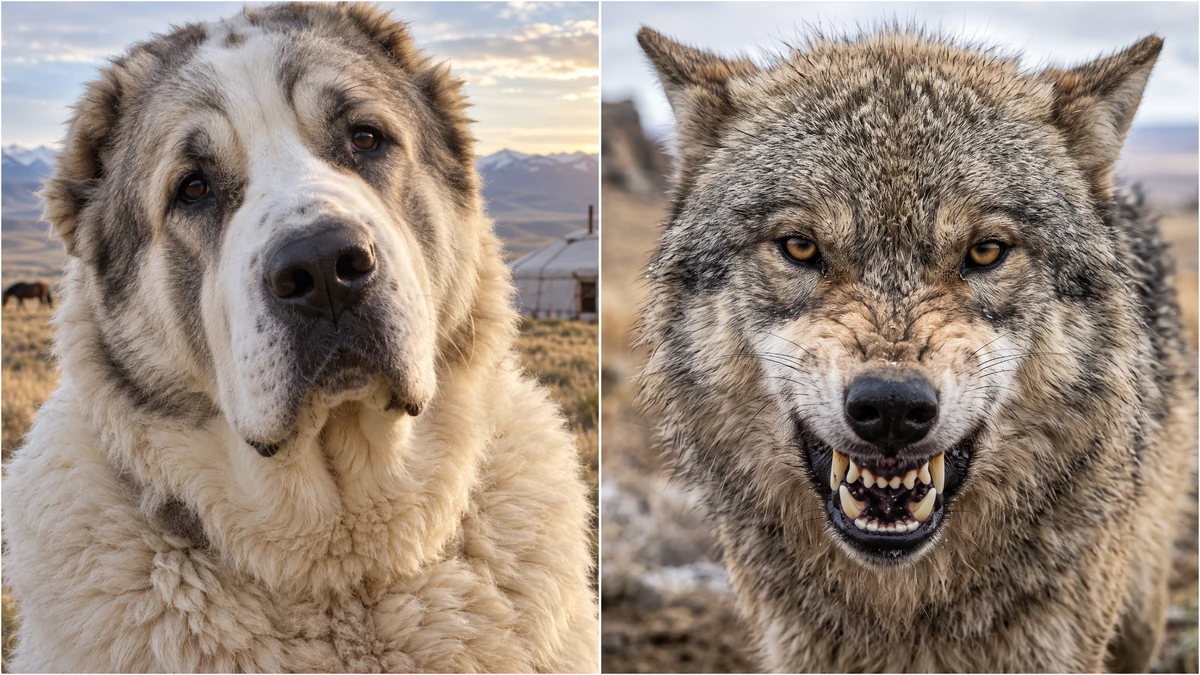
That's why a good livestock guardian dog doesn't actually need to kill a wolf. Its job is smarter and far simpler: convince the predator that this flock is way too risky for dinner.
And when a whole pack shows up, things get even more interesting—it’s no longer about having the biggest dog, but about how well the security system works as a whole.
First, Let’s Compare the Matchup
The Central Asian Shepherd Dog, commonly known as the Alabay, is a formidable breed. This is no modern designer dog created in a kennel, but a descendant of ancient livestock guardian dogs selectively bred for millennia by shepherds from the Caspian Sea to the Pamir Mountains. 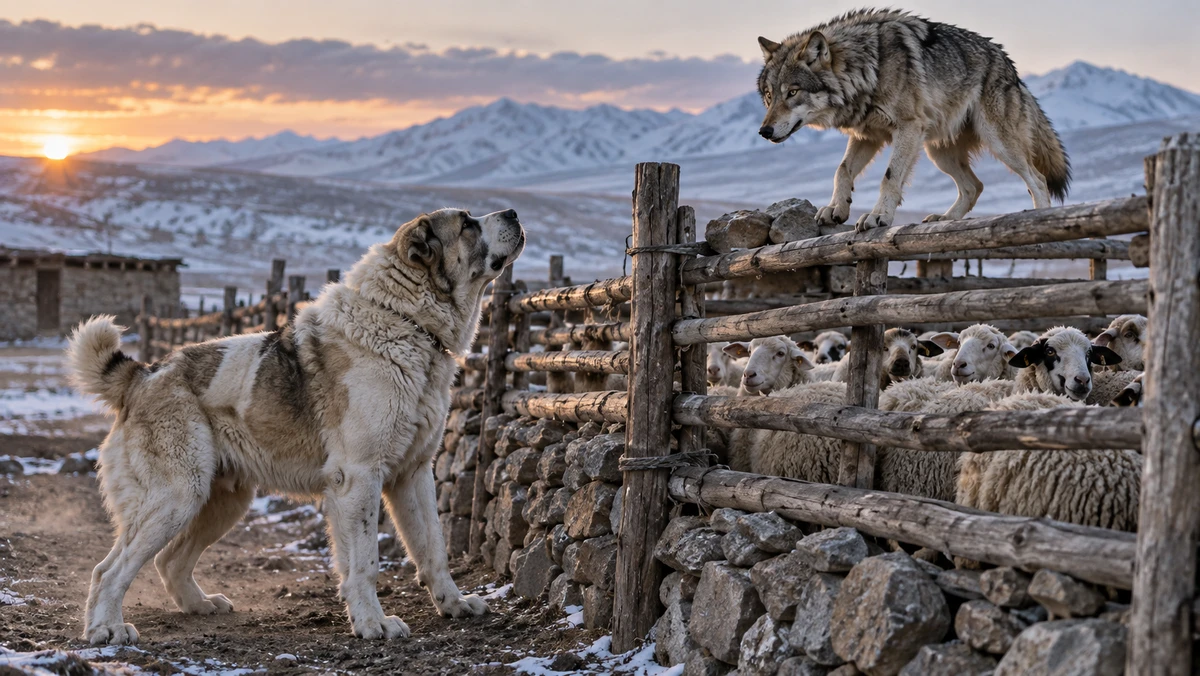
Their duty was brutal and straightforward: accompany the herd, endure blistering heat and freezing cold, and independently decide when to drive off a wolf or intruder. Selective breeding focused above all on endurance, independence, and fearlessness—not aesthetics.
The breed standard is stripped of any romanticism: a massive, powerful, resilient dog with a strong territorial drive. Natural courage in the face of large predators is explicitly listed as a defining trait.
Males stand at least 70 centimeters at the withers and weigh no less than 50 kilograms. The standard sets virtually no upper limit—larger size is welcomed, provided the dog remains well-proportioned.
Now let’s look at the wolf. The Institute of Zoology in Kazakhstan estimates the average weight of a local grey wolf at around 30 to 40 kilograms. 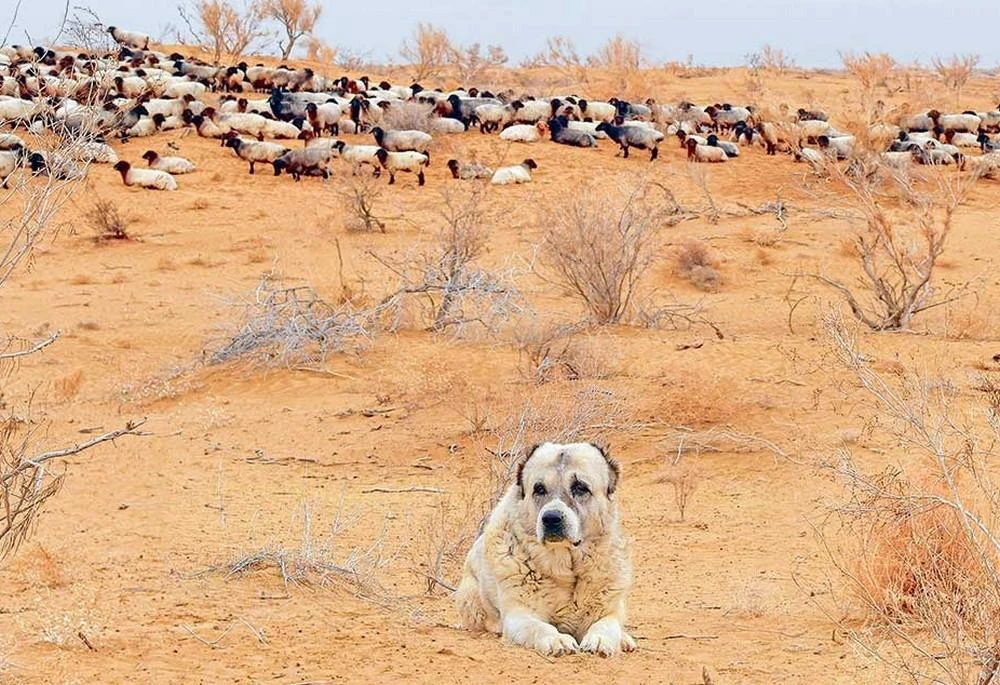
That means a large adult Alabay easily outweighs a steppe wolf by 10 to 20 kilograms or more.
But raw size alone doesn't guarantee victory.
A wolf is lighter, agile, and built for relentless long-distance tracking. The dog is bulkier and better armored. In fact, the Central Asian Shepherd's breed standard specifies thick, elastic, loose skin—designed specifically to minimize injury during fights with predators.
What If They Go One-on-One?
Let's skip record-breaking giants or massive timber wolves and look at the actual matchup this breed was built for: a mature male working Alabay weighing around 55–60 kg versus a full-grown steppe wolf at about 35–40 kg. 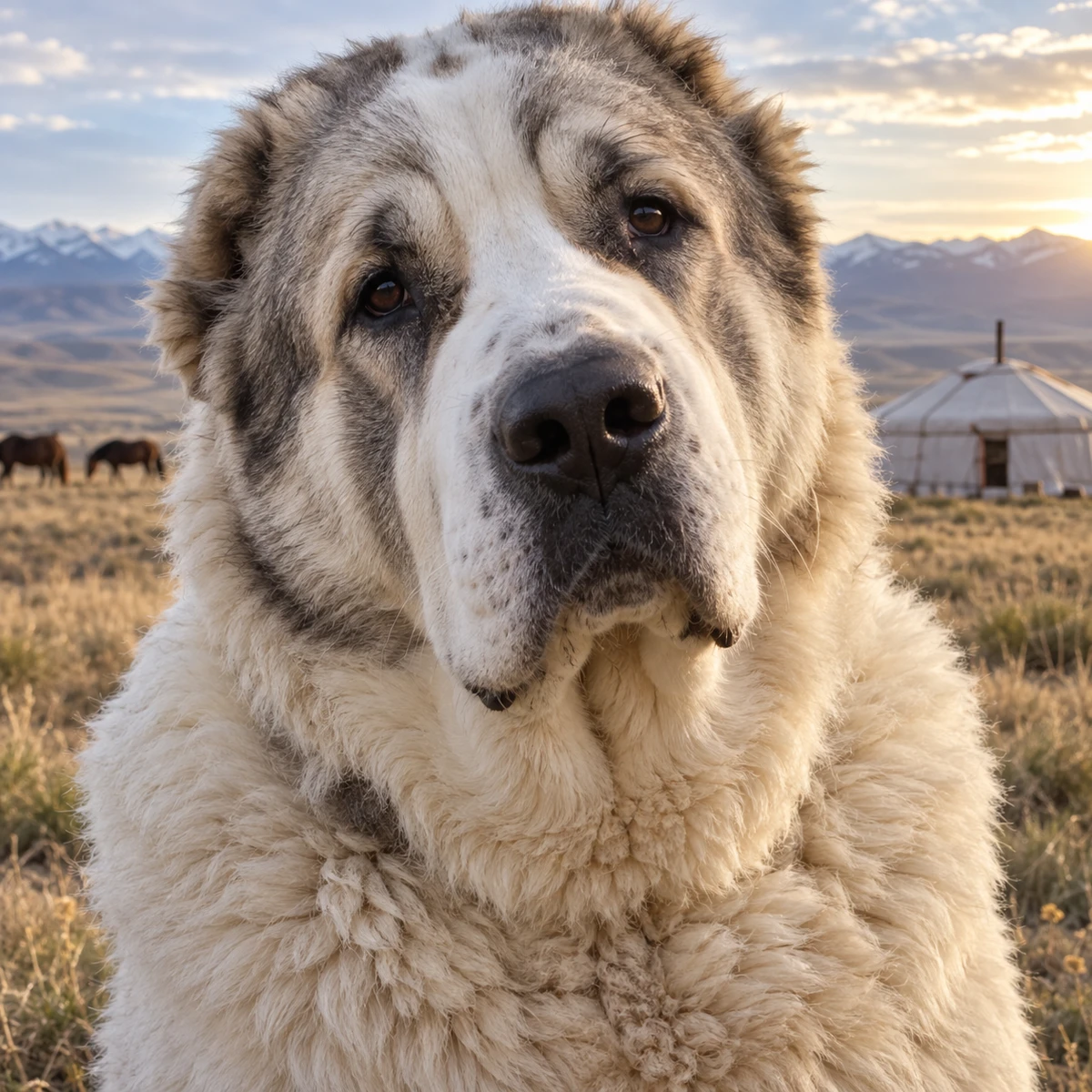
In a direct clash like this, the edge leans slightly toward the Alabay. Holding a 15–25 kg weight advantage, a massive head and neck, and a heavy frame, the dog belongs to a lineage shaped for centuries to defend herds against apex predators. The wolf is lighter, but faster, more durable, and uses its jaws daily for survival, not practice.
Ultimately, such a battle wouldn't come down to a dramatic "fatal bite," but to whoever dictates position first. The Alabay brings sheer size, while the wolf brings battle-tested survival instincts, even at the same age.
If the Alabay meets the wolf head-on and leverages its weight, the odds favor the dog. If the wolf gets room to maneuver, evades a head-on clash, and strikes from the side, that gap closes quickly. Either animal is capable of inflicting devastating injuries. Against two wolves, however, a single dog's advantage virtually evaporates.
This reveals the true purpose of the breed: a wolf should look at an opponent far heavier than itself and decide that taking this particular sheep just isn't worth the cost.
Why Wolves Avoid the Fight Altogether
These head-to-head showdowns are extremely rare in reality, even though Alabays and wolves share the same territory.
A wolf isn't looking for a championship belt. It just wants a meal. 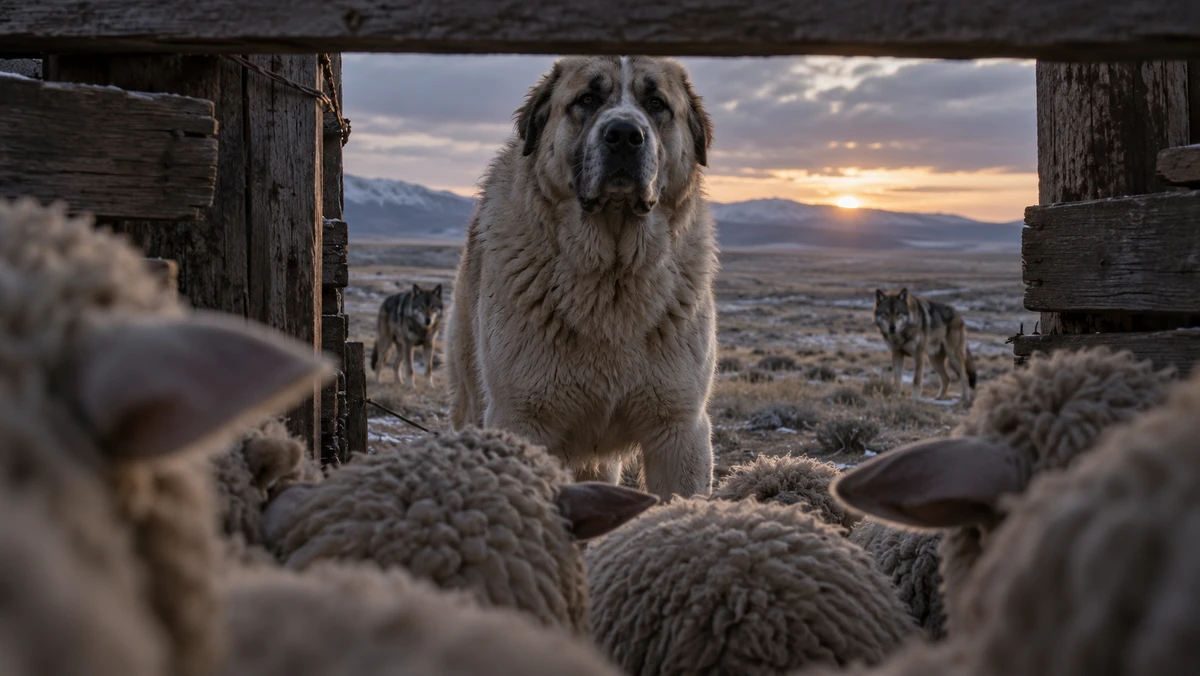
For a wild predator, a serious injury can mean an inability to hunt, followed by starvation. Risking a brutal fight with a massive dog over a single sheep is rarely worth the gamble.
That reality is the foundation of livestock protection.
The dogs mark their territory, bark loud warnings, advance to confront intruders, and chase off any approaching predators. Physical combat is strictly a last resort.
In practice, Alabays and wolves rarely test who is physically stronger in a duel.
In fact, the ultimate talent of a guardian dog is preventing the fight from happening at all. If a wolf sizes up the dog and decides to walk away, the dog has already won.
When the Pack Arrives, the Math Changes
A single dog facing multiple wolves is a completely different story. 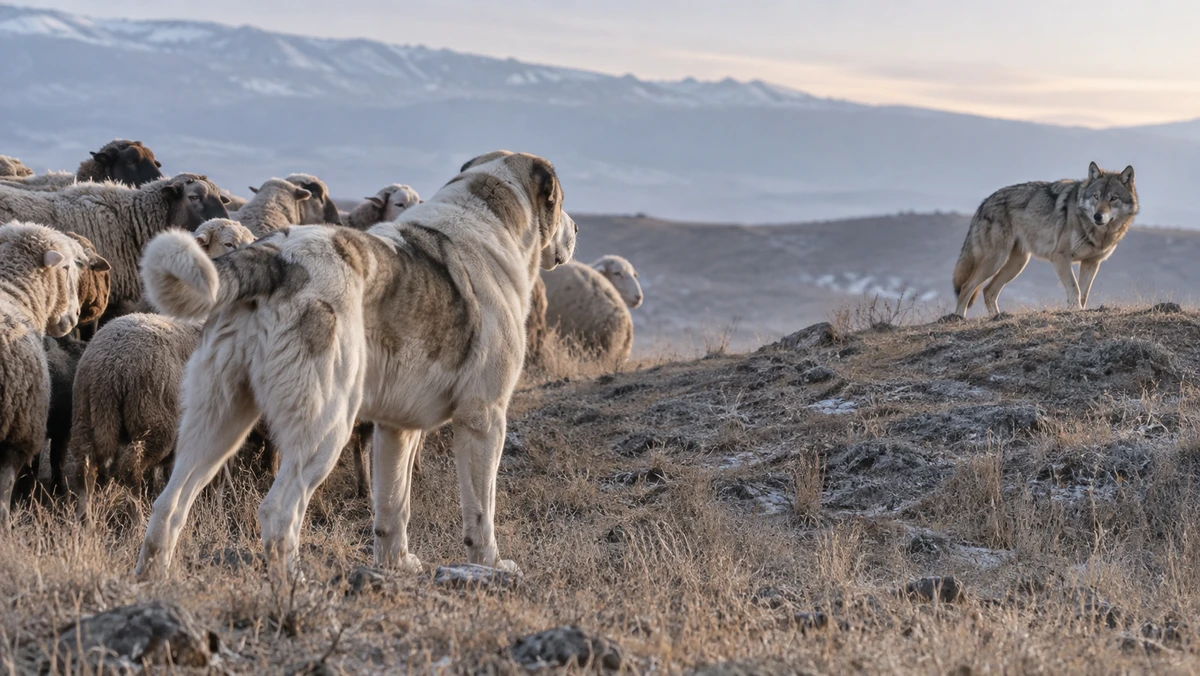
One dog simply cannot cover every angle at once. A pack can flank the guardian, distract it, and break through to the livestock.
What's more, a raid on a herd doesn't always end with just one sheep killed.
A study analyzing 133 documented wolf attacks on livestock in Iran uncovered a striking pattern: in 126 cases, the wolves engaged in "surplus killing," destroying far more animals than they could consume. On average, 6.5 animals were killed per attack, with most incidents occurring inside enclosed pens.
Why?
Confined to a tight space, sheep cannot scatter. The frantic movement of trapped prey repeatedly triggers the predator's instinct to strike.
For a wolf pack, a poorly guarded pen becomes an easy buffet.
And this is precisely why shepherds rely on a team of dogs.
One Dog Is Good. A Pack Is Better 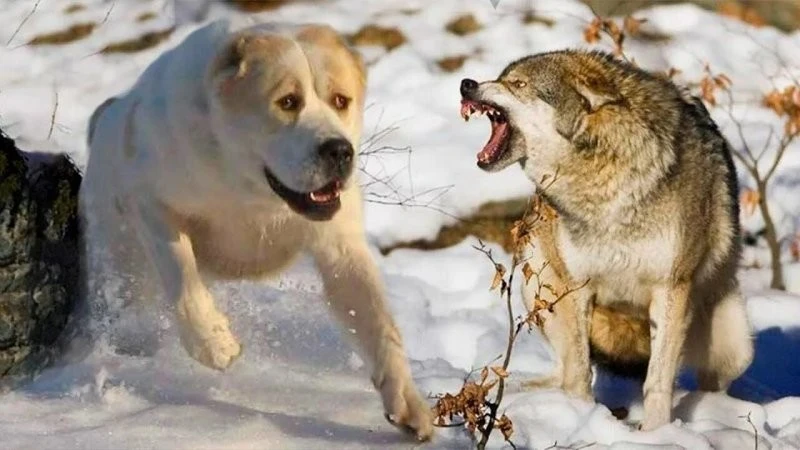
A revealing study conducted near Golestan National Park in Iran underscores this point.
Researchers surveyed 139 shepherds across 32 villages, comparing livestock losses from wolf attacks to the number of livestock guardian dogs present.
The results were clear: each additional dog on duty was associated with an average 25% drop in livestock losses during night raids.
Under the conditions studied, keeping around six dogs yielded the most dramatic drop in losses—from an average of 1.5 animals lost per attack down to 0.35.
That doesn't mean there is a universal rule requiring "six Alabays per wolf."
Herd size, terrain, pen construction, and the experience of both dogs and wolves vary widely.
But the underlying principle is undeniable.
A livestock guardian works best not as a lone gladiator, but as part of a tactical team.
Research from the French Alps revealed similar dynamics: when encountering wolves, a pack of dogs splits duties—some pursue the predator while others stay behind to guard the flock. This tactical division of labor was far more common in packs larger than six.
Why Their Ears and Tails Were Cropped 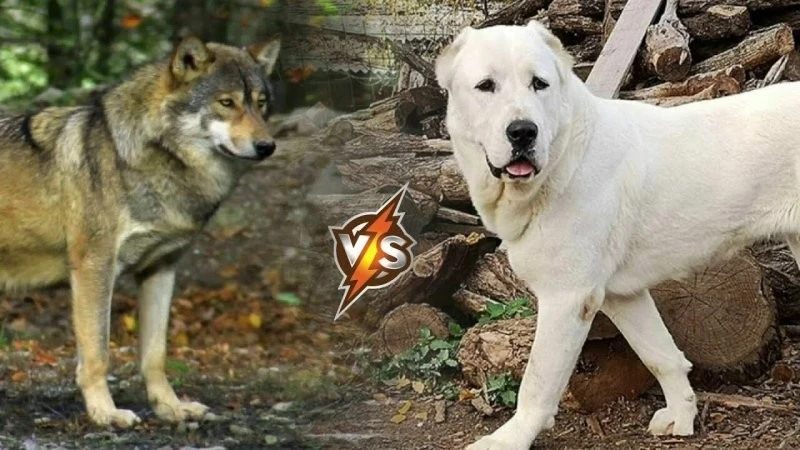
This working environment also explains the centuries-old tradition of cropping the ears and docking the tails of Central Asian Shepherds.
Shepherds viewed long, protruding body parts as vulnerable handles that a predator could bite or tear in a fight. 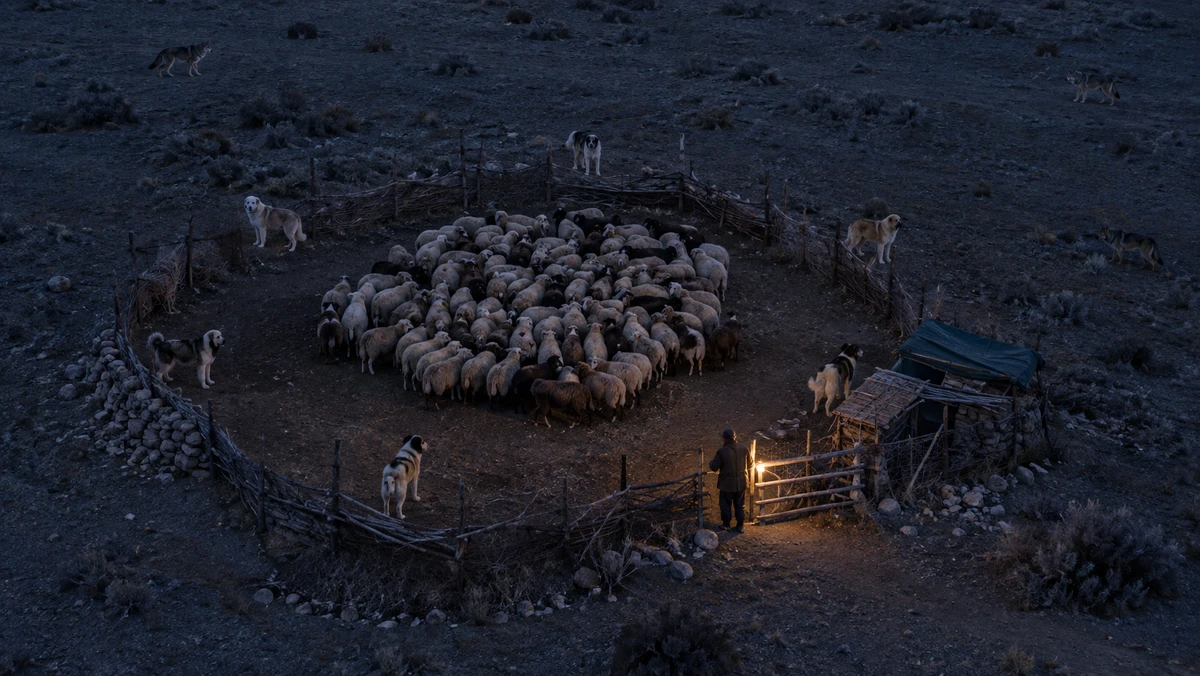
The practice is deeply rooted, and the FCI breed standard does reference it.
However, there is a key detail: the standard considers a natural tail fully equal to a docked one, and tail docking or ear cropping is permitted only where legally allowed.
In reality, there is little scientific evidence showing that ear cropping or tail docking improves a dog's survival rate in a wolf encounter.
So for a pet Alabay guarding a suburban yard, this traditional procedure doesn't magically turn them into a better wolf defender.
So, Who Would Win?
If you pit a massive Alabay against a wolf in a hypothetical ring, there is no real win rate percentage to give. 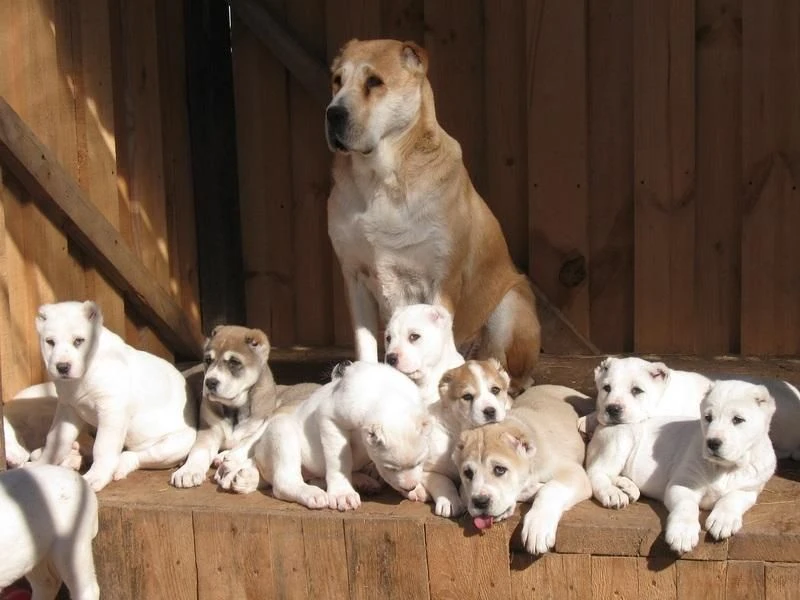
A large working dog can outweigh a steppe wolf and inflict serious damage.
A wolf is equally capable of severely injuring or killing a dog.
And against a pack of wolves, a lone dog's chances plummet.
But that was never the reason these dogs were bred.
In the real world of pastoral life, victory is far less dramatic: a wolf approaches, hears the dogs, spots the shepherd, and walks away.
The sheep are counted in the morning.
Everyone is accounted for.
A guardian dog doesn't have to defeat the wolf. It just has to make the sheep far too costly a dinner.