Dragon's Backbone Rice Terraces (36 photos)
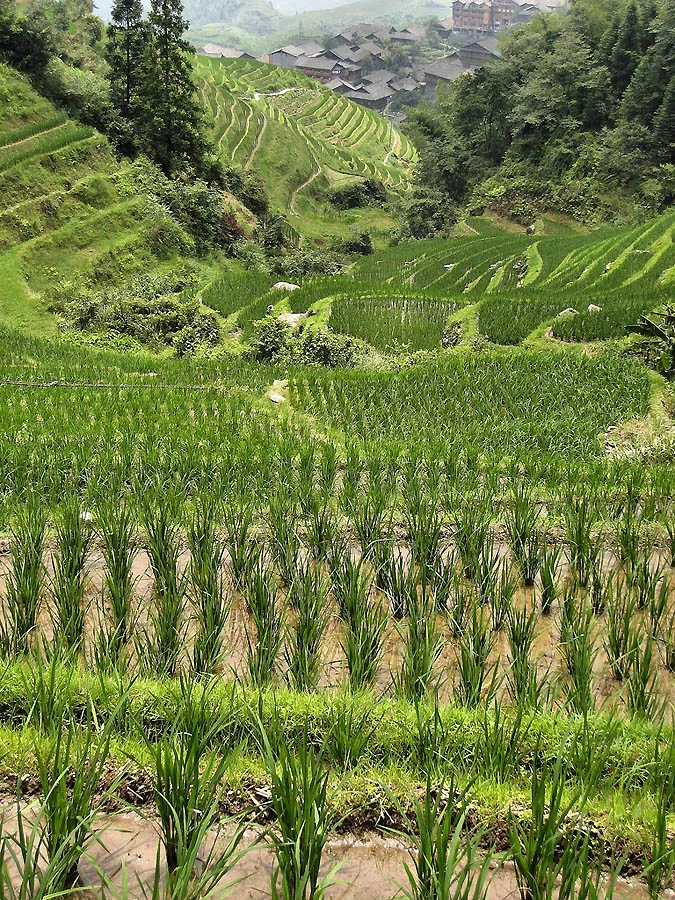
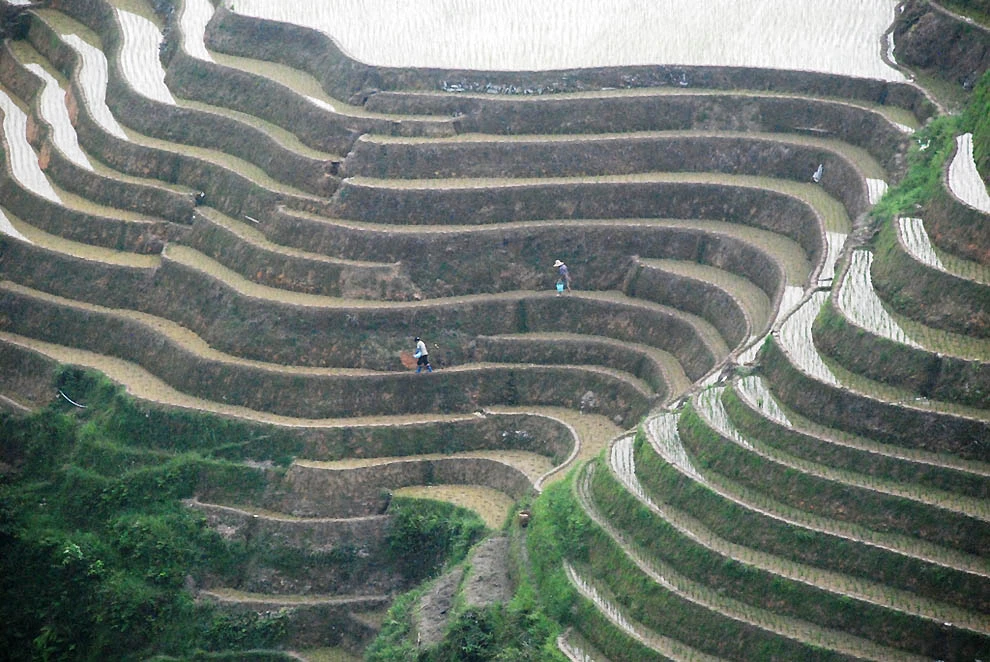
Located 27 kilometers south of Longsheng town, the vast Longji ("Dragon's Backbone") rice terraces cascade down the mountainside layer upon layer. Famous far beyond China's borders for their stunning, fairytale landscapes, they are among the country's most iconic agricultural marvels. 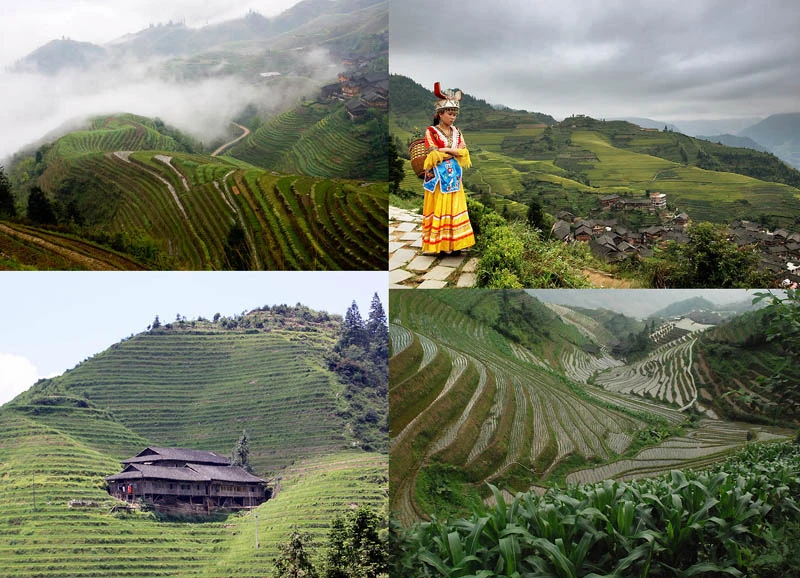
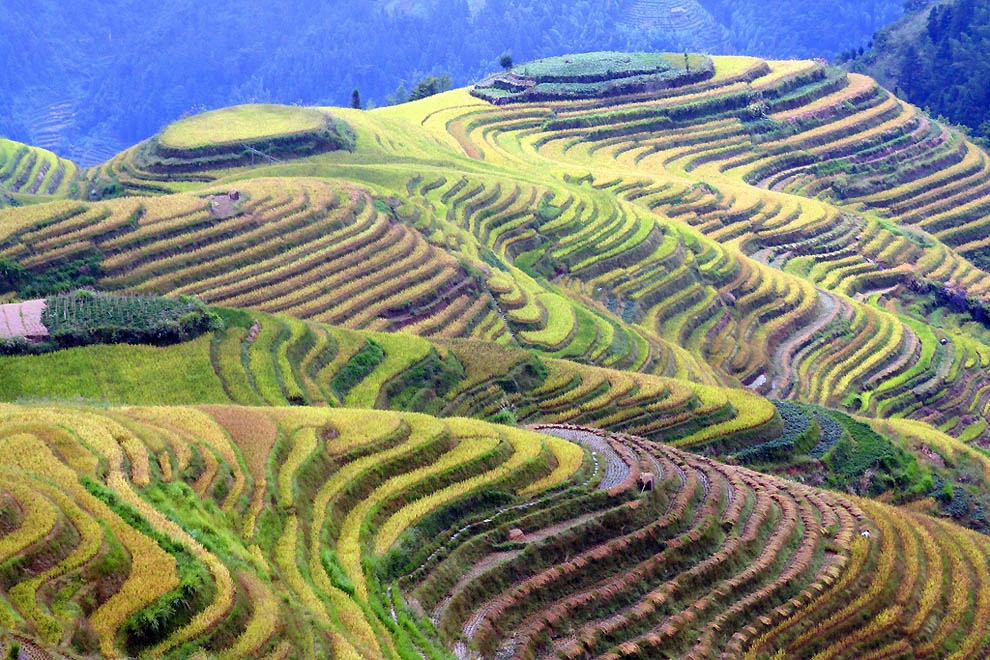
Elders in Longsheng have an old saying: "Wherever there is land, there will be a rice terrace." In China's Guangxi region, just a two-hour drive from Guilin, locals long ago mastered the art of farming steep slopes. It was back in the late 13th century, under the Yuan Dynasty, that the ambitious effort to transform the Longsheng mountains into terraced fields first began. 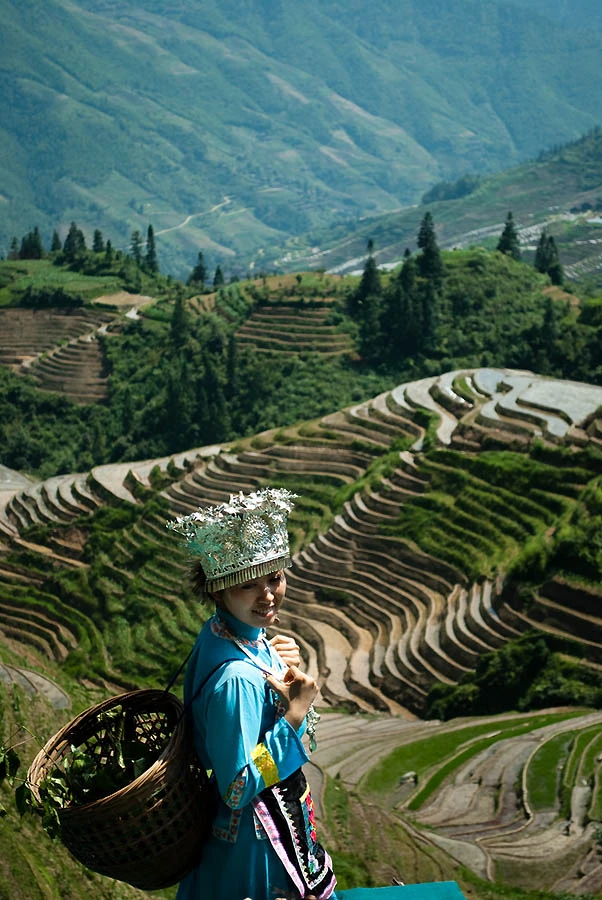
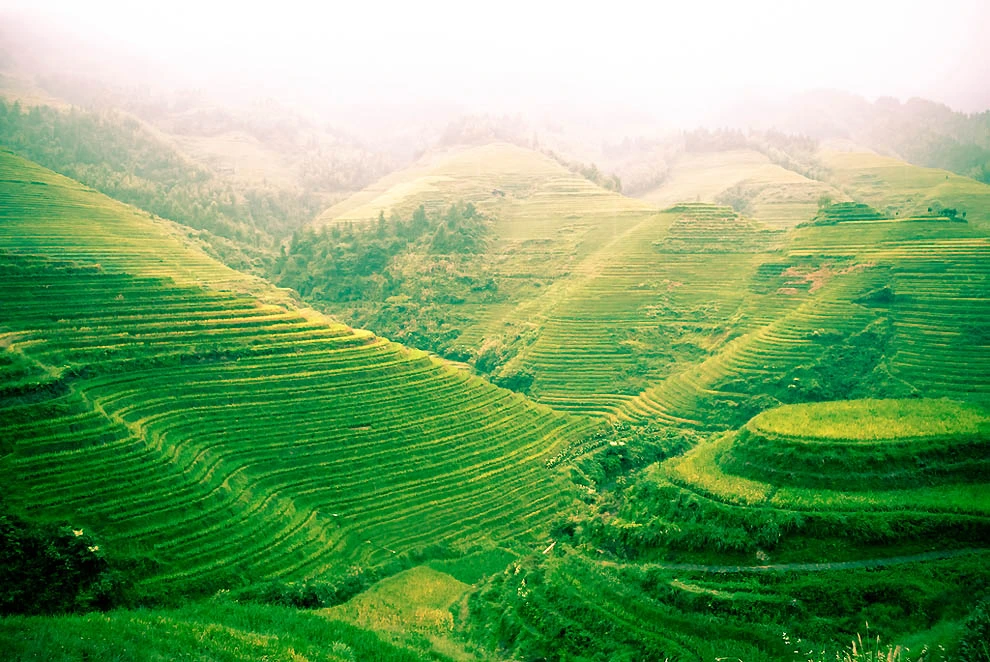
Building the famous Longji terraces took over four centuries. Across generations, families labored tirelessly on these hillsides to secure their annual rice supply, creating a landscape of breathtaking beauty in the process. It is no wonder locals lovingly refer to this engineering marvel as the "delightful terrace." 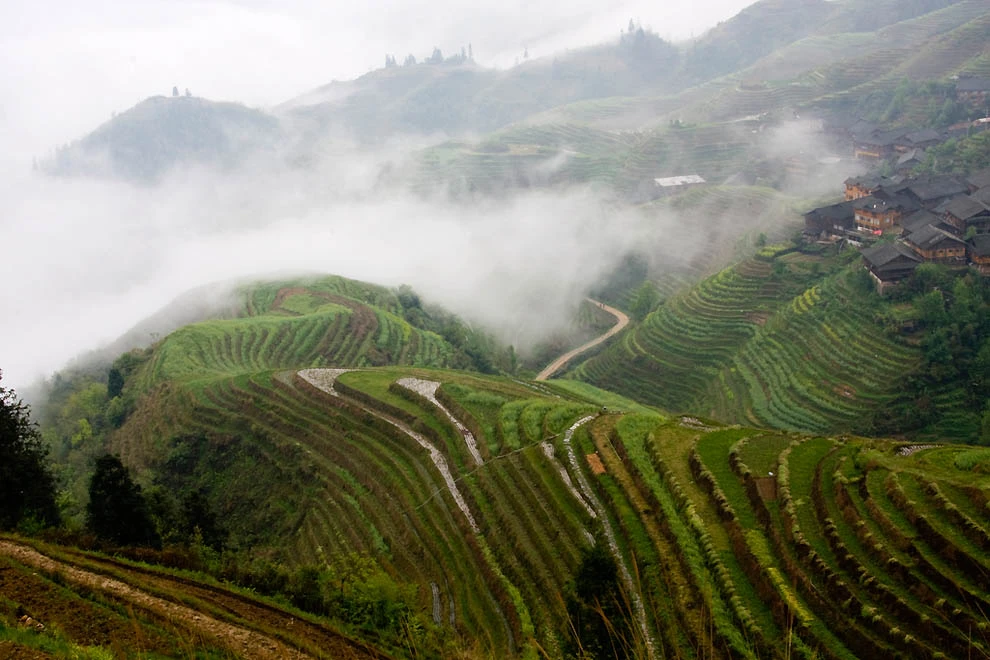
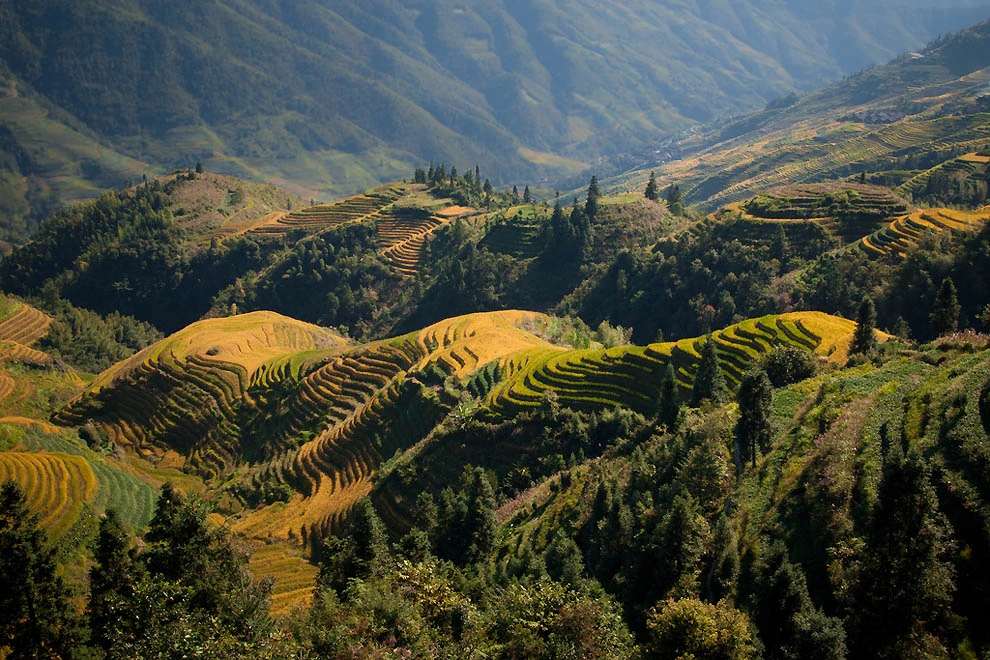
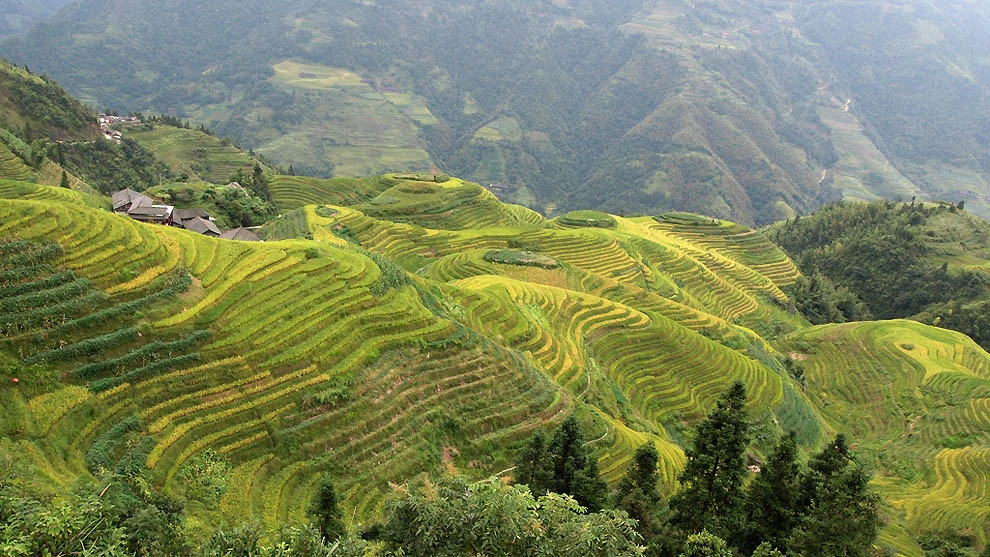
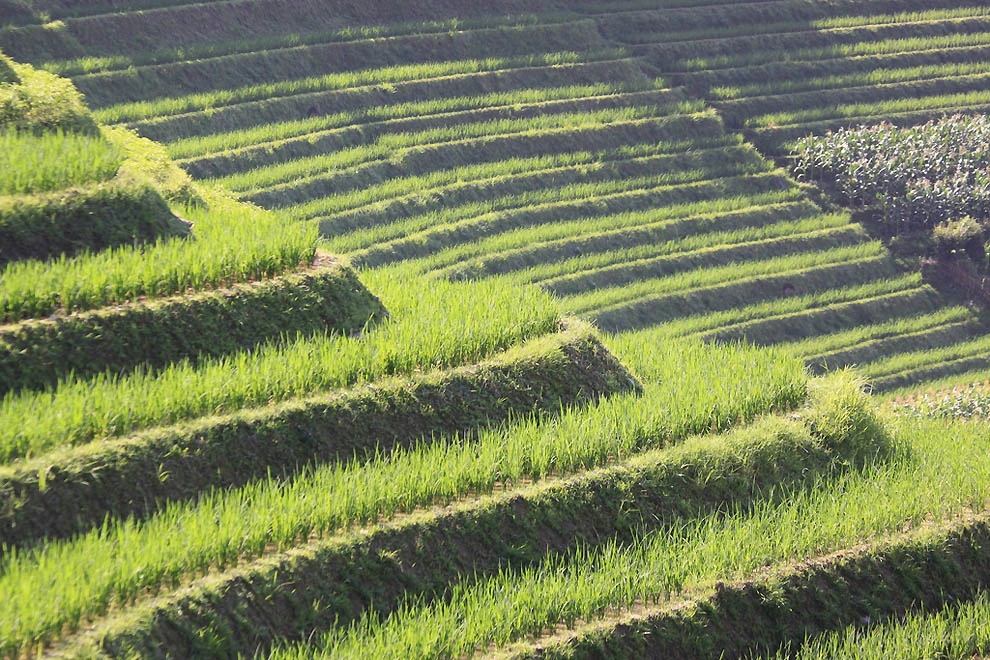
The scenery shifts dramatically with the seasons. Spring rains fill the paddies, turning the hills into shimmering pools. Summer winds ripple through young shoots, transforming the mountainsides into a sea of vibrant green. By autumn, the mature crops glow with a rich golden hue, before winter drapes the entire slope in a blanket of snow. 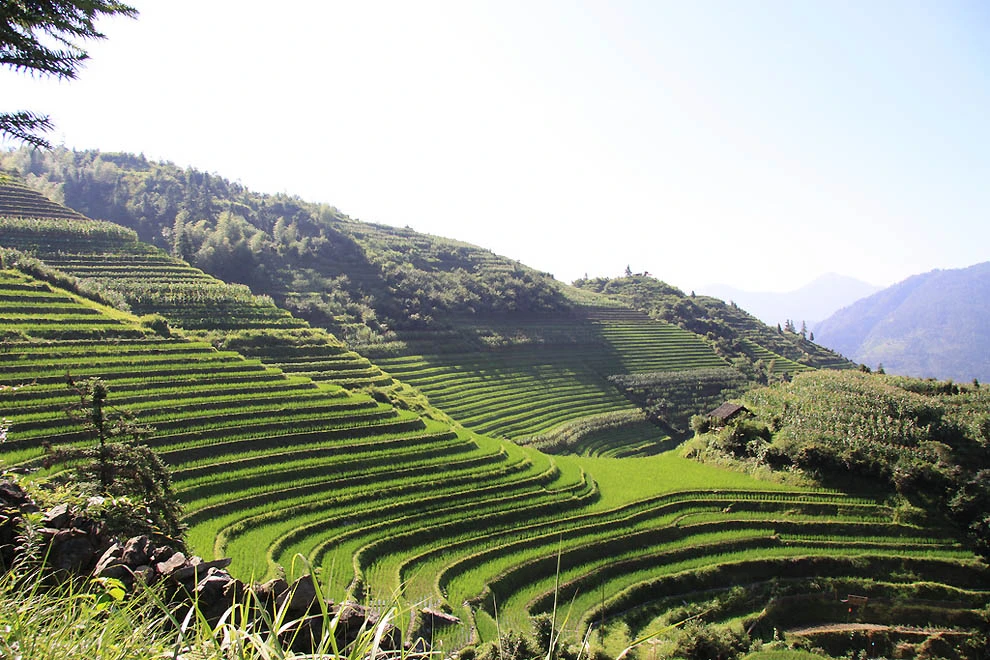
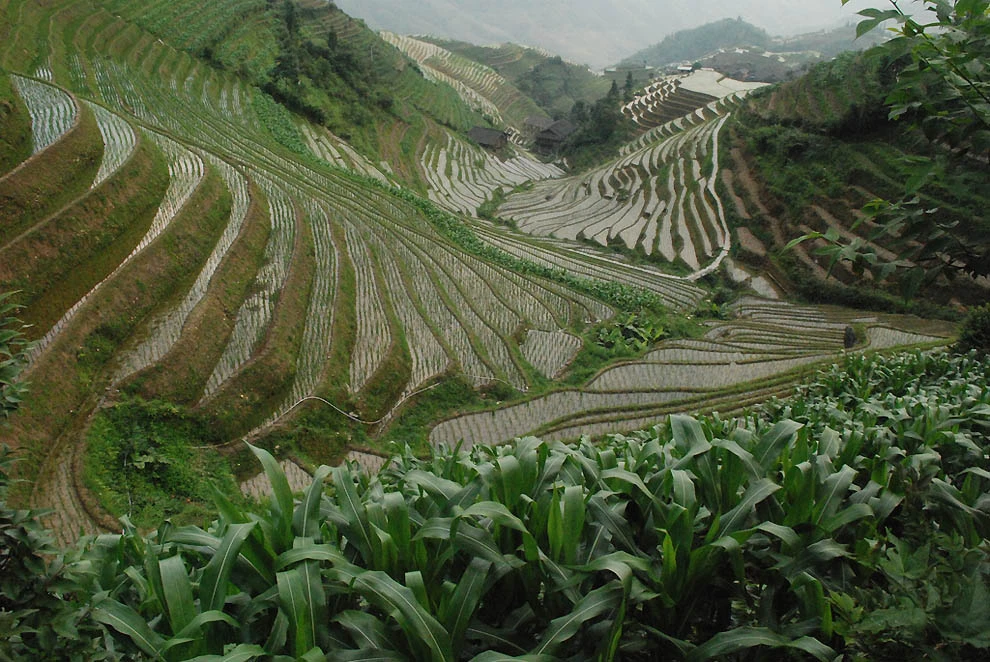
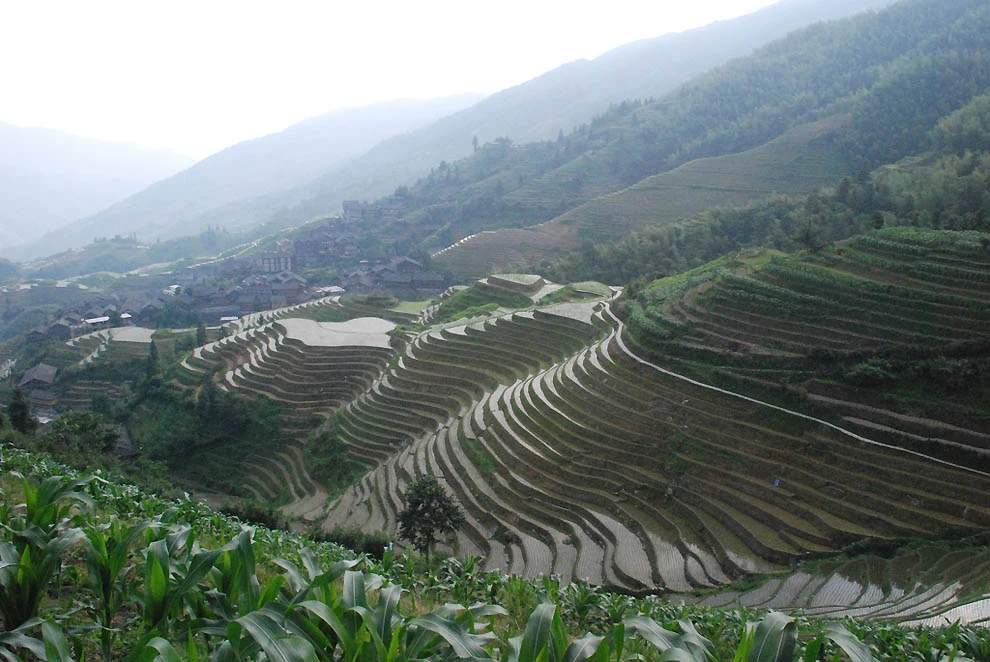
During the Yuan Dynasty, as people migrated en masse to these rugged hills, they faced a critical shortage of arable land. With a growing population and limited flat soil, traditional farming was impossible, prompting locals to devise an ingenious technique to maximize every inch of usable slope. 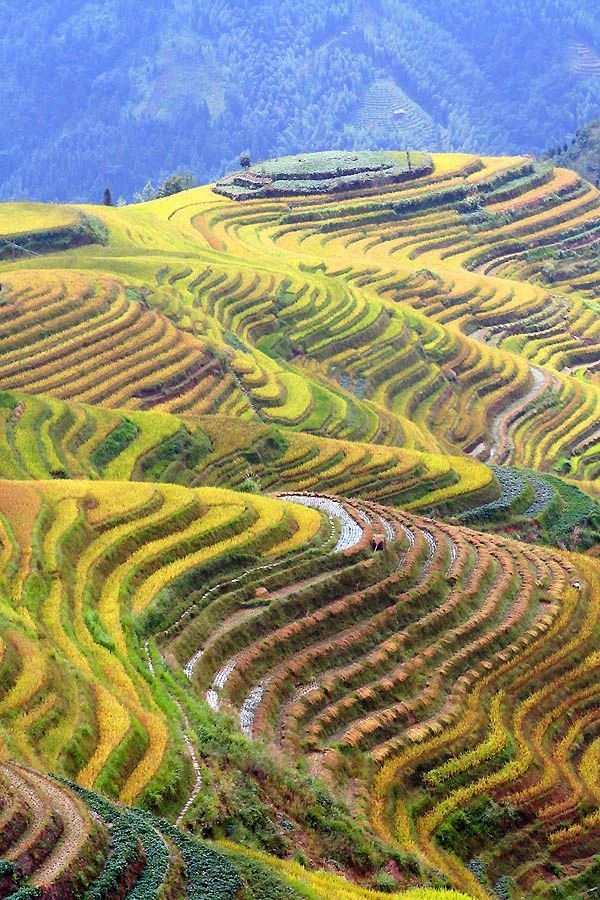
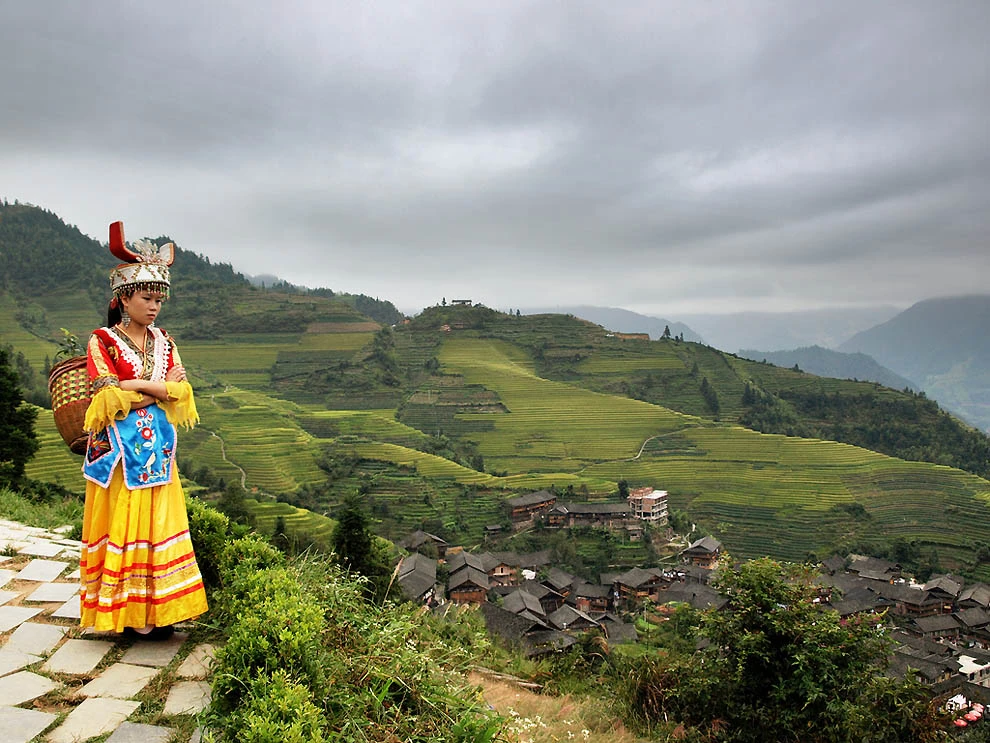
A triumph of human ingenuity, the irrigation system relies entirely on natural rainwater runoff—the mountain’s sole water source. Water is trapped in reservoirs and channeled into the paddies every spring. The staggered, stepped layout ensures that every single drop is utilized without waste. 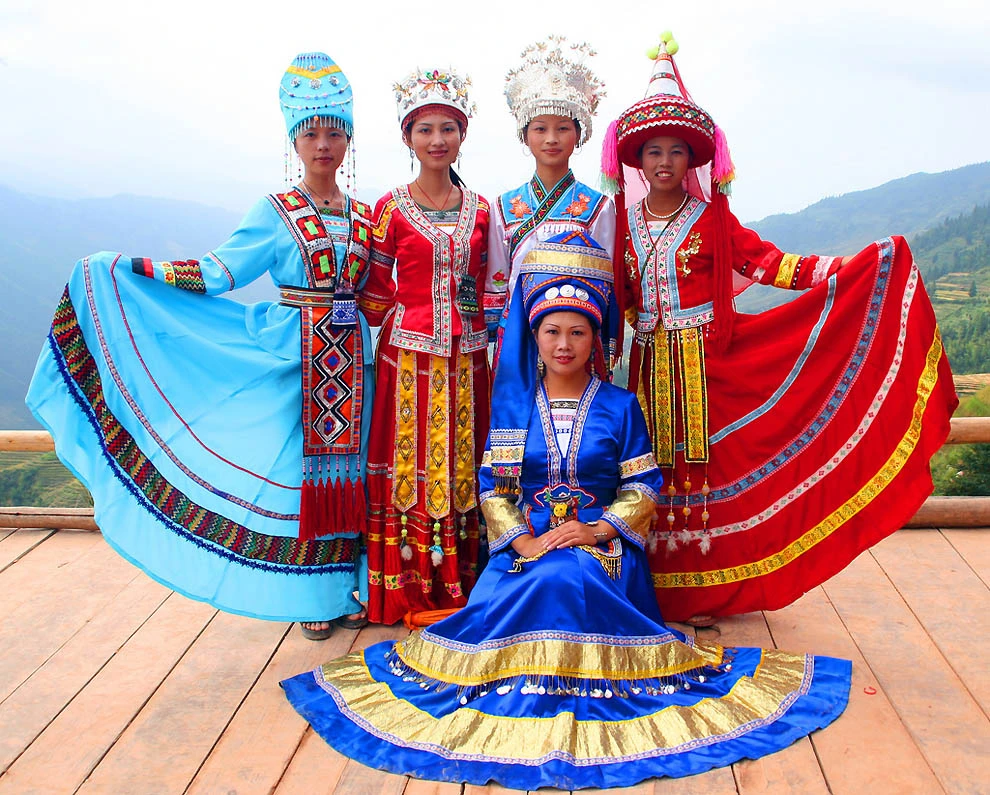
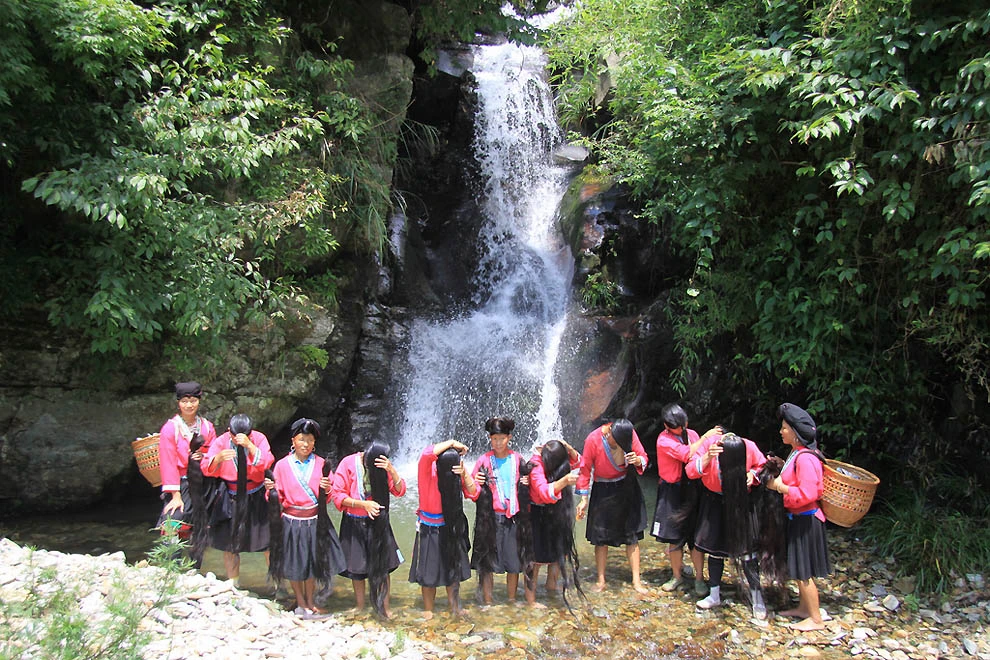
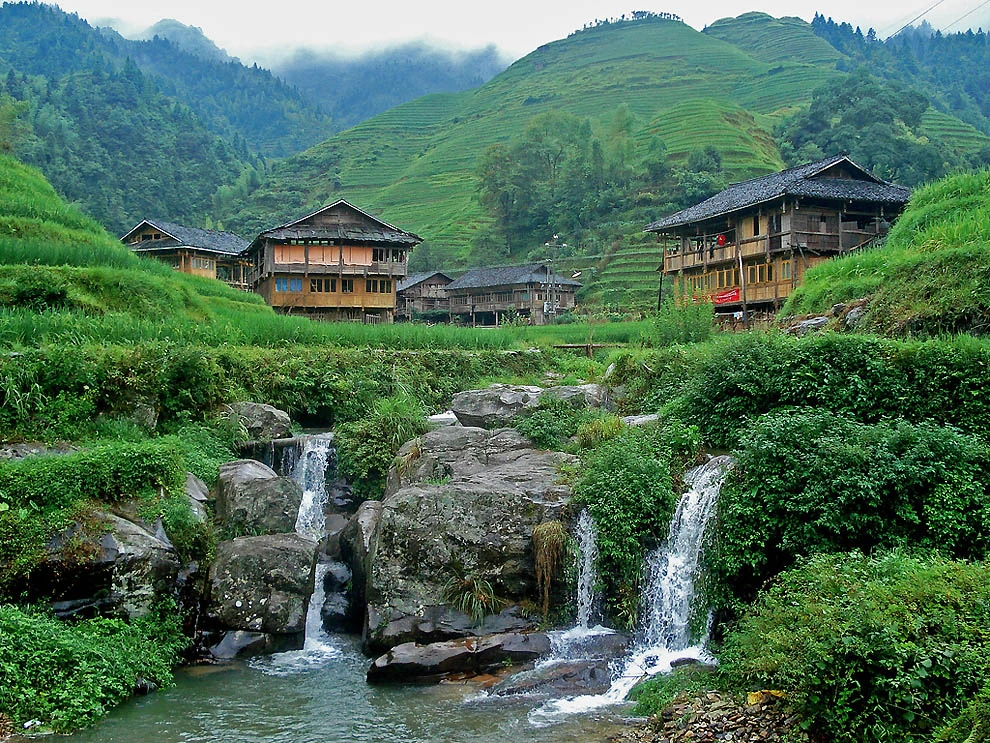
The mountain villages surrounding the Longsheng terraces are home to several ethnic minority groups, including the Zhuang, Dong, and Yao. Villagers can often be seen in traditional clothing (though some outfits are worn for tourists' benefit), and Dong women are famous for their remarkably long hair. 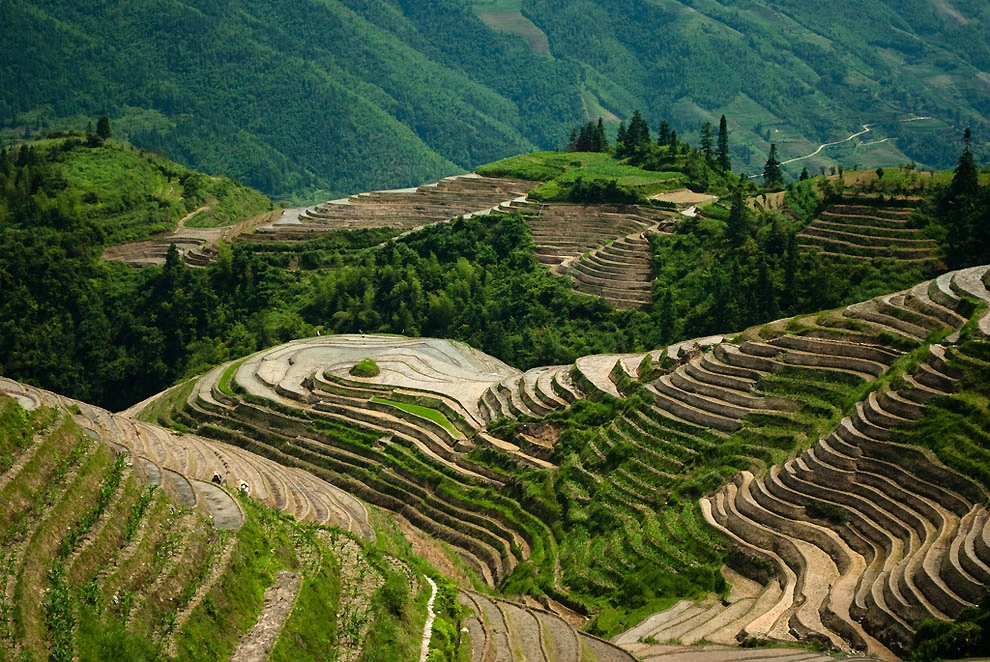
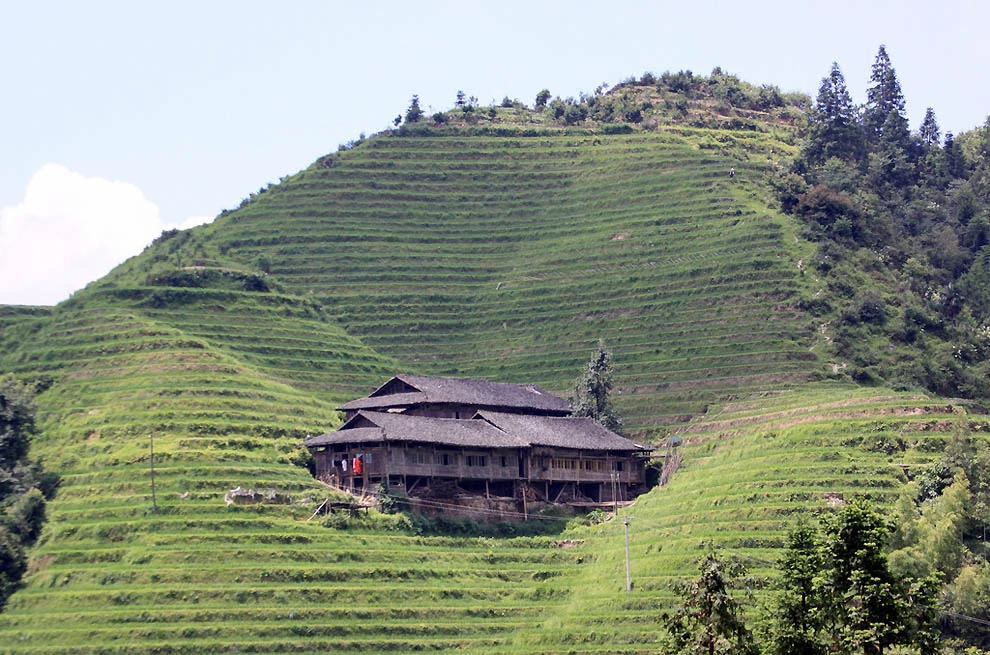
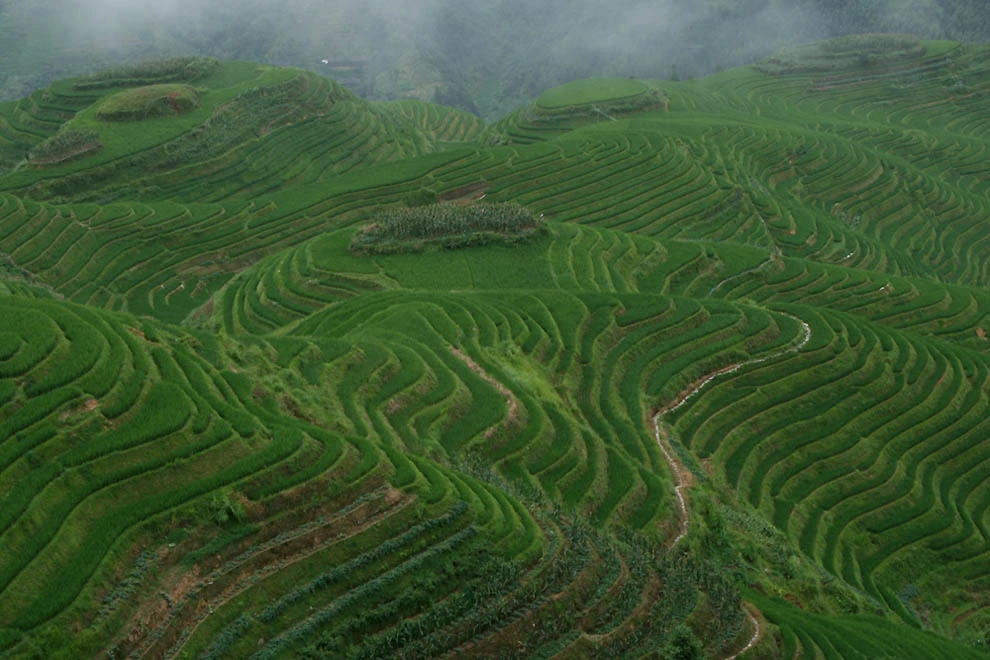
The Zhuang people named these fields the "Dragon's Backbone." Looking down from an elevation of 800 meters, it is easy to see why: the cascading tiers resemble the scales of a sleeping dragon, its winding spine stretching across the peaks. 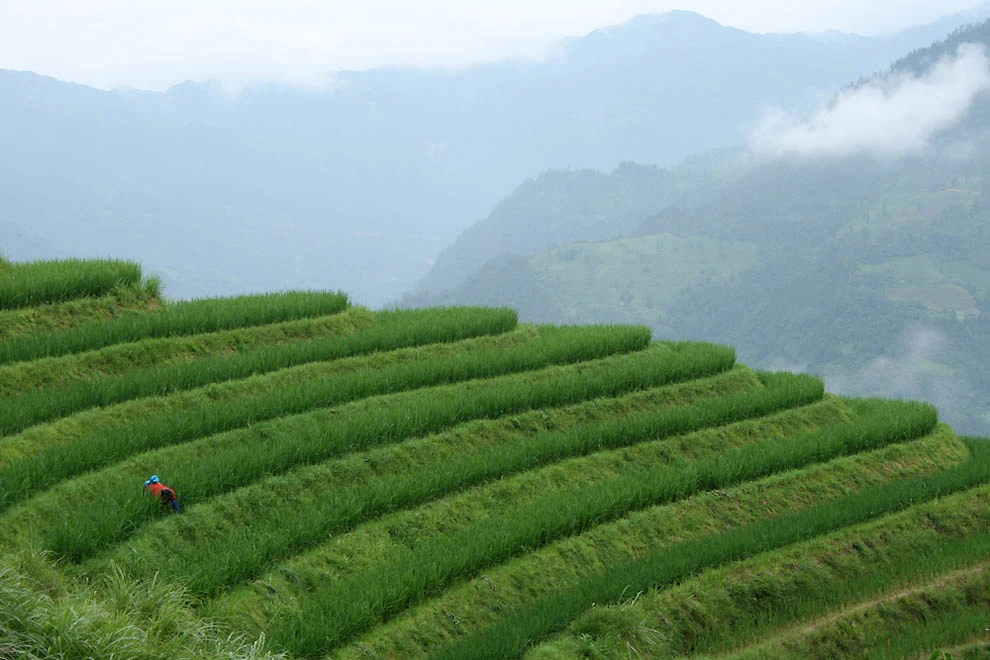
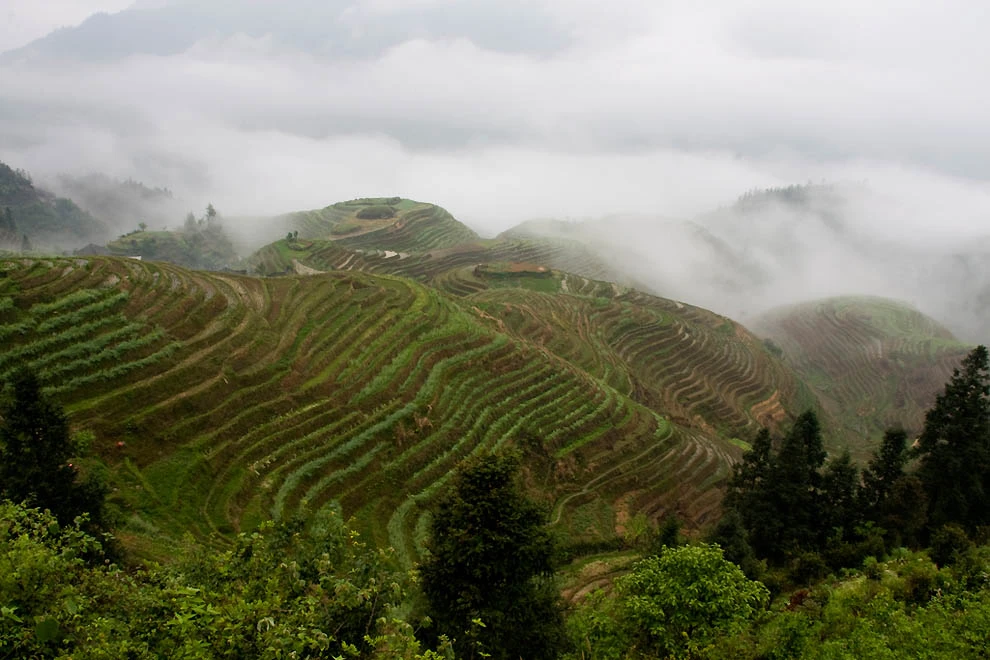
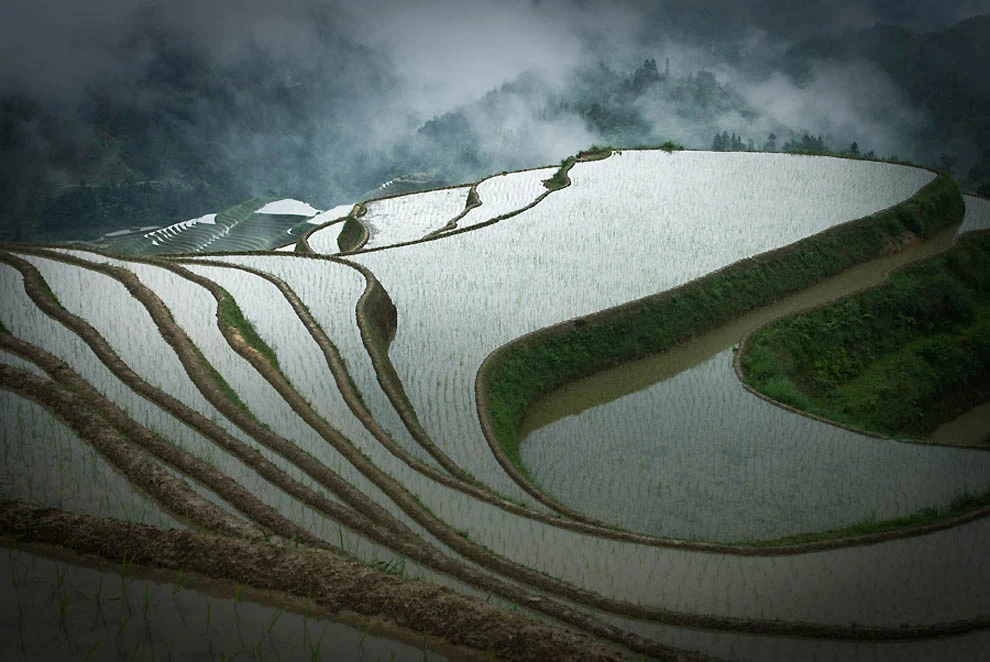
Spanning 60 square kilometers and reaching elevations of up to 1,100 meters, this is not a destination for a quick photo stop. Travelers looking to truly experience this remote region are advised to stay for at least two days. 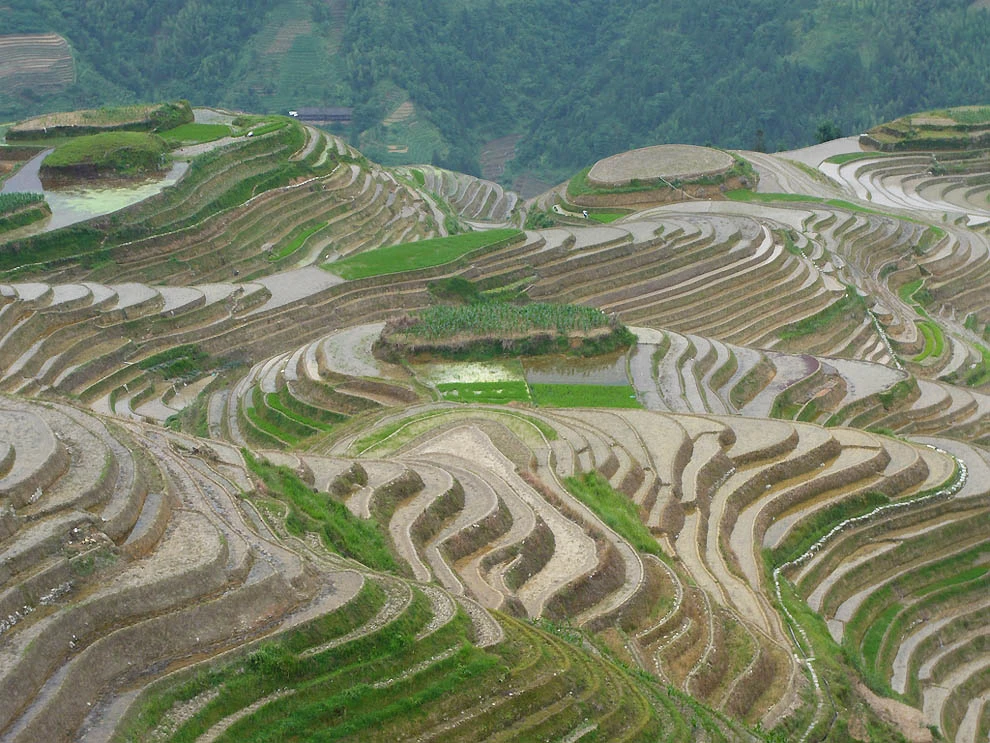
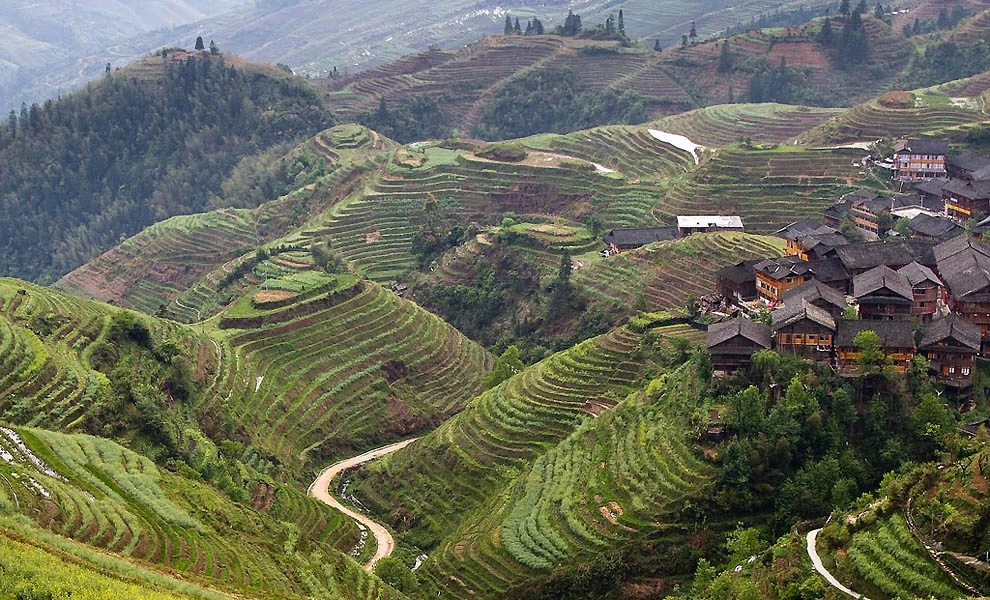
Visitors receive a warm welcome, with many locals opening cozy guesthouses. Exploring the terraces offers a deep dive into the unique culture and traditions of the region. Spring and summer are ideal for catching the fields at their best. In autumn, fully grown rice transforms the stepped slopes into rolling, golden waves. 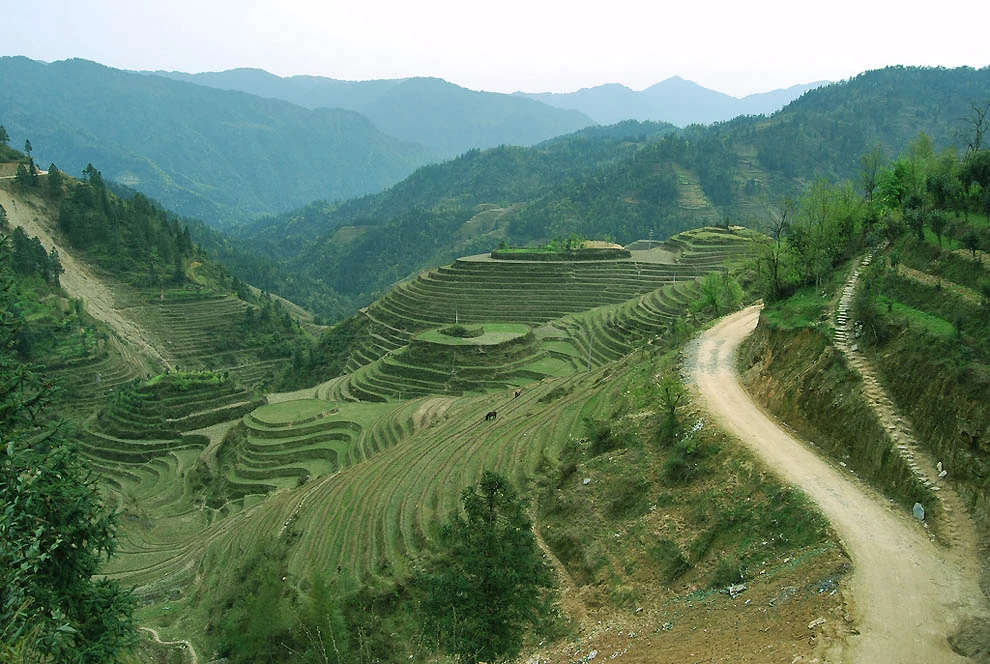
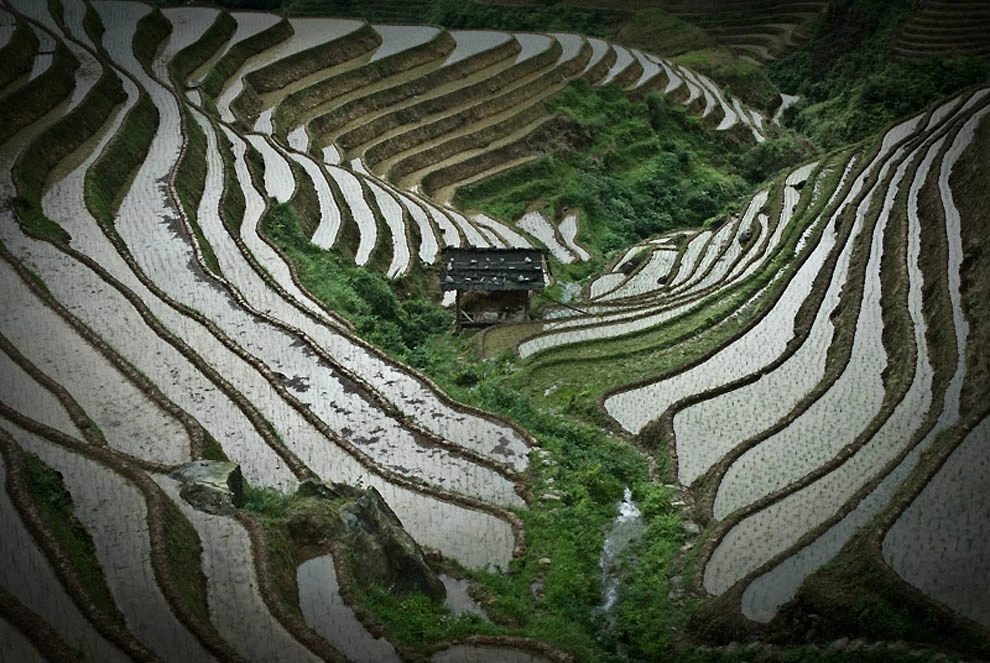
For centuries, these terraces were family property, passed down from father to son. That changed under communist rule: land plots are now allocated at birth, and upon a villager's passing, the local committee reclaims the plot to redistribute it. 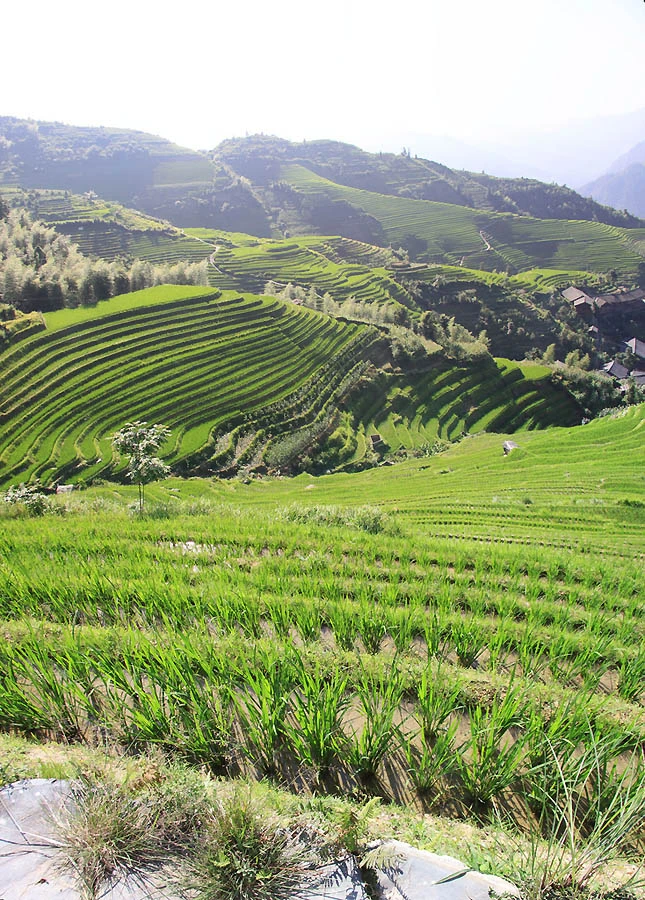
Though families grow just enough grain to sustain themselves, the harvest isn't used strictly for daily meals. Life leaves room for simple pleasures, too: each year, a portion of the sticky rice crop is set aside to brew traditional rice wine. 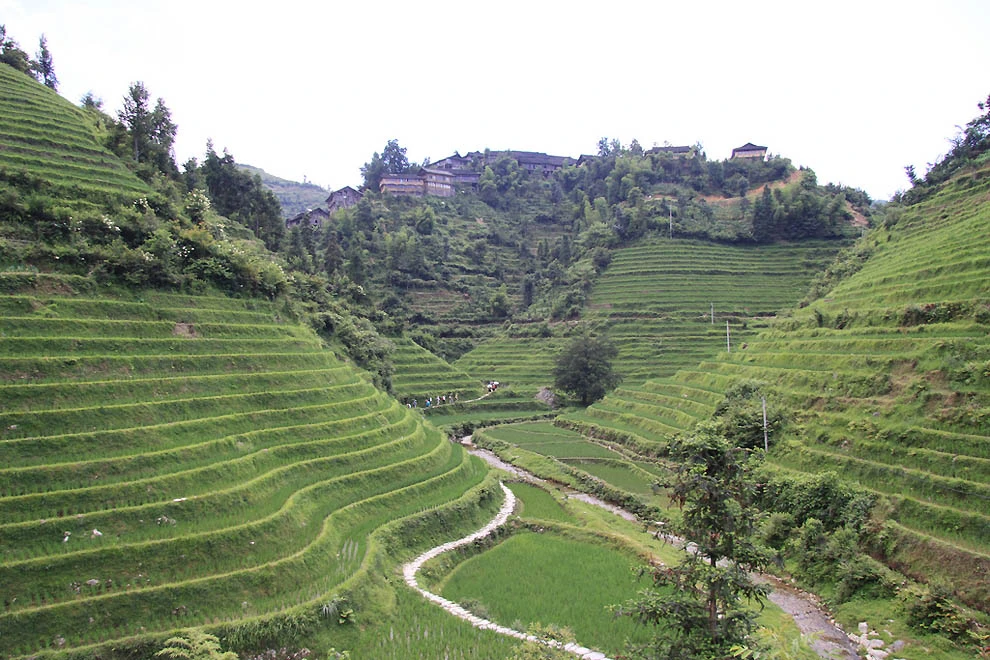
In the 21st century, the agricultural importance of the terraces has naturally faded. Younger generations increasingly head to nearby Longsheng or beyond for work. While the terraces are still farmed, agriculture is no longer the primary source of income for the local population. 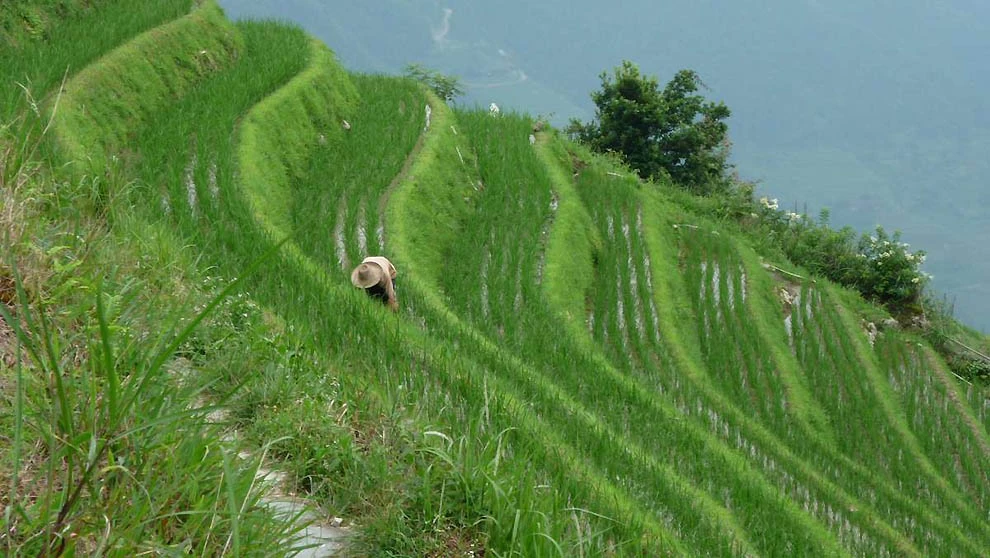
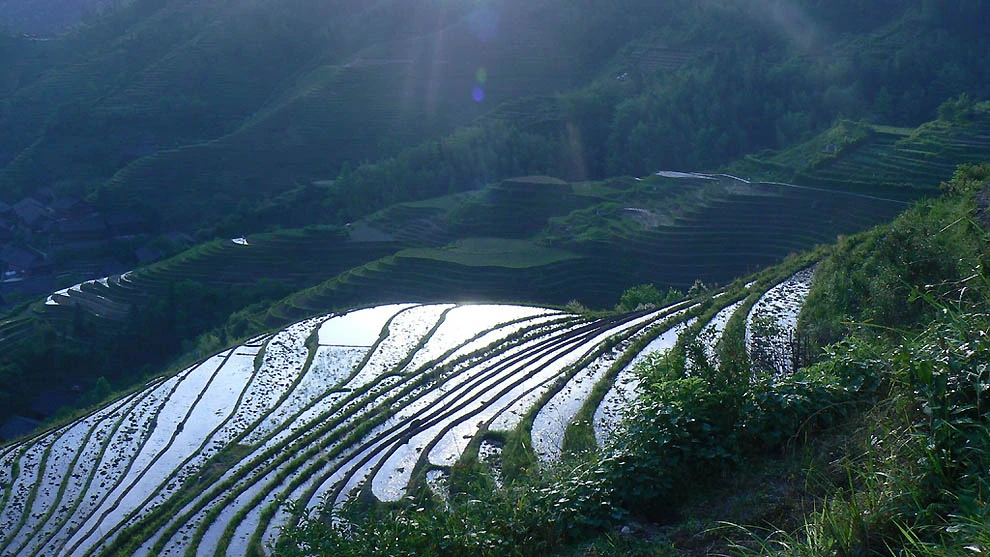
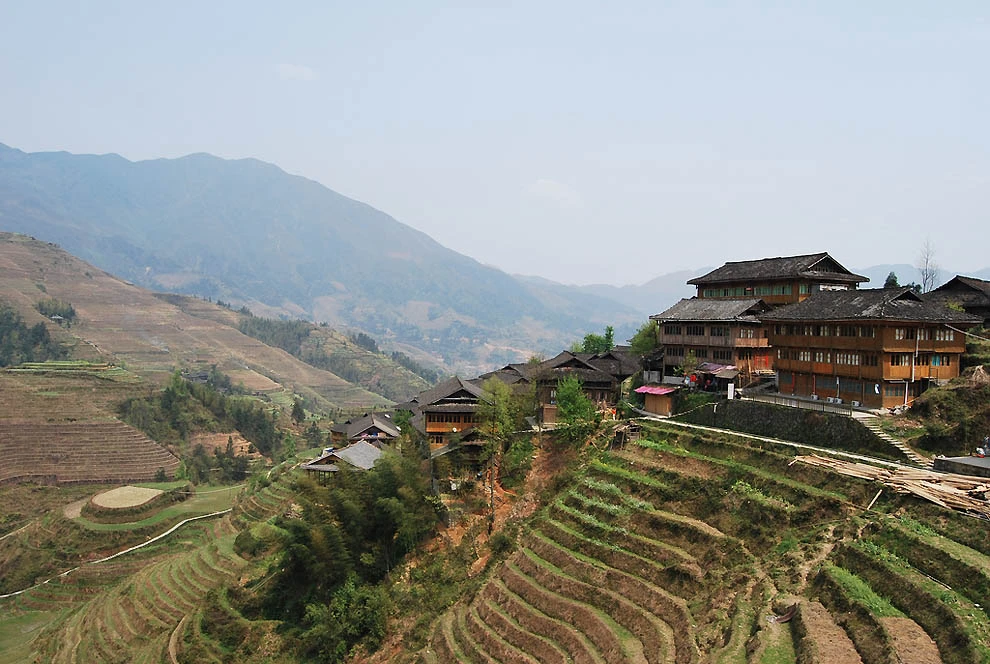
A few years ago, unscrupulous tour operators began exploiting the landscape without sharing tourist revenues with the villagers. In response, locals threatened to stop flooding and farming the paddies—a move that would have destroyed the area's scenic draw. Unsurprisingly, the tour operators quickly came to the negotiating table. 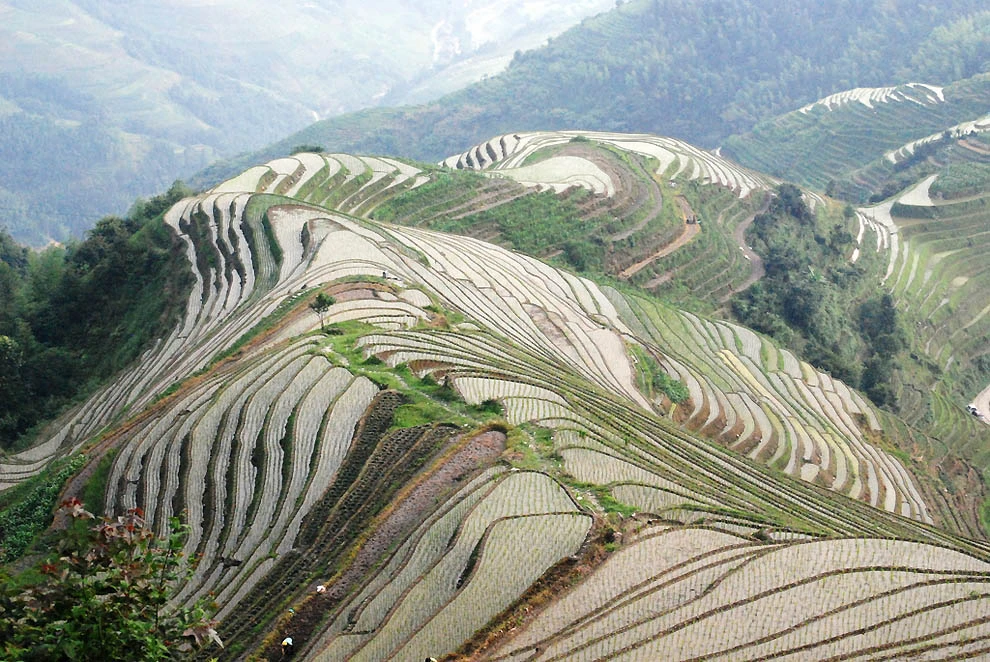
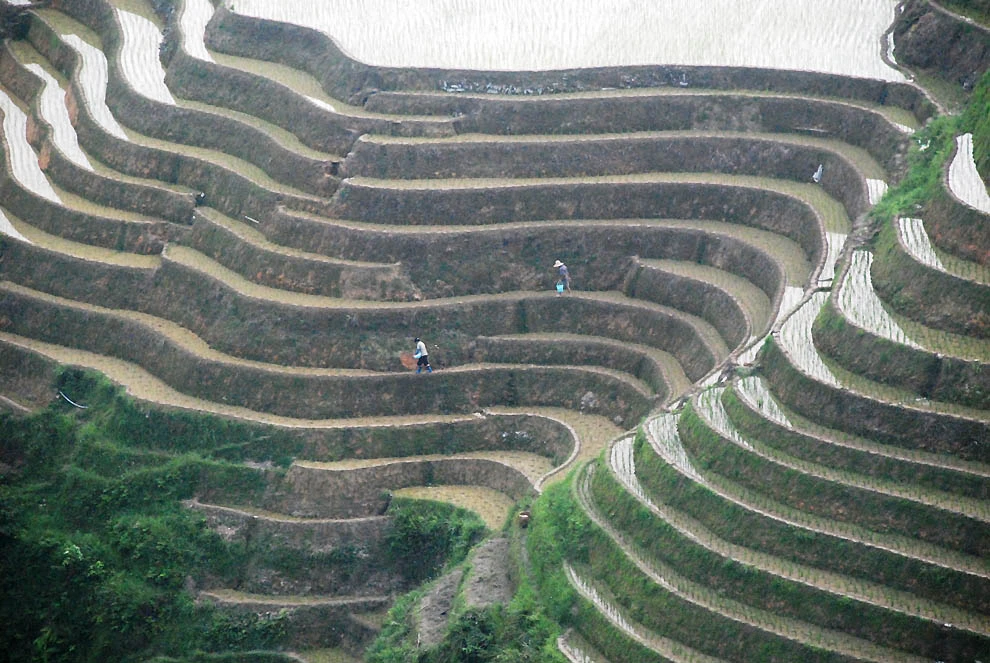
Rice grown here cannot compete on price in the open market due to limited yield. Yet as the terraces become a staple on tourist itineraries, villagers earn far more from tourism than from farming. Thus, Longsheng's rice fields will endure as long as travelers keep coming. 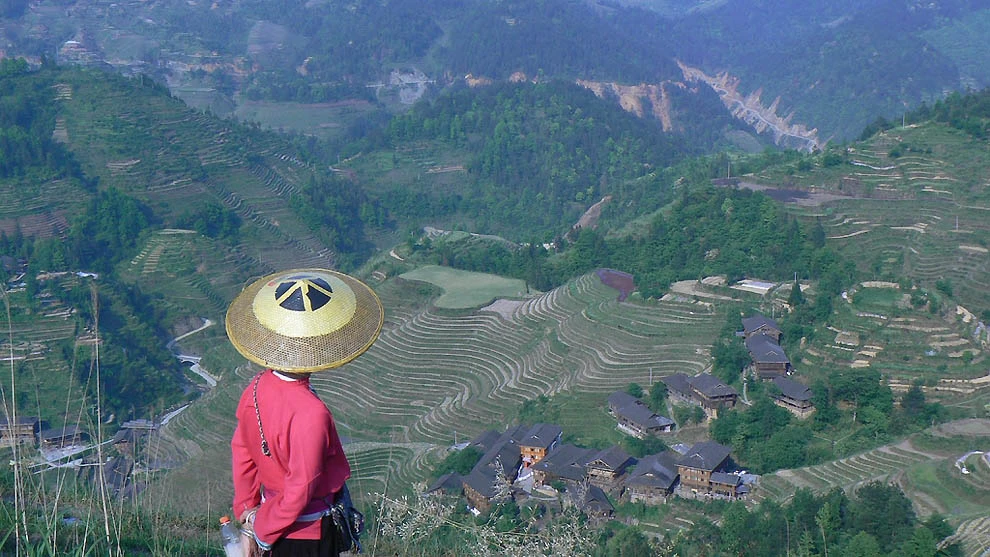
Given the sheer beauty of the landscape, that seems unlikely to change anytime soon.