In the original *Starship Troopers*, the Arachnids come across as a fairly straightforward army. Endless swarms of Warriors sweep across the deserts of Klendathu, colossal Tankers burst from underground, and massive Plasma Bugs blast Federation starships right from the planet's surface. 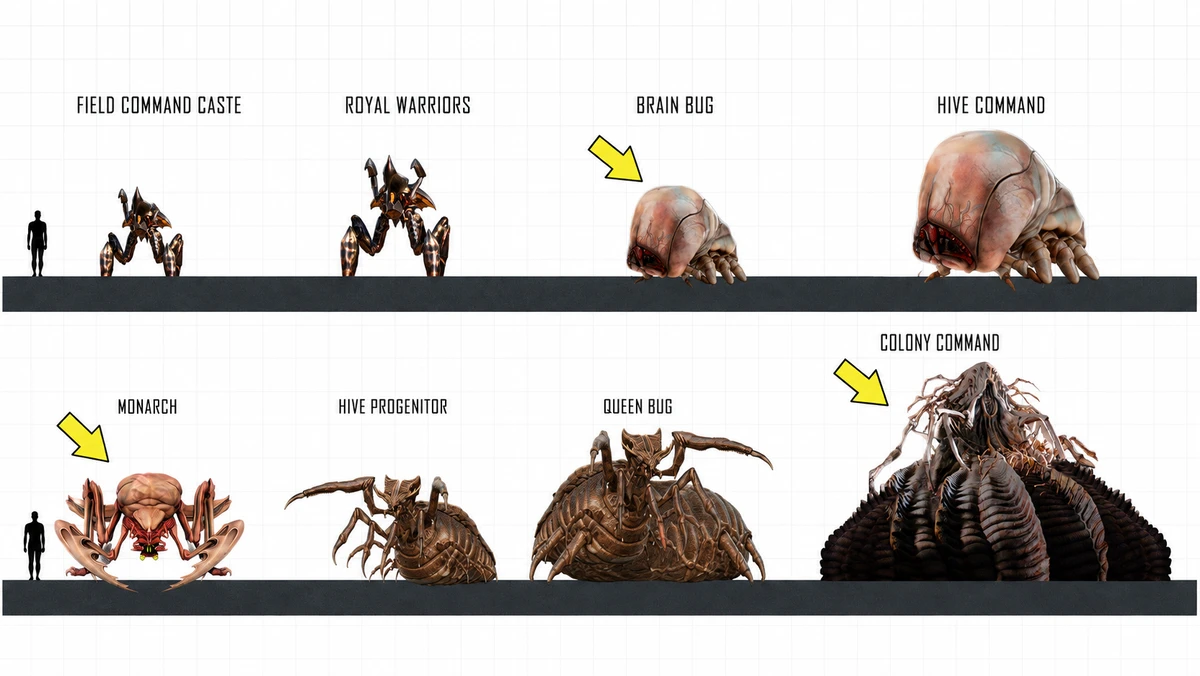
At first glance, we see only a handful of species, each serving a single, obvious purpose.
However, the sequels, animated series, and spin-off games vastly expanded this bestiary. As it turns out, Arachnid civilization comprises dozens of biological castes. Compared to some of them, even the iconic Brain Bug looks like nothing more than mid-level management...
1. Warrior Bug 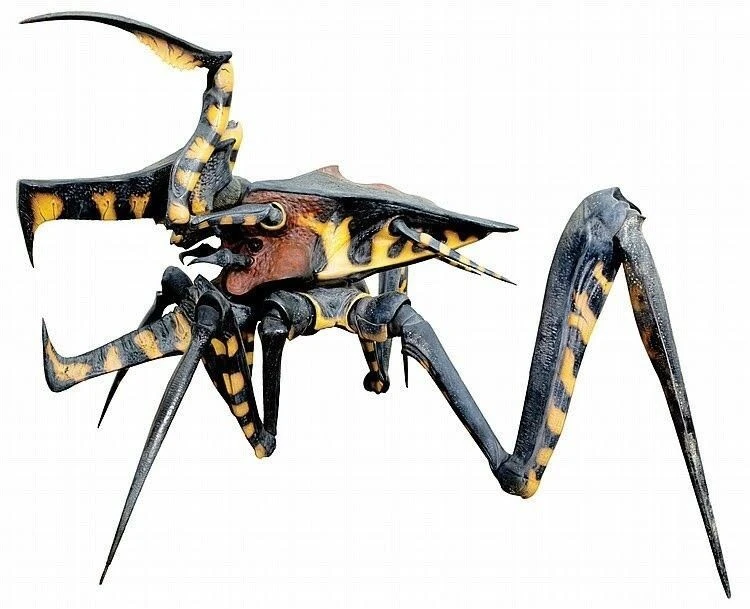
Warriors form the backbone of the Arachnid army and are the most common threat encountered by the Mobile Infantry.
These swift creatures measure two to three meters long, boasting four spindly limbs, powerful mandibles, and razor-sharp forelimbs capable of impaling a soldier. Their exoskeleton can deflect standard rifle fire, often requiring an entire squad to concentrate their fire on a single bug to bring it down.
The Warriors' greatest strength lies in sheer numbers. They reproduce rapidly, scale rocky terrain and fortifications with ease, and dig extensive underground tunnels. Whenever one wave falls to Federation fire, another is ready to swarm in right behind it.
Different populations adapt to their environments: desert worlds host tan-colored variants, while specimens with extra abdominal spikes have been spotted on Mars.
2. Hopper Bug 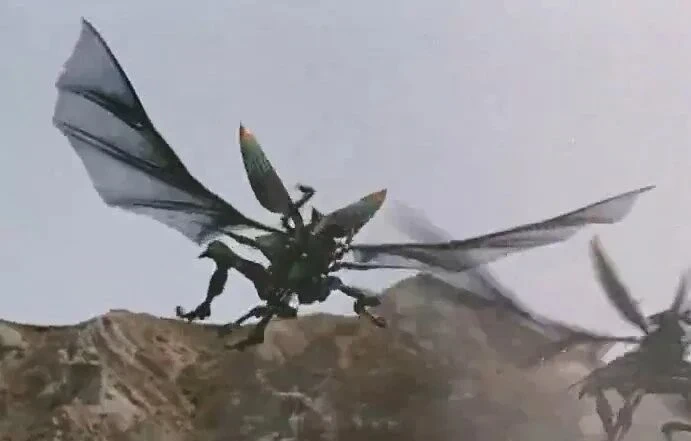
Hoppers provide air support for the swarm. Anatomically, they resemble lightweight, winged Warriors capable of launching into the air, swooping down on infantry, and vanishing just as quickly. It was a Hopper that killed Lieutenant Rasczak during the assault on Outpost Whisky.
Hoppers aren't built for durability. Their lightweight frames make them vulnerable to small-arms fire, but hitting such a fast-moving target is no easy task. A typical attack involves a Hopper diving onto a soldier, snatching them up, and tearing them apart with claws or impaling them with its tail appendage.
3. Jungle Spider 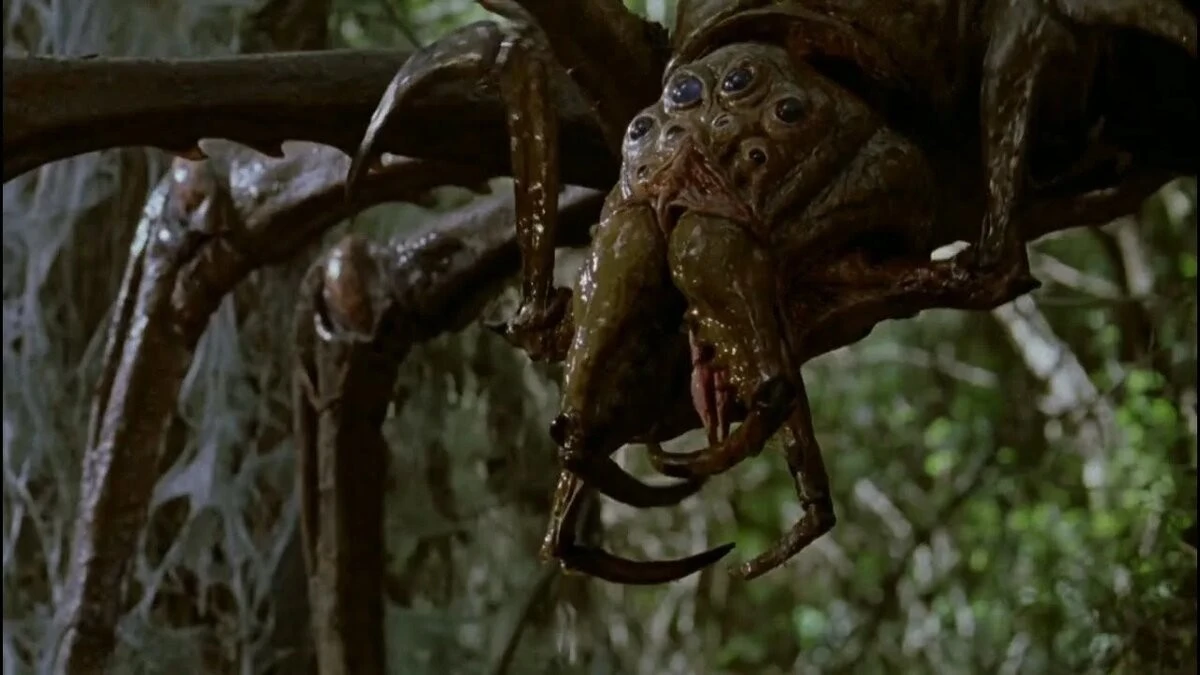
This species bears a striking resemblance to Earth spiders, featuring eight eyes, a broad armored body, and powerful limbs. It can leap impressive distances, navigate dense foliage effortlessly, and ambush prey from the shadows.
In jungle environments, this agility makes it an apex hunter.
Jungle Spiders also play a key role in harvesting genetic material for the swarm. They carry captured prey back to the hive and hand it over to Nurse Bugs, who integrate alien DNA to breed new castes. As a result, every clash with a new enemy fuels the colony's next evolutionary leap.
4. Tanker Bug 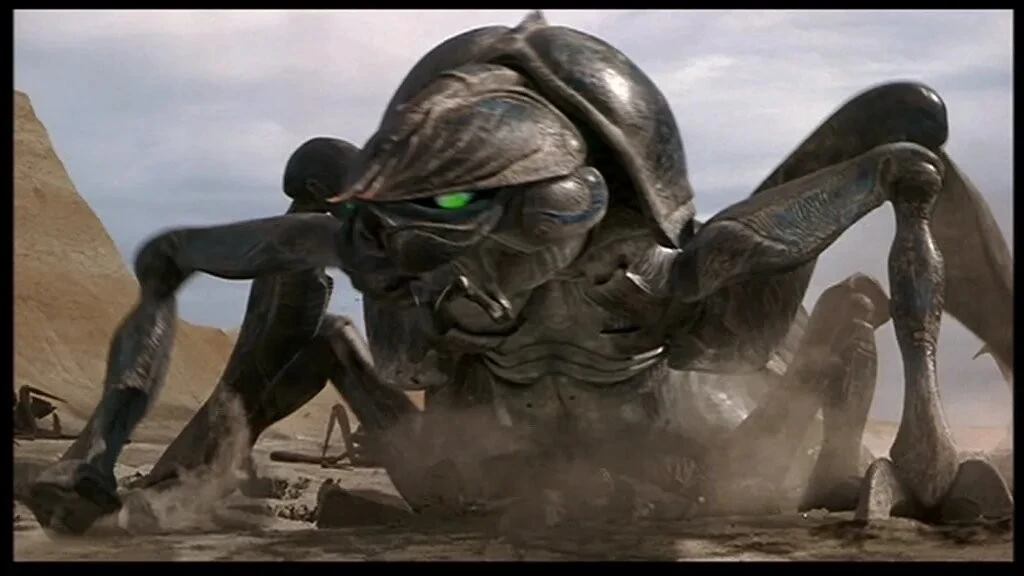
Tanker Bugs certainly live up to their name. Roughly the size of a small house, their thick black carapace easily deflects standard rifle bullets. Taking one down requires heavy ordnance, high explosives, or targeted strikes on its vulnerable weak points.
Despite their immense size, Tankers are adept burrowers. They tunnel beneath human positions, erupt into the middle of defense lines, and blast troops with a stream of corrosive, flammable liquid sprayed from their heads. During the invasion of Klendathu, a single Tanker incinerated an entire squad in seconds and nearly wiped out Johnny Rico.
5. Scorpion Bug 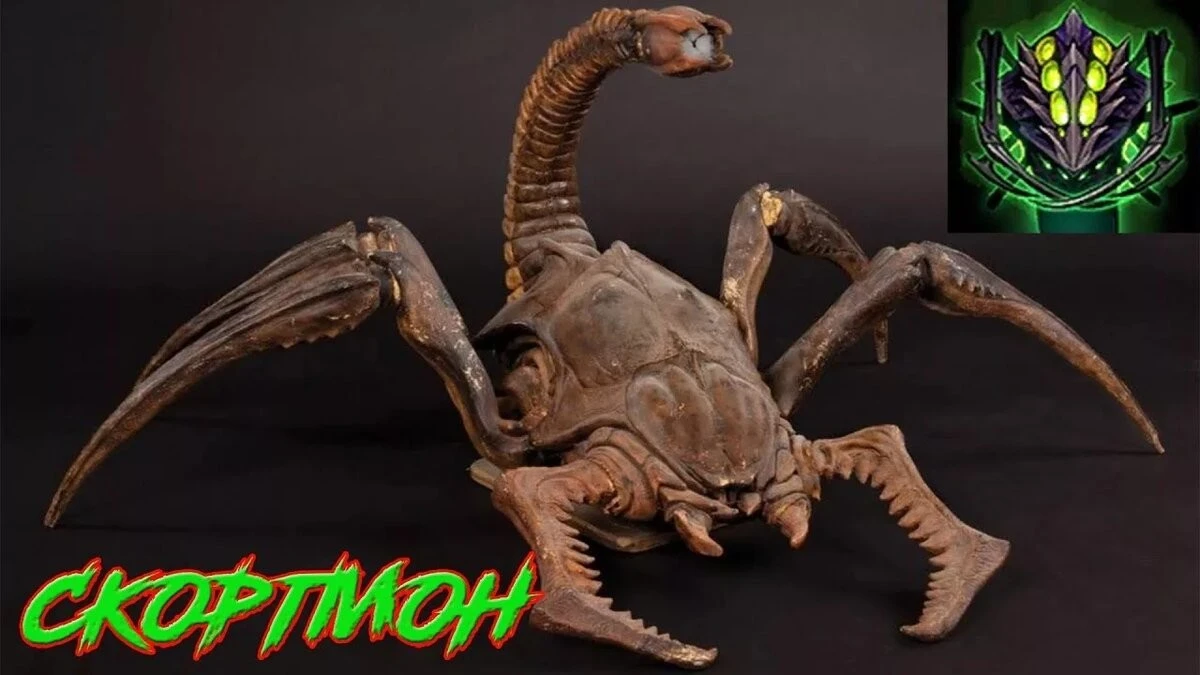
Scorpion Bugs debuted during the Second Arachnid War. Encased in heavy armor comparable to a Tanker's carapace, they launch streams of superheated plasma from their tails. Standard assault rifles are virtually useless against them, forcing troopers to rely on rocket launchers and heavy explosives.
The Scorpion has two main drawbacks: slow movement speed and a lengthy charge-up time before firing. The Bugs compensate by hiding these heavy artillery units behind waves of Warriors. While troopers are busy fighting off the front line, the Scorpion locks onto a target and rains plasma down on their position.
6. Spitter Bug 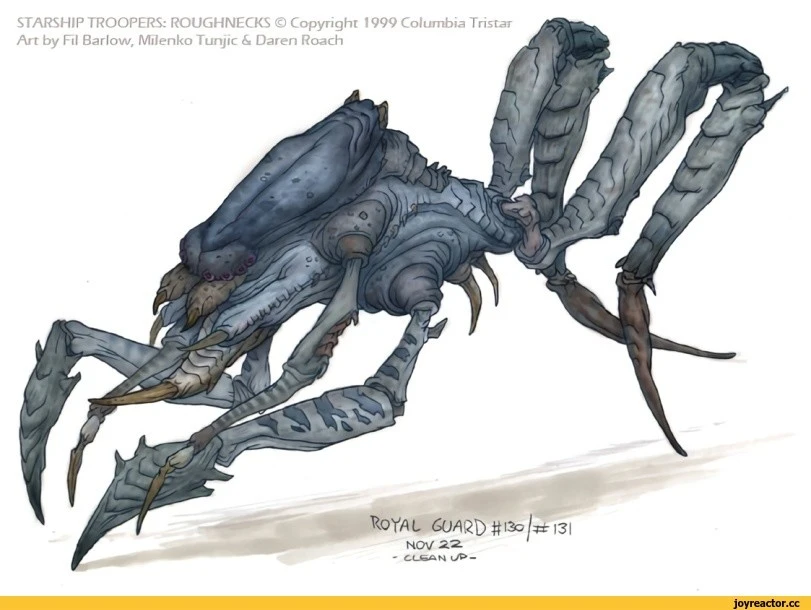
Control Bugs are roughly the size of a human palm and pose little direct threat in open combat. Instead, they enter a host through the mouth or other openings, attach to the spinal cord, and hijack the nervous system.
From the outside, an infected host appears completely normal, even though their mind is entirely enslaved by the hive mind.
One such parasite managed to infect General Jack Shepherd, using him as a Trojan horse to infiltrate the highest ranks of Federation high command. The compromised commander could have quietly infected senior officers, effectively decapitating human military leadership. Such a covert strike had the potential to end the war without a single planetary assault.
7. Blaster Bug 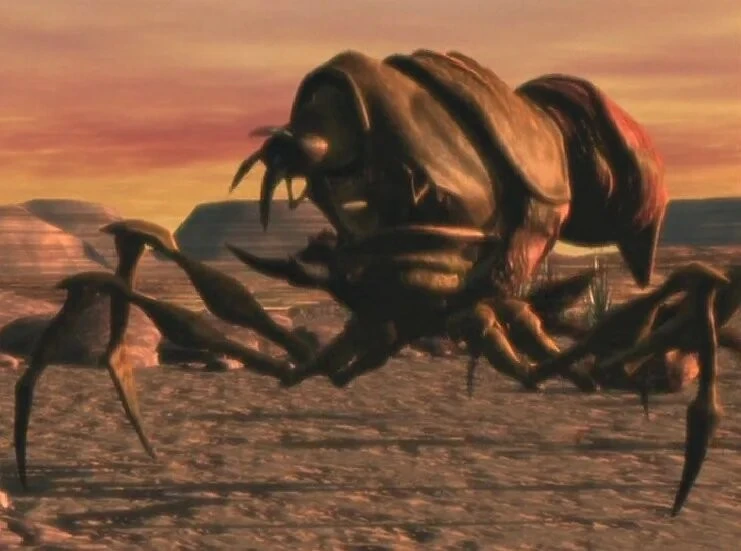
The Blaster is essentially a scaled-down, highly agile version of the Plasma Bug. It darts across the battlefield, dodges incoming fire, and unleashes rapid bursts of energy. Just before attacking, it lets out a distinctive screech, giving soldiers only a split second to react.
After firing, the Blaster needs time to recharge, exposing its soft underbelly. That brief window is the best opportunity to take it down with a shotgun or grenade launcher.
If multiple Blasters spread out and attack from different angles, an infantry unit can easily find itself trapped in a deadly crossfire of plasma.
8. Plasma Bug 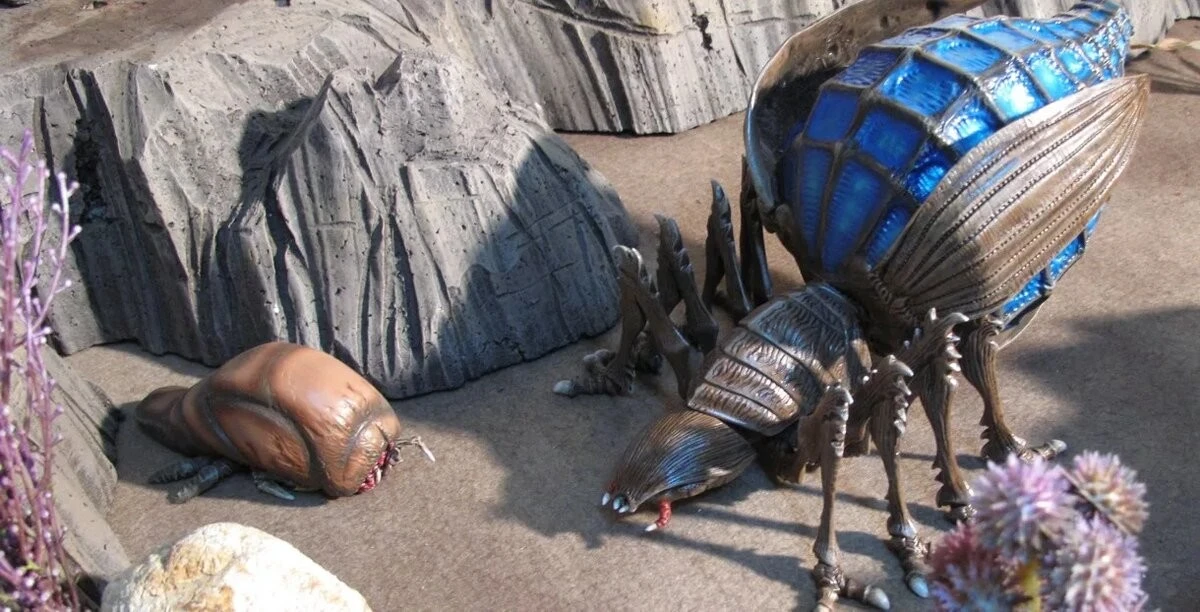
Plasma Bugs serve as heavy artillery and surface-to-space defense systems. Their massive abdomens build up immense energy before firing a high-yield plasma charge into the atmosphere. A single strike can obliterate a starship in orbit from tens of kilometers away.
For a long time, the Federation couldn't comprehend how these virtually blind ground units could target orbiting starships with such pinpoint accuracy. Coordinates are likely relayed to them by intelligent caste members. Beyond orbital defense, Plasma Bugs can bombard ground targets and launch spore pods into deep space to seed new worlds.
9. Kamikaze Rippler 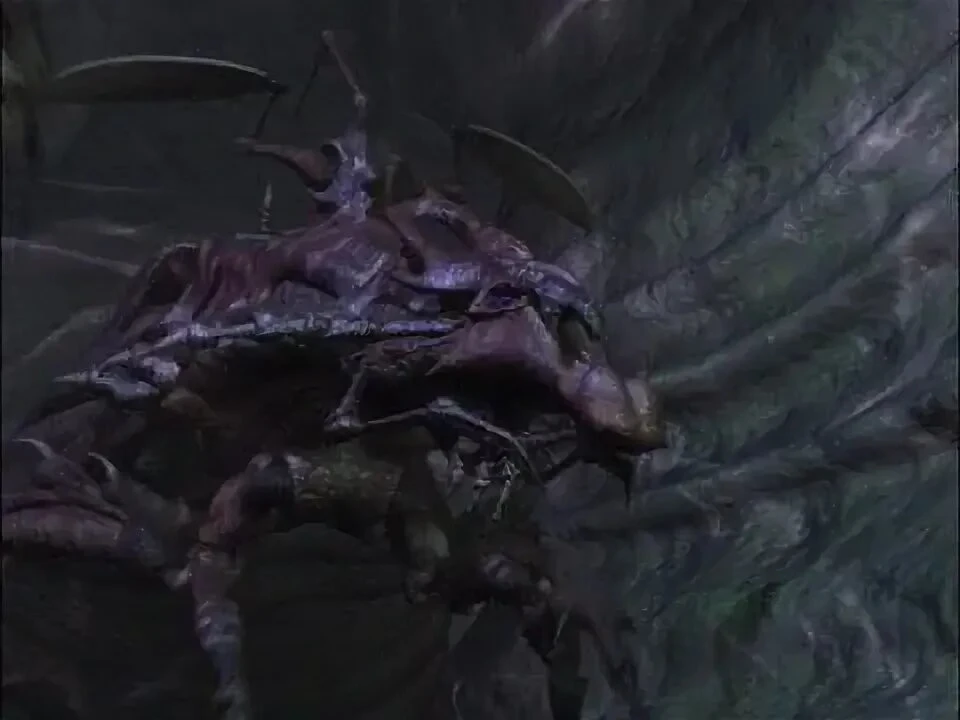
Ripplers resemble heavily upgraded Hoppers, but their capabilities go much further. They can fly, swim underwater, and fire quills laced with corrosive venom that melts through skin and armor. In pitch darkness, their bodies emit a faint yellowish glow.
Certain variants act as living suicide bombers, plunging into groups of soldiers and detonating on impact to inflict devastating splash damage. Since Ripplers often attack in packs, a single breach can wipe out an entire squad before troopers even have time to scatter.
10. Bombardier Bug 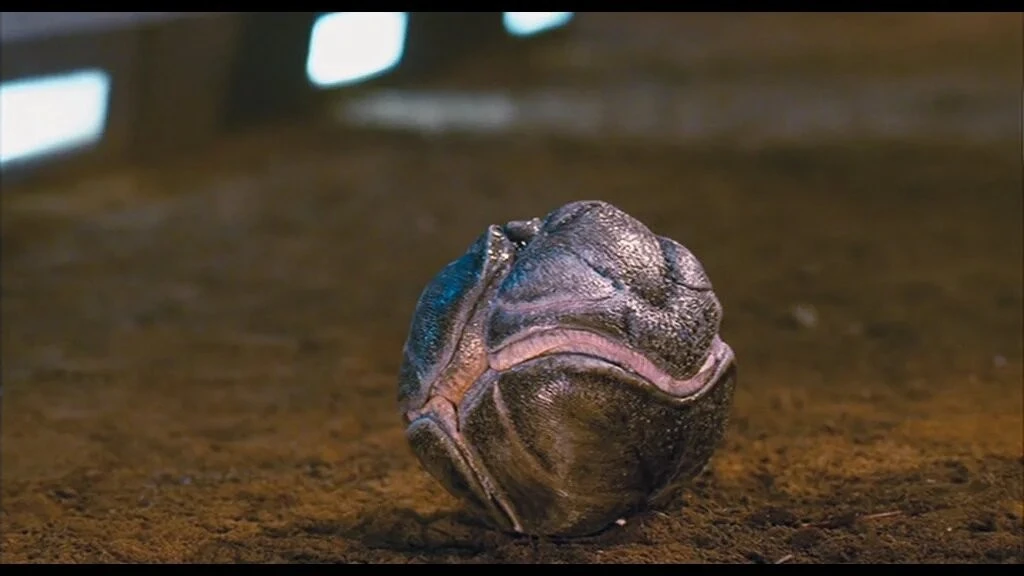
Bombardier Bugs made their debut in *Starship Troopers 3: Marauder*. These compact creatures resemble heavily armored shells or balls, launched over walls and defensive perimeters by larger Bugs like biological catapult projectiles.
Upon landing, the Bombardier unfurls its protective shell, crawls toward enemy positions, and explodes on contact. During the Battle of Roku San, swarms of Bombardiers rained down behind Federation barricades, distracting troopers with living ordnance while the main Warrior swarm breached the outer defenses.
11. Brain Bug 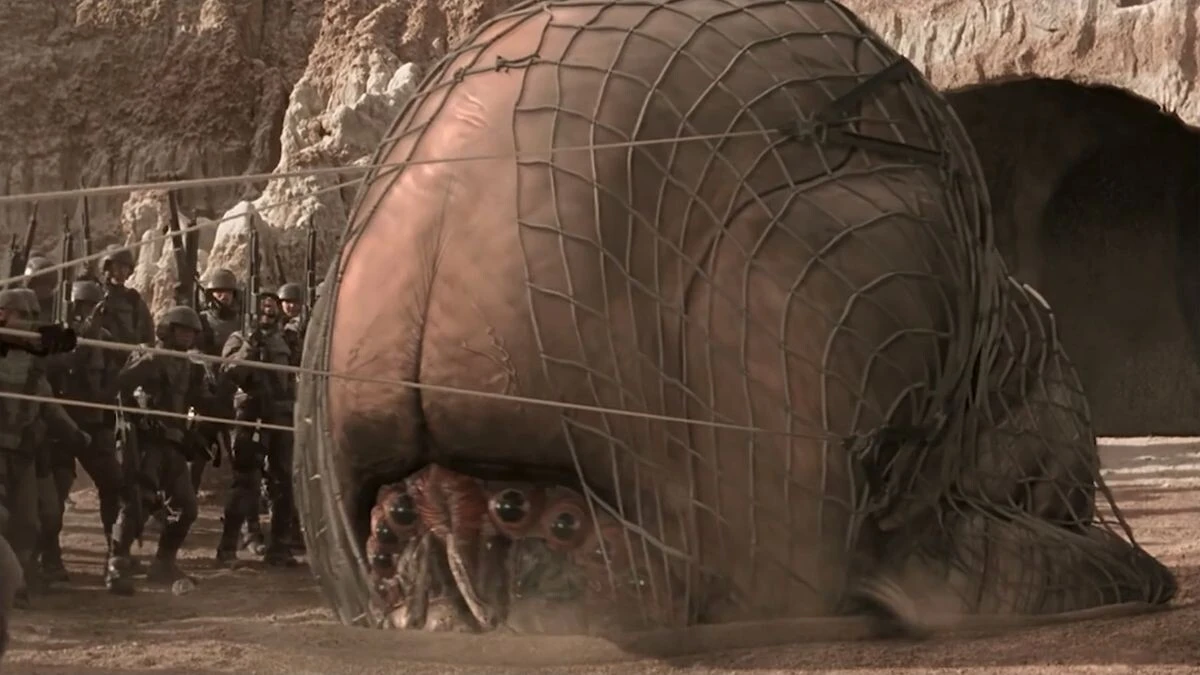
The Brain Bug commands the colony, orchestrates combat tactics, and relays directives to the entire swarm. On its own, it is nearly helpless: its massive, bloated body can barely move, requiring constant protection from Warriors and Royal Guards. Eliminating a Brain Bug throws the entire hive into chaos.
To extract intelligence, the Brain Bug uses a long, extendable proboscis to pierce a human skull, consuming brain matter and absorbing the victim's memories. This terrifying ability allows the Arachnids to study Federation weaponry, tactics, and strategic plans.
The capture of a Brain Bug on Planet P provided the Federation with its first definitive proof that they were fighting an intelligent enemy.
12. Control Bug 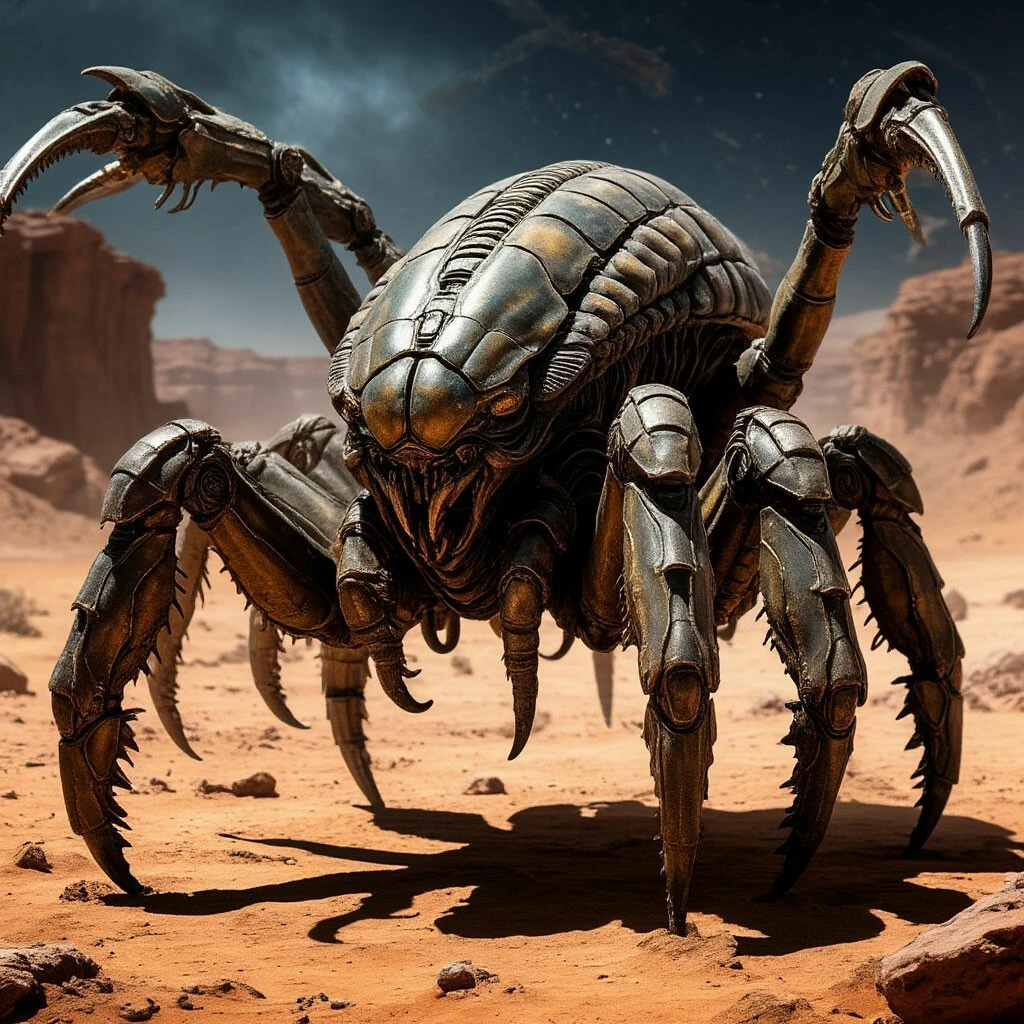
Control Bugs are roughly the size of a human palm and pose little direct threat in open combat. Instead, they enter a host through the mouth or other openings, attach to the spinal cord, and hijack the nervous system.
From the outside, an infected host appears completely normal, even though their mind is entirely enslaved by the hive mind.
One such parasite managed to infect General Jack Shepherd, using him as a Trojan horse to infiltrate the highest ranks of Federation high command. The compromised commander could have quietly infected senior officers, effectively decapitating human military leadership. Such a covert strike had the potential to end the war without a single planetary assault.
13. Queen Bug 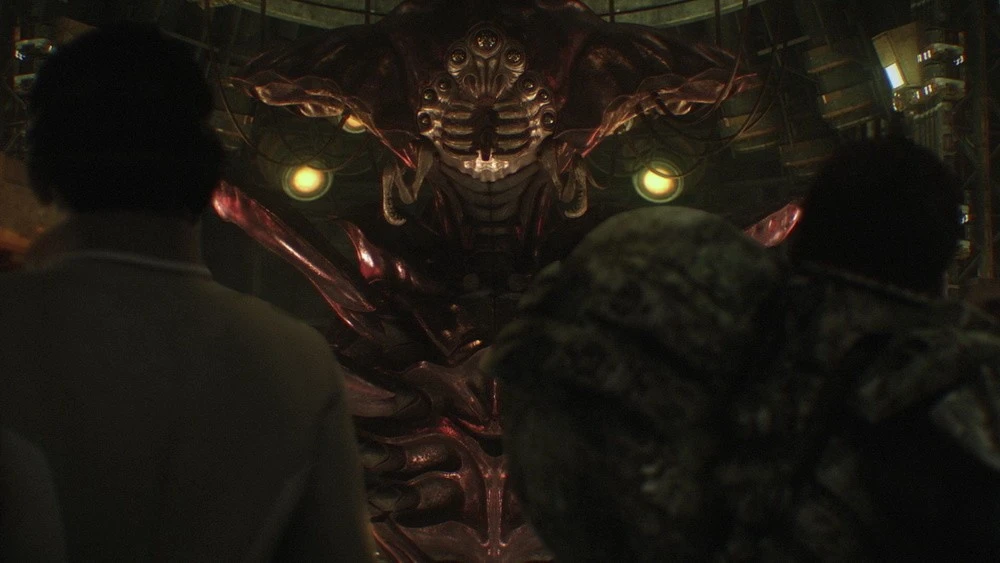
The Queen Bug oversees colony reproduction, capable of laying up to 75 eggs per hour. While her elongated body is optimized for breeding, her powerful mandibles and heavy limbs make her a formidable combatant. When threatened, a Queen understands the value of hostages and won't hesitate to use captives as living shields.
For years, the Federation was entirely unaware that this caste existed. The Arachnids keep Queens deeply concealed within hive networks, as losing one cripples the colony's ability to replenish its forces. While Brain Bugs command the war effort, Queens ensure the endless supply of troops needed to sustain it.
14. God Bug 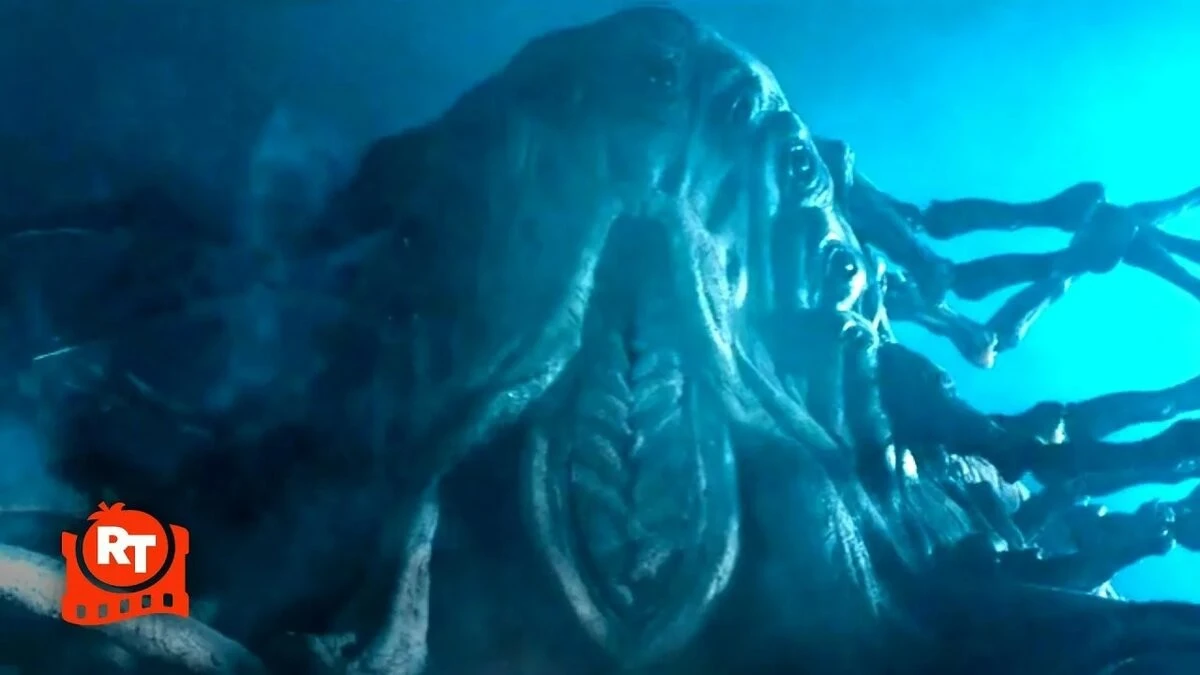
The God Bug ranks far above even the Brain Bug. This colossal entity roots itself deep within a planet's core, spreading a massive sub-surface network of tendrils. It can shatter the ground, drag nearby prey beneath the surface, and absorb their minds using tentacles housed inside its gargantuan maw.
The Federation discovered its existence while dissecting a captured Brain Bug. Military Intelligence estimates that the God Bug dictates global Arachnid strategy, suggesting the swarm could collapse without its overarching direction. Intelligence also suspects multiple God Bugs may exist, each controlling a different sector of the galaxy.
15. Ice Bug 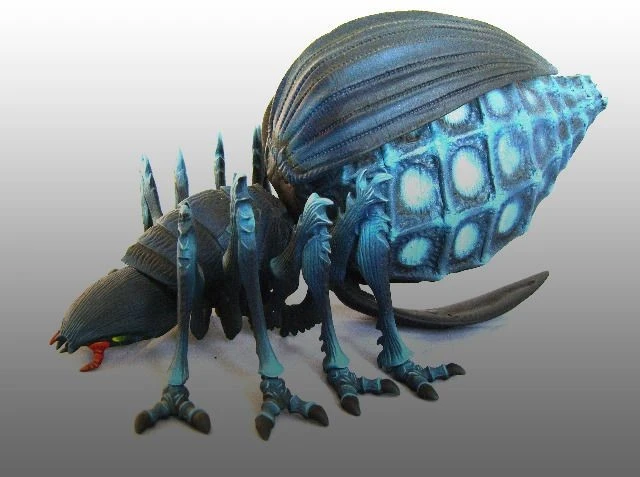
The Ice Bug dwarfs almost every other organism in the swarm. Essentially a living asteroid, it can lie dormant for millennia until an impact with another celestial body supplies the energy needed to travel through space. Spikes, tentacles, and long eyestalks protrude from its icy surface.
A self-contained ecosystem thrives inside the Ice Bug. Smaller organisms breed within the crevices of its body, serving as a renewable food source that sustains the creature during deep-space transit.
Once awakened, an Ice Bug can travel between worlds and devastate entire planets—making even the Brain Bug look downright harmless by comparison.
16. Human-Bug Hybrid 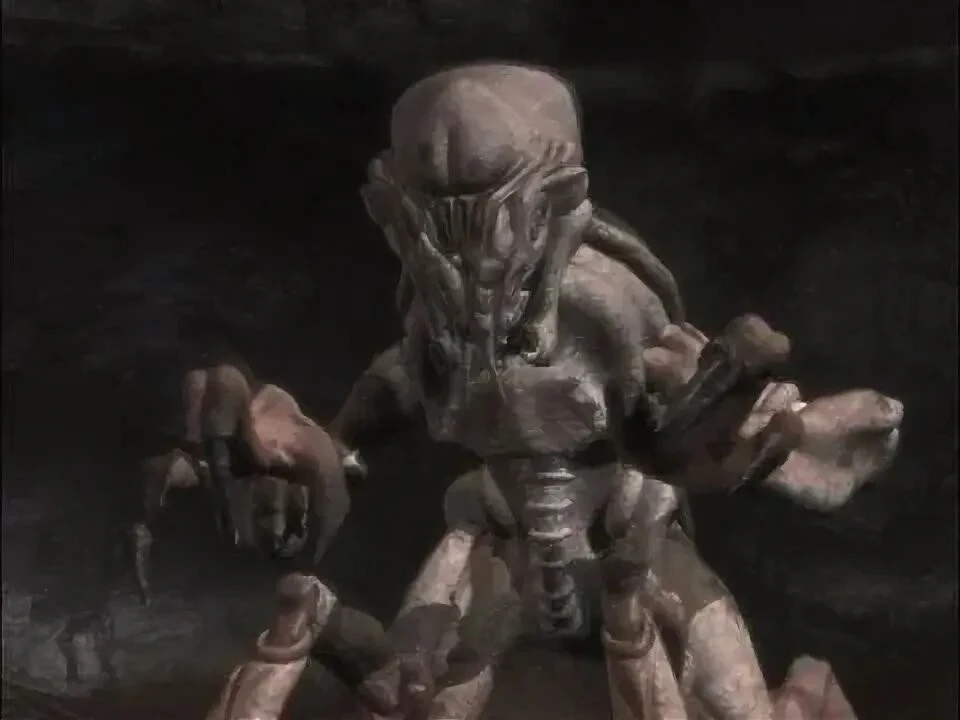
The only known hybrid emerged after Lieutenant Zander Barcalow was infected with an alien virus. The officer initially began losing control of his actions before his body mutated into a towering, Arachnid-like creature—all while retaining fragments of his human intellect.
Overwhelming instincts drove Zander to Klendathu, where the mutation reached its final stage. The swarm attempted to dominate the hybrid's mind and weaponize him against the Federation, but Zander's human consciousness reasserted control. In the end, he sacrificed himself to derail the Arachnids' plans.
17. X-Bug 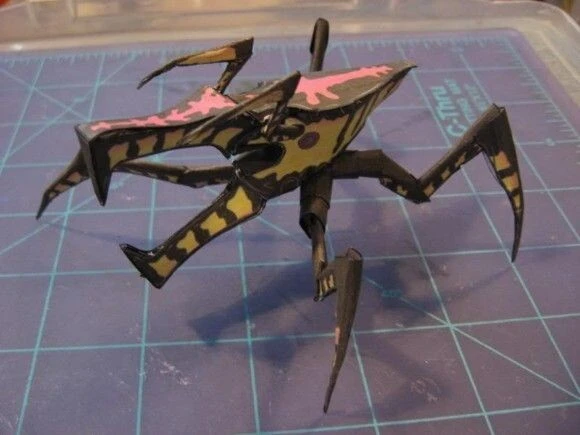
The X-Bug was engineered by Federation scientists seeking to turn the enemy's biology against them. By emitting synthetic pheromones, the creature lured Arachnids out of their subterranean tunnels, drawing the swarm into pre-set kill zones filled with mines, heavy gunfire, and airstrikes.
Developing the project took four years, as scientists had to contain the specimen while continuously harvesting its pheromones. Encased in near-impenetrable armor, the X-Bug's only vulnerability was a soft yellow patch on its abdomen. To strike it, troops had to target its nerve trunk to force the creature to rear up.
18. Federation Intel Bug 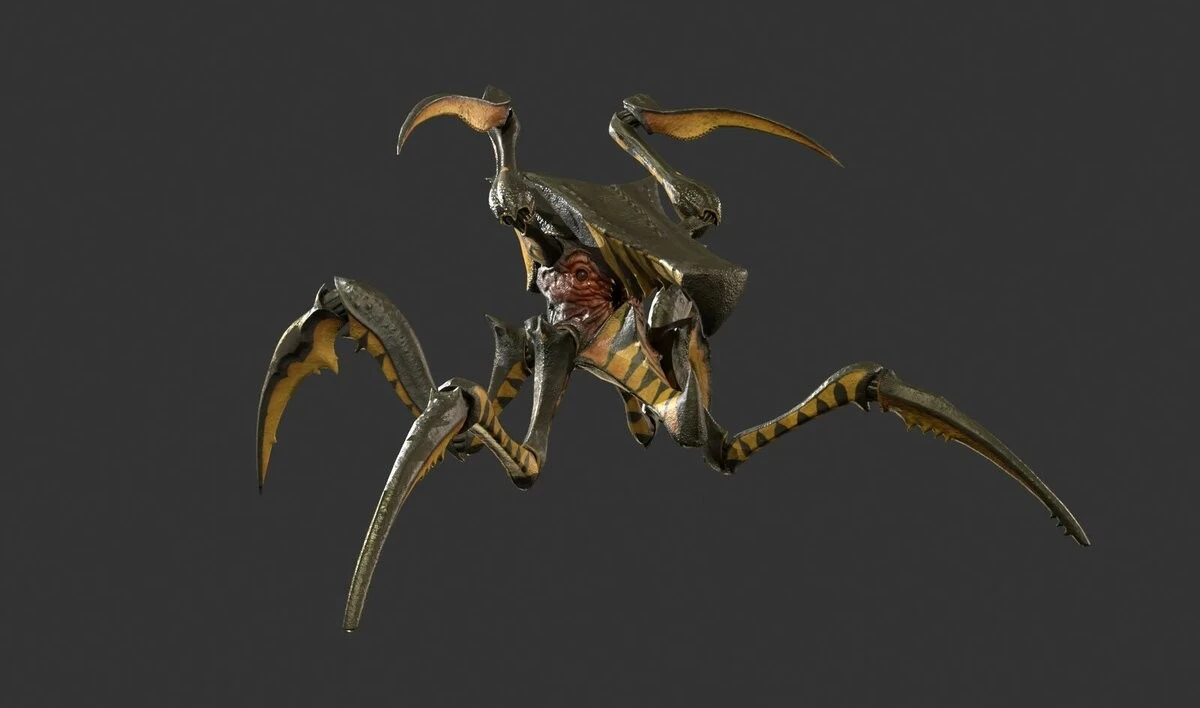
The military eventually learned to capture Workers and Warriors, using psychic technology to suppress their free will. These repurposed Arachnids—dubbed Intel Bugs—were turned into cybernetic assets that fought on behalf of humanity.
In fact, some modified specimens proved even more effective in combat than their wild counterparts.
During the Battle of Fort Casey, soldiers were able to mentally override multiple Bugs at once, turning them against plasma-firing units. These experiments demonstrated that the Federation was slowly adopting its enemy's core doctrine.
While the Arachnids bred living biological organisms instead of manufacturing tanks, jets, and artillery, humanity was learning to turn that living hardware into its own arsenal.
Which Arachnid Is the Most Dangerous? 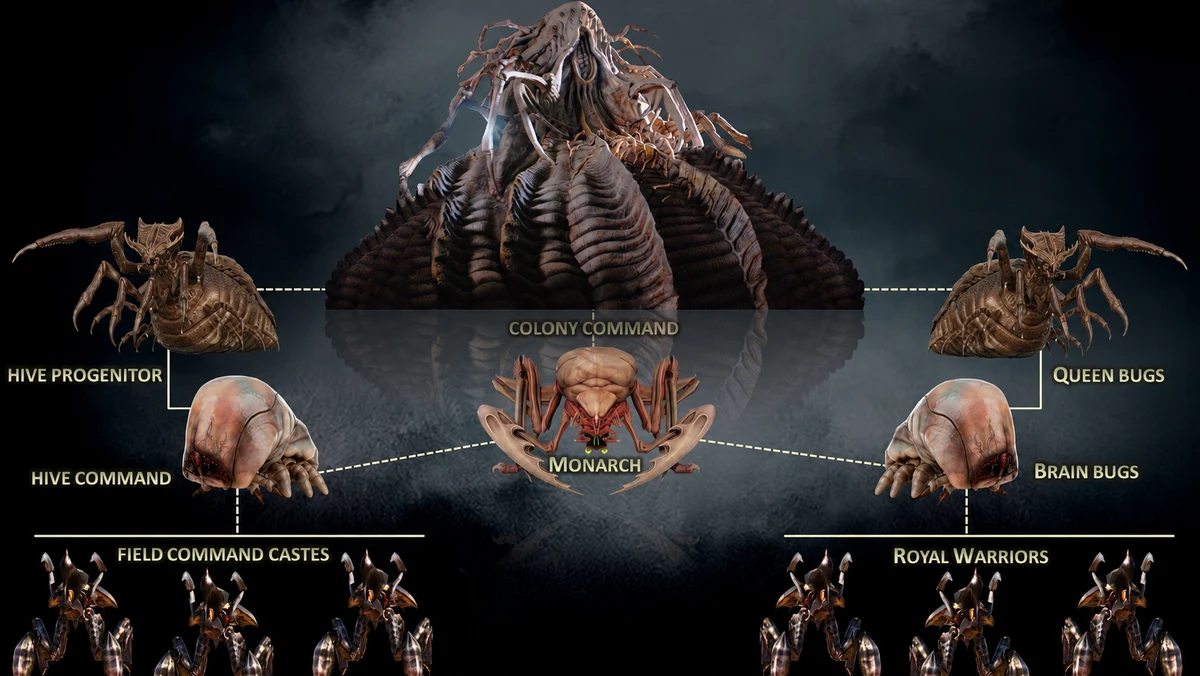
The Brain Bug became famous during the climax of the first film, where its capture was hailed as a monumental victory for humanity. Physically, however, it is defenseless, utterly reliant on guards, and only manages individual colonies.
The Queen Bug is far more critical for the survival of the species, the Control Bug can quietly decapitate Federation leadership, and the Ice Bug possesses planet-killing power.
At the very top sits the God Bug, which unifies colonies under a master strategy and dictates the outcome of entire galactic campaigns. Ultimately, the Arachnids built a civilization designed like a living war machine, where every organism serves as an organic counterpart to a military unit or vehicle.
That's why wiping out millions of rank-and-file Warriors changes very little. As long as Queens, Brain Bugs, and higher-tier entities remain hidden deep within alien worlds, the swarm will regenerate and launch fresh armies against human colonies...
Add your comment
You might be interested in:











A young Ukrainian itishnik became the owner of the McLaren

Bermamyt Plateau, from where a beautiful view of Elbrus

Nike showed new shoes for those who can't imagine life

Balenciaga will release a bag in the shape of a bag of

A woman from the United States demanded that the airline

Michael Jordan sneakers sold for a record amount at auction

Ferrari for 15 thousand dollars (3 photos)

So this is who Irina Shayk is so beautiful in (2 photos)

Louis Vuitton boots in the shape of bare legs for 2.5

How to start a 102-liter engine

Protective film Removing it with a power screwdriver

When a child plays hide-and-seek at a professional level

Man sets up bedroom camera and discovers the reason for his

Super dads who swoop in to save the day

Precision carpentry

Looks like it's time to buy WinRAR

How to hang wallpaper neatly

How metal buckets are made in Pakistan
