The Story of Graham Young: The Serial Poisoner Who Terrified Even His Prison Guards (9 photos)
On August 22, 1990, staff at Parkhurst high-security prison on the Isle of Wight breathed a collective sigh of relief. The lifeless body of the facility's most dangerous inmate, Graham Frederick Young, had been found on the floor of his solitary cell. Young had instilled terror even behind thick stone walls and multiple sets of iron bars. Guards remained deeply wary even around his corpse, genuinely relieved when his body was finally carried out of the prison gates. 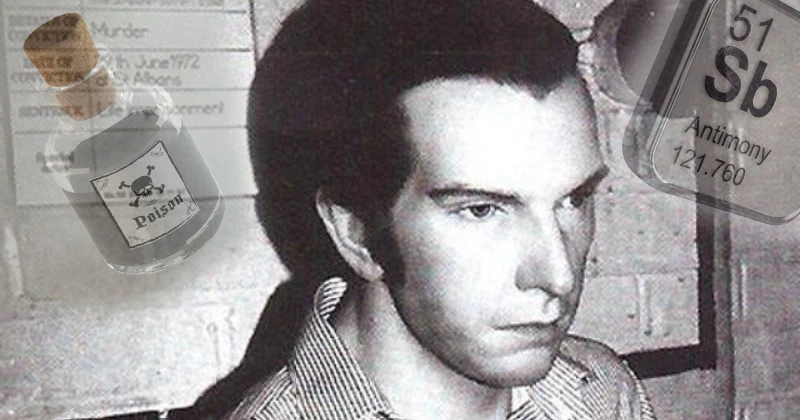
Life was cruel to Graham Young almost from the day he was born. When he was just three months old, his mother died, leaving his paternal aunt to raise him. She treated Graham like her own son, and he might have grown into a respectable member of society had circumstances not intervened. 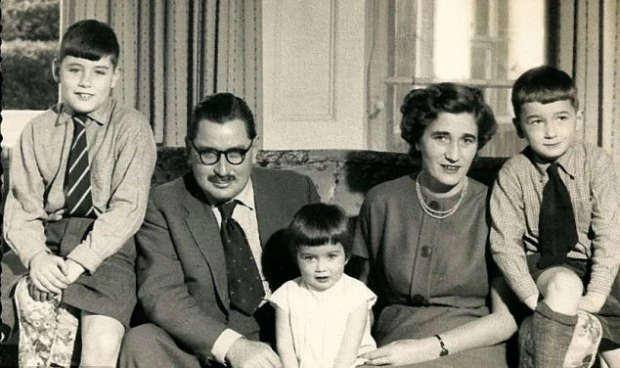
Graham Young (far left) with his family
When the boy turned three, his father, Fred Young, remarried and brought his son back home. It was a deeply traumatic transition for the young child, even though his father and stepmother cared for him just as well as his aunt had. Unfortunately, they were often too busy to give him enough attention, leaving him to spend long hours alone.
A Macabre Youth and a Passion for Chemistry
During his school years, Graham’s favorite haunts were London's Blitz ruins. In the 1950s, many bomb sites still remained, their labyrinths of broken brick, concrete, and twisted rebar attracting vagrants and unsupervised teenagers.
One day while exploring the rubble, Graham found a book on satanism and read it cover to cover. The discovery sparked a fascination with evil, and he even developed an obsession with Adolf Hitler—a bizarre fixation for a British child in the early post-war years. 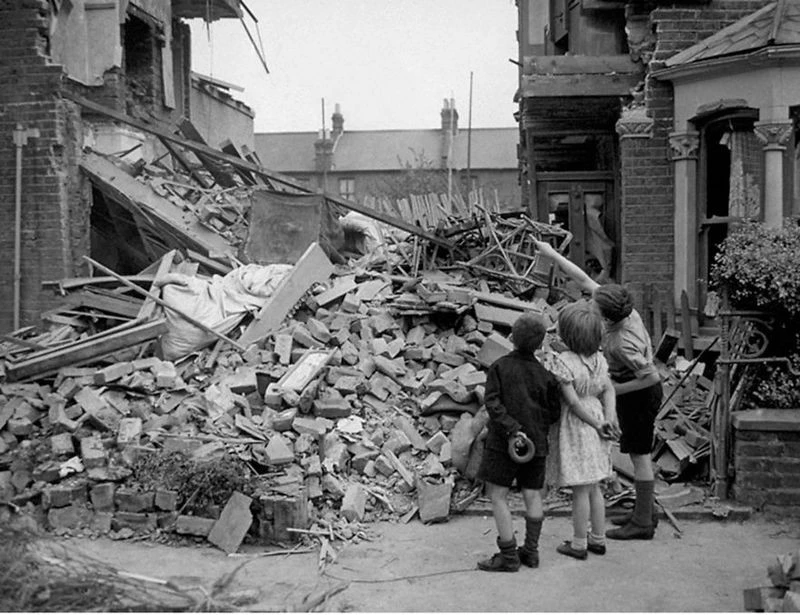
In the early 1950s, large areas of London still lay in ruins
At home, no one saw any red flags. Graham did well in school, was polite, neat, and remarkably independent. He developed a passion for chemistry, prompting his father to buy him a chemistry set for his birthday. Naturally, no one checked on what the young experimenter was doing in his room or what kind of tests he was running. They certainly should have, because young Young had become obsessed with manufacturing poisons.
Mice and frogs became his first test subjects. Graham poisoned them with carefully measured doses of toxins, watching their agony with cold fascination. When he was 13, he read a book about Edward Pritchard, a 19th-century doctor who had poisoned his wife and mother-in-law with antimony. The story captivated Graham so intensely that he set out to get his hands on the lethal compound to test its killing power himself.
Toxic antimony was not sold to minors, so Young lied about his age to a chemical supplier. He claimed he needed it for legitimate experiments and, thanks to his impressive knowledge of chemistry, easily convinced the clerk. Once he had the coveted substance, the aspiring poisoner moved on from mice to human targets. 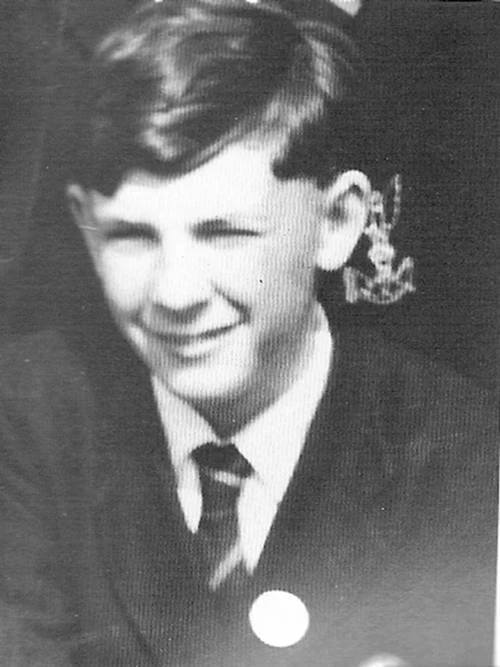
A loner by nature, Graham had only one friend at school: Christopher Williams. Williams unwittingly became his first human guinea pig, receiving a trial dose of antimony in a glass of lemonade. Doctors saved the boy but couldn't figure out what had caused the severe illness. It is unclear why Williams survived—perhaps Young hadn't intended to kill him yet, or simply miscalculated the lethal dose.
Regardless, Graham was thrilled with the results. He considered slowly finishing his friend off with small, regular doses in his food and drink, but backed off out of fear of detection after the unexplained poisoning sparked widespread concern.
Poisoning His Own Family
Instead, Graham turned his attention to his family. In the autumn of 1961 alone, mysterious poisoning symptoms struck his father, stepmother, sister, aunt, and even Graham himself—after the young poisoner accidentally mixed up plates and ingested his own antimony.
Naturally, suspicion flickered toward the self-taught chemist, as he was the only one in the house handling toxic compounds. His stepmother once even found a bottle labeled with a skull and crossbones in his pocket. Yet the thought that a schoolboy could deliberately poison his own loved ones seemed too unthinkable for anyone to voice. 
His father assumed the recurring illnesses were due to poor hygiene and Graham using kitchen cookware for his home experiments. However, Graham came close to being caught when his sister, Winifred, fell so violently ill that she had to be rushed to the hospital.
The case caught the attention of police, and an investigation confirmed she had been exposed to a potent poison. However, doctors couldn't identify the specific chemical or determine how it entered her system. Winifred survived, which actually pleased Graham—he hadn't intended to kill her, viewing her merely as a test subject.
His main target was his stepmother, Molly Young. Graham systematically spiked her food with small doses of antimony, causing her health to slowly deteriorate. Eventually, Molly collapsed in the garden. She was rushed to the hospital and stabilized, but died shortly after. Graham was delighted with the outcome and emboldened to kill again. 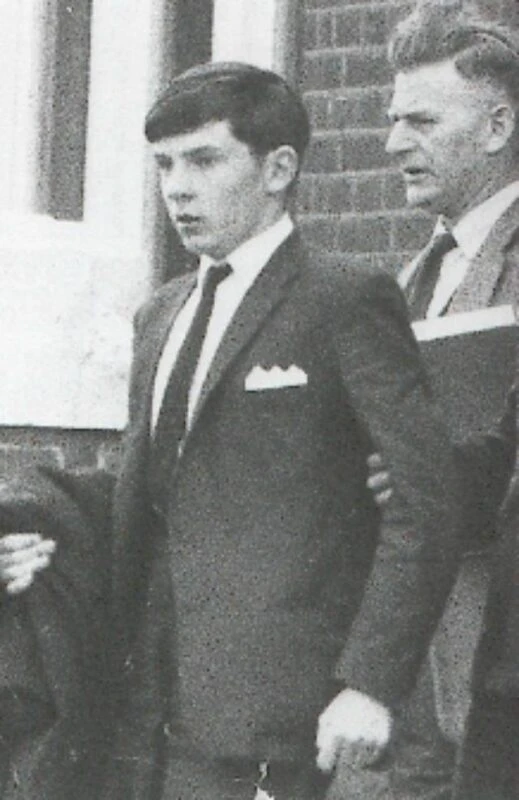
His father was next. Just weeks later, Fred Young was hospitalized with the exact same symptoms as his deceased wife. Yet even then, he refused to suspect his son. It was Graham's chemistry teacher who finally uncovered the truth after discovering empty bottles containing traces of antimony and a notebook detailing toxic dosages inside the boy's desk. The teacher immediately alerted the headmaster.
Rather than turning the teenager over to police immediately, the school referred him to a psychiatrist. After interviewing Graham, the specialist determined that the boy had a psychotic obsession with poisoning people. Only then did the school administration—anxious to avoid a public scandal—finally contact law enforcement.
Arrest, Broadmoor, and Fresh Victims
Graham initially denied everything, but soon began recounting his toxic experiments in vivid detail, his eyes lighting up with enthusiasm. A search of his bedroom uncovered seven bottles of various poisons alongside raw chemical ingredients. "I did it all!" the teenager boasted, basking in the attention from police and the press. 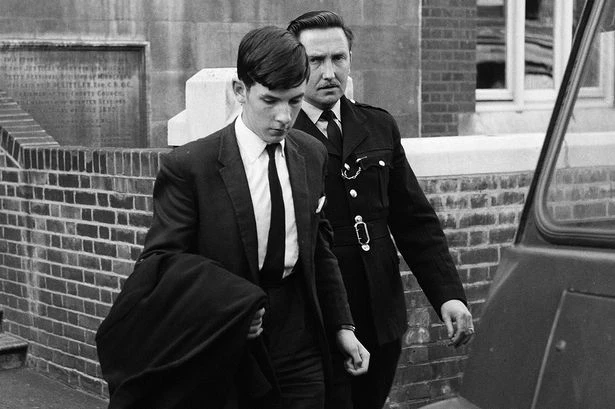
Doubts about his mental stability prompted a comprehensive psychiatric evaluation. Experts concluded that while Young was legally sane, he suffered from severe personality disorders and held shocking views on human life:
"He has no conception of love for his fellow man and has never possessed the slightest understanding that he should abide by societal laws."
So wrote one of the evaluating psychiatrists. Young himself described his compulsion quite plainly:
"I thought the doses I gave weren't lethal, though I knew what I was doing was wrong. It acted on me like a drug, even though I didn't take drugs. I knew full well how foolish my poison experiments were—I realized it from the very start—but I just couldn't stop."
Graham Young was charged with the murder of his stepmother and the attempted murder of his father, sister, and friend. Sentenced to detention at Broadmoor High Security Psychiatric Hospital, he spent nine years there. Surprisingly, the unsociable Young became a favorite among both staff and patients. Within a couple of years, he was granted numerous privileges, including freedom of movement throughout the facility. 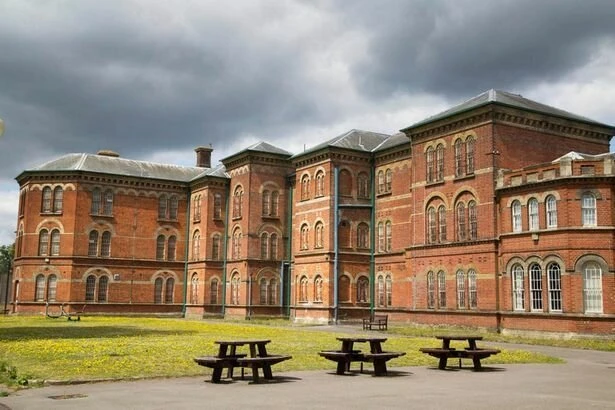
Broadmoor Psychiatric Hospital
It ended disastrously. One day, a 23-year-old inmate named John Berridge collapsed during recreation, suffered violent convulsions, and died despite medical intervention. As the facility's resident poison expert, Graham was immediately suspected. However, hospital administrators chose to hush up the incident—a decision that soon backfired when several doctors and nurses began exhibiting symptoms of poisoning months later.
To quietly handle the situation, the medical director submitted official paperwork declaring Young fully cured. Thus, after nine years, the poisoner was released back into society. He took a job as a storekeeper at an optical instruments firm in Bovingdon and settled into an unassuming life.
Soon, however, Young's coworkers began falling ill with dry skin, breathing difficulties, and hair loss. Nobody connected their symptoms to the helpful new storekeeper who constantly offered to make tea and coffee for everyone. In 1971, department head Bob Egle died at age 59; his death was initially attributed to natural causes and poor health.
But when Fred Biggs, a vibrant middle-aged manager, died just two months later, suspicions were raised. The investigation led straight to Young, who once again confessed to every detail of his crimes out of vanity. Doubting his sanity once more, the court ordered him remanded to a psychiatric facility in Liverpool. 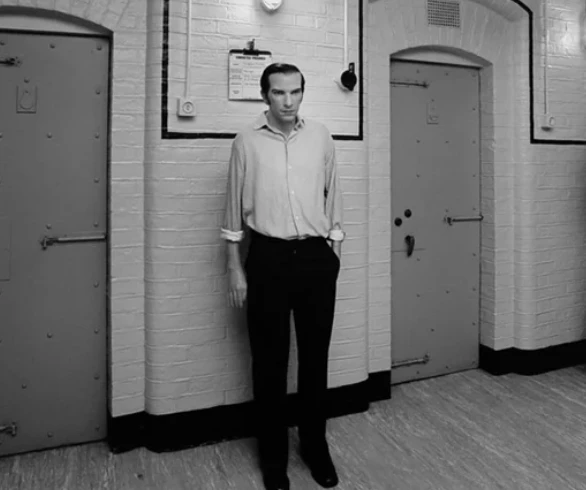
Young spent only two years there before medical staff, terrified of his lethal expertise, begged to have him transferred to a prison. Their fear was justified: Young had honed his skills to the point where he could create poison out of almost anything. In prison, he was placed under tight security, yet guards still underestimated him. At one point, he was caught mixing poisonous mushrooms harvested from the exercise yard with his own feces to synthesize a deadly neurotoxin, sending shockwaves of panic through the guards.
It was a relief to everyone when the 43-year-old killer died suddenly in his cell in 1990. While initial rumors suggested suicide, an autopsy revealed he had suffered a fatal heart attack.