Life Begins at 100: Scientists Prove There Is No Limit to Human Lifespan (5 photos)
According to biblical lore, people in ancient times lived for 500 to 800 years. But what about today? Human longevity remains a hotly debated topic, but recent research suggests that the biological risk of mortality increases only up to age 105—after that, it levels off. 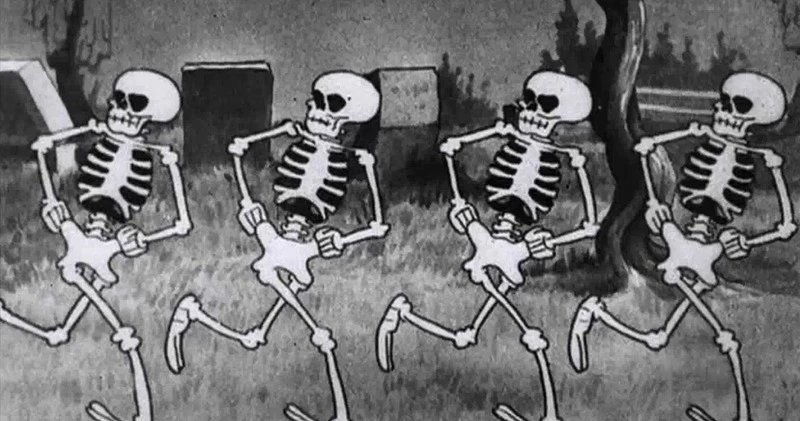
American and Italian researchers published a study on the potential of human longevity in the journal Science. Co-author Kenneth Wachter from the University of California, Berkeley, revealed that after tracking elderly Italians, the team arrived at a fascinating conclusion: at age 105, the risk of death stops rising. 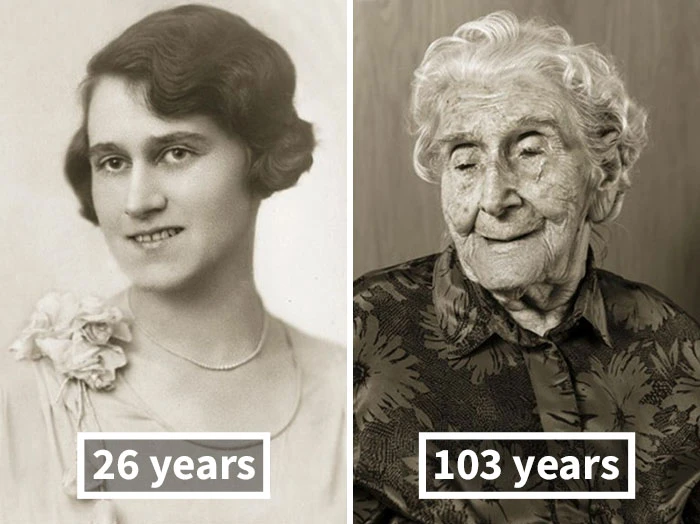
Jan Langer's photo project "Faces of a Century"
Put simply, a 60-year-old has a lower risk of dying than an 80-year-old because health declines significantly over those two decades. But at 105 and 115, the mortality risk remains exactly the same.
The study analyzed 3,836 Italian residents aged 105 and older who reached that milestone between 2009 and 2015. Unsurprisingly, the vast majority were women, with only 463 men crossing the threshold. The results showed that "hazard curves" flatten out after age 105, meaning the risk of death no longer increases. 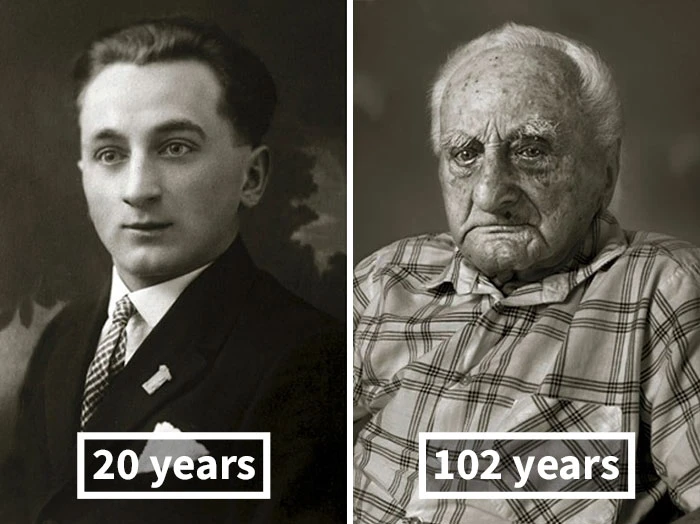
In nature, biology is typically subject to Gompertz's law of mortality: upon reaching a certain age, most members of a species die of old age, while for survivors, the risk of death escalates with each passing year.
However, scientists remain hopeful that human life isn't bound by this grim law—even though American researchers claimed in 2016 that humans cap out at a maximum of 110 to 115 years. 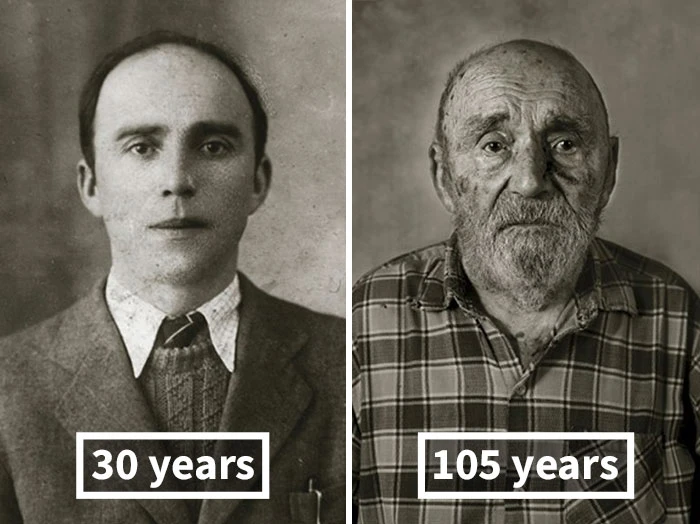
Wachter and his colleagues reject that limit. After analyzing data on long-lived individuals, they discovered that past age 105, how much older you get no longer matters—the risk stays flat. This suggests Gompertz's law does not apply to humans at extreme ages; otherwise, the risk of death would continue to rise past 105. And if Gompertz's law doesn't apply to humans, it means there is no ultimate limit to human life. 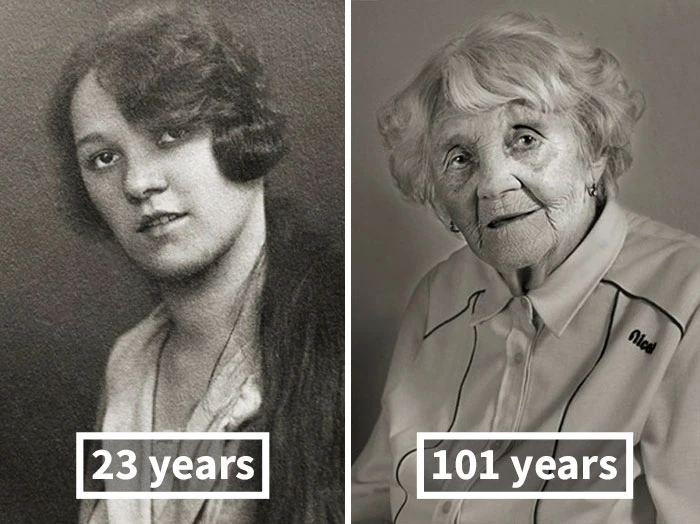
While the data appears solid, it hasn't won over everyone in the scientific community. For instance, prominent researcher Brandon Milholland contends that biological immortality is impossible. He believes the ceiling on human life is simply higher than 110–115 years, but certainly cannot continue indefinitely.
Either way, there is clear evidence that humans can live far beyond 110–115 years. Case in point: the oldest documented person in modern history lived to be 146 years old before passing away in 2017.