"Everything is banned: salt, sex, and meat": What 2032 has in store for us, according to 90s Hollywood (10 photos)
In the 1990s, filmmakers looked to the future with dread. They pinpointed exact years: 2013, 2021, 2032, 2035. They envisioned a world where megacorporations eclipsed nations, viruses wiped out billions, and human touch became a crime. All of those years have either passed or are right around the corner—making now the perfect time to see how their predictions stack up against reality. 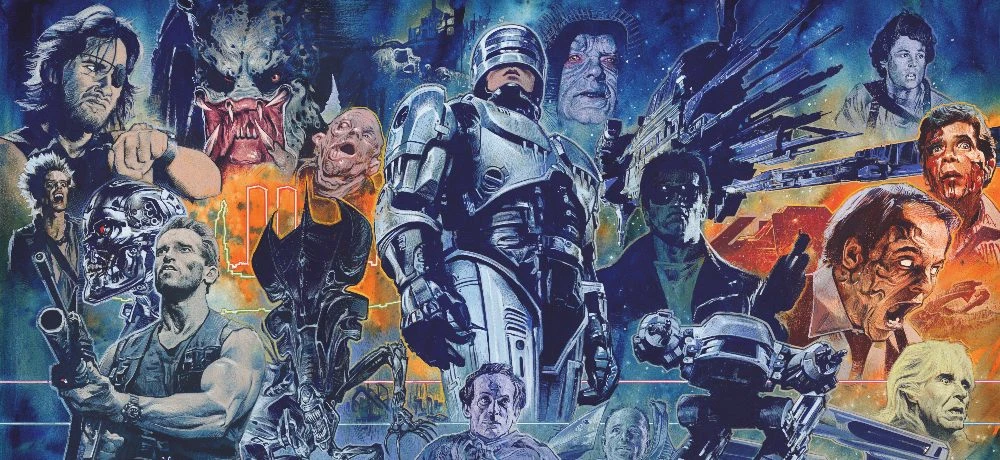
Johnny Mnemonic
(1995): Set in 2021
Sci-fi author William Gibson penned the screenplay himself, adapting his own 1981 short story. The movie hit theaters in 1995, setting its story in the far-off year of 2021. Critics slammed it as a total trainwreck. Yet 26 years later, it turns out Gibson was actually onto something. 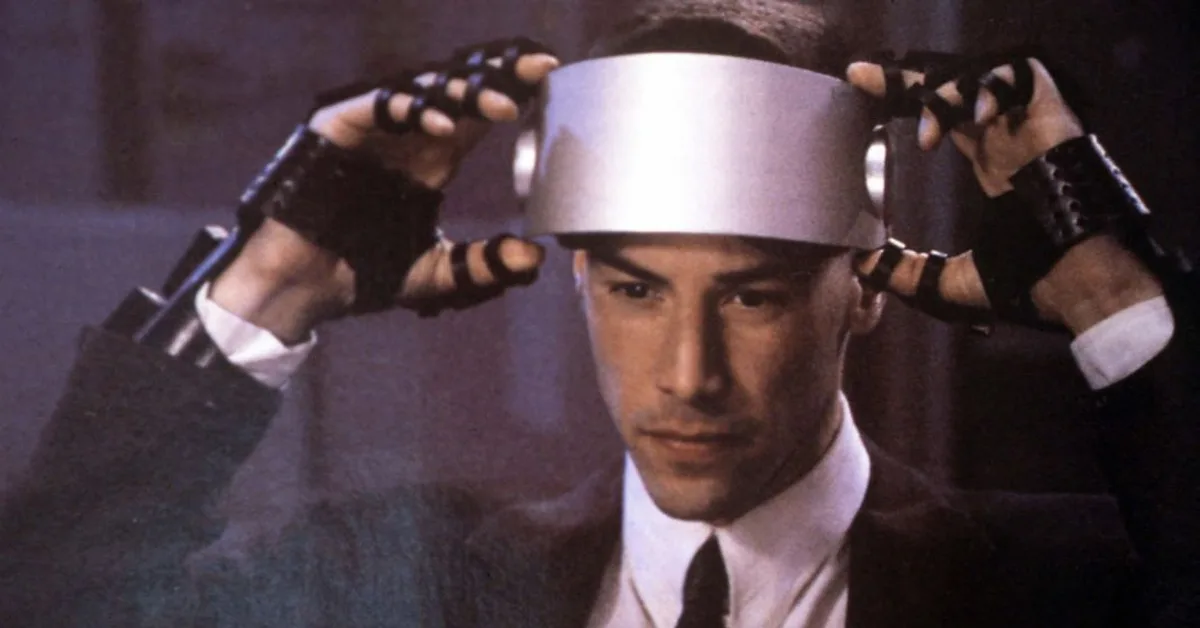
Keanu Reeves in
Johnny Mnemonic
—6 years before
The Matrix
and 26 years before the actual year 2021.
In the film's version of 2021, the world is gripped by NAS—"Nerve Attenuation Syndrome"—a fatal condition caused not by a virus, but by radiation overload from wireless signals. Half the global population is infected, while greed-driven corporations hoard the cure. The protagonist, Johnny (Keanu Reeves), is a data courier with a brain implant, smuggling encrypted data in his own head like a living hard drive.
The real 2021 did bring a global pandemic—just not one caused by Wi-Fi. Brain implants haven't gone mainstream either; while medical neural implants exist, they are primarily used to treat conditions like Parkinson's. Still, the film nailed video calls, digital IDs, and mass data harvesting, not to mention corporate power overshadowing governments. As for Johnny's memory capacity? A whopping 320 gigabytes—which by 2021 standards is a cheap thumb drive, hardly enough to hide high-level state secrets.
Demolition Man
(1993): Set in 2032
The story begins in 1996 when cop John Spartan (Sylvester Stallone) and criminal Simon Phoenix (Wesley Snipes) are sentenced to cryo-prison and frozen solid. Both thaw out in 2032. Los Angeles has merged with San Diego and Santa Barbara to form "San Angeles" following a massive 2010 earthquake. The city is run by Dr. Cocteau, who has banned anything remotely unhealthy or dangerous: meat, alcohol, caffeine, contact sports, salt, swearing, and physical touch during sex. 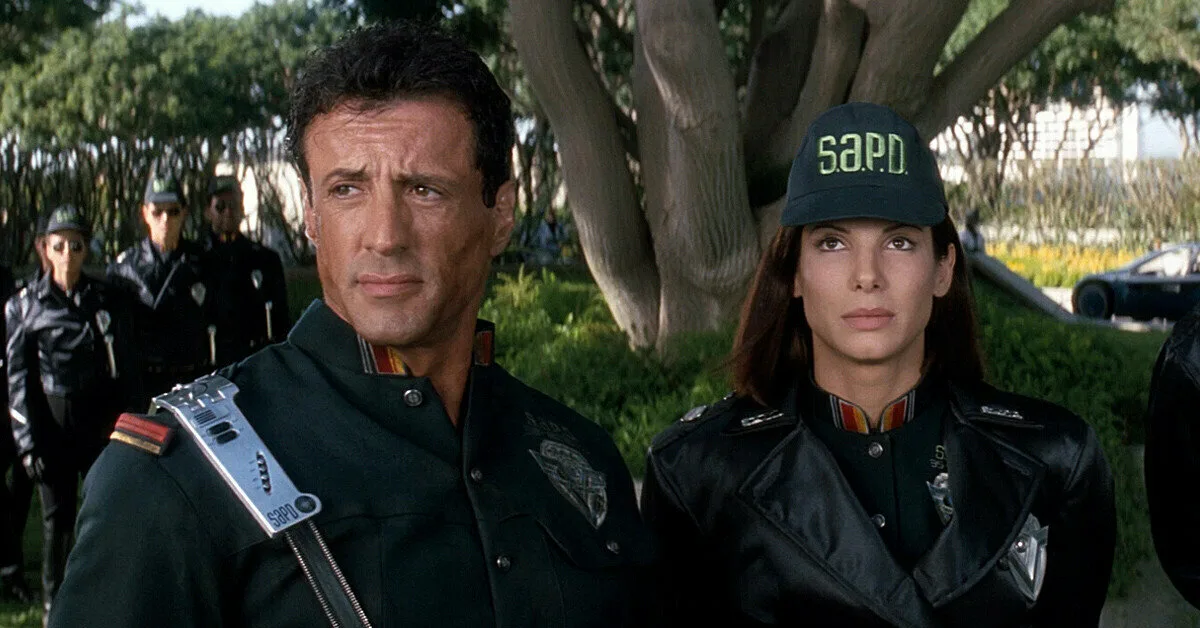
Sandra Bullock plays a 2032 police officer—a rule-abiding citizen desperate to understand the past.
The film's last recorded murder occurred on September 25, 2010. After 30 peaceful years, the police force has completely forgotten how to deal with real crime. Teleconferencing has replaced face-to-face meetings, and every citizen carries a microchip that serves as an ID, medical card, and digital wallet.
We are just a few years away from 2032. Meat is still on the menu, and salt is sold everywhere. But video calls have become second nature—especially post-2020—and smartphone digital wallets double as ID cards. Back in 1993, seven years before the new millennium, the movie accurately anticipated hyper-politeness, PC culture, and post-pandemic anxiety.
Escape from L.A.
(1996): Set in 2013
John Carpenter directed this sequel to
Escape from New York
in 1996, setting the action in 2013. In the story, a massive 9.6 earthquake detached Los Angeles from the mainland in the year 2000, turning it into an island prison colony. Anyone deemed "undesirable"—criminals, atheists, smokers, and the overweight—is deported there. The U.S. is ruled by a lifetime president, having morphed into a total theocratic dictatorship. 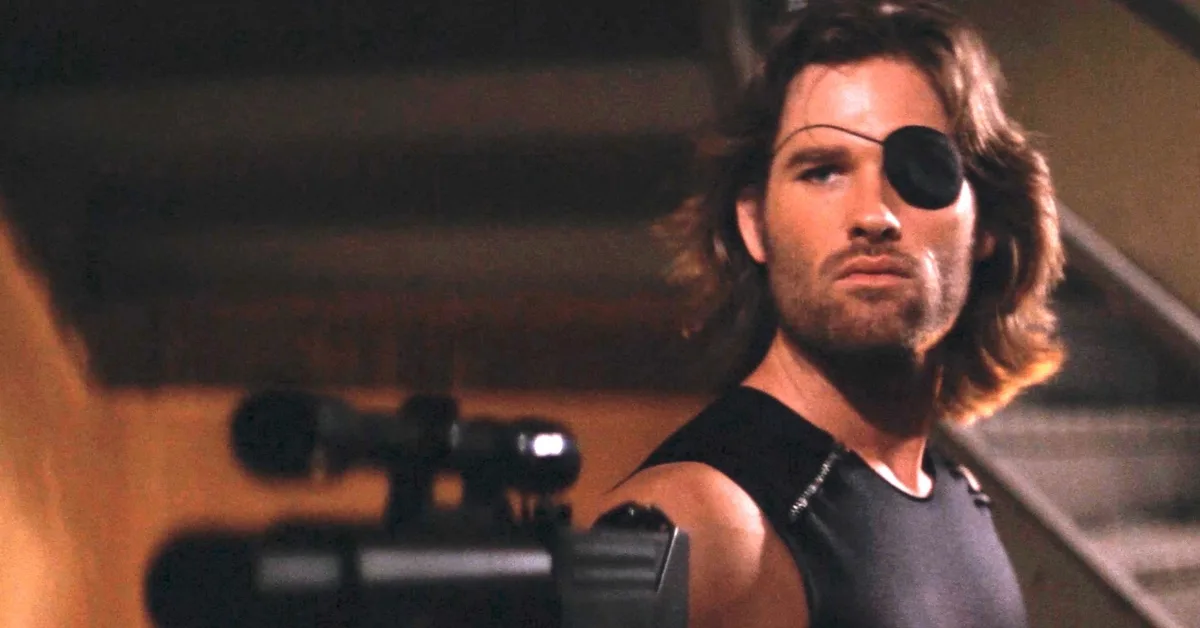
Kurt Russell's Snake Plissken is the ultimate antihero, indifferent to whether total control or total chaos wins.
Snake Plissken is sent on a mission to infiltrate the island and retrieve "Sword of Damocles"—a satellite weapon capable of shutting down all electronics on Earth. In the climax, Snake activates it himself, plunging the entire world into darkness.
The real 2013 came and went without a theocracy or a prison island; Los Angeles remains firmly attached to California, and the mega-quake never hit. The film bombed, earning just $25 million against a $50 million budget. Yet its portrayal of a moralizing, overreaching regime resonates surprisingly well in modern debates over individual freedoms.
Strange Days
(1995): Set in 1999
Director Kathryn Bigelow and screenwriter James Cameron set their thriller in December 1999, just four years after its release. Los Angeles is on the brink of the new millennium—racked by racial tension, police corruption, and widespread paranoia. The film's centerpiece technology is SQUID, a headpiece that records sensory experiences directly from the human brain, which are then peddled on the black market like a new drug. 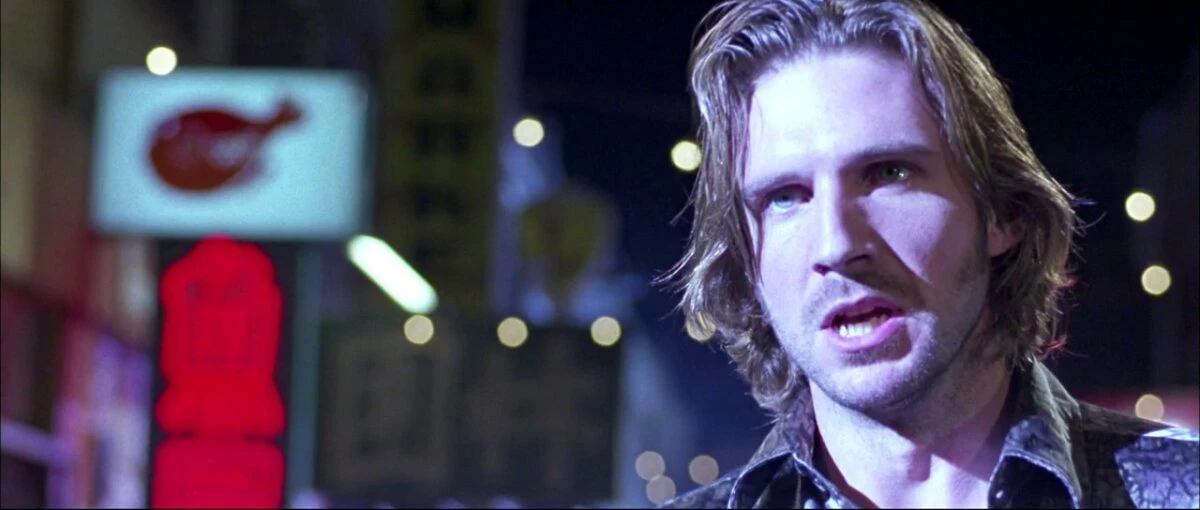
Ralph Fiennes plays a dealer of second-hand memories—a concept that seemed absurd in 1995, but echoes today's neural interface technology.
The film tanked at the box office, making back only a fraction of its $42 million budget. Audiences simply didn't buy that brain recording would exist in just four years—and they were right. SQUID never materialized in 1999. But the movie got plenty of other things right: Y2K panic, mass surveillance, and technology weaponized for abuse. Its concept of trading mental experiences foreshadowed the very brain-computer interfaces companies like Neuralink are developing today. 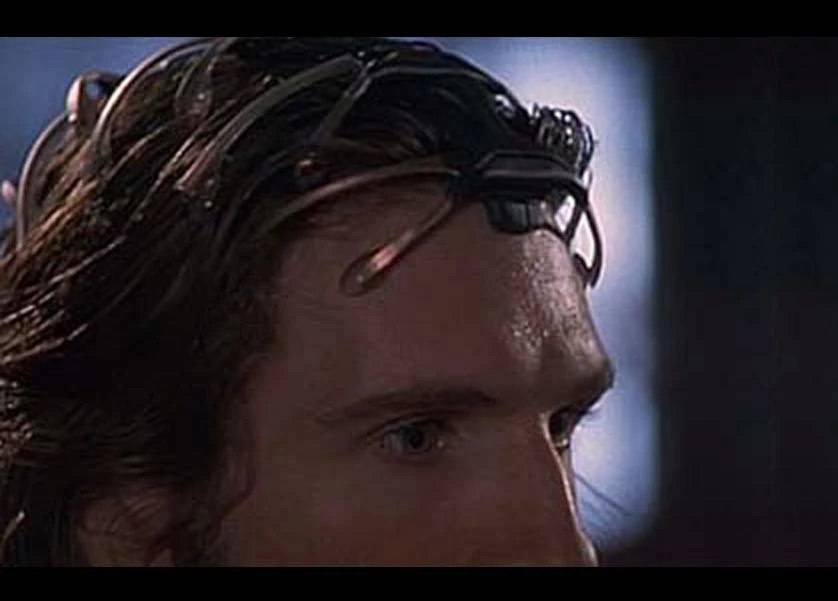
SQUID technology allowed users to not just watch a story, but literally live someone else's life—an idea
Black Mirror
continues to mine to this day.
12 Monkeys
(1995): Set in 2035
Terry Gilliam directed this 1995 classic inspired by the 1962 French short film
La Jetée
. In the storyline, a deadly virus breaks out in Philadelphia in 1996, mutating faster than scientists can develop a vaccine and wiping out five billion people. The survivors retreat underground. In 2035, convict James Cole (Bruce Willis) agrees to travel back to 1996 to gather pure samples of the virus before the outbreak begins. 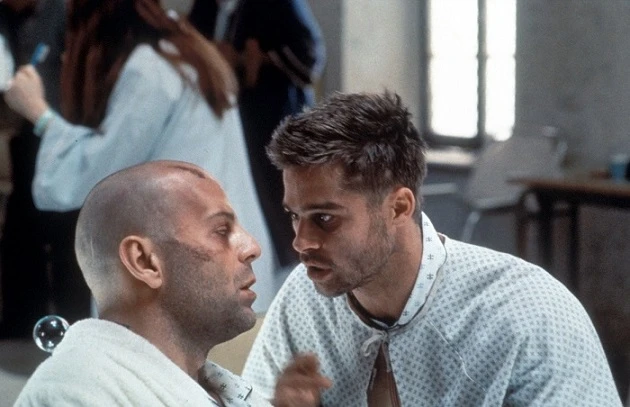
Bruce Willis as Cole—a man who knows the future, yet is powerless to change it.
The real 1996 passed without a pandemic, but 2020 and 2021 brought COVID-19. Viruses mutated, spawning new variants, while vaccines became central to global politics. Humanity didn't move underground, but the film's depiction of society's reaction—panic, conspiracy theories, and isolation—proved chillingly accurate. Brad Pitt earned an Oscar nomination and won a Golden Globe for his brilliant supporting role.
Gattaca
(1997): "The Not-Too-Distant Future"—DNA Instead of Resumes
Director Andrew Niccol never named an exact year in the film, opting for "the not-too-distant future." Based on character ages, film analysts calculated that the events take place around 2038. The world of
Gattaca
divides humanity into "valids" (genetically engineered at birth) and "in-valids" (conceived naturally). Employers ask for DNA profiles instead of resumes, and insurance companies calculate risk based entirely on your genome. 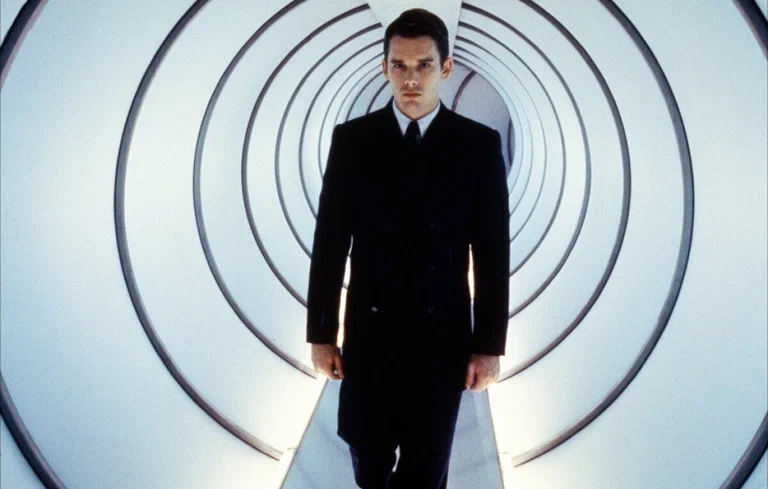
Ethan Hawke in
Gattaca
—a film that felt like a distant dystopia in 1997, but reads like a warning today.
The protagonist, Vincent (Ethan Hawke), was born naturally. At birth, doctors predicted he had a heart condition with a life expectancy of 30 to 35 years. Yet Vincent dreams of becoming an astronaut. 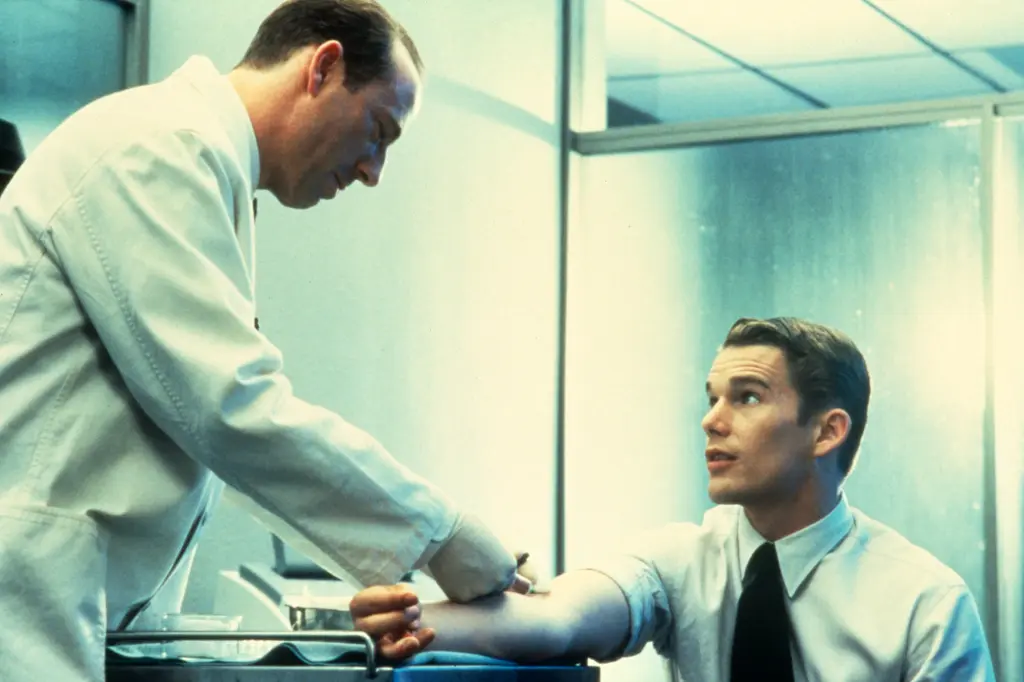
In the world of
Gattaca
, DNA serves as passport, diploma, and medical record all in one.
In 1997, the Human Genome Project wasn't even complete (it wrapped up in 2003). Today, DNA test kits are sold over the counter, and genetic discrimination is a genuine ethical threat. In 2008, the U.S. Congress passed the Genetic Information Nondiscrimination Act (GINA). In 2022, the journal
Genetics
published a paper on
Gattaca
, noting that virtually every scientific theme explored in the movie has become part of modern biology.
The Verdict: What They Got Right and Wrong
90s sci-fi missed on the specifics, but nailed the core themes. We might not have neural implants, but our personal data is stored on remote servers and monetized without our explicit consent. Smoking isn't universally outlawed, but public space is monitored more strictly than ever. Los Angeles didn't break off into an island, but the impulse to isolate "undesirable" elements remains strong. A pandemic didn't kill five billion people, but a world of lockdowns and mutating viruses ended up looking eerily like Gibson's and Gilliam's visions. 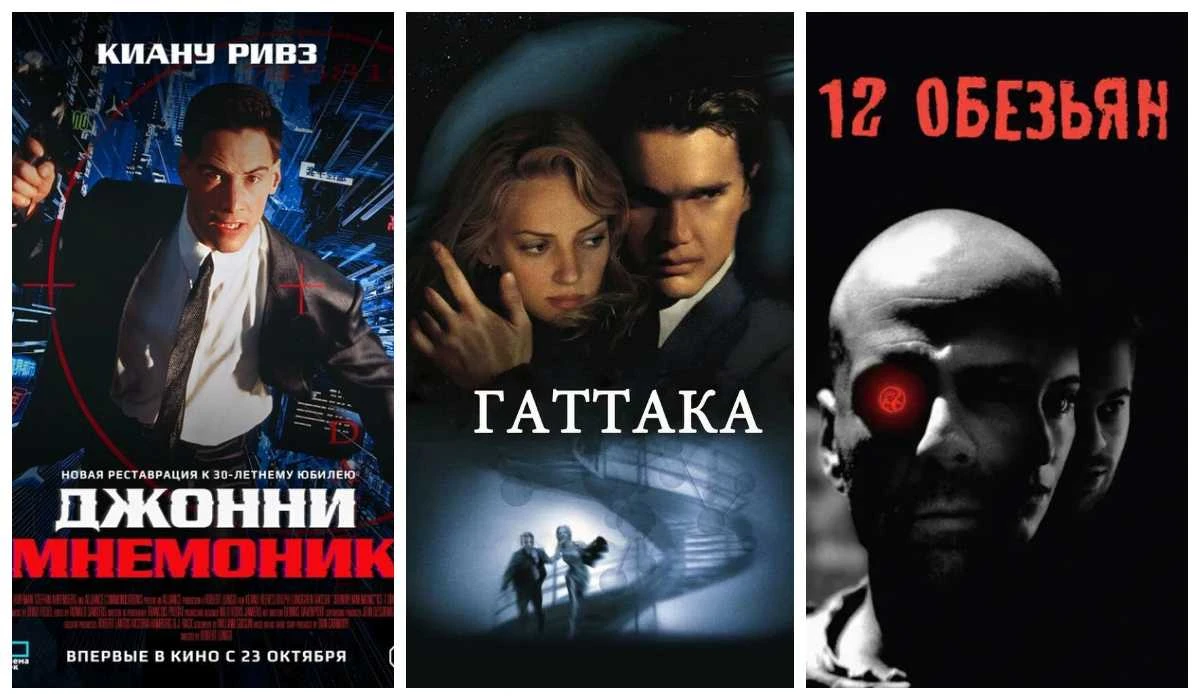
Six movies, six futures—and not a single one hit the nail on the head completely. Yet every one of them struck a nerve.
1990s directors feared corporate overreach, surveillance, rampant disease, and the erosion of bodily autonomy. These turned out to be the defining anxieties of the 21st century. They got the timelines wrong, and the technology didn't look quite the same—but they understood our deepest fears perfectly.
Which of these films feels the most prophetic to you today, and why?