Why Left-Handers' Brains Are Wired Differently—And What Fencing and Evolution Have to Do with It (13 photos)
Left-handers make up about 10 percent of the global population. For just as many centuries, humanity has struggled to decide what they are: agents of the devil, misunderstood geniuses, or simply people who favor a different hand. Every year on August 13, the world celebrates International Left-Handers Day—making today the perfect time to look at what neuroscience actually tells us about their brains. Spoiler: the popular myths don't hold up. But what science has discovered instead is far more intriguing. 
Where Left-Handedness Comes From
Hand preference isn't a random coincidence or a passing quirk. It begins to take shape long before birth. Studies show that fetuses in the womb favor one hand over the other when moving around. After birth, this tendency gradually solidifies, usually settling into a permanent trait by ages four to six. 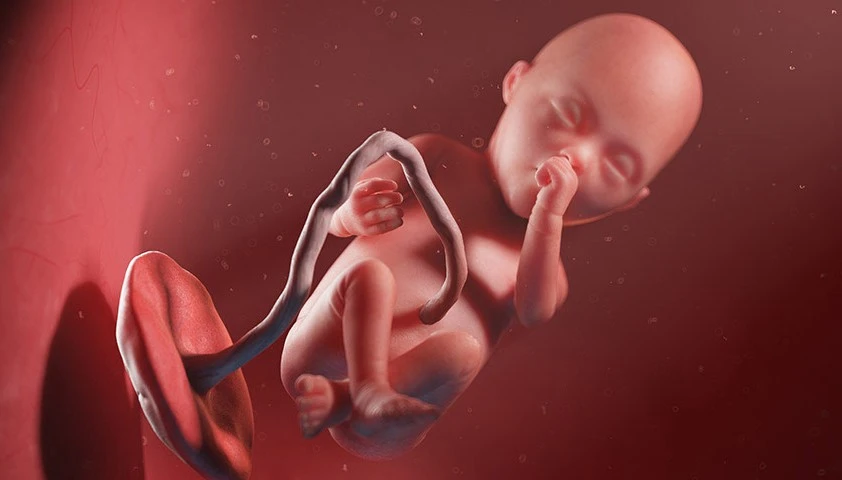
Research shows that fetuses show a clear hand preference in the womb—long before birth
Genetics plays a major role, though not a decisive one. If both parents are left-handed, the likelihood of having a left-handed child increases three- to fourfold. In 2020, a massive genomic study of 1.7 million people published in Nature Human Behaviour identified 41 genetic variants associated with left-handedness. Many of these regulate the growth of neural microtubules—protein structures essential for neuronal migration during brain development. 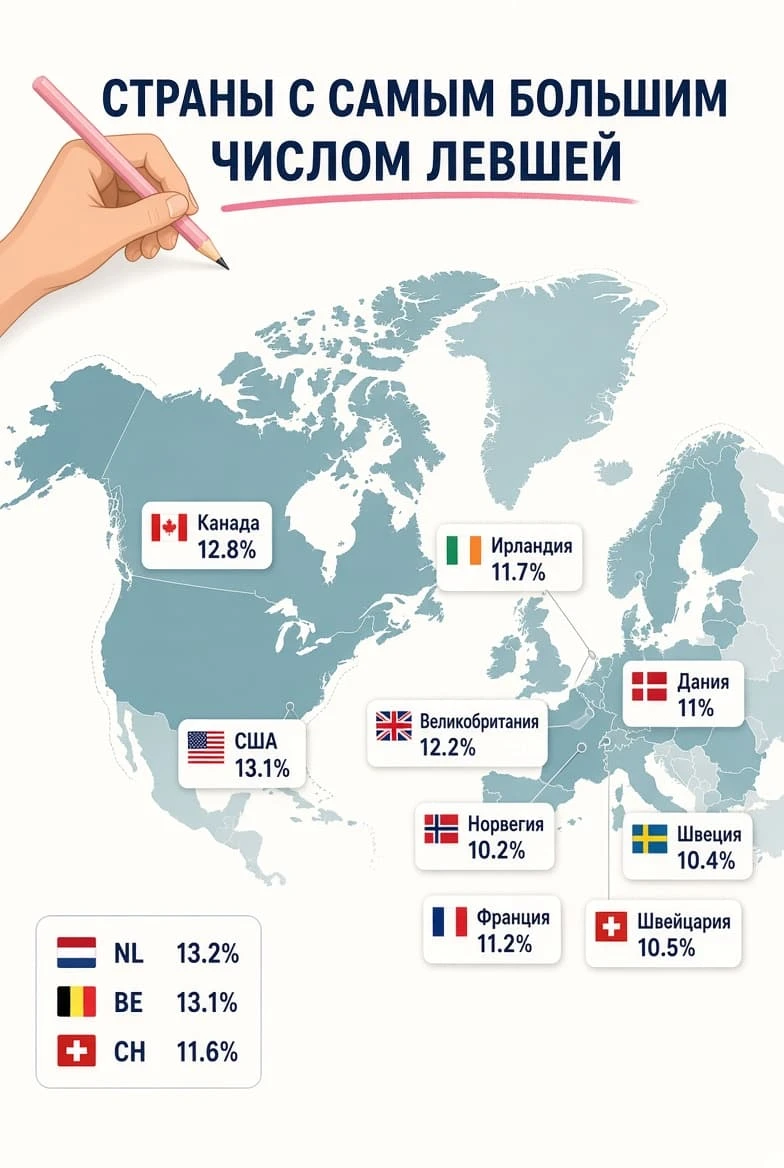
The proportion of left-handers varies significantly from country to country—and genetics is only part of the story
LRRTM1, long touted as the primary "left-handed gene," showed no link to handedness in this study. The genetics turned out to be far more complex. In fact, environmental factors account for roughly 75 percent of the equation—including country of birth, birth weight, and cultural pressure to switch hands. Occasionally, left-handedness develops as a result of early damage to the brain's left hemisphere, prompting the right hemisphere to compensate. In the vast majority of cases, however, it is simply a normal variation of neurodevelopment—neither a disease nor a defect.
How a Left-Hander's Brain Actually Differs
The popular trope goes like this: left-handers are right-brain dominant—creative, intuitive, and artistic—while right-handers rely on the logical left brain. It's a neat theory, but neuroscientists abandoned it long ago. 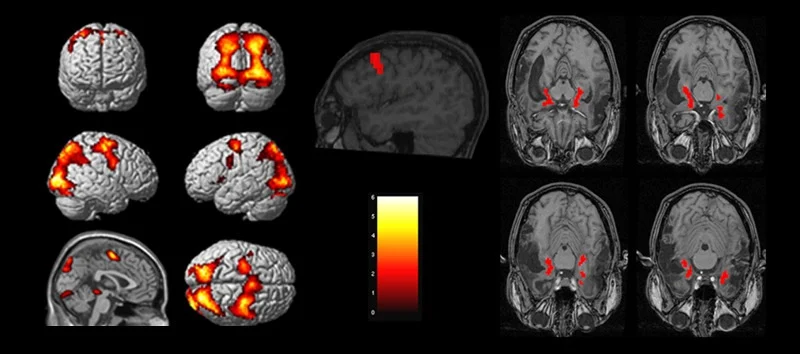
The defining feature of a left-hander's brain isn't a "creative" hemisphere, but more active communication between the left and right sides
The real distinction of a left-handed brain isn't hemisphere dominance, but interhemispheric connectivity. Information flows more rapidly between the two sides of the brain in left-handers. The corpus callosum—the bundle of nerve fibers linking the hemispheres—often exhibits structural differences in left-handed individuals, facilitating higher crosstalk. A 2025 study in Scientific Reports identified significant differences in left-handers' functional connectivity across language, motor, and sensory neural networks. 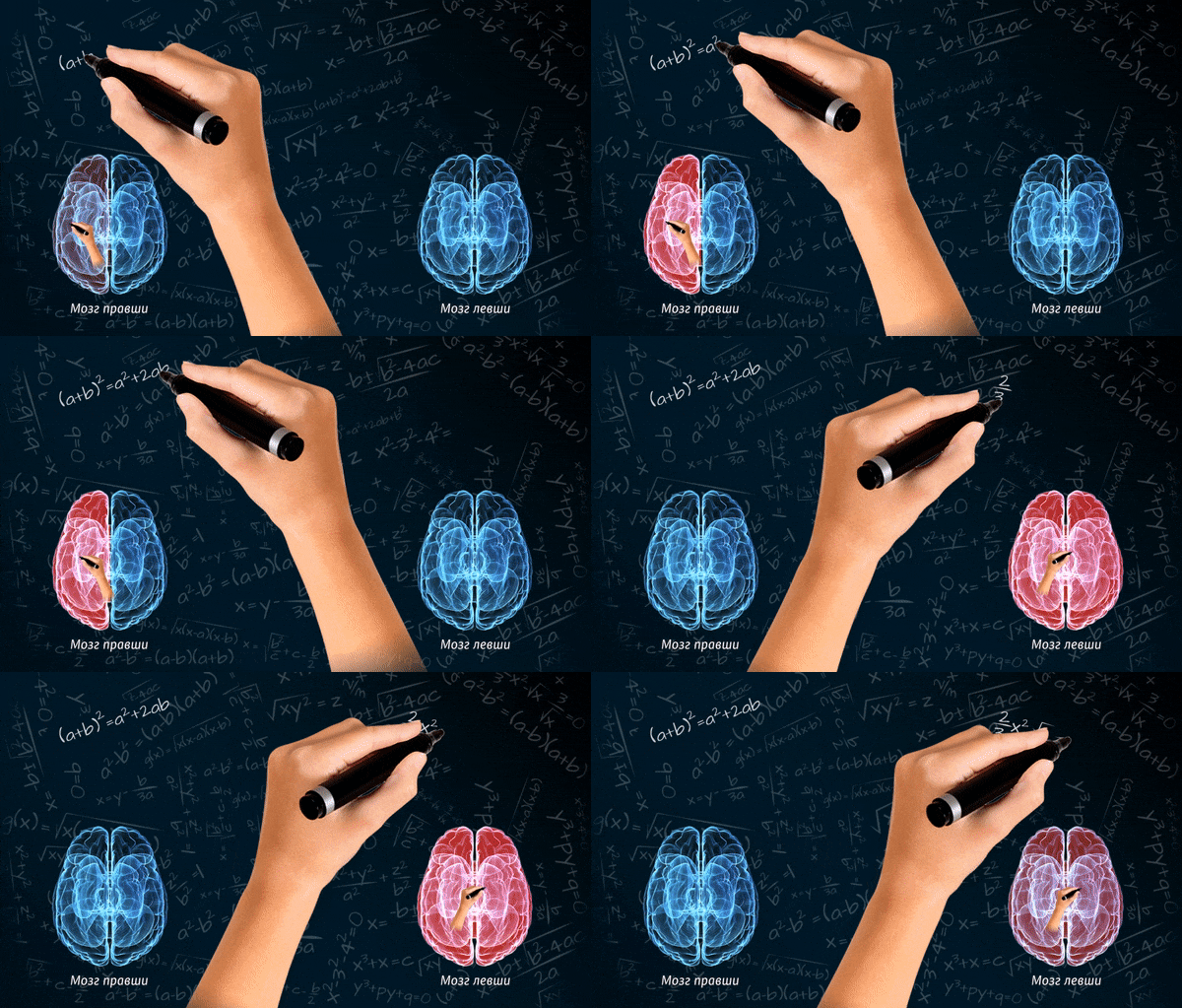
A diagram illustrating how the brain distributes functions across hemispheres in right- and left-handers
Another key factor is lateralization, which tends to be less pronounced in left-handers. In a typical right-handed person, language processing is heavily concentrated in the left hemisphere. In left-handers, language functions are more frequently split across both hemispheres. This is neither better nor worse—just a different framework of brain organization.
The Myth of the Creative Left-Hander
The myth rested on simple logic: divergent thinking—the ability to generate multiple solutions to a single problem—was tied to the right hemisphere. Left-handers were assumed to be right-brain dominant. Ergo, left-handers are inherently creative. It sounded plausible, which is why the myth persisted for decades.
In June 2025, researchers at Cornell University published a paper in Psychonomic Bulletin & Review titled "Left-Handedness and Creativity: Fact and Fiction." Authors Owen Morgan, Siyi Zhao, and Daniel Casasanto analyzed nearly a thousand scientific papers spanning a century. Their conclusion was unequivocal: the data shows no evidence that left-handers hold an advantage in creative thinking. 
Leonardo da Vinci is the most famous poster child for "creative left-handers." But a single genius doesn't make a statistical rule
Across three standard tests measuring divergent thinking, left-handedness conferred no advantage whatsoever. In fact, right-handers slightly outperformed left-handers on certain tasks.
“Looking at the body of literature as a whole, the claim that left-handers are more creative simply isn’t supported by the data,” Casasanto stated. 
Paul McCartney is often cited as a prime example of a "creative leftie." Science, however, attributes his talent to entirely different factors
Why, then, does it feel like artists and musicians are so frequently left-handed? Part of it comes down to anecdotal evidence and confirmation bias: famous lefties stand out in our minds, while right-handers go unnoticed. Additionally, certain fields may naturally attract people with atypical brain lateralization. Yet science has found no cause-and-effect relationship. Furthermore, the same analysis of data from nearly 12,000 Americans revealed that right-handers actually predominate in highly creative professions.
Creativity Doesn't Live in the Right Brain
In February 2025, researchers at Harvard Medical School published an analysis of data from 857 participants across 36 fMRI studies in JAMA Network Open. The main takeaway: creativity isn't localized in any single hemisphere. 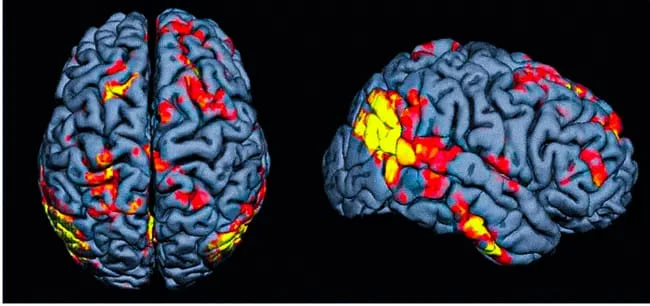
Modern fMRI research demonstrates that creativity engages the whole brain, rather than relying on a single hemisphere
Instead, creativity emerges from a distributed neural network that spans the entire brain. “Many complex human behaviors, including creativity, do not rely on a single brain region,” explained co-author Michael Fox. The right hemisphere isn't inherently "creative"; both sides collaborate through intricate, interconnected circuits. The division of the brain into "logical" and "artistic" halves is a 1970s textbook simplification that neuroscience has long since moved past.
Where Left-Handers Really Have the Upper Hand
After setting aside the neat myth, researchers uncovered something genuinely fascinating. The true advantage of left-handers lies in one-on-one competition. 
In fencing, boxing, and tennis, left-handers are consistently overrepresented among top athletes—and science knows why
Lefties consistently overrepresent elite ranks in combat sports, tennis, and fencing. A study published in Royal Society Open Science in 2026 confirmed that left-handers excel in dual combat primarily because of their rarity. Right-handed athletes simply face left-handed opponents far less often in practice, leaving them less equipped to build counter-strategies on the fly. Evolutionary biologists refer to this as the negative frequency-dependent selection hypothesis. 
Rafael Nadal, a left-hander who won the French Open 14 times. His edge isn't a "creative" brain, but the element of surprise
This precise mechanism explains why left-handedness has endured evolutionary pressures. It has held steady at roughly 10 percent of the population for at least 1.8 million years—dating back to the era of Homo habilis. That is far too long to be a random fluke. In competitive environments, left-handedness likely provided a distinct survival edge, ensuring the trait endured.
Why Forcing Left-Handers to Switch Is Harmful
Since left-handedness is a natural path of brain development, attempts to "correct" it cause direct harm. Forcing a left-handed child to use their right hand disrupts established neural wiring, leading to stuttering, anxiety, writing difficulties, insomnia, and nervous tics. These are documented medical consequences, not mere metaphors. 
In the Soviet Union, retraining left-handed children was official educational policy until 1986
These exact side effects were widely observed in children forced to switch hands in Soviet schools up until the mid-1980s. The practice was both official and widespread: teachers bound children's left hands or forced them to wear mitts they couldn't take off. In 1986, Soviet educational authorities finally abolished the practice. Today, modern neuroscience and pediatrics firmly oppose any form of hand retraining: you cannot force brain structure to change, but you can cause very real psychological damage. 
Hand preference isn't a habit. By ages four to six, it directly reflects the child's brain wiring
Dominant hand preference fully stabilizes between the ages of four and six, though in some children it can take until age seven. If a child naturally reaches with their left hand at this age, it isn't a bad habit to break—it's a reflection of how their brain is built.
Different Doesn't Mean Worse—or More Creative
A left-hander's brain is wired differently—that is a scientific fact. It boasts stronger interhemispheric connectivity, less pronounced lateralization, and a broader distribution of language functions. But "different" does not mean "more creative." A century of research has failed to back up that claim. 
August 13 is the one day a year when the world reflects on the fact that a fraction of humanity experiences life in mirror image.
Yet science uncovered something far more fascinating than the popular myth. Left-handedness is an evolutionarily stable strategy preserved across millions of years by a very specific mechanism. Not artistic inspiration, not right-brain magic—but the element of surprise in head-to-head combat. The good news for left-handers: your brain is neither better nor worse. But in the right place and at the right time, it offers an advantage right-handers never see coming.
Left-handedness has held steady at roughly 10 percent of the human population for nearly two million years—far too long to be an accident, yet too rare to take over the world. And that balance is precisely where its strength lies.
Are you left-handed or right-handed? And how do you feel about the "creative leftie" theory turning out to be a myth?