China Plans to Drill Deep Into the Earth's Mantle. What Do They Hope to Find? (13 Photos)
In 2026, a vessel set sail from the Port of Guangzhou on an ambitious mission: to drill completely through the Earth's crust and reach the mantle. 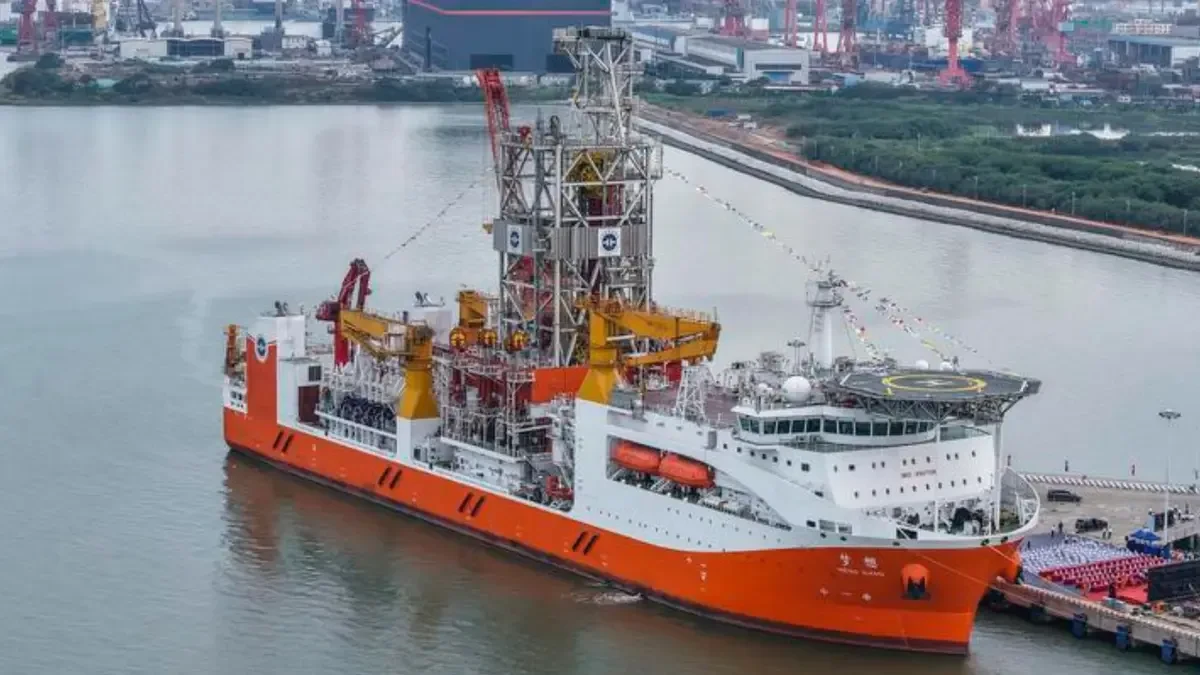
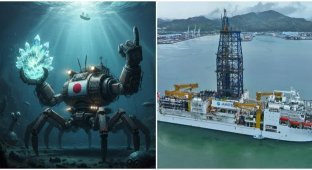
The $470 million drillship
Meng Xiang
(meaning "Dream") is aiming for a depth of 11 kilometers beneath the ocean floor. It will bore through solid rock under crushing pressures of 2,000 atmospheres and scorching temperatures reaching 300°C.
Humanity has sent astronauts into space, launched probes beyond the Solar System, and even photographed a black hole—yet we still have little idea what lies inside our own planet. No one in history has ever held an untouched piece of the Earth's mantle retrieved directly from its source. China is set on changing that.
The Mystery Beneath the Thin Crust
To put the scale into perspective, imagine an apple. The skin is the Earth's crust, the flesh is the mantle, and the core is, well, the Earth's core. Throughout all of human history, our entire civilization has never managed to penetrate even that thin outer skin. 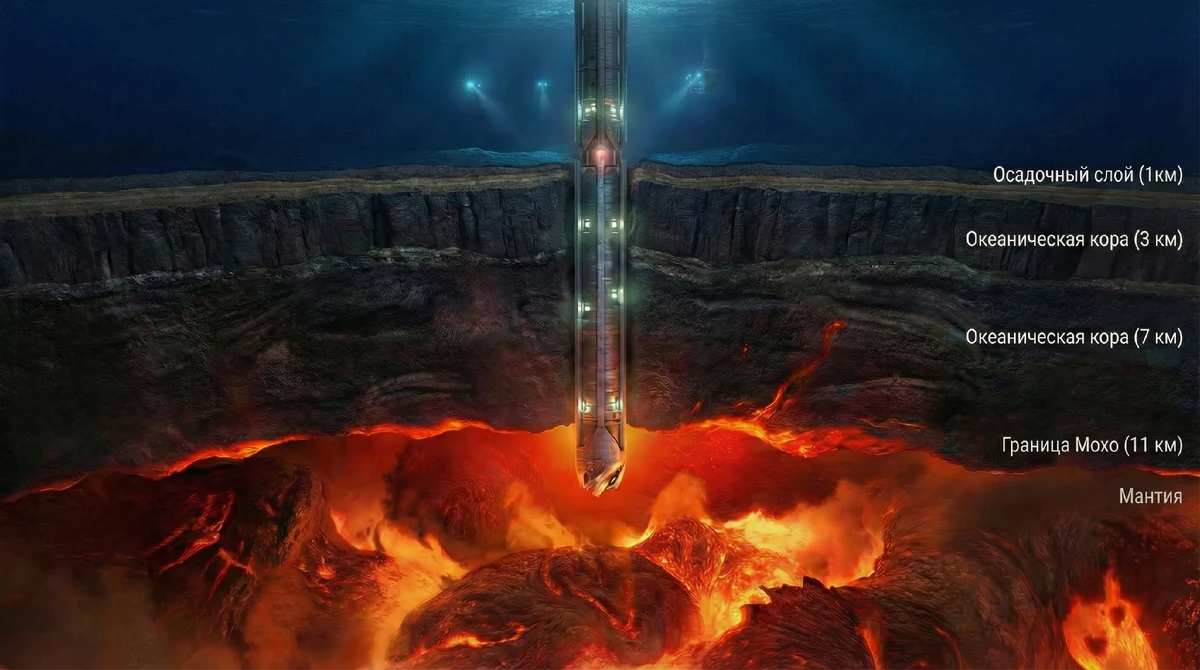
Choosing to drill at sea was a calculated move. On land, continental crust is far too thick—averaging 30 to 50 kilometers, and reaching up to 75 kilometers beneath the Himalayas. Drilling through that much rock remains far beyond our current technological capabilities.
Beneath the oceans, however, the crust is vastly thinner—just 5 to 7 kilometers deep. That is where the Mohorovičić discontinuity lies—affectionately known to geologists as the "Moho"—marking the boundary where the crust meets the mantle. 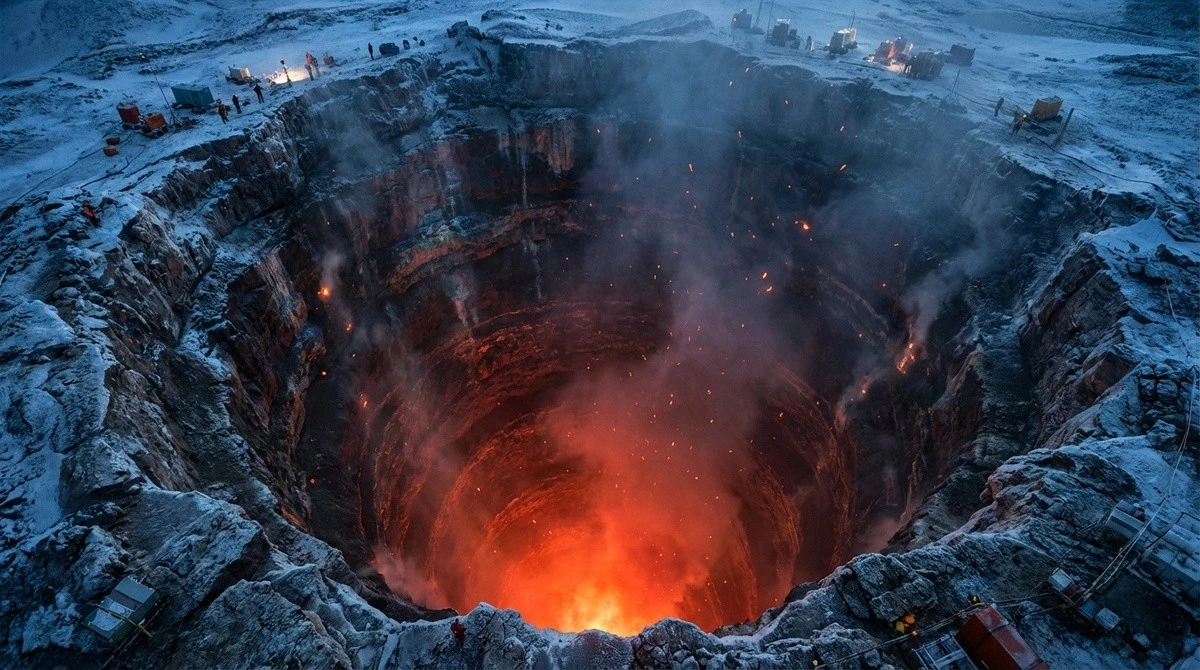
The mantle makes up about 80% of Earth's volume. It is a nearly 3,000-kilometer-thick layer of scorching rock that drives continental drift, volcanic eruptions, and earthquakes. Yet we know surprisingly little about it.
Kola Superdeep: 12 Kilometers Down and the Myth of 'Voices From Hell'
The most successful attempt to drill deep into the Earth was made by the Soviet Union.
Located on the Kola Peninsula, the Kola Superdeep Borehole stands as the most daring attempt in history to penetrate the Earth's crust. 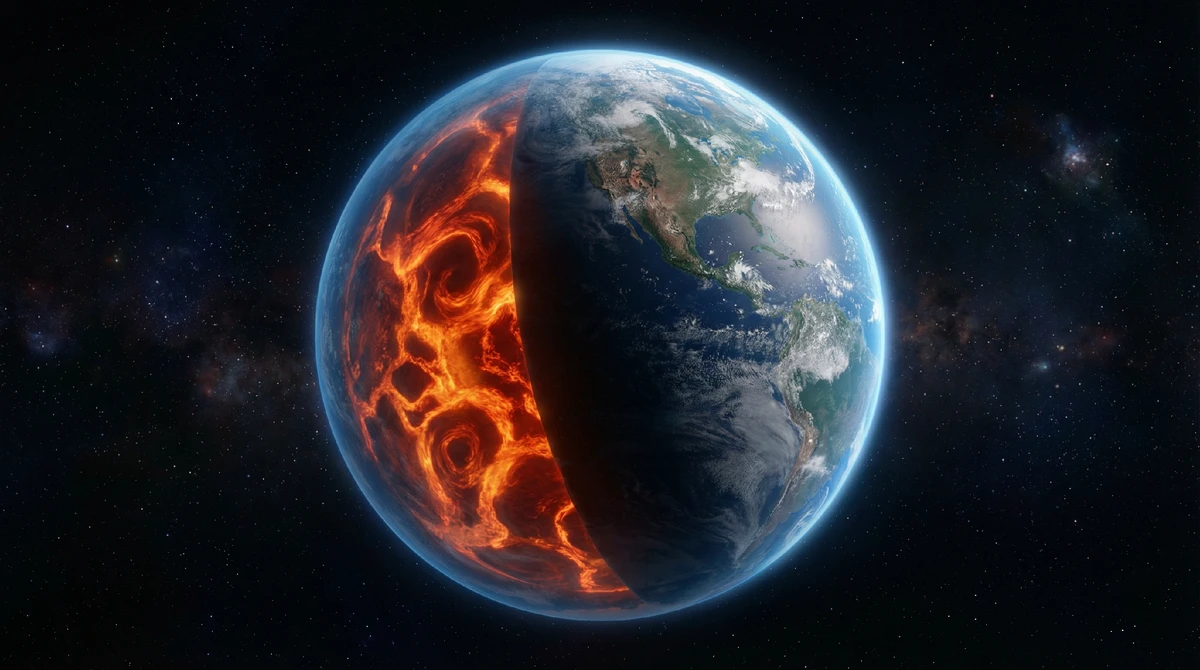
The Soviet project began drilling in 1970 and reached a staggering depth of 12,262 meters—a record that still stands today, recognized by the Guinness World Records as the deepest penetration into the Earth's crust.
Yet they never reached the mantle. The continental crust turned out to be far thicker than textbooks predicted. At a depth of 10 kilometers, temperatures reached 180°C instead of the expected 100°C, causing drill bits to deform while drill strings weighing over 200 tons snapped under their own weight. 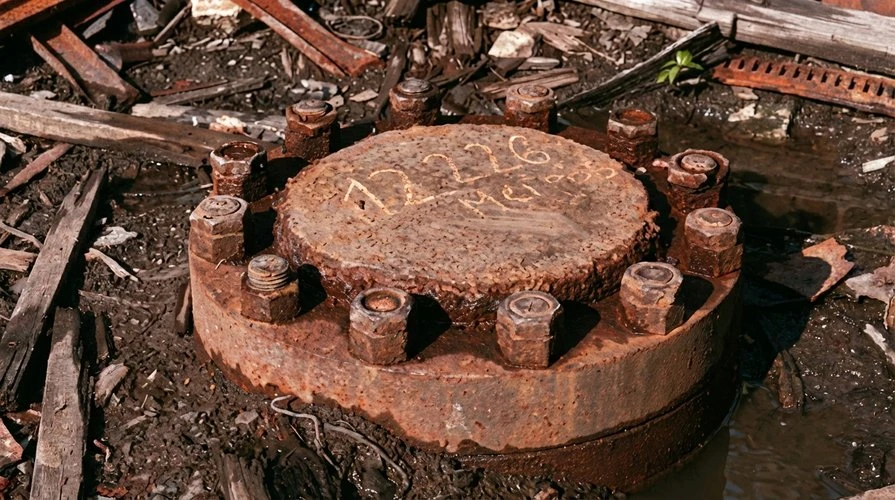
In the 1990s, the Kola Superdeep Borehole was shut down
In the 1990s, the site was sealed off, but the scientific payoff was immense. Seismic models had predicted dense basalt at a depth of 7 kilometers; instead, the drill encountered fractured granite unexpectedly saturated with water. Scientists also discovered ancient microorganisms far deeper than anyone thought possible, proving that life can survive under vastly more extreme conditions than previously believed.
Meng Xiang
: A Half-Billion-Dollar Floating Laboratory
The
Meng Xiang
is no ordinary drillship. It is the world's largest custom-built scientific research vessel of its kind, measuring 180 meters in length and 33 meters across.
Designed to withstand super typhoons, the vessel 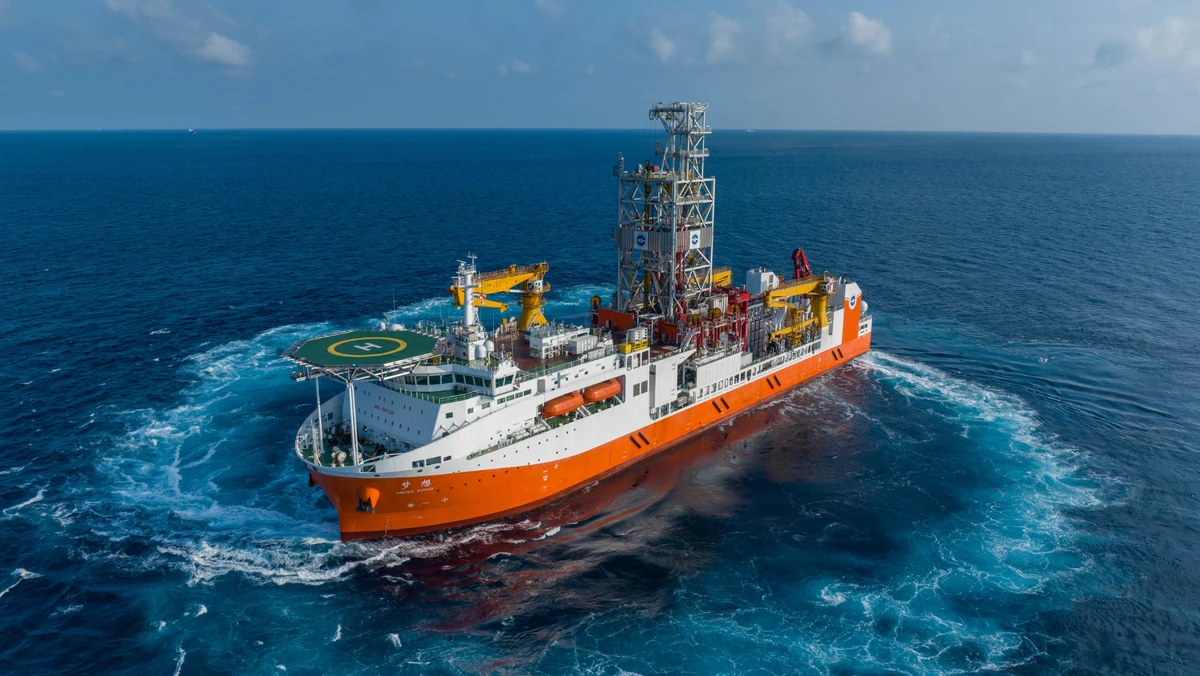
At the heart of the ship lies a hydraulic derrick with a top-drive capacity of 907 tons. The system supports four drilling modes and three core-sampling methods, capable of handling everything from soft sediments to ultra-hard lower-crustal rock.
What truly sets the
Meng Xiang
apart, however, is its first-of-its-kind Riserless Mud Recovery (RMR) system. Simply put, this technology recycles drilling mud and lifts drill cuttings to the surface without polluting the seafloor. Without it, maintaining borehole stability at depths of 11 kilometers would be impossible. 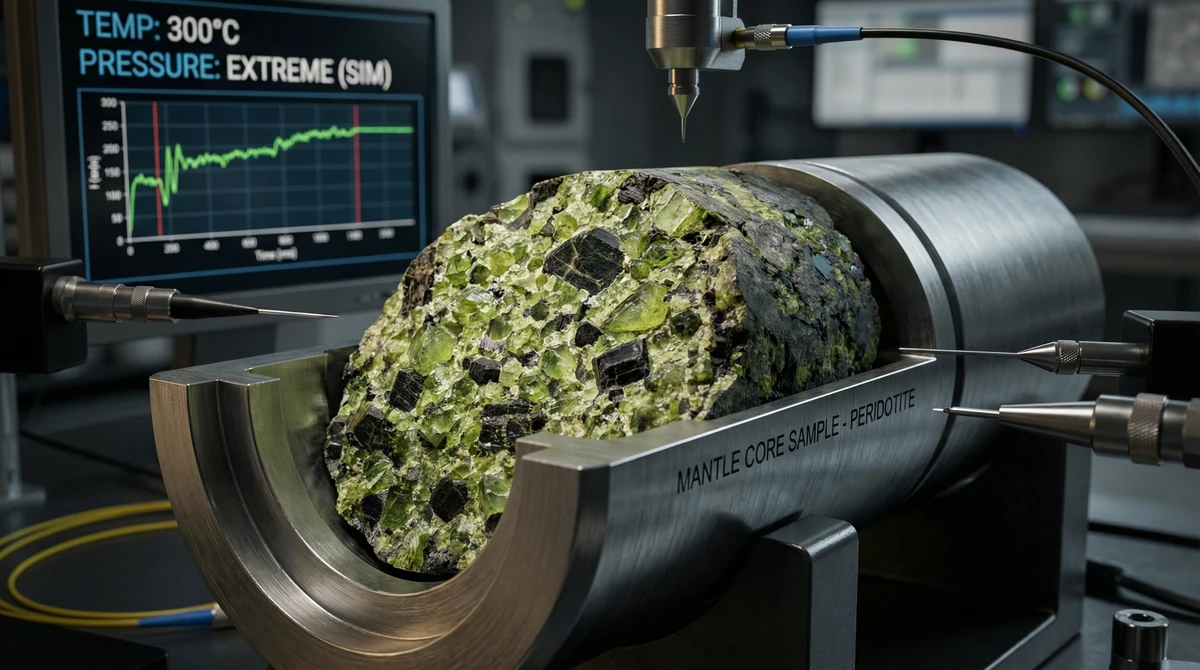
The ship houses nine onboard laboratories, spanning geochemistry to microbiology. The microbiology lab features ultra-clean enclosures designed for studying extremophiles, ensuring surface microbes don't contaminate the samples.
Drilling operations are set to begin in the coming months at a designated site in the South China Sea.
Why Drill So Deep?
Suppose China reaches the mantle. Why spend half a billion dollars and risk advanced machinery under such punishing conditions? 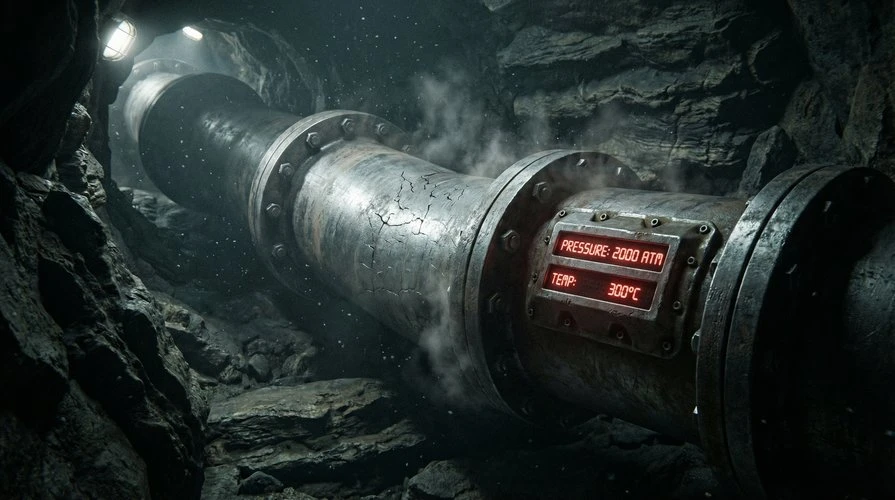
To finally know rather than guess. Until now, scientists have studied the mantle through xenoliths—rock fragments brought to the surface by volcanoes. But as a xenolith travels up through a volcanic vent, it undergoes decompression melting, interacts with magma, and alters its composition. It's
like trying to judge a gourmet meal by inspecting the trash bin. A direct core sample from the mantle is a completely different story—a pristine specimen that preserves the true composition and structure of the deep Earth.
To test existing models. Roughly 99% of our knowledge about the Earth's interior relies on indirect data, mainly seismic waves. That's a bit like diagnosing a patient using only X-rays without ever performing an examination.
The
Meng Xiang
will allow scientists to calibrate existing models by comparing the actual density and viscosity of deep rock against theoretical calculations. At the Kola borehole, nature already surprised theorists when water was found 7 kilometers down—where it was deemed impossible. Who knows what surprises await within the oceanic crust?
Uncovering ancient climate data. Deep core samples retain records of ancient oceans and climate shifts stretching back tens of millions of years. Decoding them offers the longest climate record in planetary history—providing invaluable insights for forecasting future climate change. 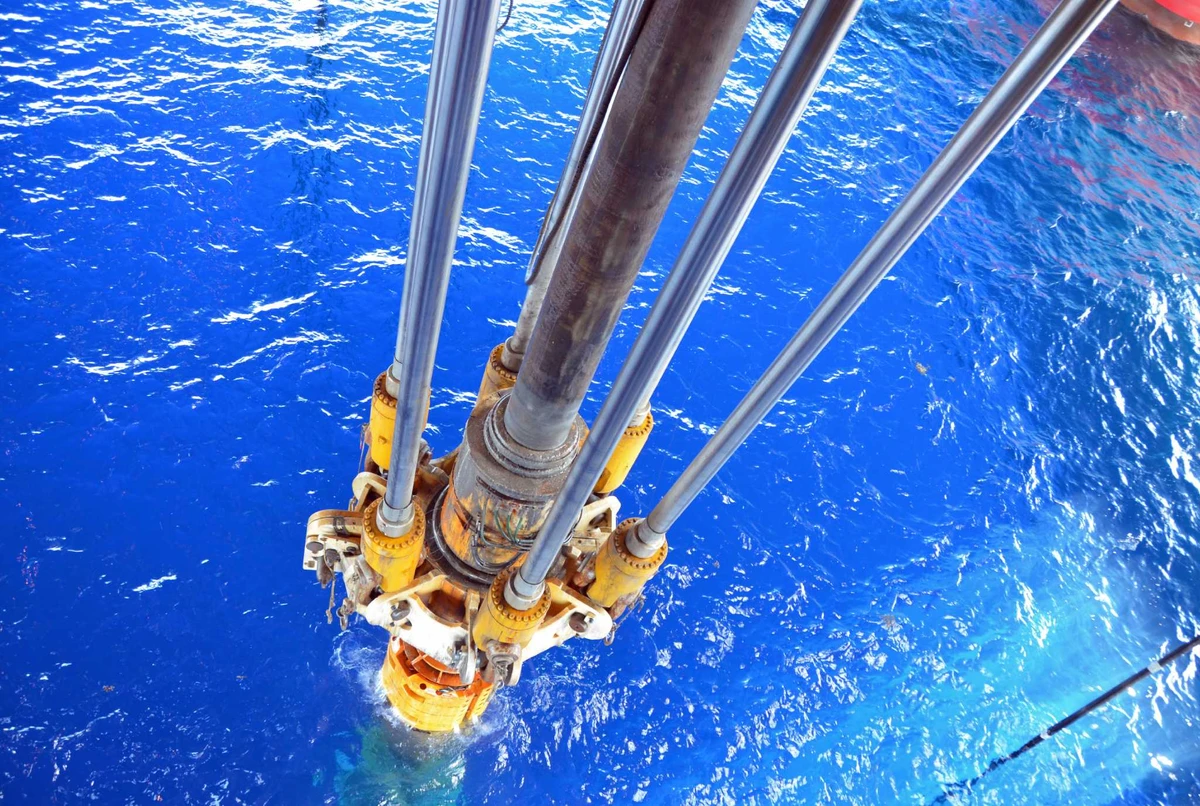
Understanding the magnetic field. While the mantle is the primary driver of tectonic processes, it also plays a key role in generating Earth's magnetic field. Analyzing the magnetic susceptibility of deep crustal layers will help reconstruct the history of magnetic field reversals—moments in history when the North and South magnetic poles swapped places.
This research is crucial not just for geology, but also for navigation systems and for understanding how our planet shields us from solar radiation.
Studying "life in hell." One of the
Meng Xiang's
most intriguing goals is searching for life at unprecedented depths.
Organisms that thrive completely without sunlight could exist deep down. While science is familiar with extremophiles, life deep within the Earth takes survival to a whole new level.
Why does this matter? 
First, it sheds light on the origins of life on Earth. Many biologists believe life did not begin in warm surface oceans, but rather deep within hydrothermal systems inside the crust.
Second, it holds immense implications for astrobiology. If microorganisms can survive at 300°C and thousands of atmospheres of pressure deep inside Earth, why couldn't life exist in the subsurface oceans of Jupiter's moon Europa or the geysers of Saturn's moon Enceladus?
Third, it could revolutionize biotechnology. Enzymes from extremophiles that function under extreme temperatures and pressures are a potential goldmine for pharmaceuticals, industrial chemistry, and even the food industry.
This isn't just about pure science—it offers direct economic benefits. Which brings us to the practical side of the mission.
"Combustible Ice" and Vast Resources of the Future
Pure science is wonderful, but China would not be China without a keen eye on practical applications. 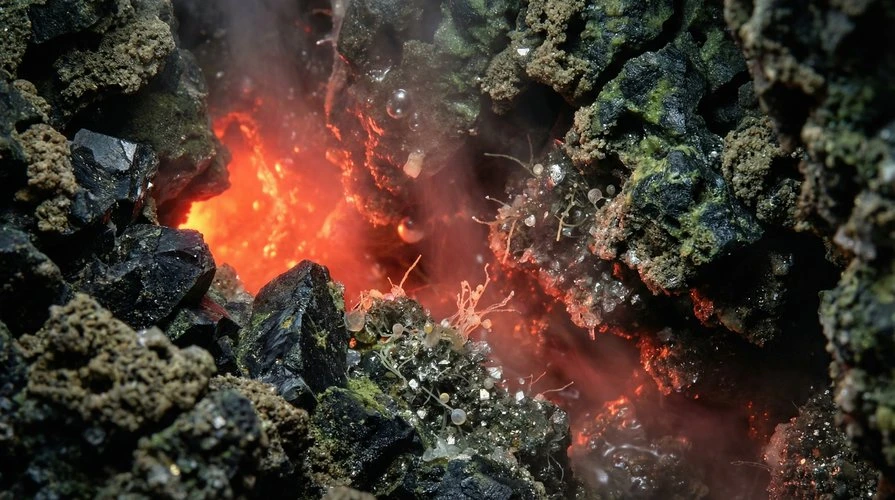
The
Meng Xiang
is the world's first vessel to integrate scientific drilling, oil and gas exploration, and gas hydrate research on a single platform.
Gas hydrates—methane trapped in ice within seafloor sediments—are often dubbed "combustible ice." Global ocean hydrate reserves are estimated at a staggering 20,000 trillion cubic meters, vastly exceeding all known conventional gas reserves. The South China Sea alone holds around 84 trillion cubic meters. Whoever learns to safely extract them first will gain a massive edge in the global energy market.
China has already conducted successful trial extractions of methane hydrates in the South China Sea and is now scaling up its technology. 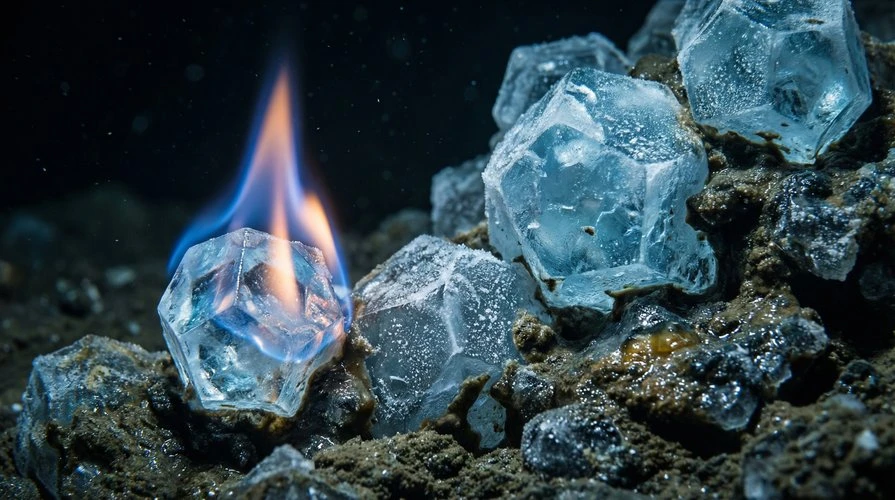
Deepwater oil and gas represent another lucrative target. Deposits that were once utterly unreachable now fall within the range of an 11-kilometer drill. For a nation importing vast quantities of hydrocarbons, this is a matter of national energy security.
Deep-sea sediments and mantle rocks also contain high concentrations of manganese, cobalt, nickel, and rare earth elements—essential components for EV batteries, smartphones, and defense electronics. As land reserves dwindle, the seafloor presents a viable alternative. The deep-sea resource market is estimated in the trillions of dollars, and China aims to stake its claim first.
Could We "Puncture" the Earth?
Ambitious drilling projects inevitably trigger a reasonable question: could penetrating deep into the Earth trigger a major global catastrophe?
The short answer is no. A borehole less than 30 centimeters in diameter cannot physically destabilize a tectonic plate spanning thousands of kilometers. It's like poking a needle into a concrete wall and expecting the building to collapse. Borehole pressure is balanced using heavy drilling mud, and drill sites are selected in geologically quiet areas far from active volcanic zones. 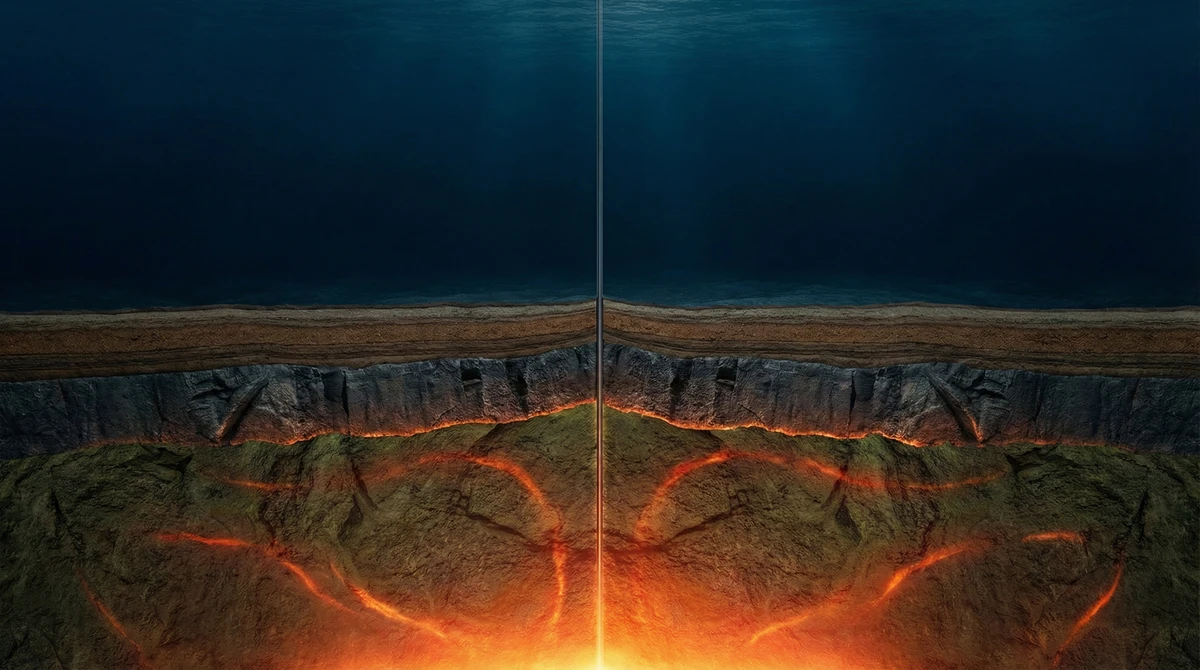
As for "dangerous gases" or "unknown creatures from the deep": any life form at these depths is so specialized for punishing conditions that it would perish instantly upon exposure to our atmosphere. Meanwhile, gas releases from a borehole are negligible compared to what naturally vents from the seafloor through thousands of hydrothermal vents and oceanic rifts.
We spend billions exploring distant worlds, yet the greatest mystery lies right beneath our feet—just a few kilometers down. China has decided that enough is enough: it's time to drill. We will see how this ambitious journey unfolds, with drilling operations scheduled for completion in 2030.