The success story of Arnold Schwarzenegger (90 photos)
Today we'd like to tell you the success story of one of the world's most famous film actors, whose name is always associated with the Terminator from sci-fi action films. Naturally, this post will focus on Arnold Schwarzenegger and how Arnie began his career in the 1960s as a simple Austrian boy dreaming of becoming a world-famous athlete. 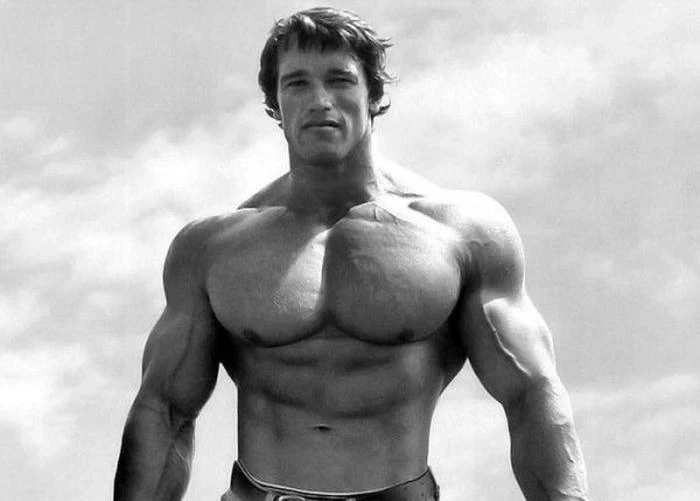
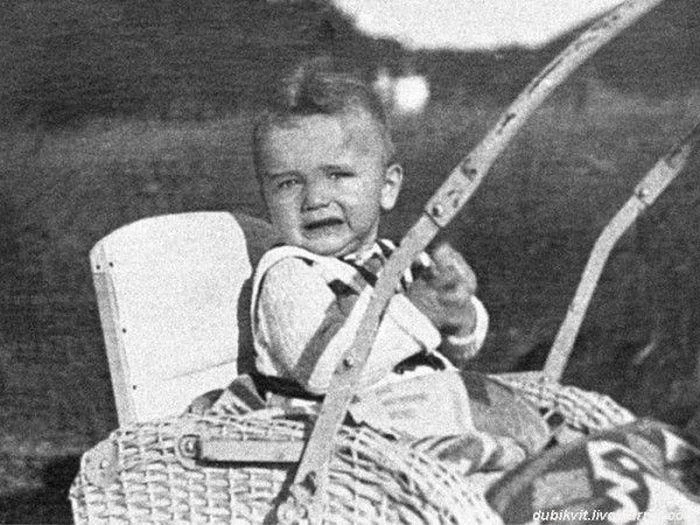
Schwarzenegger was born on July 30, 1947, in the small town of Thal bei Graz, Austria, to 38-year-old police chief Gustav Schwarzenegger and his 23-year-old housewife wife, Aurelia. 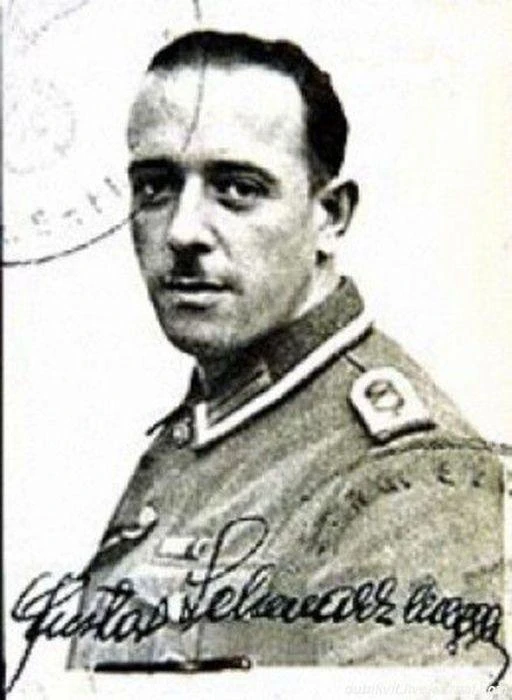
His father, a former member of the Nazi Party, was stern and harsh, which is why little Arnie received painful and often undeserved beatings daily, passionately wanting to leave Austria and never see it again. 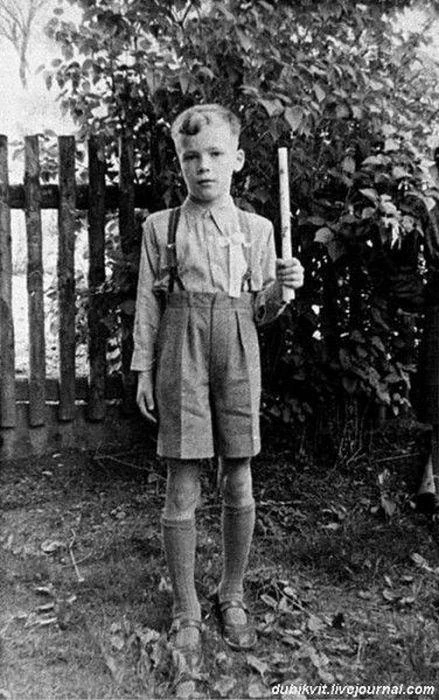
But there was a silver lining: his father dreamed of making him an athlete, and he did – from an early age, Arnold played football, training, if not his strength, then certainly his endurance. 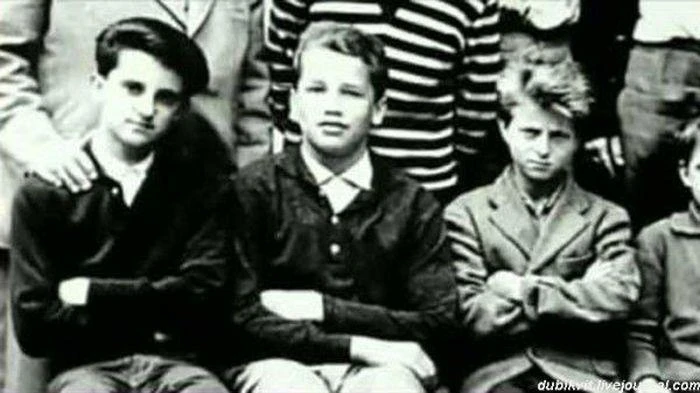
From an equally early age, Arnie and his brother Meinhardt also worked as farmhands on the property, replacing "40 standard black harrowers." Until the age of 14, he had never seen a telephone or a globe, nor had he experienced many of the most common household amenities. And the rest of the world remained unaware of what awaited him. 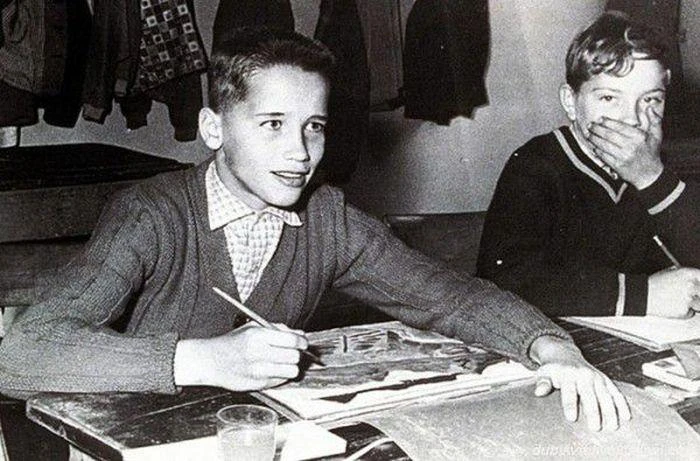
Inspired by seeing the strongman Vlasov at the World Weightlifting Championships, and against his father's wishes, Arnold began lifting weights at the age of 15. 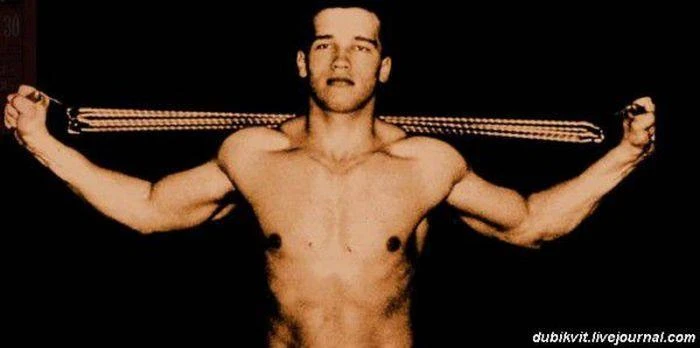
He demonstrated such fanaticism that when the gym in Graz happened to be closed due to a weekend or holiday, young Arnie would naturally sneak in through the window and work out alone. 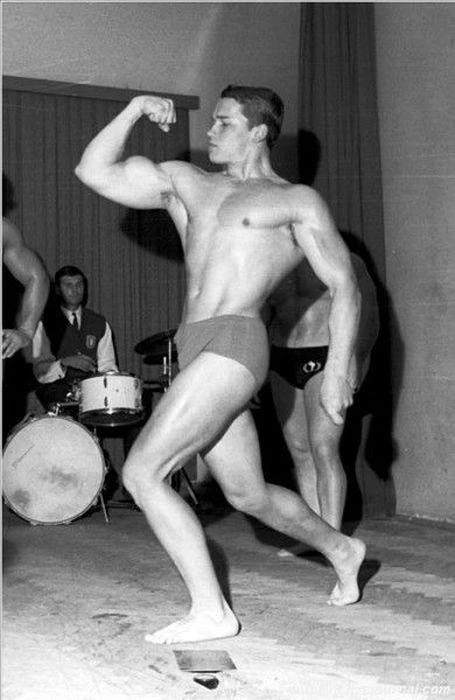
He also didn't forget to eat a lot of rich foods, so by the age of 17, he was no longer a skinny boy, but a powerful muscleman, capable of lifting weights that even an adult trainer would be afraid to approach. 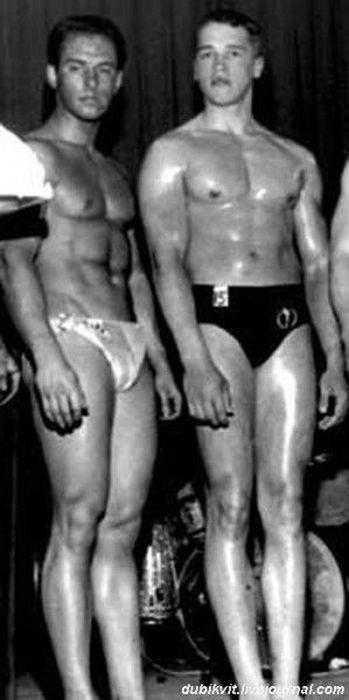
"At the age of seventeen, as a member of the Graz Athletic Union, I bench pressed 185 pounds—the crowd's applause gave me extra strength." 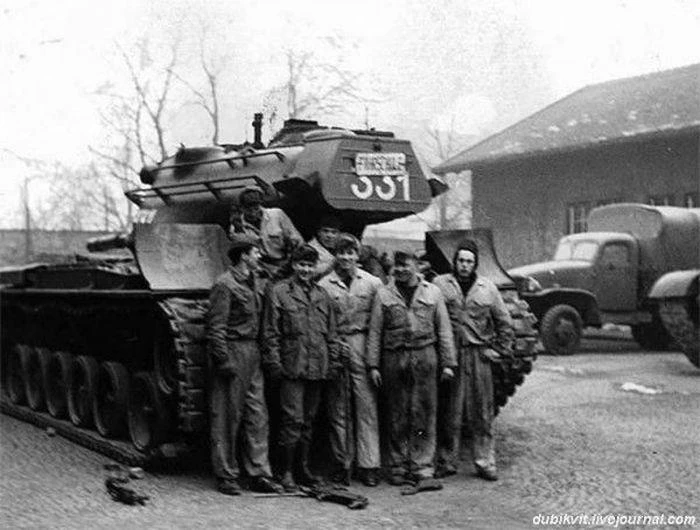
And then graduation came. After finishing school, Arnie voluntarily enlisted in the Austrian army. By his own admission, it was to get enough food and sleep. In the army, he served as a tank driver and mechanic (Western tanks, unlike Soviet ones, are suitable for a man 188 cm tall). 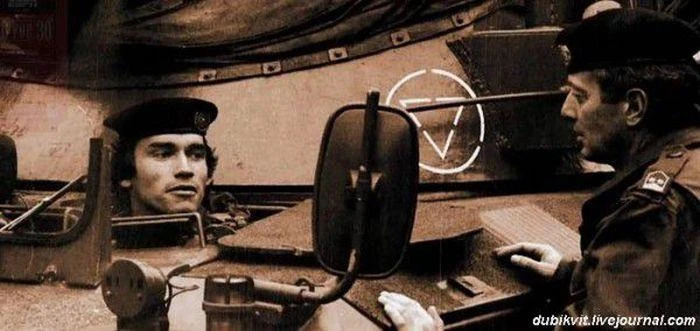
It's noteworthy that Schwarzenegger was the only eighteen-year-old conscript who was immediately entrusted with a tank—apparently, the Austrian oak was far from as simple as all those haters of "stupid musclemen" might have thought. However, Arnie himself later admitted that he wasn't the ideal soldier and once sank his tank. 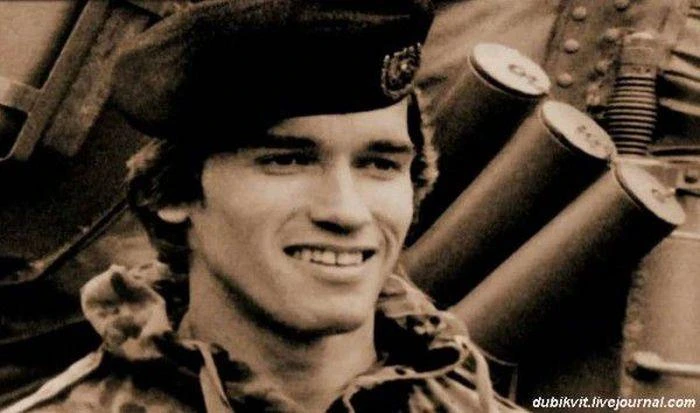
His military service, which lasted only one year—from 1965 to 1966—didn't stop him from serving disciplinary arrest for unauthorized absence. He sneaked off to participate in the "Mr. Europe" bodybuilding competition and was arrested. And, by the way, Arnie won that competition. This was all because, in addition to the excellent army food, he also pumped homemade weights daily—all while serving the standard, never-so-easy life of a brave Austrian tanker. But willpower and perseverance helped Arnold overcome all difficulties. 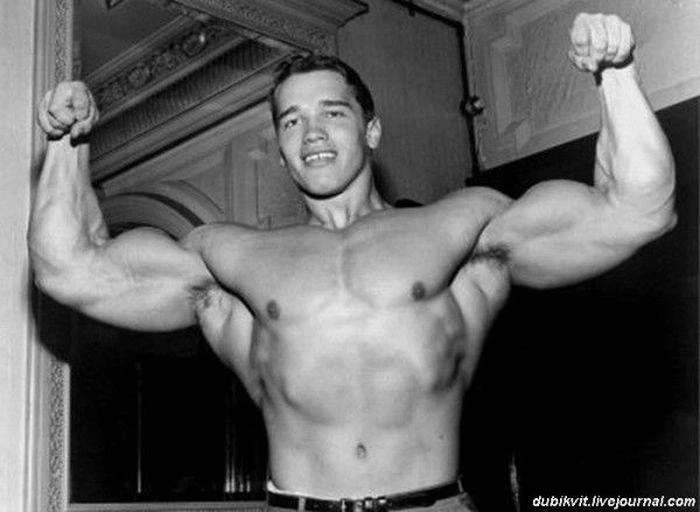
It's been that way ever since. As soon as the young talent was announced at some bodybuilding competition, all the judges gave him a standing ovation and awarded him a trophy. In 1967, he even became the youngest winner of the Mr. Universe title. This was all because, despite his tender age, Schwarzenegger possessed stunningly massive muscles, plus an exceptionally well-built physique (genetics helped). He competed equally with athletes six to eight years his senior, and beat them. 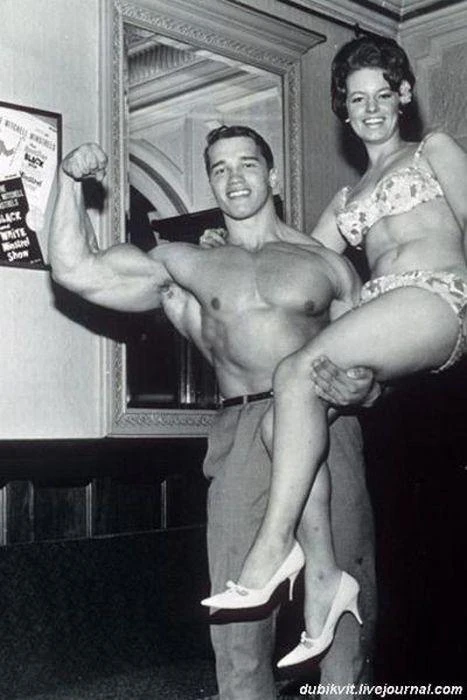
A year later, in 1968, Arnold's rise to fame, having become a two-time Mr. Universe at the London competition, was astounding. He was the number one bodybuilder on this side of the ocean! However, the main center of bodybuilding and its main competitors were located on the other side of the Atlantic. Joe Weider, the founding father of all modern bodybuilding, lived there. Through his London representative, Ludwig Schusterich, he offered the young Schwarzenegger a move to the United States and a one-year contract. However, Arnold, figuring that a bird in the hand is worth a cockroach in the pantry, refused the contract. For a year, Weider tried unsuccessfully to lure Arnold to the United States. 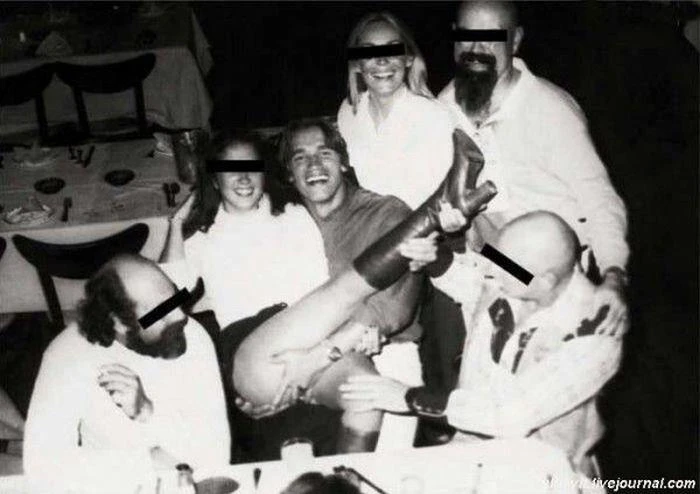
Meanwhile, the champion lived in Munich and lived a truly champion's lifestyle: fighting, drinking, and generally living a pure and holy life. According to Arnold's friends at the time, he was narcissistic and as cocky as a turkey. He was involved in every nightclub fight. It's only natural that he soon began having some serious problems with the police. And the further he went, the more serious they became. 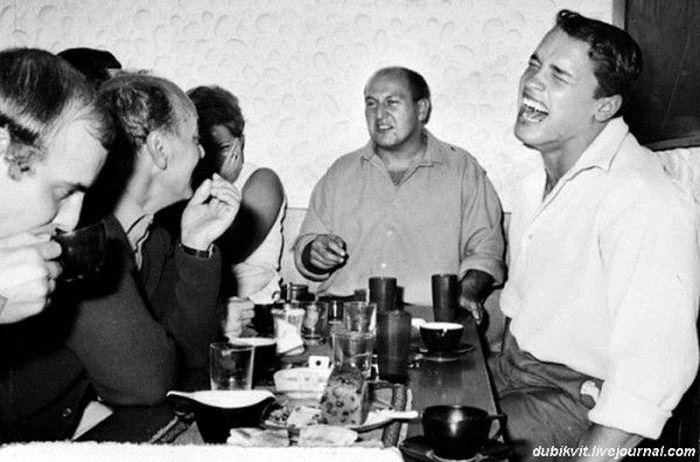
Finally, one glorious evening, Arnie showed up in Schwarzenegger's room, duffel bag in hand, and declared that he very much wanted to leave Germany as soon as possible and was willing to accept Weider's offer, if it was still open. Schwarzenegger used all his influential connections to obtain an American visa for him in a single day. And so, at the end of September 1968, Arnold Gustav Schwarzenegger, born in 1947 in Austria, a non-partisan, set foot on the cradle of democracy. 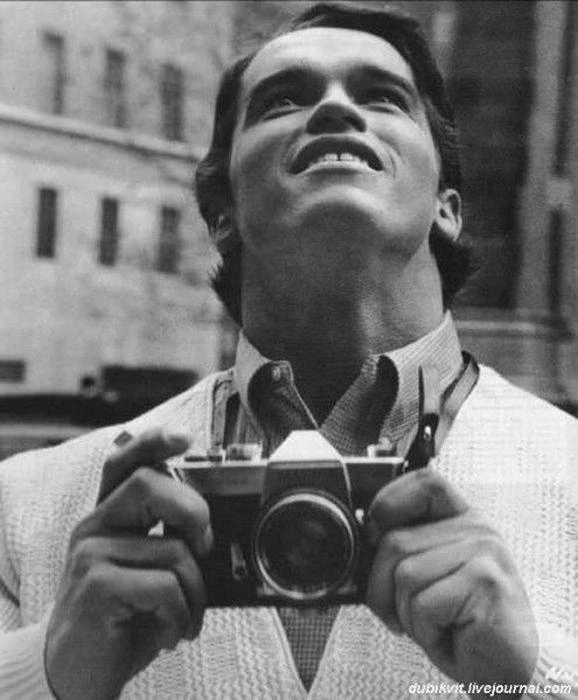
The location was wisely chosen – sunny and carefree California, where our "Iron" Arnie struck gold even before his acting salaries reached six or seven figures. Unlike most other bodybuilders who achieved athletic fame but never managed to turn it into money, Schwarzenegger possessed a strong business acumen and a keen eye for profit. Having barely arrived in the United States, he and his fellow muscleman Franco Columbu began doing nothing more than supplying bricks. Then another accident occurred – one of those that would lead him to wealth and fame – in 1971, Los Angeles was seriously damaged by an earthquake. Despite the residents' reaction, the city's restoration urgently needed bricks, which Arnold began selling in unimaginable quantities. 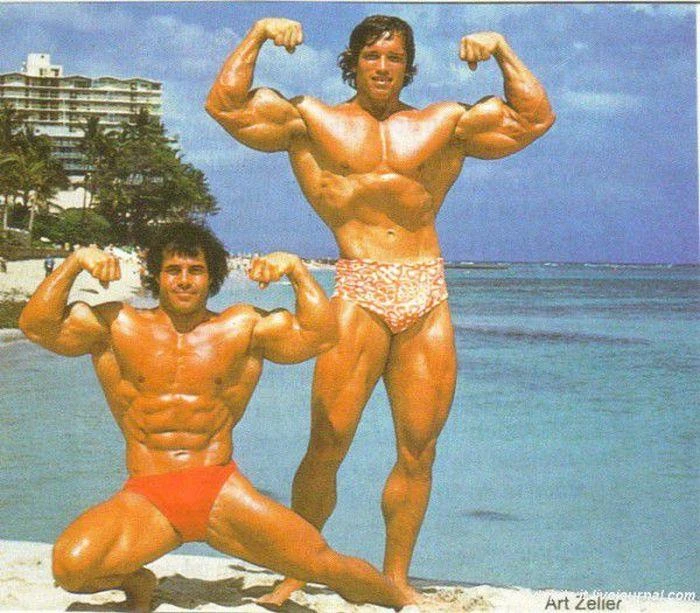
But Arnie had no intention of spending his life in the building materials business. At the same time, he was actively training in American gyms, invariably impressing with his stature and Herculean strength. Soon, the tall Austrian athlete was noticed, and his career took off. He became a well-known bodybuilder in the US and successfully sold bodybuilding accessories throughout the country, including videotapes with courses like "How to Go from Skinny to Apollo in One Year." Having saved up some money from bricks and videos, Schwarzenegger invested it in mail-order sales. The money kept growing. Schwarzenegger invested part of his email marketing profits and his contest winnings in real estate. He also began investing in various antiques on Weider's advice. Even before his thirtieth birthday (and long before his film success), Arnie became a millionaire.
Since 1970, Arnold Schwarzenegger, having already made a name for himself in bodybuilding, began acting in films, as did many of his idols, such as Steve Reeves and Reg Park. He faced challenges: a difficult-to-pronounce surname, a foreign accent, and "excessively large" muscles. 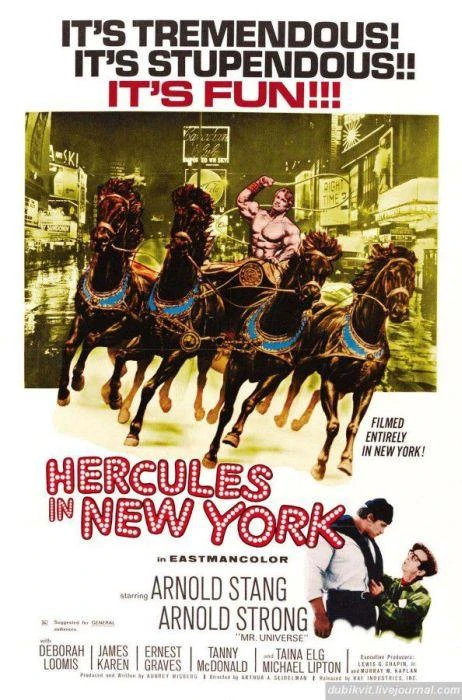
Nevertheless, less than a year after his arrival, he caught the attention of veteran producer Aubrey Weisberg, who worked at the small film studio Filmpartners. He had a script about the mythical strongman Hercules, who finds himself in a modern metropolis, and Aubrey thought the young Schwarzenegger would be perfect. As for the accent—Hercules is generally a man of few words...
Arnold agreed to the role after calling his friend Reg Park, who had played Hercules in films himself, who immediately advised Arnold to "take the part without further ado." When Arnold's agent negotiated with the studio, he said his client "had stage experience," but omitted the fact that Arnold had posed for bodybuilding contests rather than played Hamlet. After holding an audition, the casting director was horrified by the young strongman's accent—he was barely understandable. But his powerful physique paid off, and Arnold was cast in the film after all. The decision was made to voice another actor who spoke fluent English (and replace Schwarzenegger's last name with Strong). Many years later, Arnold voiced Hercules with his own voice, and the film was re-released. 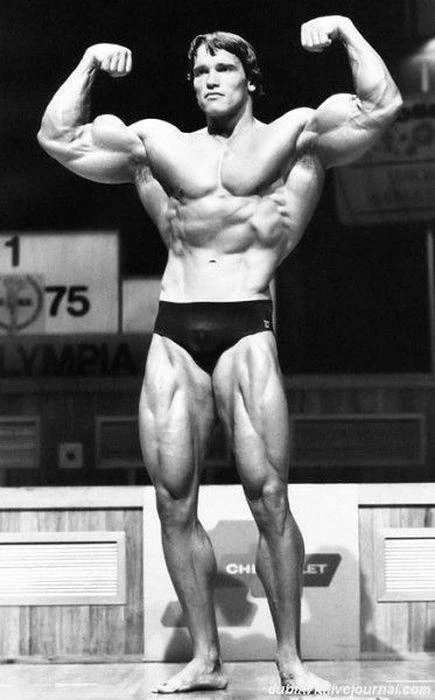
His bodybuilding career didn't take off right away either. At first, he acted quite arrogant and haughty, always introducing himself as a two-time Mr. Universe. However, his arrogance was soon knocked down a notch – he lost his first competition in the US convincingly to Frank Zane, who was 20 kg lighter. Anyone else would have burst into tears, but the Iron Arnold soberly analyzed the reasons for his defeat and entered the Mr. Olympia the following year in excellent shape. Unfortunately for him, the competition featured Sergio Oliva, an icon of American bodybuilding, Storm Cliff, and the World's Most Ripped Legs. The conceited Arnold lost again. And, beside himself with rage and resentment, he publicly vowed that he would never again be defeated by anyone. He kept his vow. 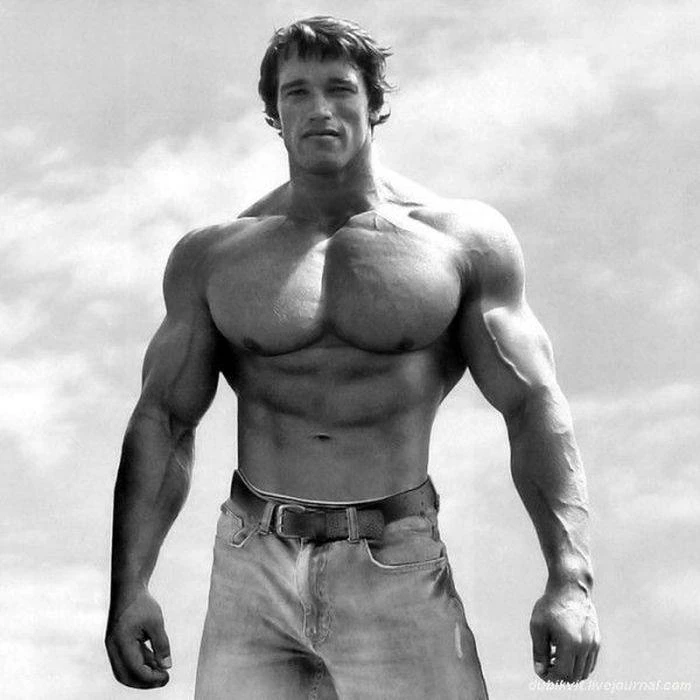
One victory followed another. Schwarzenegger began collecting medals from the most prestigious competitions, becoming a true bodybuilding icon: at the pinnacle of his career was his seven-time Mr. Olympia title. 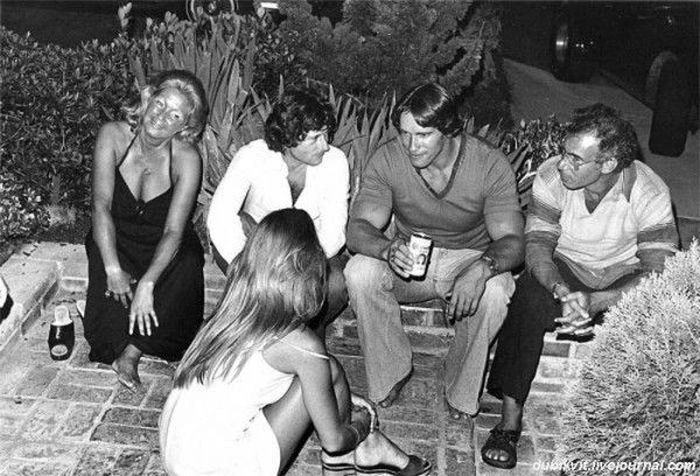
Having achieved every title in bodybuilding, Schwarzenegger finally retired from the sport in 1980 and now runs his own bodybuilding competitions, both organizing and sponsoring them—the Arnold Classic. The prizes are substantial—$100,000, a Hummer, and a gold Rolex watch.
However, filmmaking proved elusive: throughout the 1970s, Arnie continued to star in films alongside his competitions, but recognition was still elusive. Critics had a very strong opinion of the acting talent of this reserved and tongue-tied giant, softly described as "wooden." His cursed accent haunted him relentlessly (Arnie still hasn't completely lost it). So, for a long time, he wasn't invited to appear in films.
"In Hollywood, I met all sorts of people. This picture shows a party in my backyard with directors Roman Polanski and Bob Rafelson and their girlfriends." 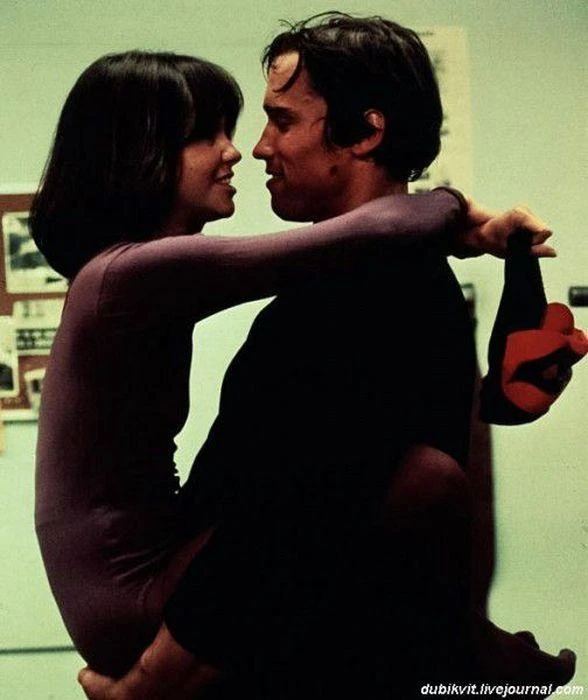
And yet, Schwarzenegger's second film appears seven long years later, after his famous streak of five Mr. Olympia titles had already passed, and he had become rich and famous.
"Stay Hungry" (1976) is a drama about bodybuilder Joe Santo, who gets in the way of a criminal syndicate illegally buying up real estate in the area. A bit naive, but kind and heartfelt, the film features a young Jeff Bridges and Arnold, who doesn't blow anyone's brains out or smash them against the wall, but works out in the gym and plays the violin for fun. This time, the critics were more favorable—no one mentioned the oak trees and other greenery; instead, they noted that the bodybuilder proved himself a true actor and was clearly capable of great things. In 1977, Arnold received the prestigious Golden Globe for this role, for some reason in the "Best Newcomer" category. Apparently, the critics didn't even consider "Hercules" a film. Alas, that Globe remained the only award of this caliber in Arnold's career. 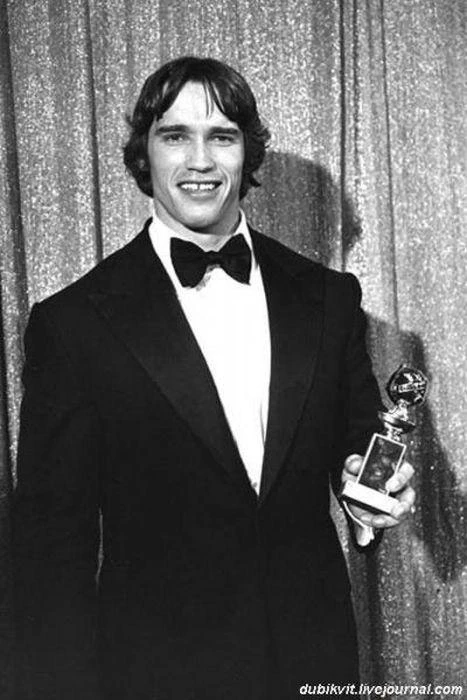
In the late 1970s, Arnold earned a bachelor's degree in economics from the University of Wisconsin. He always strove to develop not only his body but also his mind. 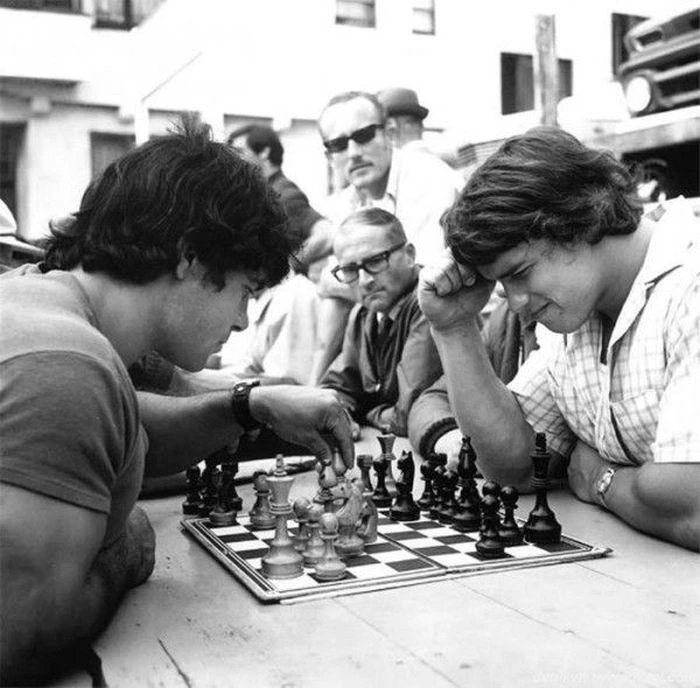
Personal Life 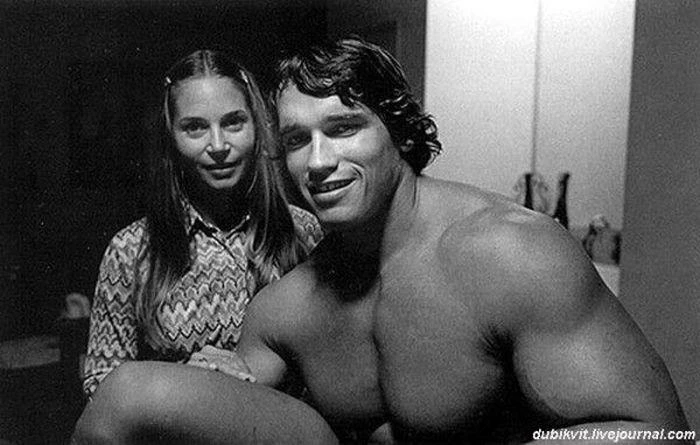
About six months after moving to the United States, Arnold met a young schoolteacher, Barbara Baker, and lived with her for five years. Arnold himself explains the reason for their breakup this way:
"She was calm and level-headed and wanted to live a normal, measured life. I was very unstable and hated the very idea of 'being like everyone else.'"
And here are Baker's memoirs:
"He was a cheerful, incredibly charismatic, and adventurous guy, but in the end he became simply unbearable—the whole world had to revolve around his precious person. I've never met such a complete egotist in my life."
Arnold cheated on her left and right. In 2006, Baker published a memoir about her life with Arnold, calling it, simply, "In the Shadow of the Austrian Oak." Contrary to expectations, Arnold didn't protest and even... wrote the foreword to the book! 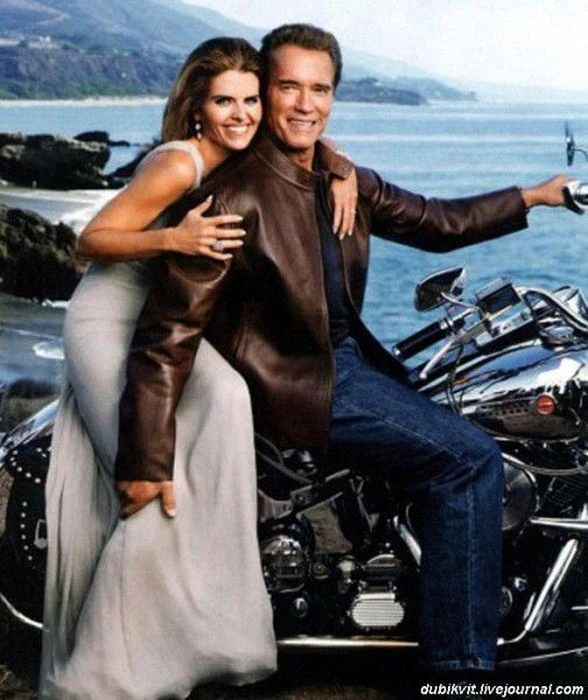
In 1977, Arnold began dating Sue Morey, a hairdresser, and around the same time, he began a relationship with journalist Maria Shriver (John Kennedy's niece), whom he met at the Robert Kennedy Tennis Tournament. 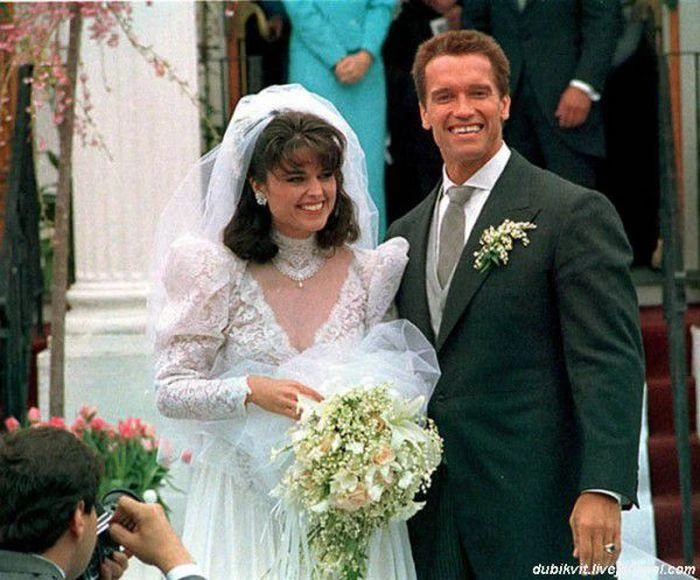
He dated them both comfortably for about a year, until Morey finally broke up with him. Moreover, Arnold was rumored to be having an affair with Brigitte Nielsen at the same time! But Maria ultimately turned out to be the most important woman in his life (even though he waited nine years to marry). They married in 1986. 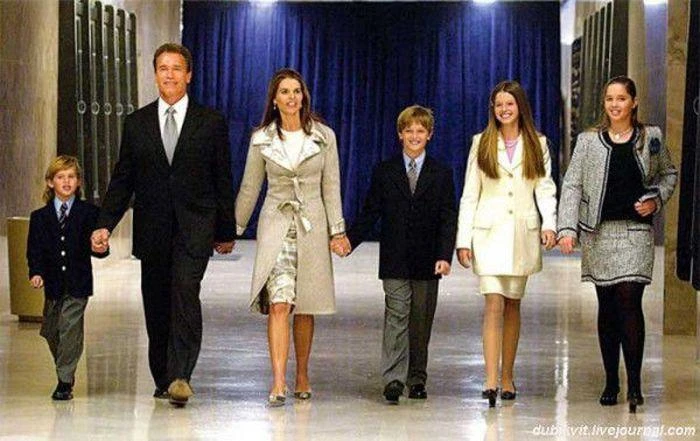
The couple has four children: daughters Katerina and Christina and sons Patrick and Christopher. 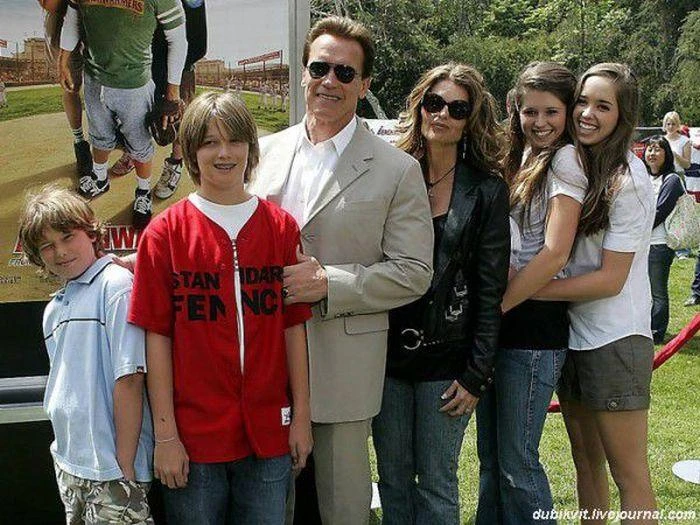
Unfortunately, in 2011, after a quarter century of marriage, Maria filed for divorce and moved out of their massive Brentwood home just a couple of weeks after their silver wedding anniversary… The reasons were her husband's infidelity and his illegitimate child. 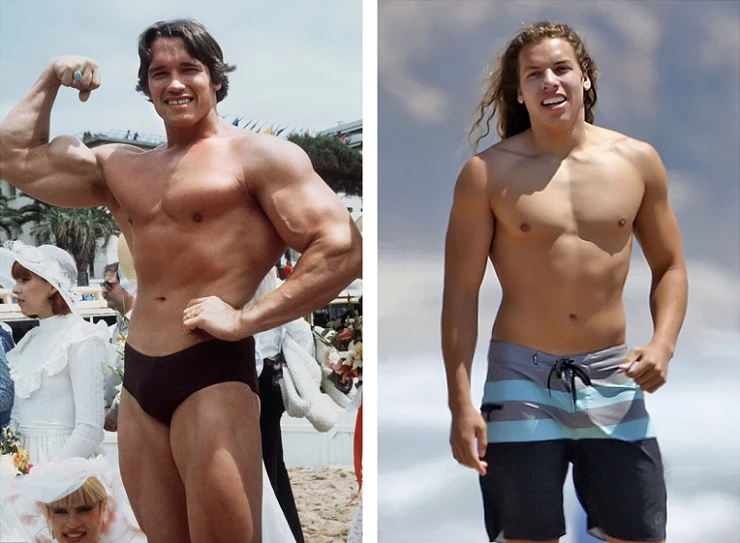
Arnold himself is to blame, or rather, his marital infidelity. A sensational fact has been revealed: it turns out Arnold has an illegitimate son, Joseph, the same age as Christopher, born to a maid who worked at the Schwarzenegger mansion in the late 1990s! Moreover, this boy was dear to Arnold; he saw him regularly and always found a way to maintain their relationship. Oddly enough, Arnold himself had no idea he was Schwarzenegger's son before the scandal, and was shocked when he found out. 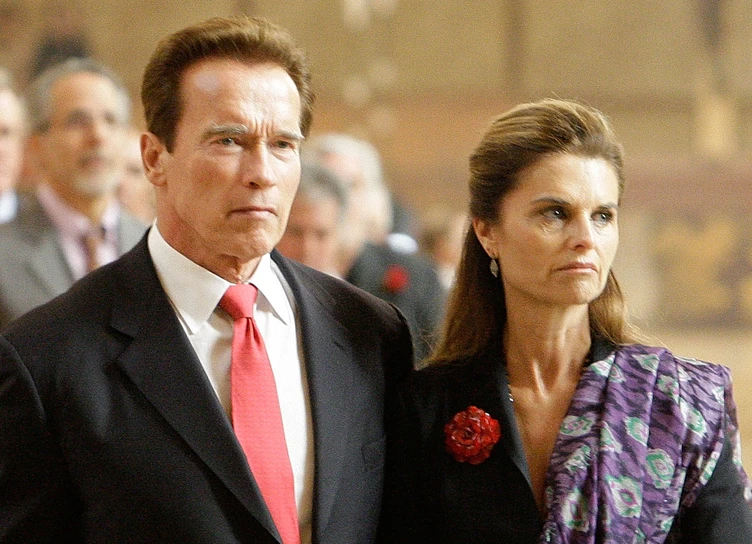
The divorce proceedings between Schwarzenegger and Shriver lasted nearly 10 years. They were finally finalized only at the end of December 2021. 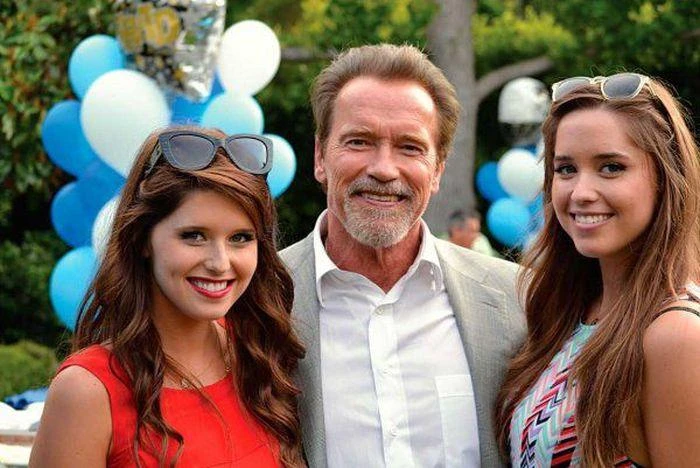
Arnold with his daughters
TMZ cites two reasons why the divorce proceedings between Schwarzenegger and Shriver lasted nearly 10 years.
The first is a "lack of motivation" on both sides. Media reports suggest the couple may have delayed the divorce because feelings still lingered between Maria and Arnold. The actor has repeatedly told the press that he continues to love Maria and hopes to renew their relationship.
The second reason is "property settlement." According to The Blast, the couple's net worth could have been over $400 million. Given that Maria and Arnold did not sign a prenuptial agreement, this amount would have been split equally in the divorce, the publication suggests. Furthermore, over the years of their marriage, Maria and Arnold acquired a large amount of real estate and a profitable business, which are also "not easy to divide."
Film Career 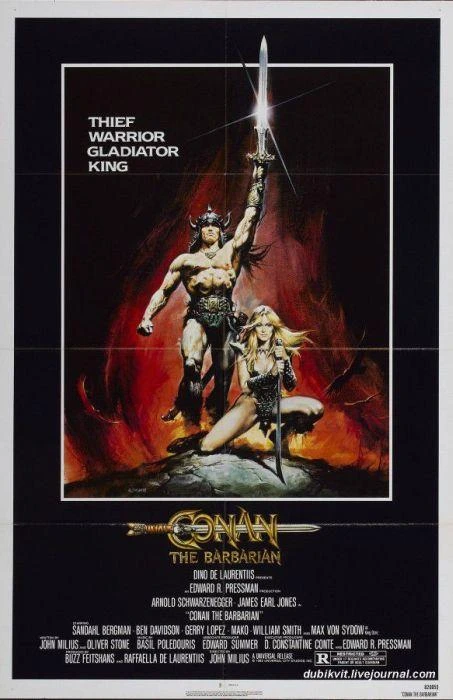
It wasn't until 1982 that Arnold achieved true film success. His first films starring Schwarzenegger, among the blockbusters that made him a superstar, were the famous adaptations of Robert E. Howard's fantasy novels about the Hyborian Age, written in the 1930s. These novels told the story of a mighty and agile barbarian warrior named Conan, capable of single-handedly dispatching hundreds of enemies and crushing all manner of evil spirits.
Universal Pictures allocated a budget of $20 million, a hefty sum by early 1980s standards, and Arnold immediately became a favorite for the role of Conan (incidentally, he was recommended to the producers by Steven Spielberg, who has a phenomenal eye for successful characters). 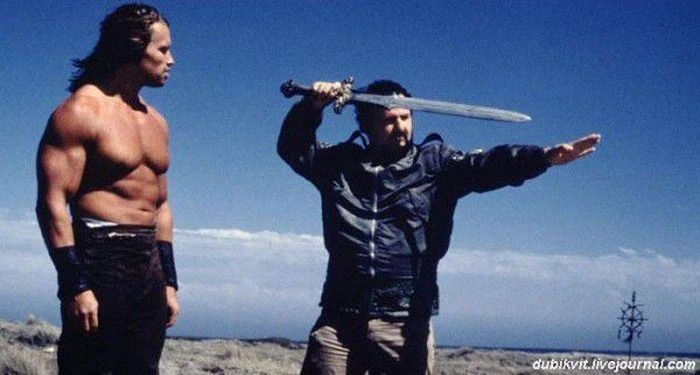
And it was the long-awaited success Arnold had dreamed of: Conan the Barbarian (1982) became an overnight hit, stunning audiences with its savage romance, confident direction, brutality, and Poledouris's brilliant score. Fun fact: Schwarzenegger was forced to reduce his muscle mass—his muscles were so large that the sword-fighting directors couldn't get him to move properly. He dropped to 100 kilograms (recovering to 120 kilograms immediately after filming). Critics were quick to criticize his performance, which was "little better than his horse's," and it was for Conan the Barbarian that Arnold received his first Golden Raspberry Award nomination for Worst Actor. He would later be nominated more than once... 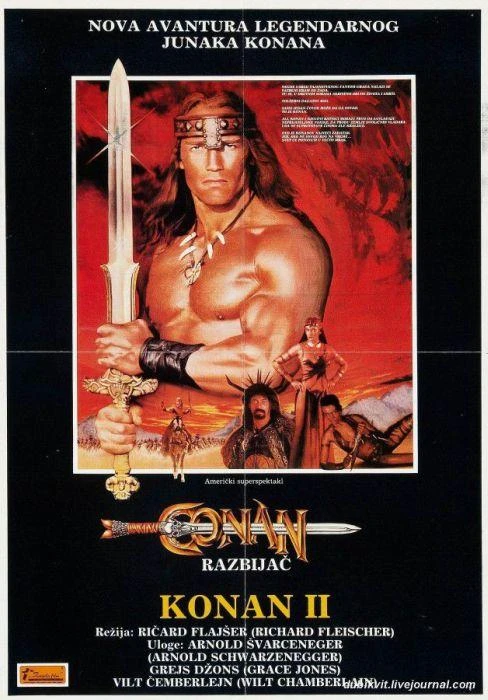
Striking while the iron was hot, they immediately made a sequel, "Conan the Destroyer" (1984). 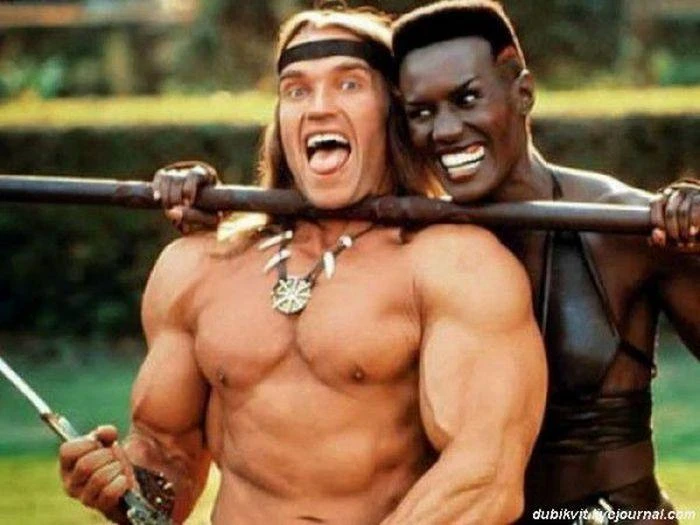
But Richard Fleischer, who replaced the talented John Milius as director, couldn't match his predecessor, so the rather lackluster film never repeated the triumph of "The Barbarian."
But a film was coming that would instantly elevate Schwarzenegger, whose popularity, already considerable after his role as Conan, would grow exponentially. 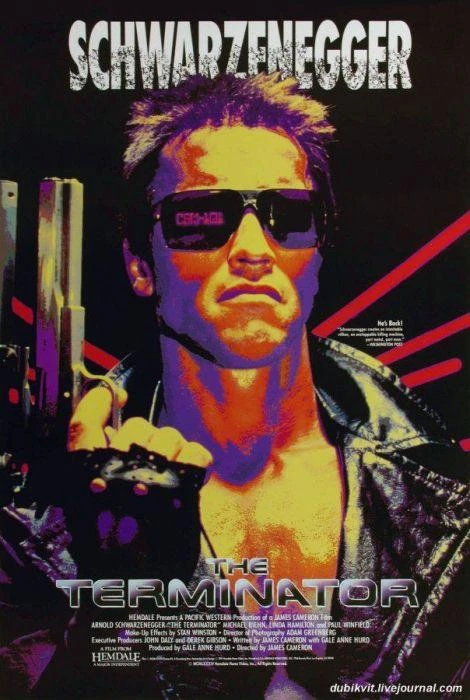
"The Terminator" (1984) is a milestone in the history of science fiction action films, dividing the genre into "before" and "after," just as Lucas's "Star Wars" had done to science fiction. It's impossible to say anything new about James Cameron's film—everything has already been said, with numerous variations and the most colorful epithets. Now Arnold had a true masterpiece in his filmography, and his character was instantly in high demand, so he could choose from several scripts at once. 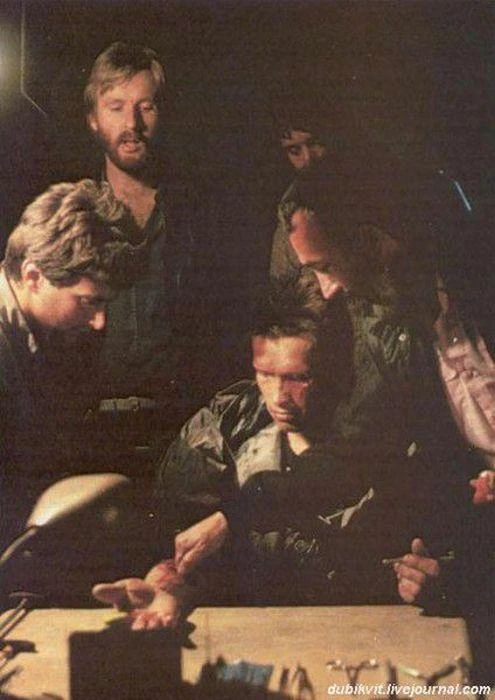
It seems Schwarzenegger himself loved the story of the barbarian, as Conan the Destroyer director Fleischer has cast him in a new film based on the Hyborian universe. 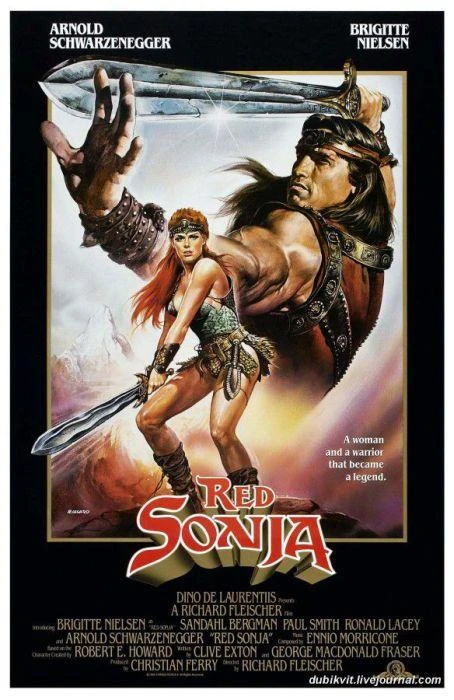
At first, the project was considered as a third installment in the Conan series, but then they decided to make the story completely original and named the character Kalidor (he's almost indistinguishable from Conan). Alas, the idea ended in failure—despite its familiar aesthetic and the stunning Brigitte Nielsen, Red Sonja (1985) attracted almost no attention and sank ingloriously into oblivion. Perhaps the film would have been more appealing as part of a trilogy, or perhaps it was the director's lack of skill that was to blame, but the fantasy project ended rather ingloriously. 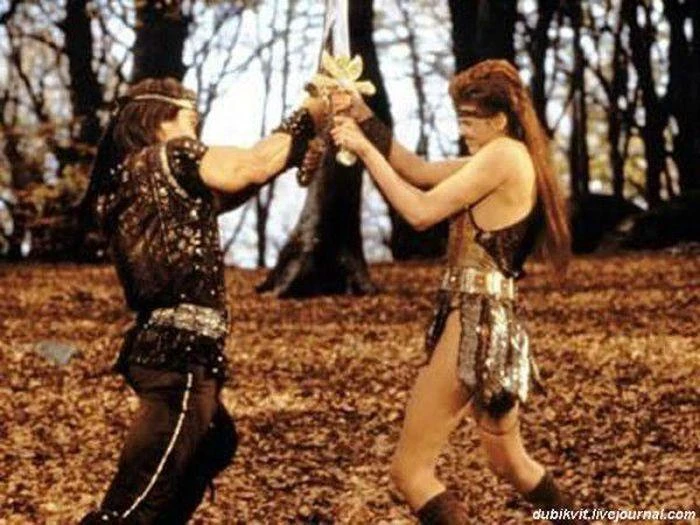
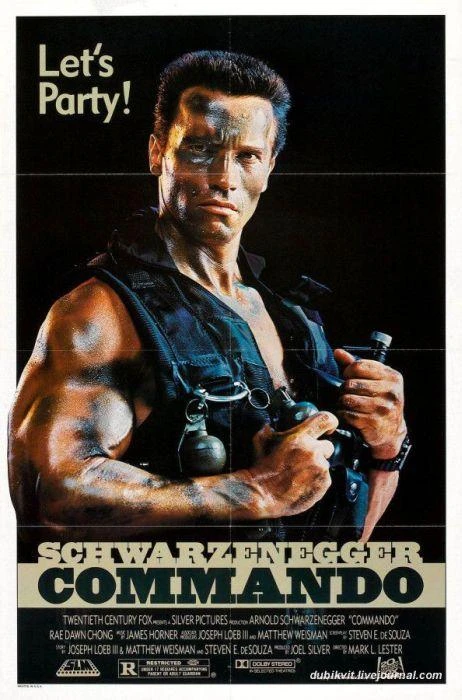
But there were still plenty of characters worthy of Schwarzenegger in the world! Director Mark Lester's best film, the terribly straightforward "Commando" (1985), about a special forces soldier seeking revenge on the villains who kidnapped his daughter, gave the world John Matrix, who undoubtedly stands alongside Arnold Schwarzenegger's other immortal screen personas. 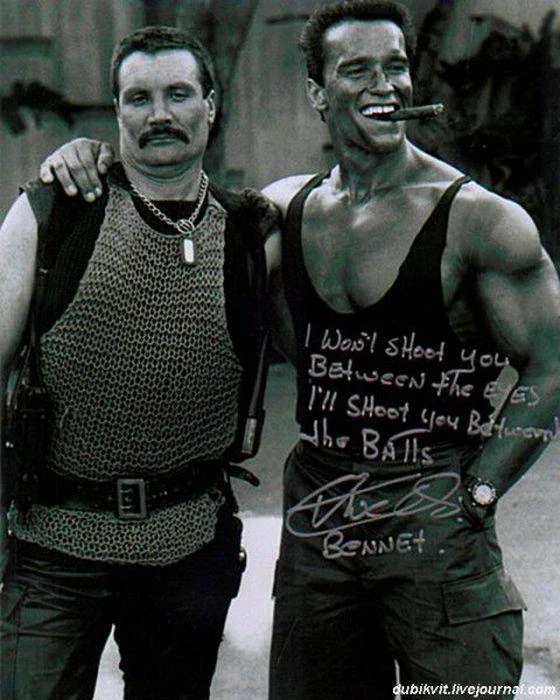
The film became a kind of apotheosis of brutality – on average, there's one murder per minute of screen time (more than 80 dead). Arnold, draped in camouflage and sporting an impressive arsenal and a stern, scowling face, became a kind of teenage icon, a kind of role model – though he would return in this role many times. 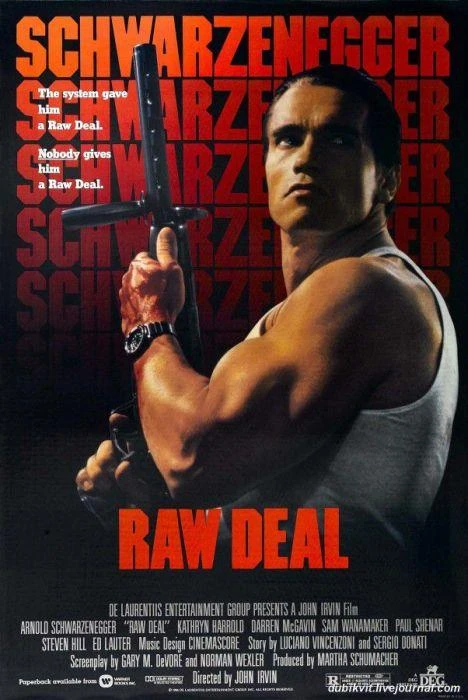
On the wave of popularity of primitive action films, the film "No Compromise" (1986) was released, but it's a work that can rightfully be considered a passing performance for the actor – a deliberately simple, clearly low-budget, and unremarkable action film with an inexpressive hero and a standard "one against all" scenario – a kind of "Commando" without style or charisma. Audiences ignored it. 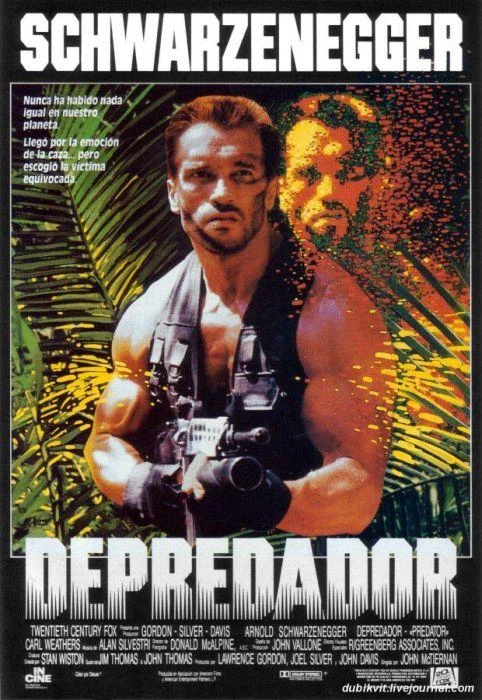
But the next project became a real hit – it was the sci-fi action film "Predator" (1987), about an alien bounty hunter who encounters a worthy adversary on Earth in a special forces soldier named Dutch, and fittingly takes his last breath after a series of splendid battle scenes. 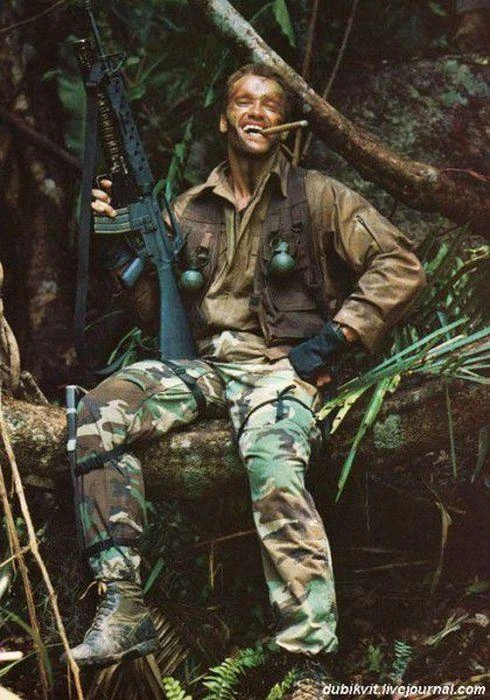
Director John McTiernan (who would go on to direct the seminal Die Hard starring Bruce Willis a year later) and special effects master Stan Winston, recognized as the best in his field, delivered a spectacle that captured audiences' imaginations and made the film a cult classic. The terrifying Predator was partly conceived by James Cameron—it was from his design that Winston fashioned the monster's famous sliding jaw. 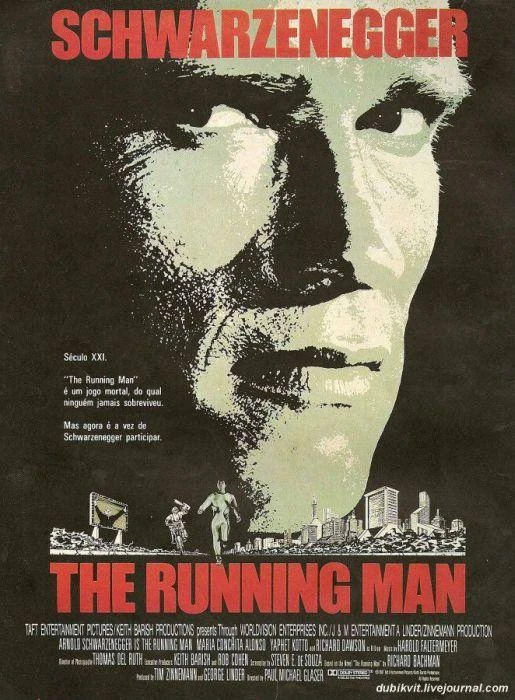
"The Running Man" (1987) is a film about a dystopian future in which terrifying reality shows are held featuring people who are being tried to be killed on camera, and who are forced to flee by any means necessary. Schwarzenegger played police officer Ben Richards, who not only defeated all his opponents in the death labyrinth but also dealt with the creator of the terrifying game. The film grossed significantly less than expected, but it was still a success and had many positives: it was dynamic and engaging, based on the work of the famous Stephen King, although somewhat derivative in its plot (perhaps that's why King wrote it under a pseudonym). 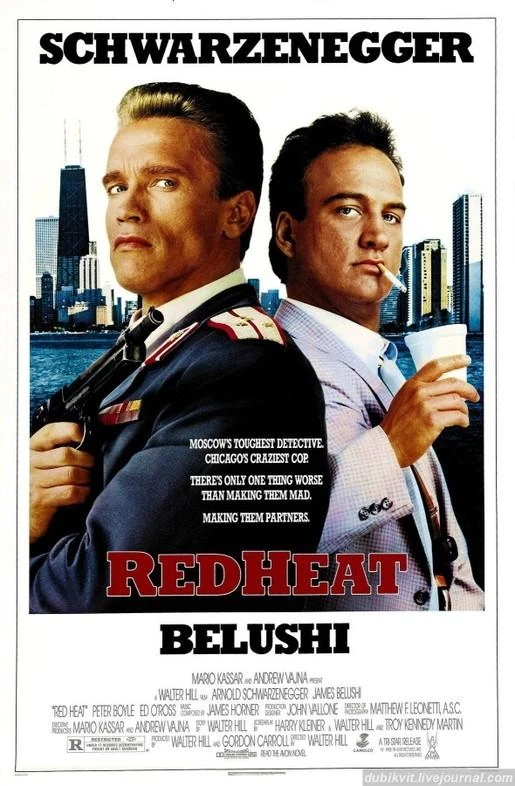
When Arnold McTiernan, who directed him in "Predator," called him and offered him the lead role in an action film about a lone cop fighting European terrorists in a hijacked skyscraper, Schwarzenegger declined without much hesitation. McTiernan had to cast a completely different actor in Die Hard... 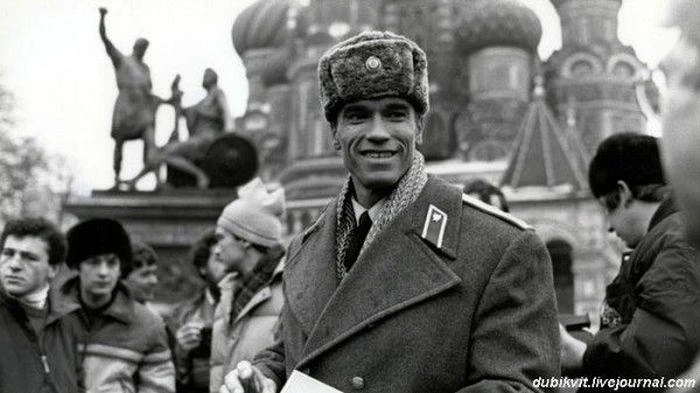
The film "Red Heat" was released in 1988, and Arnold starred in it with James Belushi. Here, Arnold plays none other than... a Soviet policeman, a fervent communist, who pursues a fellow Soviet gangster across the United States. The film can't help but evoke a smile with its naiveté in the American portrayal of Soviet reality, and the few lines uttered by "Captain Ivan Danko" became a source of genuine mirth for millions of our compatriots for years to come. "Turak!" "Hooligans!" "Capitalism!..." Pearls of wisdom simply poured from the screen. 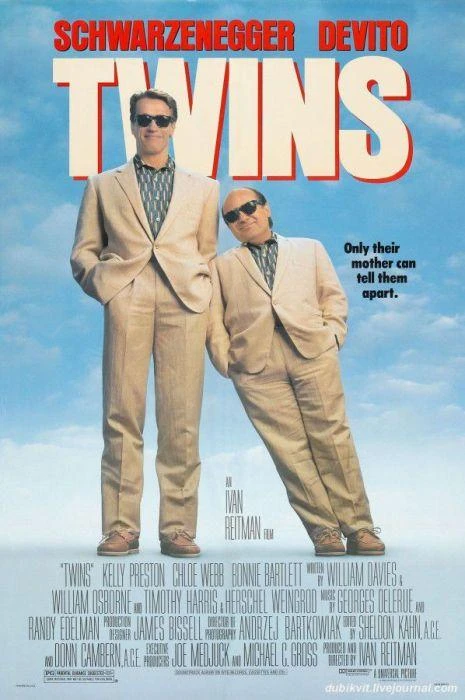
By then, Arnold was ready to break up his string of brutal roles with the cheerful and heartfelt comedy Twins (1988) with Danny DeVito. 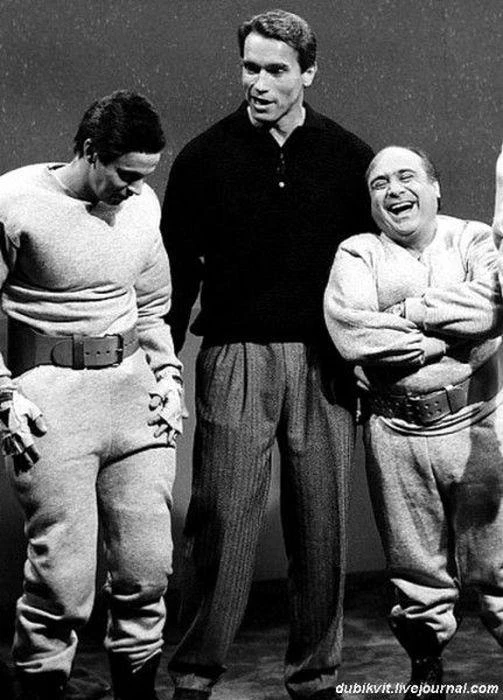
The warm-hearted and naive Julius Benedict revealed a completely different Schwarzenegger to the world: the Schwarzenegger Who Smiles. This image added to the actor's already sizable fan base those who detest violence, and even skeptics acknowledged that Arnold is far more complex than he might initially appear. The film was a huge box office success. 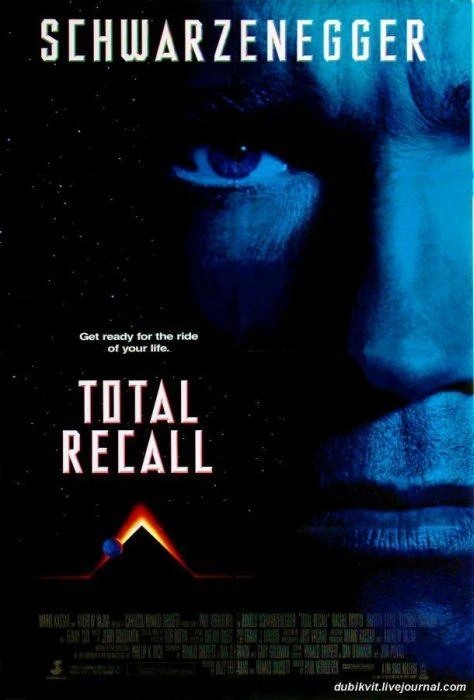
Released in 1990, Total Recall was a truly brilliant achievement, not only in terms of special effects (for which it won an Oscar), but also in terms of its dynamism and spectacle. 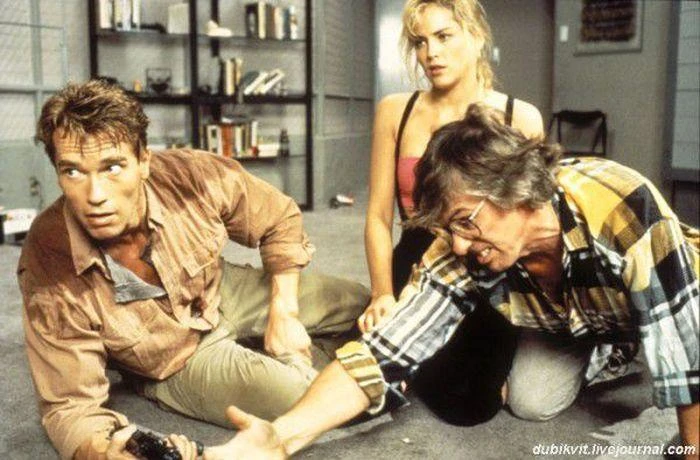
Inspired to the point of genius, containing a number of truly outstanding components, it cemented the Hollywood status of Dutch director Paul Verhoeven (who had soared the previous year with the brilliant "RoboCop") and added another successful film to Schwarzenegger's filmography. A quarter of a billion dollars in box office receipts! And one of the best film adaptations of the cult writer Philip K. Dick, which ranks alongside another brilliant film based on his work, Ridley Scott's "Blade Runner." 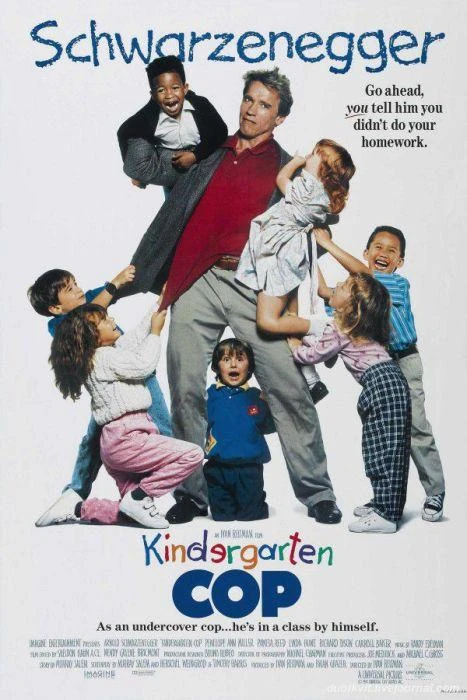
Another departure from the brutal image—albeit partial. In the film "Kindergarten Cop" (1990), Schwarzenegger appears as... a nanny for toddlers. 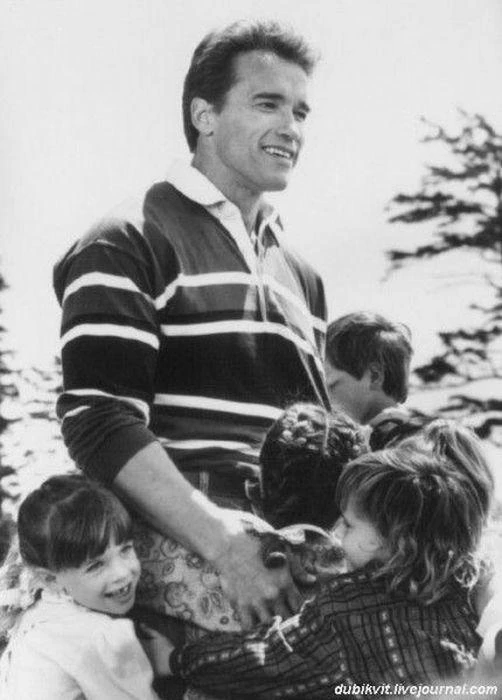
Which, of course, couldn't help but impact his popularity among the more sentimental part of the audience—everyone loved Arnie! Reitman, the director of "Twins," once again made a wonderful film, though Arnold clearly lacked a partner like DeVito... 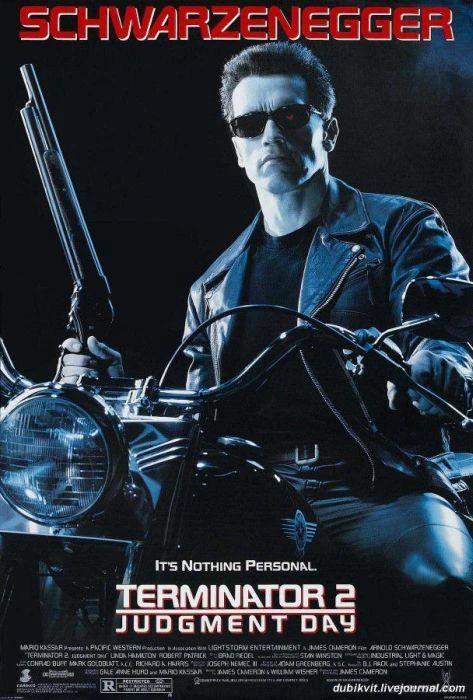
It seemed Arnold was at the height of his fame and couldn't wish for more success. And then he took part in a film that most film buffs consider one of the best sci-fi action films of all time and the best film of his entire career. This was the great "Terminator 2: Judgment Day" (1991), directed by James Cameron, who finally decided to make a sequel to the original 1984 film. 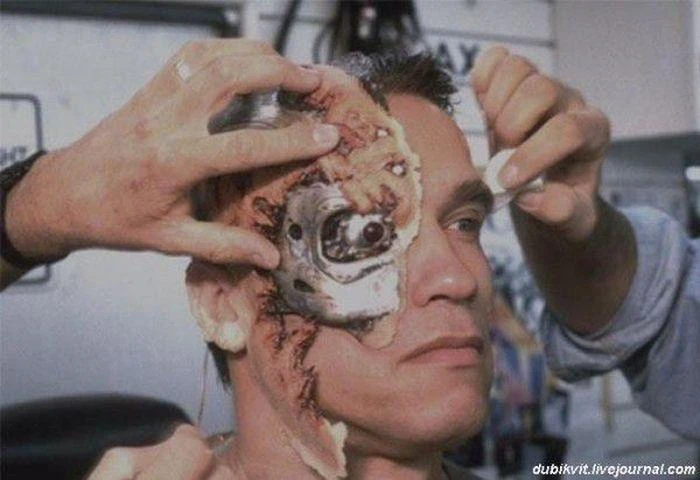
Having won four Oscars out of six nominations and revolutionized special effects, Terminator 2 will forever remain a true gem among all action films ever made. It's hard to find another film as interesting and gripping, and even more so stylistically perfect (the film was especially enthusiastic among young audiences). 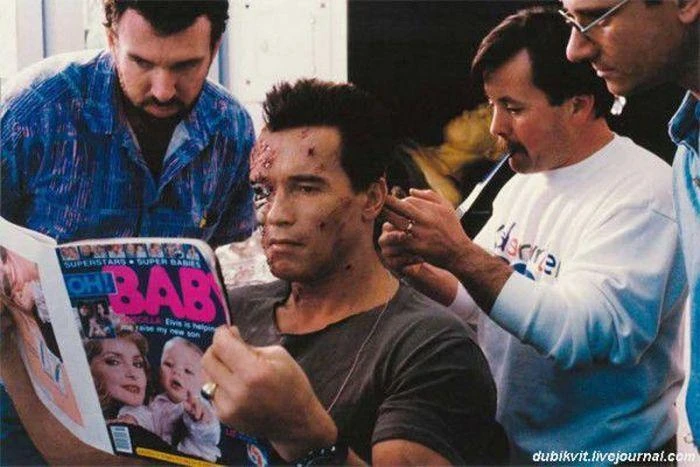
The film's over five hundred million dollar worldwide box office receipts speak for themselves—it seems there's not a single person left in the entire civilized world who hasn't seen this brilliant film... Arnold's popularity soared, reaching its peak. He never made another film of this caliber, despite his undeniable successes. 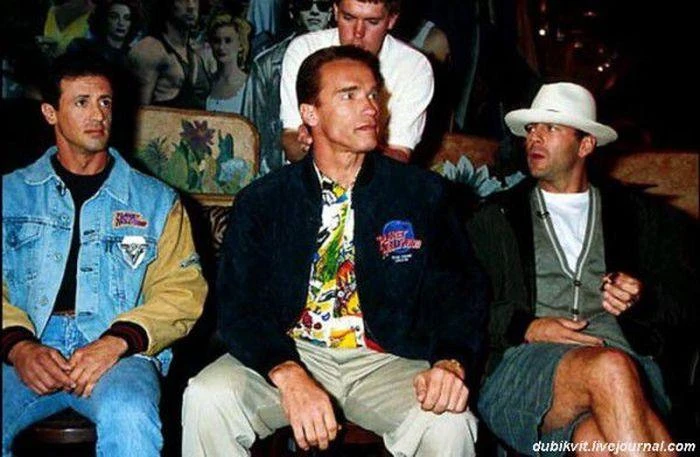
In 1991, Arnold, Bruce Willis, Demi Moore, and Sylvester Stallone founded the Planet Hollywood restaurant chain. However, this venture unexpectedly proved unprofitable, went bankrupt several times, and the stock price fell 32-fold, so in 2000, the calculating Arnold withdrew from this dubious venture.
Schwarzenegger's subsequent film career can be seen as a natural downward spiral—which is entirely expected, given the heights to which he had climbed while collaborating with Cameron. 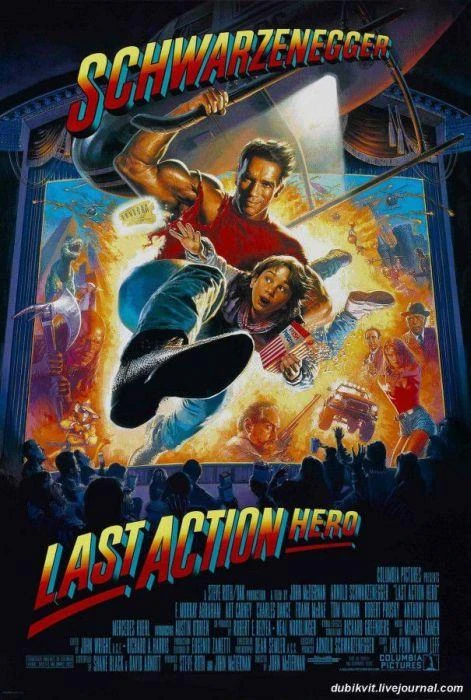
Arnold's old friend from "Predator," John McTiernan, suggested he make a film that would play with action movie clichés—not in a parodic, but in a deeper, more dramatic way. Schwarzenegger found the idea compelling, and in 1993, "Last Action Hero" was released, in which Arnold appears as a sort of composite character, trying to rethink his own meaning and, indeed, the meaning of life. The film was clearly much deeper than it initially appeared, but the general public chose not to delve into such subtleties, so the film failed to make a profit in the States and was a disappointing success at the international box office. And then there's the unfortunate Golden Raspberry nomination... Not a very successful addition to his filmography. 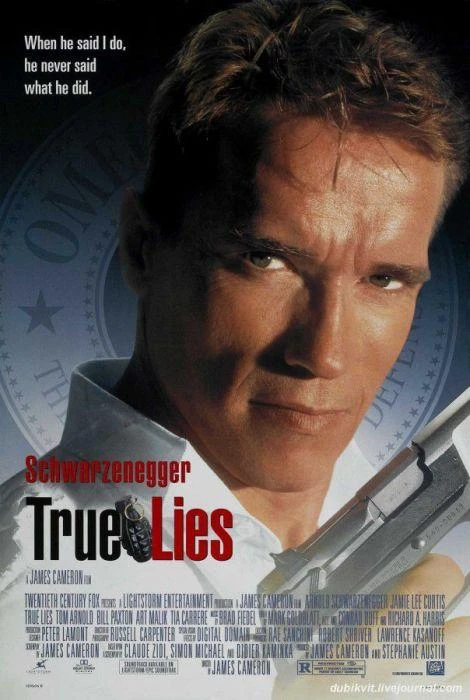
Perhaps Schwarzenegger's last truly powerful film was "True Lies" (1994), directed by Cameron—truly, all of this director's projects are simply stunning. 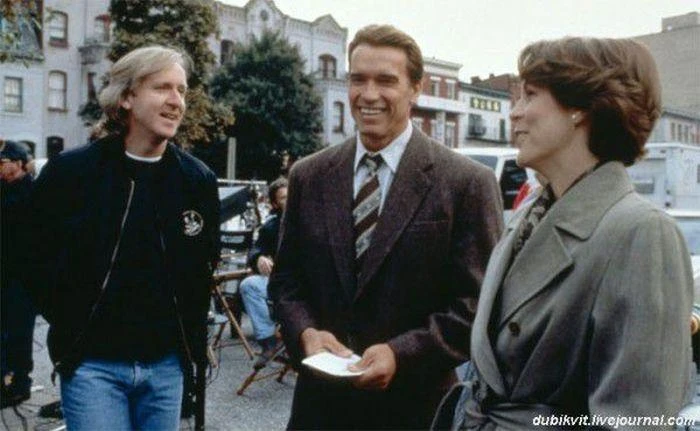
It turned out to be a true example of spectacular action, despite being a remake of the recent French film "Total Surveillance." Jamie Lee Curtis adds a dash of spice, giving a truly magnificent performance. Nearly four hundred million dollars in box office receipts meant the film was a complete and unequivocal success, though it still fell far short of the landmark "Judgment Day." 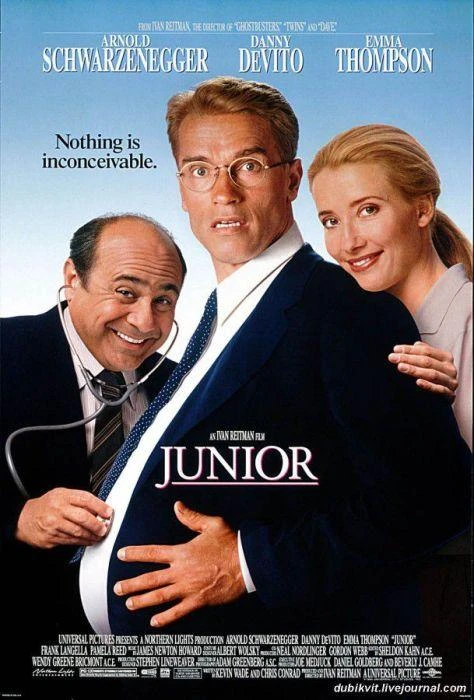
Ivan Reitman is making another comedy with Schwarzenegger—and Danny DeVito, too, just like the good old days. This time, the director really went wild: the icon of masculinity and muscle in "Junior" (1994) is cast as... an expectant mother!
Arnold's scientist, who became pregnant as a result of an experiment, humorously displays the mannerisms of a pregnant woman and pokes fun at all the cliches that are inextricably linked to his image. The bold move paid off – it seems the combination of Schwarzenegger, DeVito, and Reitman is a guaranteed success.
But from the mid-1990s onward, his career began to decline, sadly compounded by health problems. 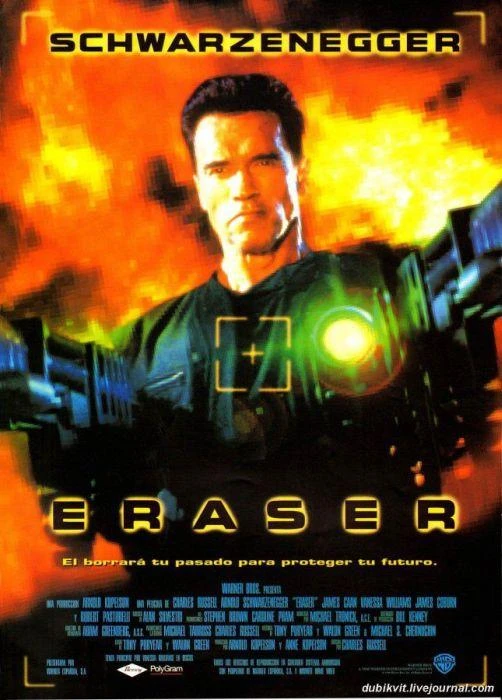
"Eraser" (1996) is an action film so straightforward that there's no point in even searching for a hint of irony. Everything is heavy and gritty—fancy special effects, lavish stunts, fights, and Schwarzenegger alone against hundreds of gun-wielding enemies, stacking them in piles throughout the film. Critics razed "Eraser" to the ground, but Arnold's fans were quite pleased—at least the $100 million budget was more than recouped. But it was all just not the same… 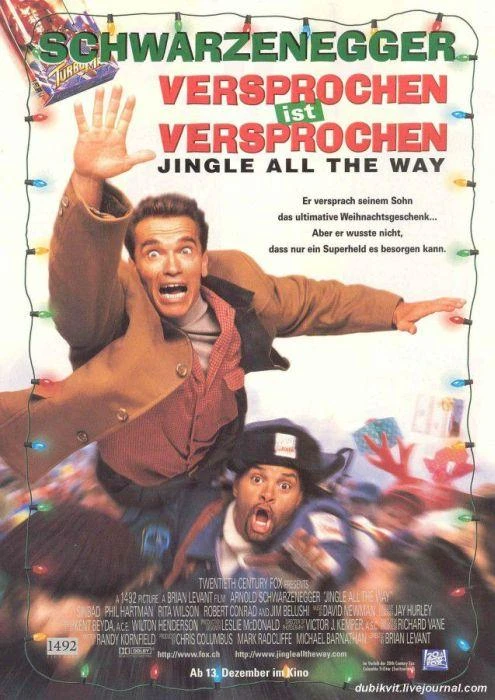
Without a break after "Eraser," Arnold took on a new project—the comedy "Just a Christmas Present" (1996), in which he plays a loving father willing to do anything to find, in the pre-holiday rush, at least one store that still has the toy his son dreams of. During filming, Arnold experienced unusual discomfort several times, and filming was postponed several times due to heart pains he experienced periodically. He asked everyone to keep his illness a secret... The lack of rest between takes proved costly for Arnold—one evening, he was taken away by ambulance. 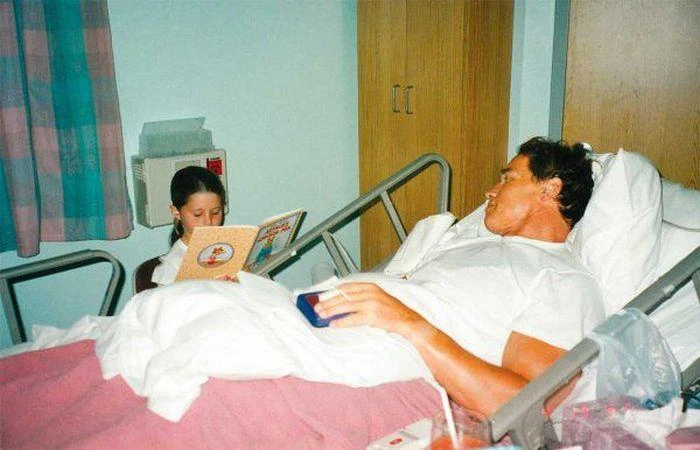
Heart problems required surgery, and so, in 1997, Schwarzenegger had a congenitally defective heart valve replaced with an artificial one. He still refused to believe that his seemingly invincible health was failing him. On the very first day after the surgery, when a patient was prescribed strict bed rest, Arnold left his hospital room without permission, found a bicycle in the clinic courtyard, and went for a short ride through the park. Rumor has it that he nearly died that day: the stitches came apart, requiring an immediate repeat operation. From that moment on, he realized that the days of intense exercise and grueling workouts were forever in the past. This was just before Schwarzenegger's 50th birthday. 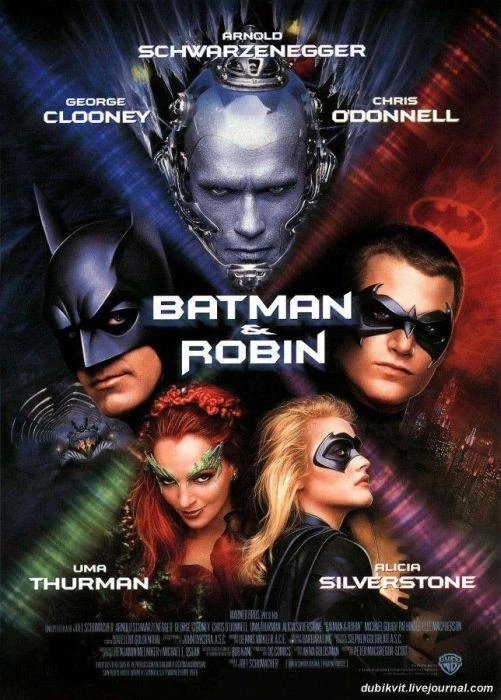
After recovering from surgery, Schwarzenegger took part in one of his most questionable projects – Joel Schumacher's Batman & Robin (1997), which, while grossing an impressive $250 million, was hailed by critics as one of the "horrible films" of all time and received a whopping eleven (!!!) Golden Raspberry Award nominations (though he only won one). A bald Schwarzenegger, playing the villainous Mr. Freeze, earned $25 million for his role, but it wasn't worth the cost of starring in this lurid farce. A more tasteless film couldn't be imagined… The Golden Raspberry nomination for Worst Supporting Actor was more than justified. 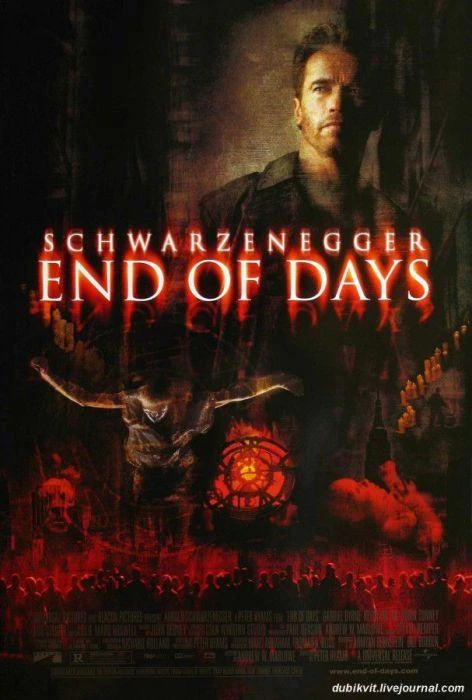
Peter Hyams's "The End of the World" (1999), while far more stylish than Schumacher's creation, was still a rather pedestrian mystical thriller, playing with medieval myths on the eve of the new millennium. Its $200 million box office is more a tribute to Schwarzenegger's fans, who number in the millions worldwide... They simply couldn't miss a new film starring their idol, even though the film itself was nothing special. Schwarzenegger's performance wasn't particularly impressive, which is why he was nominated for another Golden Raspberry Award. 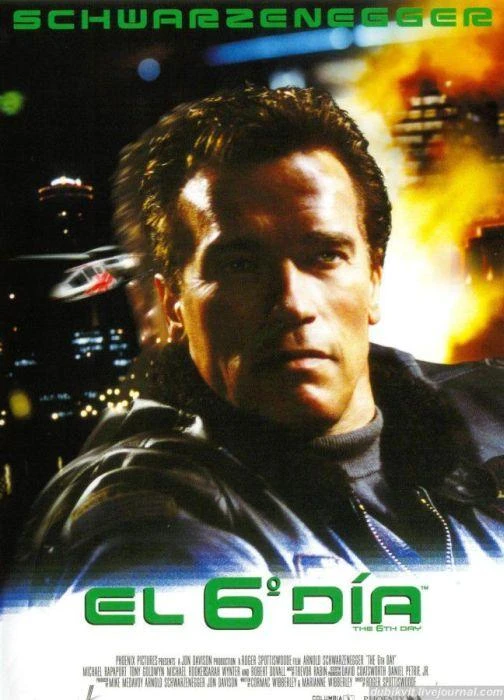
Unfortunately, Arnold's fans couldn't do much more: "The 6th Day" (2000), about a future world in which people are threatened by cloned copies of themselves, was a resounding failure in the States and barely recouped its costs after its international release. This time, critics savaged Arnold like never before—he was nominated for three Golden Raspberry Awards: Worst Actor, Worst Acting Duo (with his clone), and Worst Supporting Actor (the clone himself). Hmm. Schwarzenegger began seriously considering ending his acting career: it was better to retire "undefeated," while his great victories were still fresh in people's memories, than to slide into the "B" category (where many formerly celebrated actors had ended up), repeatedly taking part in failed projects and ultimately being left with no film offers at all. 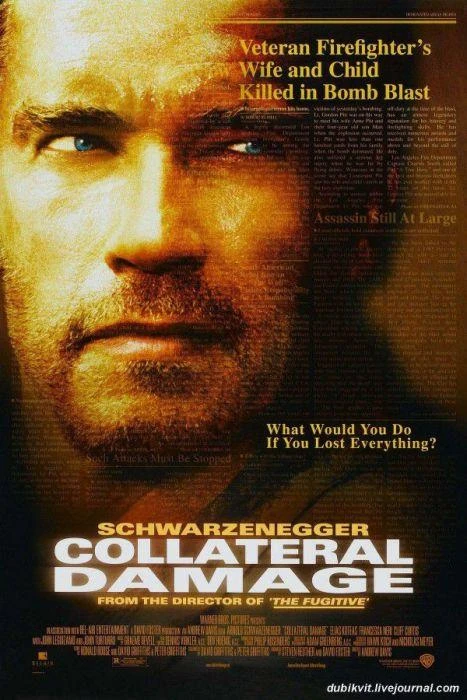
His next film, the straightforward action film "Collateral Damage" (2001), about a firefighter who loses his family in a terrorist attack and single-handedly finds and eliminates the culprits, only confirmed Arnold's fears. 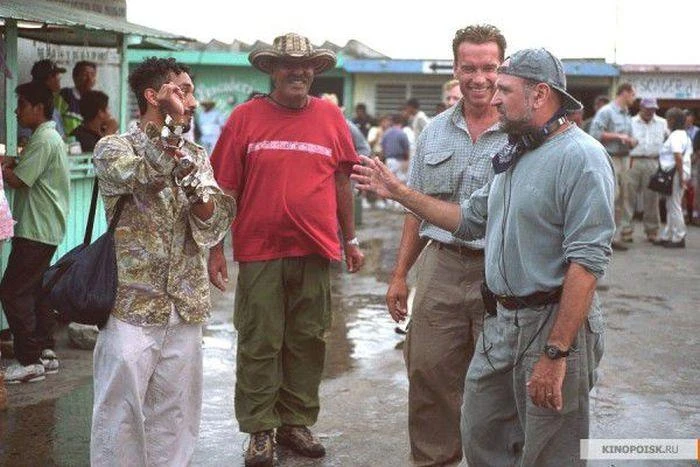
Another flop, again absolutely scathing reviews—this was enough to make you depressed. Arnold's only film that didn't even recoup its costs and became unprofitable! And that's despite the fact that it wasn't actually bad—just too mediocre. At least the "Raspberries" didn't make it. 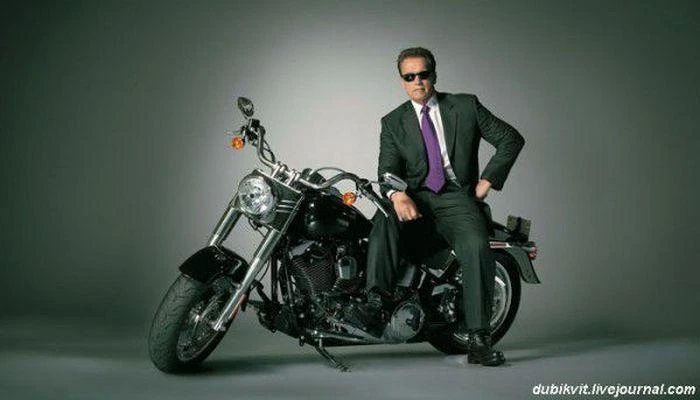
After filming, Arnold had an accident—he fell off his Harley (Arnold loves these motorcycles). The result: six broken ribs and a week of bed rest. Along the way, an interesting fact came to light: the motorcycle license Arnold had obtained in Austria was invalid in the United States! The actor had no idea, having spent years riding without a license, and immediately received a "regular" license upon leaving the hospital. 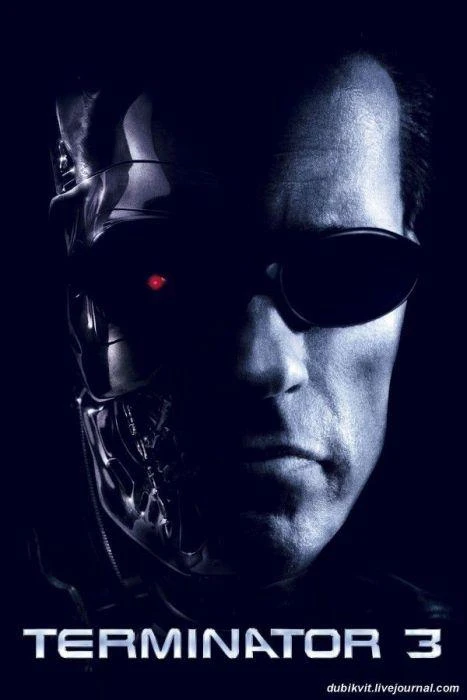
Arnold believed this string of disappointments was meant to be broken by a powerful blockbuster that would "take off," striking the world in the heart. Just then, producers from the young film company C-2 Pictures approached James Cameron with a request to direct the third Terminator film—promising a $200 million budget, Schwarzenegger's participation, and complete carte blanche. It's possible that if Cameron had taken on the project, the world would have seen something stunning and epochal. But that didn't happen—Cameron declined, saying, "I have nothing more to say on this subject." 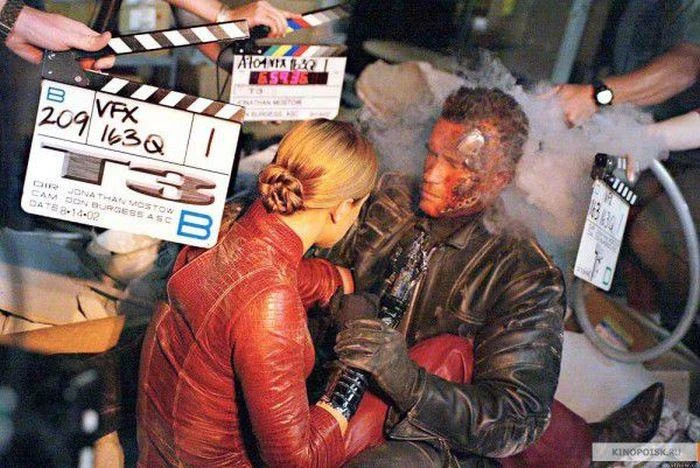
Then Jonathan Mostow took over the production, having by then directed the remarkable thriller Crash (1997) with Kurt Russell and the Oscar-winning Best Sound war drama about submariners, U-571 (2000). In short, one might have expected something interesting... But Mostow ruined everything. Truly, some ideas are forbidden to anyone but their creators. Terminator 3: Rise of the Machines (2003) was not a continuation of Cameron's legendary duology at all—it was something completely alien in spirit, chaotic, and at times bizarre. How unlike the brilliant coherence of James Cameron's creations! The world was drawn to the name "Terminator" and Schwarzenegger—and the world sighed with disappointment.
Arnold had achieved everything he could have dreamed of in show business. The time had come to conquer new heights. At 56, Schwarzenegger decided to retire from acting and devote himself to politics.
Politics
Back in 1990, George W. Bush appointed Schwarzenegger to chair the President's Council on Sports and Health, and Arnold himself strongly supported the politician and generally became quite active in public life. It was in the early 1990s that the actor began to gain real political clout, taking a keen interest in public life and the possibilities of solving universal human problems (although as early as the mid-1980s, he had been actively involved in anti-drug propaganda under Reagan's patronage). He became an insider among the US elite, a good acquaintance of the biggest names in business and politics. 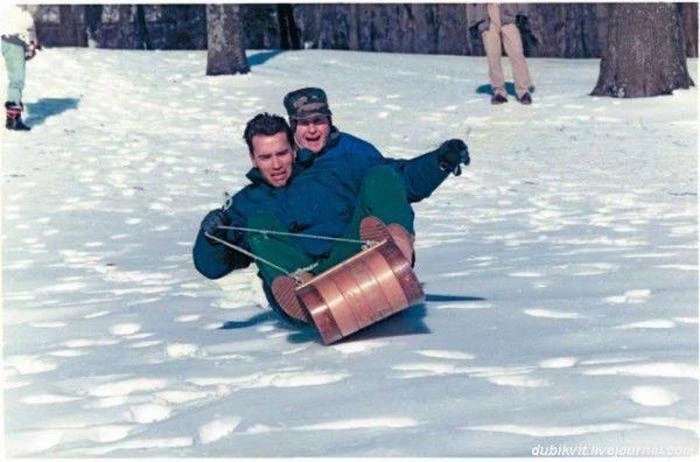
"Sledding at Camp David. President George H.W. Bush and I are about to crash into the First Lady." 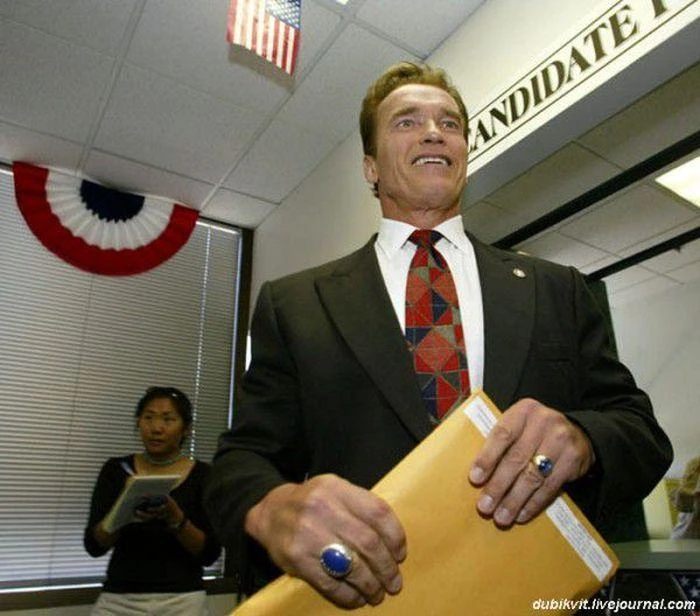
In the late 1990s, during an interview with Talk magazine, he mentioned that he'd repeatedly considered... running for president. These remarks, of course, became a source of wit for everyone, but time has shown that Iron Arnie was not to be underestimated. After all, Reagan, the movie actor, did become head of state! Why shouldn't another movie star do the same? Looking ahead, it's worth noting that US law prohibits people born outside the United States from running for president. The pure-blooded Austrian Schwarzenegger clearly has no chance here...
Since the early 2000s, rumors have circulated in the press about Arnold's intention to run for governor of California. He denied it! He even once said, "It's all nonsense. I'm in the middle of my career, I'm an actor, why would I suddenly jump to something else?" It later became clear that he was being very clever. Because on the extremely popular "Jay Leno Show" in 2003, immediately after filming the third "Terminator," Arnold publicly announced his candidacy for governor of California! The news caused shock, and then enormous excitement. "Terminator for governor!" was the slogan of Arnold's fans across the state. The race began with a fervent national interest. 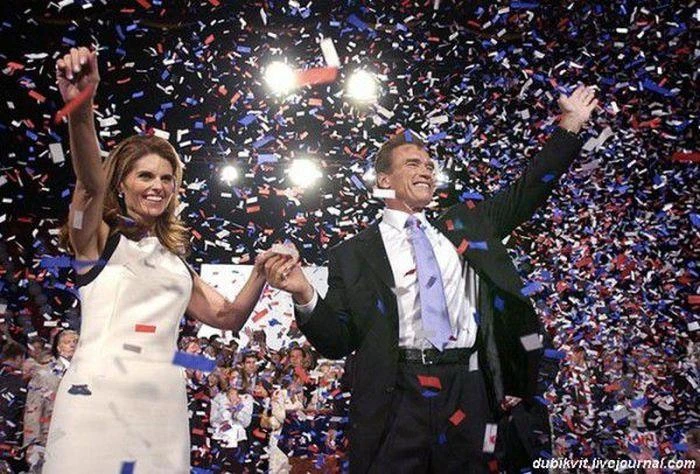
Arnold's campaign was shamelessly built on his film career—he constantly used the titles and quotes from his most famous films. Schwarzenegger's rivals accused him (and in many ways, rightly) of foul play—after all, they lacked the same worldwide popularity in film and sports! "What does politics have to do with it?" they asked. But Arnold wasn't worried, and during the October 2003 elections, he comfortably received 1.3 million votes, decisively defeating all other candidates for office and creating the biggest sensation of the day. Another huge victory in his life—Arnold Schwarzenegger became governor of the very California where he began his life as a penniless European immigrant.
But it must be admitted that Arnold's third career wasn't as successful as his previous two—while he was a unique athlete and actor, he was a rather ordinary politician. But he served for seven years and was re-elected, and that's saying something! In 2011, Arnold Schwarzenegger vacated the governor's seat at the end of his term (he is prohibited from running for a third term), declaring that "he'd had enough." 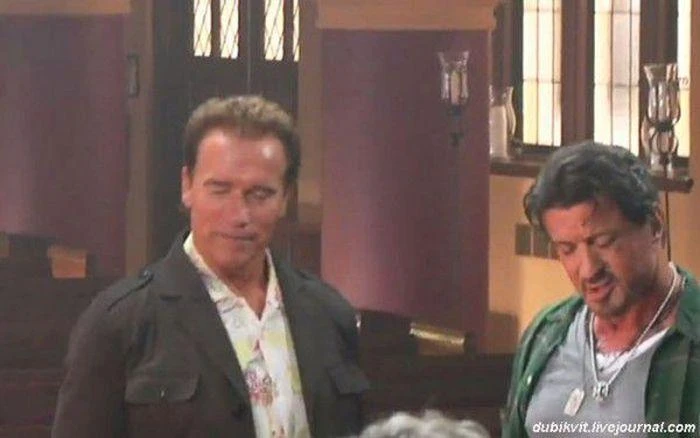
While still governor, Arnold appeared in a small role in his friend Sylvester Stallone's film, The Expendables (2010). 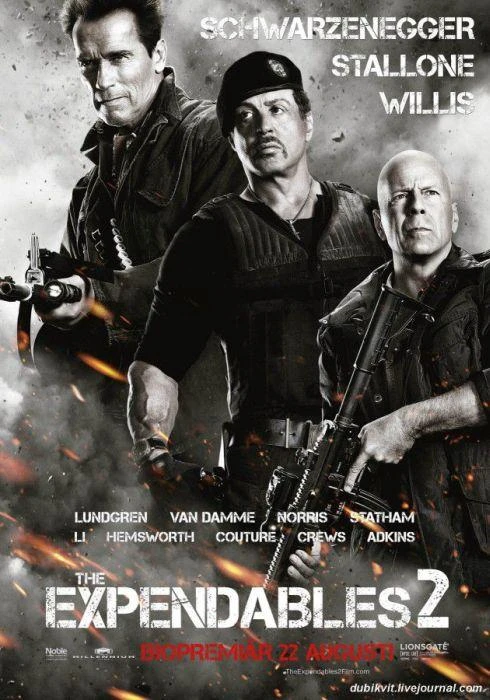
And in 2012, he starred in the sequel, The Expendables 2. 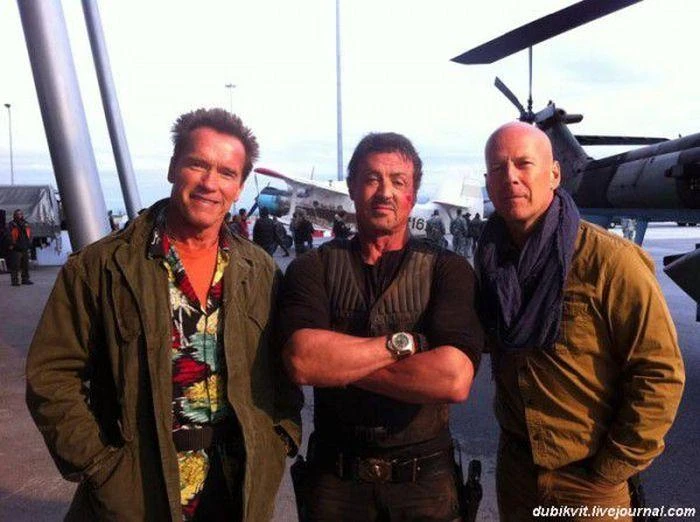
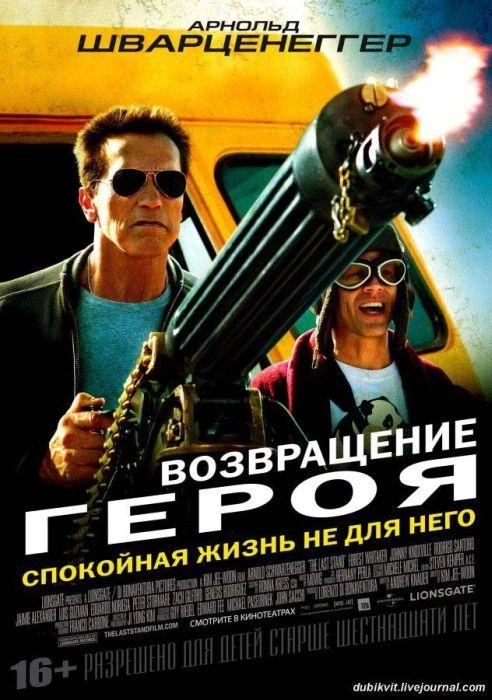
But Arnie's return to film is generally considered to be the 2013 film "The Return of the Hero," directed by Ji-won Kim, in which he plays the sheriff of a border town. 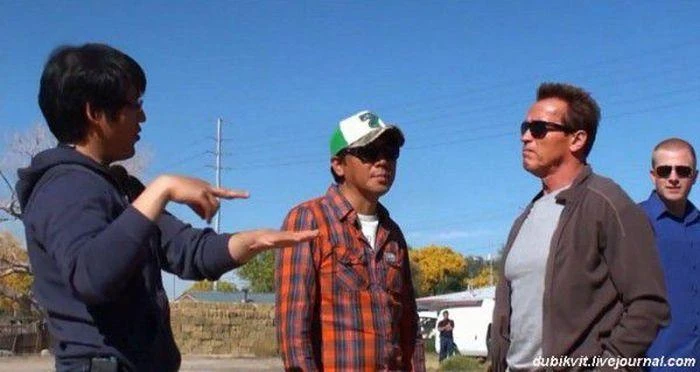
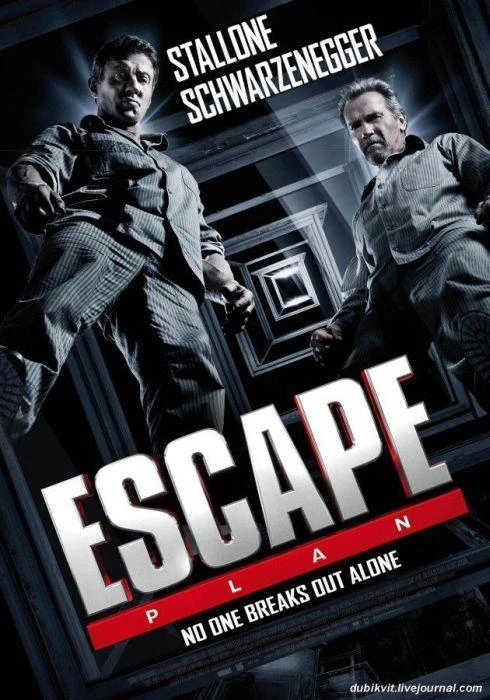
Also in 2013, director Mikael Håfström released "Escape Plan," in which Arnold starred alongside Sylvester Stallone. 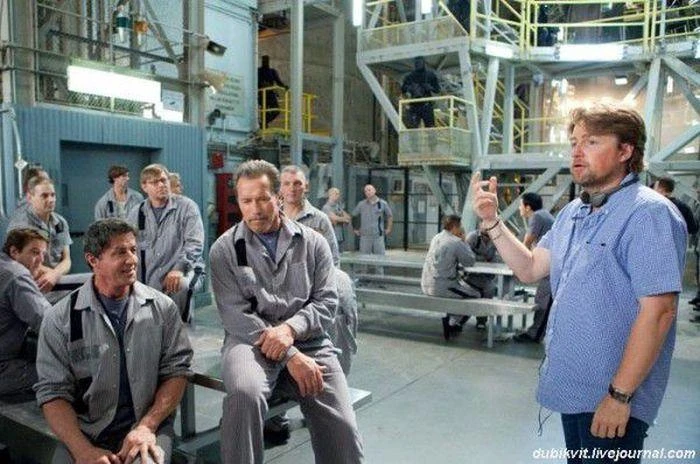
According to Stallone and Schwarzenegger themselves, the idea for such a film came to them as early as the mid-1980s, and they even wrote several draft scripts. But at first, they couldn't synchronize their filming schedules, and then Schwarzenegger went into politics, and the project was shelved until better times. 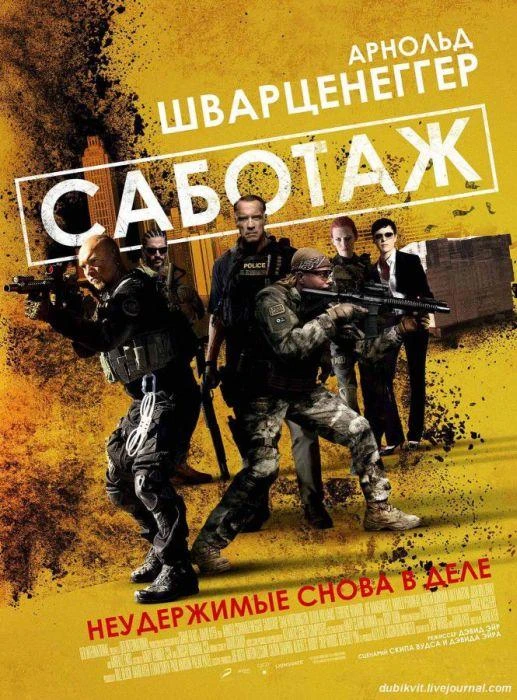
Earlier this year, another action film was released: "Sabotage," directed by David Ayer, in which Schwarzenegger plays a police officer who once again faces a drug-fueled crime spree. 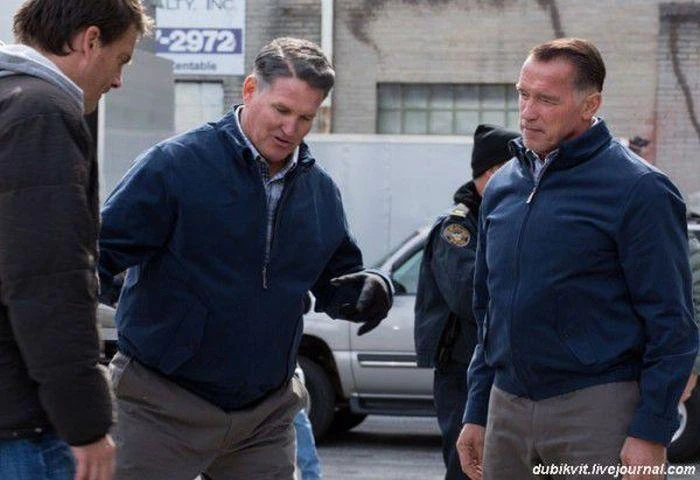
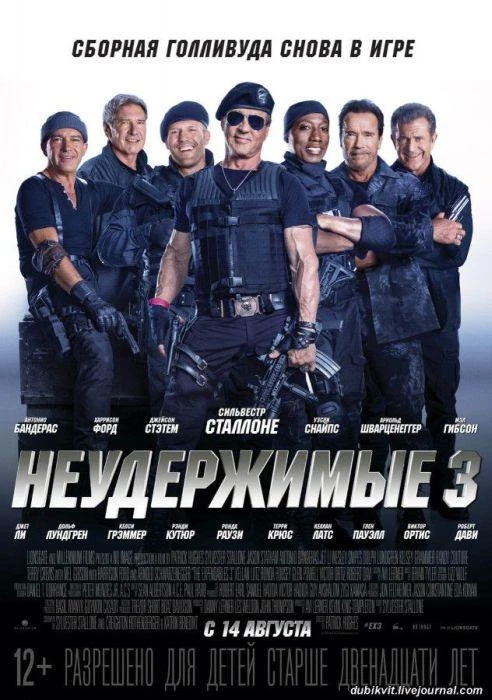
In August 2013, Arnold took part in the filming of the action movie "The Expendables 3," which starred many famous actors, including Sylvester Stallone, Jason Statham, Mel Gibson, Harrison Ford, Antonio Banderas, Dolph Lundgren, and others. 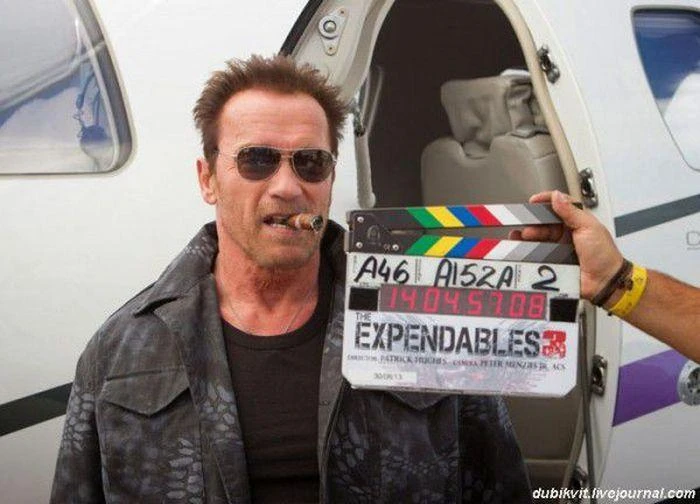
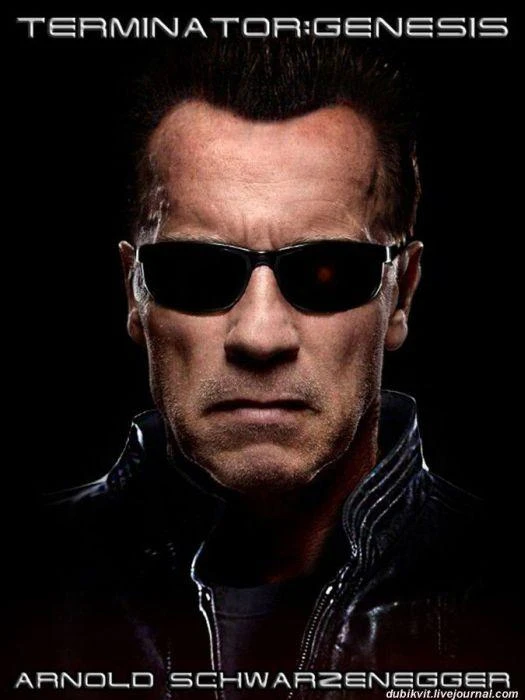
In April 2014, Iron Arnie began filming the sci-fi action film Terminator: Genesis. Arnold reprised his iconic role as the T-800 Terminator. The film was directed by Alan Taylor. The release is scheduled for 2015.
Arnold has no plans to retire. Although he's already quite old, he still leads an active lifestyle, working out in the gym, jogging in the mornings, and constantly assuring everyone that he's full of energy. So there's no doubt he'll make a name for himself, and quite soon. 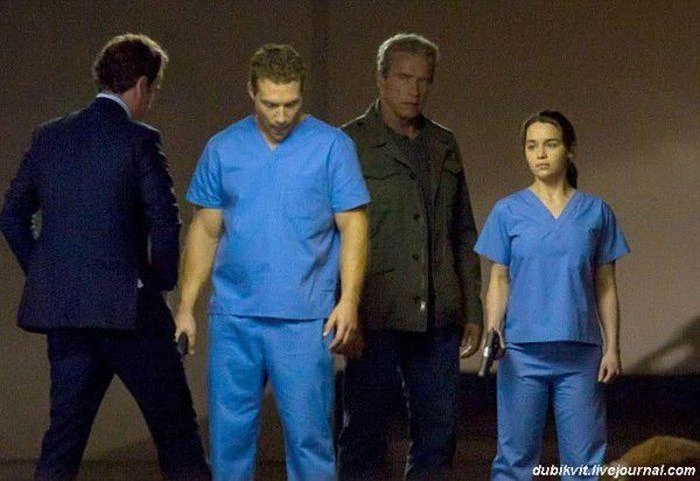
"Strength isn't gained through victories. Strength comes from struggle. When you overcome difficulties and don't give up—that's strength."