In the hustle and bustle of everyday life, we all need a break. We hope these touching furry characters will help you slow down, take a breath, and find inspiration for the next 7 days. To make your immersion in a bygone era as vivid and emotional as possible, all the black-and-white originals have been carefully and meticulously colored.
1. Running with a domesticated kangaroo, 1961. 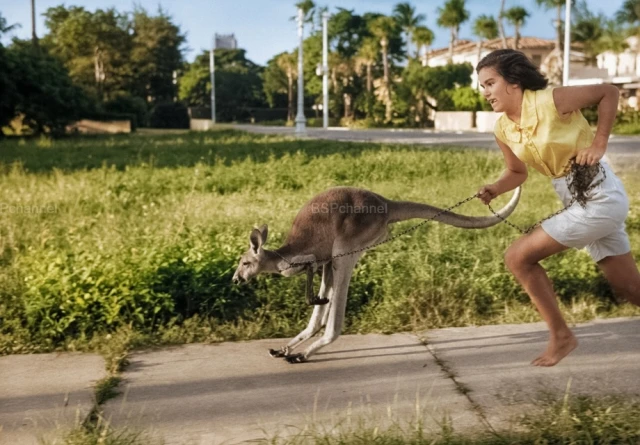
During normal movement, adult kangaroos hop at speeds of 20–25 km/h. At this "cruising" pace, they can cover vast distances without fatigue. When startled or chased, larger species (such as the Great Red and Giant Kangaroos) are capable of extreme sprints over short distances at speeds of 56 to 71 km/h.
2. The battleship Sevastopol's crew favorite, "Mishka," a bear cub, 1955. 
One of the most striking and heartwarming shots in our collection takes us aboard the legendary Soviet ship. Here you see the club-footed mascot and crew favorite, captured in moments of everyday naval life. Live bear cubs were not uncommon on warships in the mid-20th century: sailors often took wild orphans under their wing, transforming the forbidding decks into a haven of genuine care.
3. Kirov Collective Farm (Prochnookopskaya village) in the Novokubansky District of Krasnodar Krai. Collective farm beekeeper Ivan Malko with his pets, 1973. 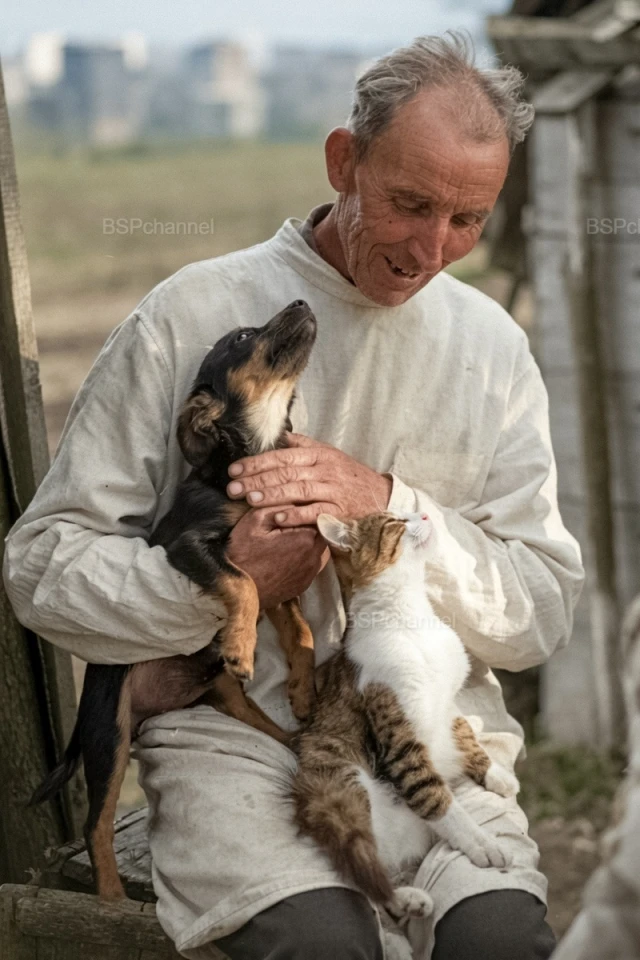
4. A girl holds an Easter bunny on a leash while searching for Easter eggs scattered in the grass, 1955. 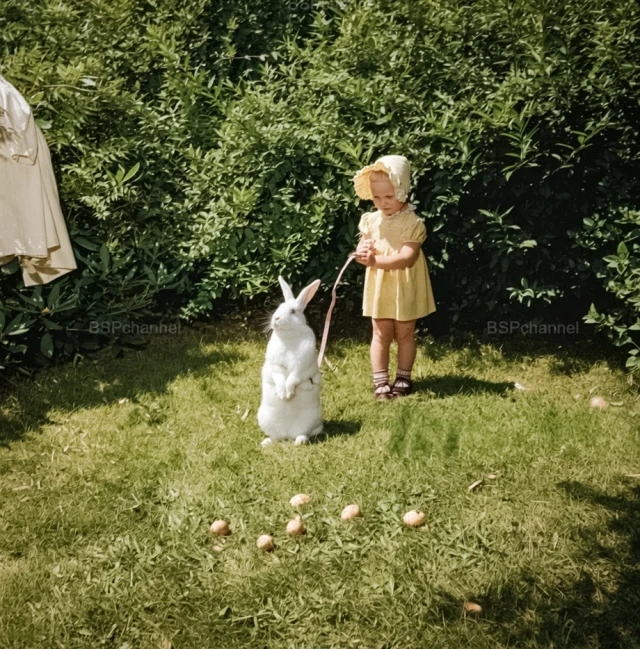
An Easter egg hunt with a live "Easter bunny" on a leash is a classic holiday tradition in Western countries. The game revolves around adults secretly hiding artificial, chocolate, or real colored eggs in the garden, thick grass, or at home the night before the holiday. In the morning, children take wicker baskets and set out to find them. The one who collects the most wins the grand prize. According to folklore (brought to the United States by German immigrants), it is the magical Easter bunny who brings and hides these eggs in the grass at night for well-behaved children. In the mid-20th century, it became fashionable for American suburban families to keep live white decorative rabbits for Easter. During festive games in the garden, pets were given fancy silk ribbon leashes to "help" children find hidden treasures and prevent them from running off into the bushes.
5. Girls from Moscow Kindergarten No. 703 in a nature corner with a guinea pig, 1978. 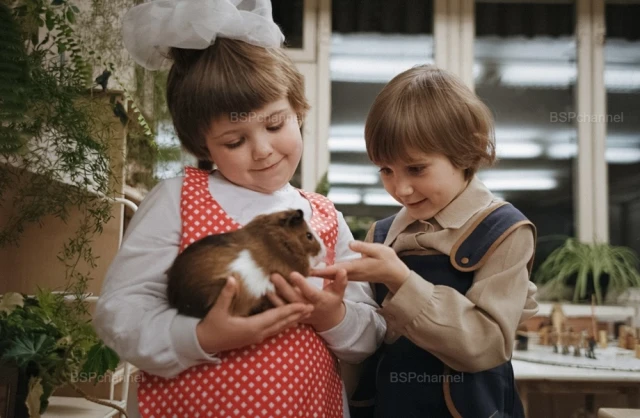
6. A girl eats ice cream with her pets, a dog and a raccoon. USA, 1930. 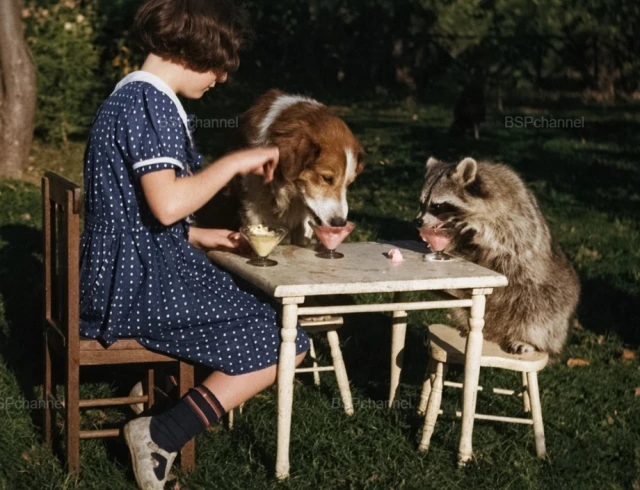
Raccoons are incredibly intelligent, charismatic, and cunning mammals native to North America. Because of their distinctive black "mask" around their eyes and striped tail, they are often called the "ultimate bandits" of the wild. The most well-known and widespread species is the common raccoon. The raccoon's front paws are as dexterous as human hands. They contain thousands of tactile receptors, which work much more effectively when the paws are wet. This is why raccoons constantly touch and "swish" everything in water—this way they literally "see" objects with their hands, determining their density and edibility. Studies show that raccoons are more intelligent than cats and only slightly inferior to primates. They have excellent memories, can memorize problem-solving algorithms for up to three years, and can easily open any door bolts, door locks, and food containers.
7. Laika and polar bear cubs at the polar explorers' camp at the North Pole-19 drifting research station in the Arctic Ocean, 1971. 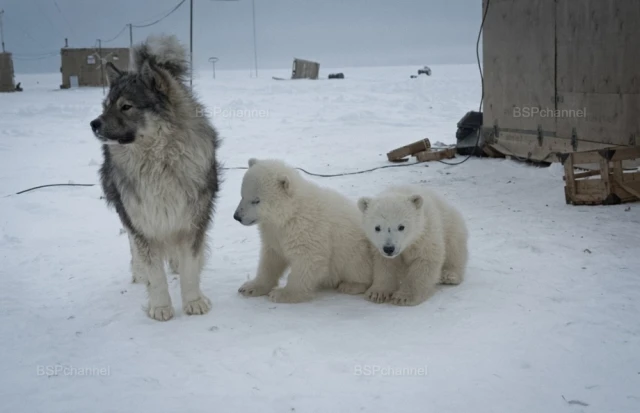
8. Fashionable squirrel. USA, 1940s. 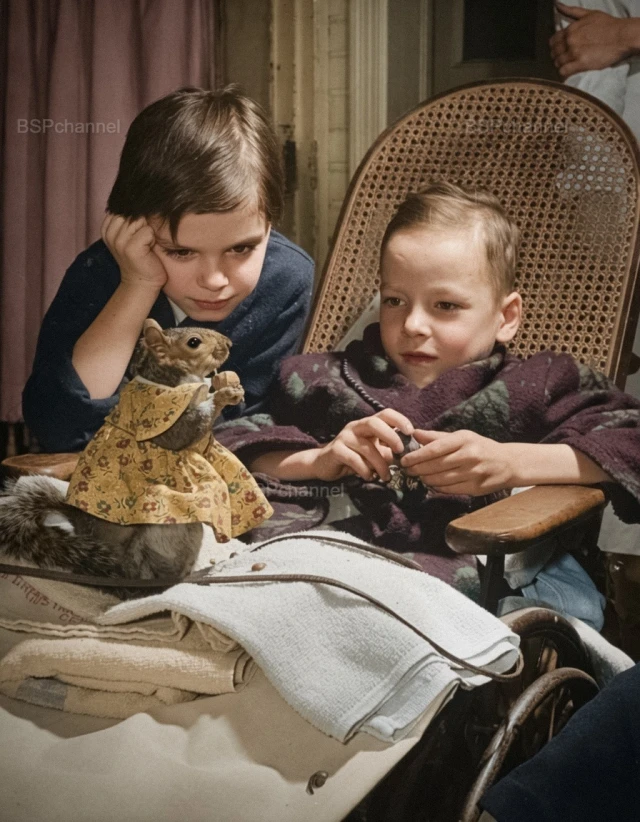
This photo shows the famous squirrel named Tommy Tucker, who became famous in the United States in the 1940s. In 1942, the squirrel, which had fallen from a tree, was picked up and nursed back to health by the Bollis couple. The wild animal became fully domesticated and remained with the family. Mrs. Bollis hand-sewed over 100 different outfits for Tommy—dresses, suits, and hats. In this photo, the squirrel is wearing one of his famous yellow flowered dresses. During World War II, Tommy Tucker became a true patriotic symbol. He traveled the United States, raising awareness for war bond sales and helping raise funds for the Red Cross. The squirrel often visited schools and hospitals to support wounded soldiers and sick children, as shown in this photo.
9. A lynx and a dog play in an enclosure in the Stolby Nature Reserve's wildlife area. Krasnoyarsk Krai, 1968. 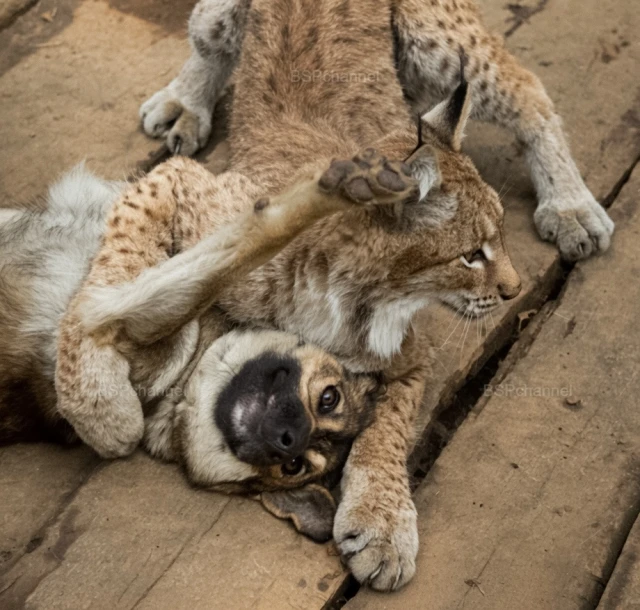
10. Alberto Rossi and his fiancée, Rossana Teatini, watch a sheep caressing a newborn lamb, Italy, 1953. 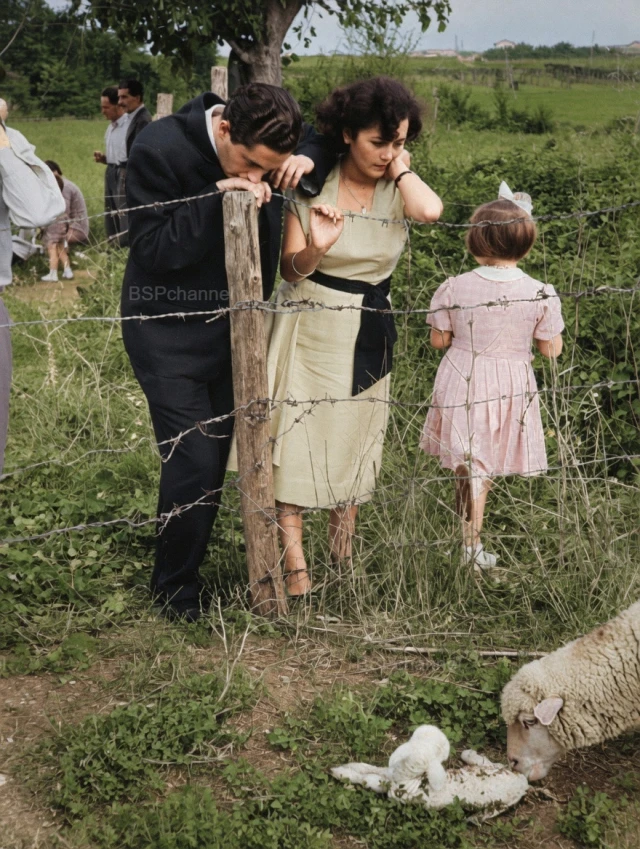
11. Nerpa, 1974. 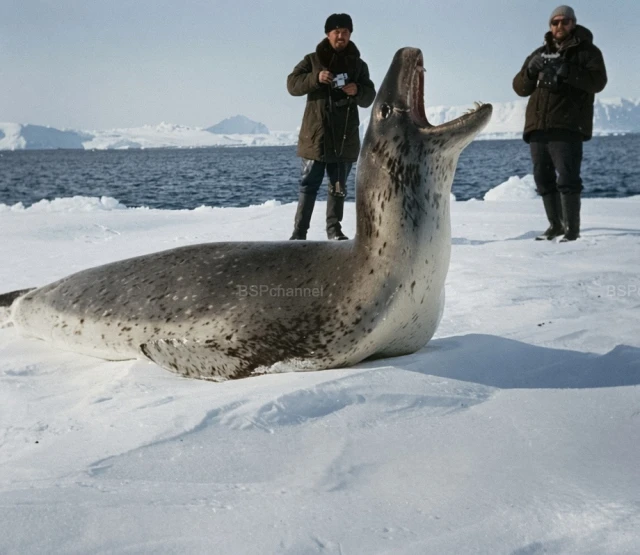
12. Kenya, 1961. 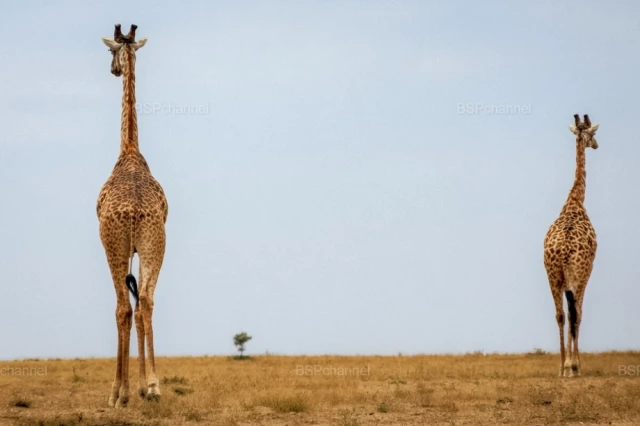
Kenya is a unique country for lovers of these graceful animals. It is the only place on the planet where three different subspecies of giraffes live simultaneously. The total giraffe population in Kenya is approximately 30,000 individuals. A little interesting information about giraffe birth. Childbirth in giraffes is an amazing and rigorous evolutionary process. The life of a baby begins with an extreme challenge, determined by the mother's anatomy. A female giraffe always gives birth standing up. She avoids lying down on the ground, so she can remain prepared to escape predators (lions or hyenas) at any moment. Because of the mother's upright position, the newborn giraffe calf is born feet first and falls to the ground from a height of approximately 1.5–2 meters. This powerful impact with the ground does not harm the baby. On the contrary, it stimulates the calf's first deep breath and expands its lungs. During the fall, the umbilical cord becomes taut and breaks spontaneously in a precise location. A giraffe's pregnancy lasts a very long time—14 to 15 months (approximately 450 days). The female almost always gives birth to only one calf. Twins are extremely rare. The calf is already a giant when it is born, standing approximately 1.8–2 meters tall and weighing between 50 and 70 kilograms.
13. Spotted Fawn. Istra State Forestry and Game Management Center, 1964. 
14. Horace the Hare and Cecil S. Webb, Director of the Dublin Zoo, 1956. 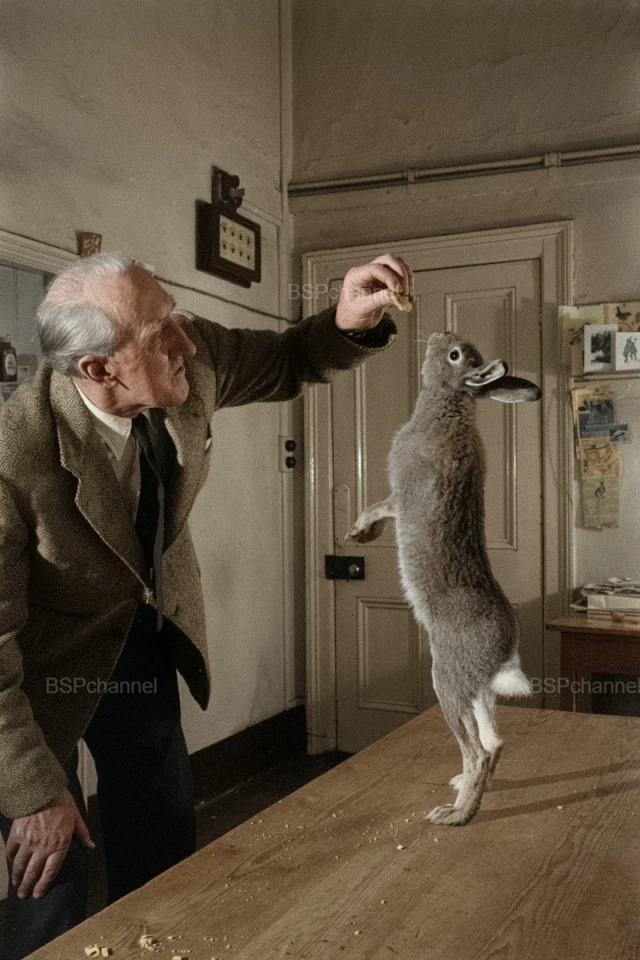
Cecil Webb feeds his famous pet Irish hare, Horace, a treat. Webb took the wild hare home to study the habits of these secretive animals up close. Horace was eventually completely domesticated, becoming as tame and obedient as a dog or cat, and hopping freely around the rooms. The naturalist described his observations in his book "A Hare about the House" (1955).
15. Leo Fagan with film producer Sidney Franklin. Los Angeles, 1951. 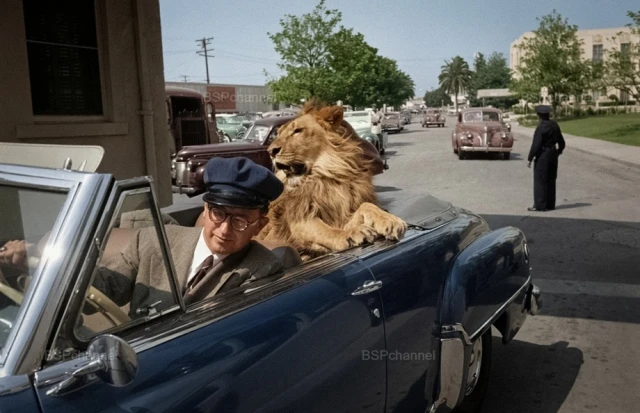
16. A female hawk spreads her wings and prepares for flight, perched on her trainer's arm, 1950. 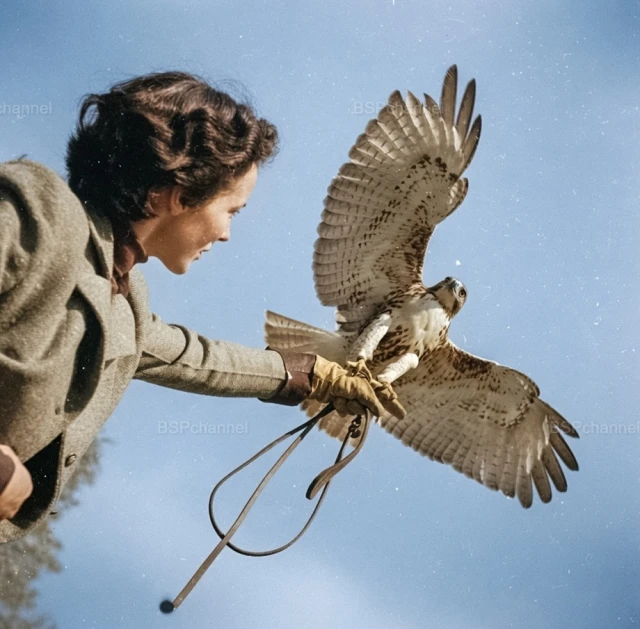
17. A pig with his trainer before his appearance on the American television show "I've Got a Secret." USA, 1956. 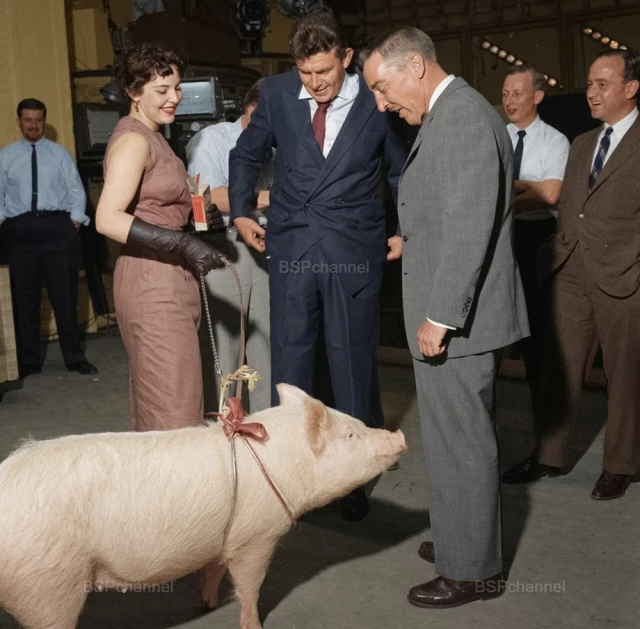
18. Hunter Mr. Gandar-Dower and one of the cheetahs he brought from Kenya to the Hackbridge sanctuary in Surrey. England, 1937. 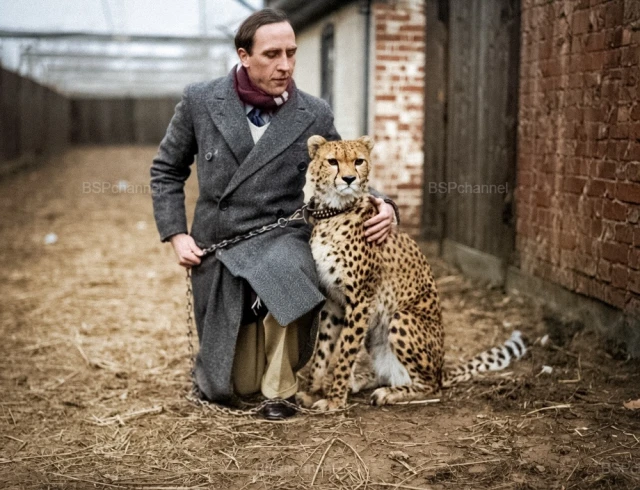
19. Street artist with a tame fox. Dublin, 1973. 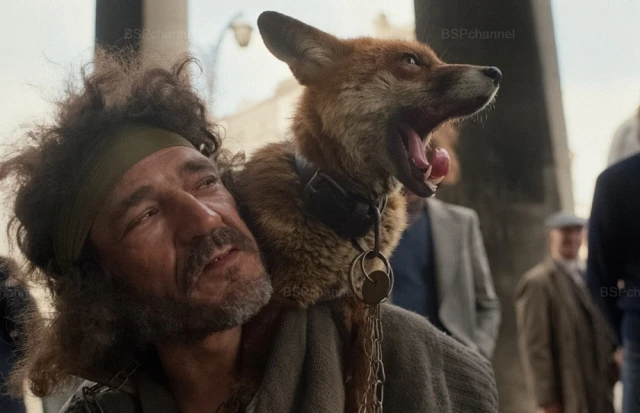
Domestic foxes are unique animals that combine traits of a cat, a dog, and an independent wild animal. When considering foxes as pets, it's important to distinguish between simply tamed wild foxes and the genetically domesticated "Belyaev" foxes. True domestic foxes emerged as a result of the Novosibirsk domestication experiment, begun in 1959 by Soviet geneticist Dmitry Belyaev and Lyudmila Trut. Scientists selected silver-black foxes for one trait only: loyalty and friendliness toward humans. Over just a few dozen generations, the foxes changed not only mentally but also physically. They developed white spots on their fur ("stars" on their foreheads). Their tails began to curl upward, and some individuals developed folded ears, like those of puppies. Levels of the stress hormone (adrenaline) in the blood decreased, giving way to "happiness hormones." A domestic fox is not an "alternative dog," but a unique pet with a unique behavior. They wag their tails at the sight of their owner and are trainable, yet they can gracefully leap over cabinets, squeeze into tight crevices, and retain a feline independence. Foxes don't bark like dogs. They produce a wide range of distinctive sounds—from amusing clucking and whining to shrill screams, especially at night. Unsupervised, a fox will quickly dismantle a sofa, rip off wallpaper, or chew through wires. Foxes have a distinctive musky odor. Even a litter-trained fox smells stronger than a clean cat. Keeping a fox free-roaming in an apartment is extremely difficult. They require a spacious enclosure or a separate room equipped with safe toys and hiding places. Lifespan: With proper home care, a balanced diet, and timely spaying/neutering, domestic foxes can live up to 20–25 years.
20. Florida Keys, USA, 1968. 
Add your comment
You might be interested in:













25 Photos That Will Give Visual Learners an Aesthetic
Scientists repainted cows as zebras and got an unexpected

Liquid Slow Mo

Peeping at Miss Universe Contestants of the 1950s (15

27 unusual photos from Google Street View (27 photos)

Geely has completely acquired Zeekr (1 photo)

Big changes: 35 entertaining photos from the series

A woman threw a tantrum on an airplane after seeing a man

Elina Ivashchenko - Behind the forests and mountains

Protective film Removing it with a power screwdriver

How to start a 102-liter engine

When a child plays hide-and-seek at a professional level

Man sets up bedroom camera and discovers the reason for his

Super dads who swoop in to save the day

Precision carpentry

Looks like it's time to buy WinRAR

How to hang wallpaper neatly

Athlete in Bavarian dress flies over a lake on a hydrofoil
