Garage Lifehack: In the US, doctors cured a woman with Diet Coke Instead of Surgery (4 photos)
A Boston, Massachusetts, resident was admitted to the hospital with a terrible blockage, but instead of a scalpel and an operating table, medical professors prescribed... a daily dose of warm cola. 
A 63-year-old patient was admitted to the emergency room at Brigham and Women's Hospital. For a month, the woman had been suffering from unbearable burning pain in her upper abdomen, constant nausea, and vomiting. Regular heartburn pills were of no help at all.
When doctors peered into her stomach with an endoscope, they were stunned. A huge, rock-hard mass of undigested food—a so-called phytobezoar—had grown there. Such things usually form when a person eats tons of persimmons or celery, but the patient hadn't consumed any of those. As it turned out during questioning, the woman suffered from type 2 diabetes and had been injecting herself with the popular drug semaglutide (the active ingredient in Ozempic and Vegovi) for a year, managing to lose about 18 kilograms. 
And then the main side effect of all these trendy super-medications emerged: they critically slow gastric motility. The digestive organs simply "fall asleep," food stops moving normally, gets stuck, is compressed by gastric juice, and turns into a monolithic plug. The patient was facing emergency abdominal surgery, as the lump had completely blocked the exit to the intestine.
Because the woman had diabetes, she was not allowed to drink regular sweet soda. So, a panel of doctors prescribed her a strict prescription: 1.5 liters of Diet Coke per day. The American woman had hated carbonated drinks since childhood, but the prospect of going under the knife terrified her even more, so she forced herself to drink. 
On the second day of therapy, the patient felt a strange "moving and pulling" sensation in her abdomen, after which the nausea and sharp pain magically disappeared. A repeat endoscopic examination revealed a perfectly clean stomach – the massive bezoar had completely dissolved and passed naturally. 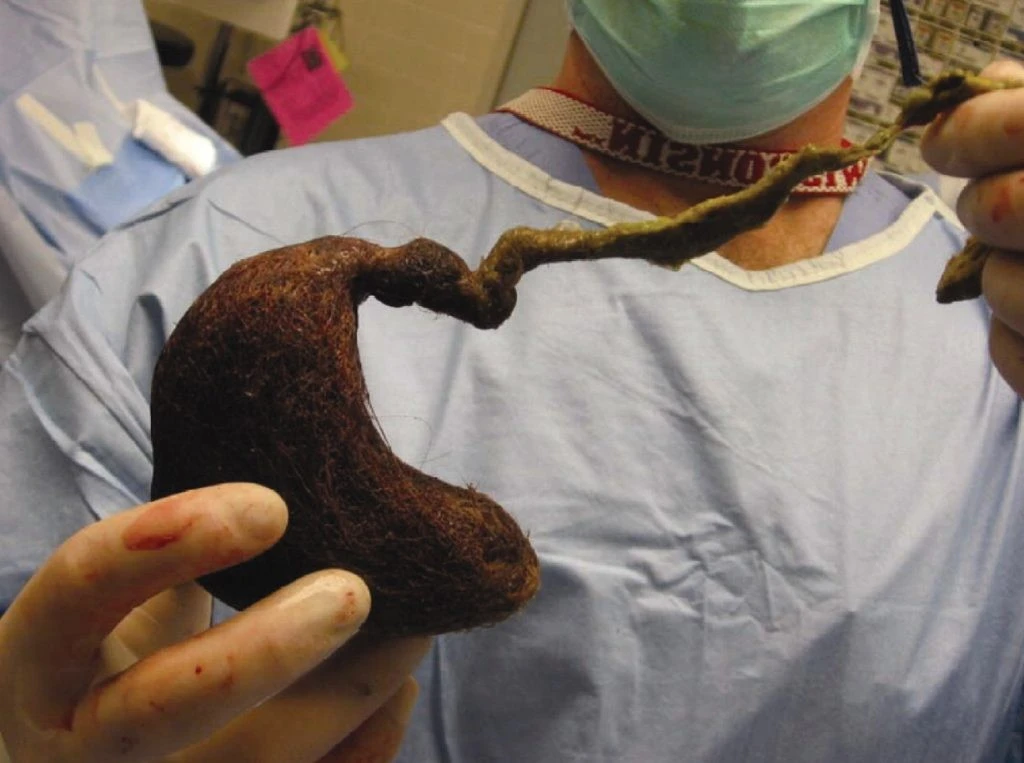
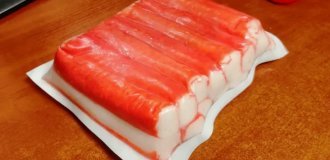
This is what these phytobezoars that accumulate in the stomach look like.
Doctors insist there's nothing mystical about it, just pure chemistry. Coca-Cola (including Diet Cola) perfectly mimics the properties of concentrated stomach acid thanks to its phosphoric and carbonic acids. The acidic environment effectively corrodes plant fibers, and millions of carbon dioxide bubbles literally "explode" the dense lump from the inside, turning it into mush.
So, the next time someone lectures you about the dangers of a can of soda, you can confidently reply that it's a proven medical remedy. Auto mechanics have been soaking rusty bolts in Coke for years, and American surgeons have been successfully using it to clear clogged human stomachs. Just make sure to use diet Coke to avoid a blood sugar spike!