8 facts that will change how you view the body, the brain, and the limits of life (9 photos)
Have you ever wondered where humanity ends? Where is the line between human and animal, between life and death, between reason and instinct? 
It all begins with a scream. With a baby's cry that no one hears. In some shelters, there was a frightening silence because babies and very young children stopped calling for help, realizing the futility of it.
And then an even more astonishing kaleidoscope of blurred boundaries awaits you. Here's a drunkard in the Siberian cold, thought frozen, but brought back to life five hours later. Here are Indians from the Brazilian jungle, living without numbers or names of colors, because for them the world is only what they can touch right now. Here's an owl that lost its protection from the rain for the sake of silent flight. Here's a liver that literally regrows itself. And finally, a Hollywood actor who, after almost 50 years, heard himself waltz. All these stories show that humanity is much broader than we usually think. And much stranger.
1. The Futility of Crying 
Children in some infant homes stopped crying because their cries were systematically ignored. The infants realized the futility of screaming and crying. This behavior led to developmental delays, disrupted attachment, and decreased cortisol levels.
2. A Forbidden, but Deadly Delicious Indonesian Dish 
There's an Indonesian dish called tempeh bongkrek, which is made from fermented coconuts. Its production was banned in 1975 after it was found to be contaminated with a highly toxic bacterial toxin. However, because it's so delicious, people still try to make it themselves.
If fermented incorrectly, the product can develop the bacterium Burkholderia gladioli, which produces bongrecic acid, a powerful toxin that damages the liver and brain, with a mortality rate of up to 60-100%.
3. An organ with the ability to almost completely regenerate 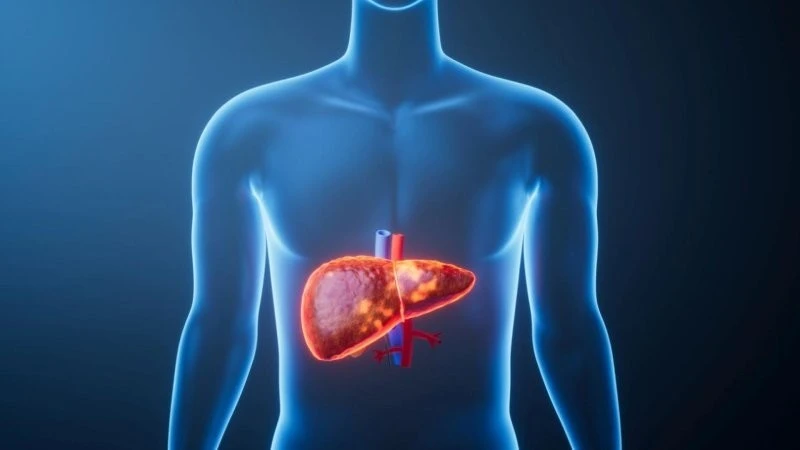
The liver is the only vital organ in the human body that can completely regenerate, even after two-thirds of its healthy tissue has been damaged or removed. In healthy patients, the liver can regain up to half its mass in 30 days. Full recovery to its original size can take up to several months, but the exact time depends on individual factors and is approximately 3-6 months.
4. The Gasoline-Powered Grandfather of the Electric Scooter 
In 1915, the autoped—the gasoline-powered ancestor of modern electric scooters—appeared in New York City. These nimble vehicles could reach speeds of up to 30 km/h and were such a terror to pedestrians that The Sun newspaper compared them to "Satan's minions" racing through the streets, flouting all rules of decency.
5. Vulnerability to Water as a Consequence of Silent Flight 
The adaptations that allow owls to fly silently also make their feathers less waterproof. This makes them unable to hunt in heavy rain and more vulnerable to drowning.
6. Incredible Resurrection 
A man was found unconscious in late March 2026 on a bench in the city of Mirny in Yakutia, one of the coldest inhabited regions in the world. The temperature was around -20°C. He was presumably heavily intoxicated.
When paramedics arrived, he had no pulse or blood pressure, and his ECG showed a flat line—all the signs of clinical death.
At the hospital, under the supervision of an anesthesiologist, gradual warming was performed: over four hours, his body temperature was raised from 24°C to 34°C. Then, advanced cardiopulmonary resuscitation (indirect cardiac massage, mechanical ventilation, and drug stimulation) was begun. After 25 minutes, ventricular fibrillation—the first sign of life—appeared on the monitor.
The total time from detection to resuscitation was 5 hours and 34 minutes. After 24 hours in a medically induced coma, the man regained consciousness. His kidney function was normal, and no serious organ damage was detected. He was discharged five days later.
7. Actor and composer 
Anthony Hopkins composed the waltz in 1964 and only heard the full orchestration 47 years later, in 2011, when his wife sent the score to conductor André Rieu, who performed and recorded the piece.
Hopkins has been involved with music since childhood and says that if he had been smarter at school, he would have gone to music college instead of becoming an actor. In 1986, he released the single "Distant Star," which reached number 75 in the UK chart. In 2012, he released an entire classical album, "Composer," performed by the City of Birmingham Symphony Orchestra.
8. The Tribe That Doesn't Count 
Imagine a language where you can't say "two" or "red." That's exactly how the Pirahã people, lost in the Brazilian jungle, speak. Instead of numbers, they have "few," "more," and "many." Instead of color names, they have comparisons like "like blood." Linguist Daniel Everett spent eight months teaching them to count to ten, but the Pirahãs couldn't even master addition at the level of 1 + 1. This isn't a lack of intelligence, but a fundamentally different system of perceiving the world, where only what can be seen and experienced here and now exists.