Heavy water: How does it differ from regular water, and what happens if you drink it? (8 photos)
Regular water is H2O. Heavy water is D2O. The difference? Instead of regular hydrogen, the molecule contains its "big brother," deuterium. Regular hydrogen has one proton in its nucleus. Deuterium has one proton plus one neutron. A small thing? The consequences are dramatic. 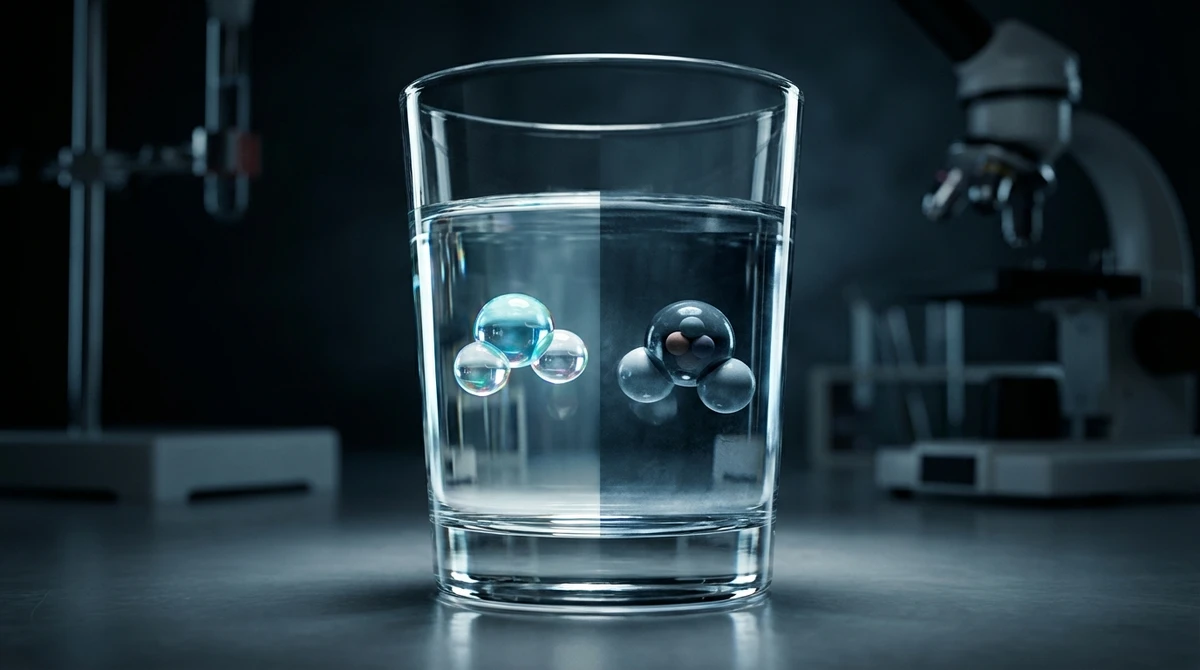
One glass—mild dizziness. A week of regular consumption—irreversible infertility. Two weeks—fatal.
However, heavy water in low doses is valuable for health and helps treat cancer.
Right now, heavy water molecules are floating in the glass of water in front of you. About 150 of them are floating for every million regular molecules. Over a lifetime, you drink 15 liters of pure heavy water—and it's completely safe at normal concentrations found in nature. 
Let's look at what heavy water is and how one neutron can change the water we know so much.
Deuterium—Hydrogen with Excess Weight
Deuterium was discovered in 1931. American physicist Harold Urey of Columbia University predicted it theoretically and then discovered it experimentally. For this discovery, Urey received the Nobel Prize in 1934. 
Harold Urey
Deuterium is found everywhere where hydrogen is found. In oceans, rivers, glaciers, and your body. Its atomic mass is twice that of ordinary hydrogen—hence the name "heavy." The deuterium nucleus contains one proton and one neutron, instead of one proton in ordinary hydrogen. This extra neutron changes everything.
Water that behaves abnormally
Heavy water looks like regular water—clear and odorless. But its physical properties are different.
It is 11% denser. A liter of heavy water weighs 100 grams more than a liter of regular water.
It freezes not at zero, but at +3.8°C. It boils not at 100°C, but at 101.4°C. Its viscosity is 25% higher, so it flows more slowly. Sound also travels 4% slower in it.
The most spectacular effect is that heavy water ice sinks in regular water. It won't float like regular ice. 
Regular ice (on the right) floats on the surface of water because it is less dense. Heavy ice, however, sinks.
But the main difference is chemical. Reactions in heavy water proceed 5-10 times slower than in regular water. This is due to the strength of the hydrogen bonds.
For inanimate chemistry, this is simply an interesting fact. For living organisms, it's a matter of life and death.
What does heavy water taste like?
It tastes like it does. A 2021 study showed that people can distinguish D₂O from H₂O by taste. Heavy water activates sweet taste receptors. It's slightly sweet.
The experiment was conducted as follows: participants were given samples of water to taste blindly. Heavy water was described as "slightly sweet," "a little strange," and "not quite like water."
One glass—dizziness, two weeks—death
Drink a glass of pure heavy water (100-200 ml)—you'll feel dizzy within 10 minutes. The mechanism is simple: the vestibular system, located in the inner ear, determines the body's position in space. It works thanks to the fluid in the semicircular canals.
When heavy water enters the semicircular canals, the density of the fluid changes by 11%. The receptors immediately sense the difference and signal the brain: "Something's wrong!" The brain interprets this as a change in position. The result is an illusion of rotation and instability.
Dizziness subsides after 6 hours. Heavy water is distributed throughout the body, concentration levels out, and the vestibular system calms. There are no side effects. A single small amount of heavy water is safe.
What if you drink it every day? 
Let's take a person weighing 70 kg. They drink three liters of pure heavy water instead of regular water. D₂O is not eliminated quickly enough, and accumulation begins.
Days 1-3: Deuteration (the percentage of regular water replaced by heavy water) reaches 10%. Mild dizziness, mild nausea, and a slight decrease in energy. Cells are operating in stress mode, but adapting. Completely reversible.
Days 5-7: Deuteration 22%. Fatigue persists. Appetite disappears. Weight drops by 3-5 kg per week. Sleep is disrupted. Mood is depressed. A catastrophe is occurring within the cells: protein synthesis has slowed by 40%, and mitochondria produce 35% less ATP—the body's energy "currency." The brain is the first to react to the energy shortage—the person feels unrelenting fatigue. 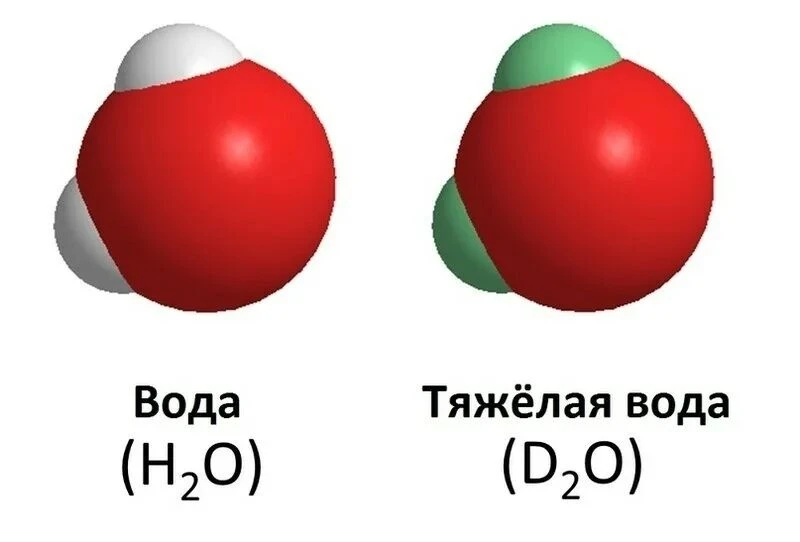
At 25% deuteration, the point of no return is reached. Germ cells—sperm and eggs—require rapid division (meiosis). This is the most energy-expensive process. When DNA synthesis slows by 5-10 times, germ cells do not have time to complete division. A self-destruction program, apoptosis, is activated. Germ cells die, leading to irreversible infertility.
Days 7-10: deuteration 25-40%. Confusion. Ataxia—impaired motor coordination. Seizures. Speech impairment. Periodic loss of consciousness. Kidney failure leads to edema and urea retention in the blood. The liver fails, causing toxins to accumulate and encephalopathy to develop. Bone marrow stops producing blood cells, leading to anemia and vulnerability to infections.
Next comes multiple organ failure. All organs fail simultaneously. Coma. Cardiac arrest or loss of the respiratory reflex.
However, heavy water in general and deuterium in particular are essential to humanity. They are useful for technology and even save lives!
Where is heavy water used today?
Today, D2O is an indispensable component of nuclear power. In CANDU reactors (Canada) and PHWRs (India), heavy water acts as a neutron moderator. 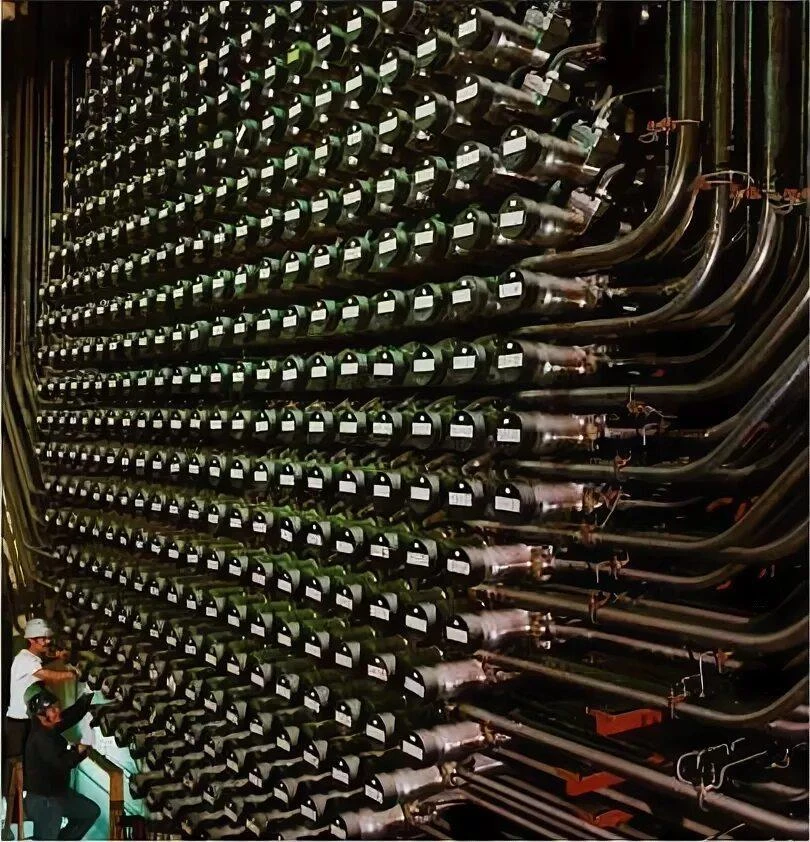
Canadian Heavy Water Nuclear Reactor
A moderator is a substance that slows fast neutrons to the thermal energies required to sustain a uranium fission chain reaction.
D2O effectively slows neutrons, absorbing almost no neutrons. Heavy water reactors can run on natural unenriched uranium. The savings are enormous: no fuel enrichment is required.
Heavy water in microdoses acts as a medicine. Moderate oxidative stress activates defense mechanisms, kills cancer cells, reduces depression, and improves heart function. 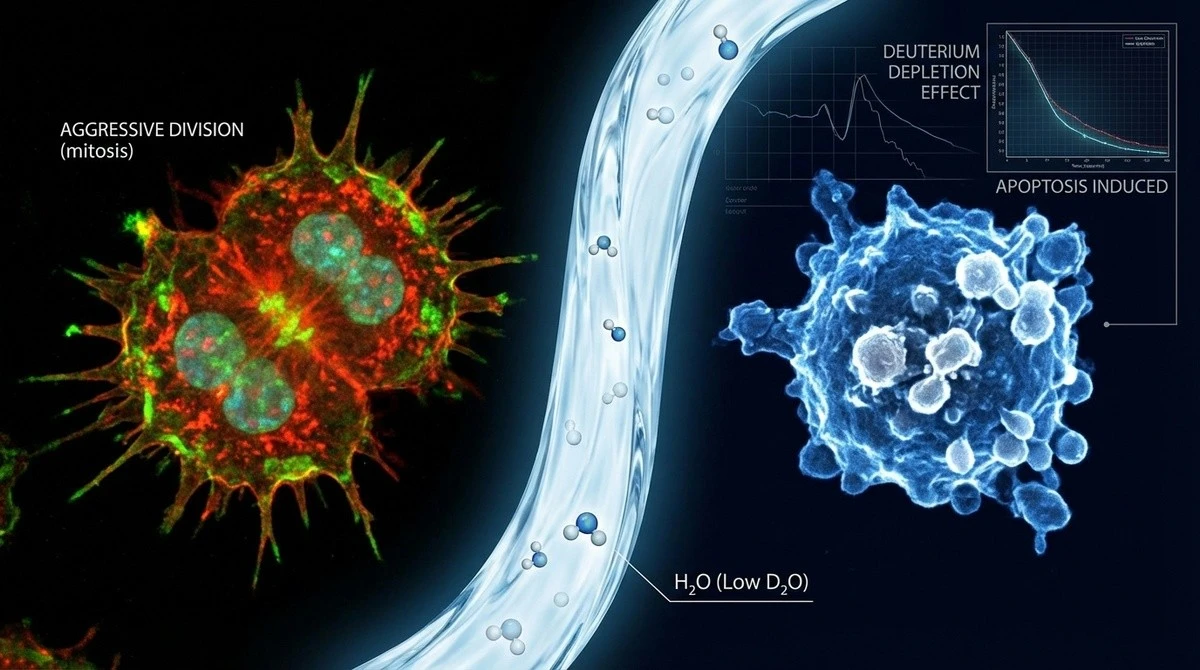
Aggressive cancer cells (left) are dramatically weakened by exposure to deuterium.
Deuterated compounds are used as molecular tracers. Scientists introduce deuterium into a drug molecule and track its metabolism in the body. Deuterium is visible in mass spectrometry—it helps understand where the drug is absorbed, how quickly it breaks down, and what metabolites are formed.
D2O is indispensable in science. Nuclear magnetic resonance uses heavy water as a solvent—deuterium does not produce signals in the hydrogen spectrum, allowing signals from the molecules being studied to be clearly distinguished.