You’ll never guess what these ladies in evening gowns are advertising (17 photos)
Scott Paper was founded in 1879 in Philadelphia. Brothers Erwin and Clarence Scott started with a single room and toilet paper rolls. By the end of the 20th century, the company had become the largest manufacturer of sanitary products in the world, with branches in 22 countries. Between 1957 and 1959, marketers at Soft-Weve came up with something truly special. They commissioned evening gowns from top designers in New York and Rome. They dressed famous models in them. And then filmed it all for a toilet paper ad. We tell you how a household product became the inspiration for a fashion show. 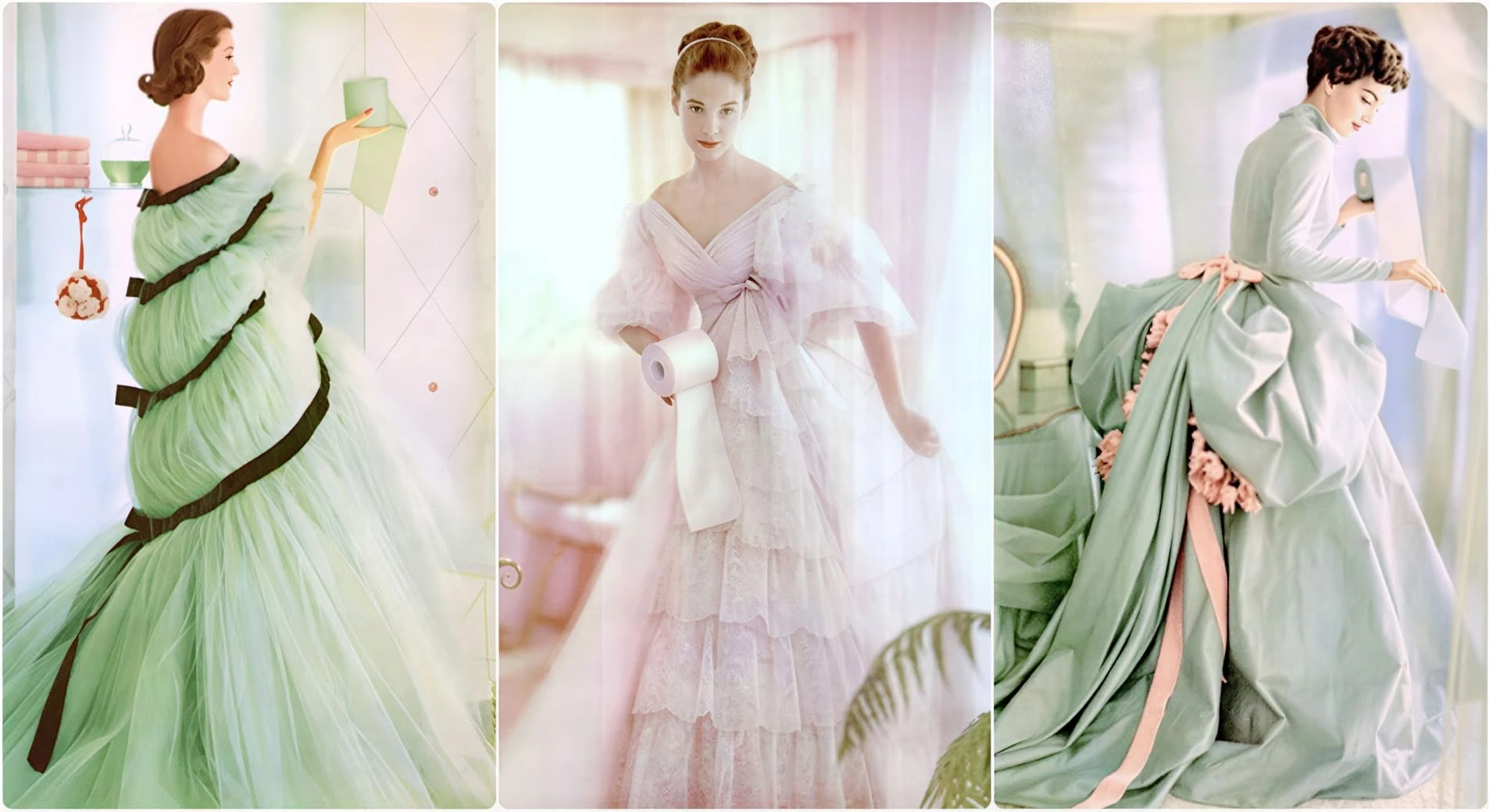
Scott Paper: From a Provincial Workshop to a World Leader
The Scott brothers began production in Philadelphia, Pennsylvania. At first, the company operated in a single small room. Toilet paper on rolls was a rarity in American homes. But demand grew rapidly, and within a few decades, Scott Paper had become a multinational concern.
The line included the brands Scott Tissue, Cottonelle, Baby Fresh, Scottex, and Viva. By 1994, the company's sales were approximately $3.6 billion. In 1995, Scott Paper was acquired by Kimberly-Clark.
Among dozens of brands, the Soft-Weve line held a special place. It was a soft toilet paper product available in several colors. In 1957, marketers came up with an idea that seemed almost a mockery of common sense: dressing top models in haute couture dresses and featuring them in a toilet paper ad. 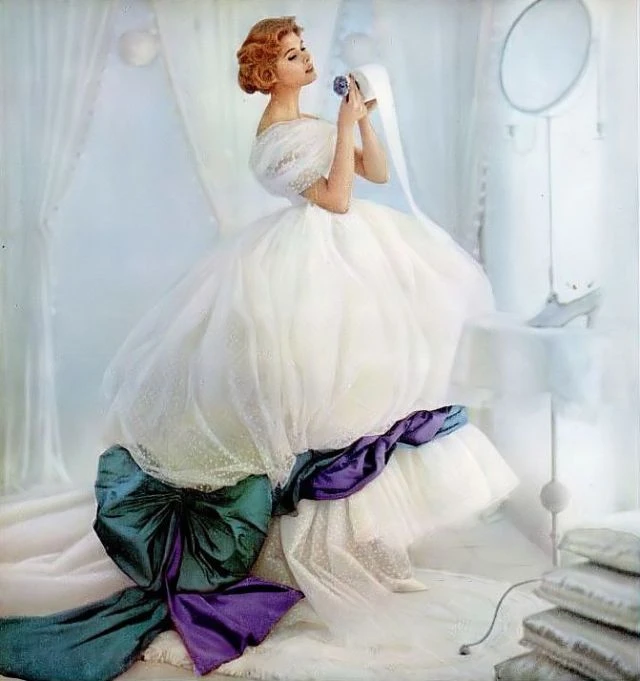
Ball gown by Arnold Scaasi, designed especially for a Soft-Weve ad, 1958.
The dresses were made by the season's best designers. The fabric color was precisely matched to the color of the roll. The model held the roll in her hands, and it blended seamlessly with her outfit. The result was a surrealist image. A luxurious woman in evening dress clutches toilet paper to her chest and looks into the camera with the air of an aristocrat at a social event.
Designers who agreed to participate
For the 1957-1959 campaign, Scott Paper collaborated with several names in American and European fashion.
Arnold Scaasi, a Canadian by birth, studied at the Chambre Syndicale de la Haute Couture in Paris. He then moved to New York. His real last name is Isaacs. The nickname "Scaasi" came about by chance: someone suggested reading the name backwards for an advertising shoot, and the name stuck. In 1958, he received the Coty Award, the highest honor in American fashion. Scaasi went on to design gowns for Barbra Streisand, Elizabeth Taylor, and several US First Ladies. 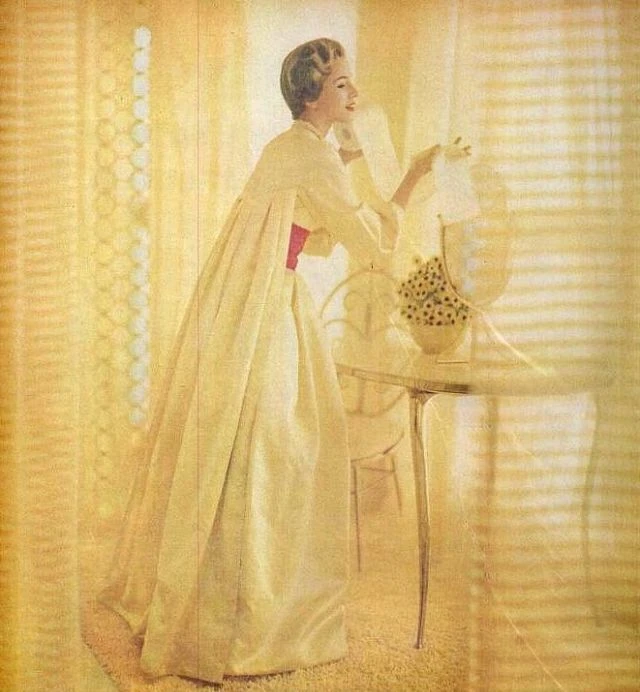
Florentine satin nightgown by the Italian couturier Simonetta, 1958.
Simonetta Colonna di Cesaro was an Italian duchess and founder of her own fashion house in Rome (1946). Her clients included Audrey Hepburn, Lauren Bacall, and Jacqueline Kennedy. In the 1950s, Simonetta's collections were sold at Bergdorf Goodman and major department stores across America. Her silk cocktail dresses and ball gowns became a symbol of Italian postwar chic. 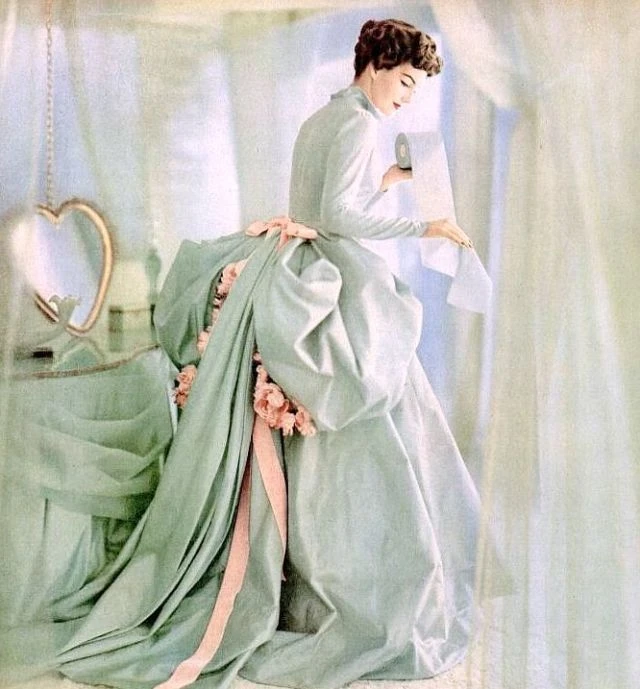
Evening gown by Count Sarmi, an Italian aristocrat who became a star of New York fashion, 1958.
Count Ferdinando Sarmi was born in Trieste to an aristocratic family. His father wanted his son to become a lawyer, and Sarmi earned a degree from the University of Siena. But his passion for fashion prevailed. From 1951 to 1959, he worked as the head designer at Elizabeth Arden's New York salon. Pat Nixon wore a Sarmi dress at her husband's inaugural ball in 1957. In 1959, he opened his own boutique on Seventh Avenue, and in 1960, he received a Coty Award. One buyer of the time said: "Every woman with $600 for a dress wants a Sarmi." The Count participated in the Soft-Weve campaign in both 1958 and 1959.
Models: Faces of American Fashion in the Late 1950s
The campaign attracted not only renowned designers but also runway stars.
Mary Jane Russell was born in 1926 in Teaneck, New Jersey. From 1948, she worked for the Ford Models agency. Her long neck and classic features were perfect for 1950s fashion. Russell became a favorite model for photographers Irving Penn and Louise Dahl-Wolff. Researchers estimate that approximately 30% of all Dahl-Wolff photographs were taken of her. In 1961, Russell retired. 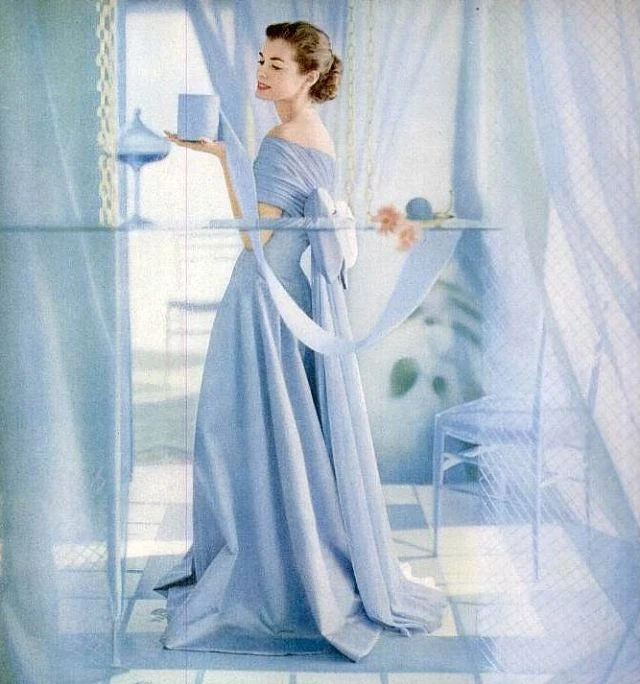
Jan Rylander in blue satin and double chiffon by couturier Alberto Fabiani, 1958. 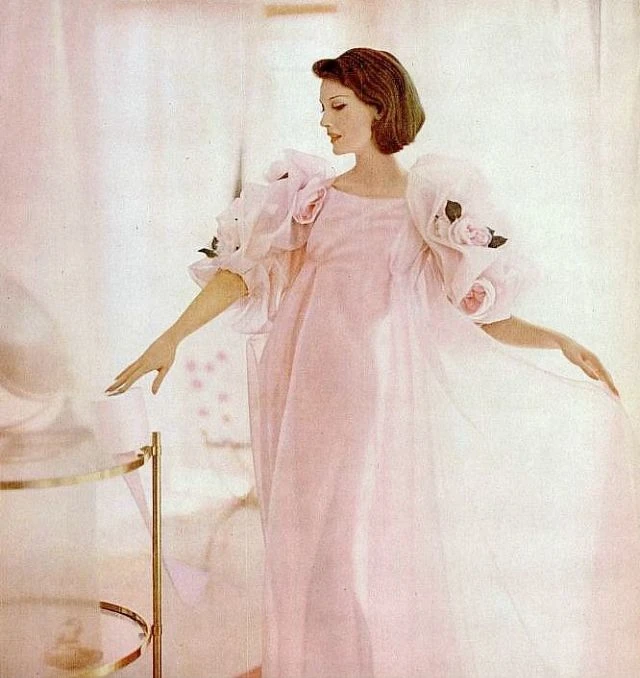
Mary Jane Russell, a 1950s glossy magazine star, in a silk organza negligee, 1958.
Anne Sainte-Marie was born in 1926 in Pasadena, California. By the late 1950s, she was a leading face of Vogue and Harper's Bazaar. Her blue eyes, dark hair, and enigmatic gaze made her unlike most fashion models of the era. Based on her life, the 1970 film "Puzzle for a Child of Decadence" starring Faye Dunaway was made. 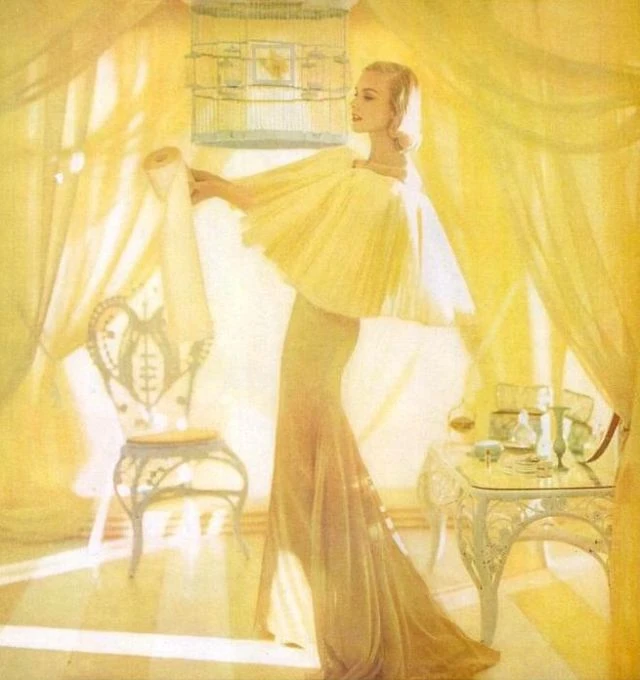
A negligee dress by Howard Greer, the Hollywood couturier who dressed Katharine Hepburn and Carmen Miranda, 1958.
Fashion in a Roll: The Logic of Impossible Advertising
The idea was simple yet paradoxical. Soft-Weve was produced in pastel colors: pink, blue, gold, and white. Designers created dresses in exactly the same shades. The model held the roll in her hands, and it blended with the outfit. It took the viewer a few seconds to figure out what exactly was being advertised. 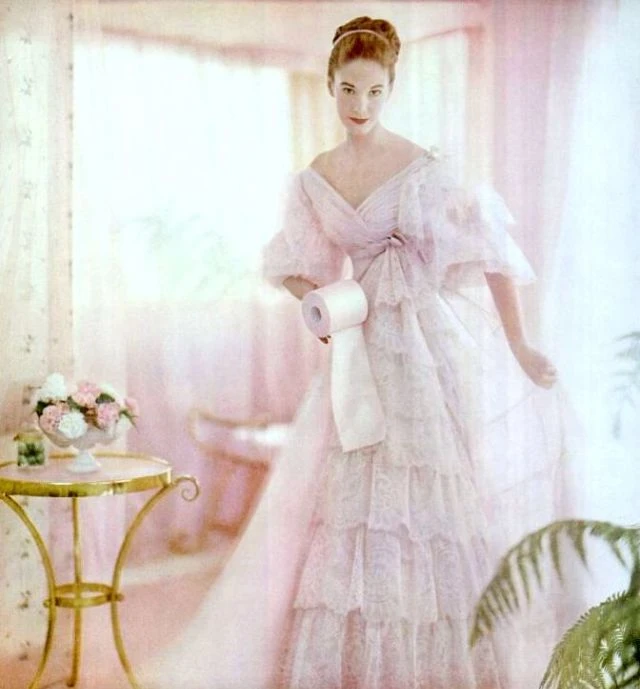
A chiffon and French lace nightgown—another Count Sarmi creation for the campaign, 1958.
The technique worked on several levels: stunning, humorous, and memorable. The consumer saw the brand in the context of luxury. And left with a lasting association: Soft-Weve is not just paper, but a beautiful product worthy of a beautiful home. 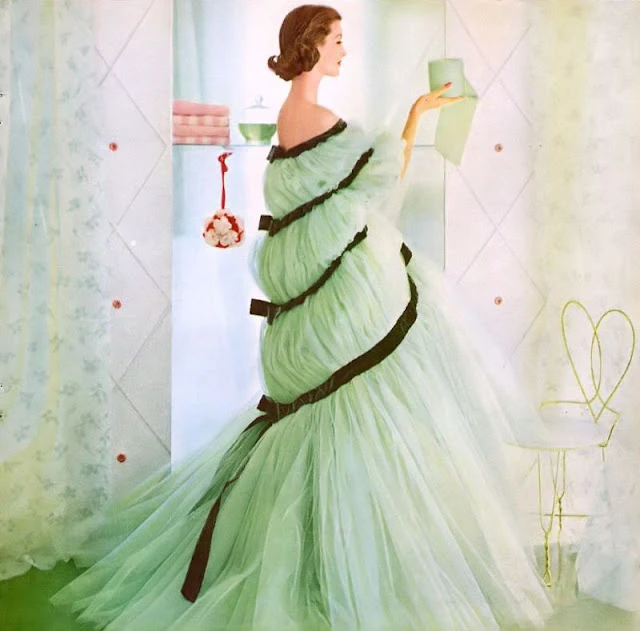
Ruth Neumann Deryuzhinskaya in a luxurious silk mesh negligee with velvet trim, 1958.
This approach was rare in advertising in the late 1950s. Most companies used direct messages about product quality, images of housewives, or cartoon characters. Scott Paper took a different approach: minimal words, maximum imagery. And it worked.
1959 Season: New Names and New Silhouettes
The campaign continued in 1959. New designers joined the project.
Tina Leser is an American fashion designer with a passion for Eastern aesthetics. Her "golden sari coat" worn over soft trousers became one of the most atypical looks in the campaign. Instead of a full ball gown skirt, it features a light, fluid silhouette. 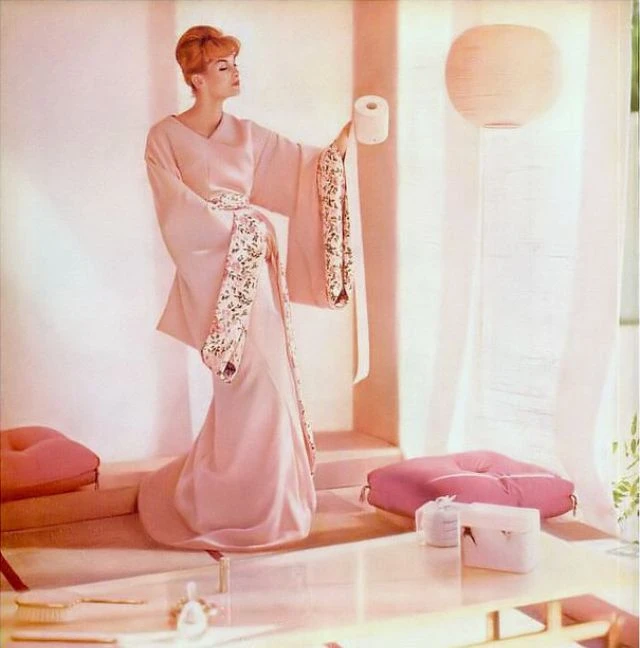
Anne Sainte-Marie in a pink crepe de Chine kimono by Count Sarmi – one of the campaign's final looks, 1959. 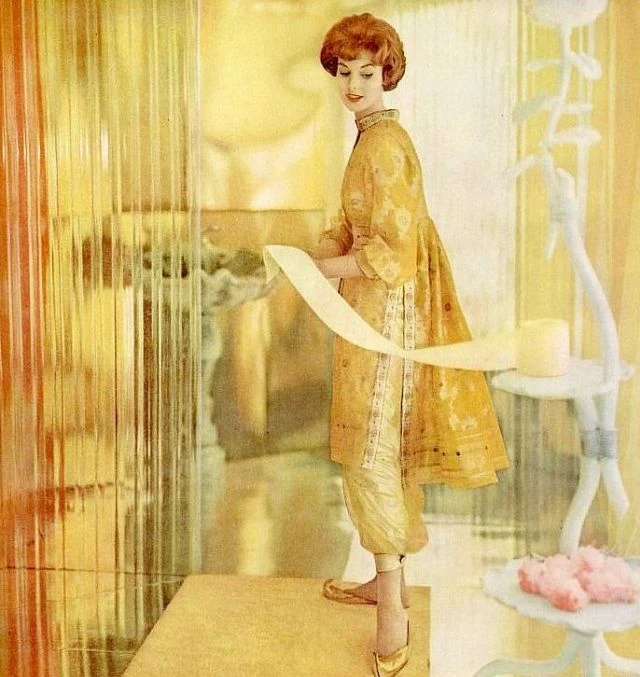
A gold sari coat over soft trousers is an unusual look by Tina Leser, 1959.
Sybil Connolly was an Irish couturier famous for her pleated skirts made of the finest linen. In 1953, she appeared on the cover of Time magazine. In America, her collections were sold in the country's finest department stores.
Bob Bunyar worked in New York and specialized in evening wear with French lace and chiffon. Hulitar was known for his bold fabric combinations: for the campaign, he created a pearl-pink satin dress with ermine-trimmed sleeves and neckline. 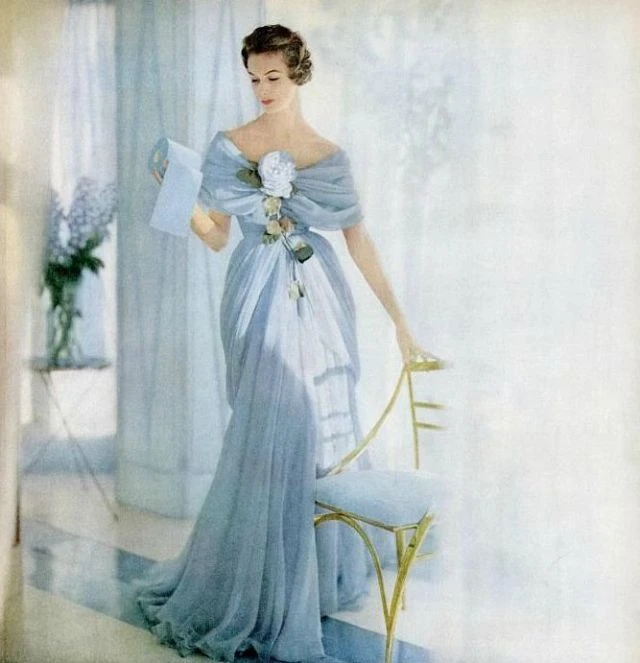
An evening gown by Count Sarmi is the designer's third look in the Soft-Weve campaign, 1959. 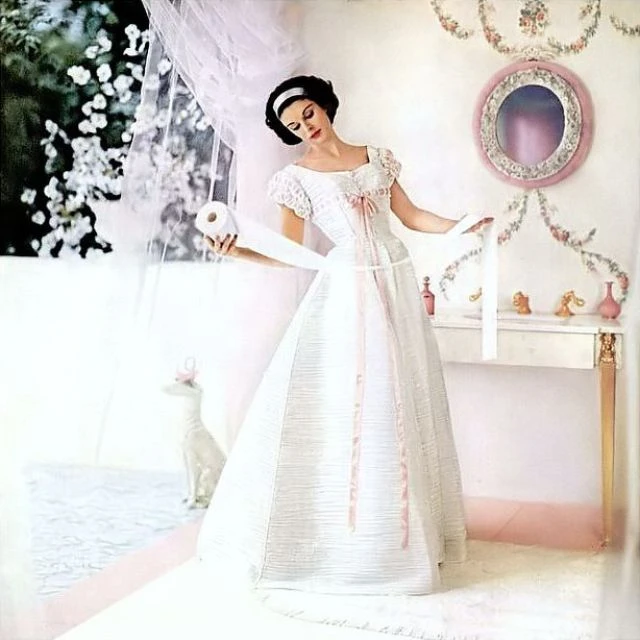
A nightgown by Irish couturier Sybil Connolly, featured on the cover of Time magazine in 1953, 1959. 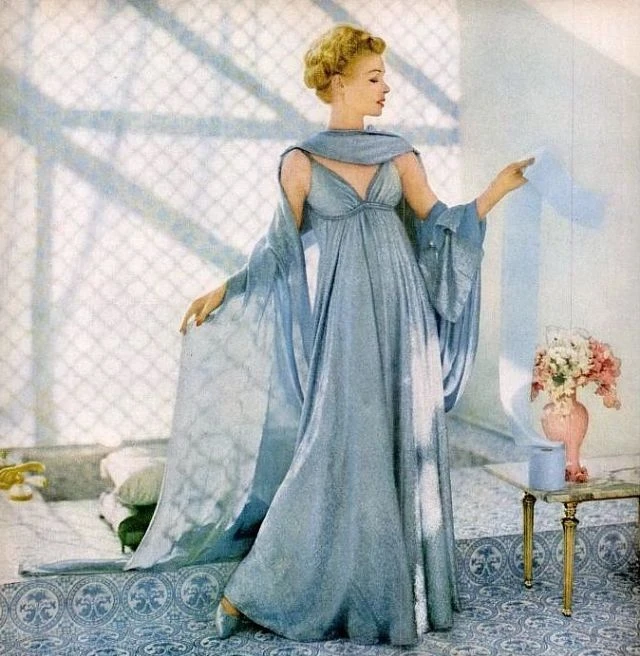
This dress by designer Yanni is one of the most minimalist looks from the 1959 campaign. 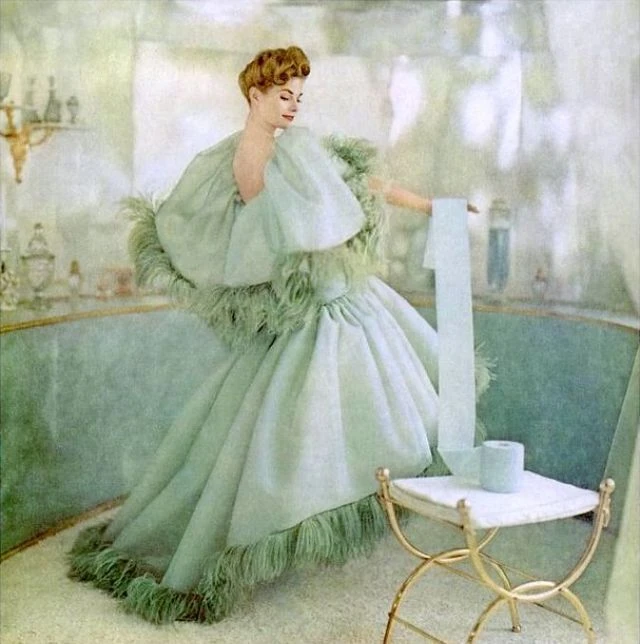
Nightgown by Bob Bugnard – a couturier with a love of French lace and chiffon, 1959. 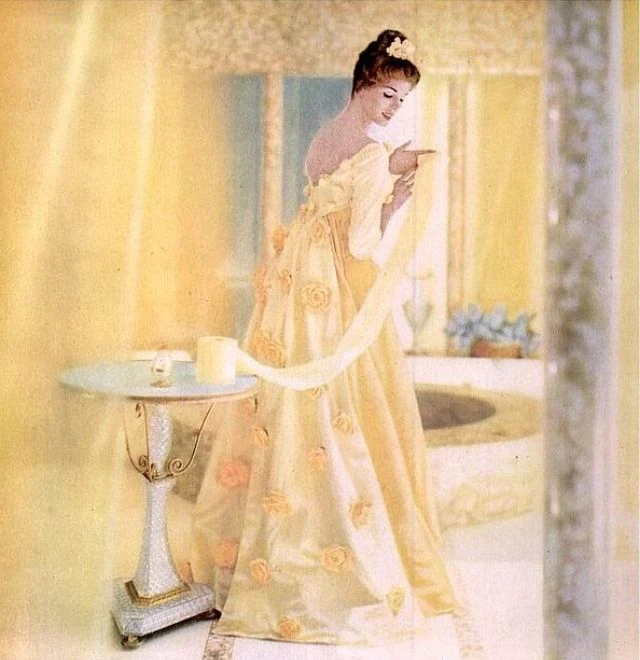
Pastel-colored nightgown by designer Ferraz, 1959. 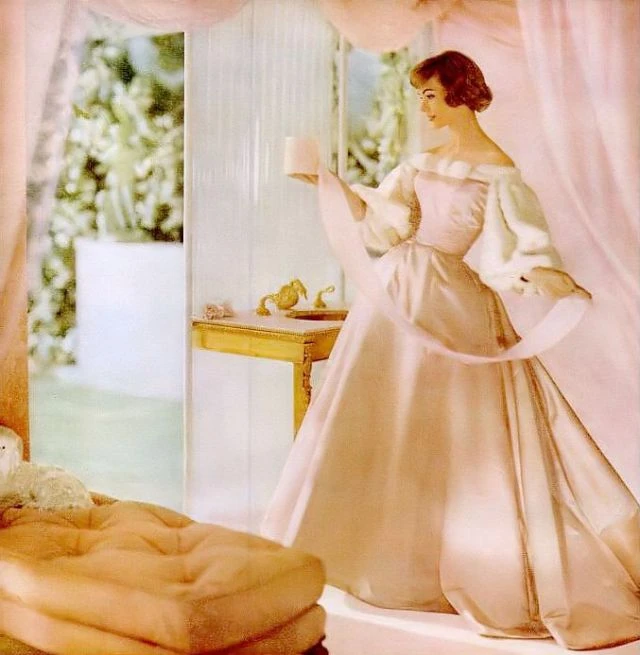
A pearl-pink satin dress with ermine trim by Hulitar is the final look of the campaign, 1959.
This advertising campaign was a rare example of a household product being transformed into a fashion phenomenon. The designers didn't lose their reputation—their names appeared in the bylines alongside the brand logo. For Scott Paper, this was a bold move. For the couturier, it was an unusual but memorable advertisement for their own talent.
Do you think this approach would work the same today, or would modern consumers perceive it differently?
The designers created dresses in the exact shade of toilet paper rolls—pink, blue, gold. The ads looked like a spread in Vogue, and it took the viewer a few seconds to figure out what exactly was being advertised.
Elegant models in Jean Patou fashion from the 1950s
Rudi Gernreich – the designer who invented the monokini, unisex, and shaved models
What brand advertising looked like in the distant past
From corsets to pinstripes: how underwear has changed over 100 years