The jeweler who tamed glass: How René Lalique turned dragonflies and snakes into masterpieces and adorned... A crystal ocean liner (21 photos)
René Lalique was the most revolutionary jeweler of the Art Nouveau era, transforming dragonflies and snakes into world-class masterpieces. He worked as a designer for Cartier and Boucheron while they were still putting their stamp on his creations. In 1885, he opened his own workshop and changed the very fabric of haute couture. We tell how a boy from the meadows of Champagne became a master glassmaker, clad an entire ocean liner in crystal, and died on Victory Day, before his factory could be revived. 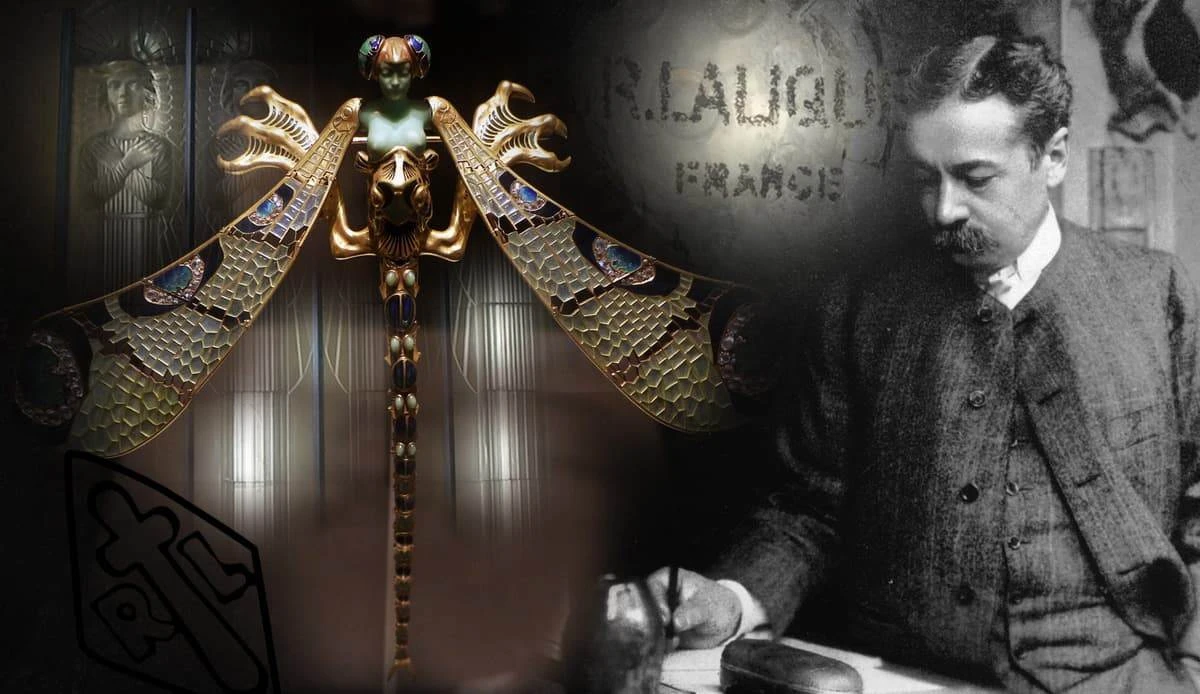
A Young Man from Champagne: From Meadows to Jewelry Workshop
When René was 12, his family enrolled him in the Lycée Turgot in Paris. There, he discovered his passion for drawing and simultaneously attended evening classes at the École des Arts Décoratifs. In 1876, his father died. At 16, René was apprenticed to the goldsmith Louis Aucoque, one of the leading Parisian jewelers of the time. 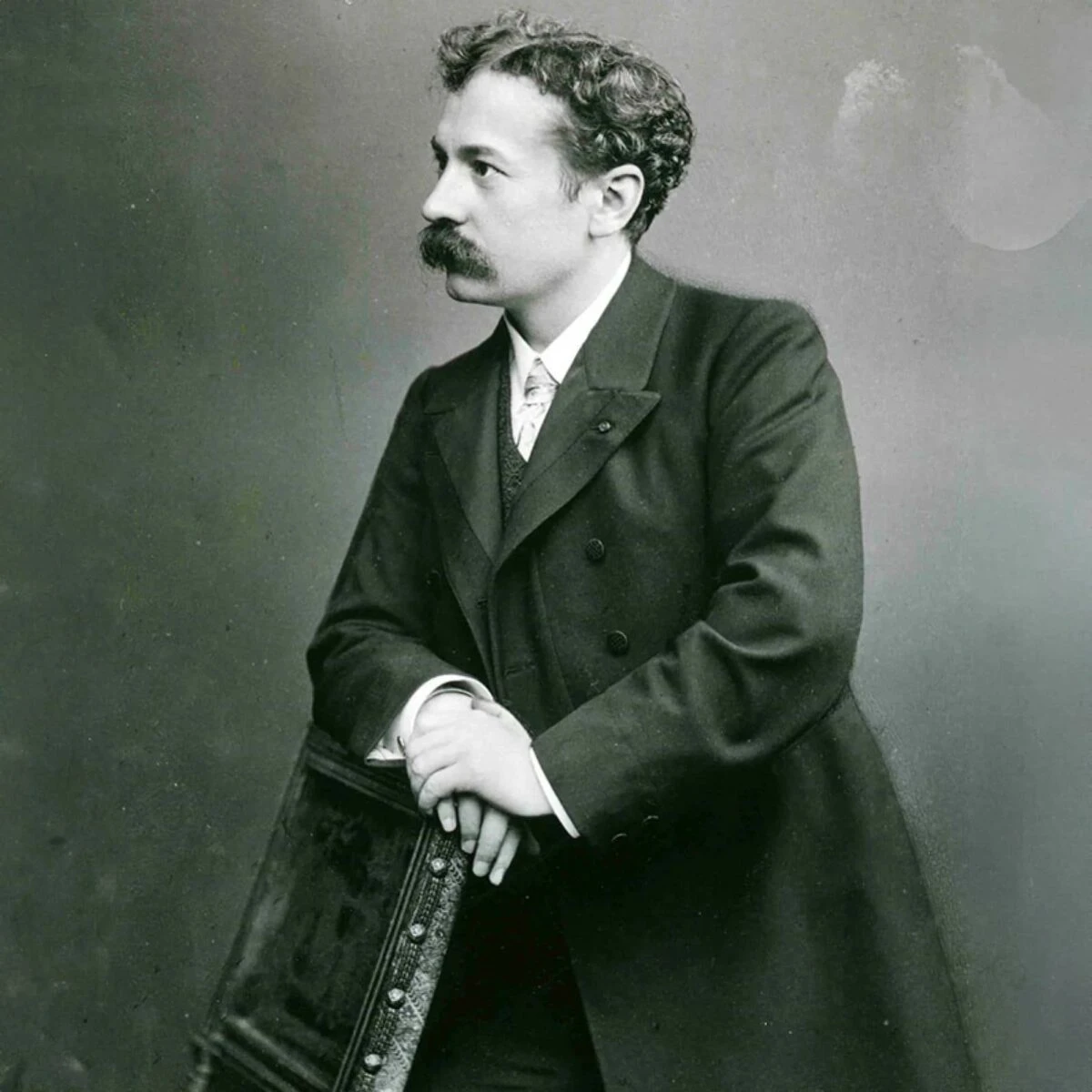
René Lalique, photograph by Aaron Herschel
There he mastered metalworking techniques. He then went to London to study at the Sydenham School of Art, located on the site of the former Crystal Palace from the 1851 Great Exhibition. Returning to Paris in 1880, Lalique began working as a freelance designer. Cartier and Boucheron eagerly bought his designs, and they put their own stamp on the finished pieces. Lalique remained in the shadows. 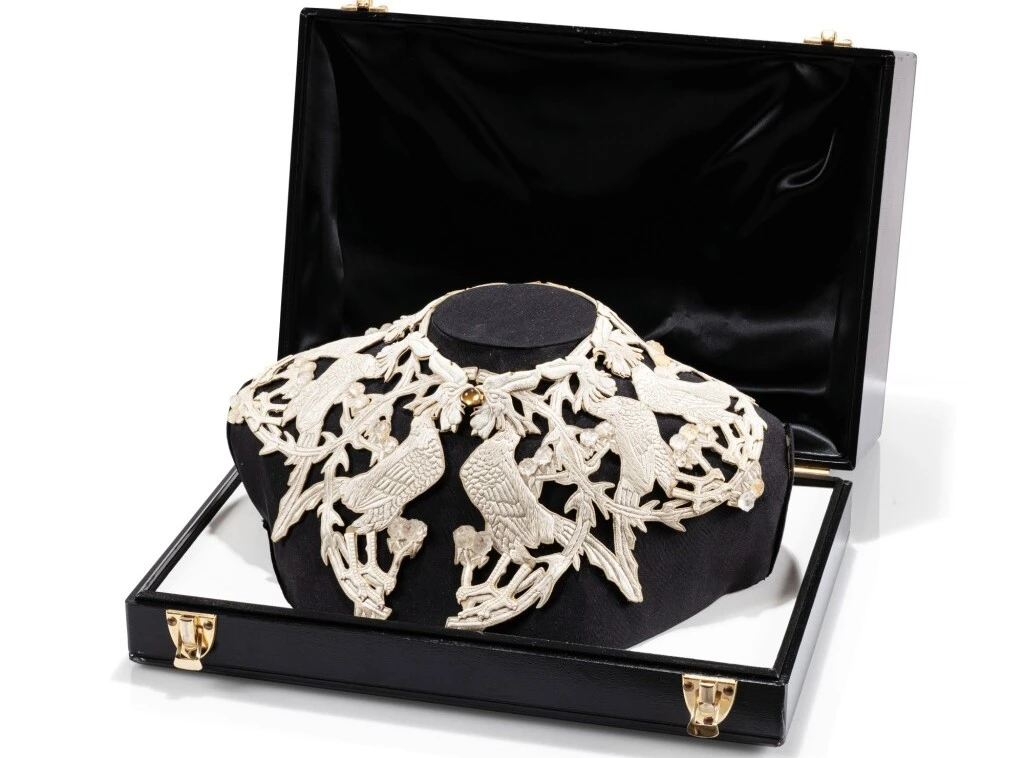
Collar-necklace "Roosters." 1909
Only in 1885, having gained experience and courage, did he open his own workshop on the fashionable Place Gaillon in Paris. His early works received critical acclaim. In 1890, Lalique opened a shop on Rue Thérèse in Paris, where he began experimenting seriously with glass.
A Revolution in Materials: Dragonflies and Snakes Instead of Diamonds
At the end of the 19th century, the value of jewelry was measured in carats. Pure stone, precise cutting, heavy gold—that was considered taste. Lalique thought differently. He brought materials previously considered "unworthy" into high fashion: cow horn, ivory, semi-precious stones, enamel, and ordinary glass. Everyone chose not by price, but by how they played with light and conveyed form. 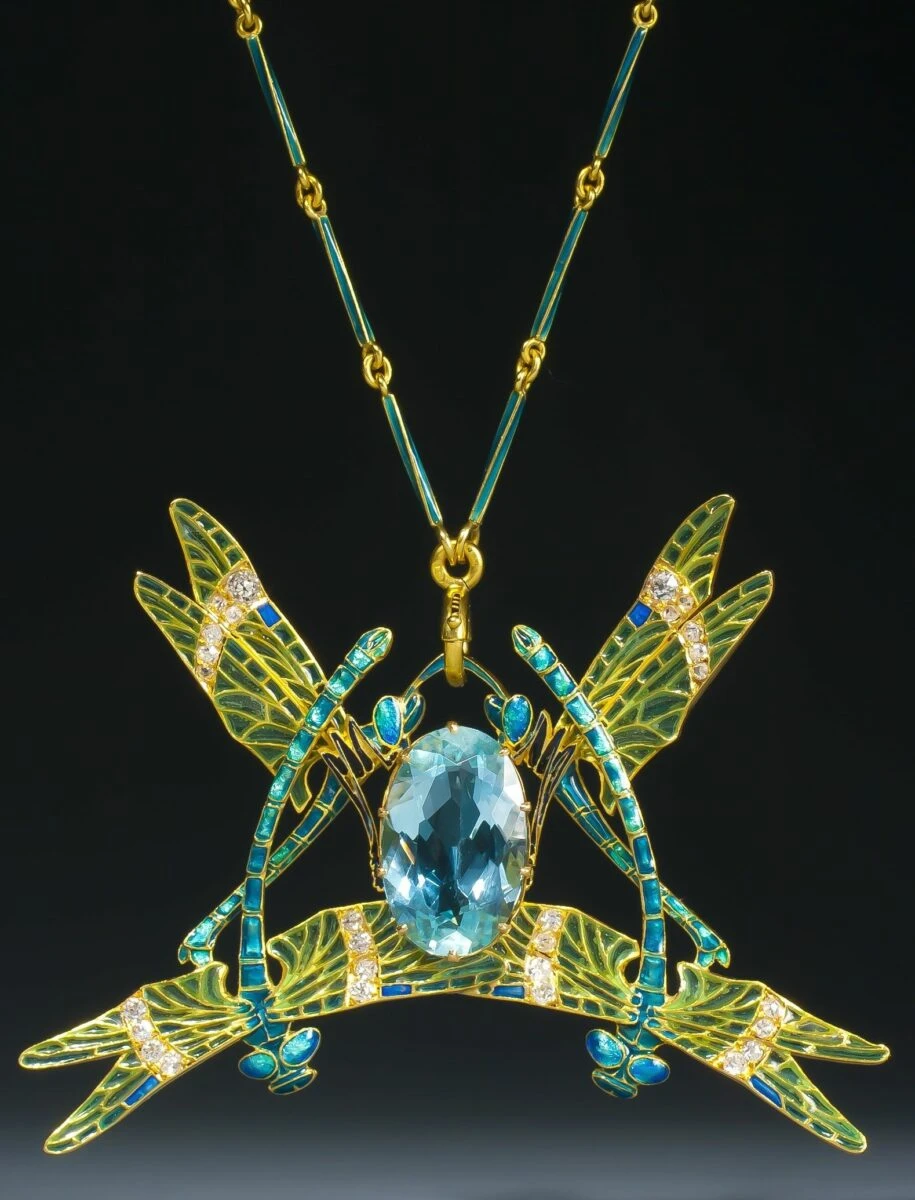
"Four Dragonflies" pendant. 1903
French glassmaker Émile Gallé called him "the inventor of the new jewelry." Lalique created brooches in the shape of dragonflies with delicate, transparent wings, necklaces with intertwined snakes, and combs with naked nymphs. He drew inspiration from Japanese art—the Japonism movement was sweeping Europe at the time, and he eagerly absorbed it. His creations shocked conservatives and captivated the avant-garde. 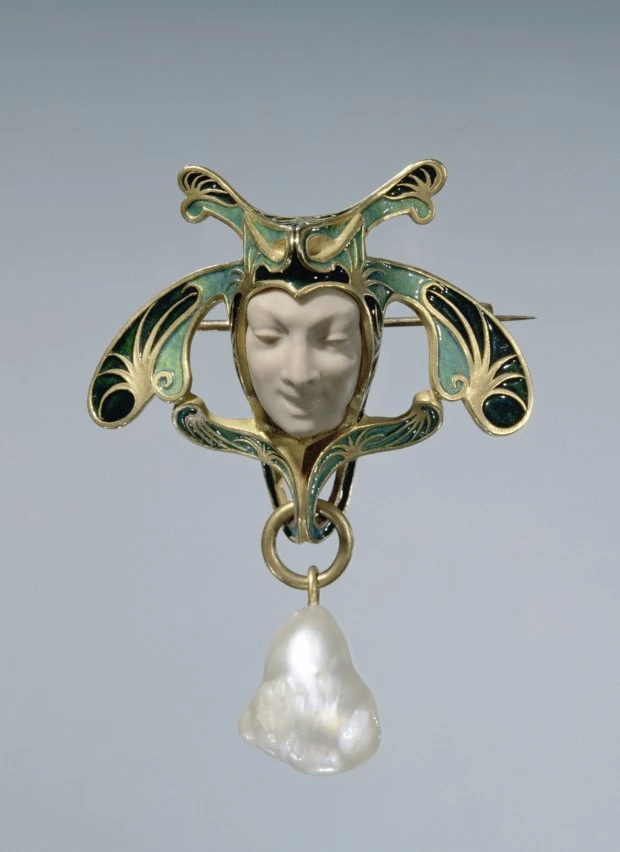
Brooch "The Jester." 1899
At the 1900 World's Fair in Paris, his stand drew crowds. Fifty million people visited the exhibition. Lalique displayed not only jewelry but also bronze and glass objects. It was a hint of where he would go next. 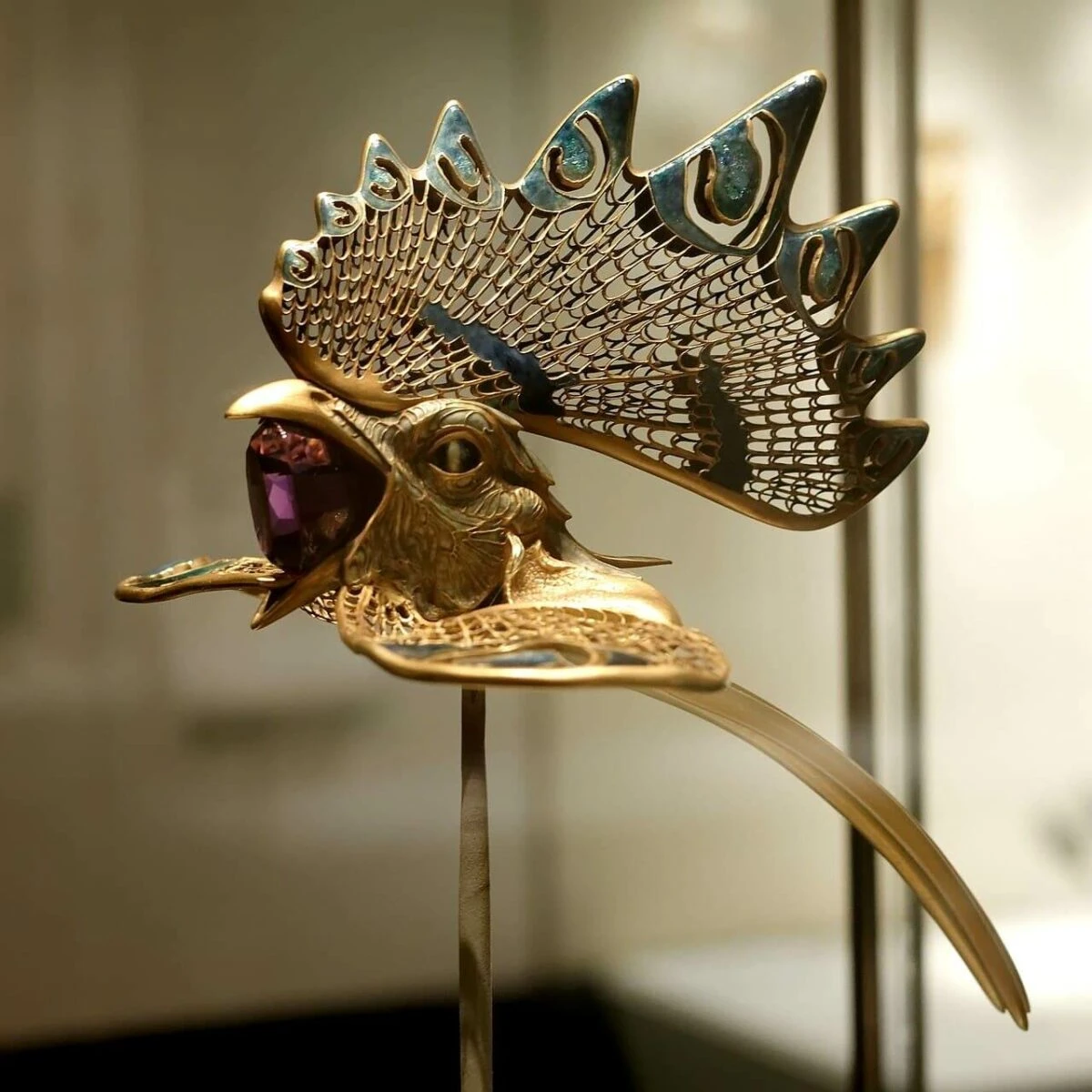
"Rooster" Tiara. 1897
Sarah Bernhardt, Medusa, and the Oil Millionaire
Lalique's clients included the great actress Sarah Bernhardt. She commissioned stage jewelry—daring, in unprecedented forms. For her role in the play "Théodora," Lalique designed a Medusa tiara: snakes entwined around her face. The production never took place. However, three Medusa-themed pieces did appear. One of them, a corsage with nine snakes, was exhibited in 1900. It's now in the Gulbenkian Museum in Lisbon. 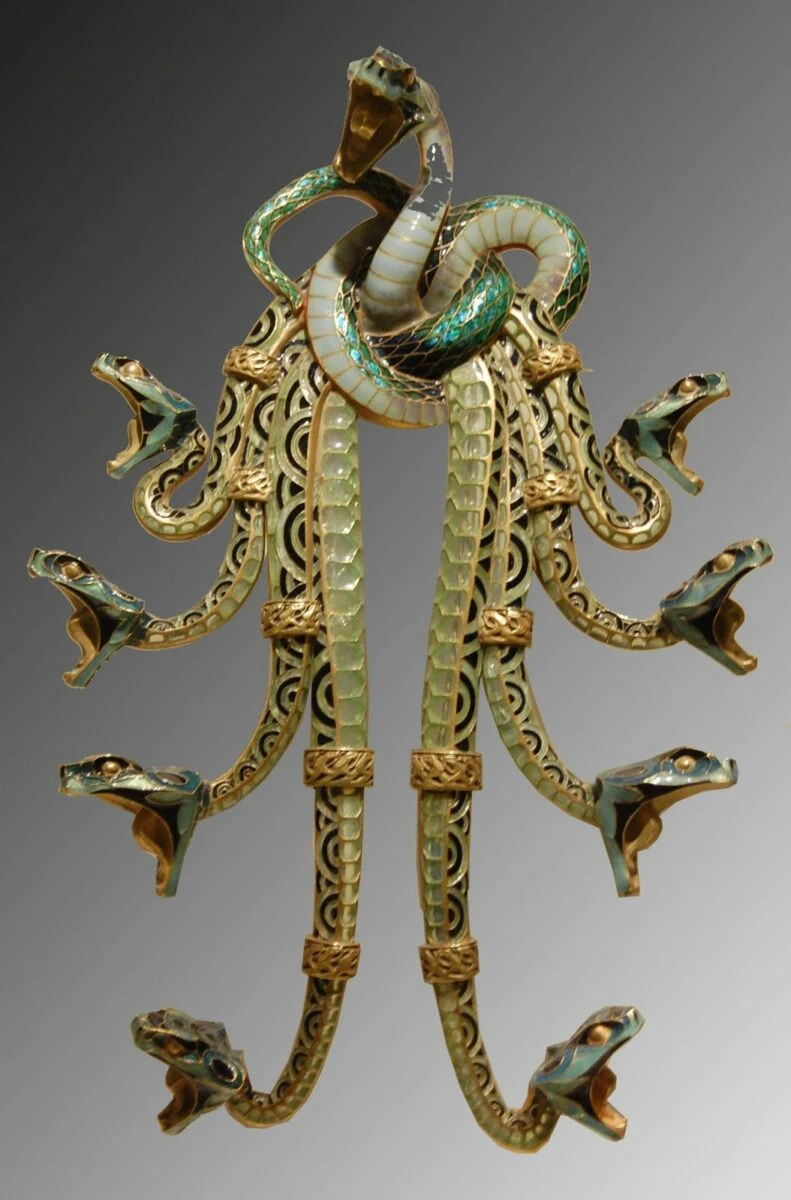
Corsage decoration "Snakes." 1899
Lalique's collaboration with Bernhardt made her famous. She showed the world that jewelry could be part of an image and a conversation piece—not just a sign of wealth. Her portraits with Lalique's jewelry were published in the press throughout Europe. 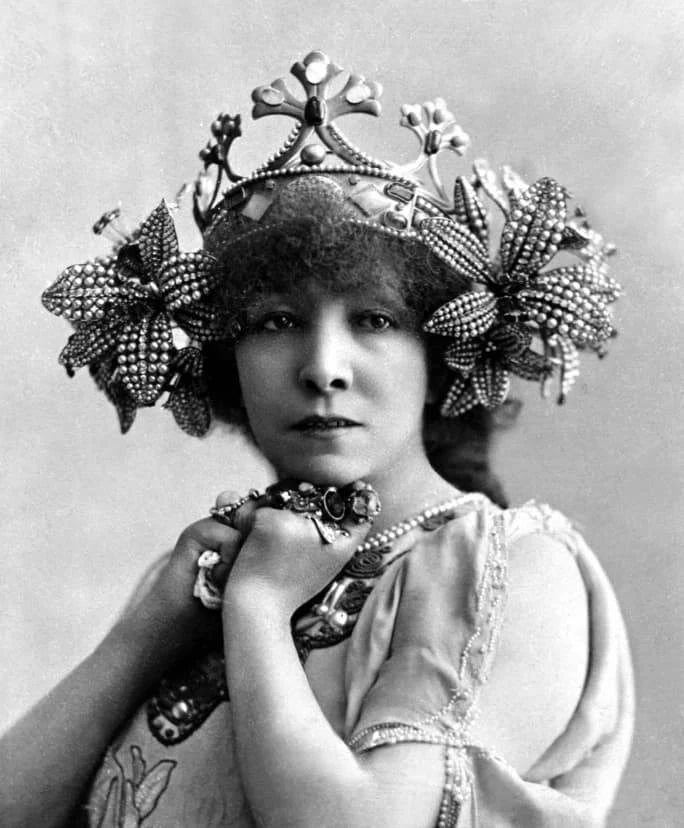
Actress Sarah Bernhardt wearing a lily tiara by René Lalique. Circa 1895
Another loyal patron was oil magnate Calouste Gulbenkian. The British-Armenian entrepreneur and philanthropist commissioned more than 140 pieces from Lalique over 30 years. Most can be seen today in the Gulbenkian Museum in Lisbon. In 1897, Lalique received the Legion of Honor for his participation in the World Exhibition in Brussels. 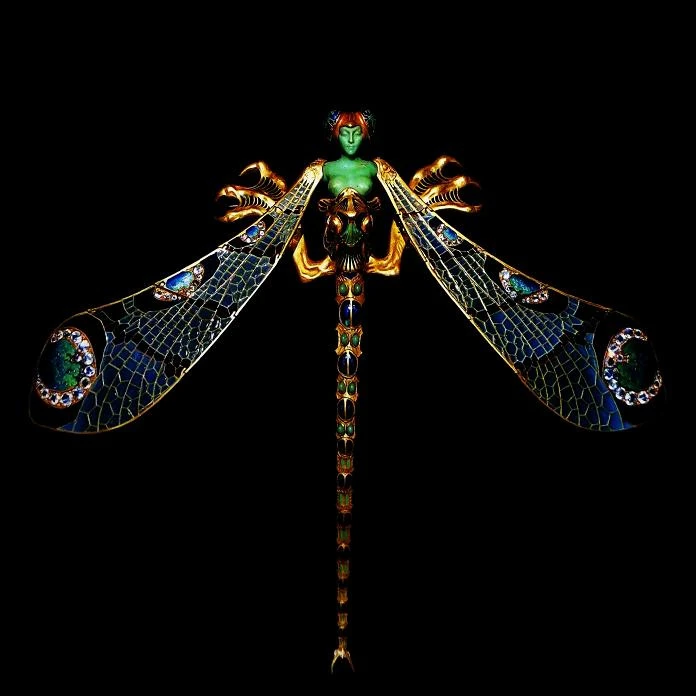
Pectoral "Dragonfly." 1898. Gulbenkian Museum, Lisbon
Coty's Bottles: How Packaging Became a Work of Art
In 1905, Lalique's shop on Place Vendôme was located next to the perfumer François Coty. Coty presented him with a challenging task: to design a bottle. Until then, perfumes were sold in simple apothecary bottles. Customers poured the fragrances themselves into crystal bottles at home. 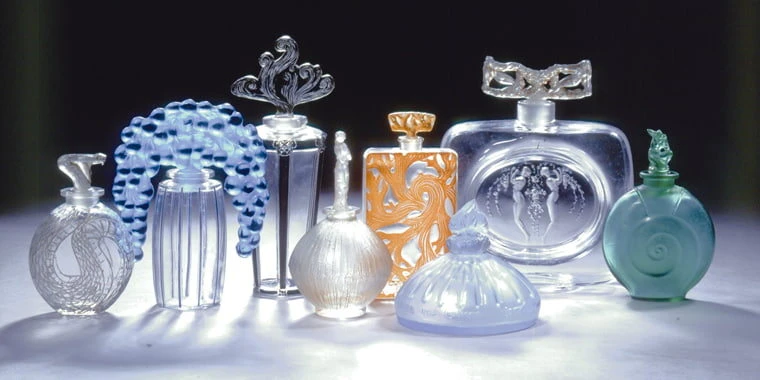
René Lalique's Perfume Bottles. 1920s
Lalique discovered how to replicate beauty. His bottles with relief figures, peacocks, and floral patterns became a sensation. He invented the very idea: packaging is art. This step changed the entire perfume industry. Following Coty, other leading perfume houses began working with him. 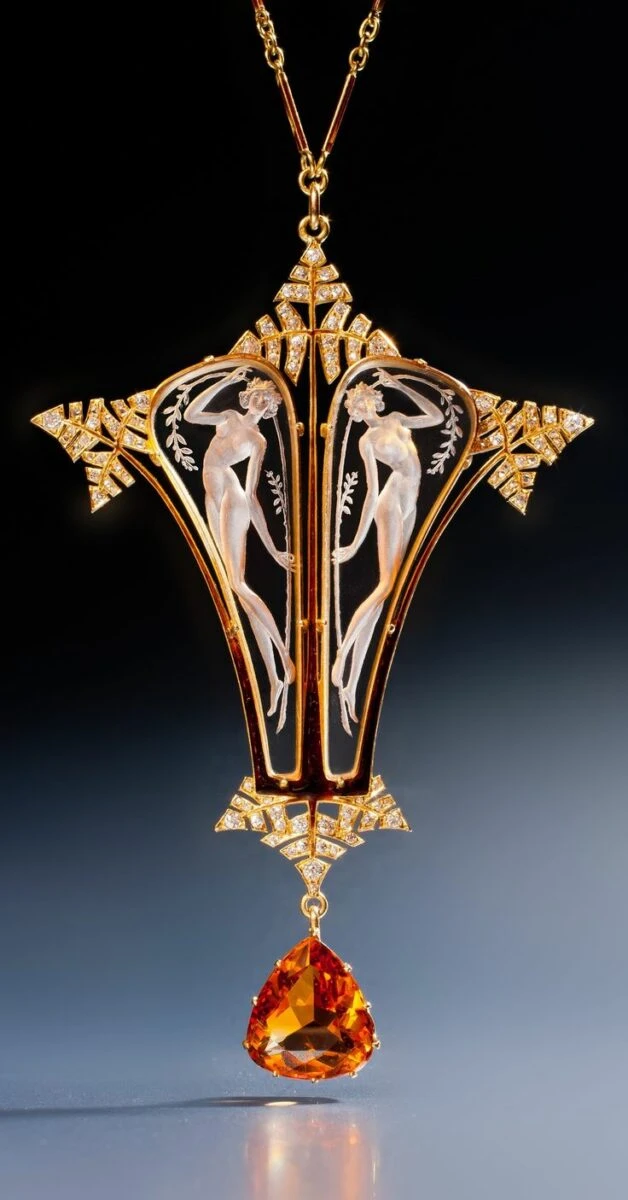
Pendant "Two Nymphs and Ferns." 1904
Lalique abandoned jewelry almost immediately. Glass took over. In 1907, he bought a factory in Combes-la-Ville near Paris. In 1912, he held the first glass exhibition there. During World War I, the factory produced hospital containers and medical bottles. After the war, Lalique opened a new factory in Wengey-sur-Moder in Alsace, a region with a long glassmaking tradition. Over the next two decades, they produced more than 1,500 types of products. 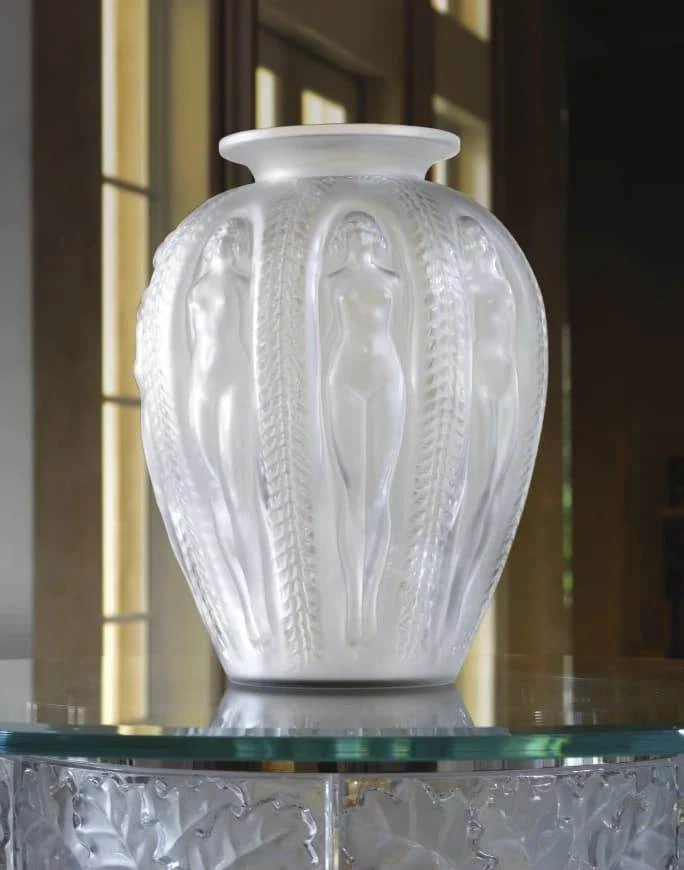
Luxembourg Vase. 1923
A liner, a church, and crystal mascots: the Art Deco era
In the 1920s, fashions changed. The smooth lines of Art Nouveau gave way to the clear geometry of Art Deco. Lalique seized the opportunity. He began to be invited to design villas, restaurants, and fashionable shops. In 1925, for the Paris Exhibition of Decorative Arts, he created the fountain "Sources of France" – 15 meters high, illuminated from within. It was one of the highlights of the program. 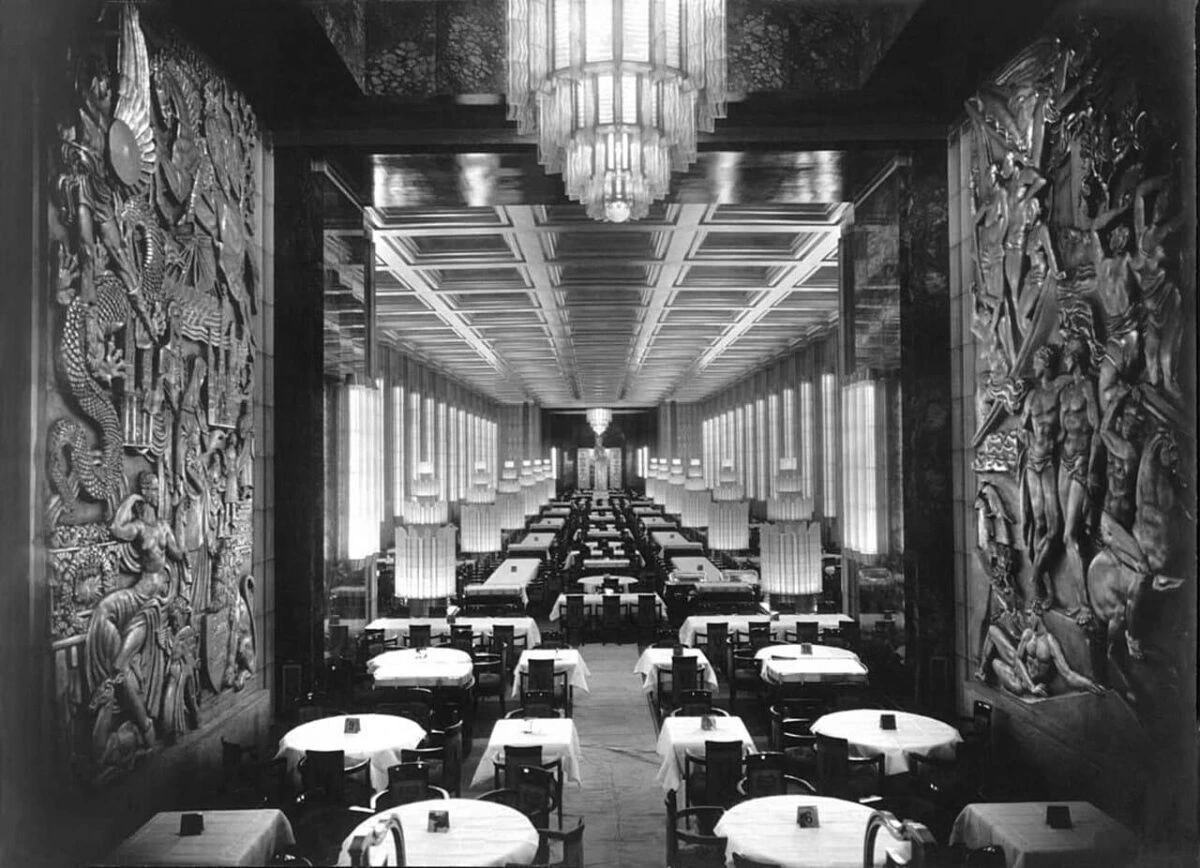
Dining room of the Normandie: glass panels by René Lalique. 1935
The pinnacle of his career was the legendary French liner Normandie. In 1935, Lalique created the enormous illuminated glass walls and columns of the dining room and first-class salon. Passengers dined surrounded by sparkling crystal—an interior like no other ship had ever seen. The Normandie wasn't the only one: Lalique had previously designed the Paris and Ile de France. 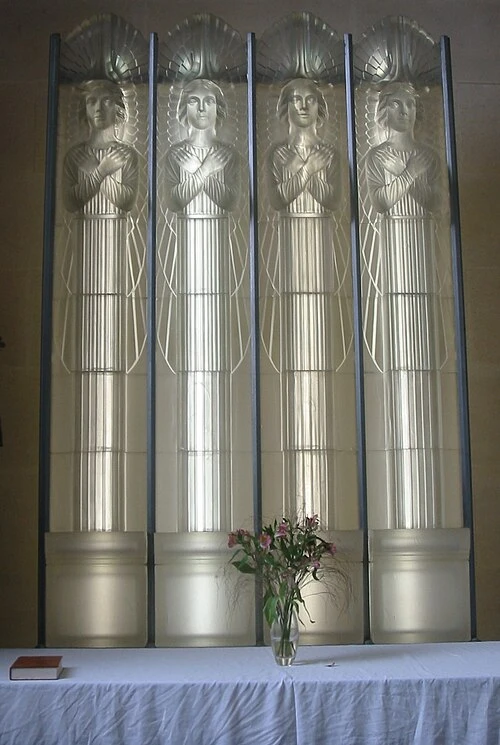
Glass Altar of St. Matthew's Church on Jersey, English Channel
For the Anglican Church of St. Matthew's on Jersey, he created a glass altar, crosses, and font. The interior is ethereal and tranquilly beautiful. Today, this church is known as "Lalique's glass church." Another trace of the master's influence on the city is the storefront windows of the Coty Building at 712 Fifth Avenue in New York City: they remain standing to this day. 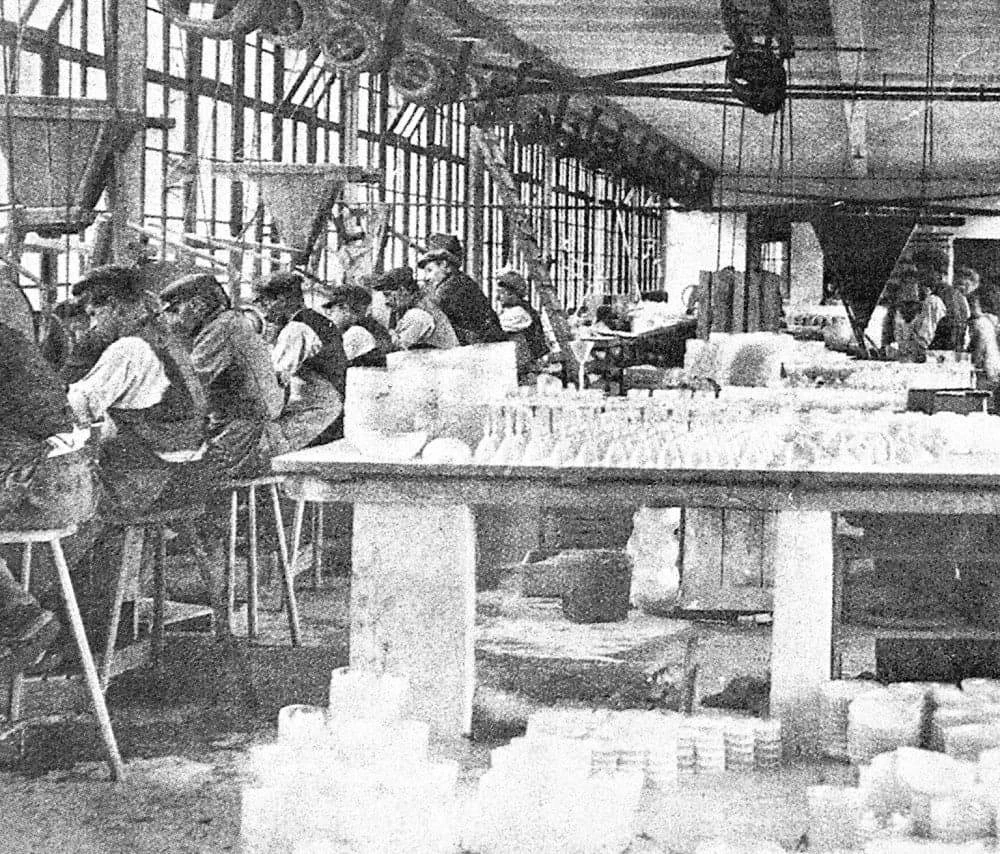
René Lalique's factory in Vingues-sur-Moder. 1922
Another page of this era is car mascots. Lalique made crystal hood ornaments: a falcon, a woman's head, and a greyhound. They glowed from within and were installed on Rolls-Royce, Bentley, and Citroën cars. 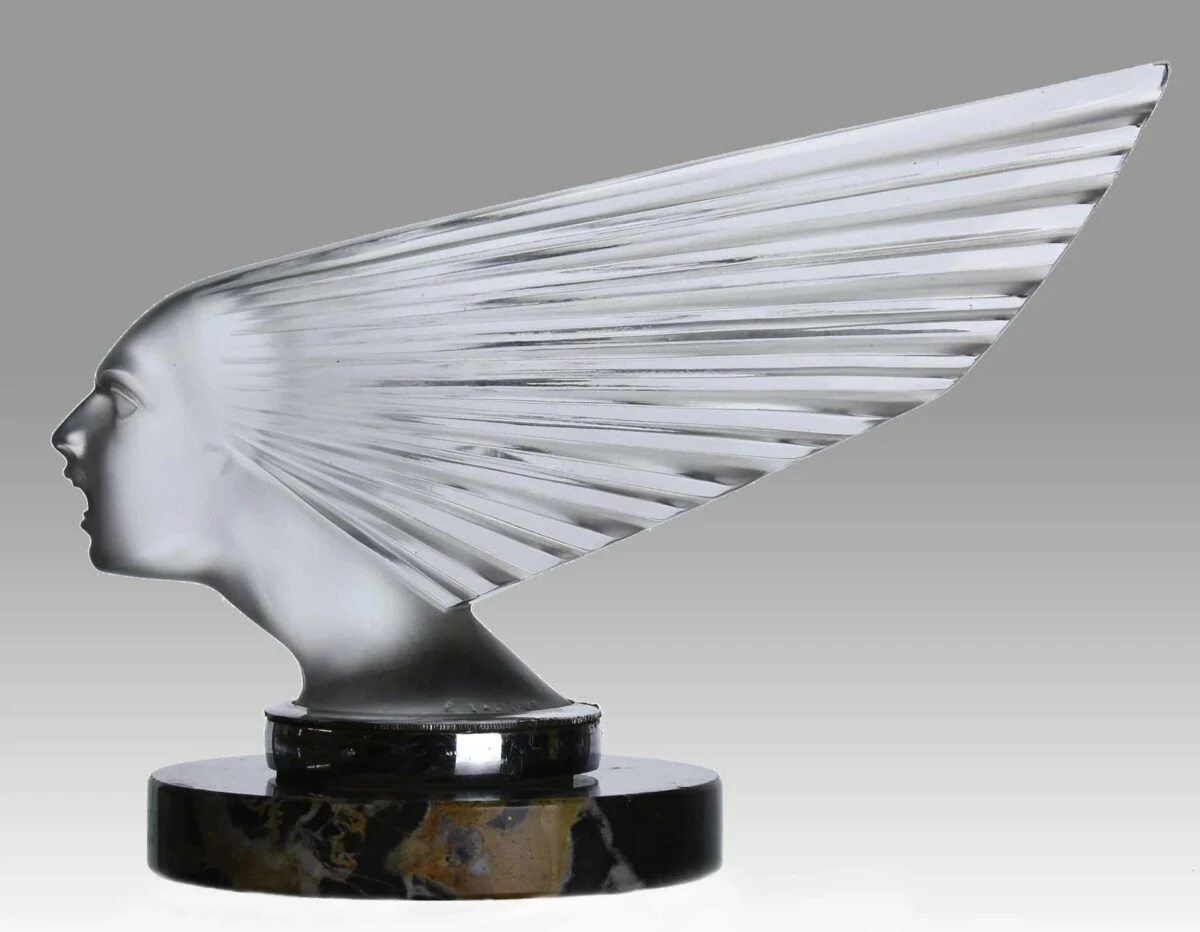
Rolls-Royce mascot "Spirit of the Wind." 1928 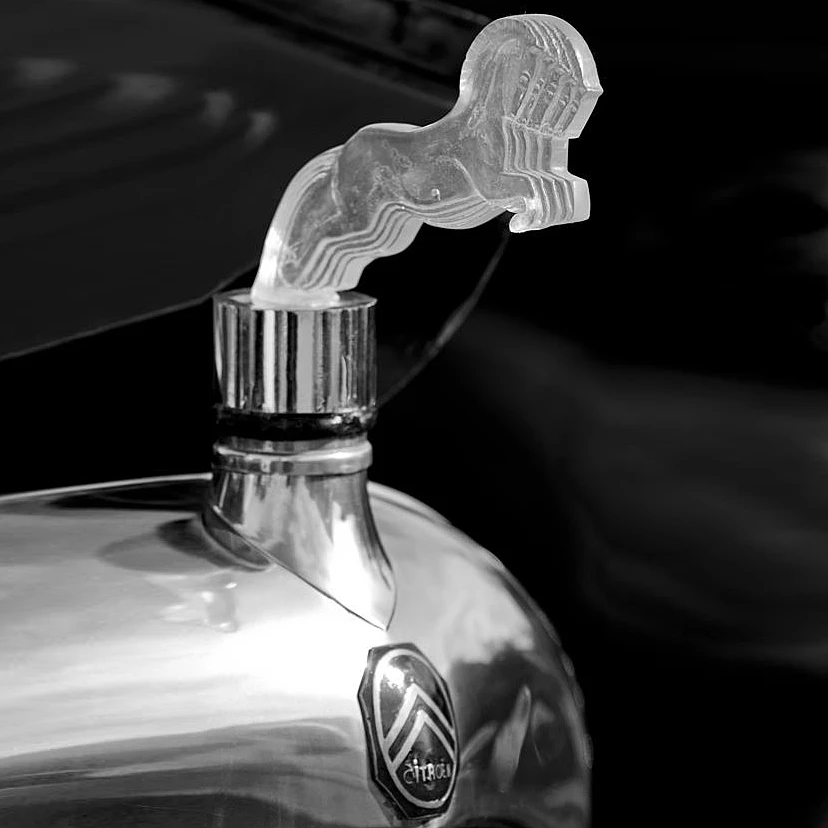
Citroën "5 Horses" Mascot. 1925
War, Death, and Life After
In 1939, German troops occupied Alsace. The factory was closed, and the equipment was removed. Lalique waited for the war to end. Ironically, he died on May 9, 1945—Victory Day—at the age of 85. He did not live to see the rebirth of his brainchild. 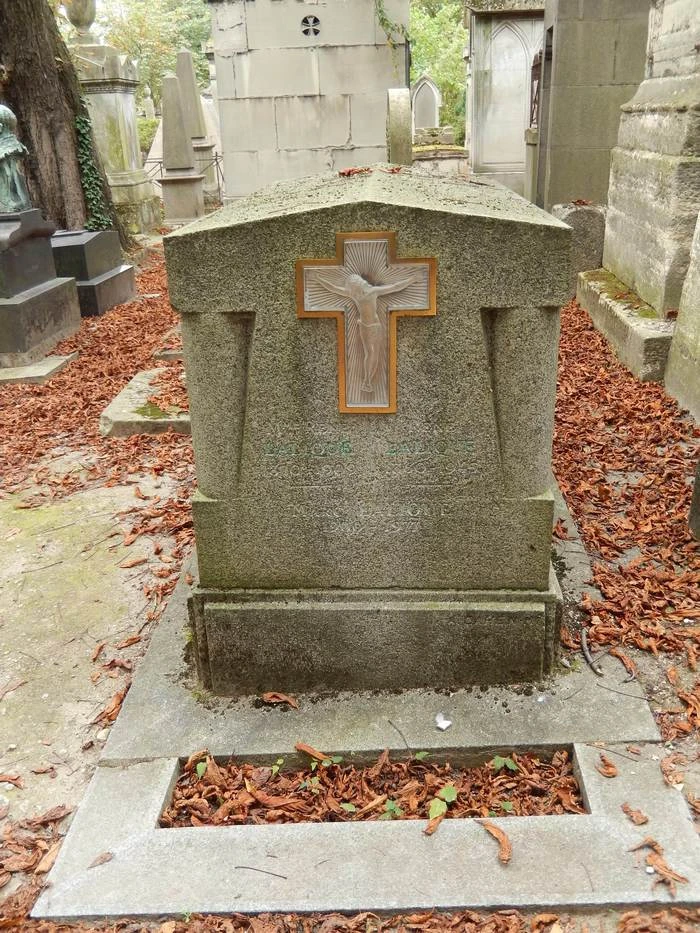
René Lalique's tombstone at Père Lachaise Cemetery is adorned with a crystal crucifix.
The business was continued by his son Marc, and then by his granddaughter Marie-Claude. In 2008, the company was acquired by Swiss entrepreneur Silvio Denz, the largest collector of Lalique's works. He carefully preserves the house's traditions without breaking them. The brand continues to operate today: crystal, perfume, jewelry, and interiors. Among the brand's partners are artist Damien Hirst and architect Zaha Hadid. 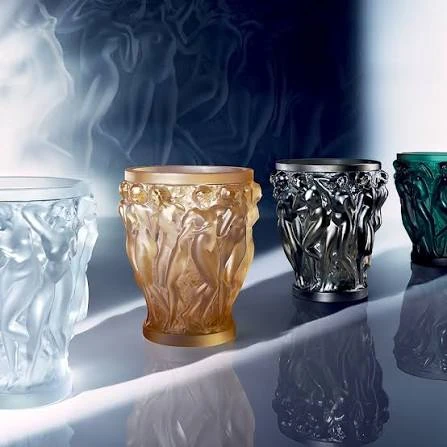
Modern vases by Lalique 
Collector and entrepreneur Silvio Denz carefully preserves the traditions of the House of Lalique.
The René Lalique Museum in Vinge-sur-Moder houses 650 of the master's works. His factory, the same one that opened in 1921, is also located there. In 2017, one of Lalique's pieces, a flower necklace created around 1900, sold for $975,035. More than 100 years later, his works continue to set auction records. 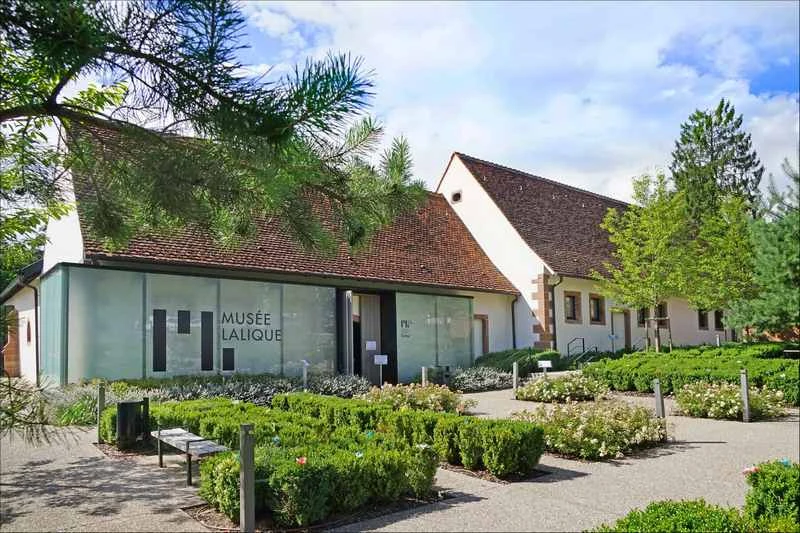
René Lalique Museum in Vinge-sur-Moder, Alsace
Which of Lalique's creations impresses you most: the jewelry with nymphs and insects or the monumental glass works? Share in the comments!