What life was like for children in Nazi Germany: from primers to concentration camps (16 photos)
In 1933, the Nazis came to power in Germany, bringing about profound changes not only in politics and economics. Childhood in the totalitarian state also changed beyond recognition. From their earliest years, children were prepared to serve the Third Reich. Ideology permeated every aspect of their lives: school, toys, holidays, and even outdoor games. Education, entertainment, and leisure left no room for the personal, the neutral, or the accidental. 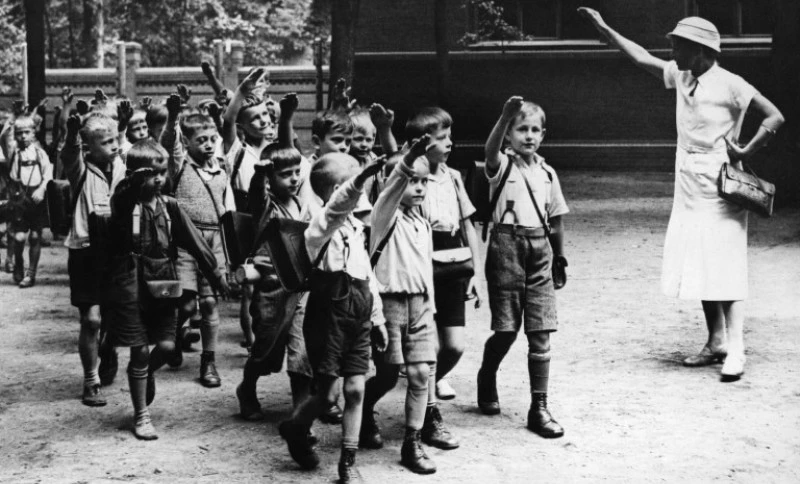
School Under the Nazis: Propaganda from the First Pages of the Primer
In 1933, when Hitler came to power, the lives of millions of Germans changed forever. These changes affected not only adults but also children. Jews, communists, and those teachers who did not support the new government were dismissed from schools and colleges. Many remaining teachers decided to join the Nazi Party. By 1936, 32 percent of German educators were members of the NSDAP. 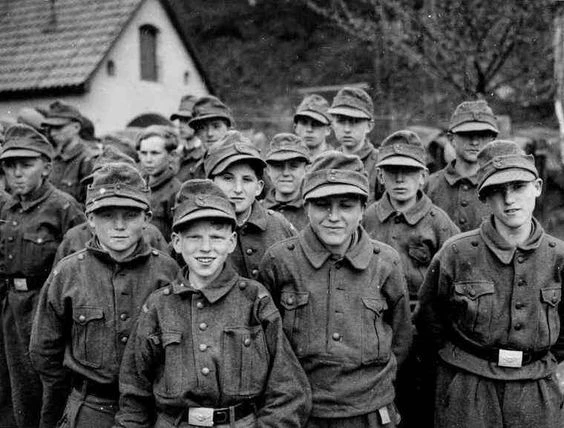
The new regime replaced all textbooks. In math class, elementary school students no longer sorted apples into baskets. Now they assigned soldiers to tents. High school students, in turn, created diagrams showing the Reich's expenses on supporting the disabled and people with hereditary diseases. 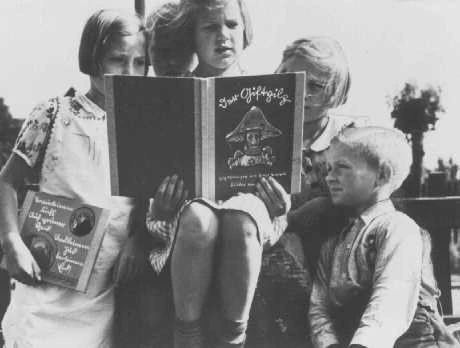
German schoolchildren with books. 1938
In their ABC books, the children formed Nazi slogans and odes to the Führer. But the most bizarre textbooks were the history textbooks. They claimed that the German nation stood at the origins of ancient civilizations and created the Persian, Greek, and Roman empires. Bible lessons disappeared from the curriculum, but the number of physical education hours increased, and the standards became stricter.
Children of "Non-Aryan" Origin
The lives of children of Jewish, Roma, and other "non-Aryan" descent were radically different from those of their German peers. Beginning in 1935, the Nuremberg Laws stripped them of their civil rights and turned them into social outcasts. Jewish children could no longer attend regular schools, play in parks, or even buy ice cream. Their childhoods became a series of prohibitions and humiliations. 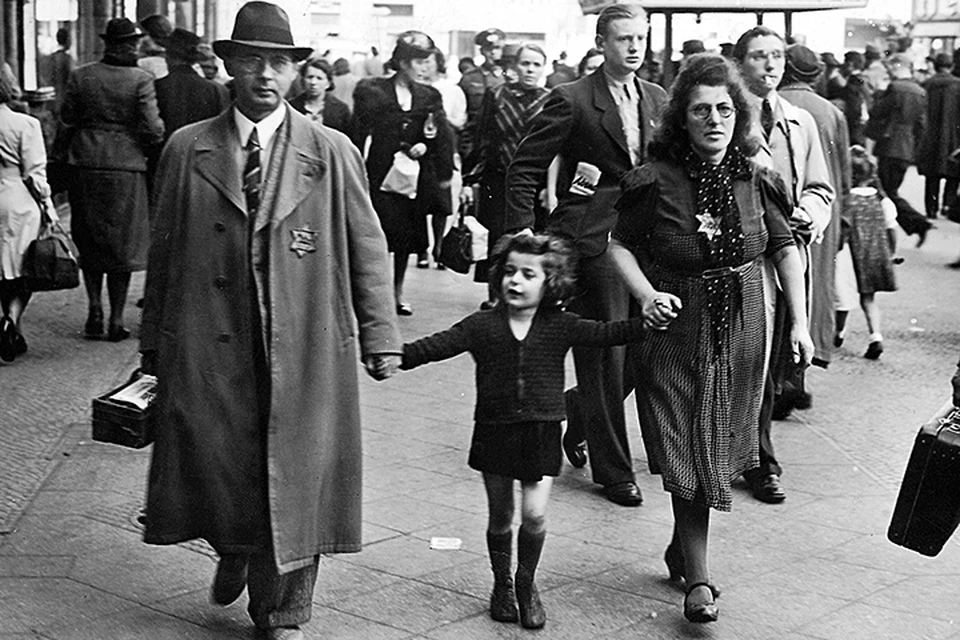
The situation gradually worsened. Children were separated from their parents, forced to wear yellow stars, and then deported to ghettos and concentration camps. Many families tried to hide their children with friends or in monasteries, but this was extremely dangerous. Children of "non-Aryan" descent became victims of one of the cruelest systems in human history, deprived not only of their childhood but often of their lives.
Lessons of Hatred
Biology classes in German schools relied heavily on the works of Julius Streicher, the racist ideologist. Children were taught that the Aryan race was superior to all others. They were told about the so-called "Untermensch"—"subhumans," which included Jews and Roma. Schoolchildren were even shown photographs of children born from mixed marriages between Germans and Jews to teach them to distinguish between "inferior" people. On November 15, 1938, Jewish children were banned from attending school. 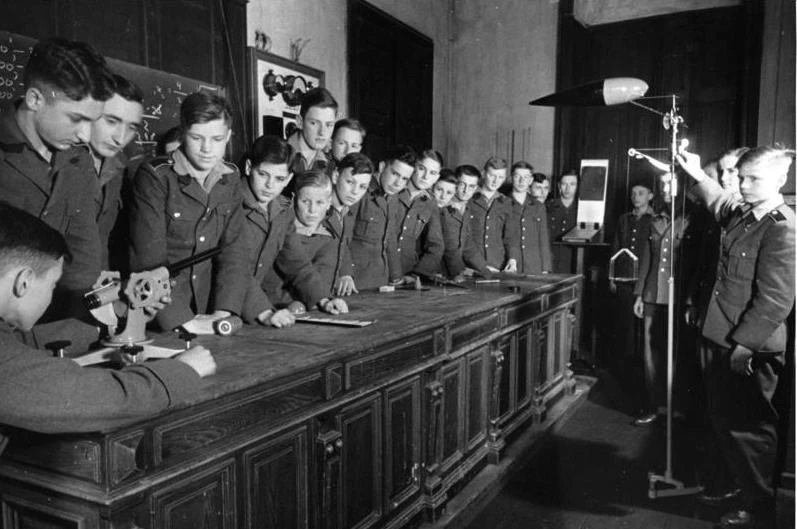
Students from the National Political Educational Institution (NAPOLAS)
In 1933, the Nazis created NAPOLAS—special national political educational institutions. These schools trained future leaders of the National Socialist movement. They accepted boys aged 11 to 18 and taught them a clear political slant. Particular attention was paid to the propagation of Nazi ideology. 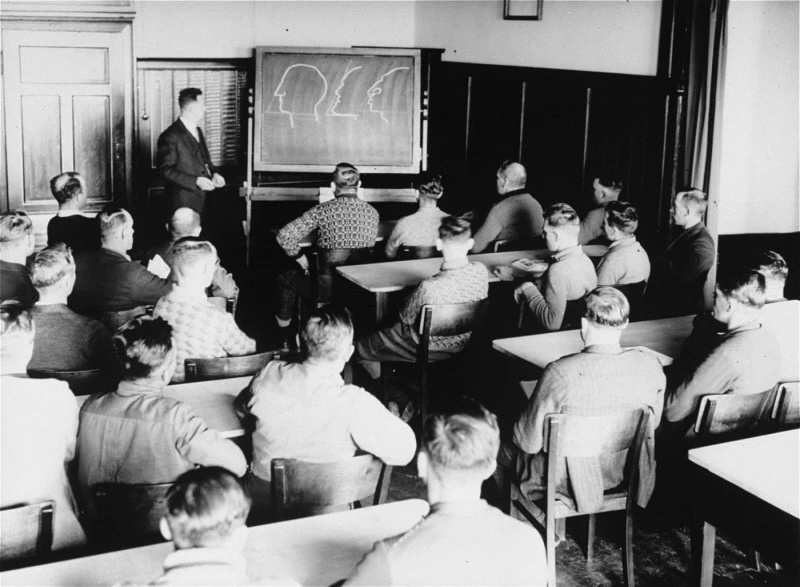
A teacher explains to schoolchildren how to distinguish a German from a Jew by the shape of their skulls.
Children born under Hitler were the most susceptible to Nazi propaganda. They knew no other way of life and completely trusted what they were taught at school and at home. In families that did not support the Nazis, parents were afraid to discuss their offspring's politics, lest they bring trouble upon themselves. 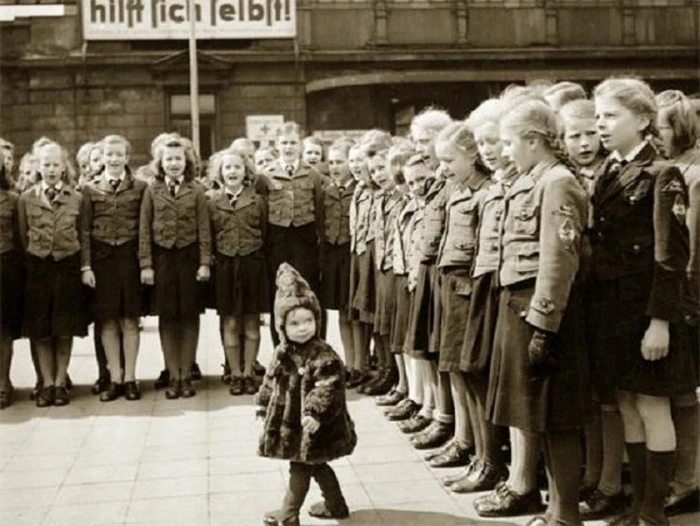
In his memoirs, Swiss diplomat and historian Karl Burkhof recalled: on the night of November 9-10, 1938, he saw a boy, just nine years old, set out with his peers to smash Jewish stores. When this little Nazi learned of the German occupation of Poland, he jumped for joy. He couldn't understand why his mother was crying. There were tens of thousands of such children in Nazi Germany.
Toy Soldiers, a Tin Fuhrer, and Nazi Dolls
Given the current circumstances, no one was surprised by the changes in the range of children's toys. Before Hitler came to power, toy production had been in decline, but Nazi rule opened up new opportunities for companies. The situation was especially favorable for companies belonging to the Association of German Tin Figure Manufacturers. 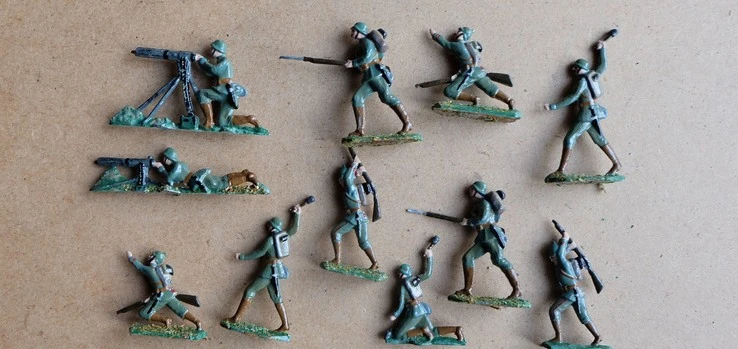
German Tin Soldiers
In 1933, the founders of the Association, which produced almost all the toy soldiers in Germany, declared:
"The stupid pacifist hatred of so-called peace societies and women's leagues for all military toys is over. National revival in Germany has revived military thinking."
In addition to numerous variations of soldiers representing various branches of the armed forces, they also produced figurines of the Führer with his arm raised in a Nazi salute. But the manufacturers overdid it, and the authorities did not appreciate their patriotic impulse. Someone suggested that children might use the Hitler figurine inappropriately. What if it gets broken or, for example, painted over? 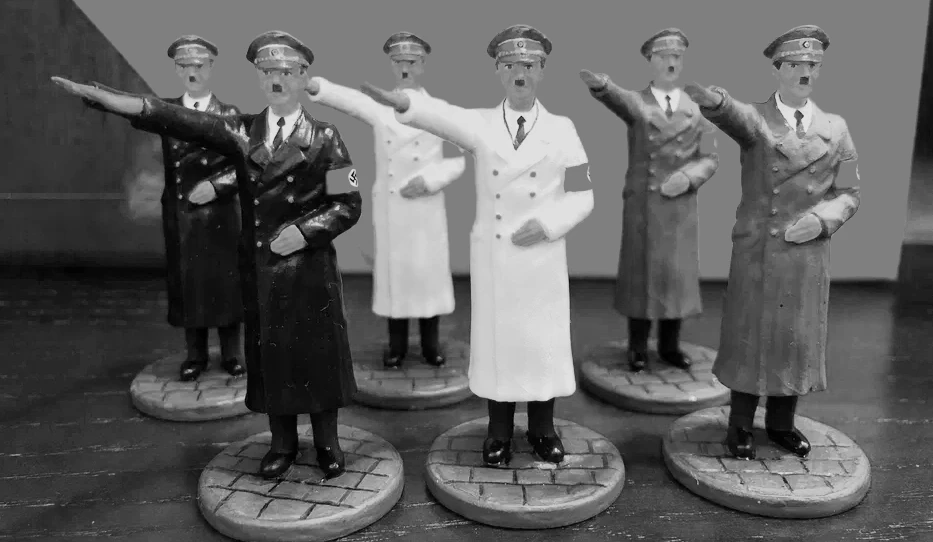
Tin Fuhrers for Every Taste
To avoid similar situations in the future, the authorities decided to regulate production through legislation. On May 19, 1933, the Law on the Protection of National Symbols was passed. According to it, factories were required to coordinate their products with a special commission and obtain permission for production. As for the tin Fuhrer figurines already produced, they were not withdrawn from sale – they were too popular among the public. 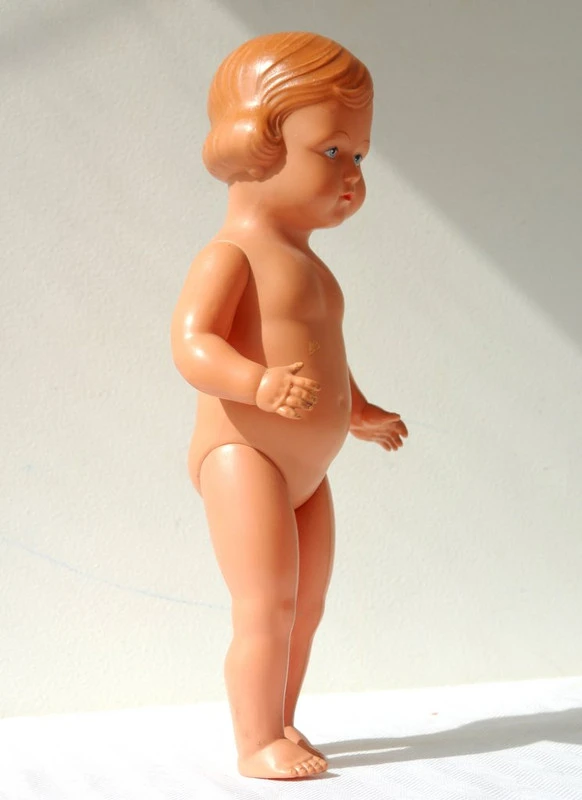
German celluloid doll of the 1930s
Toy stores were filled with pistols, machine guns, tanks, and helmets. All the dolls had blond hair and sky-blue eyes. In the mid-1930s, the Schildkröt company released dolls named Hans and Inge. Their appearance perfectly matched the concept of the Aryan race. These toys were popular throughout Europe, but only in Germany could you find Hans in a Nazi uniform. By 1943, the production of all toys was banned—all resources were needed for the war effort.
How the Third Reich Rewrote Children's Culture
Children's parties, theater, and circus performances were steeped in ideology. In 1939, children were congratulated along with St. Nicholas by... Joseph Goebbels, the Reich's chief propagandist. Nazi bacchanalia even reigned in puppet theaters. At performances, the German Harlequin Kasperle insulted Churchill and mocked Jews and communists. 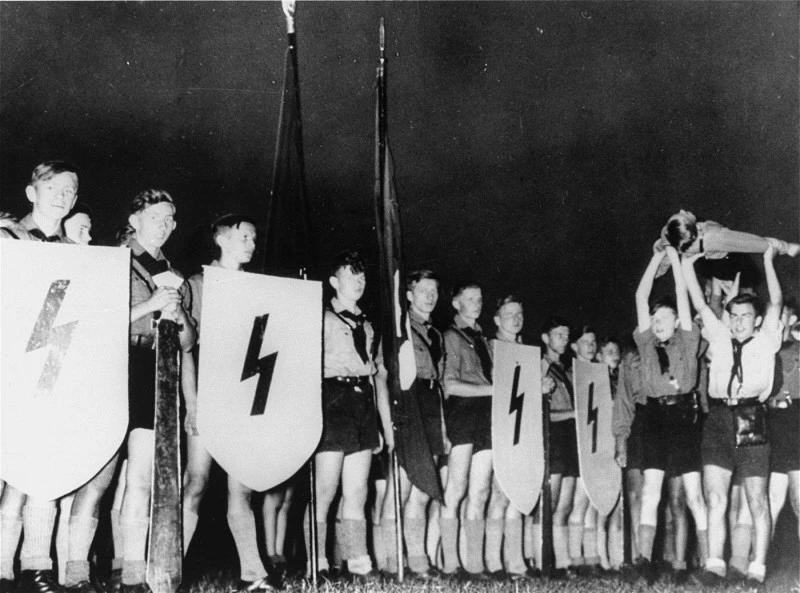
A performance organized by teenagers from the Hitler Youth
Jewish dolls appeared in puppet shows. Their appearance was deliberately repulsive: a huge hooked nose, fleshy lips, and ridiculous, unkempt clothing. Later, the creator of these dolls, Caro Schigel, tried to justify himself. He claimed he was forced to collaborate with the Nazis, as otherwise he would have been sent to a concentration camp. 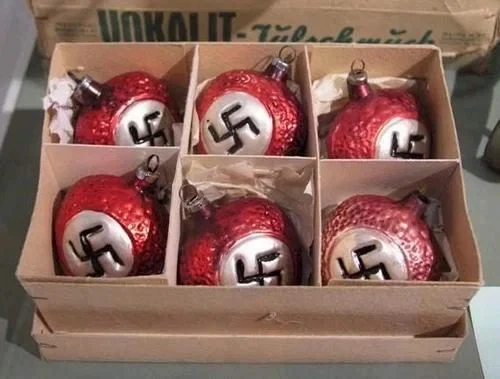
Christmas Tree Decorations of Nazi Germany
Absurd changes also affected the celebration of Christmas, a favorite holiday for children. It was said that instead of a Christmas star, the top of the tree was sometimes decorated with a swastika. However, no photographs of such decorations have survived. However, Christmas tree decorations with swastikas and images of the Führer have survived to this day. Children found chocolate soldiers and airplane-shaped candy canes among their sweet gifts.
When Games Teach Hatred
The current situation in the country could not help but affect children's play. As early as 1933, children began playing communist hunts in courtyards. The ideological enemy had to be found, captured, and sent to a special place called a "camp." In addition, various board games became very popular. 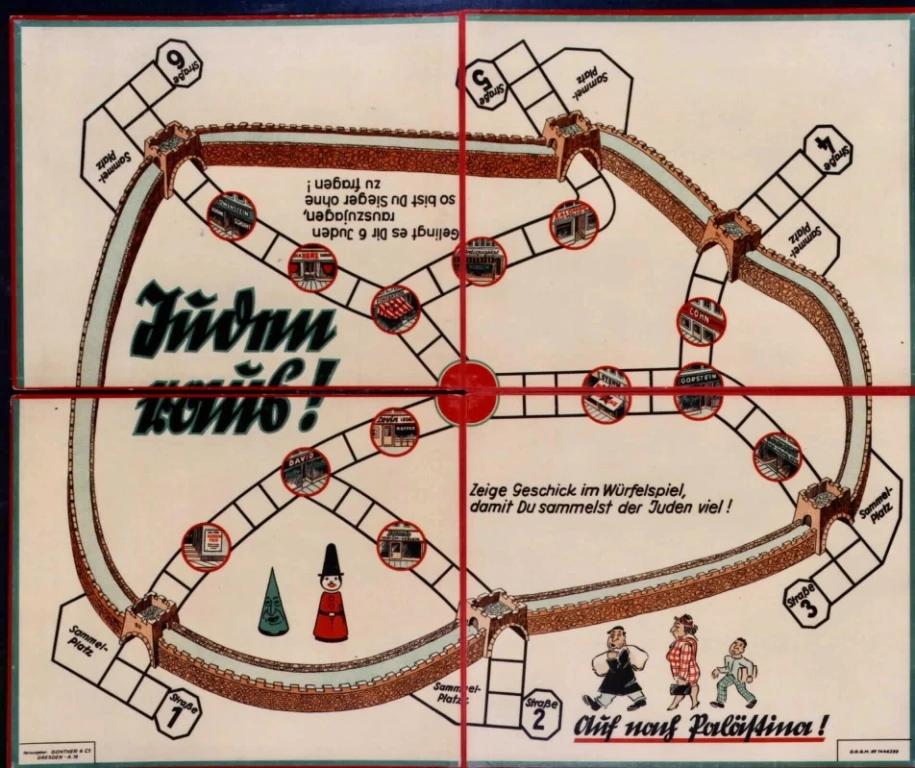
Board game "Jews, Out!"
For example, the games "We're Flying to England" and "Bombs to England" offered players boards depicting cruisers and bombers. In 1938, the game "Jews Out!" became particularly popular. The goal was to clear a city of Jews. Players took turns collecting victims at a specific location on the board for subsequent transport to a concentration camp. 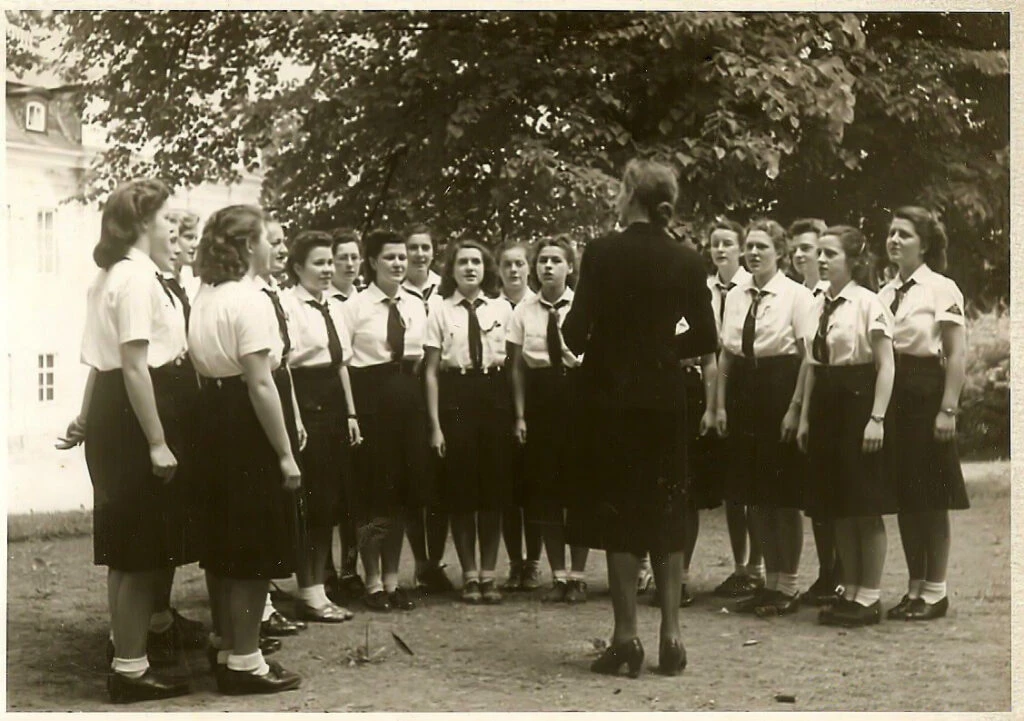
Schoolgirls from the League of German Girls
From the age of 10, children could join the Hitler Youth or the League of German Girls. These organizations had special divisions for younger children. By 1939, youth movements had reached up to 80 percent of teenagers. Their main goal was to educate future soldiers, as well as wives and mothers, with the "correct" ideology. The organizations held sports events, primarily team games. Boys were taught wrestling, knife throwing, and even shooting.
Life in the Shadow of War
With the outbreak of World War II in 1939, the lives of children in Germany changed even more dramatically. Many families lost their fathers to the front. Cities were bombed, and children often had to hide in shelters. In the final years of the war, as Germany began to suffer losses, teenagers from the Hitler Youth were sent to the front. Some of them were very young – 14 to 16 years old. 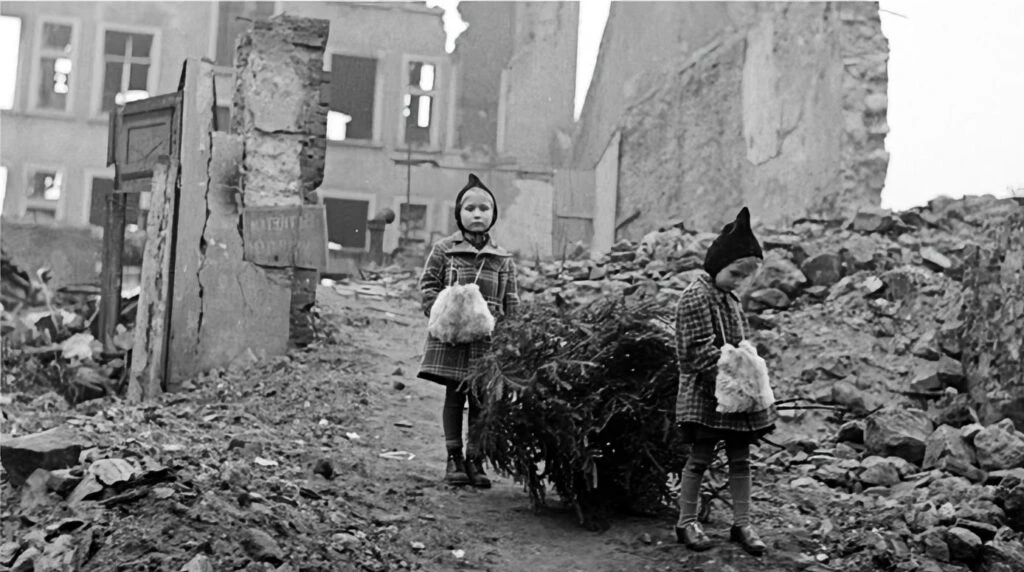
The evacuation became another serious ordeal for children. Thousands of children were sent to rural areas or special camps to protect them from the bombings and destruction of the cities. Many of them were leaving their homes for the first time, finding themselves in unfamiliar surroundings and forced to adapt to new conditions. Separation from family, constant fear for their loved ones, and an uncertain future became an integral part of their lives. The children often felt alone and helpless, but the regime continued to instill in them the idea that they must be strong for the sake of a "greater Germany."
How did this affect their future?
After the defeat of Nazi Germany, a period of rethinking began. The first step was to ban all war toys. The initiative was put forward by women from the Christian Democratic Union of Germany, and members of parliament supported it. However, toy manufacturers soon found a way around the ban by positioning their products as collectible models. Nevertheless, the militarization of children ceased, and little ones gradually returned to peaceful play. 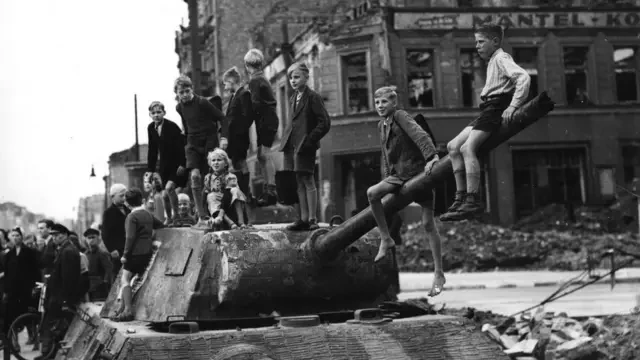
Berlin children in the spring of 1945
Childhood in Nazi Germany left a deep mark on the lives of millions of people. Some grew up believing in the ideas of Nazism, others with a sense of guilt for their country's past. After the war, many children raised on propaganda were forced to rethink their views. It was a difficult time for an entire generation, growing up under conditions of total control and fear.
The story of children's lives in Nazi Germany reminds us how easily the minds of young people can be manipulated and how important it is to protect freedom of thought. These children were both victims and part of a system that changed their lives forever. What do you think can be done today to protect children from political manipulation and preserve their right to a carefree childhood? Share your thoughts in the comments.