Caftans, kilograms, and stadiums: why a fat Greek in a hoodie became a sex symbol of the 70s (15 photos)
Eighty years ago, on June 15, 1946, a man destined to revolutionize pop appeal was born in Alexandria, Egypt. Demis Roussos weighed 147 kilograms, wore embroidered caftans, and sang with a voice critics attributed to castration. And yet, he sold 60 million albums. How is this even possible? We explore this on his 80th birthday. 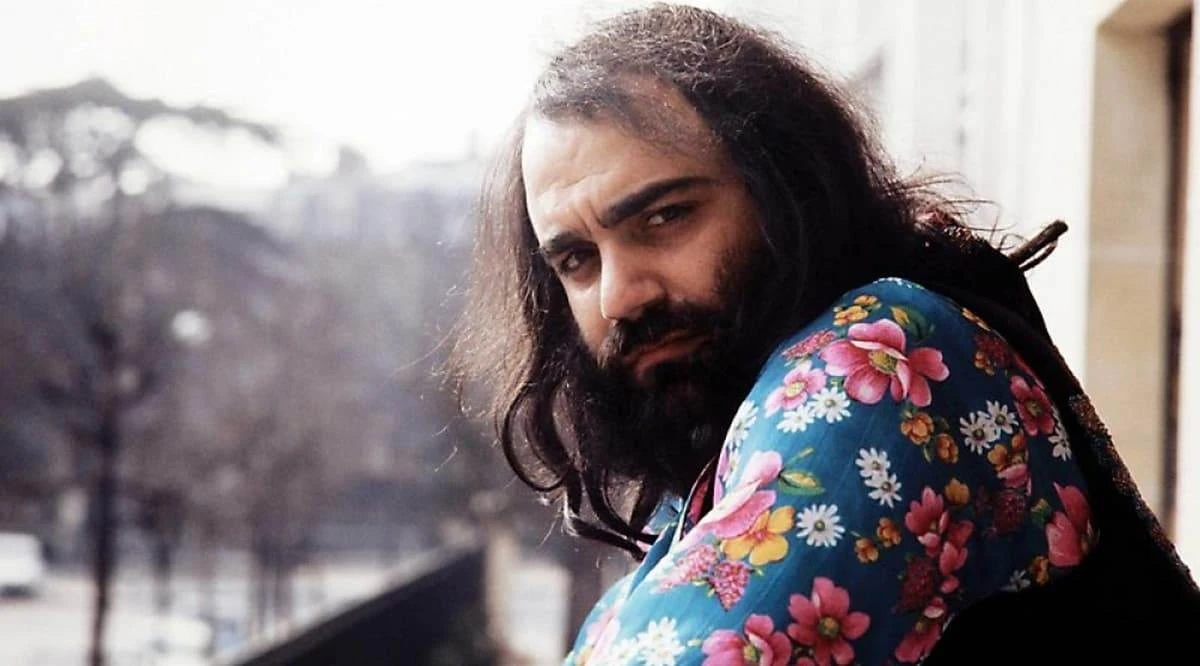
Alexandria, Athens, Paris: Where Do Such Voices Come From?
To understand how this phenomenon took shape, we must travel back to Alexandria, Egypt, in 1946. There, on June 15th, a boy was born to the Greek engineer and guitarist Giorgos Roussos and his wife Olga, a singer. They named him Artemios. He will go down in history as Demis.
Alexandria of those years was a true melting pot of cultures: Greeks, Armenians, Italians, Arabs – all lived side by side. The boy grew up in an atmosphere mingling Eastern melodies, Arabic chants, and strict Byzantine chants. From childhood, he sang solo in the Greek Orthodox Church choir. He also learned to play the trumpet, guitar, and double bass. Music was always in the house: his father was always at his guitar, and his mother sang arias by heart. 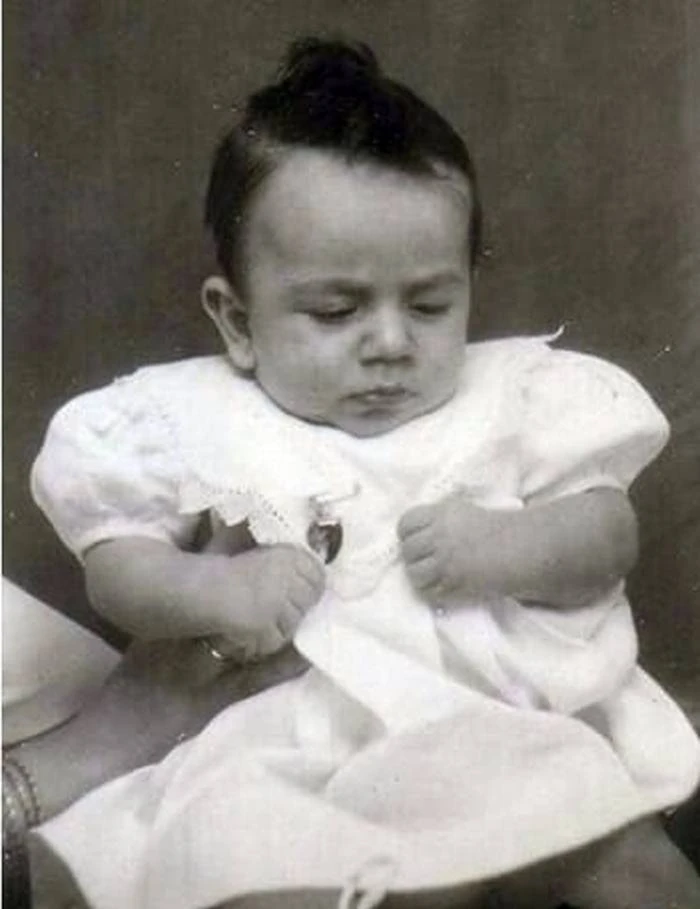
Childhood photo of Artemios Ventouris Roussos
In 1956, the Suez Crisis turned the family's life upside down. Greeks were expelled from Egypt—the Roussos family abandoned everything they had and fled to Athens. The teenage Demis quickly found his feet. He performed in cabaret to help support his family. In the mid-1960s, Athens was bustling: young musicians copied Western hits, played in bars and restaurants, and dreamed of more. 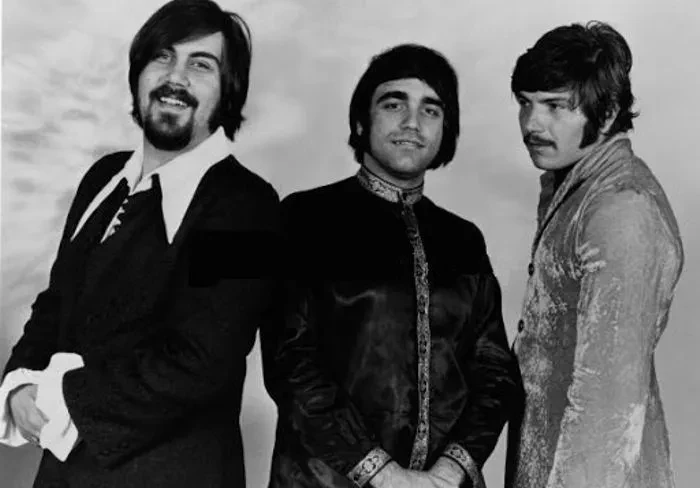
Roussos (center) with the band Aphrodite's Child
Here, Roussos met keyboardist Vangelis Papathanasiou, a future legend of electronic music. Together with drummer Loukas Sideras, they founded the band Aphrodite's Child. After the military coup in Greece in 1967, the three left for Paris, where they released the single "Rain and Tears." It instantly conquered Europe. By that time, Roussos's voice was unlike anything else.
A Voice Like No Other
Roussos's greatest weapon was always his voice. Rare in timbre, a high, soaring tenor with a captivating, vibrant vibrato, it captivated everyone who heard it for the first time. Many rumors swirled around this voice. It was said that as a child, Demis suffered a severe throat infection, causing his vocal cords to fuse in an unusual way—hence the unique resonance. 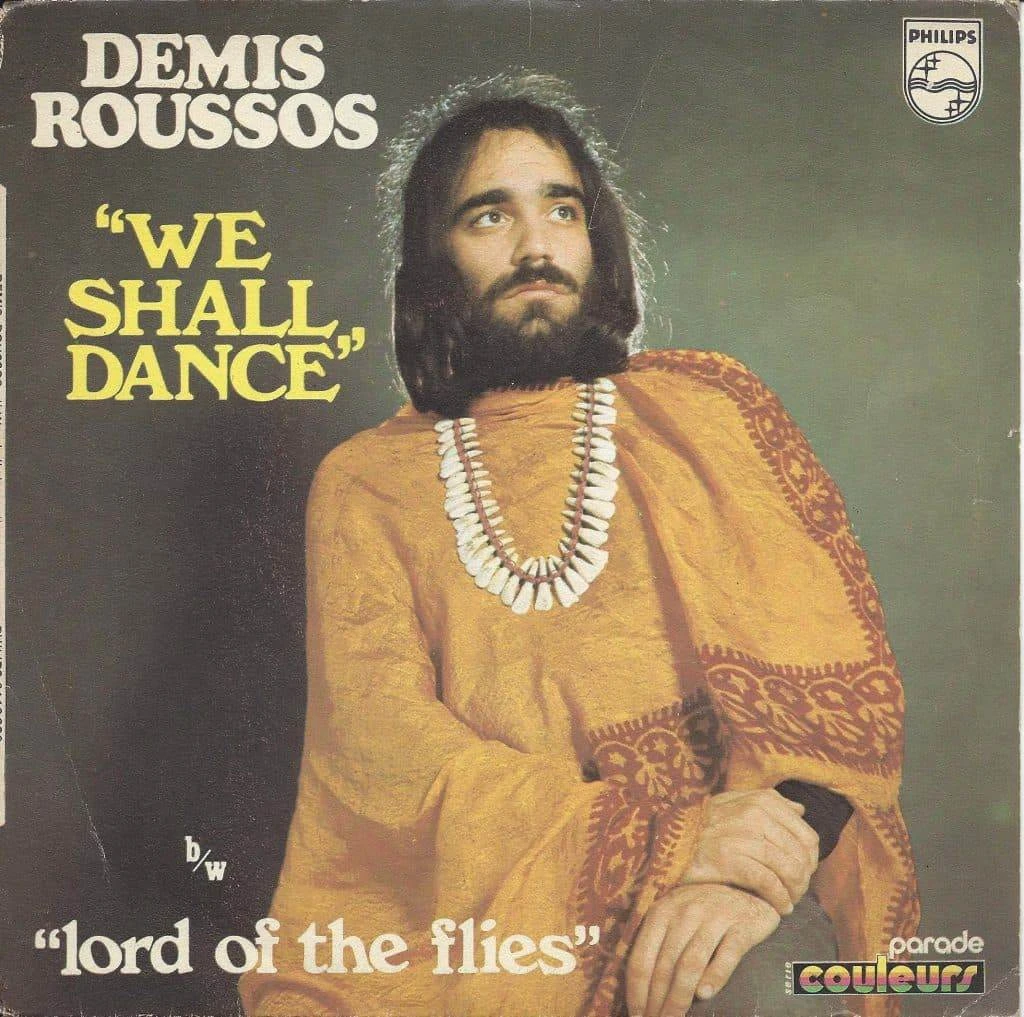
A vinyl disc by Demis Roussos, released in 1968
Journalists and critics, unable to understand the nature of this sound, went to extremes. Some seriously theorized about the singer's castration. Demis merely smiled condescendingly into his thick beard: he knew the power of his gift. Moreover, he sang in six languages—English, French, Italian, German, Spanish, and Arabic. And he sounded equally convincing in each language. 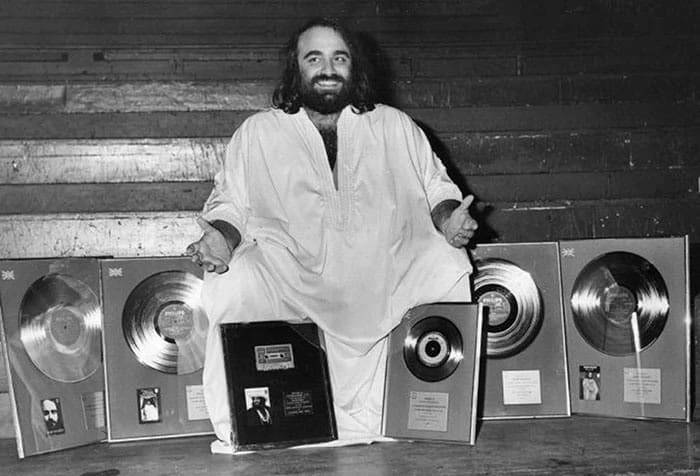
"The Greek Nightingale" Demis Roussos and His Gold Records
In 1971, Roussos left Aphrodite's Child to go solo. Initially, his success was moderate. But in 1974, the album Forever & Ever was released, and everything changed. The album topped the UK charts. Subsequently, "The Demis Roussos Phenomenon" returned him to the Top 20, and the single "When Forever Has Gone" reached number two. By the end of the 1970s, he had entered the Guinness Book of World Records for the number of records sold. During his career, Roussos has sold over 60 million albums worldwide.
The Caftan as a Manifesto
In the early 1970s, Roussos took on something that producers would have considered madness. Weighing well over a hundred kilograms, the actor didn't hide his figure in formal dark suits. On the contrary, he "dressed" it with truly Byzantine luxury. Loose caftans, silk and brocade robes with Arabic patterns—all this transformed him not into a "corpulent entertainer," but into a fairytale character. Like something out of "A Thousand and One Nights." 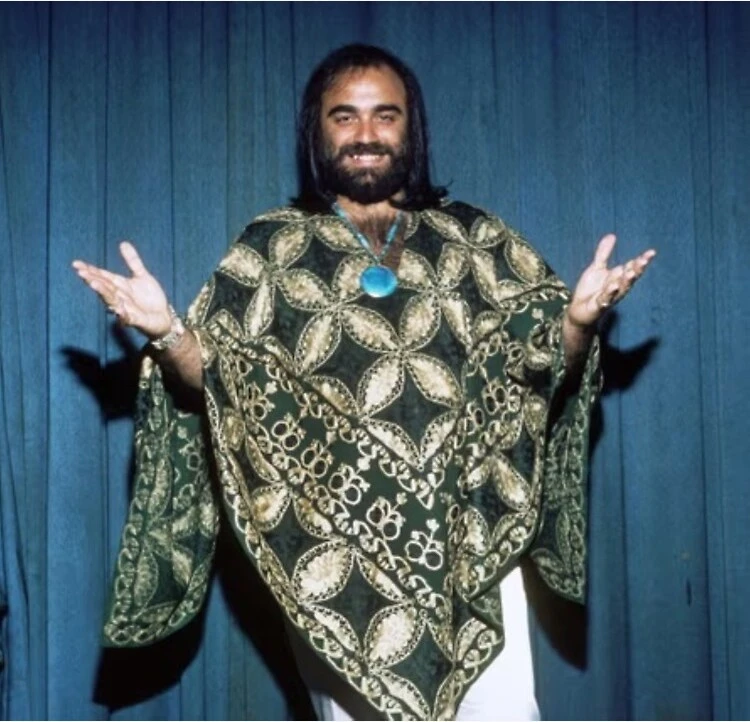
The singer's outfits have become legendary
This image worked flawlessly. Roussos captured the audience's attention even before he uttered his first note. The contrast between his powerful figure and his very gentle, almost feminine vocals created enormous tension. Women saw in him a paradoxical combination: reliable masculine strength and a subtle soul capable of understanding the most hidden emotions. 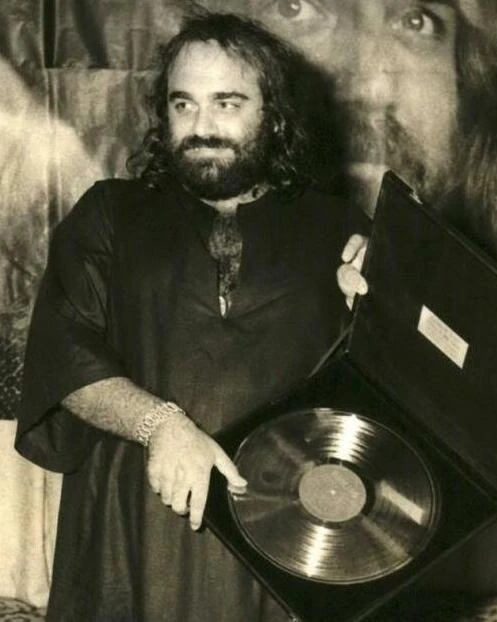
Demis Roussos in 1973
The British establishment laughed. Director Mike Leigh, in his television play "Abigail's Party" (1977), cast the lead character, Beverly Moss, a vulgar and pretentious hostess, as a Roussos fan. Beverly blasts "Forever and Ever" on the record player and foists Roussos on all her guests. The elite laughed. Millions listened. His concerts sold out across Europe, and in some years, he toured as many as 150 times a year. 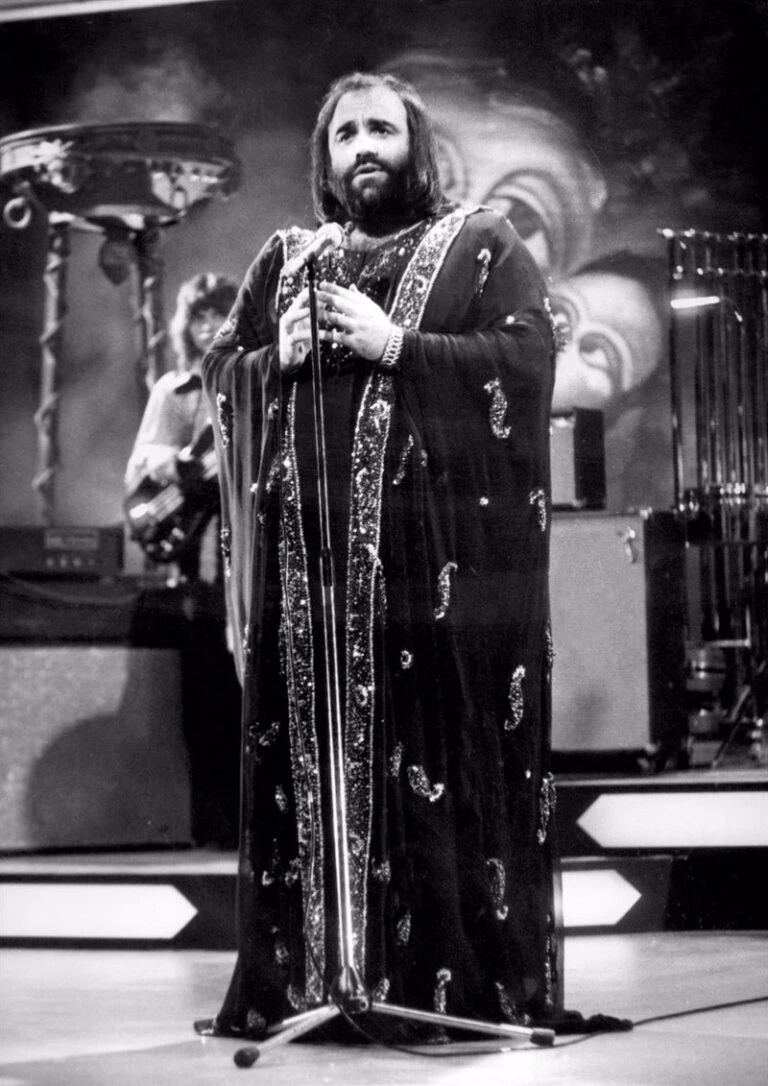
The Singing Tent Conquers the World
In the USSR, Russos became a cult figure, despite his appearance being controversial with Soviet censors. His records weren't sold in stores, but they sold like hot cakes. In 1979, Melodiya finally released a licensed compilation album, "Big Success," and it became a sensation. Soviet women copied out the lyrics to his songs by hand, passed cassettes back and forth, and sighed over photographs of him in a caftan. 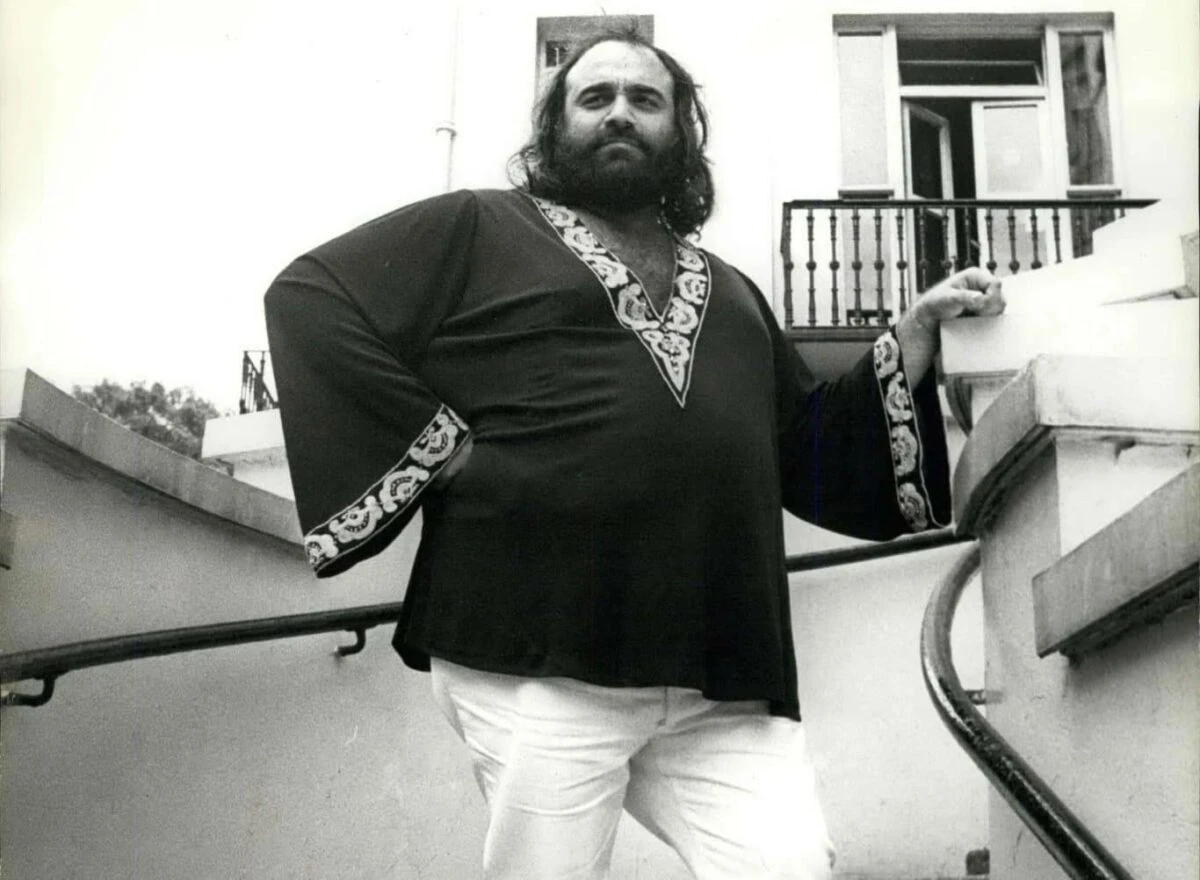
Russos at the height of his popularity
Negotiations for a tour with Gosconcert had been ongoing since 1978. It wasn't until November 1986 that he finally got to go. The concerts were sold out. Russos also made an appearance on the game show "What? Where? When?"—one of the program's first live broadcasts. Valentina Golubeva's team played that evening under the gaze of the living legend.
Diet, a book, and Soviet recipes
Russos's life was full of twists and turns. Offstage, his personal life was turbulent: the singer was married four times. His first wife, Monique, gave birth to a daughter, Emily. His second, Dominique, gave birth to a son, Cyril. Both children became musicians. His third wife was American model Pamela Smith. His fourth and final wife was Parisian Marie. 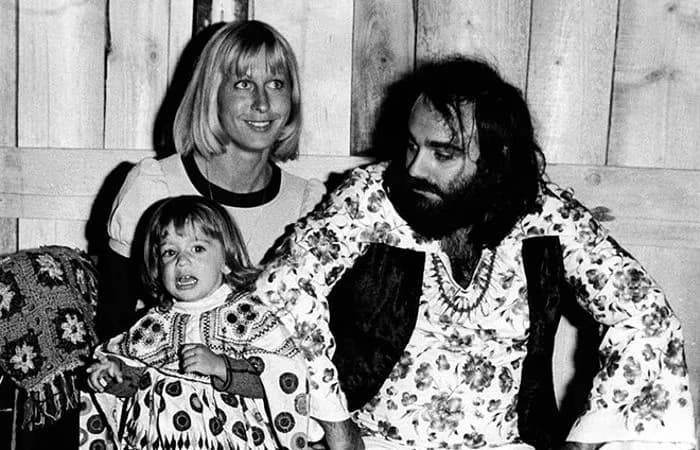
The singer with his wife, Monique, and daughter, Emily
Roussos's main personal battle remained his struggle with weight. At his peak, he weighed 147 kilograms. In 1980, he took the matter seriously and lost 50 kilograms in ten months. In 1982, his book, "A Question of Weight," was published—a frank account of his struggle with obesity and practical nutrition advice. The book became a bestseller. 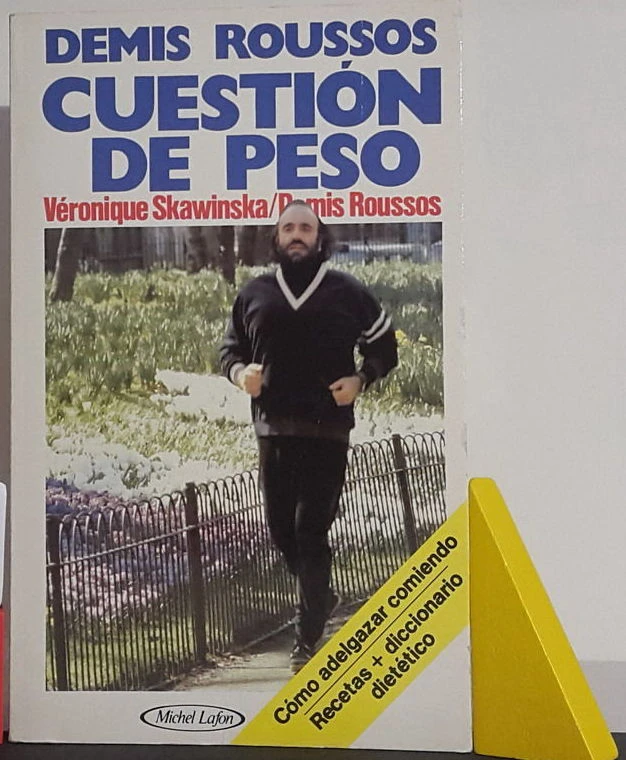
The bestselling weight loss book featured a photograph of its slender author.
Of course, the book was never published in the USSR. But Soviet women copied recipes from Roussos's diet stories by hand and passed them on to each other. The slender Demis on the cover seemed almost miraculous. The recipes spread like samizdat—through friends, by mail, and at work.
Terrorist Attack, Blade Runner, and the Legion of Honor
The most incredible ordeal awaited Roussos on June 14, 1985. He was flying from Athens to Rome with Pamela. TWA Flight 847 was hijacked by two Hezbollah militants. The plane bounced between Beirut and Algiers for 17 days. One of the hostages, American military diver Robert Stethem, was killed on board and thrown onto the tarmac. 
Security officers negotiate with the terrorists who hijacked the airliner. 1985
When the terrorists learned that a world-famous star was among the passengers, they were delighted. Roussos was well known in the Arab world. The militants demanded that he sing for them. On June 15, right on the hijacked plane, the singer turned 39—and he was given a modest birthday party with a cake. On June 19, Roussos was released—among eight Greek passengers. In exchange, Greek authorities released an accomplice of the militants, who had been detained at the Athens airport. 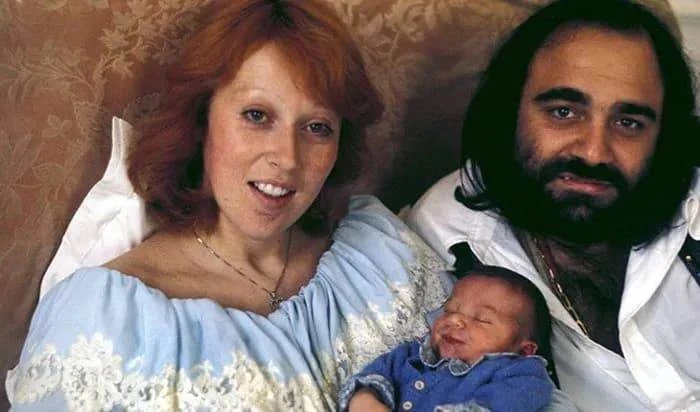
Roussos with his wife Dominique and son Cyril
Roussos's creative range extended far beyond pop hits. Back in 1982, he teamed up again with Vangelis. In the soundtrack to Ridley Scott's cult film noir Blade Runner, Roussos's voice is featured on the track "Tales of the Future"—an Arabic chant that permeates one of the film's most disturbing scenes. In September 2013, Roussos was awarded the Legion of Honor, France's highest honor. The order was presented by the French Ambassador to Athens.
The Secret of a Great Greek
On January 25, 2015, Roussos died in Athens of pancreatic cancer. He was 68 years old. He was buried in the First Cemetery of Athens, home to the most famous Greeks. Music critics are still trying to decipher the formula for his success. 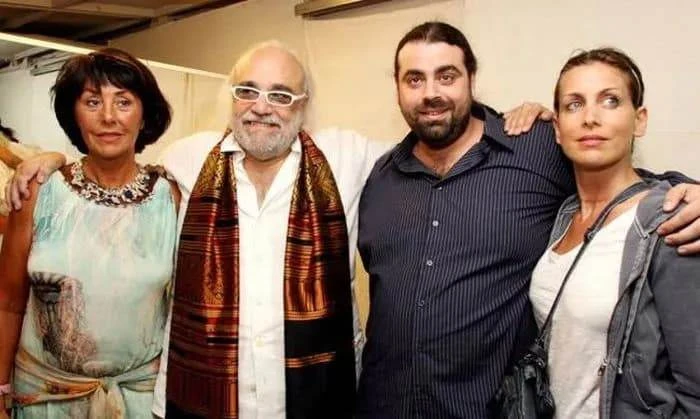
Dominique, Demis Roussos, son Cyril, and daughter Emily
The answer, perhaps, is no. Or perhaps it's offensively simple: Roussos didn't challenge standards. He ignored them. A heavyset Greek in a caftan sang about love in a way that brought stadiums to a standstill. Charisma isn't explained by clothing size. And a voice isn't measured by scales. 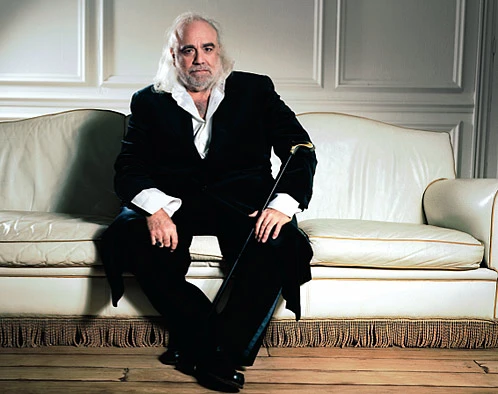
Demis Roussos is a phenomenon that no one has ever explained. He sang in a way that made stadiums stop. Until the very end.
Do you remember the first time you heard Demis Roussos's voice? Which of his songs still live on playlists? Share them in the comments – let's reminisce about that era together.