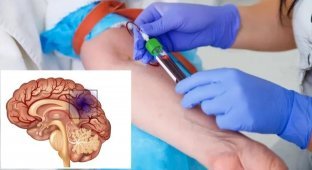
Blood as a business: why donors are paid in some countries, while it's prohibited in others (12 photos)
Щороку 14 червня світ відзначає Міжнародний день донора крові — і говорить про альтруїзм, солідарність і врятовані життя. Але за цією картиною існує інша реальність: глобальний ринок плазми об'ємом понад 32 мільярди доларів, де 70% сировини постачають незаможні американці, а країни з «високими етичними стандартами» закуповують ліки з тієї «купленої» крові, яку публічно засуджують. 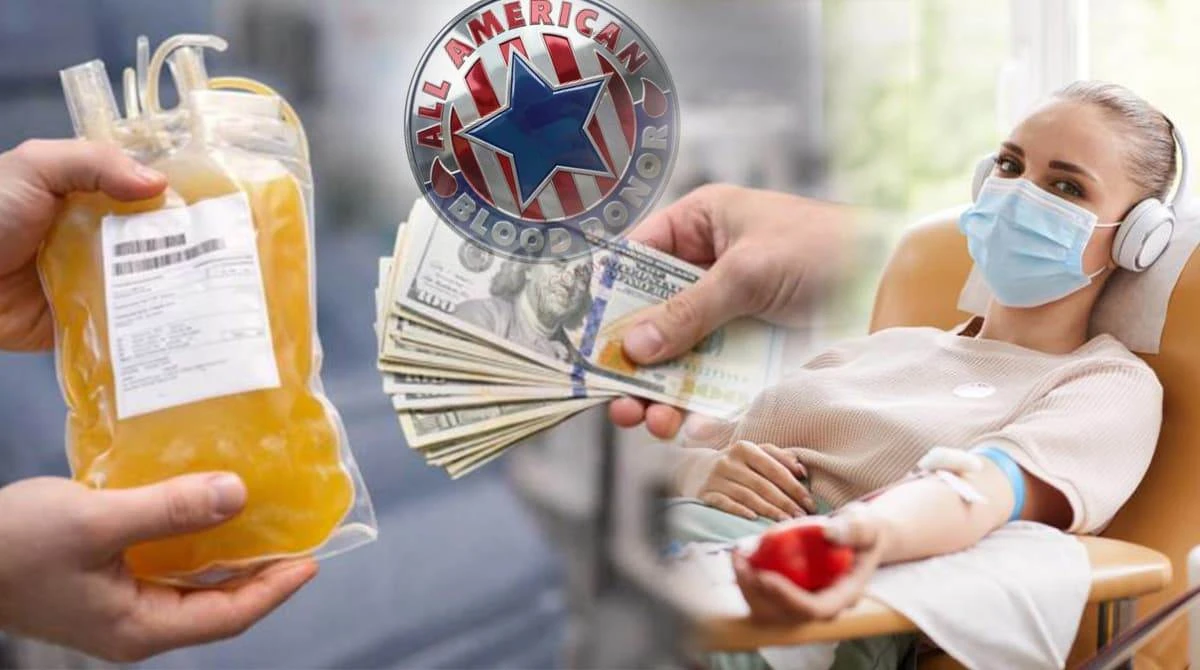
Рідке золото: цифри, які прийнято називати
Більшість людей вважає донорство крові історією про безкорисливу допомогу та гуманізм. Але справжній двигун глобального ринку — не цільна кров, а плазма, рідка частина крові, багата на білки. З неї виробляють життєво важливі ліки для людей з імунодефіцитом, гемофілією та іншими важкими захворюваннями. 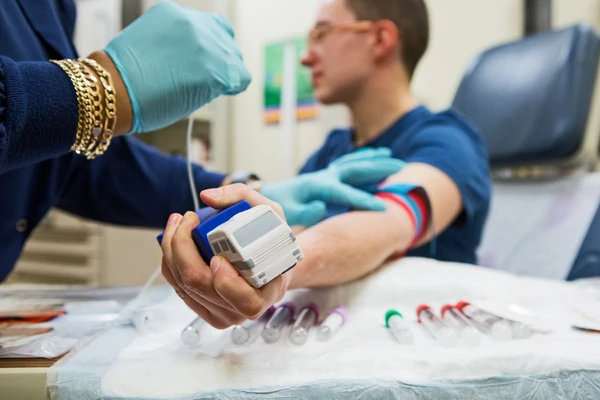
Щодня приблизно 200 000 американців здають плазму у більш ніж 1 200 центрах по всій країні
Цей сектор економіки переживає величезний бум. За даними аналітиків, світовий ринок плазми до 2023 року досяг 32,75 мільярда доларів, і зростання не зупиняється: до 2034 року очікується позначка 72 мільярди. 2025 року лише американці заробили на продажу плазми близько 4,7 мільярда доларів — на третину більше, ніж 2022 року. Весь цей час людей на здачу жене той самий стимул: інфляція.
Для розуміння масштабу: загальний обсяг експорту американських продуктів крові у 2023 році становив 37 мільярдів доларів. Це більше, ніж США заробляють на вугіллі та золоті разом узятих. Один рефрижераторний контейнер із плазмою коштує дорожче, ніж цілий корабель зерна. 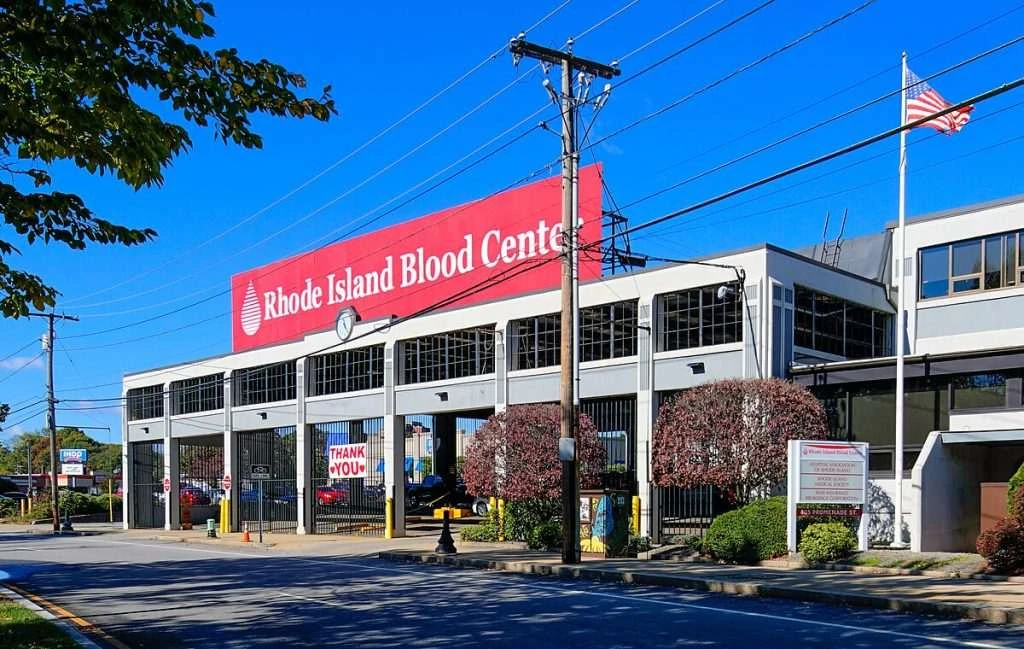
Центр переливання крові у штаті Род-Айленд. США
Ринок плазми контролюють три транснаціональні корпорації: CSL Plasma, Grifols та BioLife. Усі три зав'язані на одне джерело сировини – американських громадян. США забезпечують близько 70 відсотків світового запасу плазми, щорічно надсилаючи за кордон плазмові препарати на 6,2 мільярда доларів.
Платять не за кров – за «незручності»
У США побудовано юридично тонку дворівневу систему. Здати цільну кров за гроші фактично не можна: маркування «платна кров» робить її непридатною для переливання у лікарнях. Прямого закону немає, але стандарти Управління контролю за продуктами та ліками (FDA) працюють як замінник заборони. 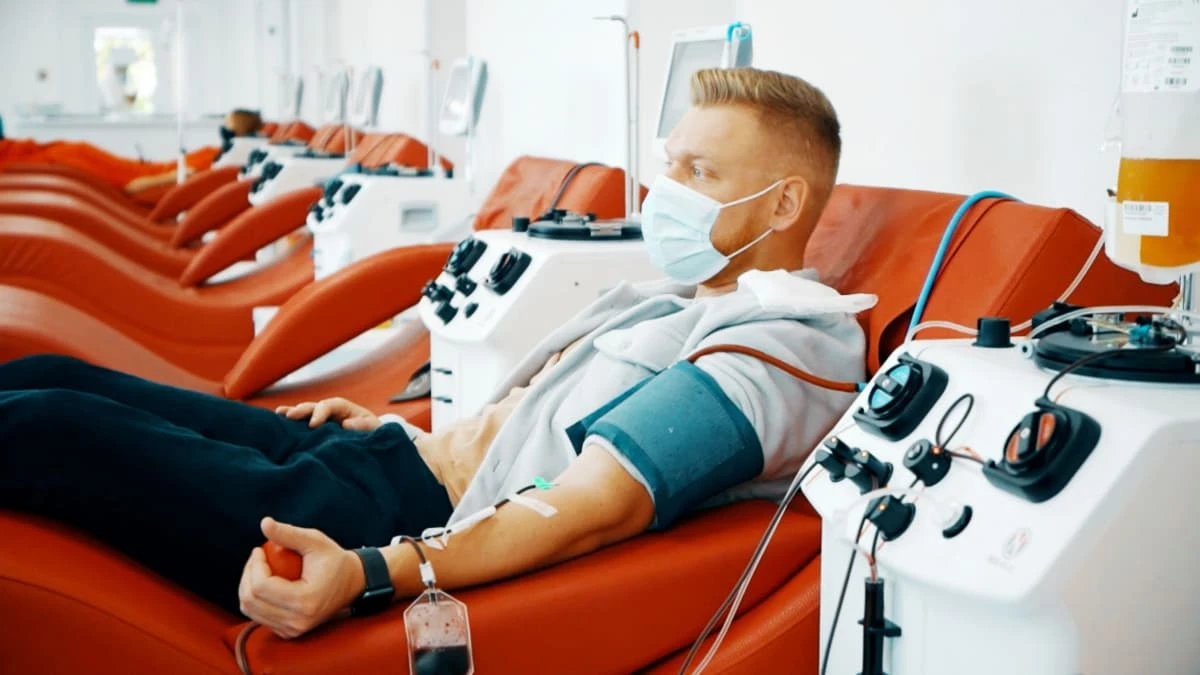
Процедура плазмаферезу займає близько півтори години. За цей час із крові відокремлюють плазму, а решта компонентів повертають донору.
Але коли йдеться про плазму, правила змінюються. Компанії платять донорам не за саму рідину – це прирівняли б до торгівлі органами. Вони платять за «витрачений час і завдані незручності». Середня виплата — від 60 до 70 доларів за одну процедуру, яка займає близько півтори години. Деякі центри пропонують бонуси новачкам: 100 доларів за перший візит. 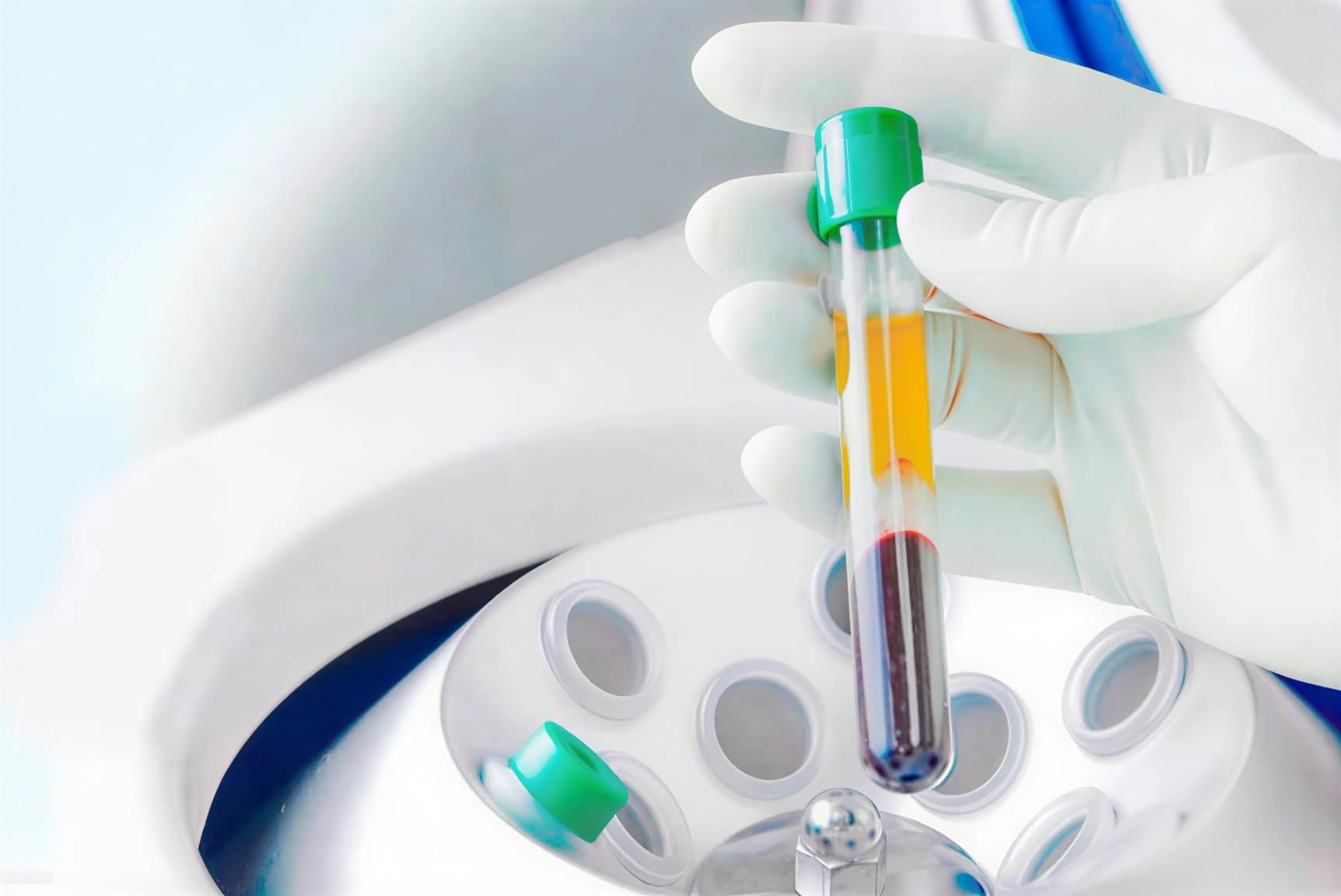
Плазму від червоних кров'яних тілець відокремлюють у спеціальних центрифугах. Процес називається плазмаферез
Як на цьому заробляють мільярди? Секрет - в обсягах, а не в маржі. З кожного літра плазми фармацевтична компанія отримує близько 15–20 доларів передподаткового прибутку. Скромно. Але через центрифуги корпорацій щодня проходять сотні тисяч людей. Скромна маржа перетворюється на гігантський грошовий потік. 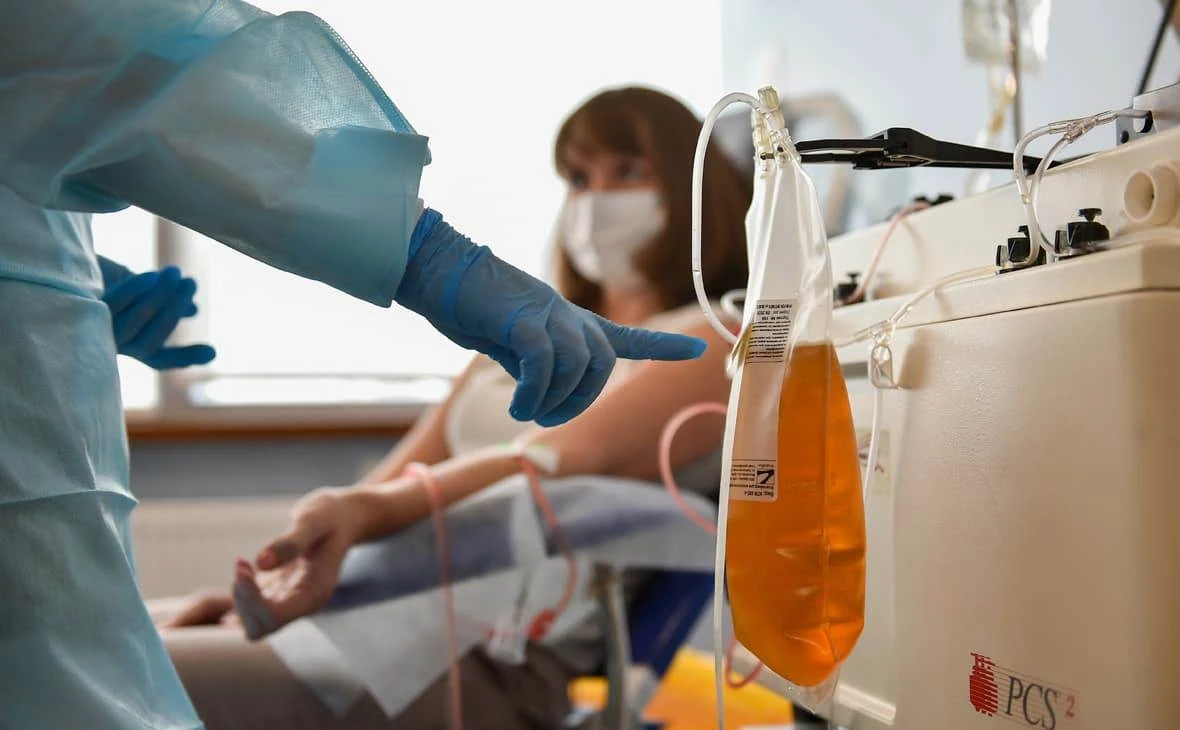
Готова до переливання плазма
Для мільйонів американців — студентів, мігрантів, малозабезпечених сімей — регулярні візити до центрів донації стали звичним підробітком. Одинока мати з Міннеаполісу двічі на тиждень проїжджає 35 хвилин до центру донації, щоб сплатити 700 доларів на місяць за дитячий садок синові. Чоловік із передмістя Філадельфії здає плазму за гроші на туалетний папір та корм для кішки.
Хто платить, хто забороняє: карта протиріч
Якщо подивитися на мапу світу, виявиться жорсткий розкол. Більшість держав забороняють платити донорам і просувають концепцію виключно безоплатної крові. Комерційним гравцям перебіг на цей ринок закритий. 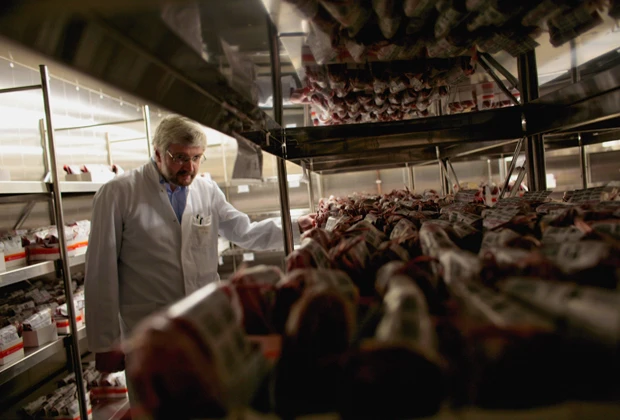
Запаси крові у лікарні Ростокського університету. Німеччина
Paid plasma donation is officially permitted in only a few countries: the United States, Austria, Germany, Hungary, Uzbekistan, Ukraine, and the Czech Republic. In European countries, donors receive a fixed compensation of up to €45 per donation. The donation rates in these countries speak for themselves. The Czech Republic leads Europe with 133 donations per 1,000 residents. Germany and Austria give 77 donations per 1,000 residents. In countries where payment is prohibited, these rates are significantly lower.
Frequency is also significant: in the United States, plasma donations are permitted up to 104 times a year, or twice a week. In Germany, the limit is up to 60 times. European guidelines recommend no more than 33 times a year. This difference is a direct consequence of the financial incentive. 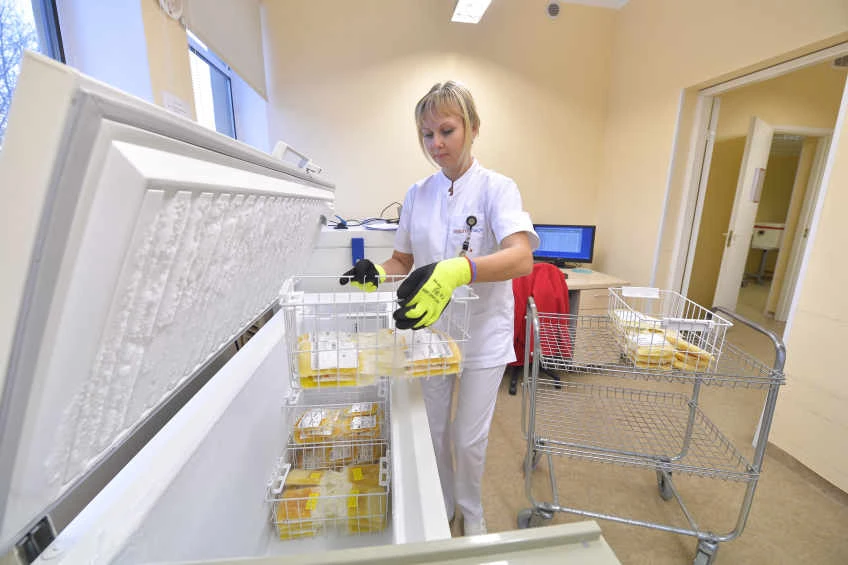
Fresh frozen plasma is stored at -25°C or lower for up to three years.
The most glaring example of this ethical impasse is the Canadian paradox. In the provinces of British Columbia, Alberta, Ontario, and Quebec—home to over 80 percent of the country's population—commercial companies are legally prohibited from paying donors. Local politicians are proud of this stance.
But the Canadian healthcare system is critically dependent on plasma products. To treat its citizens, Canada annually imports huge volumes of drugs from the United States. The country prohibits payments to its own citizens for humanitarian reasons—and yet happily purchases plasma from low-income Americans. The volume of these imports is growing year after year.
Hypocrisy in White Gloves
The Canadian case is not an exception, but a global practice. The European Union positions itself as a land of high ethical standards: blood donors must be guided solely by altruism. But behind the pretty facade lies a harsh dependence. 
A mobile donor center on the street of an American city
Europe purchases about 30 percent of its required plasma from the United States. This creates a direct contradiction. Buying plasma from a donor is exploitative and an immoral business on its own territory. But buying a medicine made from the exact same plasma purchased abroad is normal practice.
Rich countries simply delegate the "dirty" work to poorer countries and keep their hands clean. At the same time, they financially encourage the very system they publicly condemn. Banning direct payments to donors while simultaneously importing products from commercial plasma is not a solution to the ethical problem. It's shifting it to others.
Arguments of the Parties: No Verdict
There's no clear right side to this coin. Proponents of the commercial approach rely on pragmatism.
The first argument is safety. Modern filtration, testing, and quarantine technologies make products from commercial plasma just as safe as those from donated plasma. This is confirmed by all the world's leading medical organizations. 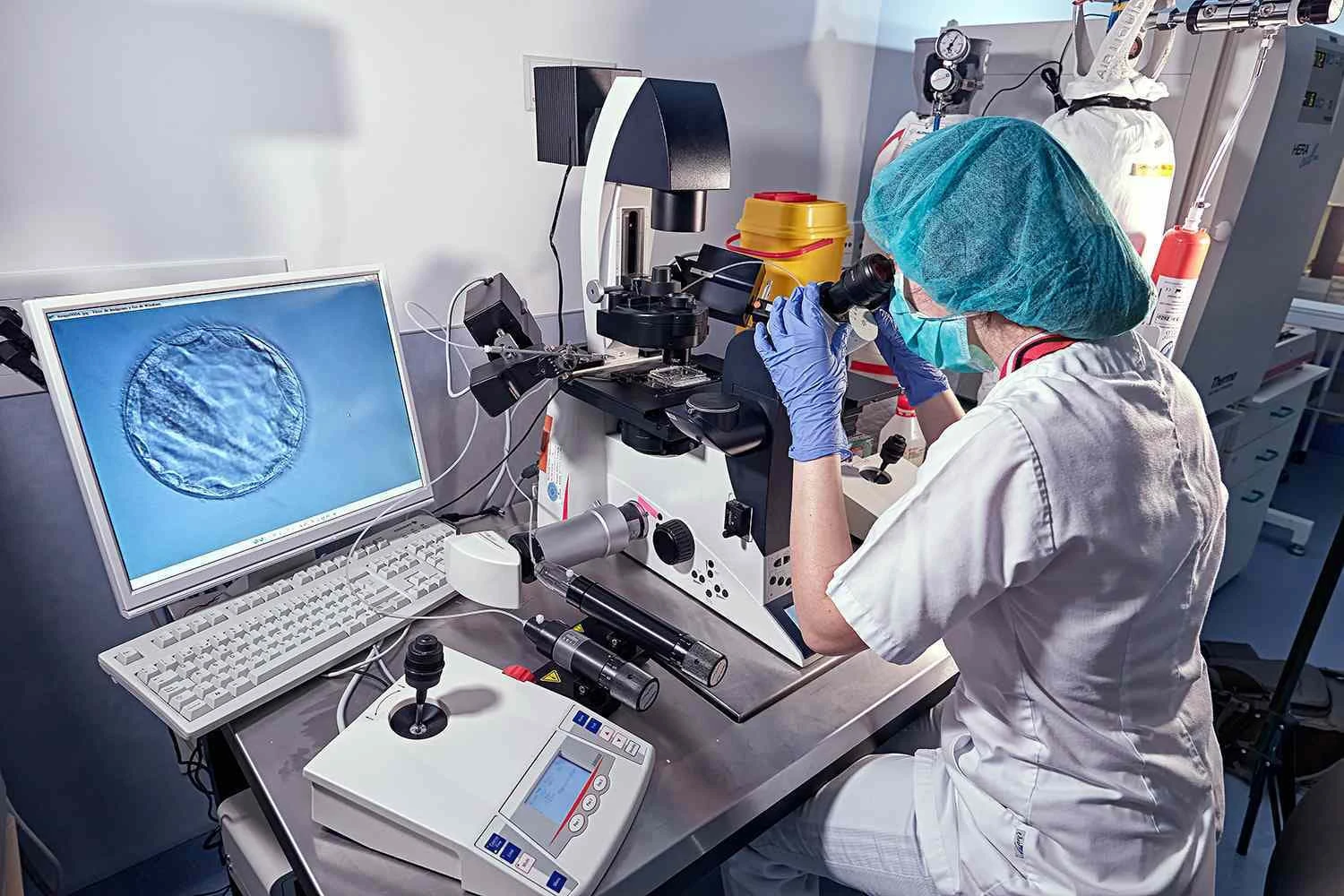
All donated plasma undergoes multi-stage testing. Viruses are inactivated before the product reaches pharmacies.
The second is self-sufficiency. The only countries that are completely self-sufficient in plasma products and do not rely on critical imports are those where donors are paid. The third is social. Paid donation does not create poverty; it only makes it visible. Banning payments will not make the poor richer, but it will deprive them of a legal source of income.
Opponents of commercialization put forward equally compelling arguments. The long-term consequences of frequent plasma donation have not yet been thoroughly studied. Studies show a significant reduction in immunoglobulin G and protein levels in donors who donate plasma twice a week. The WHO has been pushing for a transition to completely unpaid donation since 1975, but to no avail. 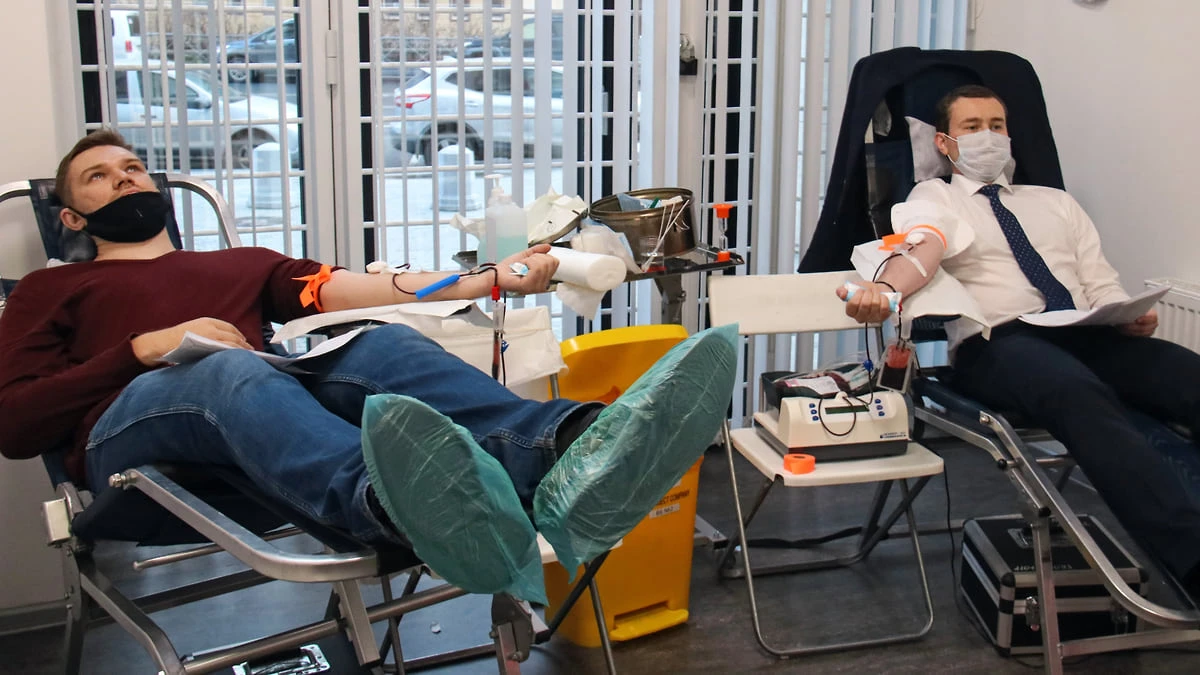
Blood and plasma donation centers operate worldwide, but their conditions and regulations vary dramatically.
The main argument of opponents is the risk of exploiting vulnerable groups: the poor, students, and migrants. In pursuit of money, people may conceal illnesses or deplete their bodies. During the COVID-19 pandemic, some American students deliberately tried to contract the virus in order to donate antibody-containing plasma at a higher rate. The controversial phenomenon of rejuvenating transfusions, which are gaining popularity in the United States and Canada, is particularly relevant.
Plasma as a Commodity: An Inconvenient Conclusion
Global medicine has become hostage to its own humanism. Completely banning the commercial plasma market is impossible: it would leave millions of patients worldwide without life-saving medications. But calling this industry pure altruism is also no longer appropriate. 
Donor debit card issued by Grifols, a company specializing in plasma processing.
Plasma is a commodity. Expensive, scarce, and very difficult to discuss in polite society. The world can't afford to give it up. But pretending this market doesn't exist is also no longer an option.
What do you think: is it acceptable to pay people for parts of their own bodies if it saves lives? Or should the human body remain untouched by the market under any circumstances?