Indian Rhinoceros: A Biological Tank Bullets bounce off it (10 photos)
The Indian rhinoceros isn't just a big beast; it's the second-largest animal in Eurasia, second only to the elephant. But the rhino isn't just as big as a car; it's also damn impressive! And looking at those mountains of muscle beneath their ultra-strong leather armor, it's hard to believe how vulnerable these animals really are. 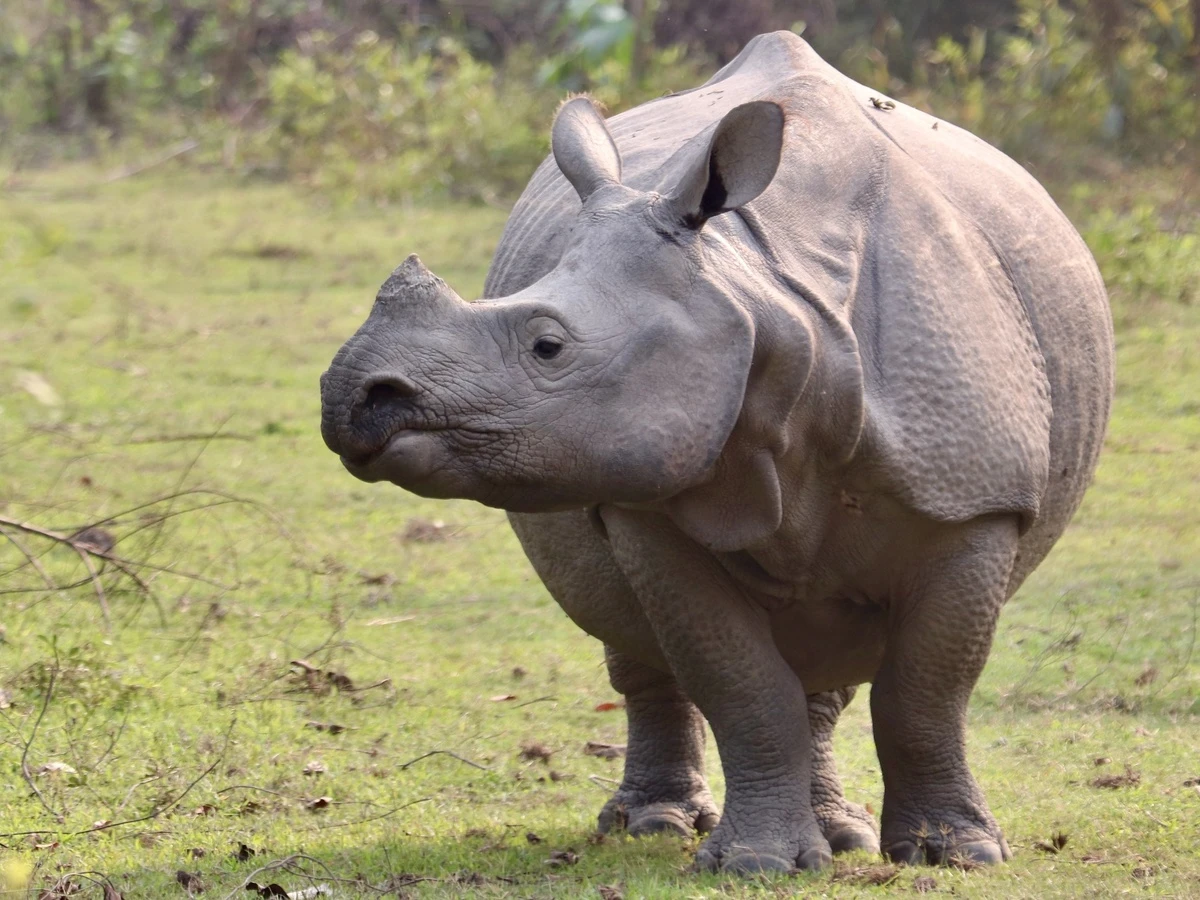
A shining knight in armor. Girls, you asked for it, and I'm here!
I know for a fact that pictures don't do a rhino's majesty justice, so let's supplement them with some impressive figures, facts, and comparisons. A full-grown, large rhino is a monster, almost 4 meters long and weighing over 2 tons, comparable in size to a medium-sized car. But much, much stronger. 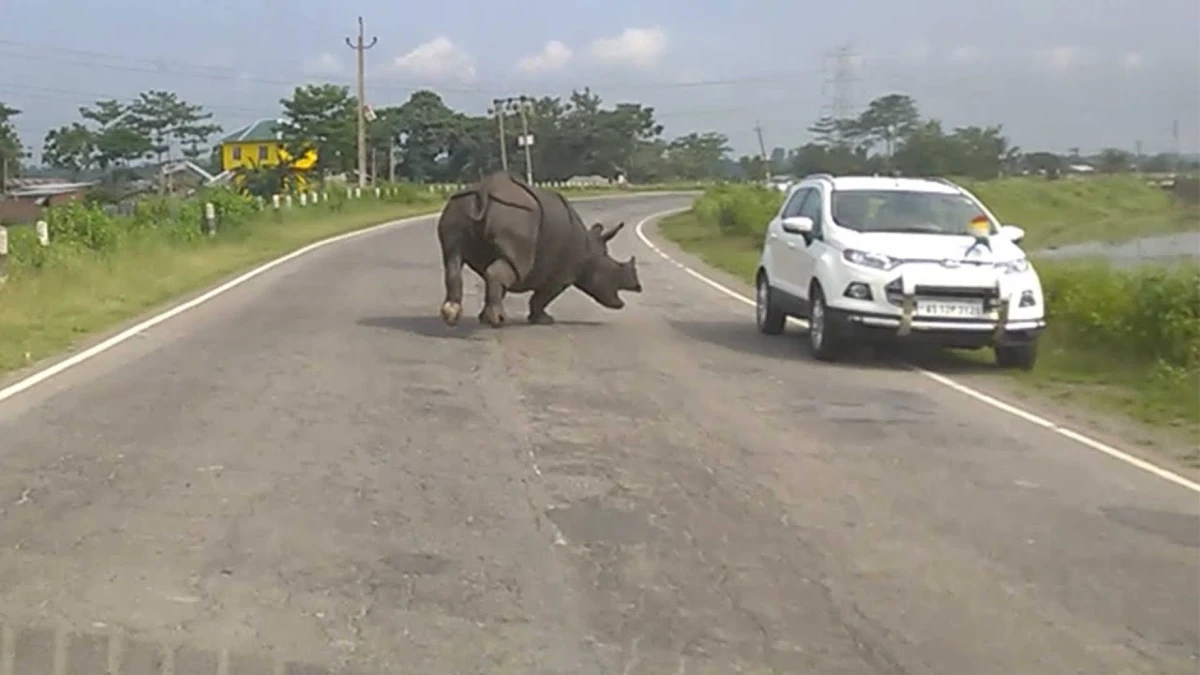
A car weighs about a ton. And the "baby" next to it weighs twice as much.
After all, a car is a sturdy frame with a fragile metal shell on top that bends even with a good kick. A rhino, however, is a lump of muscle and bone, with no extra cavities inside, very difficult to destroy. What can I say, even its skin is hard to penetrate! 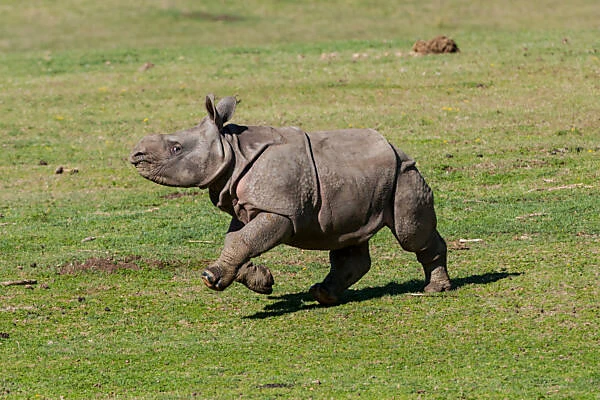
So small, and already armored!
After all, over the course of evolution, the rhinoceros' skin has evolved into veritable plates up to 5 centimeters thick, impenetrable by knives, arrows, or spears. Even modern small-caliber bullets either bounce off it or simply get stuck in the 5-centimeter-thick layer of subcutaneous fat. The only thing that remains is: why would a machine capable of destroying all life need such good protection? No animal on the planet has ever been born so stupid that it could attack a full-grown rhinoceros! 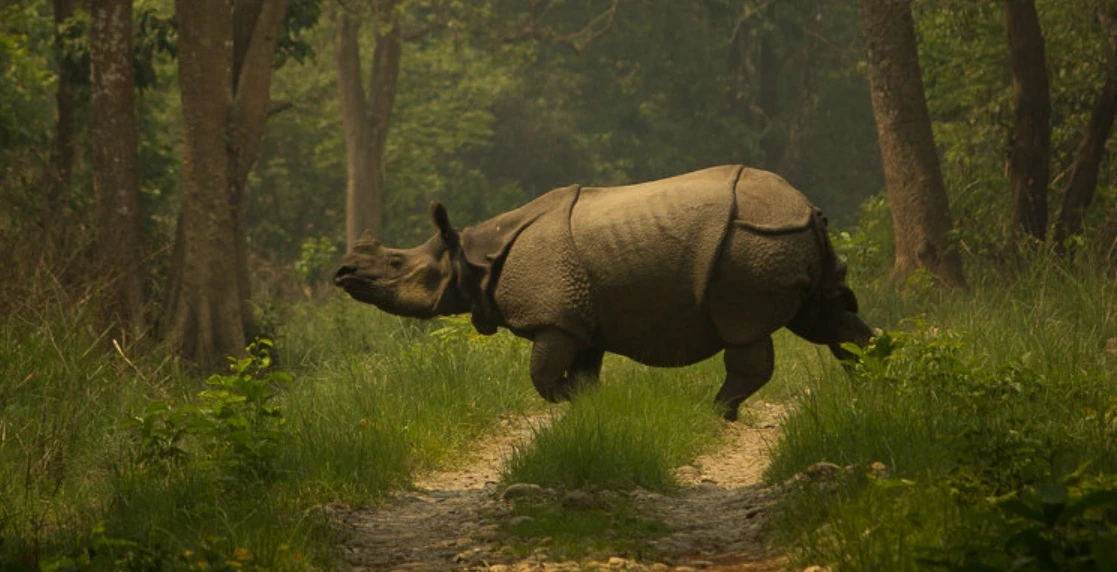
Unlike African rhinoceroses, the Indian rhinoceros' skin is attached to the body in specific places—on the neck, shoulders, and hips—and forms deep, permanent folds. Between these folds, the skin is thinner and hangs over the body in large "shields." This creates the effect of knightly armor. 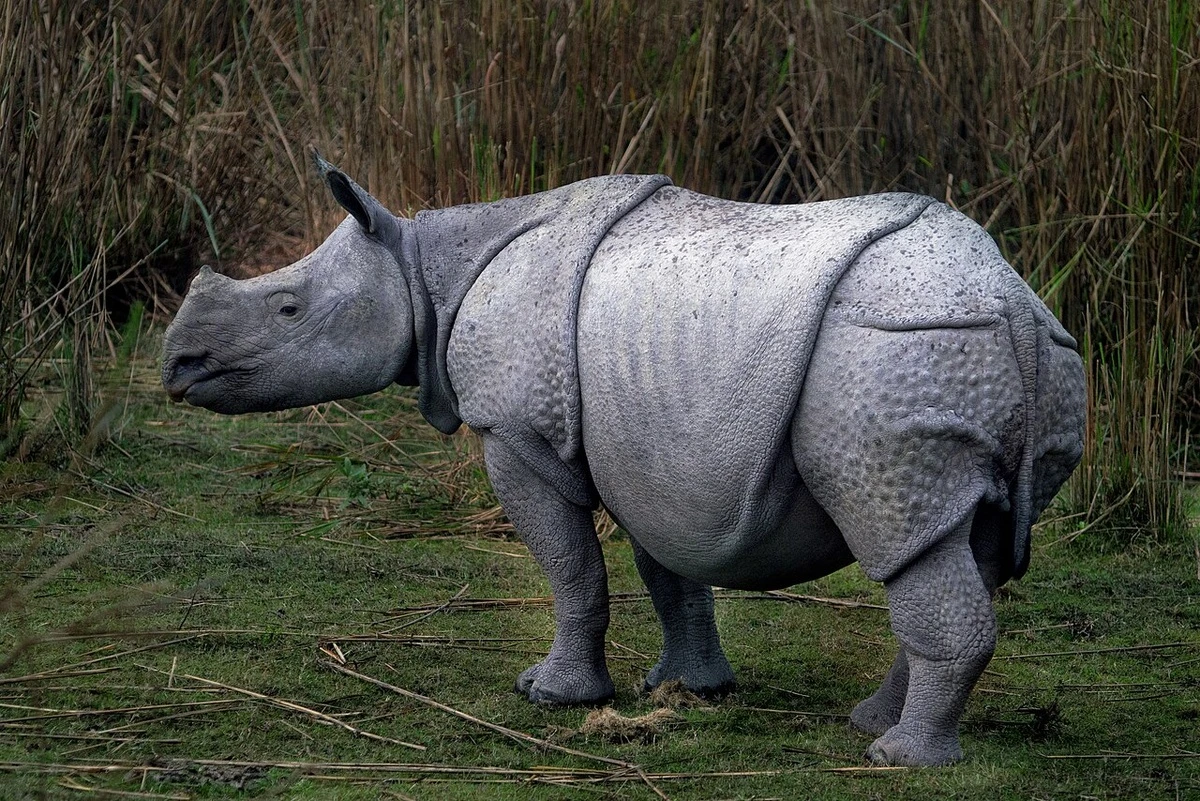
The Indian rhinoceros lives in humid tropical jungles and swamps, spending much of its time in the water. The folds increase surface area and help dissipate heat, while also trapping moisture and dirt in the folds—a natural "air conditioner."
Rhinoceroses developed this armor not for protection from enemies of other species, but for combat among themselves. During mating battles, males can inflict and receive serious injuries. This is not surprising, as an adult rhinoceros can flip a car, move a boulder, or uproot a small tree with its horn. Now imagine the damage it can inflict on another rhinoceros if it accelerates to 60 kilometers per hour? It's necessary to protect against such force. 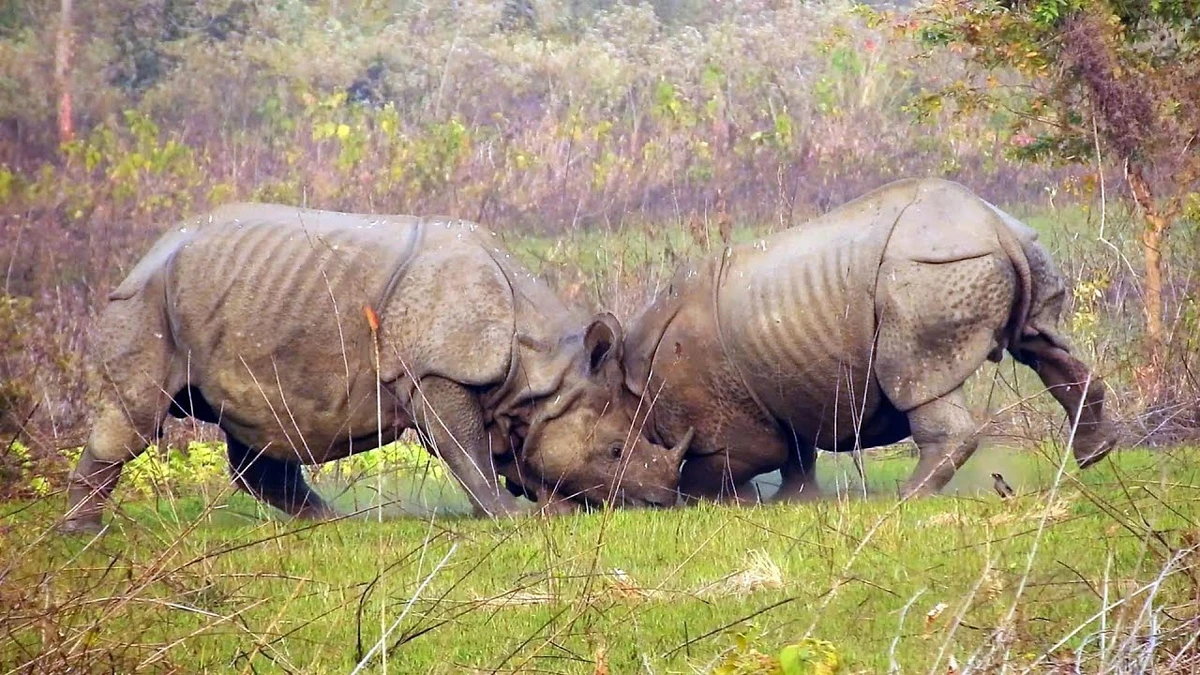
Battle for respect (and females). 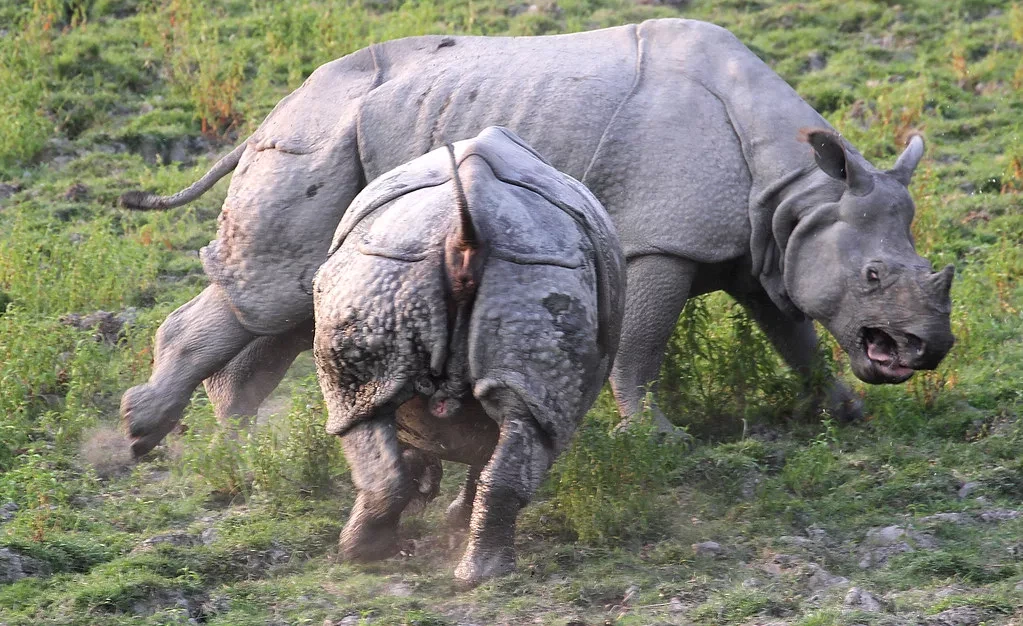
When I pumped up my abs and asked a friend to punch me with all his might.
However, while virtually invulnerable to larger opponents, rhinos are terrified of their microscopic enemies. Every adult rhinoceros, without exception, is infected with parasites, both internal and external, and their concentrations can be extremely high. On average, 1 gram of Indian rhinoceros feces contains up to 60 eggs of tapeworms, roundworms, and many other worms. And that's just the intestinal worms! 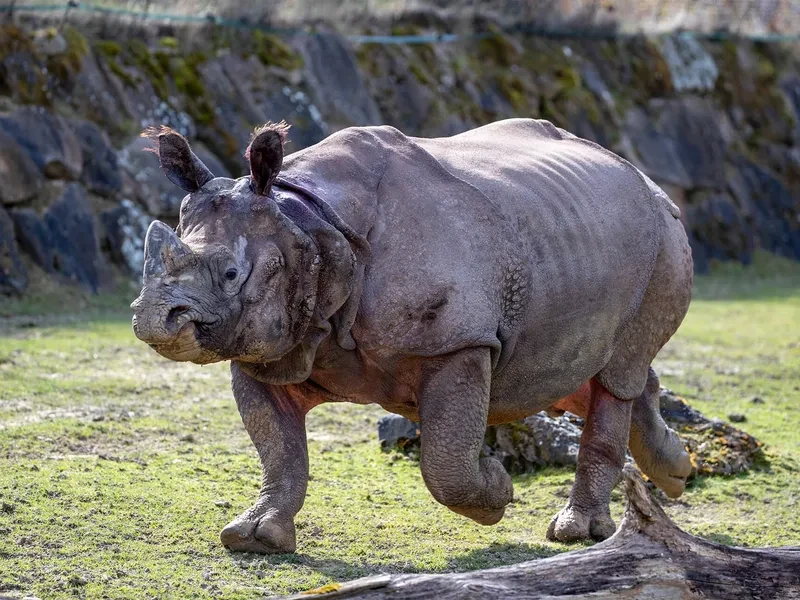
The Indian rhinoceros actually has pink skin, but its color is hidden by layers of dirt and dust that the rhinos coat themselves in. They do this to fight parasites.
Rhinos are also susceptible to viruses and bacteria. But while widespread parasite infestation is due to the animals' enormous size and long lifespan, viruses and bacteria are a threat to them due to their low genetic diversity. After all, the lower the diversity of their protective proteins, the easier it is for microparasites to adapt to life within the rhinoceros, and the slower their bodies respond to invaders. 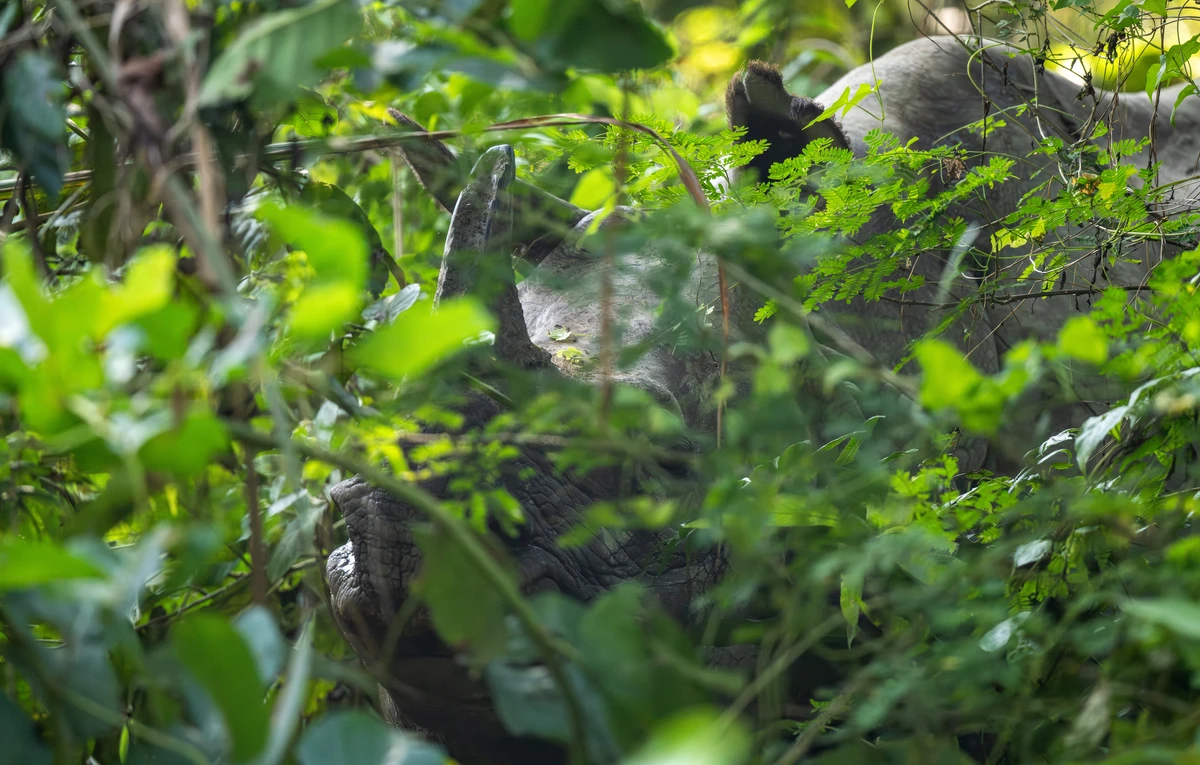
Hiding from viruses and parasites.
So, despite their incredible physical strength, the lives of rhinoceroses were full of problems and suffering even before the arrival of humans. And when we invented weapons capable of defeating even such giants, the species began to die out, rapidly declining in numbers. While up to half a million rhinoceroses lived in Asia at their peak, by the 1990s, fewer than two thousand remained. 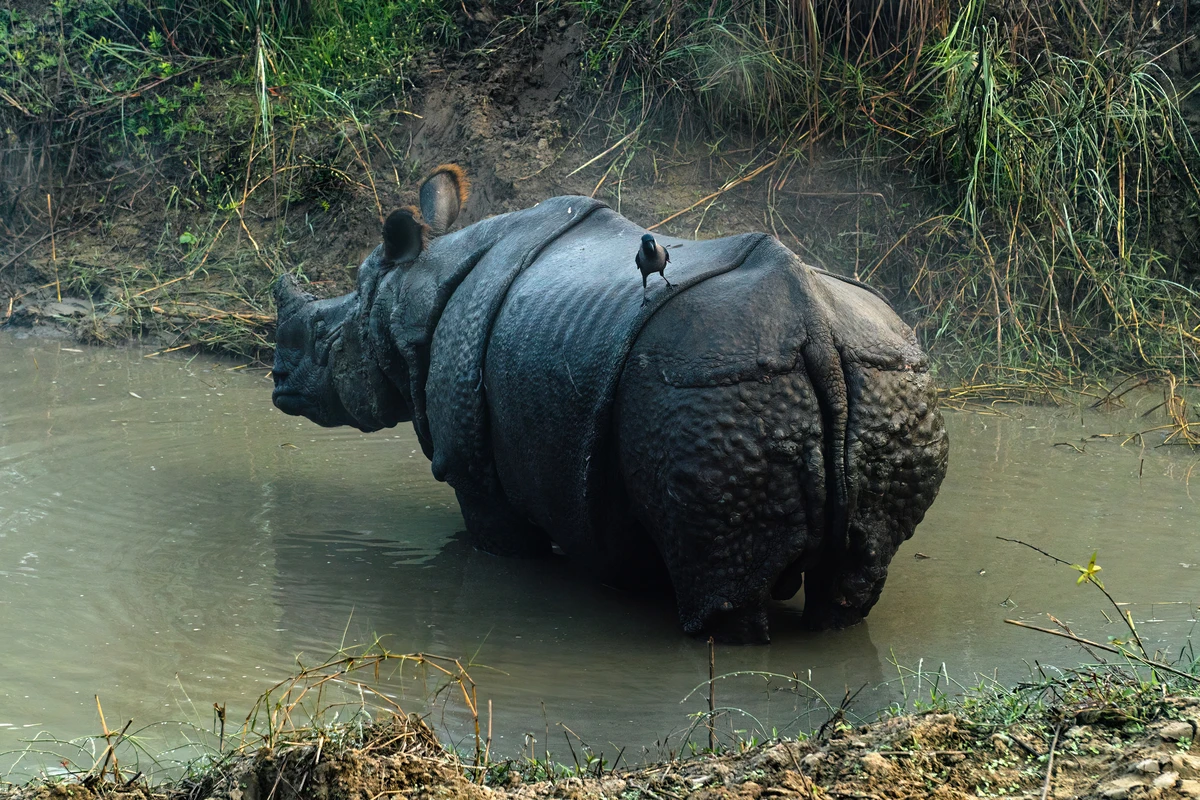
A stupid big guy and a cunning manipulator. Typical cartoon characters.
Fortunately, their numbers are now steadily growing and have already exceeded 4,000 rhinos. However, restoring the population costs India and Nepal astronomical sums of money, which could be avoided if people had less faith in the miraculous potency of rhinoceros horn.