20 artifacts that will change your understanding of ancient history Civilizations (21 photos)
History isn't just made up of boring textbooks. Every museum exhibit is a portal to a world where exceptional women ruled empires, warriors fought in armor crafted from the creatures of the deep ocean, and daggers accompanied kings into the afterlife to continue protecting them beyond. 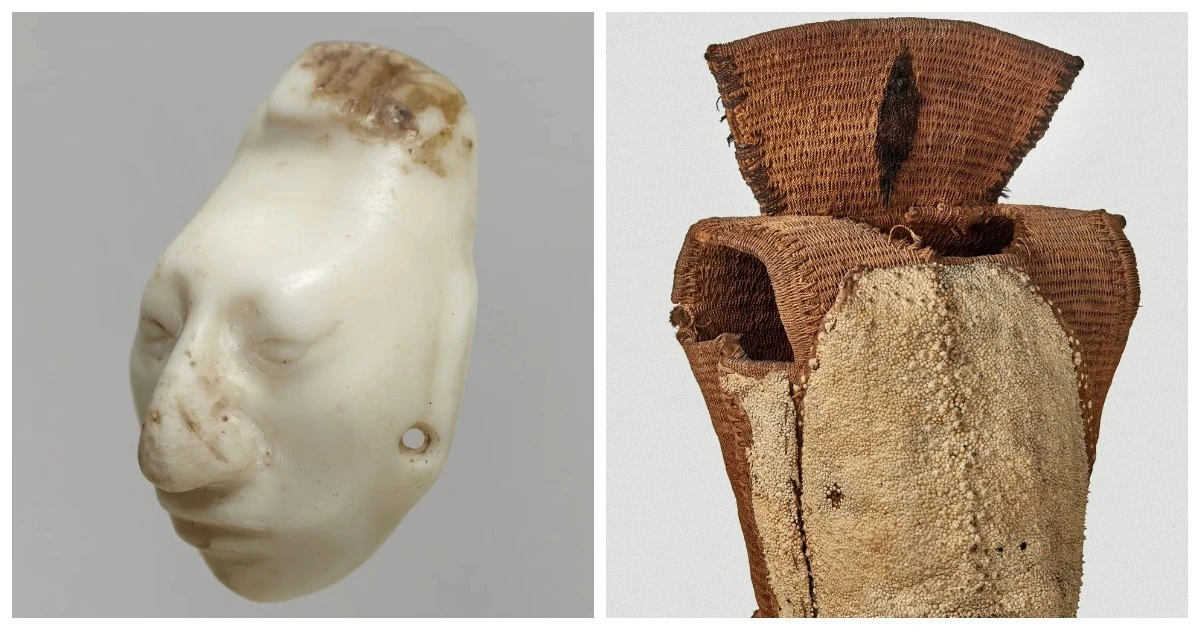
This collection includes a gold coin of Queen Boran, one of three women on the Persian throne during the Sassanid era; armor made of stingray skin and coconut fiber from the Kiribati Islands, worn by warriors during ritual combat; and the dagger of Anepada, head of the First Dynasty of Ur. Plus 17 other items that prove the ancients were far more inventive and ambitious than is commonly believed.
1. Carnsalloch Chapel - a disused private chapel and crypt built for the wealthy Johnston family of Carnsalloch, Scotland, in 1850. 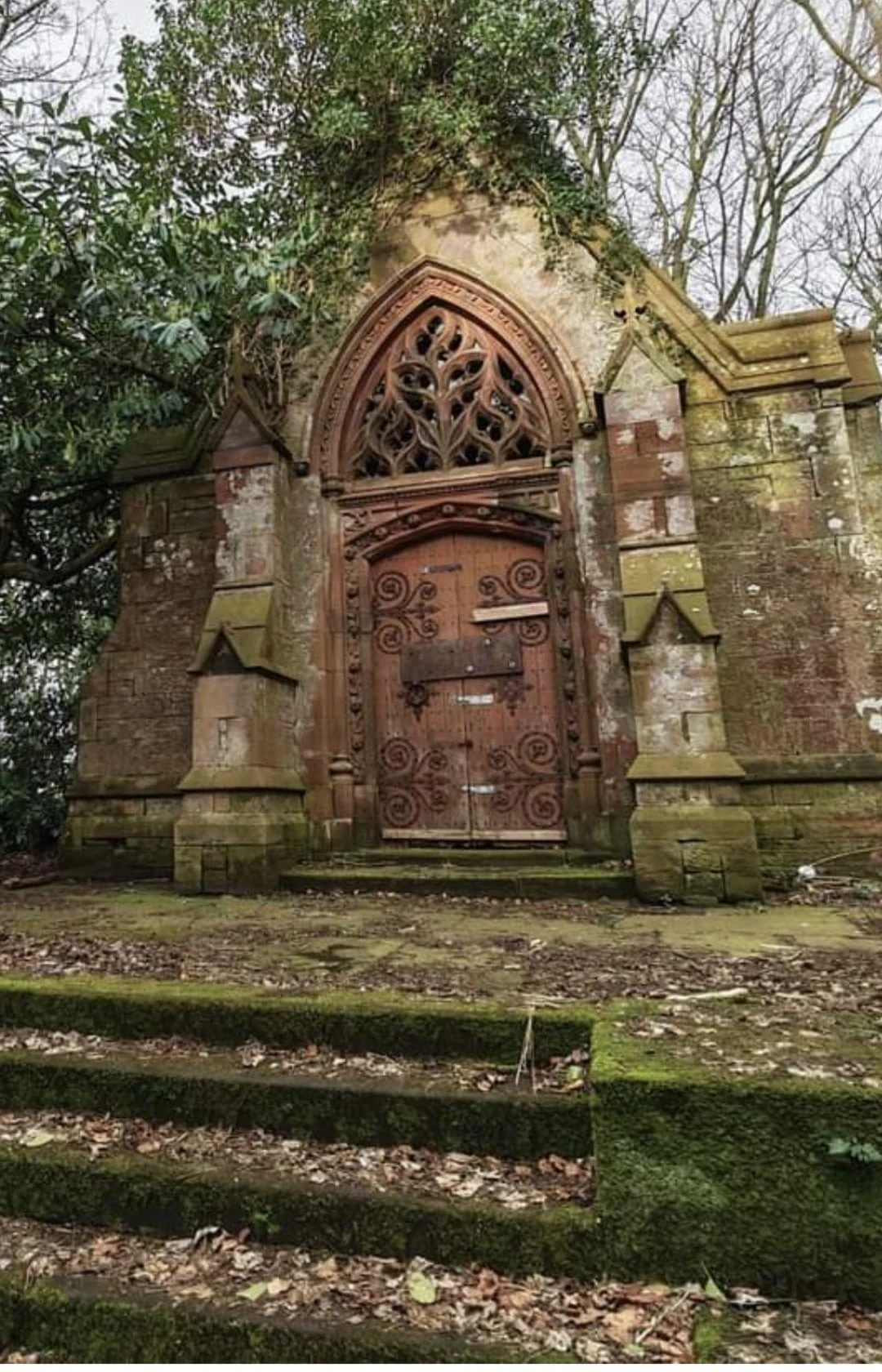
2. A 5th-century silver plate depicting the Persian king Yazdegerd slaying deer 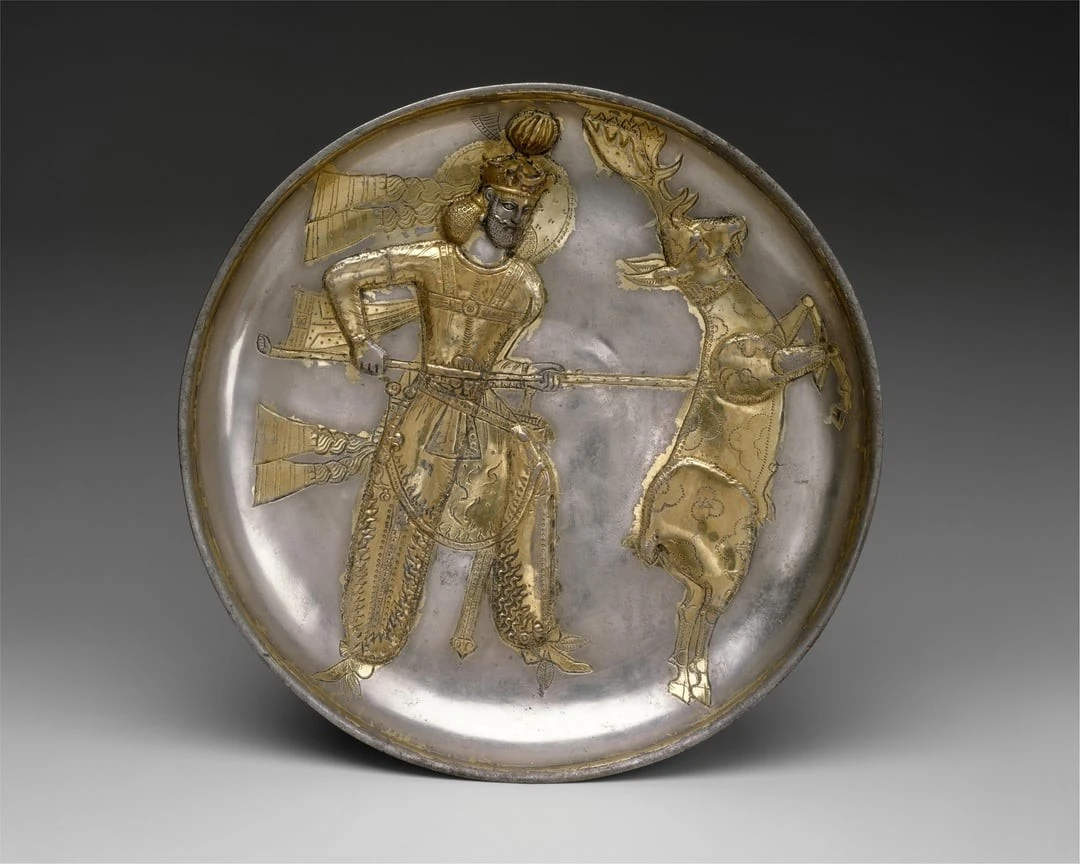
3. In 2022, archaeologists in Indonesia discovered a 1,096-year-old inscription 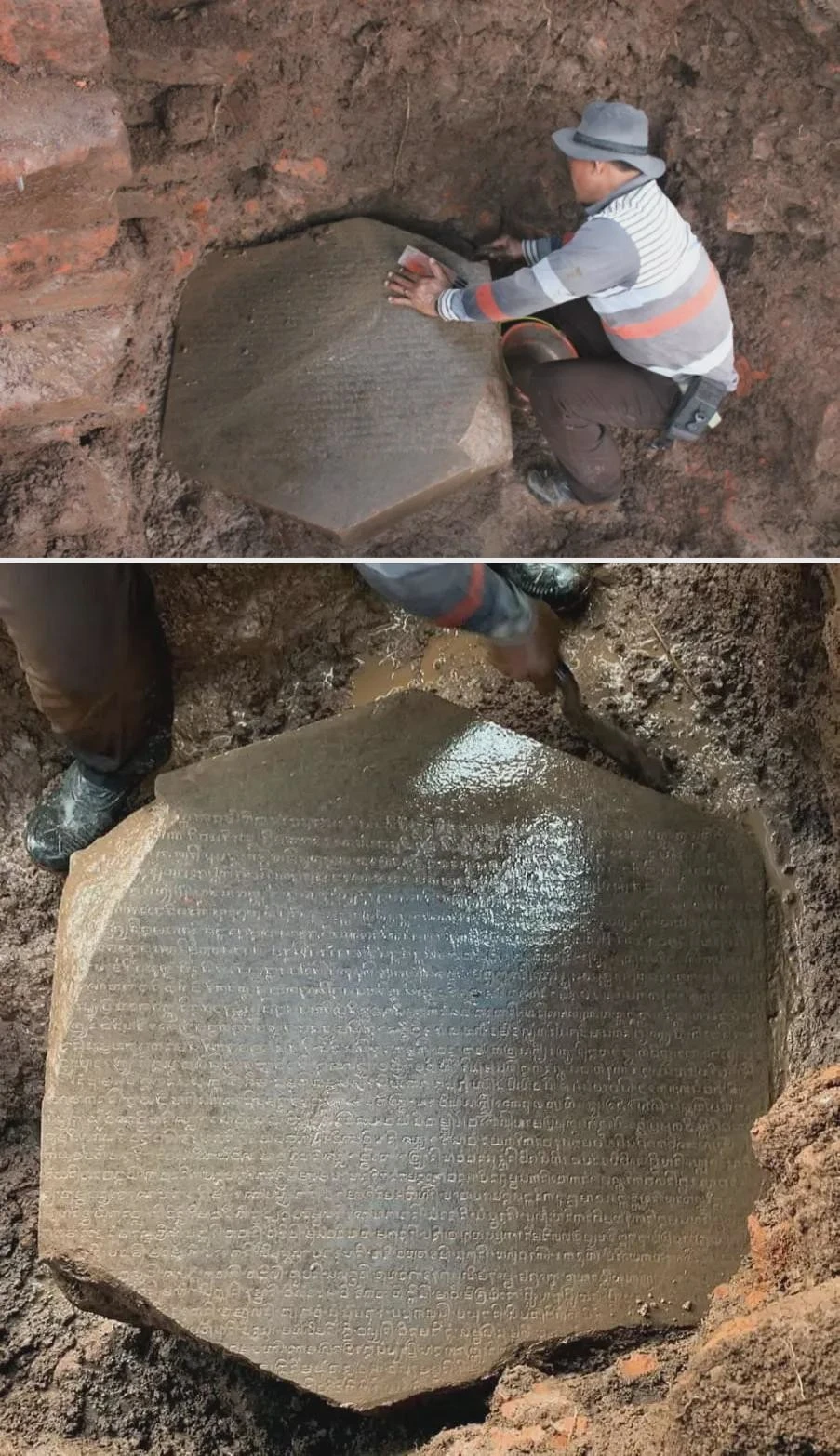
It describes a tarukan rice field, declared tax-free by King Mpu Sindok, and a ceremonial banquet where alcohol, salted fish, Eggs, beef jerky, cooked vegetables, coconuts, and much more.
4. German protective mask, 1515 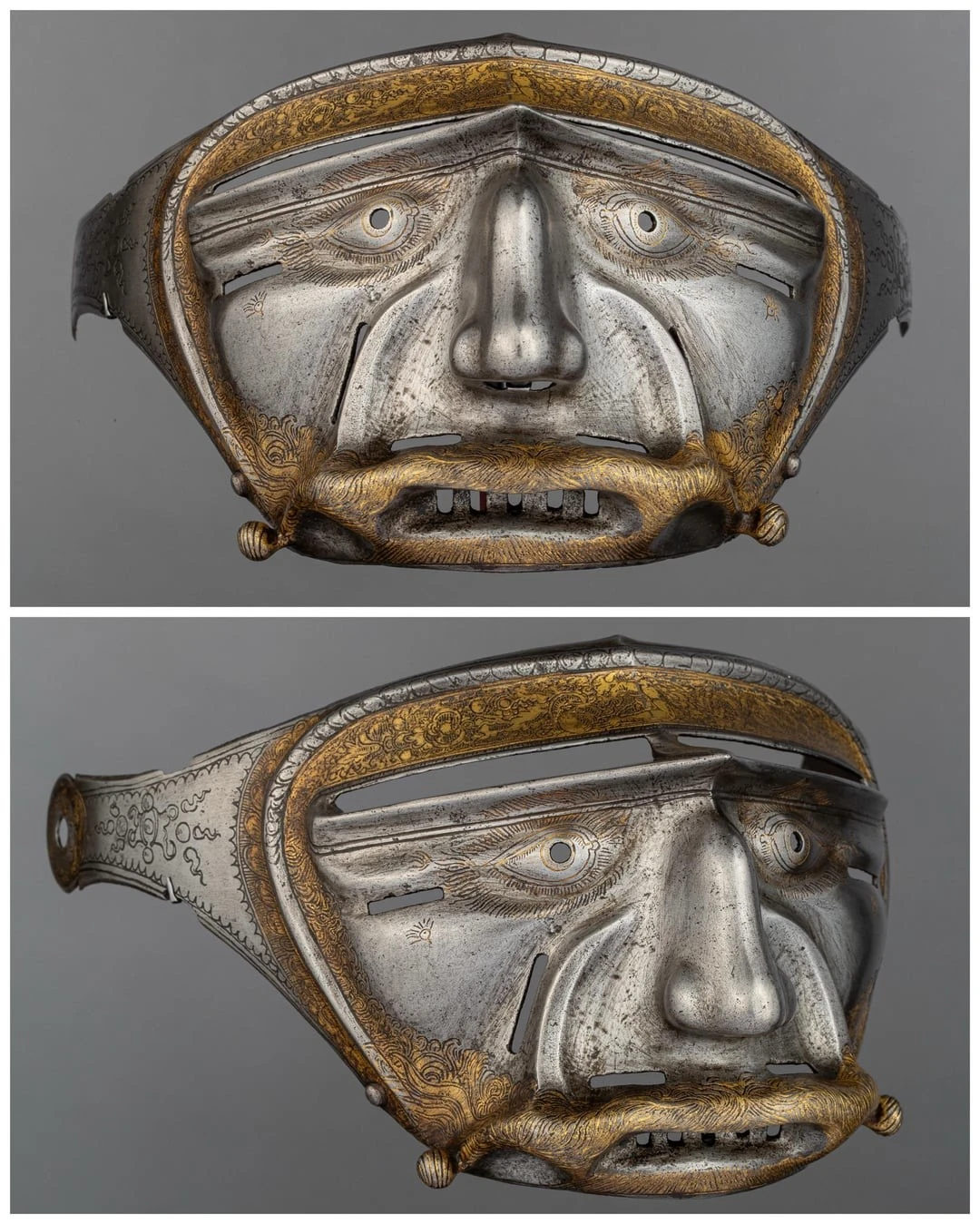
5. Roman tombstone of a beloved horse 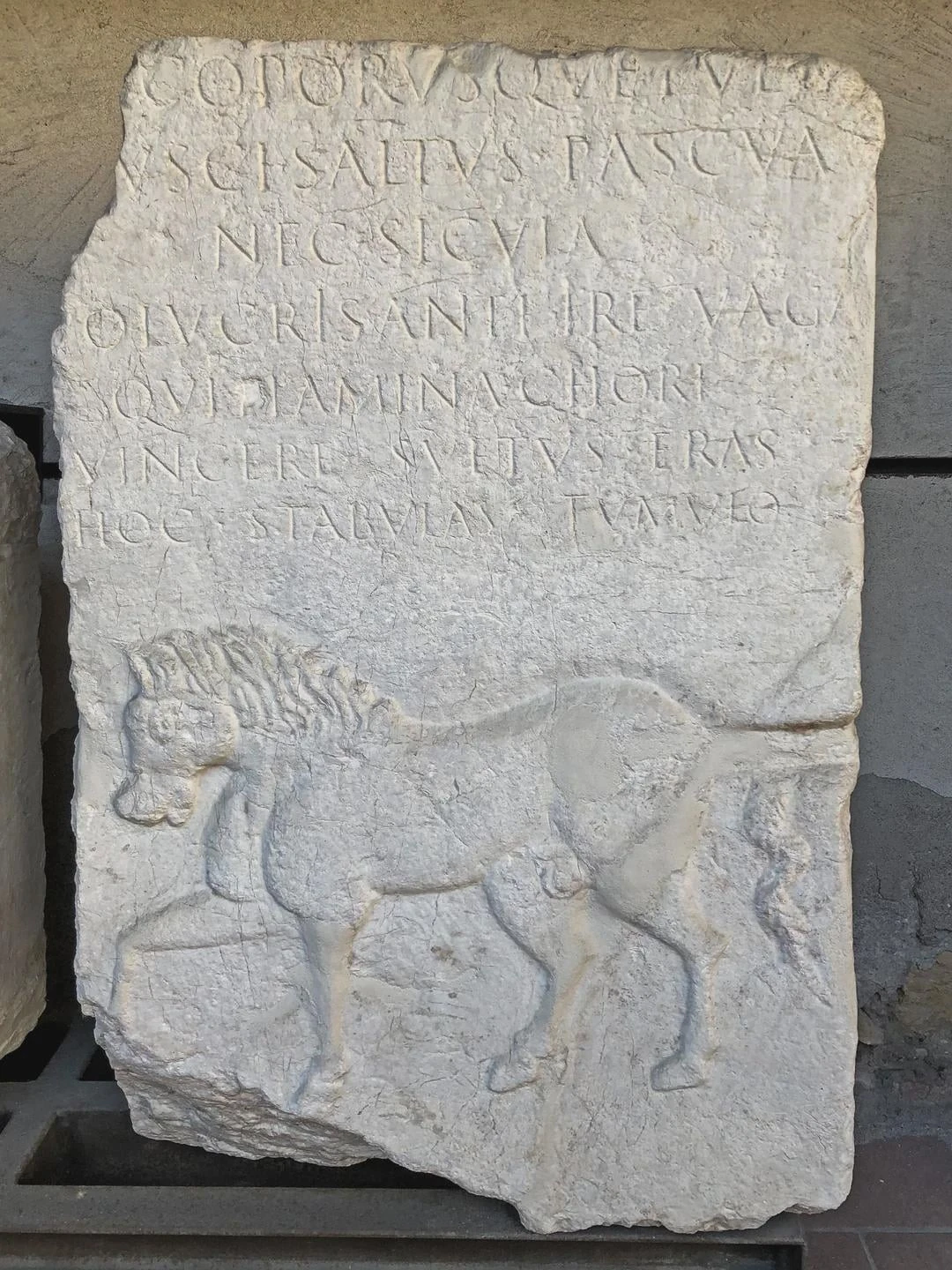
The epitaph reads: "Once you flew faster than the birds in the sky, outpacing even the northwest wind. But you no longer graze in the Tuscan forests and Sicilian fields, and now you rest peacefully in this tomb." From Brescia, Italy, 2nd century AD.
6. "Hen Painting" (Hönstavlan) by Johan Pasch 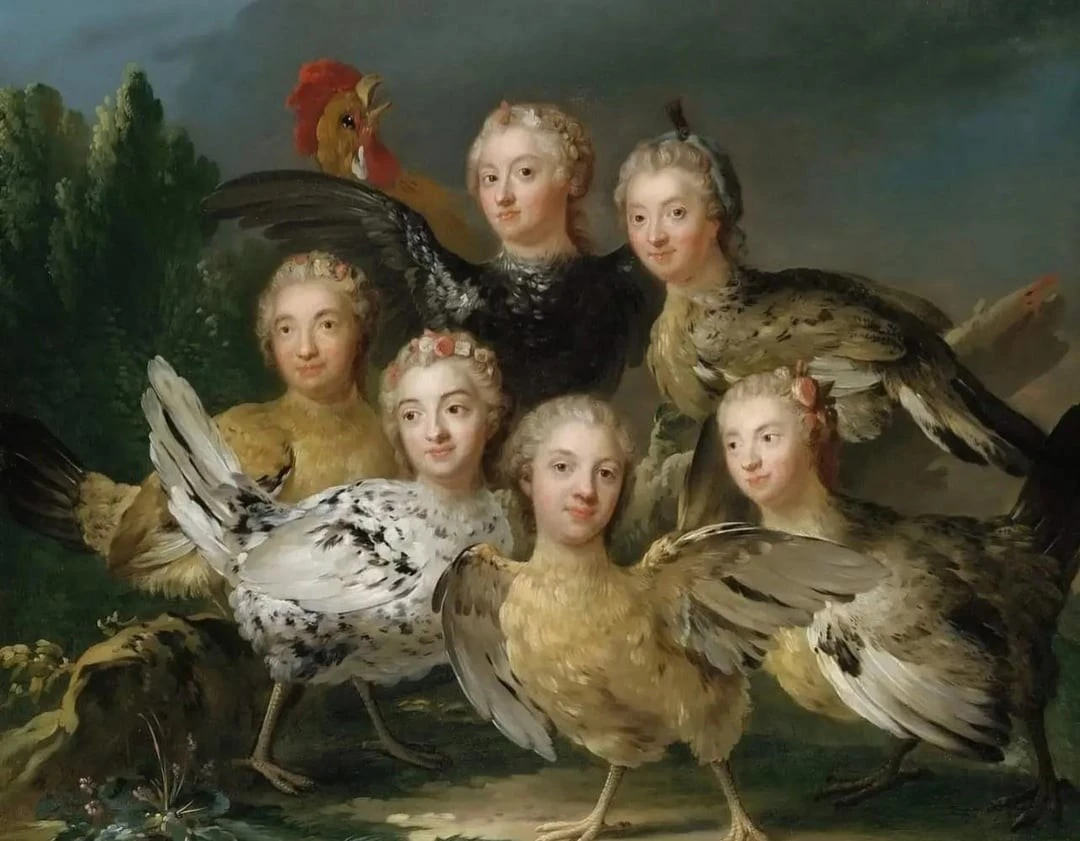
A surrealist painting from 1747 depicting Swedish court ladies as chickens with human heads. Nationalmuseum, Stockholm.
7. The dividing sword of the last Mughal emperor, Bahadur Shah Zaffar, steel and gold, early 19th century, on display at the Salar Jung Museum, Hyderabad, India. 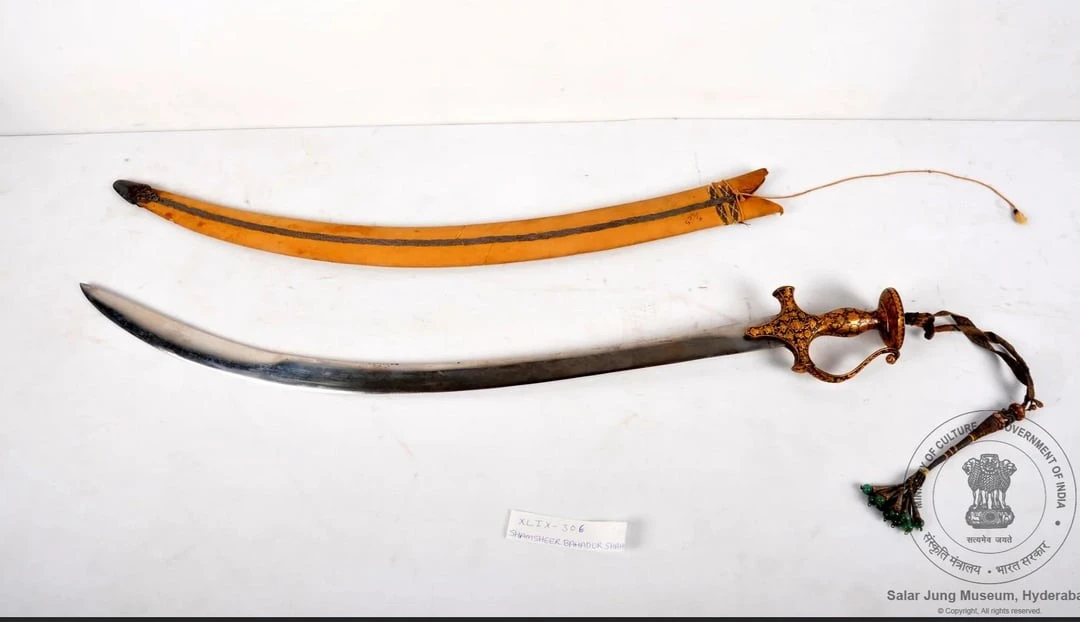
8. Mayan sculpture, ca. 600-800 CE. Royal conch shell. Collection of the Princeton University Art Museum. 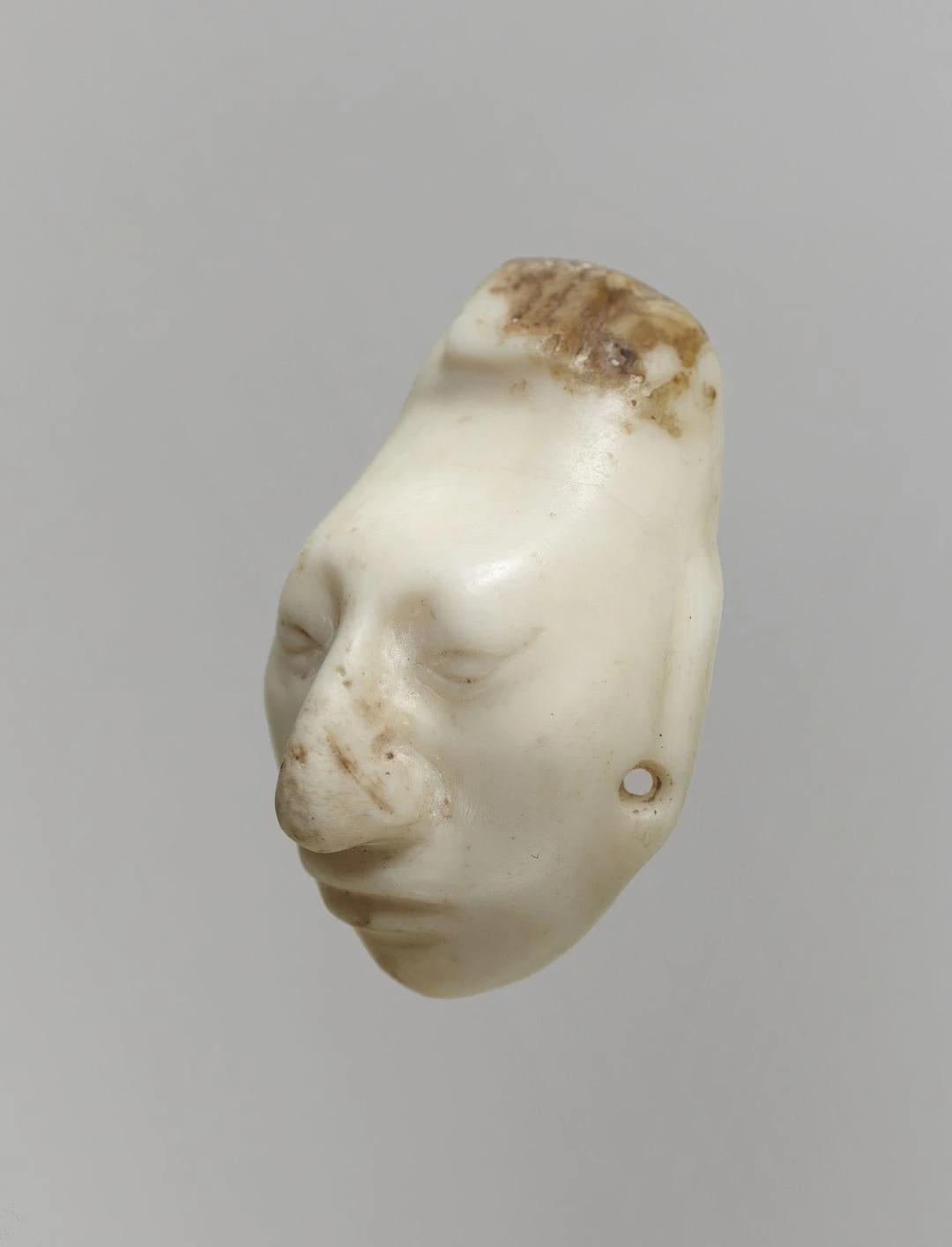
9. Sculptural image of an elderly Roman. The object dates to the 1st century BC. The artifact is housed in the Ny Carlsberg Glyptotek in Copenhagen, Denmark. 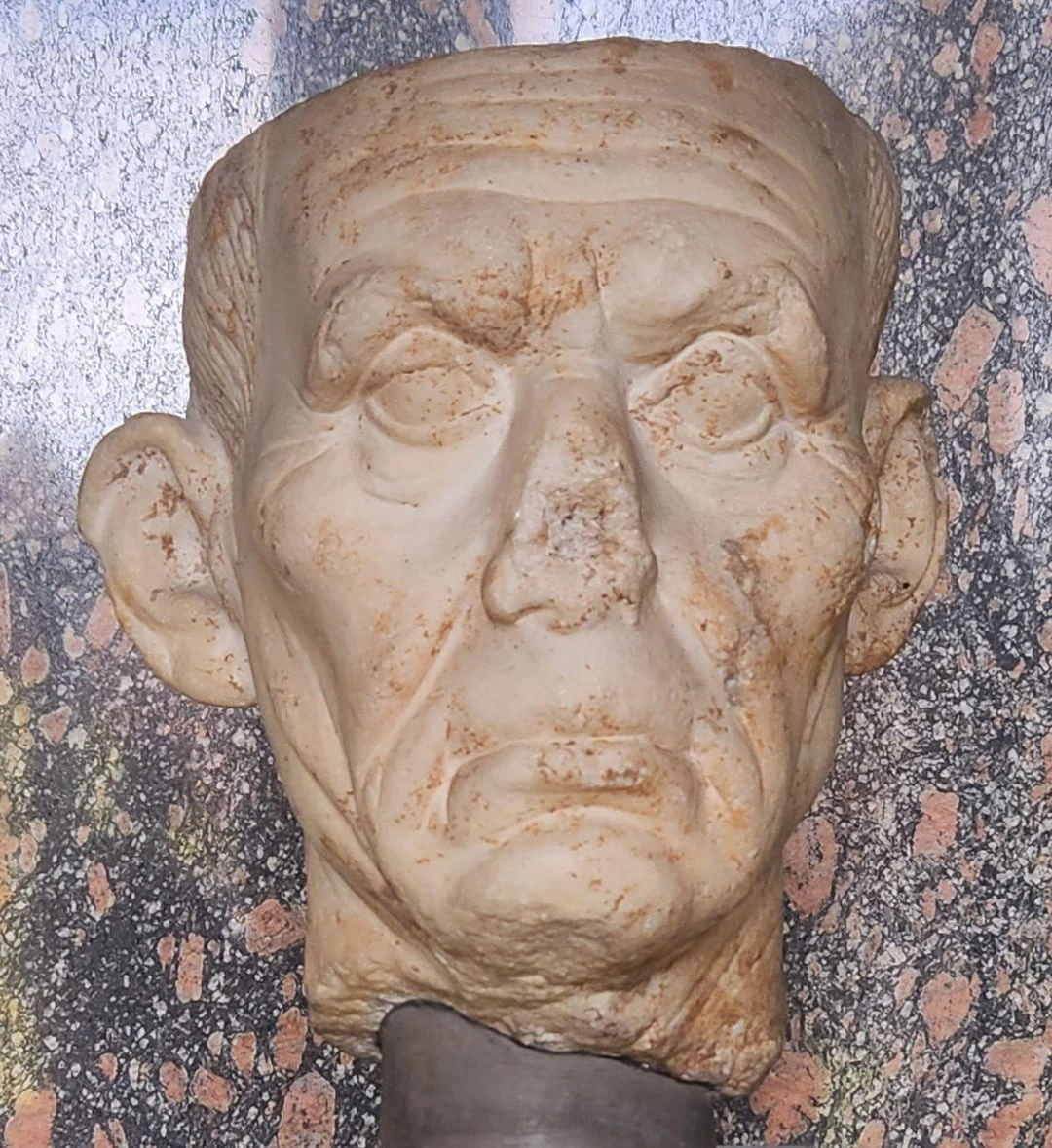
10. Gold coin depicting the Persian queen Borandokht (Boran, Buran) 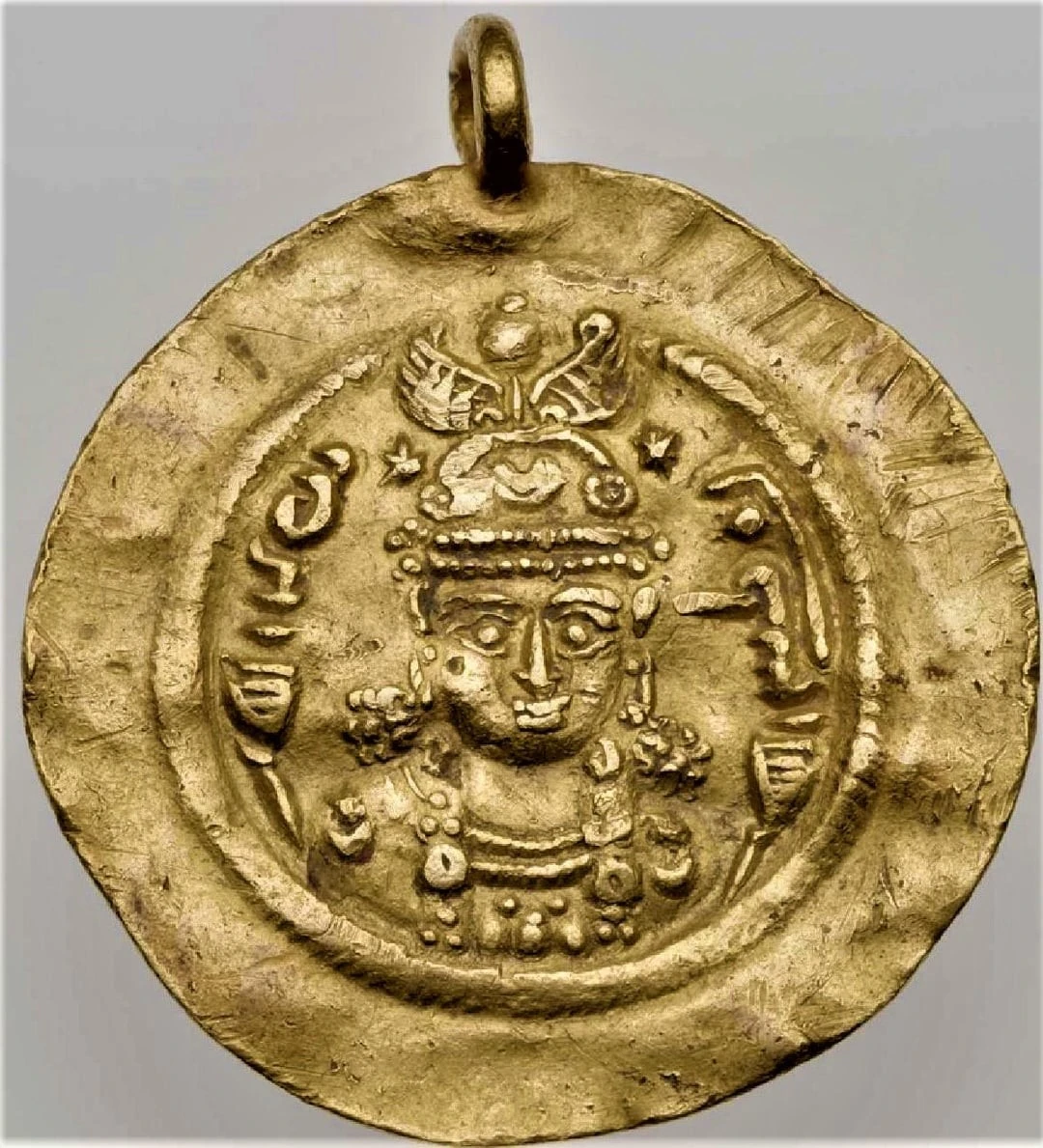
Borandokht reigned from 630 to 632 CE, with a break of several months, and was one of only three women to ever rule Iran.
11. Stingray skin armor from Kiribati, circa 1800-1880 CE. 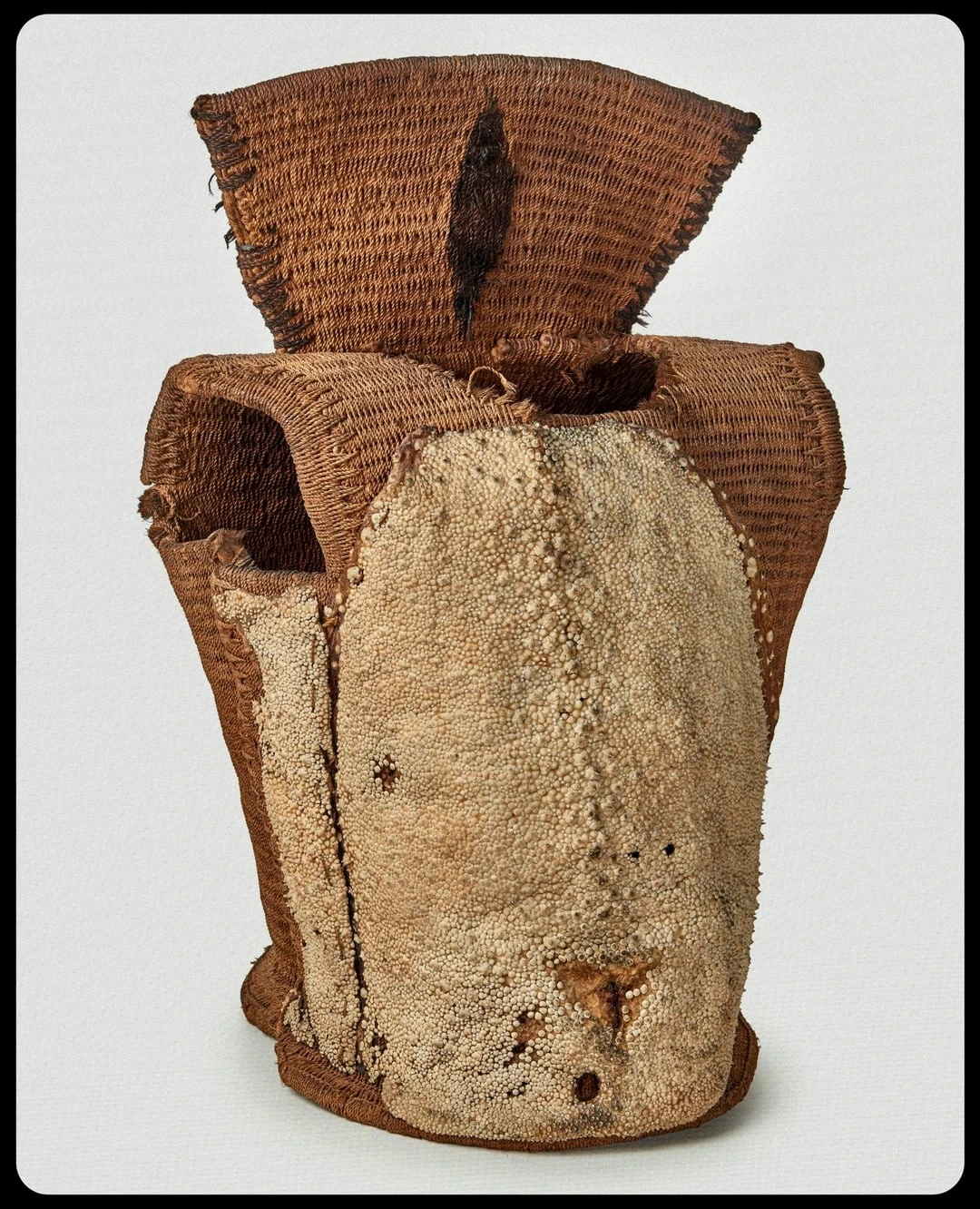
This armor was made of coconut fiber and stingray skin and was worn by warriors during ritual combat.
12. The Gislinge boat, 1150 CE, Denmark. A clinker-built workboat, likely used for fishing and transportation. 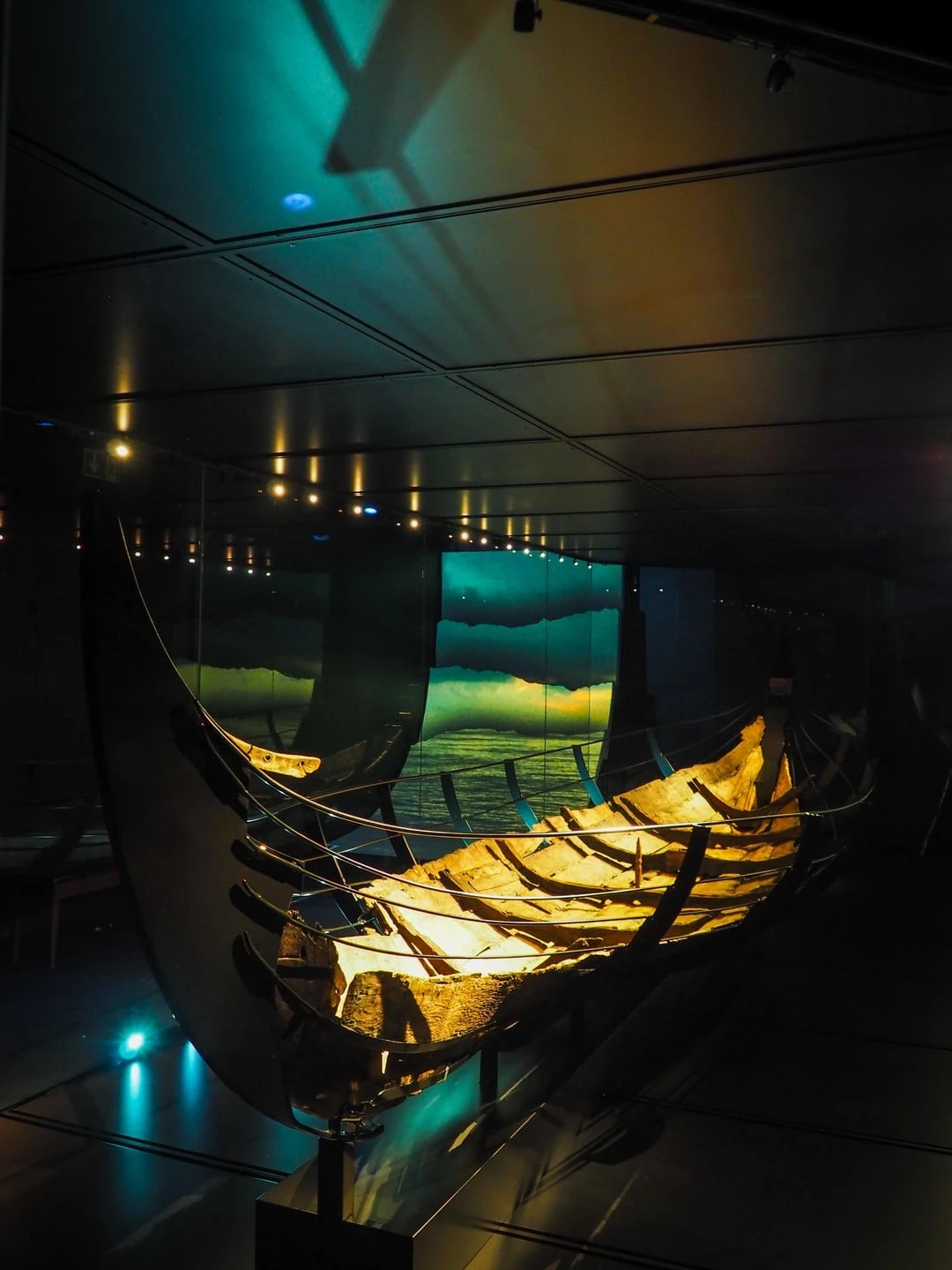
13. Plate. Iznik, Turkey, Ottoman period, ca. 1560, underglaze pottery. Brooklyn Museum Collection. 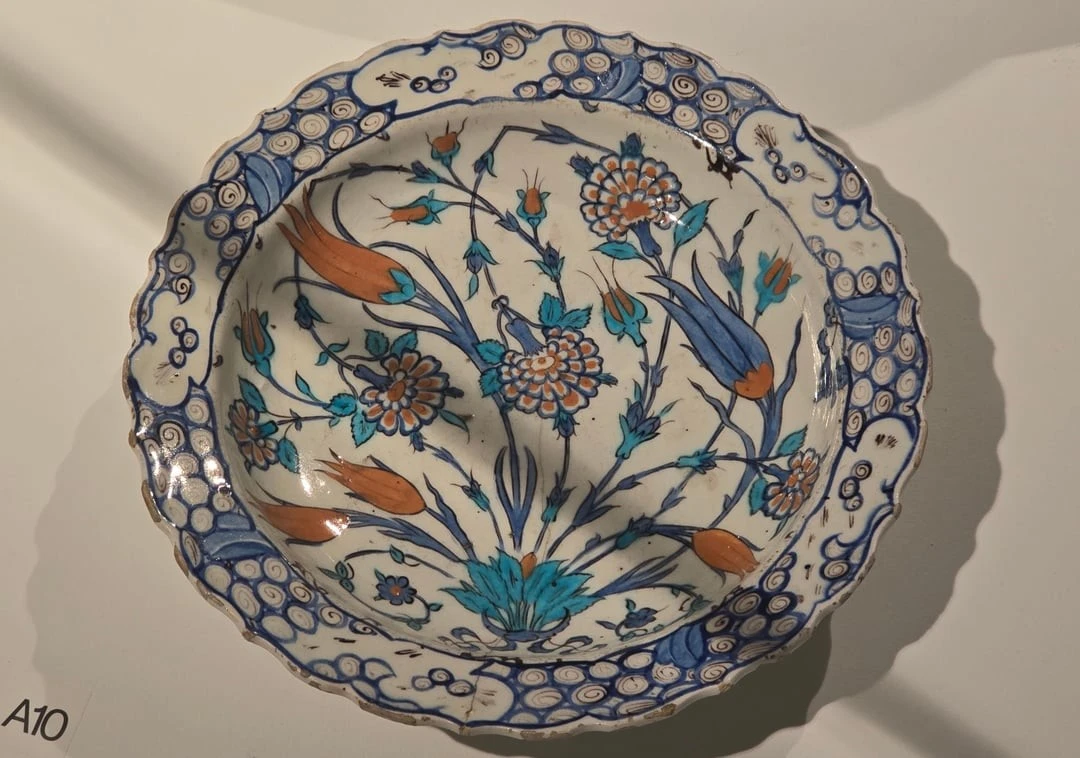
14. Iron tanko armor with gorget and helmet. Japan, Kofun period, 5th-6th centuries 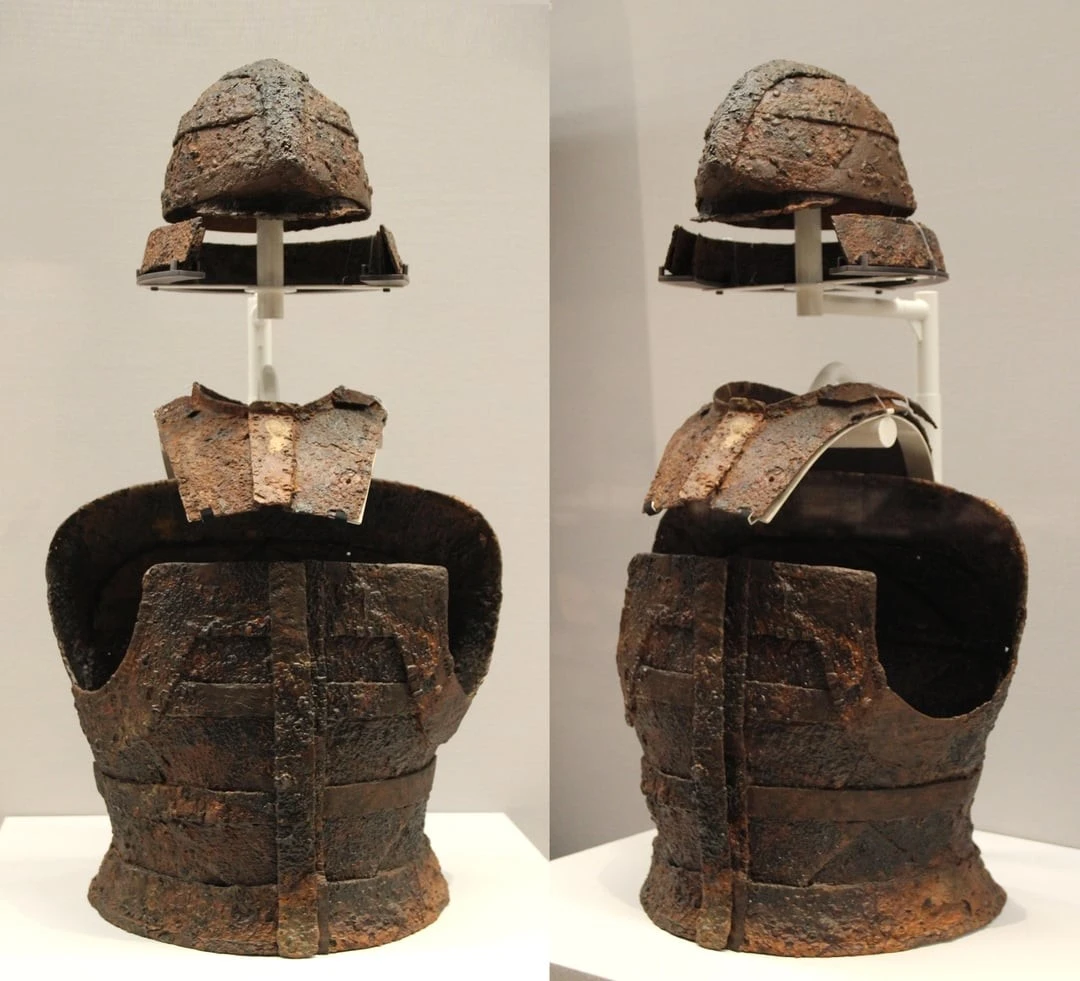
15. Bronze vessel with two rings. China, Western Han Dynasty, 202 BC - 9 AD. 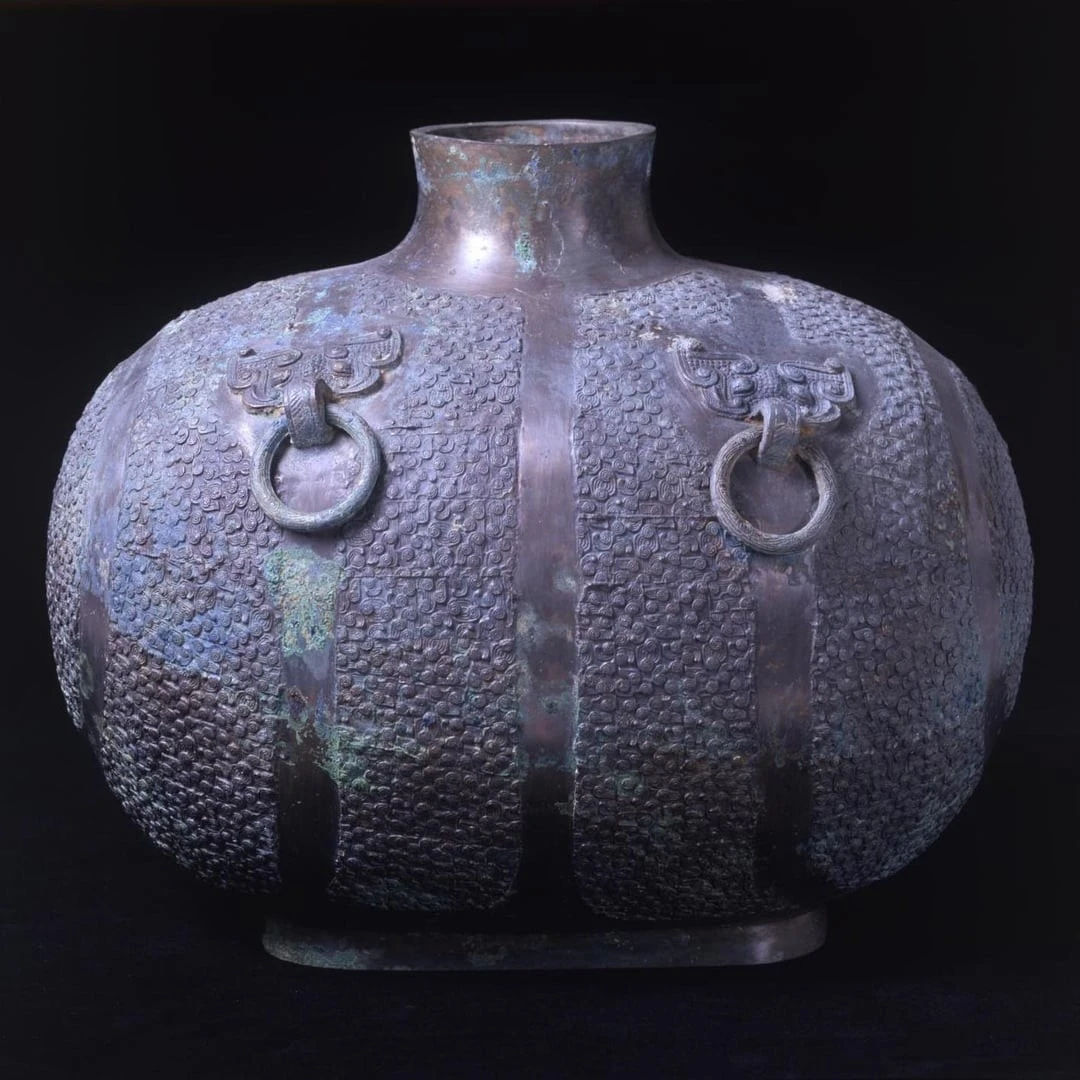
16. Daab sword with engraved hilt. Thailand, 19th century 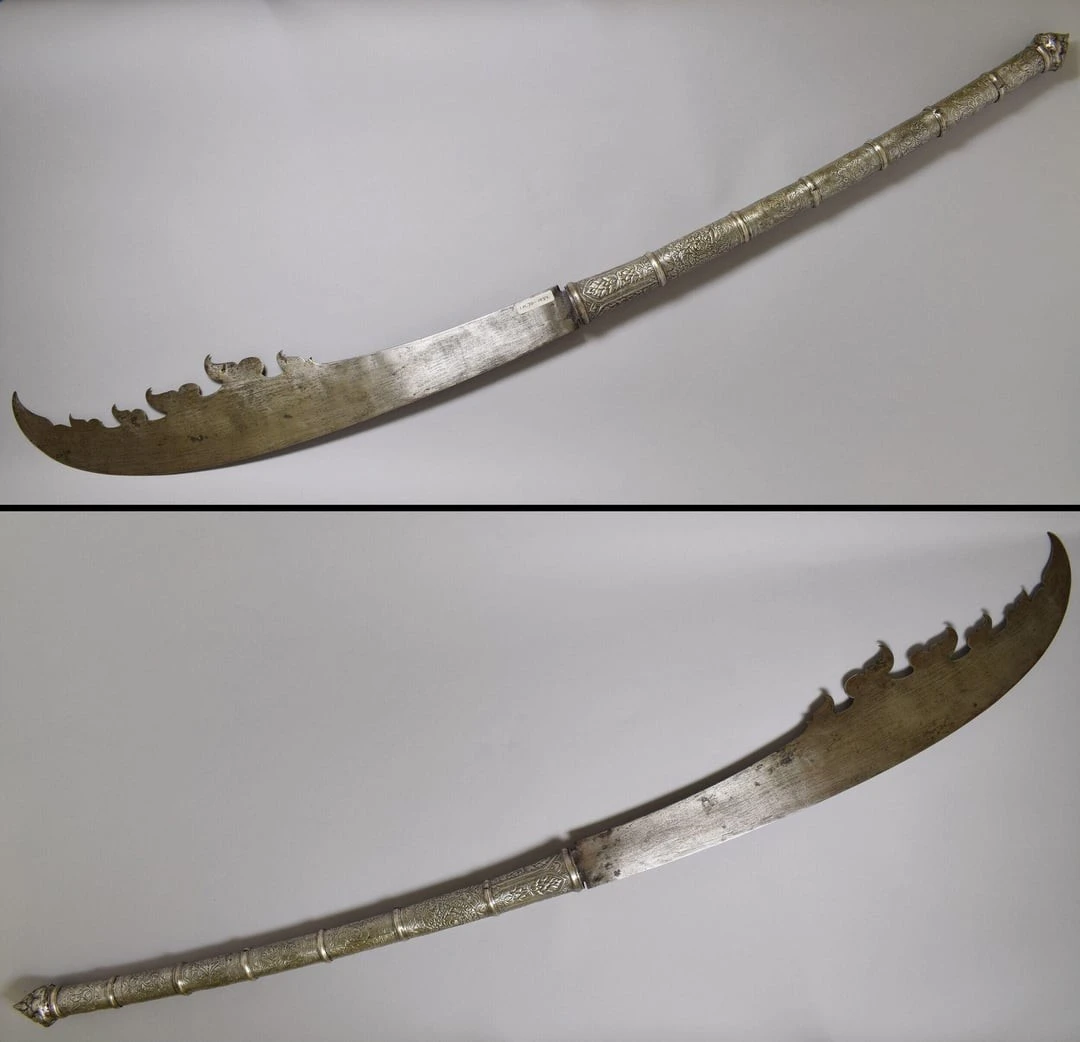
17. Pelike - an ancient Greek two-handled vessel for wine or oil, circa 300 BC. Floral motif with a goose. 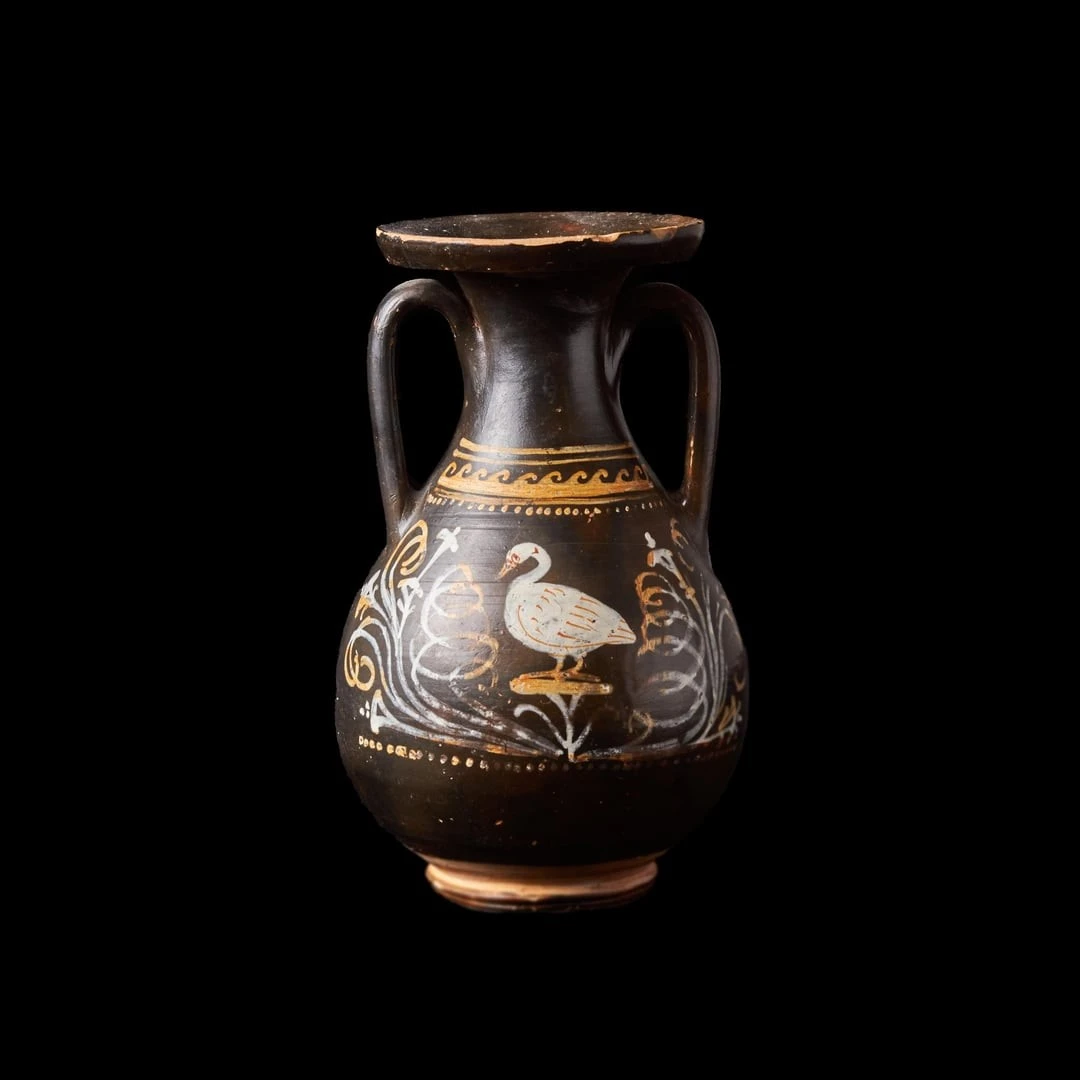
18. The so-called "Crown of Henry II" (or Reliquary Crown), which actually dates to the 13th or 14th century, not the emperor's reign. 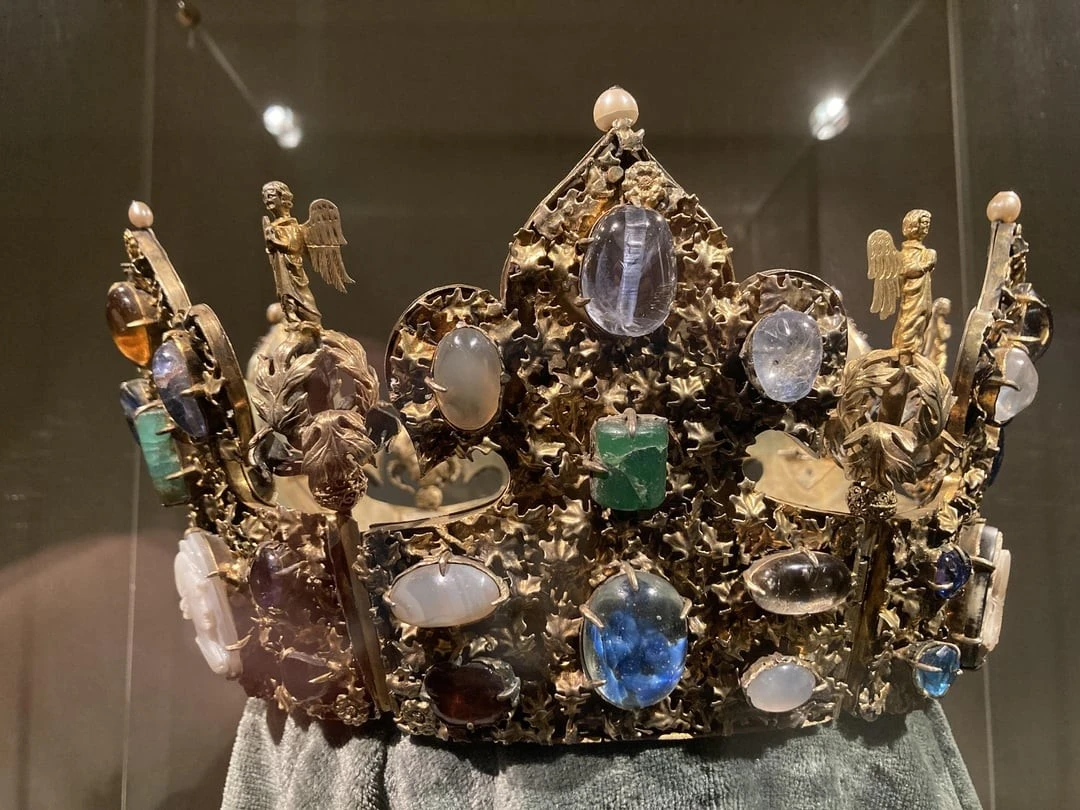
19. A gold, crystal, and turquoise perfume bottle from the Restoration period. 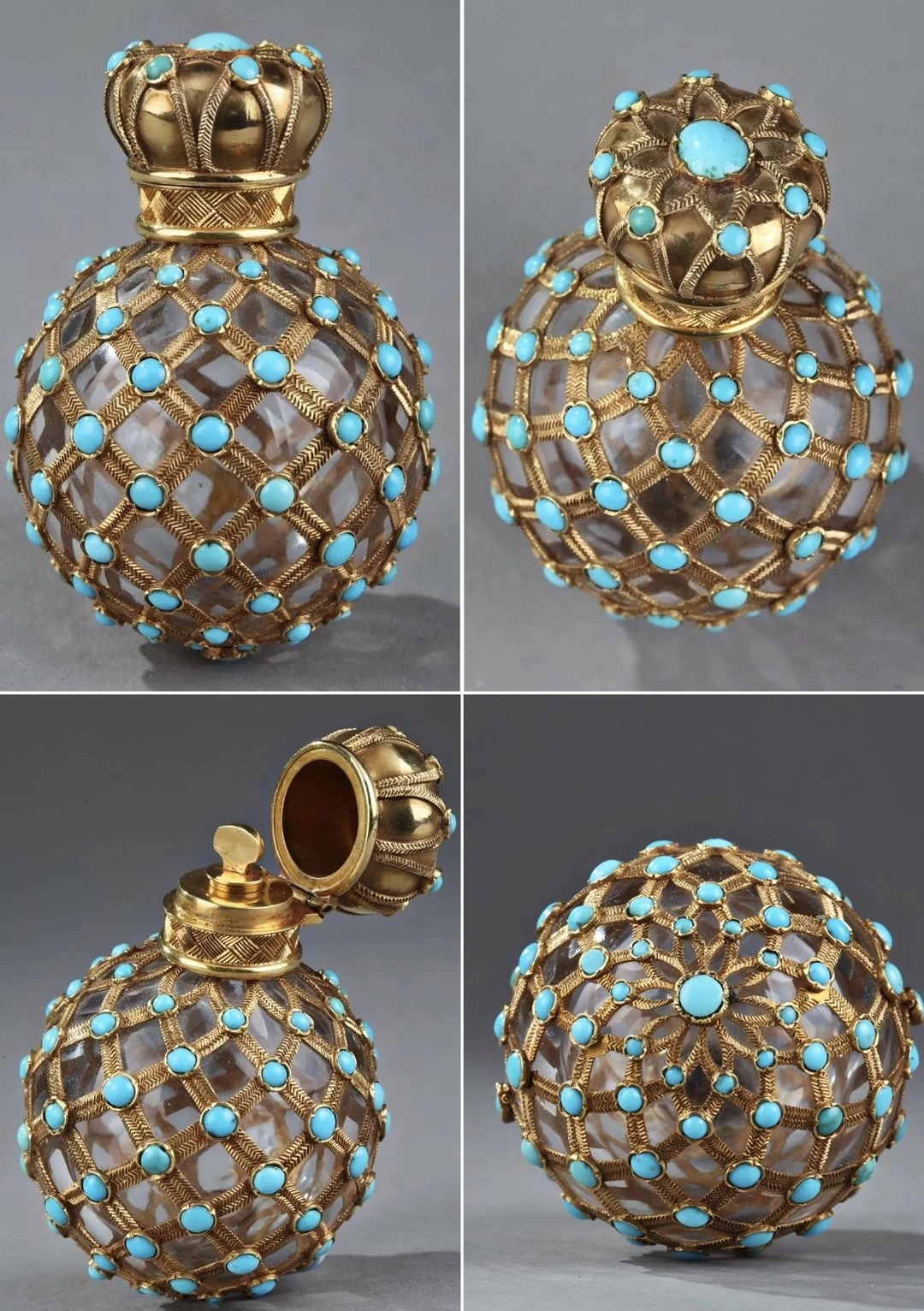
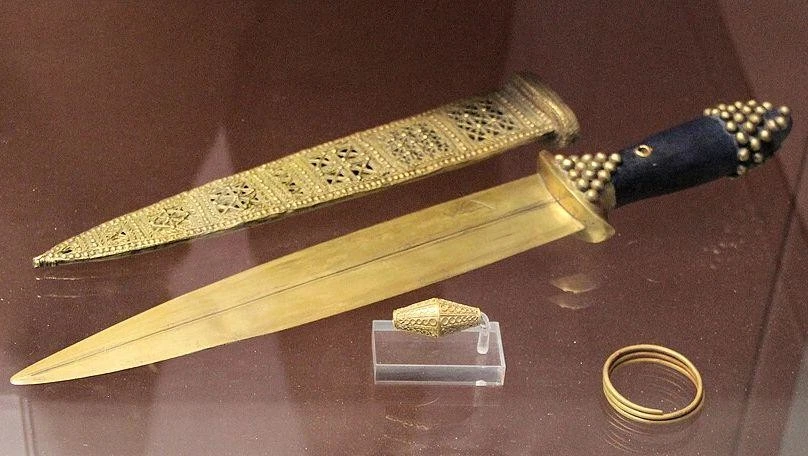
20. The gold dagger of Anepada, head of the First Dynasty of Ur and king of Kish, found in his tomb in the Royal Cemetery. Hurray - circa 2350 BC.