Killer waves: how do 10-story-high walls of water appear out of nowhere in the ocean? (9 photos)
The ocean actually looks like a romantic place: seagulls, sunset, a captain in a white cap, and the certainty that the most dangerous thing on board is the buffet on the third day of the cruise.
And then a wall as tall as a ten-story building rises out of the water. 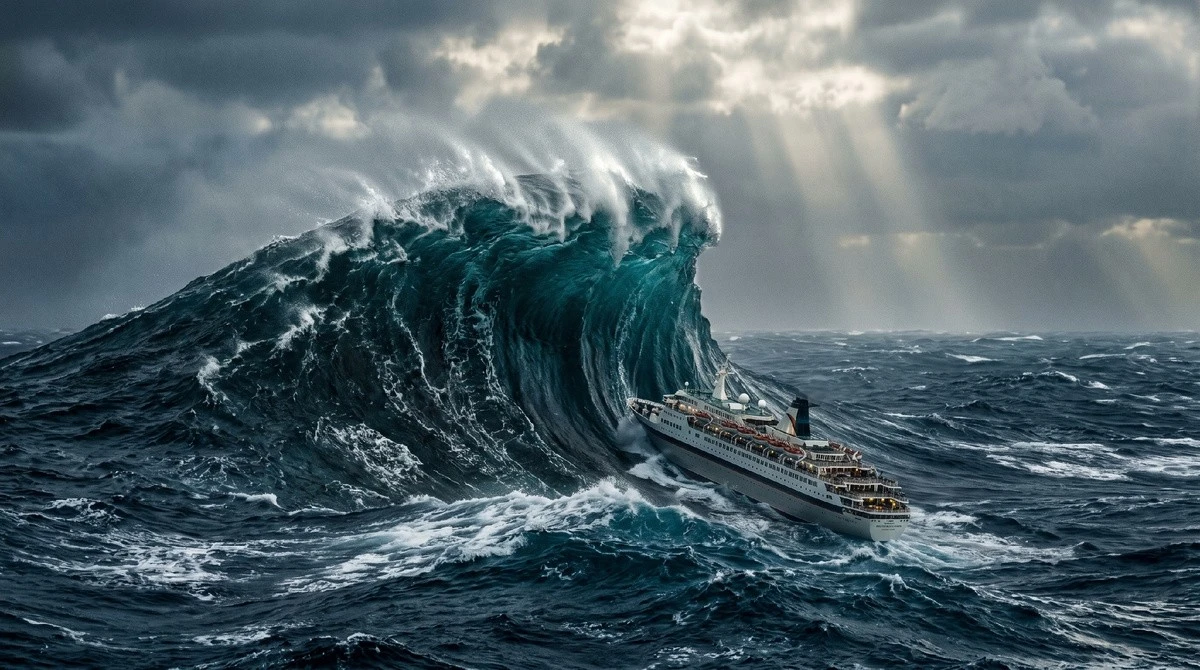
Just a second ago, the sea was simply big, wet, and slightly nervous—and now a white cliff of water rises in front of the ship, hitting steel harder than a bulldozer.
For a long time, sailors who reported such waves were believed the same way fishermen after their third drink: "Yeah, right, and the octopus was waving at you."
But the instruments ruined everything. They confirmed: rogue waves exist, appear quickly, and sometimes transform the ocean from a beautiful postcard into a horizon-sized hydraulic press.
On September 11, 1995, Captain Ronald Warwick of the Queen Elizabeth 2 stood on the bridge and watched a wall of water grow on the horizon. 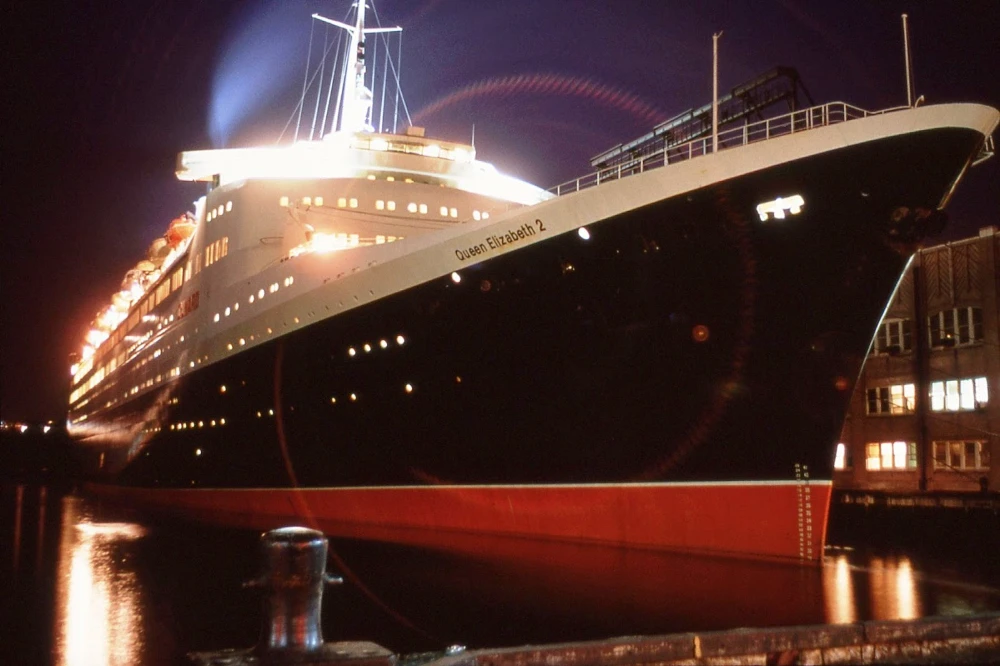
"It felt like we were crashing into the white cliffs of Dover," he later wrote in his report. The wave's height was estimated at 29 meters. The enormous ship, nearly 300 meters long, couldn't scale such a mountain—it simply pierced it. The impact damaged the bow and parts of the foredeck. 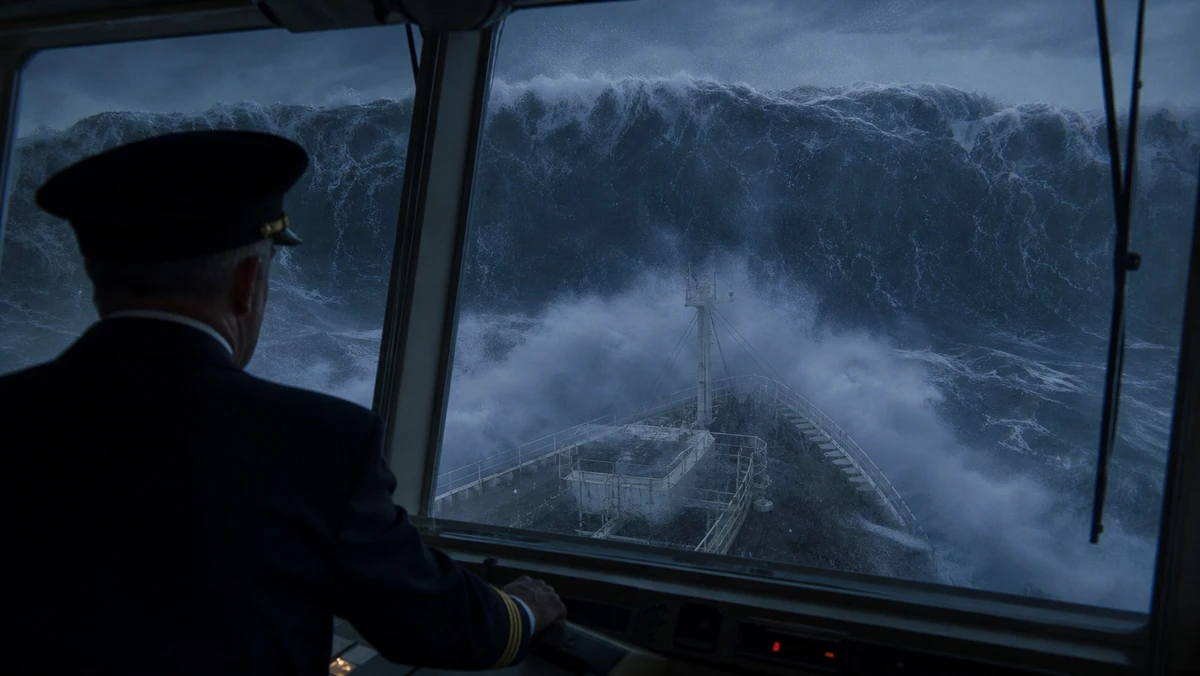
It was a rogue wave. Fortunately, none of the passengers were killed, and only some metal was damaged.
Sailors weren't believed for centuries. 
Stories of gigantic "walls of water" suddenly rising out of a relatively calm sea have accumulated over the centuries. Sailors described the same thing: a deep hole in the sea before the wave, followed by a vertical wall, often coming from the opposite direction from which the wind was blowing.
Academic science reacted much the same way a police officer would to a UFO story: nodding and noting "stress in storm conditions."
Classical hydrodynamic models explained why. According to calculations at the time, a wave twice the significant wave height around it should have been nearly impossible for a given section of the sea. 
Everything changed at the end of the 20th century, when a laser rangefinder on the Dropner gas platform in the North Sea recorded something that forever rewrote oceanography: a wave 25.6 meters high, with a significant wave height around it of about 12 meters—more than twice the background wave height. The instruments were right. The platform was damaged. This became the first instrumental proof, after which rogue waves had to be accepted as a normal, albeit rare, physical phenomenon.
Physics without magic and mysticism
"Out of nowhere" is a figure of speech, not a literal description. Rogue waves don't appear from another dimension. It's just that the mechanism by which they are generated is rare, fast, and occurs without warning. 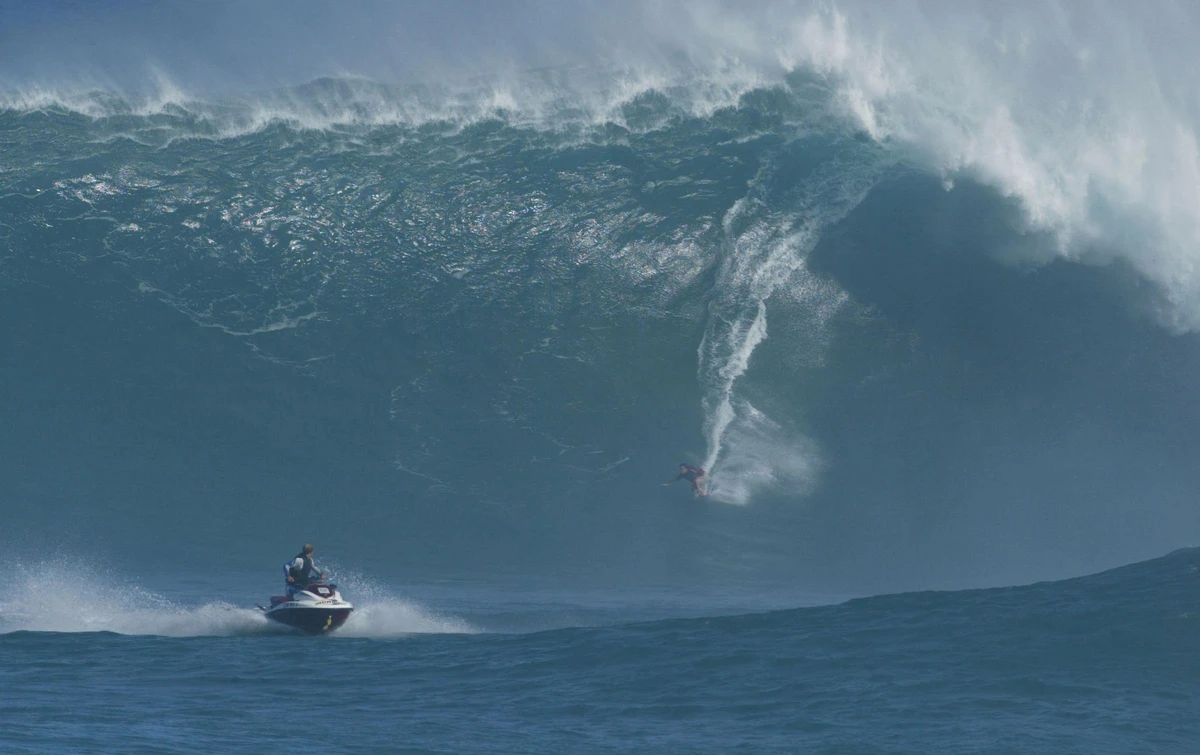
One of the simplest mechanisms is linear superposition.
The ocean is not a single wave, but dozens of wave systems moving in different directions at different speeds. When the crests of several such systems accidentally meet at one point, their heights add up. A giant peak forms, which collapses back together within a few seconds. But these seconds are enough to destroy a ship if it happens to be nearby. 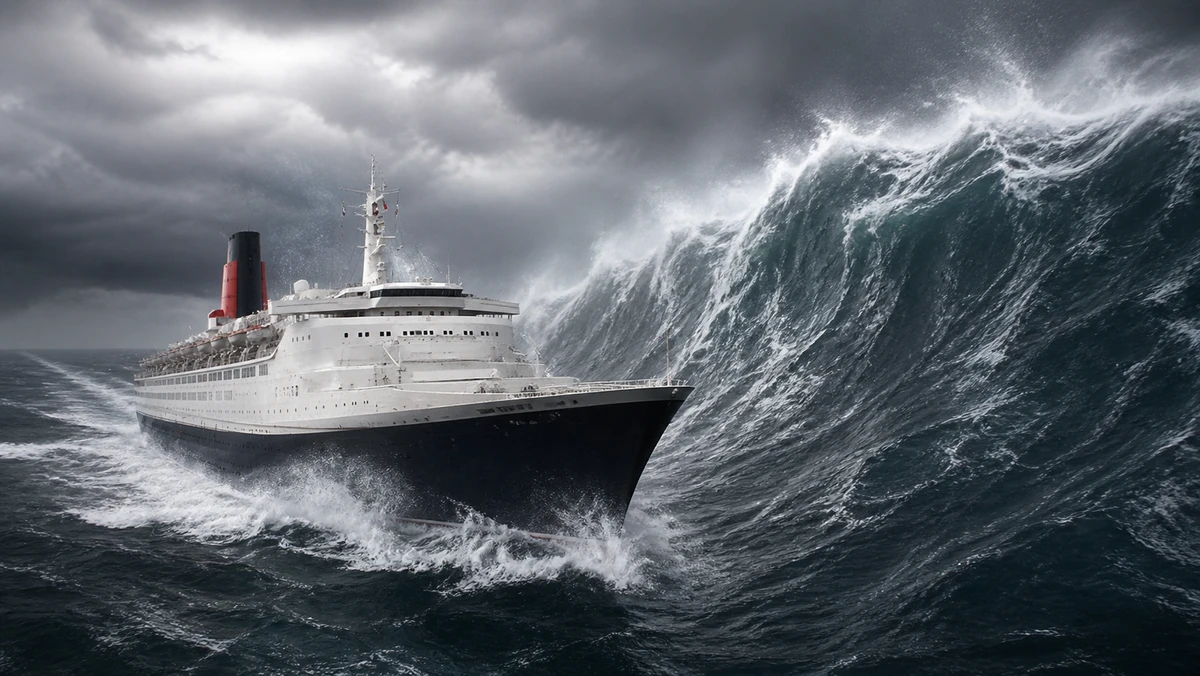
There's a more complex mechanism—nonlinear modulation instability. In a narrow beam of waves, one begins to "absorb" the energy of its neighbors. As a result, the energy is locally concentrated in one wave, and it can become several times higher than its neighbors.
The combustible mixture is created by currents. When waves enter the oncoming flow zone, their length is compressed, and their height increases. 
The Cape Agulhas Current off the coast of South Africa acts as a lens, concentrating wave energy. ESA's MaxWave project confirmed this from space in 2001: radars from two satellites detected more than 10 waves over 25 meters in height at various points across the world's oceans over a three-week period. This showed that such waves are much more common than previous models had predicted.
Where to expect them—and what to do about them
There are several "hot spots" on the world ocean map. The Cape Agulhas Current is the most dangerous of them: fast-moving waters flow toward the waves from Antarctica, compressing and lifting them. 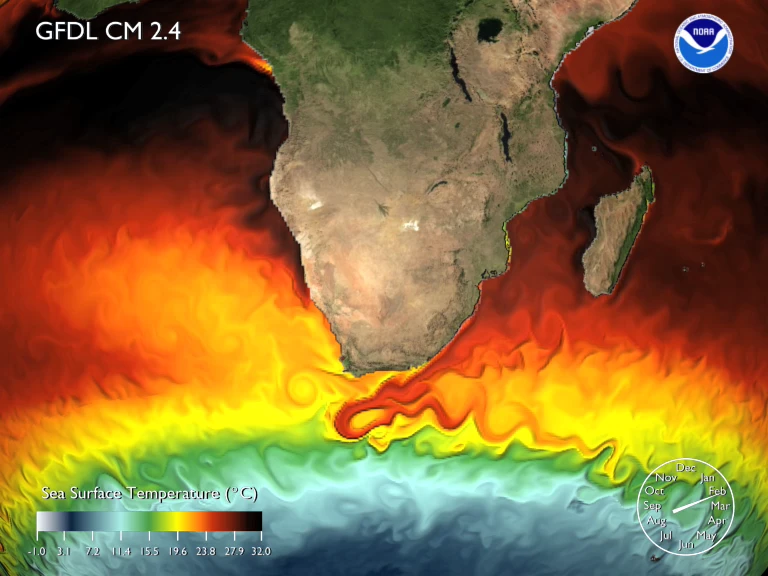
This illustration clearly shows this temperature difference in the water off the coast of South Africa.
A similar effect is observed off the coast of Japan, where the Kuroshio Current operates. The North Atlantic is also dangerous: storms, powerful currents, and intersecting wave systems create conditions for extreme waves—it was in this region that the München and QE2 disasters occurred. The Southern Ocean around Antarctica is a different story: there is no land to stop the wind, and waves accelerate over thousands of kilometers.
Studies are underway to predict these events. MIT has created an algorithm that provides a three-minute warning before a surge occurs—enough time to halt hazardous operations, close hatches, and prepare the crew.