More than 50 years ago, we sent a message to extraterrestrial civilizations. Here's what it contained (4 photos)
On November 16, 1974, a historic event occurred—the giant Arecibo radio telescope in Puerto Rico was used for the first time not to detect signals from space, but to send a message to the stars. 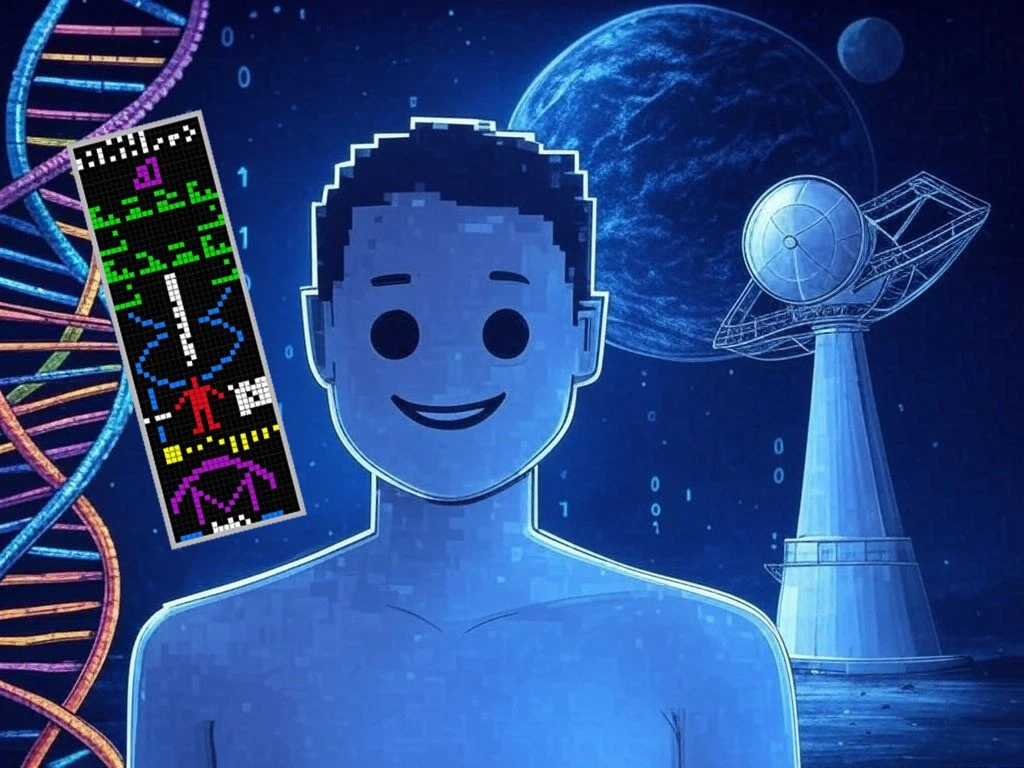
More than half a century later, this message remains one of the most famous and somewhat controversial attempts to communicate with extraterrestrial civilizations.
A real attempt at contact?
In fact, scientists never considered this message a serious attempt to contact "brothers in mind." The explanation is very simple:
We didn't know then, and we still don't know, whether intelligent extraterrestrial civilizations exist;
The target of the message is extremely far from Earth.
It was essentially a technological demonstration timed to coincide with the grand opening of a renovated radio telescope.
The message was directed toward the globular cluster M 13—a giant cluster of gravitationally bound stars, comprising several hundred thousand stars densely packed into a sphere approximately 145 light-years in diameter. M 13 is located approximately 25,000 light-years from Earth, and even if a planet with intelligent life exists there, there's no guarantee it will be in the right position tens of thousands of years from now when our signal reaches the cluster. 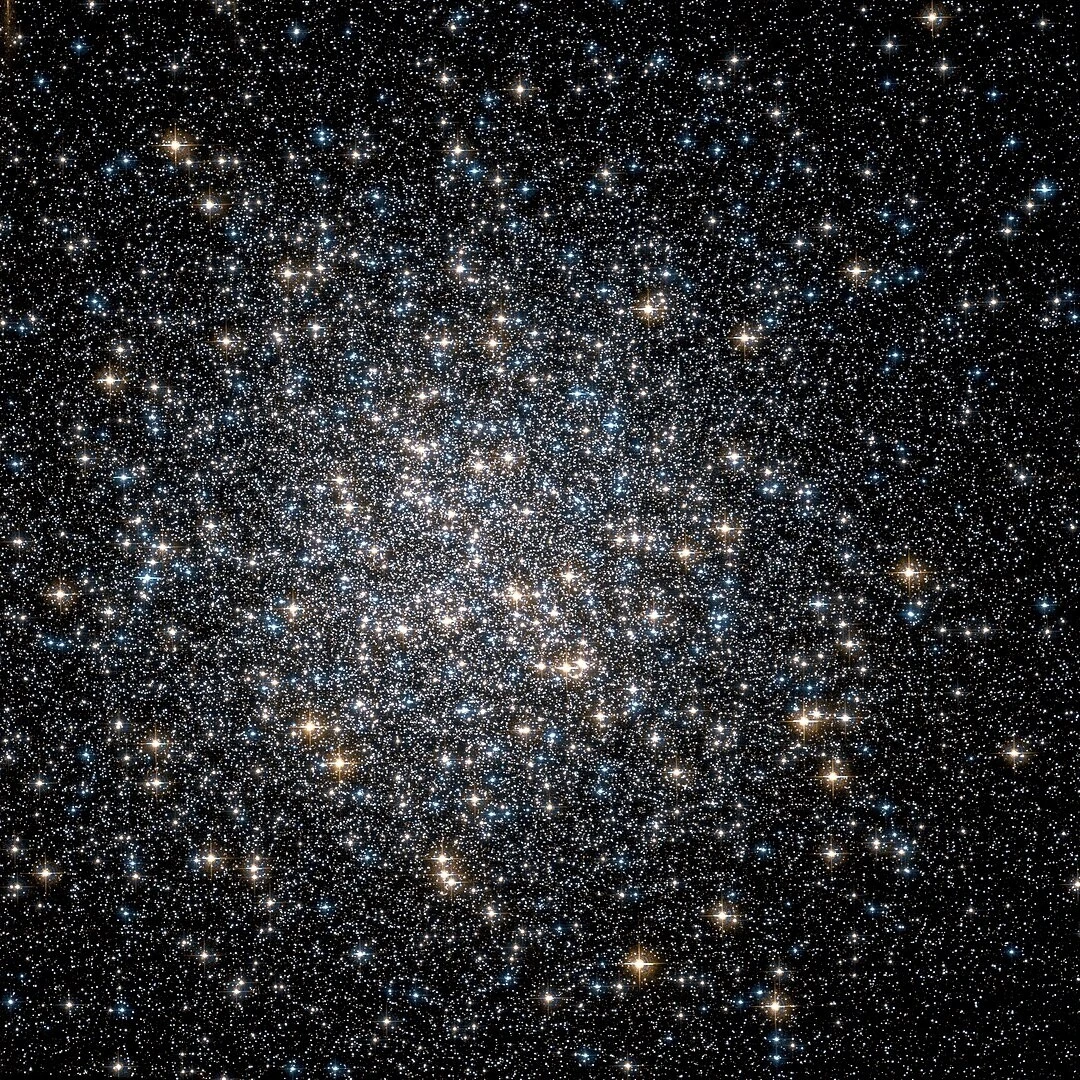
The M13 cluster, as imaged by the Hubble Space Telescope
METI – SETI's Controversial "Relative"
The METI (Messaging to Extraterrestrial Intelligence) concept is considered a controversial offshoot of the better-known SETI (Search for Extraterrestrial Intelligence) program. Some scientists (and others) fear that messing around with sending signals into space could lead to one of our messages being intercepted by a potentially militant civilization, which would easily find the source...
And then they'll board their flying saucers—or ships disguised as comets—and fly faster than light, breaking the laws of the universe, just to enslave Earthlings! It's not so scary when such fears are conceived by the average person, but when such fears arise in the mind of a scientist, it's a disaster.
For decades, we've been unknowingly announcing our existence for all to hear: radio and television broadcasts, radar, and other electromagnetic signals create a trail that spreads from Earth in all directions at the speed of light. No new message can simply outpace* the signal front we've already left in the Universe.
*This is due to the fundamental limitation of the speed of light—approximately 300,000 kilometers per second. Any electromagnetic signal, including radio waves, cannot travel faster. Therefore, new intentional messages, no matter how powerful, will never be able to catch up with, much less surpass, signals already sent from Earth.
The Anatomy of a Cosmic Message
The message itself is a series of binary pulses—a sequence of "ones" and "zeros" transmitted over three minutes. Many eminent scientists, including astronomers Frank Drake and Carl Sagan, participated in the creation of the message, seeking to convey key information about humanity. 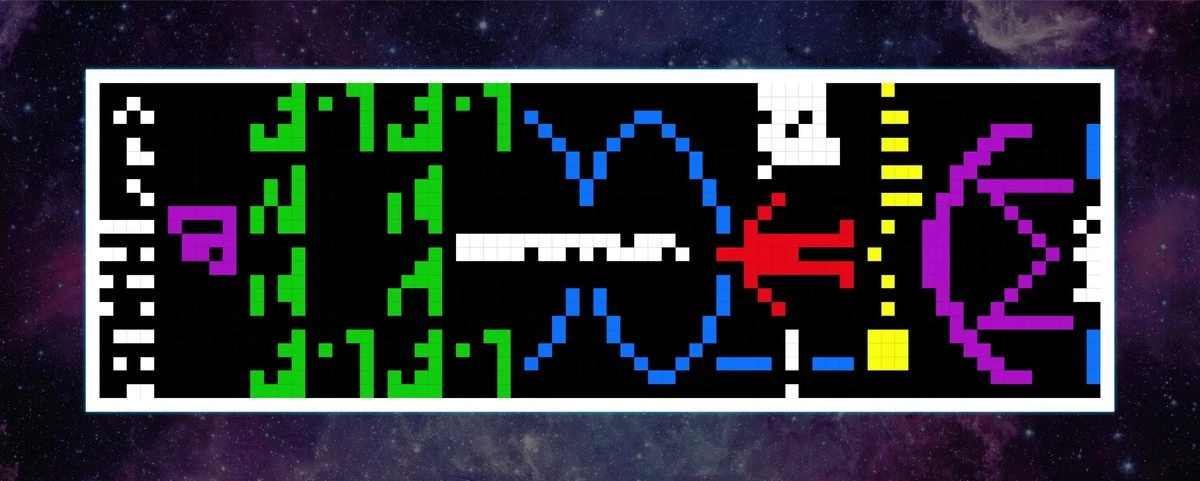
The message consists of several parts:
Numbers 1 through 10 in binary code. This section should be fairly self-explanatory and serves as a key to deciphering the following sections.
Atomic numbers of five elements: hydrogen, carbon, nitrogen, oxygen, and phosphorus. These elements were chosen because of their key role in the structure of DNA.
Chemical formulas of DNA components, followed by a graphic representation of the double helix—the structure on which our genetics is based.
The Earth's population at the time of sending was 4.3 billion, along with a schematic representation of a person with the number 14. Multiplying this number by the signal's wavelength yields 1.76 meters—the average height of an adult male in the United States. It's noteworthy that the creators of the message simply ignored their own women and representatives of other countries.
A map of the solar system showing nine planets, including Pluto, which was considered a planet at the time. Earth's position is offset relative to the other planets to clearly indicate the origin of the message.
A schematic representation of the Arecibo radio telescope itself.
A message that outlived its creators
In August 2020, a support cable supporting the massive 900-ton platform suspended above the Arecibo radio telescope's dish broke. This caused severe structural damage and forced the observatory out of service. In December of that year, the platform collapsed, permanently destroying the famous telescope. 
Arecibo sustained severe damage. However, there is hope that the observatory will be restored.
Thus, the message has already outlived its source and most of the scientists who worked on its creation. And although the signal weakens as it travels through interstellar space, it could theoretically outlive humanity itself.