The brown rat: has displaced all other rats and taken over the planet (10 photos)
Between 9 and 16 billion individuals. That's the estimated population of brown rats, and it's growing faster than the human population. They've taken over the entire planet, turning cities into giant rat nests, and no matter how hard humans try to get rid of them, they continue to dominate humans on our own territory. And that's because brown rats are true survival machines, surpassing both humans and any other rats! 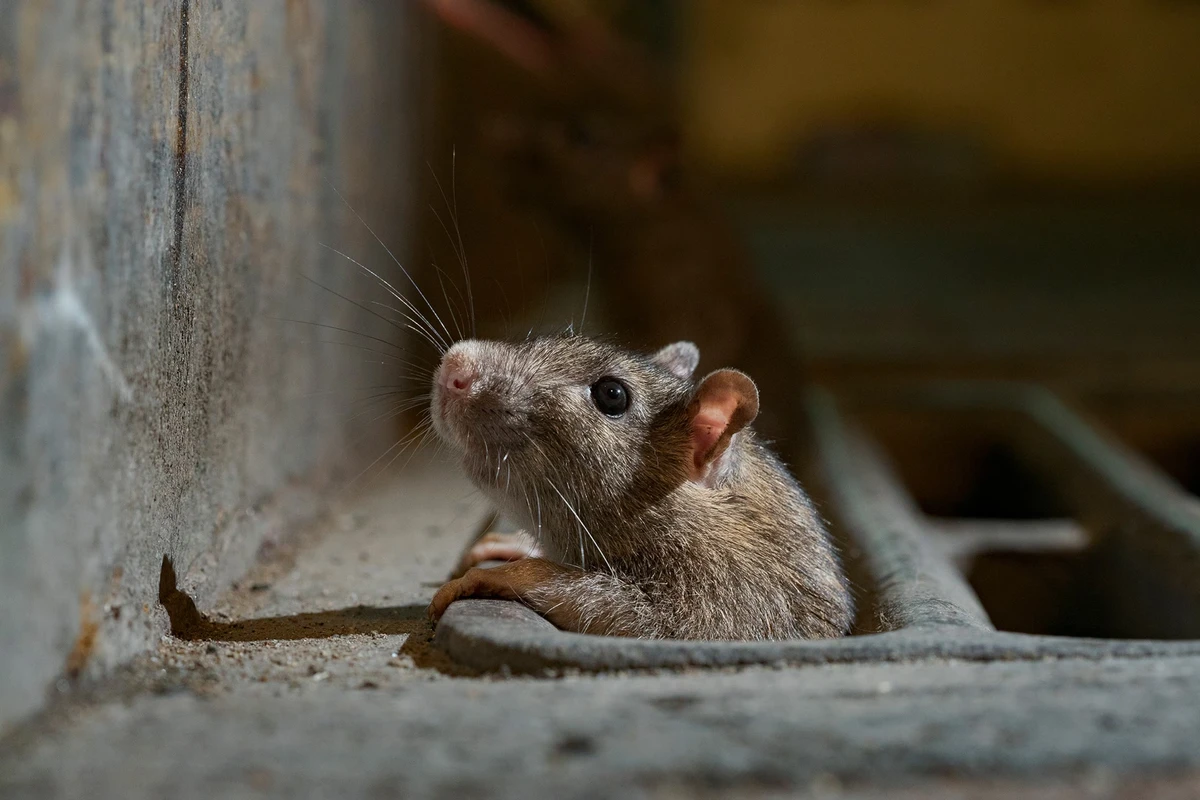
I will definitely survive. And that's not a plea, it's a fact!
Take food, for example. Brown rats can eat almost anything humans eat—and our diet is very broad. Moreover, they thrive on a diet of scraps, and can subsist on leather, dry grains, cookies, and dried meat. And if food isn't readily available... well, so much the worse for them. 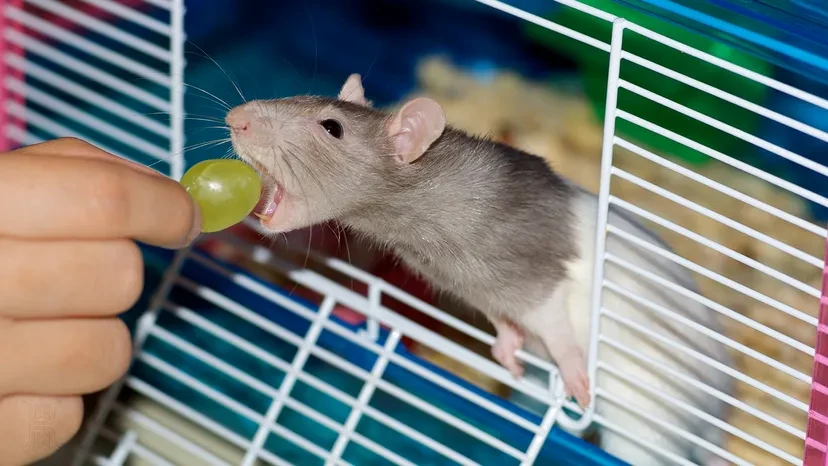
Stop running away, you damn grape!
Just a reminder: rats are rodents, and all rodents have huge, powerful, and constantly growing incisors, practically forcing them to gnaw on hard objects to wear them down. And because their enamel (already the hardest tissue in the mammalian body) is further strengthened by iron salts, brown rats are capable of making holes in wood or plastic and can chew through aluminum, copper, or lead wire. 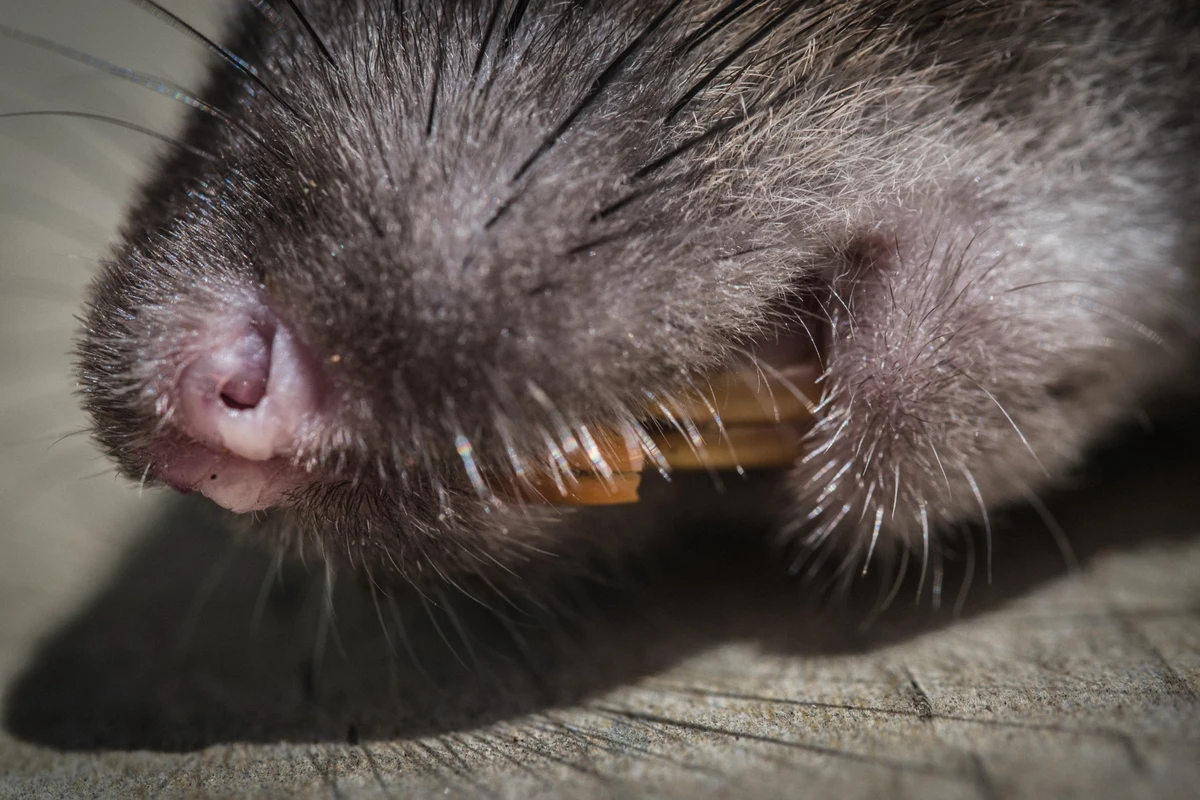
Notice the color of the rat's teeth. They are reddish due to the iron.
The already challenging task of hiding something from brown rats is further complicated by their climbing abilities, which rival those of primates. Thanks to their well-developed claws, rats are excellent at crawling, climbing, and clinging, sometimes even hanging from the ceiling. They're also not afraid of falling; given their light weight, a fall from a height of 5-10 meters usually results in only minor injuries. 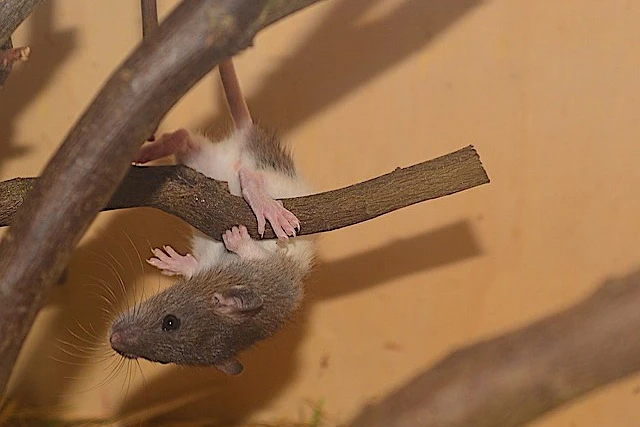
Parkour is a youth movement, a way of self-expression!
These skills make the brown rat a very unpleasant and persistent creature, impossible to get rid of. But, frankly, this is a standard rat skill set, which is nothing new and has allowed several other rat species to benefit from human labor. Just 200-300 years ago, the brown rat ruled Europe, bandicoots ruled South Asia, and the Polynesian rat had spread en masse to New Zealand and nearby islands. But as soon as the brown rats broke out of Central Asia, they quickly showed their relatives who was in charge! 
Walking through the captured streets!
After all, the brown rat is a very large rodent, capable of defeating any other rat single-handedly. But the brown rat is never alone. Regardless of where they live, rats always organize their own small communities with a strict hierarchy, which act as a united front against their enemies. But more importantly, they also help each other. After all, rats aren't just a gray plague that has spread to every city on the planet. They're an empathic gray plague. Rats share food with each other, help their comrades out of trouble, and even defend them in battle, which significantly improves their survival rate. 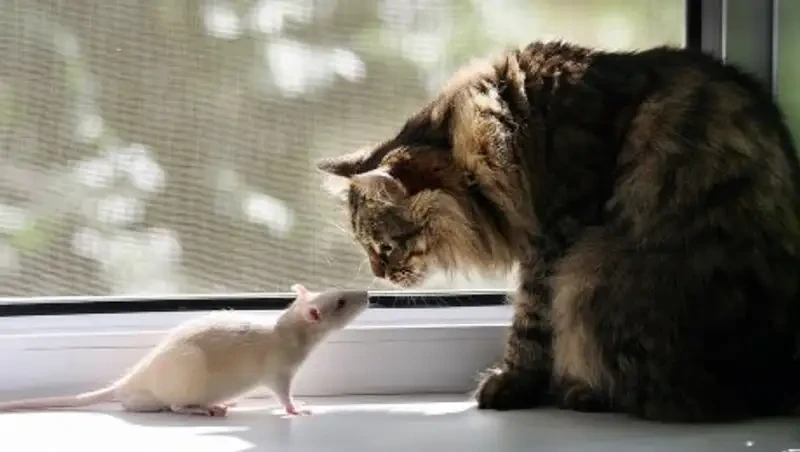
Rats are such large rodents that most cats prefer not to hunt them. 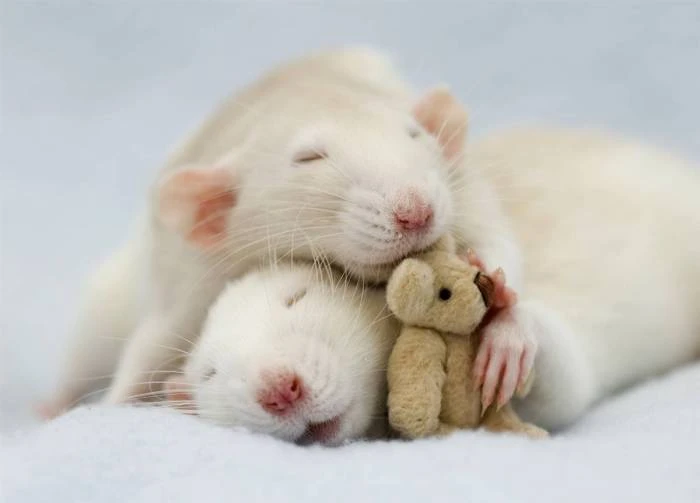
Best friends and sleep together.
And they reproduce very quickly. With a short lifespan—just 2-3 years—a female can give birth up to 18 times, which is about a hundred pups. And even if the mortality rate of the pups is around 90%, their population will still increase fivefold in just 3 years! And that's even worse than it might seem. 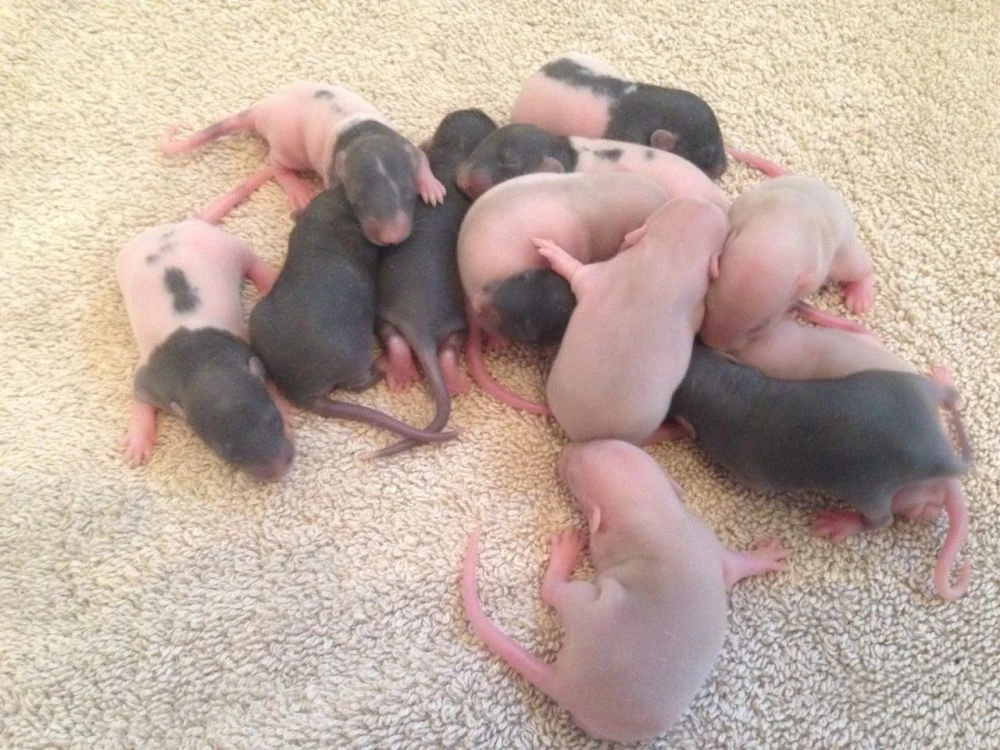
— Where did all that come from? "Well, I had nothing better to do over the weekend... I gave birth."
After all, every new rat is a new combination of genes and new mutations that give animals new traits. For example, resistance to the latest poisons, which is preserved in subsequent generations. The bottom line is simple: humanity simply doesn't have the tools to defeat the rat empire. Yes, we can defeat individual populations, but we can't defeat an entire species. 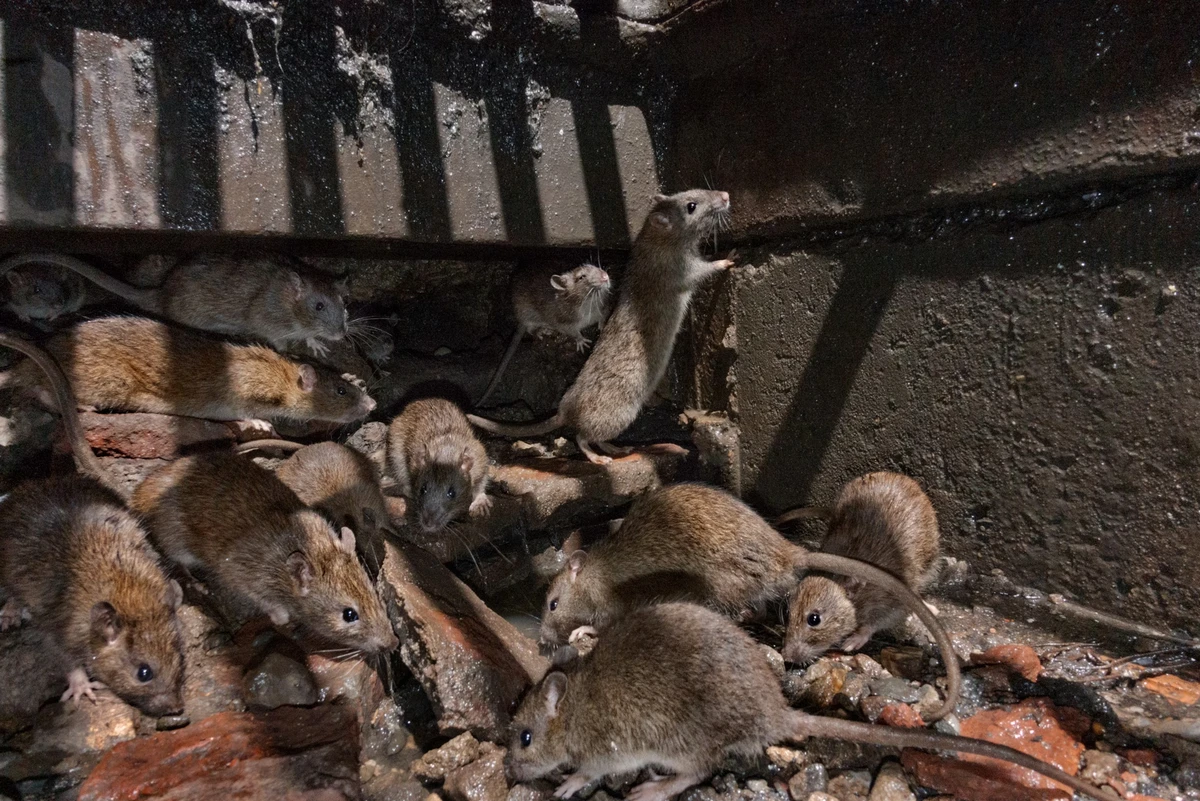
Wait! The car will pass, and then we'll take off.
Moreover, rats haven't simply learned to survive in our cities. They've convinced humans that they can and should be caged, bred, and fed deliciously. While we were battling brown rats on the streets, they donned white coats and captured our hearts. And as experience shows, if an animal becomes domesticated, humanity will defend it with all its might! 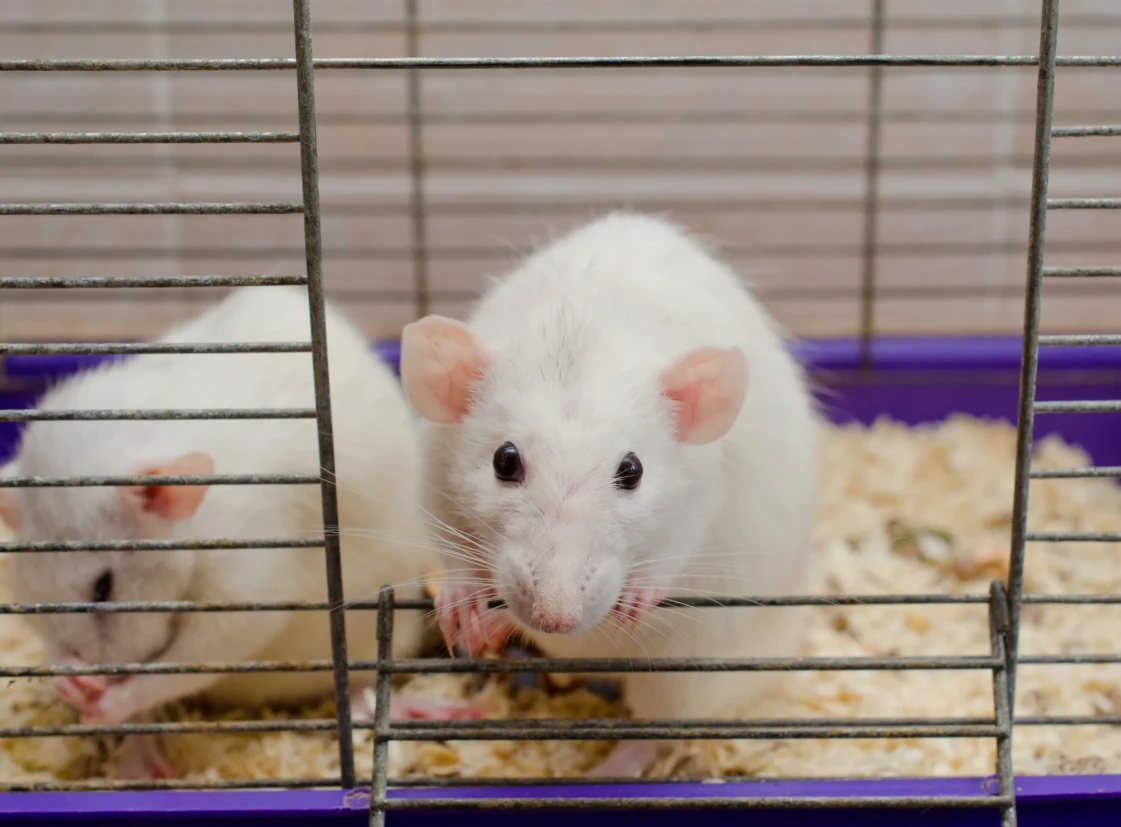
— Hey, Brain, what are we doing today? — The same thing we always do, Pinky. Let's try to conquer the world! *Music*