Burrowing owl: lives in a burrow, searches for feces, and grows on They're eating (8 photos)
When a European hears the word "owl," they imagine a stern predator perched somewhere in the tree branches, stalking prey with its eyes glittering in the darkness. But Americans disagree. For many, an owl is a diurnal (!), steppe (!!), ground (!!!) bird called the burrowing owl! 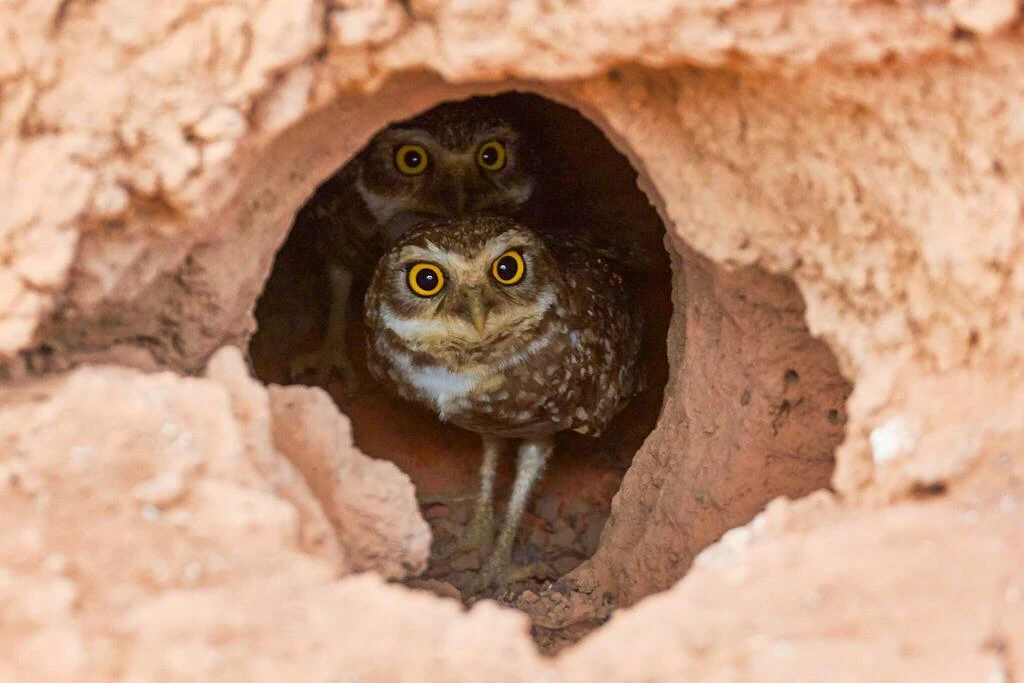
You've found a deposit of underground owls. Congratulations!
When you first meet a owl, you get the impression it's a small, silly, anarchic owl who looked at the other members of its tribe and thought, "I want to be like you. But in reverse!" Instead of eating mice in dense forests at night, the owl moved to the daylight-drenched, arid plains. But its tactics, as stupid and strange as they may seem, proved incredibly successful: the birds colonized vast territories from southern Canada to southern Argentina! 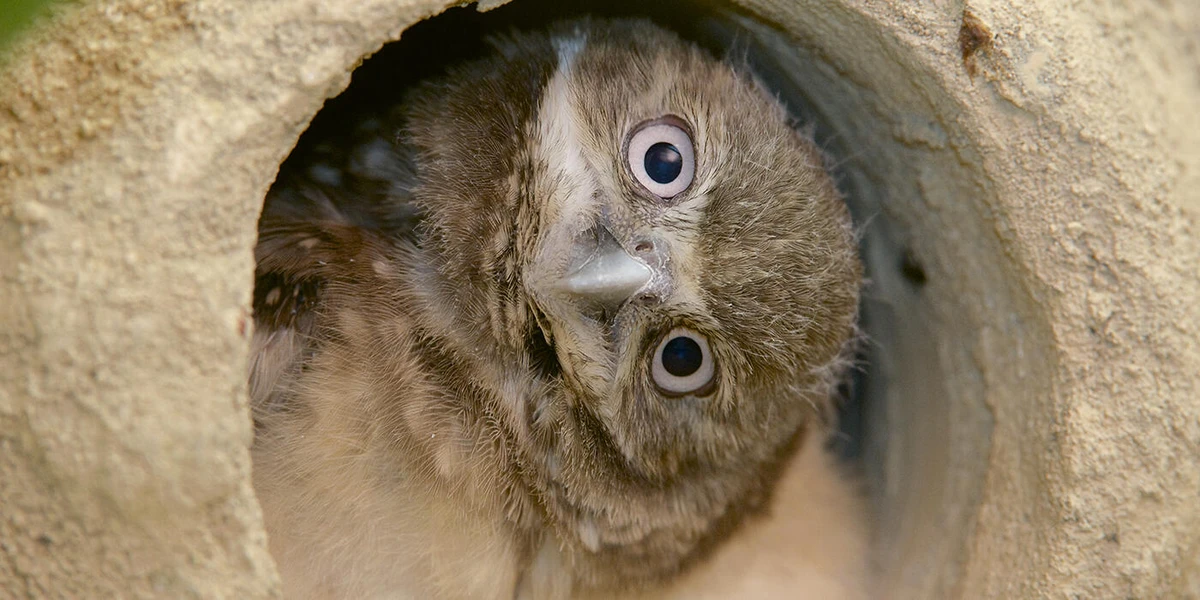
What do I think of the other owls? You mean those boring commoners?
In regions where everything can be seen for miles around, the little owl has become terribly vulnerable—it can't hide in the foliage or conceal itself in a hollow tree from the gaze of a ground or aerial predator. To survive in such conditions, the owl had to transform into a mole! 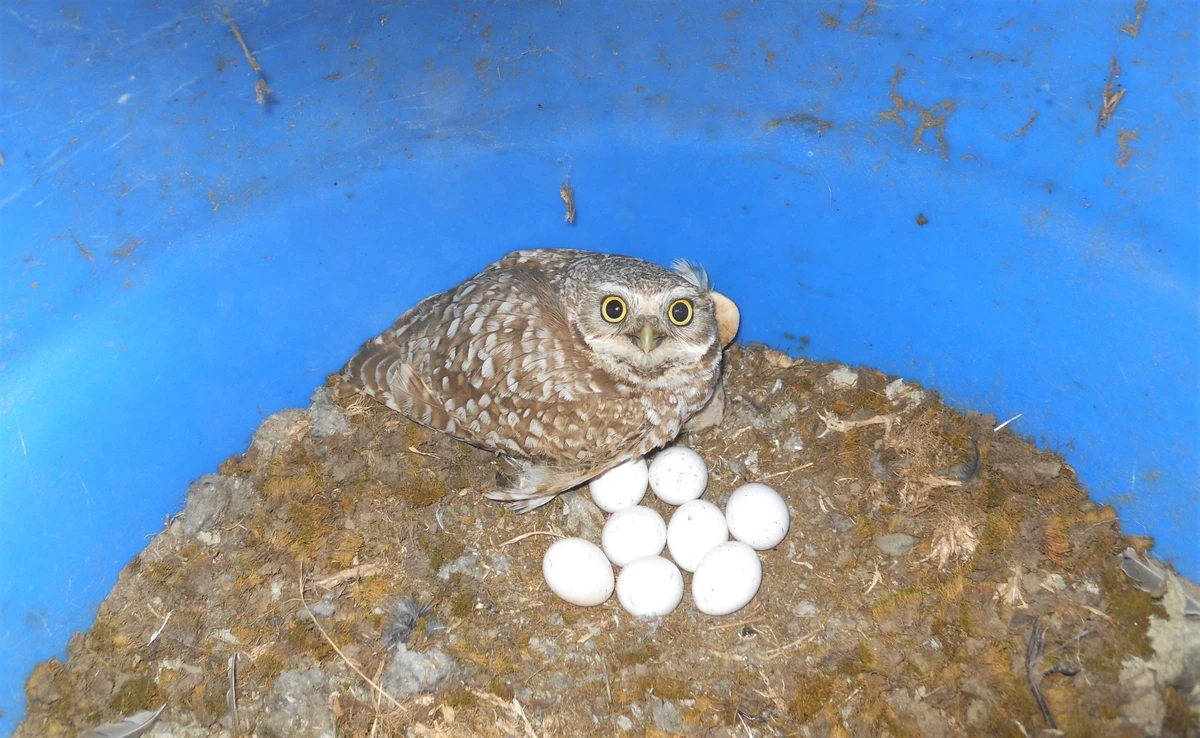
Hello... I thought this place was unoccupied...
As soon as the little owl leaves its parental home, it immediately sets out in search of a safe haven—an abandoned gopher hole or other small animal burrow. But such nesting boxes aren't always available, so many owls have to take matters into their own hands and dig a home in the hard ground. And this needs to be done as quickly as possible. 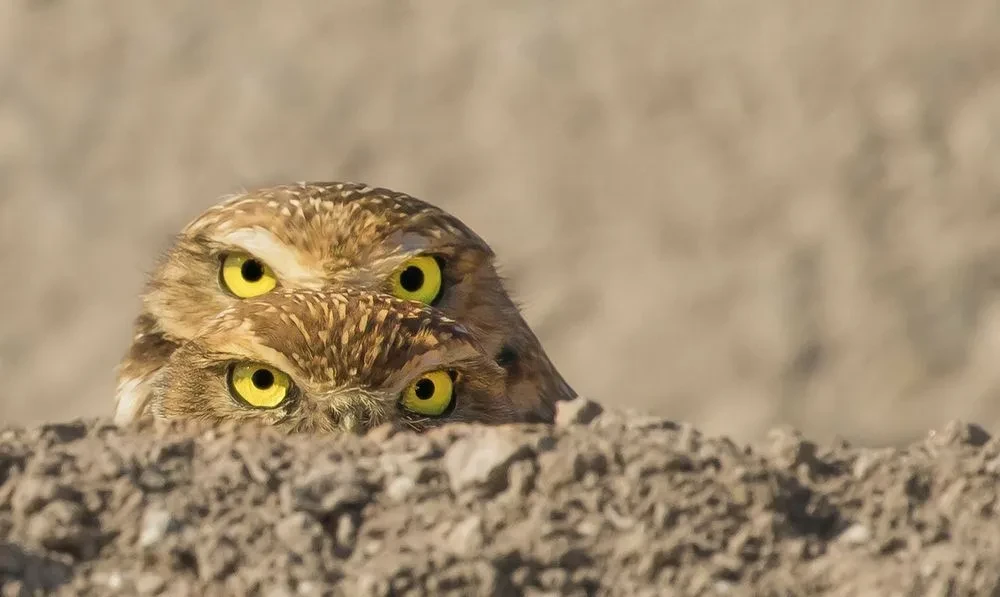
Dig a hole, not a trench!
To avoid being eaten in the open air, the owl has resorted to an even stranger solution: it spends most of its day walking. To do this comfortably, the owl has grown long, strong legs, making it the fastest and most resilient runner among owls. A dubious achievement, but an achievement nonetheless. 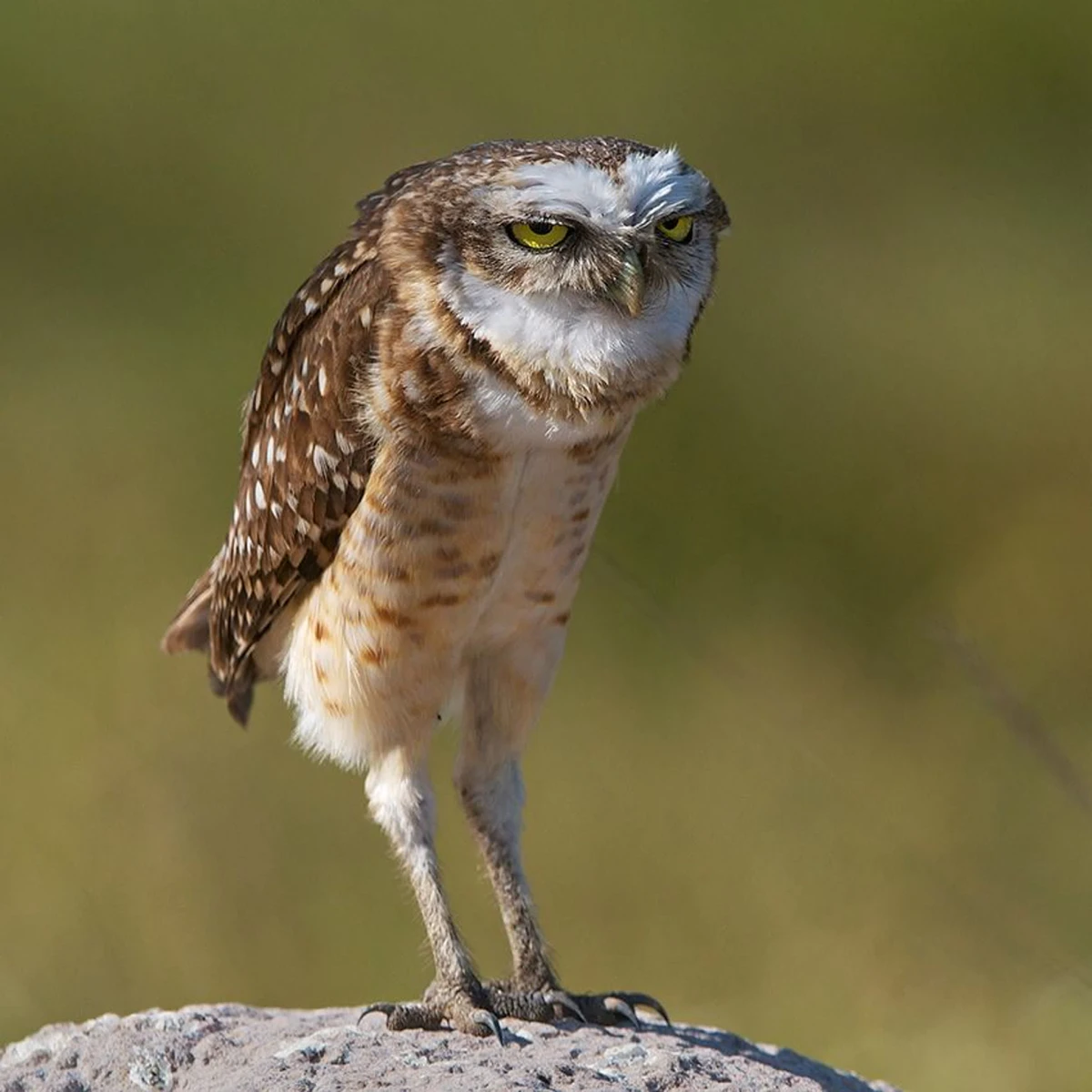
The most hunched runner on the planet.
Yet, the owl's owl nature hasn't been completely eradicated. Although it can catch an insect or a slow-moving lizard on foot, it hunts most of its prey like a typical owl: perched in ambush on a branch or elevated surface, watching for prey. It does this at dusk, where it can fully utilize its natural abilities—well-developed hearing and night vision. 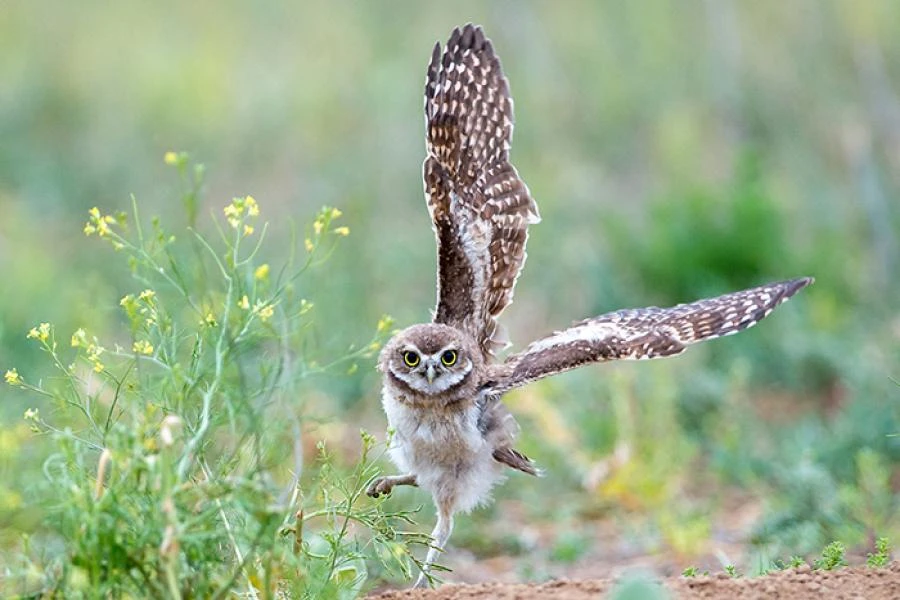
Look as I can!
And if you think their daily life is somehow abnormal, then you haven't heard anything about reproduction yet! It all starts out pretty standard—except for the fact that the pair of owls are inhabiting a hole in the ground, not a beautiful and elegant nest in a tree. However, the burrowing owls decorate it as best they can: they carry hay, animal fur, and, of course, manure inside. The owls then pile the manure in neat piles next to the nest. 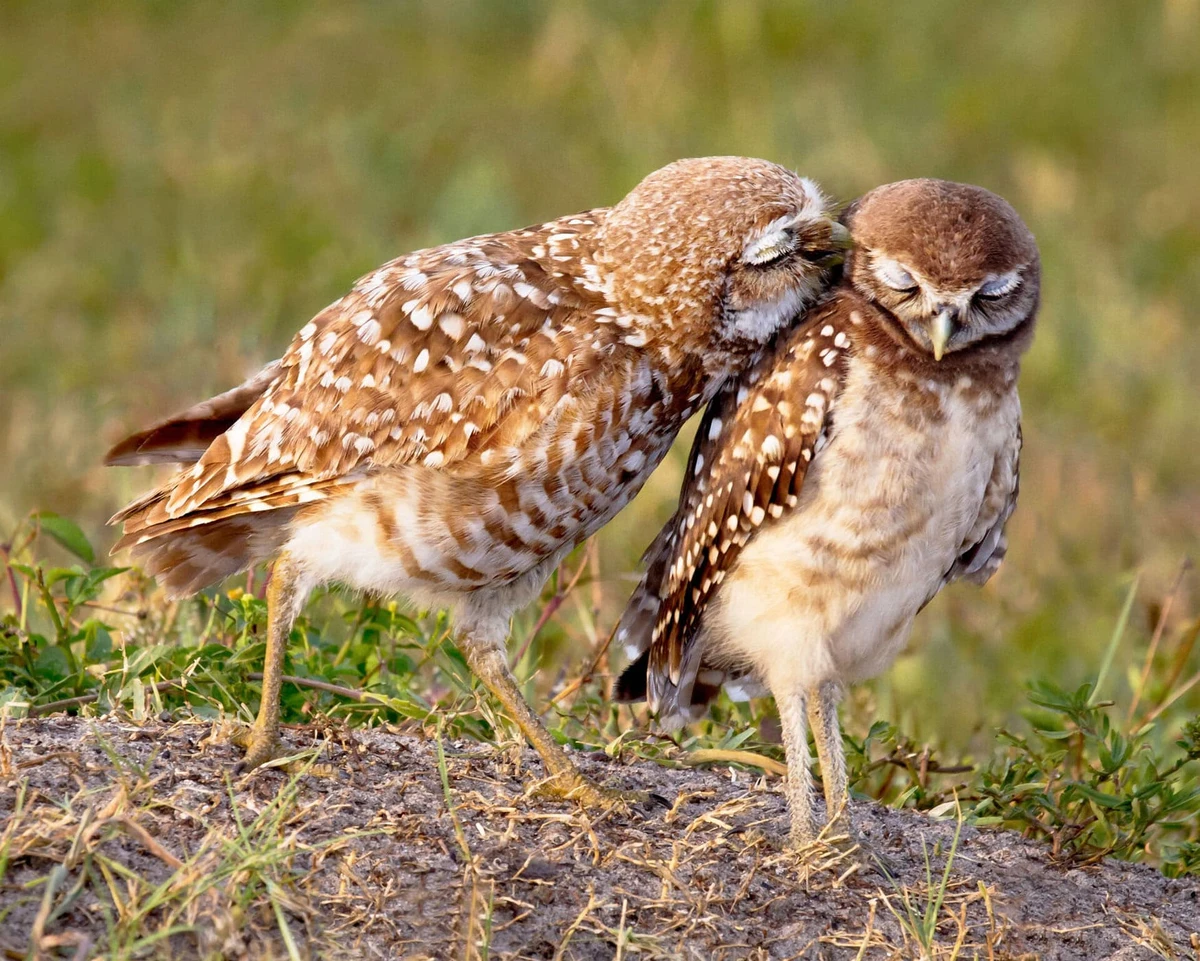
Tsmok :3
Why do they do this? Answering this question turned out to be difficult. At first, ornithologists thought it was camouflage—no sane predator would venture into a dung heap. But then it turned out that they would: the mortality rate from predator claws among chicks in "clean" nests was no different from that in nests with dung. 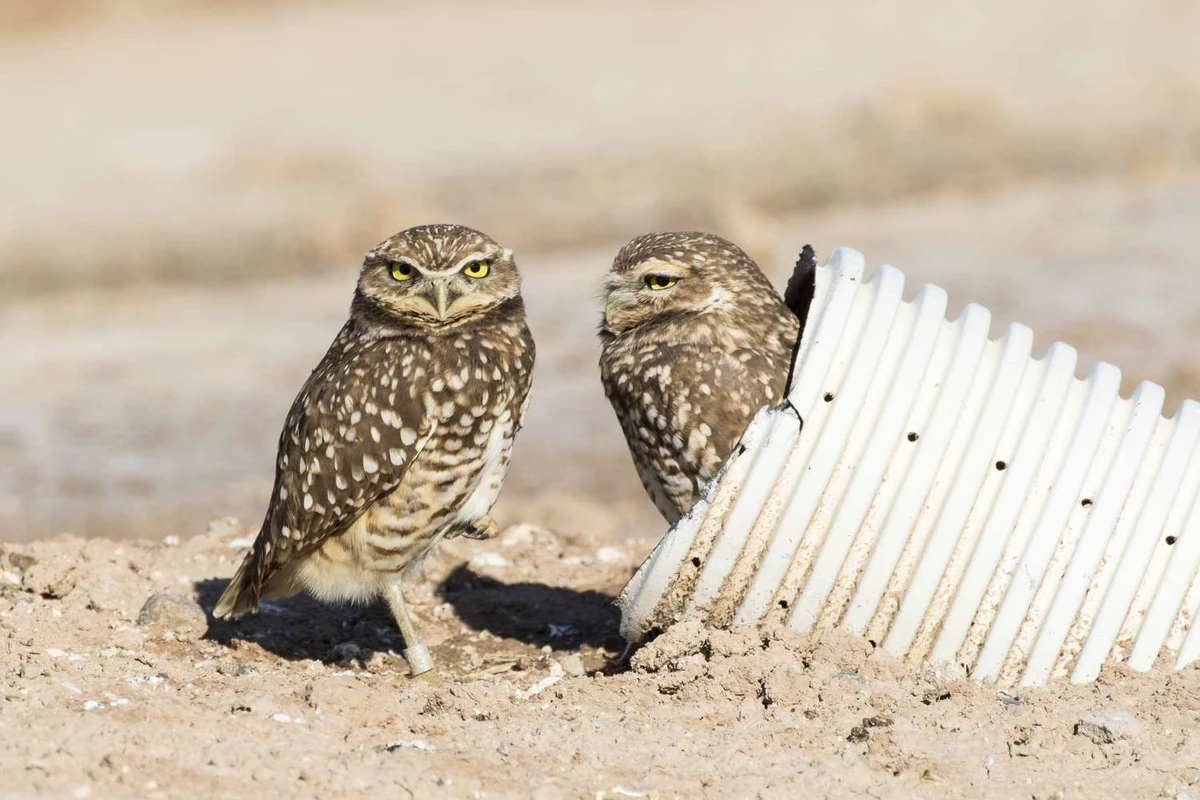
I won't let you home without cow dung. Go find it.
It turns out that manure has a different purpose. During its fermentation process, it releases a considerable amount of heat, which keeps 4-6 chicks warm while the parents are hunting. And the piles of manure in front of the burrow attract insects, which actively breed in them and serve as an additional food source for the owls. In other words, the owls grow their own food! And to be honest, they don't really need manure for self-defense. Both chicks and adults have one trick that helps them avoid unnecessary attention: they can hiss. And any predator hearing a hiss from the depths of a hole will involuntarily wonder: is there a snake hiding there?