An unprecedented study published in the journal Applied and Environmental Microbiology demonstrates that a complex organism with a cell nucleus—the fungus Aspergillus calidoustus (hereafter A. calidoustus)—is capable of surviving all stages of a Mars mission, from prelaunch preparation to spaceflight and operation on the planet's surface. 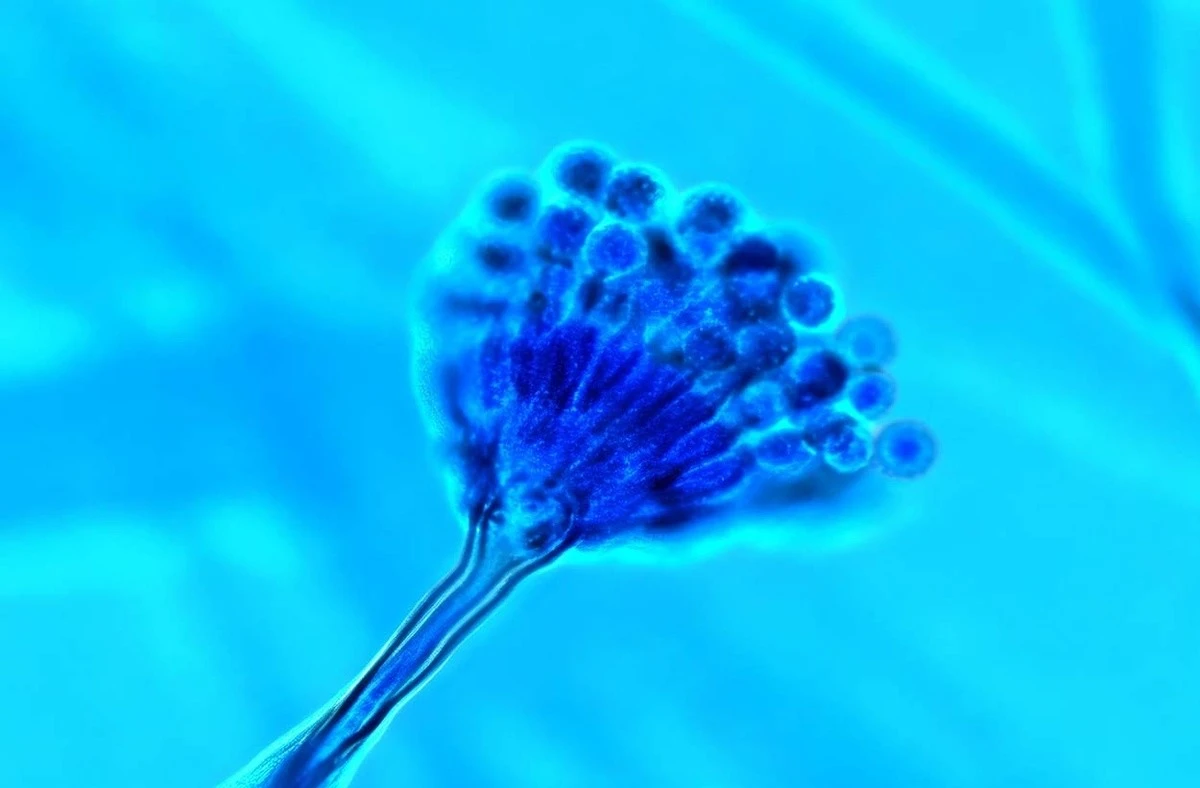
Aspergillus calidoustus under a microscope. The image shows a small vesicle, two-tiered conidiogenous cells, and rough conidia—the structures the fungus uses to form and disperse spores. Magnification approximately 1,000x, stained with lactophenol cotton blue.
And, most interestingly, fungus was discovered in NASA's ultra-clean rooms where Mars rovers are assembled. Now a fair question arises: could we have "infected" Mars with Earth life?
An Uninvited Guest in Ultra-Clean Rooms
Microbiologist Kasthuri Venkateswaran, a former NASA senior scientist, examined the ultra-clean rooms where the Perseverance rover was assembled. And, as it turns out, they are not completely sterile after all: Venkateswaran isolated 27 strains of fungi, including A. calidoustus, a small filamentous fungus that commonly lives in ducts and ventilation systems on Earth. This Earth inhabitant survived the strict sterilization protocols intended to minimize the risk of Earth life reaching Mars.
Following this, Venkateswaran and his colleagues conducted a large-scale experiment: they exposed fungal spores to conditions simulating spaceflight and the Martian surface. A. calidoustus was "bathed" in powerful ultraviolet and ionizing radiation for an extended period while in a vacuum at extremely low temperatures. The fungus was then placed in simulated Martian soil, recreated based on the known chemical composition of the Red Planet's surface. And the spores survived.
The fungus died only in one case—when extreme cold was combined with extremely powerful ionizing radiation. It survived in all other combinations. This means that A. calidoustus is not resistant to a single adverse factor, but has a whole range of defense mechanisms.
This discovery demonstrated the imperfections of planetary defense strategies. Sterilization methods have historically focused on resistant bacteria. Fungi, however, remained unnoticed, although, as it turns out, they too can be dangerous as potential contaminants—unwanted organisms introduced somewhere unintentionally.
Is it too late?
Perseverance landed on Mars on February 18, 2021. If A. calidoustus spores were on its surface or inside its equipment, they could theoretically have survived the landing. Does this mean that life on Earth is already on Mars? There's no definitive answer yet.
Venkateswaran is cautious in his statements:
"This doesn't mean that contamination of Mars is likely, but it helps us more accurately assess the potential risks. Microorganisms are remarkably resilient."
Nevertheless, he is concerned by the very existence of a fungus capable of surviving in Martian conditions. This suggests that protecting explored worlds from Earthly biology is much more difficult than previously thought. 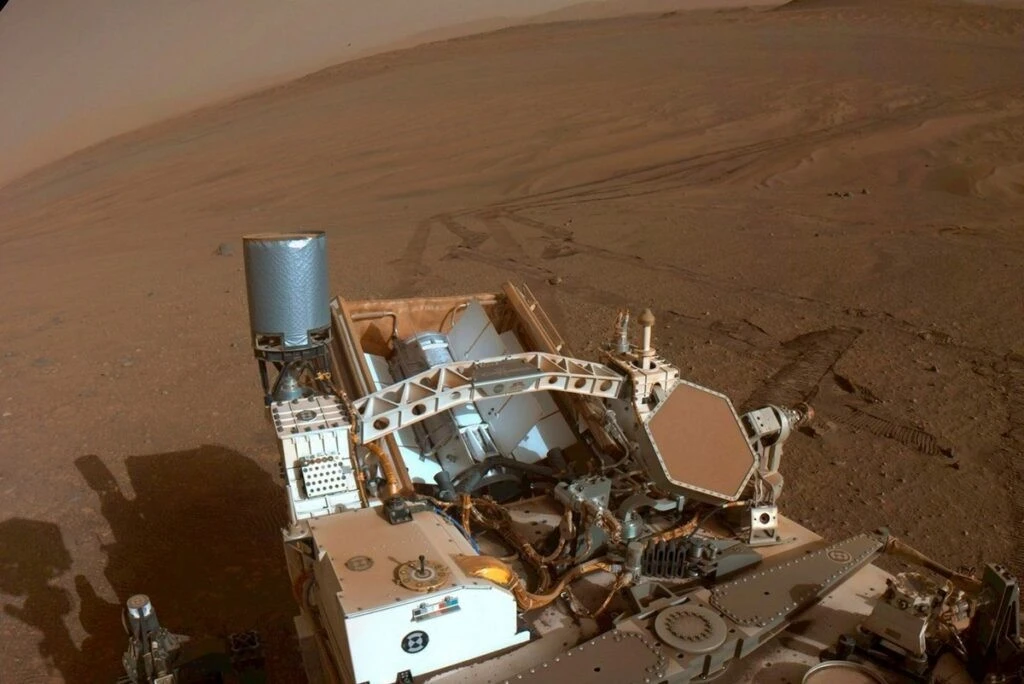
The Perseverance rover under local natural light conditions
In another study, published in 2025, scientists discovered 26 previously unknown bacterial species in the Kennedy Space Center's ultra-clean rooms. Many of them possessed genes that help them survive radiation, repair damaged DNA, form protective biofilms, and produce spores.
This, of course, doesn't mean NASA is incompetent. It shows that life is more resilient than we thought. Microorganisms find ways to survive and thrive even in conditions designed to destroy them. Therefore, there is no doubt that terrestrial biology is leaking into space, despite all efforts to prevent it.
Study Conclusions
The study suggests using A. calidoustus as a reference organism for testing sterilization methods. If sterilization kills this fungus, it will likely work on other terrestrial microbes as well. When planning future missions to Mars, Europa, Titan, Enceladus, and other potentially habitable worlds, specialists will take these new findings into account.
But is it too late? The Curiosity and Perseverance rovers are already on Mars. And if A. calidoustus spores were resilient enough to survive space travel and then adapt to new conditions, perhaps life on Earth has already set foot on the Red Planet—just not in the way we planned.
Add your comment
You might be interested in:












NASA posted footage of a rare “ring-shaped” solar eclipse
NASA showed a Mars simulator in which four volunteers will
Mars "peeps out" from behind the moon (3 photos)

NASA is looking for volunteers who will live in a Mars

NASA's Curiosity rover showed what the night sky looks like
Jewelry and life - how are opals on Mars and the presence
NASA has discovered rocks that look like a teddy bear on
15 times people have found something incredible while
A unified time standard will be developed for the Moon (2

Margaret Hamilton Dies at 90: The Story of the Moon
25 Incredibly Beautiful and Rare Stones (26 Photos)

16 Fascinating and Surprising Facts About Life in Sweden

"What Is This Thing?": 20+ Bizarre Objects That

13 "Healthy" Habits You Should Actually Quit (14
Cassini Spacecraft Reveals Saturn’s Rings (10 Photos)

How Germany Got a Mountain Made of Salt (6 photos)

30 Everyday Details That Will Change How You See the World

Hypnotic and Oddly Satisfying GIFs That Show How Food Is
